


Refine your search for walks in Pulversheim
Pulversheim walks
 Bollwiller and its surroundings
 Visorando Member
 3.73 mi
 +33 ft
 -33 ft
 1h 45
1h 45
 Easy
Easy
 Departure from Bollwiller (Haut-Rhin)
This route starting from Bollwiller will allow you to discover the village and its surroundings. Starting from the castle, visit the village centre and then set off to explore the rural hillside with its breathtaking view of the Vosges mountains. On the way back, pass through Cité Sainte-Thérèse, a former mining town typical of the region.
The banks of the Thur and Old Thur rivers in the potash region
 6.22 mi
+43 ft
-43 ft
2h 55
Easy
Departure from Ensisheim (Haut-Rhin)
6.22 mi
+43 ft
-43 ft
2h 55
Easy
Departure from Ensisheim (Haut-Rhin)
For a long time, the Thur was used as a dumping ground for the dye works in the Thann-Cernay valley and beyond, as far as Ensisheim, for chlorides from the potash mines.Today, these industries have disappeared, which is regrettable, but the polluted ditch has regained its wild beauty and the trout have returned. Starting from the Ensisheim Pond, this route offers a tour of the river, its tributary the Old Thur and its forest, the Thurwald.
Please note: Japaneseknotweed invades the banks of the Thur every year, obstructing the view of the river between May and November.It is best to do this hike between November and early May.
The three waterways from Wittenheim to Ruelisheim
 7.07 mi
+36 ft
-36 ft
3h 15
7.07 mi
+36 ft
-36 ft
3h 15
 Moderate
Departure from Wittenheim (Haut-Rhin)
Moderate
Departure from Wittenheim (Haut-Rhin)
Discover the three waterways from Wittenheim to Ruelisheim: the Ill, the Quatelbach and the Dollerbaechlein.
From Wittenheim to Ruelisheim
 5.37 mi
+20 ft
-20 ft
2h 30
Easy
Departure from Wittenheim (Haut-Rhin)
5.37 mi
+20 ft
-20 ft
2h 30
Easy
Departure from Wittenheim (Haut-Rhin)
A short walk along the Dollerbaechlein.
On the banks of the Ill, the Thur and the Vieille Thur
 8.52 mi
+49 ft
-49 ft
4h 00
Moderate
Departure from Ensisheim (Haut-Rhin)
8.52 mi
+49 ft
-49 ft
4h 00
Moderate
Departure from Ensisheim (Haut-Rhin)
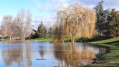
Water is ever-present throughout this route; starting from the lovely Eiblen Nature and Leisure Park, it follows the edges of the large pond, the tree-lined banks of the Ill and then the water body of the former gravel pit. It then enters the tranquillity of the Thur Forest and its banks to reach the Little Prince Park. Return along the banks of the Vieille Thur, then back along the Thur to its confluence with the Ill, ending with a final glimpse of the park’s waterbird ponds.
Please note : Japanese knotweed, an invasive plant, regrows every year along the banks of the Thur from its rhizome, starting in March–April. Its growth accelerates (2 to 8 cm per day) and the plant can reach 2 or 3 m by July, obstructing the view of the river. It flowers in September–October (beautiful colours) and dies off by November.To enjoy the view of the waterways, it is best to undertake this walk between November and early May.
Route de découverte de Berrwiller
 2.98 mi
+89 ft
-89 ft
1h 25
Easy
Departure from Berrwiller (Haut-Rhin)
2.98 mi
+89 ft
-89 ft
1h 25
Easy
Departure from Berrwiller (Haut-Rhin)
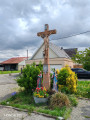
A small village with just over 1,000 inhabitants, Berrwiller is situated near the Wine Route. It is a village in the countryside. This route takes you on a tour of the entire village, exploring its pleasant streets close to the farming community. The highlight of the route is undoubtedly Berrwiller Church.
On the banks of the Ill and Dollerbaechlein rivers in Kingersheim
 4.82 mi
+16 ft
-16 ft
2h 15
Easy
Departure from Kingersheim (Haut-Rhin)
4.82 mi
+16 ft
-16 ft
2h 15
Easy
Departure from Kingersheim (Haut-Rhin)
A lovely family walk that allows you to discover the potash villages from a different angle, along the Ill and Dollerbaechlein streams.
The potash basin of the Bois de Nonnenbruch
 5.30 mi
+23 ft
-23 ft
2h 30
Easy
Departure from Richwiller (Haut-Rhin)
5.30 mi
+23 ft
-23 ft
2h 30
Easy
Departure from Richwiller (Haut-Rhin)
Explore this area dotted with small ponds, a real green oasis right in the suburbs of Mulhouse!
Discover Richwiller and its industrial past
 Local authority4.96 mi
+43 ft
-43 ft
2h 20
Easy
Departure from Richwiller (Haut-Rhin)
Local authority4.96 mi
+43 ft
-43 ft
2h 20
Easy
Departure from Richwiller (Haut-Rhin)
The municipality of Richwiller is launching a series of historical discovery trails to help residents learn more about their village.
First loop: "Richwiller, its industrial past" with 18 stops.
Route de découverte de Hartmannswiller
 1.30 mi
+39 ft
-39 ft
0h 40
Easy
Departure from Hartmannswiller (Haut-Rhin)
1.30 mi
+39 ft
-39 ft
0h 40
Easy
Departure from Hartmannswiller (Haut-Rhin)
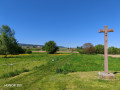
Hartmannswiller is a small village situated at the foot of the Vieil Armand. It is best known for its church and its fortified cemetery. This walk allows you to discover other sites, marked by cultural information boards, such as the town hall, the well on Grand'Rue and the crosses. To round off your exploration of the area, you can combine this walk with a visit to the neighbouring village of Wuenheim.
Fields and vineyards between Hartmannswiller and Berrwiller
 3.64 mi
+135 ft
-138 ft
1h 45
Easy
Departure from Hartmannswiller (Haut-Rhin)
3.64 mi
+135 ft
-138 ft
1h 45
Easy
Departure from Hartmannswiller (Haut-Rhin)
A pleasant walk to discover some of the highlights of the village of Hartmannswiller, as well as its vineyards and some of the surrounding hills.
Lutterbach Wood Circular Loop
 5.19 mi
+20 ft
-20 ft
2h 25
Easy
Departure from Pfastatt (Haut-Rhin)
5.19 mi
+20 ft
-20 ft
2h 25
Easy
Departure from Pfastatt (Haut-Rhin)
This short forest trail will delight lovers of nature walks! Be careful, however, as the undergrowth is quite sparse. Although entirely in the forest, the trail is regularly exposed to the sun.
From Soultz-Haut-Rhin to Cernay
17.04 mi
+643 ft
-633 ft
8h 25
 Very difficult
Departure from Soultz-Haut-Rhin (Haut-Rhin)
Very difficult
Departure from Soultz-Haut-Rhin (Haut-Rhin)
A long hike, almost flat, but covering a significant number of kilometres. This route will take you through villages and towns such as Hartmannswiller and Cernay. When conditions allow, the view stretches as far as the Alps. Apart from the theme of religion, which is very prominent with the various small churches and the Thierenbach Basilica, the theme of the First World War is also present on the way back. Most of the hike is in open country. Only a quarter of the hike is covered between Wattwiller and the basilica of Thierenbach.
Route de découverte de Soultz-Haut-Rhin
4.60 mi
+43 ft
-43 ft
2h 10
Easy
Departure from Soultz-Haut-Rhin (Haut-Rhin)
Soultz-Haut-Rhin is a small town with a population of 7,000 located at the gateway to the Florival Valley. It is home to two museums: the Nef des Jouets (Toy Museum) and the Bucheneck Museum. This walk takes you on a tour of the town and other historical sites such as the old railway line, the Capuchin monastery of Saint-Maurice, the old synagogue, memorials and various green spaces.
The Zeller Canteen
 7.79 mi
+1,594 ft
-1,588 ft
5h 00
Easy
Departure from Hartmannswiller (Haut-Rhin)
7.79 mi
+1,594 ft
-1,588 ft
5h 00
Easy
Departure from Hartmannswiller (Haut-Rhin)
Like the "South and North Trenches of Hartmannswillerkopf" hikes, this hike pays tribute to the soldiers of theFirst World War.
This hike follows the German supply routes that fed the front.
The Zeller canteen was the location of the German army's Sector II headquarters in 1914. Around this canteen, the pioneer village included a bookshop, dentist, hairdresser, kitchen, photographer and a chapel.
Warning. Friday 12 May 2023. From (9) to (10), dangerous to approach, the owners of the Ollwiller estate almost let the dogs loose. Be very careful, do not approach the estate.
Awaiting modification...
Wuenheim Wine Trail
 Tourist office2.13 mi
+135 ft
-135 ft
1h 05
Easy
Departure from Soultz-Haut-Rhin (Haut-Rhin)
Tourist office2.13 mi
+135 ft
-135 ft
1h 05
Easy
Departure from Soultz-Haut-Rhin (Haut-Rhin)
Discover the winemakers’ expertise and the work involved in viticulture on the Wuenheim wine trail. This educational trail introduces you to the world of wine and nature. The work in the vineyard, winemaking methods and the unique characteristics of the grape varieties will hold no more secrets for you.
The Grand Ballon from Soultz loop
17.91 mi
+4,206 ft
-4,203 ft
2 days
 Difficult
Departure from Soultz-Haut-Rhin (Haut-Rhin)
Difficult
Departure from Soultz-Haut-Rhin (Haut-Rhin)
The Grand Ballon is a legendary peak in the Vosges. It is easily accessible by car. More experienced hikers can reach it on foot via various hiking trails. One of the longest routes starts from Soultz. The climb is steady on the first day and the descent is steady on the second. The more athletic can complete this hike in a single day, but to fully enjoy the scenery, it is better to do it over two days. This hike will leave you with lasting memories of the view from the summit at over 1,400 metres above sea level.
Le Col du Grand Ballon depuis Soultz
8.15 mi
+3,596 ft
-89 ft
6h 55
Difficult
Departure from Soultz-Haut-Rhin (Haut-Rhin)
Randonnée presque quasiment en montée qui permet de relier Soultz, sympathique village culturel, au Col du Grand Ballon où vous pourrez passer la nuit avant d'aller le lendemain matin au sommet. Bien que cette étape soit courte en kilomètres, elle comporte un important dénivelé à ne pas négliger. Mais que de beautés en revanche entre les forêts et points de vues remarquables dans la dernière partie du parcours.
From the banks of the Quatelbach to the Rhône-Rhine Canal
5.83 mi
+20 ft
-20 ft
2h 40
Easy
Departure from Baldersheim (Haut-Rhin)
A route north-east of Mulhouse, along the Quatelbach, then towards the Hardt, passing by the canal and the gravel pits. Classic lowland landscapes with lovely views of the Vosges and the Black Forest. Much of the route follows tarmac cycle paths and routes.
Réguisheim and Meyenheim in the heart of the Alsace plain
 5.09 mi
+10 ft
-10 ft
2h 20
Easy
Departure from Réguisheim (Haut-Rhin)
5.09 mi
+10 ft
-10 ft
2h 20
Easy
Departure from Réguisheim (Haut-Rhin)
Both villages offer a typical view of the South Alsace plain: nestled between the Vosges and the Black Forest, you won’t find a flatter walking route than this! Wander between the Ill and the Thur rivers and visit two peaceful villages with charming neighbourhoods.
Route de découverte de Wuenheim
 1.71 mi
+66 ft
-43 ft
0h 50
Easy
Departure from Wuenheim (Haut-Rhin)
1.71 mi
+66 ft
-43 ft
0h 50
Easy
Departure from Wuenheim (Haut-Rhin)
Wuenheim is a small village of 800 inhabitants, situated between Soultz and Cernay. With a history deeply rooted in winegrowing, this route takes you past various winegrowers’ houses that withstood both world wars. Indeed, the village of Wuenheim was severely affected by the First World War. This route allows you to discover Wuenheim’s wine-growing heritage, whilst exploring the theme of the village’s reconstruction following the First World War and learning about the impact that conflict had on the village.
Route d'Issenheim découverte
2.66 mi
+46 ft
-46 ft
1h 15
Easy
Departure from Issenheim (Haut-Rhin)
Issenheim is a small town with a population of 3,000. It was formerly known for the Gast spinning mill. This mill was one of the largest in the region and processed wool into yarn. It is also the starting point for this walk. The first part runs along the banks of the Lauch, passing Villa Spetz and Saint-André Church. The return journey is via Rue de Guebwiller, passing in front of the chapel of the former Antonine convent of Saint-Joseph.
Wuenheim and the vineyards of Ollwiller
 3.69 mi
+344 ft
-348 ft
2h 00
Easy
Departure from Wuenheim (Haut-Rhin)
3.69 mi
+344 ft
-348 ft
2h 00
Easy
Departure from Wuenheim (Haut-Rhin)
Starting from Wuenheim, this circular route will take you through the vineyards of Ollwiller after a short stretch through the forest.
The foothills of Soultz
4.93 mi
+912 ft
-886 ft
3h 05
Easy
Departure from Soultz-Haut-Rhin (Haut-Rhin)
This short walk presents no particular difficulties. It starts in the town of Soultz, notable for its rich Renaissance heritage, and takes you through the surrounding forest and vineyards. At Nez de Soultz, you can enjoy a beautiful view over the towns of Soultz and Guebwiller.
Short walk south of Jungholtz
 3.06 mi
+295 ft
-315 ft
1h 40
Easy
Departure from Jungholtz (Haut-Rhin)
3.06 mi
+295 ft
-315 ft
1h 40
Easy
Departure from Jungholtz (Haut-Rhin)
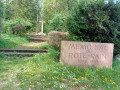
This walk between Soultz-Haut-Rhin and Jungholtz takes you along the Way of the Cross from the Rote Rain Memorial to the famous Thierenbach Basilica, before crossing the village of Jungholtz to reach Mittelbourg and its vineyards, and finally returning to the starting point near the stork park in Soultz/Wuenheim.
Through the fields between Merxheim and Gundolsheim
 2.89 mi
+36 ft
-33 ft
1h 20
Easy
Departure from Haut-Rhin
2.89 mi
+36 ft
-33 ft
1h 20
Easy
Departure from Haut-Rhin
This circular walk starting from Merxheim is a leisurely stroll through the fields, with a short stretch through the village of Gundolsheim, on flat ground.
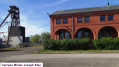
Natural heritage, historical heritage and mining history of Wittelsheim
 6.43 mi
+43 ft
-39 ft
3h 00
Moderate
Departure from Wittelsheim (Haut-Rhin)
6.43 mi
+43 ft
-39 ft
3h 00
Moderate
Departure from Wittelsheim (Haut-Rhin)
The route allows you to discover part of the town of Wittelsheim, its historical and natural heritage, and above all its mining past, thanks to the Potash Mine Memory Circuit. The route partly follows the Wittelsheim Discovery Route and the new Anneau Bleu route, marked by the Club Vosgien.
Tour of the Lutterbach Woods
4.27 mi
+16 ft
-16 ft
2h 00
Easy
Departure from Lutterbach (Haut-Rhin)
When you think of hiking in Alsace, the Vosges mountains spring to mind. But the Alsace plain also offers some very pleasant walks. This is the case with this short, family-friendly circular in the Bois de Lutterbach, on the outskirts of Mulhouse. This walk is completely safe and accessible to almost everyone. Most of the route is through forest. The highlight of the hike is halfway along the route: the Gros Chêne de Pfastatt (Pfastatt Great Oak).
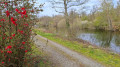
Lutterbach, its basilica and its woods
 5.32 mi
+52 ft
-52 ft
2h 30
Easy
Departure from Lutterbach (Haut-Rhin)
5.32 mi
+52 ft
-52 ft
2h 30
Easy
Departure from Lutterbach (Haut-Rhin)
A family walk offering the chance to discover some of the attractions of Lutterbach, a town steeped in history and culture, home to one of the four basilicas of Alsace and a famous brewery rich in history, before enjoying the Bois de Lutterbach, the south-western part of the Forêt du Nonnenbruch (Marais des Nonnes), criss-crossed by numerous walking trails and serving as the urban area’s green lung.
This walk is accessible via Lutterbach railway station (Haut-Rhin).
Col Amic - Thierenbach and its basilica from Wuenheim
 9.40 mi
+2,175 ft
-2,182 ft
6h 15
Moderate
Departure from Soultz-Haut-Rhin (Haut-Rhin)
9.40 mi
+2,175 ft
-2,182 ft
6h 15
Moderate
Departure from Soultz-Haut-Rhin (Haut-Rhin)
Starting from Wuenheim near Soultz, this hike offers a wealth of historical and cultural heritage discoveries, taking you through beautiful forests in the foothills of the Vosges mountains to Col Amic on the Route des Crêtes, passing historic sites from the 1914-1918 war near Hartmannswillerkopf: Zimmermann Cross, Baratin Shelter and Sicurani Chapel, then return via the Kohlschlag farm inn, Holzwasen, St Anne's Chapel, Notre-Dame de Thierenbach Basilica and the Jewish cemetery in Jungholtz.
The remains of Vieil Armand as seen from the Gros Chêne
 10.13 mi
+2,310 ft
-2,333 ft
6h 40
Moderate
Departure from Soultz-Haut-Rhin (Haut-Rhin)
10.13 mi
+2,310 ft
-2,333 ft
6h 40
Moderate
Departure from Soultz-Haut-Rhin (Haut-Rhin)
A long walk with a relatively gentle gradient, but one that is nevertheless recommended for
hikers who are reasonably experienced walkers. History enthusiasts will be delighted by the walk across the Vieil Armand or Hartmannswillerkopf battlefield and by discovering the many monuments linked to the history of the First World War.
Thierenbach from the Gros Chêne
 2.75 mi
+554 ft
-551 ft
1h 45
Easy
Departure from Soultz-Haut-Rhin (Haut-Rhin)
2.75 mi
+554 ft
-551 ft
1h 45
Easy
Departure from Soultz-Haut-Rhin (Haut-Rhin)
A short walk through the forest before setting off to explore the Basilica of Notre-Dame de Thierenbach.
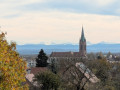
The Cernay Stork Park from Uffholtz
 3.45 mi
+69 ft
-66 ft
1h 40
Easy
Departure from Uffholtz (Haut-Rhin)
3.45 mi
+69 ft
-66 ft
1h 40
Easy
Departure from Uffholtz (Haut-Rhin)
Set off to meet the storks of Cernay from the charming little village of Uffholtz, passing by numerous points of interest and beautiful views of the region. In good weather, you will also be able to see the Alps!
Bergholtz quarries, Dreibannstein Pass and Croix de Mission
 5.96 mi
+1,132 ft
-1,106 ft
3h 45
Moderate
Departure from Guebwiller (Haut-Rhin)
5.96 mi
+1,132 ft
-1,106 ft
3h 45
Moderate
Departure from Guebwiller (Haut-Rhin)
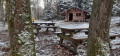
Starting from the Guebwiller cemetery, this hike will allow you to discover the Bergholtz quarries, the Col du Dreibannstein and the Croix de Mission with beautiful views of Guebwiller, the Grand Ballon and the entire Alsace plain.
Walk around Reiningue Lake
 1.51 mi
+16 ft
-16 ft
0h 45
Easy
Departure from Reiningue (Haut-Rhin)
1.51 mi
+16 ft
-16 ft
0h 45
Easy
Departure from Reiningue (Haut-Rhin)
A short walk around Lake Reiningue.
From Guebwiller to Rouffach through the vineyards
 15.15 mi
+1,480 ft
-1,483 ft
8h 15
Difficult
Departure from Guebwiller (Haut-Rhin)
15.15 mi
+1,480 ft
-1,483 ft
8h 15
Difficult
Departure from Guebwiller (Haut-Rhin)
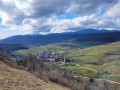
A long circular walk connecting two towns in the Haut-Rhin: Guebwiller and Rouffach. What makes this circular walk unique is that it mainly passes through vineyards. Other crops can be seen in the first part of the walk, but the bulk of the route is through vineyards. The return leg is particularly interesting, featuring chapels, a nature reserve and some remarkable views. The route passes through several charming villages
The heights of Jungholtz
 6.49 mi
+1,417 ft
-1,411 ft
4h 15
Moderate
Departure from Jungholtz (Haut-Rhin)
6.49 mi
+1,417 ft
-1,411 ft
4h 15
Moderate
Departure from Jungholtz (Haut-Rhin)
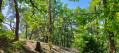
The hike starts in Jungholtz and crosses the communal forest of Guebwiller to take you to the Col de Peternit. Hike between the Guebwiller and Rimbach valleys, among conifers and deciduous trees.
The hike can also be done by mountain bike.
Ascent of Hartmannswillerkopf
 6.81 mi
+2,169 ft
-2,172 ft
5h 00
Moderate
Departure from Jungholtz (Haut-Rhin)
6.81 mi
+2,169 ft
-2,172 ft
5h 00
Moderate
Departure from Jungholtz (Haut-Rhin)
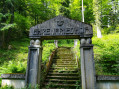
A beautiful hike on Hartmannswillerkopf mountain, also known as "The Man-Eater", where a battle took place during the First World War.
You can discover various historical remains (old cemeteries, old shelters, ruins, trenches) and a magnificent view of the Alsace Plain.
Ascent to Grand Ballon from Jungholtz
 14.56 mi
+4,098 ft
-4,081 ft
8 hrs
Very difficult
Departure from Jungholtz (Haut-Rhin)
14.56 mi
+4,098 ft
-4,081 ft
8 hrs
Very difficult
Departure from Jungholtz (Haut-Rhin)
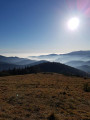
This long hike will allow you to enjoy the many views offered by the Col Amic and the climb to the Grand Ballon. You can also stop for refreshments at the various farm inns located along the route. It's the ideal way to spend a sporty day in the open air on the highest peak in the Vosges.
From the Croix des Missions to Hugstein via the quarries
 7.02 mi
+958 ft
-945 ft
4h 05
Moderate
Departure from Guebwiller (Haut-Rhin)
7.02 mi
+958 ft
-945 ft
4h 05
Moderate
Departure from Guebwiller (Haut-Rhin)
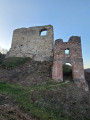
This walk offers beautiful views of Guebwiller and the Florival, and allows you to explore the old quarries of Buhl as well as the ruins of Hugstein.
It can be combined with a visit to Guebwiller: industrial wastelands and villas, Saint-Léger Church, the Dominican Convent, the former Notre-Dame Collegiate Church, the Deck Museum, etc.
Castle Trail: from Guebwiller to Orschwihr
10.54 mi
+1,214 ft
-1,211 ft
5h 55
Moderate
Departure from Guebwiller (Haut-Rhin)
A themed walk exploring the castles around Guebwiller.
The circular route through the four communal forests from Guebwiller
15.66 mi
+3,107 ft
-3,100 ft
10 hrs
Very difficult
Departure from Guebwiller (Haut-Rhin)
A long hike taking you through four communal forests: those of Lautenbach, Guebwiller, Bergholtzzel and Orschwihr. It features four climbs with an elevation gain of around 150 to 250 metres, the gradient of which varies depending on the section. There are numerous points of interest, including the town of Guebwiller, the viewpoint in the Bergholtzzell Communal Forest, and the Oelberg Calvary. The walk offers the chance to discover the remains of several castles as well as the Hochfelsen rock formation. Furthermore, it takes you around a small peak rising to an altitude of 688 metres: the Engelstein.
A short walk to the Croix de la Mission above Guebwiller
 1.68 mi
+371 ft
-371 ft
1h 05
Easy
Departure from Guebwiller (Haut-Rhin)
1.68 mi
+371 ft
-371 ft
1h 05
Easy
Departure from Guebwiller (Haut-Rhin)
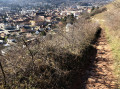
A short walk from Guebwiller will take you through the Alsatian vineyards to the Croix de la Mission, where you will have a beautiful view of Guebwiller, the Grand Ballon and, above all, the Alsace plain.
Route de découverte de Bergholtz
 2.00 mi
+23 ft
-23 ft
0h 55
Easy
Departure from Bergholtz (Haut-Rhin)
2.00 mi
+23 ft
-23 ft
0h 55
Easy
Departure from Bergholtz (Haut-Rhin)
Bergholtz is a small village with just over 1,000 inhabitants. Situated on the Wine Route, this route allows you to explore its narrow streets and discover its almost hidden heritage. The walk is suitable for everyone, and you can also have a picnic there and take your children to play in the playground on the outskirts of the village. Among the places of interest are the old Vauban Canal and Saint-Gall Church
Circular route around the Cernay and Nonnenbruch lakes
 1.94 mi
+20 ft
-20 ft
0h 55
Easy
Departure from Cernay (Haut-Rhin) (Haut-Rhin)
1.94 mi
+20 ft
-20 ft
0h 55
Easy
Departure from Cernay (Haut-Rhin) (Haut-Rhin)
A pleasant short walk in summer as it is well shaded.
Easy parking.
On the slopes of the Grand Ballon from Jungholtz
 12.47 mi
+2,762 ft
-2,766 ft
8h 10
Difficult
Departure from Jungholtz (Haut-Rhin)
12.47 mi
+2,762 ft
-2,766 ft
8h 10
Difficult
Departure from Jungholtz (Haut-Rhin)
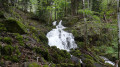
A moderately challenging hike which, as the paths wind their way, offers beautiful views of the Rimbach Valley, the Alsace plain and, of course, the summit of the Grand Ballon. Crossing the little Kaltenbach valley with its trees and moss-covered rocks, its small waterfall and the remarkable 1914–1918 baths is a real treat.
Shaded route in the city of Mulhouse
 1.70 mi
+7 ft
-7 ft
0h 45
Easy
Departure from Mulhouse (Haut-Rhin)
1.70 mi
+7 ft
-7 ft
0h 45
Easy
Departure from Mulhouse (Haut-Rhin)
During a heatwave, we mainly seek shade or cool places. That is why this route was created. Enjoy this peaceful walk, far from the noise. To complete the circular route, return to the city centre.
Street art in Mulhouse
 2.10 mi
+3 ft
-3 ft
1h 00
Easy
Departure from Mulhouse (Haut-Rhin)
2.10 mi
+3 ft
-3 ft
1h 00
Easy
Departure from Mulhouse (Haut-Rhin)
Come and discover the works of the many street artists who adorn the city's walls and even... road signs! Clet, C215, Jana & Js are among those who embellish the streets of Mulhouse. Before starting this route,please note that street art is ephemeral, so some of the works may no longer be there when you take your walk. However, we invite you to keep your eyes peeled, as they may well be hidden.
From Sainte-Anne to the Kohlschlag Farm Inn via Holzwasen
 7.18 mi
+1,785 ft
-1,775 ft
4h 50
Moderate
Departure from Jungholtz (Haut-Rhin)
7.18 mi
+1,785 ft
-1,775 ft
4h 50
Moderate
Departure from Jungholtz (Haut-Rhin)
A hike mostly through woodland on the lower slopes of the Grand Ballon, passing the charming Kohlschlag Farm Inn at the foot of the Col Amic. The return route to Sainte-Anne goes via the
Holzwasen shelter.
Route de découverte de Guebwiller
5.18 mi
+243 ft
-236 ft
2h 35
Easy
Departure from Guebwiller (Haut-Rhin)
Guebwiller is a small wine-growing town. As the "capital" of Florival, it is nonetheless well worth a visit. In addition to major tourist attractions such as the Saint-Léger and Notre-Dame churches and the Théodore Deck Museum, there are several other points of interest, such as the Parc de la Marseillaise, the military cemetery and Neuenbourg Castle and its grounds. Of course, there are other lesser-known curiosities along this route.
The Heidenbuckel menhir and the Dietrichstein sacrificial stone
 3.84 mi
+902 ft
-902 ft
2h 35
Moderate
Departure from Guebwiller (Haut-Rhin)
3.84 mi
+902 ft
-902 ft
2h 35
Moderate
Departure from Guebwiller (Haut-Rhin)
An easy walk full of discoveries that passes through the beautiful Grossberg clearing (look for its totem tree!). Nearby is the Heidenbuckel menhir, which was once used as a ceremonial site. Further on, we arrive at Dietrichstein, which was probably a place of sacrifice in the 8th century BC.
Contemporary art in Mulhouse
 2.65 mi
+3 ft
-10 ft
1h 15
Easy
Departure from Mulhouse (Haut-Rhin)
2.65 mi
+3 ft
-10 ft
1h 15
Easy
Departure from Mulhouse (Haut-Rhin)
Set off to discover the contemporary artworks scattered throughout Mulhouse. From the city centre to the Promenade William Wyler, along the Nouveau Bassin, where sculptures and installations interact with the water and trees. In just a few steps, let yourself be guided by iconic creations that reveal the city's daring spirit.
Old Mulhouse Trail
 1.42 mi
+3 ft
-7 ft
0h 40
Easy
Departure from Mulhouse (Haut-Rhin)
1.42 mi
+3 ft
-7 ft
0h 40
Easy
Departure from Mulhouse (Haut-Rhin)
Discover historic Mulhouse with this tourist trail! You will admire the most beautiful buildings in the city centre.In about an hour, you will stroll through the medieval streets, observing the houses that have marked the history of the city...
From Guebwiller to the Grand Ballon
 11.92 mi
+3,406 ft
-3,406 ft
8h 25
Difficult
Departure from Guebwiller (Haut-Rhin)
11.92 mi
+3,406 ft
-3,406 ft
8h 25
Difficult
Departure from Guebwiller (Haut-Rhin)
This hike will take you up to the Grand Ballon, the highest peak in the Vosges mountains, rising to 1,424 metres. From the summit, weather permitting, you can enjoy an exceptional panoramic view across the whole of the Alsace plain, the Black Forest and even as far as the Alps. Along the way, you’ll pass through a variety of landscapes, from coniferous and deciduous forests to clearings and pastures. As you gain altitude, you’ll notice how the flora of the Vosges changes.
The Axwald's wood trail, Guebwiller
2.72 mi
+515 ft
-538 ft
1h 40
Easy
Departure from Guebwiller (Haut-Rhin)
This walk visits Guebwiller woodlands. While walking, enjoy different very nice spots ideals to take pictures and learn about various vegetal species (indicated by numbers). This walk is very nice to keep fresh in summer times. However, be careful when raining, it can be quite slippery!
Street art and painted walls in Mulhouse
 5.40 mi
+13 ft
-13 ft
2h 30
Easy
Departure from Mulhouse (Haut-Rhin)
5.40 mi
+13 ft
-13 ft
2h 30
Easy
Departure from Mulhouse (Haut-Rhin)
This family walk will give you the chance to discover Mulhouse’s tradition of painted walls.From giant murals to the tiniest graffiti, street art is everywhere in Mulhouse: on walls, pavements, letterboxes and even on road signs!You’ll need to keep your eyes peeled!
The banks of the Ill in Mulhouse
 4.51 mi
+23 ft
-23 ft
2h 05
Easy
Departure from Mulhouse (Haut-Rhin)
4.51 mi
+23 ft
-23 ft
2h 05
Easy
Departure from Mulhouse (Haut-Rhin)
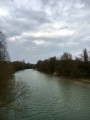
This is an undemanding hike, ideal for a Sunday stroll with the family.
This circular runs along the banks of the Ill and allows you to discover the "Japanese Bridge" behind the Mulhouse swimming pool, as well as the "Bois des Philosophes" near the University.
19th-century trail in Mulhouse
 1.13 mi
+3 ft
-3 ft
0h 30
Easy
Departure from Mulhouse (Haut-Rhin)
1.13 mi
+3 ft
-3 ft
0h 30
Easy
Departure from Mulhouse (Haut-Rhin)
This trail will allow you to discover Mulhouse as it was in the 19th century, during its industrial textile boom. Find the locations of former factories, mansions and remnants of this unprecedented development.
The waterfront circuit in Reiningue
 5.13 mi
+20 ft
-20 ft
2h 20
Easy
Departure from Reiningue (Haut-Rhin)
5.13 mi
+20 ft
-20 ft
2h 20
Easy
Departure from Reiningue (Haut-Rhin)
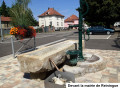
The "Au fil de l'eau" circuit, between the Doller and Leimbach rivers, crosses a magnificent oak-lined avenue before entering the Vorwald oak forest, passes by two series of blockhouses, then the Müatergottesgartla Chapel, and reaches the banks of the Doller via farmland north of Reiningue.
The entire route is marked with the Anneau Vert (Green Ring) sign by the Club Vosgien de Guewenheim
Bergholtz-Zell Quarries Circular Loop
4.88 mi
+1,168 ft
-1,191 ft
3h 15
Moderate
Departure from Bergholtzzell (Haut-Rhin)
This route will take you past some lovely viewpoints over the surrounding vineyards and the old Bergholtz quarries. It is possible to go rock climbing in the quarries, but you’ll need to bring your own equipment.
Bollenberg Tour
4.59 mi
+459 ft
-446 ft
2h 30
Easy
Departure from Orschwihr (Haut-Rhin)
This route is open through the vineyards and takes you around the Bollenberg massif, a limestone site renowned for its fine wines.
The markings are easier to find if you do the circular loop clockwise. It is possible to do the tour in the other direction, although the markings are less easy to find.
The vineyard on the Rouffach side and the hills of Zinnkoepfle and Bollenberg
 10.05 mi
+1,414 ft
-1,398 ft
5h 50
Moderate
Departure from Orschwihr (Haut-Rhin)
10.05 mi
+1,414 ft
-1,398 ft
5h 50
Moderate
Departure from Orschwihr (Haut-Rhin)
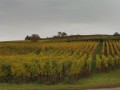
The route takes us to the Bollenberg hill, then winds its way through the vineyards on the Rouffach side. Beautiful views of the Alsace plain, the Black Forest and the Jura mountains. We then cross over to the other side, into the Vallée Noble vineyards, interspersed with the limestone hill of Zinnkoepfle. On the way back, we pass through the village of Westhalten.
Route d'Orschwihr découverte
 2.48 mi
+161 ft
-135 ft
1h 15
Easy
Departure from Orschwihr (Haut-Rhin)
2.48 mi
+161 ft
-135 ft
1h 15
Easy
Departure from Orschwihr (Haut-Rhin)
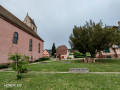
Orschwihr is a small village situated in the heart of the Alsatian vineyards. As it is right next to Bergholtz-Zell, you can combine this walk with a visit to that village. This route takes you past Saint-Nicolas Church, the Japanese pagoda tree, Saint-Wolfgang Chapel and other points of interest. It is a family-friendly walk that can easily be completed in 1½ hours, taking your time.
Orschwihr Wine Trail
2.95 mi
+331 ft
-302 ft
1h 40
Easy
Departure from Orschwihr (Haut-Rhin)
The wine-growing village of Orschwihr is situated in a small valley between the Florival and the Vallée Noble. It is separated from the plain by the Bollenberg, a hill with a Mediterranean climate, where numerous animal and plant species thrive (praying mantises, hoopoes, orchids...).
Route de découverte de Bergholtz-Zell
 1.22 mi
+108 ft
-115 ft
0h 40
Easy
Departure from Orschwihr (Haut-Rhin)
1.22 mi
+108 ft
-115 ft
0h 40
Easy
Departure from Orschwihr (Haut-Rhin)
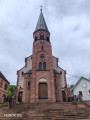
Bergholtz-Zell is a small Alsatian village situated in the heart of a vineyard. It is bordered by a wooded hill to the west. This short route offers a pleasant stroll through the heart of this wine-growing village. The main point of interest is a visit to the Mont Calvaire de l’Œlberg. This walk can easily be combined with a visit to the neighbouring village of Orschwihr or Bergholtz.
From Riedisheim to Rixheim via the vanished village of Leibersheim
 5.88 mi
+417 ft
-417 ft
3h 05
Easy
Departure from Riedisheim (Haut-Rhin)
5.88 mi
+417 ft
-417 ft
3h 05
Easy
Departure from Riedisheim (Haut-Rhin)
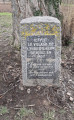
Between the two villages of Riedisheim and Rixheim lies a third, Leibersheim, which ceased to exist five centuries ago. You will also pass by the cemeteries of these two villages, one of which dates back more than two centuries. Finish by climbing the Fuchsberg hill to enjoy the beautiful scenery.
Around Buhl via Guebwiller and Saint-Barnabé
6.24 mi
+1,086 ft
-1,060 ft
3h 50
Moderate
Departure from Guebwiller (Haut-Rhin)
Two circular routes around Buhl: varied route offering beautiful views and sights. Several variations or shortcuts are possible.
The Dry Meadows of Bollenberg
 5.52 mi
+574 ft
-561 ft
3h 00
Easy
Departure from Orschwihr (Haut-Rhin)
5.52 mi
+574 ft
-561 ft
3h 00
Easy
Departure from Orschwihr (Haut-Rhin)
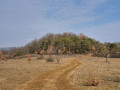
An easy route that will take you through the dry meadows of Bollenberg overlooking the Alsace plain, between vineyards and mountains.
 Circular route starting from Orschwihr to the Petit Ballon
26.60 mi
+4,104 ft
-4,114 ft
3 hrs
Moderate
Departure from Orschwihr (Haut-Rhin)
A route alternating between paths and trails through the forest with some stunning views. Starting from Orschwihr, this route takes you to the summit of the Petit Ballon via the Col de Bannstein and then the Col de Boenlesgrab.
Rixheim Hills Route
 5.74 mi
+463 ft
-436 ft
3h 00
Moderate
Departure from Rixheim (Haut-Rhin)
5.74 mi
+463 ft
-436 ft
3h 00
Moderate
Departure from Rixheim (Haut-Rhin)
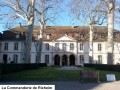
The Rixheim Hills Route crosses the southern part of the town, passing through an urban area, then winds through the countryside and orchards on the heights overlooking the Alsace plain, offering beautiful views of the Hardt Forest, the Black Forest, the Jura, the Vosges, and, on a clear day, the peaks of the Swiss Alps.
The entire route is marked with the Red Ring by the Club-Vosgien.
A short circular loop at the foot of the Demberg
 2.08 mi
+341 ft
-341 ft
1h 15
Easy
Departure from Buhl (Haut-Rhin) (Haut-Rhin)
2.08 mi
+341 ft
-341 ft
1h 15
Easy
Departure from Buhl (Haut-Rhin) (Haut-Rhin)
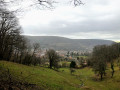
This short circular route (1 hour 10 minutes recorded on the stopwatch), starting from Buhl, will allow you to get some fresh air in the wooded areas at the foot of the Demberg and enjoy a lovely view of your starting village from the west.
Above Guebwiller, between the forest and the vineyards
 10.45 mi
+1,211 ft
-1,234 ft
2 hrs
Moderate
Departure from Buhl (Haut-Rhin) (Haut-Rhin)
10.45 mi
+1,211 ft
-1,234 ft
2 hrs
Moderate
Departure from Buhl (Haut-Rhin) (Haut-Rhin)
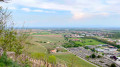
Starting from Buhl, this route takes you up to the Col de Bannstein via the village of Schweighouse, before entering the Schimberg Forest, which you’ll cross until you reach the vineyards near Bergholtz. You’ll then head back up the valley through the vineyards to the east of Guebwiller.
Castle Trail: from Buhl to Hohrupf
7.90 mi
+2,326 ft
-2,326 ft
5h 40
Moderate
Departure from Buhl (Haut-Rhin) (Haut-Rhin)
A walk exploring the fortified castles around Guebwiller
The quarries of Buhl, the Appenthal alignments and the Childbirth Seat
 3.05 mi
+627 ft
-617 ft
1h 55
Easy
Departure from Buhl (Haut-Rhin) (Haut-Rhin)
3.05 mi
+627 ft
-617 ft
1h 55
Easy
Departure from Buhl (Haut-Rhin) (Haut-Rhin)
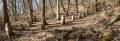
An easy walk (except for a slightly steep initial climb) that passes through the beautiful and wild pink sandstone quarries of Buhl.
The pretty quarry trail continues to the famous Menhirs de l'Appenthal and its cyclopean wall.
The walk ends along the vineyards, offering a beautiful view of Hugstein Castle and passing by the strange birthing chair, which is said to have been used in ancient times for childbirth.
The quarries of Buhl
 3.74 mi
+728 ft
-699 ft
2h 20
Easy
Departure from Buhl (Haut-Rhin) (Haut-Rhin)
3.74 mi
+728 ft
-699 ft
2h 20
Easy
Departure from Buhl (Haut-Rhin) (Haut-Rhin)
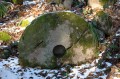
This hike could also be called 'Les Balcons de Buhl' (the Buhl balconies). It crosses the Buhlois vineyard, offering magnificent views of the Florival and the Grand Ballon. An additional point of interest is that the circuit crosses old abandoned red sandstone quarries in the Vosges.
Col de Dreibannstein via the quarries at Buhl, Guebwiller and Bergholtz
 8.71 mi
+1,509 ft
-1,493 ft
5h 20
Moderate
Departure from Buhl (Haut-Rhin) (Haut-Rhin)
8.71 mi
+1,509 ft
-1,493 ft
5h 20
Moderate
Departure from Buhl (Haut-Rhin) (Haut-Rhin)
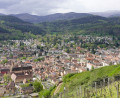
This route offers a comprehensive tour of the three beautiful sandstone quarries above Guebwiller, which were in operation until the early 20th century.
Starting north of Buhl, the route crosses and explores the major sandstone quarries of this massif, those of Buhl, as well as Guebwiller and Bergholtz. This route will take you beneath and above the quarries, passing through the Col du Dreibannstein, which features a Club Vosgien shelter and tables.
After skirting the quarry walls, the route offers views of Guebwiller, its Grand Ballon and the Florival valley. The quarries and the very pleasant trails are a delight for the region’s rock climbers. But they also appeal to hikers, with views of the valley, the Vosges, the plain, the sandstone cliffs, and more...