Rixheim Hills Route

The Rixheim Hills Route crosses the southern part of the town, passing through an urban area, then winds through the countryside and orchards on the heights overlooking the Alsace plain, offering beautiful views of the Hardt Forest, the Black Forest, the Jura, the Vosges, and, on a clear day, the peaks of the Swiss Alps.

The entire route is marked with the Red Ring by the Club-Vosgien.

Details

97222433
Creation:
Last update:
Last review:
  • Walking
    Activity: Walking
  • ↔
    Distance: 9.23 km
  • ◔
    Average duration: 3h 00 
  • ▲
    Difficulty: Moderate

  • ⚐
    Back to start: Yes
  • ↗
    Ascent: + 141 m
  • ↘
    Descent: - 133 m

  • ▲
    Highest point: 301 m
  • ▼
    Lowest point: 239 m
  • ⚐ Country: France
  • ⚐ City: Rixheim (68170)
  • ⚑
    Start/End: N 47.741651° / E 7.398393°
  • ❏
    IGN map(s): Ref. 3720ET
  • Hour-by-hour weather

Photos

Description of the walk

Park in the cemetery car park, opposite Saint-Léger Church in Rixheim. Follow the Red Ring markings

(S/E) Cross Rue du Cimetière, go down the pedestrian crossing on the left to reach Rue de la Brasserie, and walk down this street.

(1) At Place du Souvenir Français, turn left into Rue de l’Étang, then immediately right into Rue Foch. At the junction with Rue Zuber, turn right, walk 50 metres there and back to the town hall and Place Montjoie.

(2) Return to the junction with Rue Foch, continue straight on along Rue des Vergers, cross the Quartier Suisse, and arrive at Rue Haute.

(3) Turn right, continue straight on, ignoring Rue des Raisins on the right. At the next junction, turn left and head up Rue Bellevue.

(4) Pass the old Jewish Cemetery; at the next junction, cross Rue de Riedisheim and take Rue des Primevères for 50 metres. Continue straight on along the path leading to Rue des Dahlias. At No. 21, first turn left then right, and continue along the path.

(5) At the foot of Parc d’Entremont, turn left and head up the cycle path to the junction with Impasse des Cèdres in the Entremont district (formerly Naegeleberg).

(6) At the junction with Impasse des Cèdres, turn left and follow the Red Ring markings, taking the path through the fields. After 300 m, continue straight on and head down the path, ignoring the tracks to the right and left. The path ends with a short steep section – take care – and leads onto Rue de Riedisheim.

(7) First turn left then right, and follow the path running alongside the retention reservoir on the left. At the three-way junction, turn right, continue straight on along the track, following the Red Ring markings, ignoring the three successive crossroads. After the 90° bend, the path climbs back up through the fields, heading south. At the next Y-junction, continue to the right.

(8) About 200 m further on, at a place called Marxgarten, keep an eye out so as not to miss the path leading downhill to the left; turn left, following the Red Ring markings. The path is circular and loops through the valley. At the next T-junction, turn right, then continue straight on until you reach Rue de l’Étang.

(9) Cross Rue de l’Étang with care, turn right into Rue du Steinberg , and ignore the three successive tracks branching off to the left. Continue through the fields, following the Red Ring markings.

(10) The Circuit des Collines joins the Sentier Interrégio (Yellow Diamond). Turn left and follow the wide country lane towards Bellevue and the Croix de l’Eschbrunnen.

(11) At the Eschbrunnen Crossroads, turn left. At thefirst Y-junction, keep left. At thesecond Y-junction, turn right and continue straight on for 700 m, ignoring the three successive tracks.

(12) At the next junction with a wayside cross, opposite the donkey park, turn right. After 180 m, leave the main path, turn left and begin the climb up the Brunnenberg hill, following the Red Ring markings. Ignore the track on the right. There are two bends, one to the left, then one to the right. Reach the viewpoint.

(13) From the shelter of the Société des Arboriculteurs and its orientation table, admire the superb view from Brunnenberg. Continue along the path, ignoring the track on the left. At the next junction, turn left and head straight down towards Rue Basse, through the old vineyard district, ignoring the adjacent streets.

(14) Turn left into Rue Basse. At the end of the street, the route passes the shooting range, then between the buildings of a farm. At the next Y-junction, follow the path to the right, ignoring the track on the right. The route joins the main path; turn right towards the cemetery and Saint-Léger Church to return to the church car park (S/E).

Waypoints

  1. S/E : km 0 - alt. 249 m - Car parks at Saint-Léger Church and the cemetery
  2. 1 : km 0.18 - alt. 241 m - Place du Souvenir Français
  3. 2 : km 0.43 - alt. 239 m - Town Hall and Place Montjoie
  4. 3 : km 0.65 - alt. 244 m - Junction with Rue Haute
  5. 4 : km 1.25 - alt. 253 m - Rue Bellevue, former Jewish cemetery
  6. 5 : km 1.79 - alt. 240 m - Parc d'Entremont
  7. 6 : km 2.11 - alt. 267 m - Entremont district, left through the fields
  8. 7 : km 2.54 - alt. 257 m - Retention reservoir
  9. 8 : km 3.83 - alt. 291 m - Marxgarten, path on the left
  10. 9 : km 4.5 - alt. 255 m - Rue de l'Étang
  11. 10 : km 5.3 - alt. 290 m - Interrégio Trail (Yellow Diamond)
  12. 11 : km 5.85 - alt. 301 m - Eschbrunnen Cross
  13. 12 : km 6.83 - alt. 270 m - Square with wayside cross, donkey park, on the right
  14. 13 : km 7.51 - alt. 289 m - Brunnenberg shelter and viewpoint
  15. 14 : km 8.17 - alt. 249 m - Rue Basse, on the left
  16. S/E : km 9.23 - alt. 249 m - Car parks at Saint-Léger Church and the cemetery

Notes

The route can also be started from Parc d'Entremont (8), Impasse des Cèdre, or Place de la Jumenterie near the Town Hall.

My kit for this walk: a phone with GPS enabled, the Visorando app for reading GPX tracks and recording the route.

Slideshow A-R_Rixheim

Worth a visit

In Rixheim: the Wallpaper Museum and the Parc de la Commanderie.

Texts taken from: M2A Mobilités > Route des Collines de Rixheim

Saint Léger Church: consecrated in 1786, its origins date back to the 12th century, as evidenced by the two lower levels of the bell tower dating from the Middle Ages. On the north side, a slab from the Teutonic Order dated 1775 bears witness to the existence of a former burial vault.

Place du Souvenir français: this square, which has been home to the town’s war memorial since 1945, stands on the site of the moat of the former Rixheim Castle, first mentioned in the 14th century.

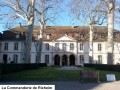
The Town Hall and Place Montjoie: former commandery of the Teutonic Order. Built between 1733 and 1745, this building served after 1789 as barracks, a prison and a military hospital, before becoming the Zuber et Cie wallpaper factory in 1797. Today it houses the town hall, the wallpaper museum and the factory.

The Swiss Quarter: this neighbourhood, consisting of modest farm workers’ houses, probably took its name after the Thirty Years’ War, when many Swiss people came to repopulate Alsace.

The Jewish Cemetery: dating from 1798 and containing over a hundred graves, it bears witness to the existence of a strong Jewish community in Rixheim during the second half of the 18th century and the first half of the 19th century, including the ancestors of Captain Dreyfus.

Entremont District: in the 19th century, two country houses surrounded by a park (Zuber and Naegely, hence its former name, the Naegeleberg, sold to Dollfus) stood there before the district was established in the 1970s, designed by the architect François Spoerry. An old ice house is the only remnant bearing witness to this earlier period.

The Marxgarten or Marx Brennle is a natural area near the village of Leibersheim, a site inhabited since Gallo-Roman times and abandoned in the 15th or early 16th century. The Basel Abbey of Saint-Alban owned property there, as did the Commandery of the Teutonic Order of Mulhouse-Rixheim.

The Eschbrunnen Cross: erected in 1870. It was damaged by bombing in 1944 and restored after the war. The path leading eastwards (towards Habsheim) leads to a hill covered in a small wood, near which stood a semaphore (an old Chappe telegraph, late 18th to early 19th century).

The Rue Basse neighbourhood: this area, comprising a few fine farm labourers’ houses, was formerly known as the ‘Lumpazepfel’, the drunks’ corner, as boozy parties were held there (Lumpa = drunkard, Zepfel = the edge, the village boundary).

The cemetery: dating from 1861 and replacing the old cemetery situated around the church, it contains several graves of historical interest, notably the Zuber family plot.

Other walks in the area

For more walks, use our search engine .

The GPS track and description are the property of this route's author. Please do not copy them without permission.