


Refine your search for walks in Argenteuil
Argenteuil walks
 From Cormeilles to Conflans via the hillsides on the right bank
 Visorando Member
 6.98 mi
 +197 ft
 -351 ft
 3h 25
3h 25
 Moderate
 Departure from Cormeilles-en-Parisis (Val-d'Oise)
A hike from station to station in two stages. In the first stage, you stay at a higher elevation and enjoy beautiful views of the Seine and its valley. In the second stage, you stay closer to the river. The beautiful Saint-Martin Church in Herblay and the important river transport industry in Conflans-Sainte-Honorine add to the charm of this hike.
Coulée Verte and urban trail from Colombes to Asnières
 3.59 mi
+36 ft
-33 ft
1h 40
3.59 mi
+36 ft
-33 ft
1h 40
 Easy
Departure from Colombes (Hauts-de-Seine)
Easy
Departure from Colombes (Hauts-de-Seine)
A short hike, from station to station, in two stages. First, follow the Coulée Verte along the route of an old disused railway line, then a green walkway, both of which have been converted for pedestrians. Next, explore the streets and alleys to discover a diverse range of residential architecture.
In the footsteps of the Impressionists: from the Pont de Bezons to Chatou
 5.52 mi
+43 ft
-26 ft
2h 35
Easy
Departure from Bezons (Val-d'Oise)
5.52 mi
+43 ft
-26 ft
2h 35
Easy
Departure from Bezons (Val-d'Oise)
A linear walk that takes place mainly along the banks of the Seine, with very few tarmac roads. You can stroll through two “Impressionist Parks”, the one in Rueil-Malmaison and the one in Chatou.
On the Argenteuil plateau, where the mills meet
9.24 mi
+889 ft
-784 ft
5h 00
 Difficult
Departure from Épinay-sur-Seine (Seine-Saint-Denis)
Difficult
Departure from Épinay-sur-Seine (Seine-Saint-Denis)
A route with a slight elevation gain, starting at the banks of the Seine and the railway line, then climbing towards Parc de la Butte d'Orgemont. Pass by Moulin d'Orgemont and Moulin de Sannois, through the Buttes du Parisis regional forest and Fort de Cormeilles.
⚠️ Please note! This hike is not marked, so be sure to follow the description, map and compass.
Île Saint-Denis
 3.73 mi
+26 ft
-52 ft
1h 45
Easy
Departure from Épinay-sur-Seine (Seine-Saint-Denis)
3.73 mi
+26 ft
-52 ft
1h 45
Easy
Departure from Épinay-sur-Seine (Seine-Saint-Denis)
In the footsteps of the Impressionists, an urban route mostly along the banks of the Seine, through the Parc Départemental de l'Île Saint-Denis. At the end of the route, the Basilica of Saint-Denis adds a superb touch of heritage to this short walk.
From Épinay to the Pont de Bezons via Argenteuil and Parc Lagravère
 5.92 mi
+105 ft
-131 ft
2h 50
Easy
Departure from Épinay-sur-Seine (Seine-Saint-Denis)
5.92 mi
+105 ft
-131 ft
2h 50
Easy
Departure from Épinay-sur-Seine (Seine-Saint-Denis)
An urban route that starts on the towpath along the banks of the Seine and then climbs higher into Argenteuil. After crossing to the other bank, the route follows the river through Parc Lagravère.
The Seine valley around La Frette
6.81 mi
+571 ft
-568 ft
3h 40
Moderate
Departure from La Frette-sur-Seine (Val-d'Oise)
During this walk, the route gradually enters wooded areas after passing the English Cemetery, where nature offers a little respite from the built-up areas. The Seine, the Buttes du Parisis National Forest, Cormeilles Fort.
In the footsteps of the Refoulons
 1.97 mi
+246 ft
-3 ft
1h 05
Easy
Departure from Enghien-les-Bains (Val-d'Oise)
1.97 mi
+246 ft
-3 ft
1h 05
Easy
Departure from Enghien-les-Bains (Val-d'Oise)
For nearly 90 years, the Refoulons railway line shaped the lives of the people of Enghien and Montmorency. This route invites you to take a trip back in time. The main appeal of this route lies in its historical significance: following the route of this old railway line, where a few remnants still remain here and there. Those who love railway relics will truly enjoy this walk.
Strolling through the villas and avenues of Bois-Colombes
 3.98 mi
+23 ft
-23 ft
1h 50
Easy
Departure from Bois-Colombes (Hauts-de-Seine)
3.98 mi
+23 ft
-23 ft
1h 50
Easy
Departure from Bois-Colombes (Hauts-de-Seine)
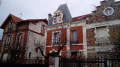
The commune of Bois-Colombes is home to many townhouses nestled in narrow streets, lanes and cul-de-sacs known as "villas" or "avenues". This urban route takes you along a number of these streets, allowing you to discover the charms of spacious housing and diverse architecture.
The Parc des Chanteraines and the Promenade Bleue
 3.77 mi
+79 ft
-36 ft
1h 50
Easy
Departure from Gennevilliers (Hauts-de-Seine)
3.77 mi
+79 ft
-36 ft
1h 50
Easy
Departure from Gennevilliers (Hauts-de-Seine)
An itinerary almost entirely surrounded by greenery in a densely urbanised area! The circular paths within the park are complemented by a walk along the banks of the Seine. The charming Jardin Ombre et Lumière (Shadow and Light Garden) and the reed beds of the lake are sure to delight enthusiasts.
Route of the three ponds in the Montmorency Forest
8.88 mi
+748 ft
-738 ft
4h 45
Moderate
Departure from Saint-Leu-la-Forêt (Val-d'Oise)
A circular route in the Montmorency Forest starting from Saint-Leu-la-Forêt station. You will pass by the remarkable sites in the southern part of the forest, including the three main ponds. The urban section follows the paths of Saint-Leu as much as possible.
De Saint-Leu-la-Forêt à Écouen-Ézanville
9.03 mi
+725 ft
-738 ft
4h 45
Moderate
Departure from Saint-Leu-la-Forêt (Val-d'Oise)
A walk through some woodland, passing through Saint-Leu, Montlignon, Montmorency, Saint-Brice-sous-Forêt and, finally, Écouen. A lovely way to spend a day with friends or family – and why not stop off at a good restaurant in Piscop before finishing the route?
17/02/2026: Route change between (11) and (12) to avoid a road closed to traffic.
From the Galatea Statue to the Church of Notre-Dame de Deuil
 1.34 mi
+49 ft
-0 ft
0h 40
Easy
Departure from Deuil-la-Barre (Val-d'Oise)
1.34 mi
+49 ft
-0 ft
0h 40
Easy
Departure from Deuil-la-Barre (Val-d'Oise)
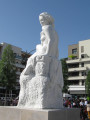
This route across Deuil-la-Barre from south to north connects Place de la Nation in the renovated Galathée district to Place de l'Église in the historic town centre. It takes about 40 minutes at a leisurely pace.This pleasant walk through numerous public gardens takes you to Place de l'Église (or Place de Victimes du V2), which is also the starting point for several hikes on the Côte de Deuil trails.This route is recommended by the association Les Sentiers de la Côte de Deuil.
From Bécon-les-Bruyères to Bois-Colombes
 3.51 mi
+23 ft
-43 ft
1h 40
Easy
Departure from Courbevoie (Hauts-de-Seine)
3.51 mi
+23 ft
-43 ft
1h 40
Easy
Departure from Courbevoie (Hauts-de-Seine)
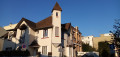
A short urban walk exploring narrow streets and cul-de-sacs lined with beautiful townhouses, passing through Parc des Bruyères and the Promenade Verte.
Along the water’s edge through various parks north of Paris
10.99 mi
+180 ft
-141 ft
5h 15
Moderate
Departure from Épinay-sur-Seine (Seine-Saint-Denis)
A walk that follows the water’s edge, starting from Épinay-sur-Seine station, with a view of Fort de la Briche from the Île Saint-Denis Departmental Park. The route passes by the Basilica of Saint-Denis, then through Madeleine Riffaud Park, before heading into the Coulée Verte green corridor alongside the ponds of the Georges Valbon Departmental Park.
On the paths of the Côte de Deuil
 1.88 mi
+144 ft
-144 ft
1h 00
Easy
Departure from Deuil-la-Barre (Val-d'Oise)
1.88 mi
+144 ft
-144 ft
1h 00
Easy
Departure from Deuil-la-Barre (Val-d'Oise)
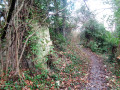
This walk allows you to explore the Côte de Deuil, a vast natural area located just 300 m from the town centre. Formerly an agricultural area, this green space is criss-crossed by numerous paths, the oldest of which date back to Gallic times. The walk is fully signposted in the same style as classicGR® trails but in purple.
You can also view a 3D tour of the walking route on YouTube or on the Côte des Sentiers website
From Notre-Dame Church in Deuil to Dino Park in Montmorency
 1.66 mi
+125 ft
-128 ft
0h 50
Easy
Departure from Deuil-la-Barre (Val-d'Oise)
1.66 mi
+125 ft
-128 ft
0h 50
Easy
Departure from Deuil-la-Barre (Val-d'Oise)
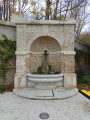
This circular takes walkers along the paths of the Deuil coastline through areas that are sometimes wooded, sometimes more open, with beautiful views of the capital.Starting from Notre-Dame Church (Place des Victimes du V2), halfway through the walk, you will cross Dino Park in Montmorency, a place steeped in history that was redeveloped and inaugurated in July 2025.This route is offered by the association Les Sentiers de la Côte de Deuil.
Old Asnières and the Genevilliers greenway
 4.98 mi
+33 ft
-36 ft
2h 20
Easy
Departure from Asnières-sur-Seine (Hauts-de-Seine)
4.98 mi
+33 ft
-36 ft
2h 20
Easy
Departure from Asnières-sur-Seine (Hauts-de-Seine)
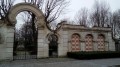
A hike from station to station in two stages. First, we zigzag through old Asnières, passing through squares and discovering a rich heritage. Then, we walk along the paths of the Gennevilliers green corridor, which winds its way through a highly urbanised setting.
A stroll through Courbevoie
 4.07 mi
+36 ft
-49 ft
1h 55
Easy
Departure from Courbevoie (Hauts-de-Seine)
4.07 mi
+36 ft
-49 ft
1h 55
Easy
Departure from Courbevoie (Hauts-de-Seine)
An unpretentious urban walk that begins in the shadow of the towers of La Défense and continues through the tranquil streets of Courbevoie and a few public parks.
From Maisons-Laffite to Villennes-sur-Seine, between the Seine and the forest
 11.82 mi
+318 ft
-354 ft
5h 45
Moderate
Departure from Maisons-Laffitte (Yvelines)
11.82 mi
+318 ft
-354 ft
5h 45
Moderate
Departure from Maisons-Laffitte (Yvelines)
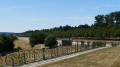
A walk from station to station, taking in the banks of the Seine, woodland and viewpoints, interspersed with more urban sections. The route features a variety of heritage and natural attractions: Château du Val, the state-owned forest and the terrace at Saint-Germain-en-Laye, the banks of the Seine and the old bridge at Poissy, Saint-Nicolas Church and the Art Nouveau-style station at Villennes-sur-Seine.
 From one Olympic venue to another: from the Arena to the Yves-du-Manoir Stadium
 Tourism professional5.90 mi
+26 ft
-108 ft
30 mins
Easy
Departure from Nanterre (Hauts-de-Seine)
Tourism professional5.90 mi
+26 ft
-108 ft
30 mins
Easy
Departure from Nanterre (Hauts-de-Seine)
This heritage trail will allow you to discover and visit the two sites that hosted Olympic and Paralympic events for the Paris 2024 Games in the Hauts-de-Seine department: Paris La Défense Arena in Nanterre and the Yves-du-Manoir Stadium in Colombes. Created through a collaboration between the Nanterre Tourist Office, OMEPS and the towns of Nanterre and Colombes for the Paris 2024 Olympic and Paralympic Games, this route is suitable for beginner cyclists and also allows you to enjoy the banks of the Seine. The bike ride alternates between contemporary buildings and unexpected green spaces.
Architectural walk in Levallois-Perret
7.06 mi
+16 ft
-16 ft
3h 15
Moderate
Departure from Levallois-Perret (Hauts-de-Seine)
The town of Levallois offers a wide variety of styles, materials and standards of living. Elegant Haussmann-style buildings stand alongside former industrial buildings and the first social housing blocks from the 1960s, with brick façades often adorned with ceramic motifs. Today, the town is home to numerous corporate headquarters and office blocks, whilst new, large modern residential developments surrounded by green spaces are springing up.
Strolling at the foot of the towers of La Défense
 3.43 mi
+200 ft
-295 ft
1h 45
Easy
Departure from Puteaux (Hauts-de-Seine)
3.43 mi
+200 ft
-295 ft
1h 45
Easy
Departure from Puteaux (Hauts-de-Seine)
A thoroughly urban route, in the heart of the famous business district, yet one where you are rarely bothered by traffic. A route that allows you to discover the architectural audacity and inventive diversity of the many towers rising to over 200 metres.A walk best undertaken outside of working hours.
Large loop from Maisons Laffite to the Étang du Corra
 8.70 mi
+66 ft
-79 ft
4h 05
Moderate
Departure from Saint-Germain-en-Laye (Yvelines)
8.70 mi
+66 ft
-79 ft
4h 05
Moderate
Departure from Saint-Germain-en-Laye (Yvelines)
This circuit connects some notable points in the northern part of the Saint Germain forest: a riding school and former theatre, a hunting lodge, a pond, a former shooting range and a 10-pointed star (crossroads). There are no particular difficulties, except for watching out for horse riders, who are numerous at weekends (horses have right of way).
In the forest between Étang Godard and Étang and Château de la Chasse.
 7.69 mi
+371 ft
-351 ft
3h 50
Moderate
Departure from Saint-Leu-la-Forêt (Val-d'Oise)
7.69 mi
+371 ft
-351 ft
3h 50
Moderate
Departure from Saint-Leu-la-Forêt (Val-d'Oise)
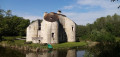
A route through the Montmorency National Forest, with a variety of tree species. You will pass the small Étang Godard at the start of the hike and the Étang de la Chasse halfway through. The Château de la Chasse, near the lake of the same name, offers a superb touch of heritage!
Chemin de l'Ile Park, Promenade Bleue and Lagravère Park
 5.07 mi
+20 ft
-26 ft
2h 20
Easy
Departure from Nanterre (Hauts-de-Seine)
5.07 mi
+20 ft
-26 ft
2h 20
Easy
Departure from Nanterre (Hauts-de-Seine)
An urban route from station to station with a water theme! After crossing Parc du Chemin de l'Ile with its many ponds, follow the towpath along the Seine. Two detours into Parc Lagravère complete the picture.
From Nanterre to La Défense via André Malraux Park
 4.37 mi
+144 ft
-66 ft
2h 10
Easy
Departure from Nanterre (Hauts-de-Seine)
4.37 mi
+144 ft
-66 ft
2h 10
Easy
Departure from Nanterre (Hauts-de-Seine)
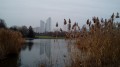
An urban route where you can admire architecture from various periods. A stone's throw from the La Défense district, in the shadow of its vertiginous towers, the Parc André Malraux and its collection garden offer a preserved setting.
A walk in the Montmorency forest
 4.07 mi
+226 ft
-226 ft
2h 05
Easy
Departure from Saint-Leu-la-Forêt (Val-d'Oise)
4.07 mi
+226 ft
-226 ft
2h 05
Easy
Departure from Saint-Leu-la-Forêt (Val-d'Oise)
A pleasant circular with a moderate elevation gain, in the chestnut grove of one of the green lungs of the Ile-de-France region. In autumn, families can come and collect chestnuts.
A stroll through Clichy-la-Garenne
 3.76 mi
+23 ft
-23 ft
1h 45
Easy
Departure from Clichy (Hauts-de-Seine)
3.76 mi
+23 ft
-23 ft
1h 45
Easy
Departure from Clichy (Hauts-de-Seine)
Still an industrial town today, with architecture characterised by Art Nouveau, Clichy offers a variety of facets that this urban walk allows you to discover. A diverse heritage awaits.
From Saint-Denis to Asnières-sur-Seine
8.75 mi
+30 ft
-30 ft
4h 05
Moderate
Departure from Saint-Denis (Seine-Saint-Denis) (Seine-Saint-Denis)
A walk from station to station around Villeneuve-la-Garenne, along the Seine and then to Île Saint-Denis via the park’s water sports centre, passing by the Chantereine Farm (visiting hours are in the afternoon only); a walk without too much distance or elevation gain.
The Château de la Chasse
 6.27 mi
+446 ft
-443 ft
3h 15
Moderate
Departure from Montlignon (Val-d'Oise)
6.27 mi
+446 ft
-443 ft
3h 15
Moderate
Departure from Montlignon (Val-d'Oise)
Half-day hike of moderate difficulty from Château de la Chasse to Montlignon.
Château de la Chasse
 4.43 mi
+315 ft
-315 ft
2h 20
Easy
Departure from Montlignon (Val-d'Oise)
4.43 mi
+315 ft
-315 ft
2h 20
Easy
Departure from Montlignon (Val-d'Oise)
Short hike with a relatively low elevation gain over 7 km in the Montlignon Forest.
Moderator's addition on 08/03/2021: the description does not seem to be sufficient to follow this route. A GPS or the Visorando app may be useful
Short loop in the north of the Saint-Germain-en-Laye Forest
 4.70 mi
+79 ft
-69 ft
2h 15
Easy
Departure from Saint-Germain-en-Laye (Yvelines)
4.70 mi
+79 ft
-69 ft
2h 15
Easy
Departure from Saint-Germain-en-Laye (Yvelines)
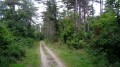
A former royal hunting ground, the Forest of Saint-Germain-en-Laye has wide, long avenues. There are also paths winding through the undergrowth, which this hike invites you to discover. The route is mainly through the forest, with a variety of tree species and a short stretch along the edge of a pond.
The Forêt de Montmorency and its Southwest border
 9.50 mi
+778 ft
-768 ft
5h 05
Moderate
Departure from Montlignon (Val-d'Oise)
9.50 mi
+778 ft
-768 ft
5h 05
Moderate
Departure from Montlignon (Val-d'Oise)
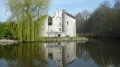
A walk in the larger Val d'Oise forest, located only 20 kilometres north of Paris. Chestnut trees are plentiful in this hilly area with ponds and historical sites. A walk to the southwest border will let you discover some interesting features of the local heritage.
The Étoile des Pétrons Botanical Trail
 0.87 mi
+23 ft
-23 ft
0h 25
Easy
Departure from Saint-Germain-en-Laye (Yvelines)
0.87 mi
+23 ft
-23 ft
0h 25
Easy
Departure from Saint-Germain-en-Laye (Yvelines)
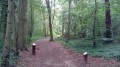
A trail very well maintained by the ONF for discovering different tree species! A short, easy route with excellent signposting and numerous information boards. Ideal for children (and grown-ups) keen to learn more about life in our forests.
La Mare aux Canes and the forest trails of Saint-Germain-en-Laye
 7.25 mi
+69 ft
-69 ft
3h 25
Moderate
Departure from Saint-Germain-en-Laye (Yvelines)
7.25 mi
+69 ft
-69 ft
3h 25
Moderate
Departure from Saint-Germain-en-Laye (Yvelines)
A pleasant circuit entirely through the woods in the Saint-Germain-en-Laye National Forest. Enjoyable in all seasons except when it rains. Beautiful oak and beech forests, a discovery trail, and a small pond (the duck pond) halfway along the route. No particular difficulty, except for paying attention to the frequent changes in direction. Be careful in autumn and winter, as some paths are difficult to see under the leaves. Visitor numbers: see practical information.
Ile de la Jatte
 4.87 mi
+108 ft
-108 ft
2h 20
Easy
Departure from Neuilly-sur-Seine (Hauts-de-Seine)
4.87 mi
+108 ft
-108 ft
2h 20
Easy
Departure from Neuilly-sur-Seine (Hauts-de-Seine)
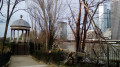
An urban route where the Seine takes centre stage, along with the many houseboats moored on its quays! You cross the entire length of the Ile de la Jatte and the hike ends at the foot of the La Défense towers.
From the Pont de Neuilly to the Champs-Élysées
 4.51 mi
+79 ft
-85 ft
2h 10
Easy
Departure from Neuilly-sur-Seine (Hauts-de-Seine)
4.51 mi
+79 ft
-85 ft
2h 10
Easy
Departure from Neuilly-sur-Seine (Hauts-de-Seine)
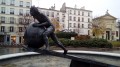
A stroll through what are commonly known as the “upmarket neighbourhoods”… Far from the clichés, this urban route offers its share of quiet corners and surprises, such as the Parc de la Folie Saint-James or the short Promenade Péreire. Eighteenth- and nineteenth-century buildings line the route before reaching the much-visited Arc de Triomphe de l’Étoile and the Avenue des Champs-Élysées.
Barge path and footbridges between Neuilly and Saint-Cloud
 7.35 mi
+59 ft
-72 ft
3h 25
Moderate
Departure from Neuilly-sur-Seine (Hauts-de-Seine)
7.35 mi
+59 ft
-72 ft
3h 25
Moderate
Departure from Neuilly-sur-Seine (Hauts-de-Seine)
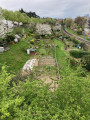
This walk from Neuilly-sur-Seine takes you along the towpaths on Île de Puteaux and then along the east bank of the Seine in a very pleasant, tree-lined setting to the Passerelle de l'Avre footbridge. The return route, which is more urban, takes you to the heights of Saint-Cloud (with beautiful views of Paris and La Défense), where you can discover the Parc du Château and the lively historic district in the centre of Suresnes before returning to Île de Puteaux via the François Coty footbridge.
Architectural diversity in Puteaux
 3.95 mi
+154 ft
-154 ft
1h 55
Easy
Departure from Puteaux (Hauts-de-Seine)
3.95 mi
+154 ft
-154 ft
1h 55
Easy
Departure from Puteaux (Hauts-de-Seine)
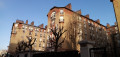
This urban walk offers a wide variety of architectural styles spanning the ages: ancient alleyways and a 16th-century church, brick and concrete architecture from the interwar period, and the tall glass-walled towers of the La Défense district.
Between the forests of Montmorency and L'Isle-Adam
 7.15 mi
+509 ft
-535 ft
3h 45
Moderate
Departure from Saint-Leu-la-Forêt (Val-d'Oise)
7.15 mi
+509 ft
-535 ft
3h 45
Moderate
Departure from Saint-Leu-la-Forêt (Val-d'Oise)
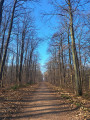
Route north of the Montmorency forest, crossing the unspoilt valleys of Montubois and Chauvry. Views of the Oise Valley. Church and half-timbered houses in Villiers-Adam, calvary, hoof wash and fountain in Béthemont-la-Forêt.
Between Levallois-Perret and the Batignolles district
5.06 mi
+43 ft
-43 ft
2h 20
Easy
Departure from Levallois-Perret (Hauts-de-Seine)
The Bernard Lafay promenade takes us to Boulevard Pereire, where we join Square des Batignolles and Martin Luther King Park. The return route takes us through squares, passageways and narrow streets. Along the way, we come across some interesting murals and original contemporary architecture.
The trompe l'oeil of Levallois-Perret
 3.49 mi
+7 ft
-16 ft
1h 35
Easy
Departure from Levallois-Perret (Hauts-de-Seine)
3.49 mi
+7 ft
-16 ft
1h 35
Easy
Departure from Levallois-Perret (Hauts-de-Seine)
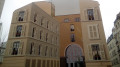
The streets of Levallois-Perret are decorated with a large number of trompe-l'oeil paintings and murals. This urban trail takes you on a tour of around thirty of them, as you stroll through the city's grid-like streets and cross some of its public gardens.
Tours and detours in Saint-Ouen
 4.31 mi
+36 ft
-36 ft
2h 00
Easy
Departure from Saint-Ouen (Seine-Saint-Denis) (Seine-Saint-Denis)
4.31 mi
+36 ft
-36 ft
2h 00
Easy
Departure from Saint-Ouen (Seine-Saint-Denis) (Seine-Saint-Denis)
This urban route offers a taste of what can be found in the inner suburbs of Paris: lively streets; markets; old townhouses; state schools; post-war buildings in varying states of repair; more recent tower blocks; old workshops and a few factories still in place; green spaces; rapidly changing neighbourhoods. Add to that a stroll through the famous flea market, a lovely view of the Seine, and a brief glimpse of the legendary Stade Bauer.
Parks and cemeteries in the Hauts-de-Seine: art, anarchism and feminism
 5.27 mi
+13 ft
-20 ft
2h 25
Easy
Departure from Paris
5.27 mi
+13 ft
-20 ft
2h 25
Easy
Departure from Paris
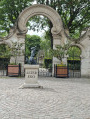
This walk takes us in the footsteps of famous men and women, through the cemeteries of Clichy, Asnières and Levallois. The route is flat and is covered at a moderate pace to allow time to locate the graves, which can sometimes be difficult to find.
A stroll through the Batignolles Cemetery
 1.61 mi
+20 ft
-20 ft
0h 45
Easy
Departure from Paris
1.61 mi
+20 ft
-20 ft
0h 45
Easy
Departure from Paris
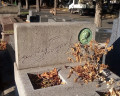
The Batignolles Cemetery is one of the largest cemeteries within the city limits of Paris; it is also the one situated furthest to the north. It is notable for being spanned by the Boulevard Périphérique, which was built well after the cemetery opened. The Batignolles Cemetery is the final resting place of several notable figures, in particular poets from the 19th and 20th centuries.
From Saint-Denis to Le Bourget via Georges Valbon Park
 5.93 mi
+66 ft
-33 ft
2h 45
Easy
Departure from Saint-Denis (Seine-Saint-Denis) (Seine-Saint-Denis)
5.93 mi
+66 ft
-33 ft
2h 45
Easy
Departure from Saint-Denis (Seine-Saint-Denis) (Seine-Saint-Denis)
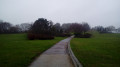
Starting from one of the masterpieces of Gothic art in Île-de-France, the Basilica of Saint-Denis, this urban route crosses a vast park where lawns alternate with flowerbeds, woodland and lakes. There is a commemorative aspect to the commune of Le Bourget, which was the scene of fierce fighting in 1870–1871.
Historical route through Saint-Denis and walk along the canal
 3.91 mi
+62 ft
-13 ft
1h 50
Easy
Departure from Saint-Denis (Seine-Saint-Denis) (Seine-Saint-Denis)
3.91 mi
+62 ft
-13 ft
1h 50
Easy
Departure from Saint-Denis (Seine-Saint-Denis) (Seine-Saint-Denis)
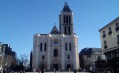
The first stage of this urban journey consists of two distinct sections. The first section, the historical trail, invites us to trace the passage of time from the legend of Saint-Denis and the city’s origins right up to the 21st century, with the help of some twenty richly documented information points. Next, we follow the Canal Saint-Denis along its pedestrian quay back to Paris.
From the Basilica of Saint-Denis to Notre-Dame de Paris
 17.04 mi
+554 ft
-528 ft
5 days
Easy
Departure from Saint-Denis (Seine-Saint-Denis) (Seine-Saint-Denis)
17.04 mi
+554 ft
-528 ft
5 days
Easy
Departure from Saint-Denis (Seine-Saint-Denis) (Seine-Saint-Denis)
This urban itinerary, comprising five short stages, links two masterpieces of Gothic art in the Île-de-France region. It offers an opportunity to discover a rich and diverse heritage: medieval remains, 17th-century mansions, industrial and modern architecture, street art, and more. The purely urban sections are interspersed with a walk along the Canal Saint-Denis and a stroll through several parks and gardens, including those of La Villette and the Buttes Chaumont.
Loop in the Montmorency Forest
 Association / Club / Walk leader
 6.12 mi
+354 ft
-354 ft
3h 05
Moderate
Departure from Chauvry (Val-d'Oise)
6.12 mi
+354 ft
-354 ft
3h 05
Moderate
Departure from Chauvry (Val-d'Oise)
Starting from the Route du Faîte, this is a very hilly hike in the Montmorency Forest, passing by the Château de la Chasse.
The Péreire walk and the Dauphine district
 2.95 mi
+75 ft
-10 ft
1h 25
Easy
Departure from Paris
2.95 mi
+75 ft
-10 ft
1h 25
Easy
Departure from Paris
A short walk in the western districts of Paris. After the flower-filled Promenade Péreire, you walk along or cross a few wide avenues offering a beautiful view of the Arc de Triomphe de l'Étoile.
Malmaison and Gallicourts circular
 6.28 mi
+315 ft
-328 ft
3h 10
Moderate
Departure from Rueil-Malmaison (Hauts-de-Seine)
6.28 mi
+315 ft
-328 ft
3h 10
Moderate
Departure from Rueil-Malmaison (Hauts-de-Seine)
A route that is half urban and half in the woods, in an old orchard or along the banks of the Seine. Napoleonic history is present, particularly at the Church of Saint-Pierre and Saint-Paul and in the Parc de Bois-Préau.
The Blue Walk from Rueil-Malmaison to Nanterre
 3.13 mi
+30 ft
-20 ft
1h 30
Easy
Departure from Rueil-Malmaison (Hauts-de-Seine)
3.13 mi
+30 ft
-20 ft
1h 30
Easy
Departure from Rueil-Malmaison (Hauts-de-Seine)
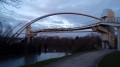
A short walk, mostly along the Seine and through three public parks, where even in a highly urbanised setting, it is possible to find peaceful spots.
From the Empress to the Impressionists from Rueil-Malmaison to Nanterre
7.90 mi
+33 ft
-33 ft
1.5 hrs
Easy
Departure from Rueil-Malmaison (Hauts-de-Seine)
In the footsteps of Josephine and the Impressionist painters
From Rueil-Malmaison, this 13 km bike ride with no particular difficulty will take you from the banks of the Seine, which served as a backdrop for the Impressionist painters, to the National Museum of the Malmaison and Bois-Préau Castles. Discover two important aspects of the history of Rueil-Malmaison: the remains of the Empire period, which was fundamental to the town's founding, and the natural setting of the Seine, which inspired many Impressionist painters inthe 19th century. The route ends along the Parc des Impressionnistes, which evokes Claude Monet's gardens in Giverny.
Paris Walk No. 1
 3.65 mi
+75 ft
-10 ft
1h 45
Easy
Departure from Paris
3.65 mi
+75 ft
-10 ft
1h 45
Easy
Departure from Paris
The start of a grand tour of Paris in several short stages, taking in the narrow streets without missing out on the monuments. Here is route No. 1 from Porte Maillot to Place Clichy.
The route takes you through the capital’s ‘upmarket neighbourhoods’, the 16th arrondissement, the Arc de Triomphe (which you can visit), then the famous Parc de Monceau, an Orthodox church and, finally, Place Clichy.
Green spaces in the west of Paris’s 17th arrondissement
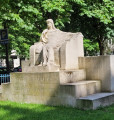 6.52 mi
+49 ft
-36 ft
3h 05
Moderate
Departure from Paris
6.52 mi
+49 ft
-36 ft
3h 05
Moderate
Departure from Paris
The 17th arrondissement of Paris is distinguished by its great urban and social diversity. The western part of the arrondissement is more residential and middle-class than the east, with the Ternes and Monceau neighbourhoods. It is characterised by varied architecture ranging from Haussmann-style buildings to contemporary blocks. Well-served by public transport, it combines Parisian traditions with modernity. The western part of the arrondissement offers two long walks and around twenty green spaces, including picturesque gardens such as the Square Saint-Odile and the undulating Jardin Claire Motte.
The wildlife of Monceau and Faubourg Saint-Honoré
 4.03 mi
+72 ft
-75 ft
1h 55
Easy
Departure from Paris
4.03 mi
+72 ft
-75 ft
1h 55
Easy
Departure from Paris
An approximate north-south crossing of the 17th and 8th arrondissements of Paris in search of animal representations. The architectural styles evolve throughout the route. The crossing of Parc Monceau offers a slice of greenery.
From Porte Maillot to Saint-Nom-la-Bretèche following the GR®1
 18.84 mi
+1,319 ft
-988 ft
8 hrs
18.84 mi
+1,319 ft
-988 ft
8 hrs
 Very difficult
Departure from Paris
Very difficult
Departure from Paris
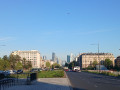
TheGR®1is a long-distance hiking trail stretching over five hundred kilometres that circles the Île-de-France region. This section is the first part of it. Thirty kilometres long, it passes through numerous parks and forests such as the Parc de Saint-Cloud, the Bois de Boulogne and the Forêt de Marly. It also passes close to some remarkable monuments and several charming spots, such as the village of Marnes-la-Coquette.
GR®1: Tour of Île-de-France
 363.31 mi
+17,464 ft
-17,103 ft
21 days
Very difficult
Departure from Paris
363.31 mi
+17,464 ft
-17,103 ft
21 days
Very difficult
Departure from Paris
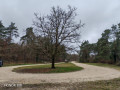
Over 500 km long and with more than 4,000 m of elevation gain, this hike is accessible to everyone if broken down into several stages. Beautiful, rural and fairly close to Paris, it is suitable for anyone who wants to try their hand at hiking. There are many points of interest along this route. History and heritage enthusiasts, as well as nature lovers, will find something to enjoy.
Over hill and dale. From Suresnes to Puteaux via Nanterre
13.26 mi
+463 ft
-463 ft
1.5 hrs
Moderate
Departure from Suresnes (Hauts-de-Seine)
This long, moderately difficult 22 km route starts at the Suresnes Mont-Valérien station. The starting point is very close to the MUS , the Suresnes Museum of Urban and Social History, which is an ideal introduction to the urban landscapes you will encounter along the way. From Puteaux in the 1930s to Mont Valérien, the vineyards of Suresnes, the Cité-Jardins and the Tours Nuage tower blocks bordered by the André Malraux park in Nanterre, a whole chapter of 20th-century history unfolds before your eyes thanks to these exceptional reminders of the past.
Mont Valérien and old Nanterre
 4.22 mi
+213 ft
-338 ft
2h 05
Easy
Departure from Suresnes (Hauts-de-Seine)
4.22 mi
+213 ft
-338 ft
2h 05
Easy
Departure from Suresnes (Hauts-de-Seine)
An urban route with some elevation changes, crossing wooded parks and residential areas in old Nanterre. Along the way, there are numerous views of Paris and the large housing estates of the Val de Seine, a memorial at Fort du Mont Valérien, an old windmill and an old barn.
A cosmopolitan stroll through the Plaine Monceau
 1.17 mi
+20 ft
-13 ft
0h 35
Easy
Departure from Paris
1.17 mi
+20 ft
-13 ft
0h 35
Easy
Departure from Paris
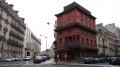
A journey through space and time, taking you past the many 19th-century mansions of the Plaine Monceau. Within a short distance, you will discover: a church, Russian restaurants, a Chinese pagoda, and a late 18th-century park featuring a pyramid, an Italian-style bridge and replicas of Roman antiquities.
The Montmorency Forest from west to east
 12.62 mi
+997 ft
-1,033 ft
6h 40
Difficult
Departure from Frépillon (Val-d'Oise)
12.62 mi
+997 ft
-1,033 ft
6h 40
Difficult
Departure from Frépillon (Val-d'Oise)
Close to Paris, the Montmorency Forest offers a pleasant breath of fresh air without straying too far from the city. Being quite large, it’s ideal for day-long walks of varying distances. This route takes you right through the forest. It’s best to do this walk in summer to make the most of the natural surroundings. There are plenty of points of interest, such as the Château de la Chasse, the Étang Godard and the Fort de Domont.
The Bestiary of Les Ternes and La Plaine Monceau
 3.16 mi
+20 ft
-49 ft
1h 30
Easy
Departure from Paris
3.16 mi
+20 ft
-49 ft
1h 30
Easy
Departure from Paris
A south-west to north-east walk through the 17th arrondissement, featuring a variety of architectural styles, in search of depictions of animals.
From Porte Dauphine to Bercy
 10.25 mi
+105 ft
-138 ft
4h 50
Moderate
Departure from Paris
10.25 mi
+105 ft
-138 ft
4h 50
Moderate
Departure from Paris
A walk through Paris exploring the Left Bank and its quartiers.
Green spaces in the east of Paris’s 17th arrondissement
 4.79 mi
+23 ft
-89 ft
2h 15
Easy
Departure from Paris
4.79 mi
+23 ft
-89 ft
2h 15
Easy
Departure from Paris
The 17th arrondissement of Paris is distinguished by its great urban and social diversity. The eastern part of the arrondissement combines working-class neighbourhoods with areas undergoing regeneration. Formerly a railway and industrial area, it has undergone significant recent transformation, notably with the Clichy-Batignolles eco-neighbourhood. Martin Luther King Park exemplifies this urban regeneration, designed according to ecological principles. But visitors also appreciate the charm of the Square des Batignolles or the Square des Épinettes, with their typical 19th-century landscape, or the tranquillity of the Square de la Villa Sainte-Croix.
Northern circular of the Bois de Boulogne
 4.32 mi
+39 ft
-39 ft
2h 00
Easy
Departure from Paris
4.32 mi
+39 ft
-39 ft
2h 00
Easy
Departure from Paris
An easy hike in the northern part of the Bois de Boulogne, starting from the Porte Dauphine, which will take you to several remarkable places: the tip of the Lac Inférieur, the "diagonale des ruisseaux" (GR®1), the entrance to Bagatelle Park, Mare Saint James and finally Frank Gehry's "Vaisseau de Verre" (the Fondation Vuitton building), before returning to your starting point.
The five lakes of Le Vésinet
 6.28 mi
+66 ft
-66 ft
2h 55
Easy
Departure from Le Vésinet (Yvelines)
6.28 mi
+66 ft
-66 ft
2h 55
Easy
Departure from Le Vésinet (Yvelines)
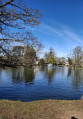
A beautiful hike through Le Vésinet, with its five lakes and rivers, as well as along the Seine.
From Chatou to Le Vésinet in a loop along the Seine
 4.45 mi
+20 ft
-26 ft
2h 05
Easy
Departure from Chatou (Yvelines)
4.45 mi
+20 ft
-26 ft
2h 05
Easy
Departure from Chatou (Yvelines)
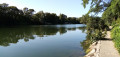
This is a very simple walk, as it follows the Seine almost from start to finish. There are beautiful views of the river and large, attractive houses along the way.
The Garden City of Suresnes
 5.73 mi
+285 ft
-282 ft
2h 55
Easy
Departure from Suresnes (Hauts-de-Seine)
5.73 mi
+285 ft
-282 ft
2h 55
Easy
Departure from Suresnes (Hauts-de-Seine)
An urban hike that combines heritage and remembrance! The route, inspired by a trail designed by the municipality of Suresnes, takes us through the heart of a garden city with architecture typical of the 1930s, built in response to the social motivations of the mayor at the time, Henri Sellier. Several places of remembrance also mark this walk, including the Fort du Mont Valérien.
Along the Seine from Chatou to Poissy
 22.26 mi
+36 ft
-66 ft
2 hrs
Moderate
Departure from Chatou (Yvelines)
22.26 mi
+36 ft
-66 ft
2 hrs
Moderate
Departure from Chatou (Yvelines)
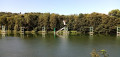
A route running almost entirely along the Seine, alternating between dedicated paths and paths shared with motor traffic. Beautiful views of the river and a rich heritage await you.
L'Île Fleurie
 6.37 mi
+79 ft
-79 ft
3h 00
Moderate
Departure from Chatou (Yvelines)
6.37 mi
+79 ft
-79 ft
3h 00
Moderate
Departure from Chatou (Yvelines)
This hike is not entirely bucolic, despite the name of this long island, the northern branch of which we explore. After an urban section, we follow a good path through relatively dense vegetation. There are some beautiful views of the Seine, especially in the urban section.
Les Grandes Carrières, Les Épinettes and Les Batignolles
 4.64 mi
+7 ft
-62 ft
2h 10
Easy
Departure from Paris
4.64 mi
+7 ft
-62 ft
2h 10
Easy
Departure from Paris
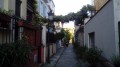
A journey through the northern districts of Paris in a new light, with the old Petite Ceinture railway line as a common thread. The many flower-filled passages, squares and gardens allow us to forget the hustle and bustle of the capital for a while.
The fish route in Paris
 4.43 mi
+108 ft
-144 ft
2h 10
Easy
Departure from Paris
4.43 mi
+108 ft
-144 ft
2h 10
Easy
Departure from Paris
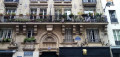
Until the advent of the railway, fishmongers brought fish to Paris from the ports of the North Sea and the English Channel in horse-drawn convoys. Their route through Paris, as far as Les Halles, has left its mark in the names of a number of lanes that this urban itinerary more or less follows, with a few detours through streets and alleyways that deserve it.
Crossing Montmartre from Place Clichy to Barbès
 2.91 mi
+262 ft
-249 ft
1h 35
Easy
Departure from Paris
2.91 mi
+262 ft
-249 ft
1h 35
Easy
Departure from Paris
Discover Montmartre hill, via the small paths, the Saint Vincent cemetery, Dalida, the old village, the Basilica, superb views of Paris.
A visit to Saint-Vincent Cemetery
 0.40 mi
+69 ft
-69 ft
0h 15
Easy
Departure from Paris
0.40 mi
+69 ft
-69 ft
0h 15
Easy
Departure from Paris
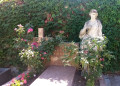
A very short walk offering the chance to visit the small cemetery of Saint-Vincent, which is perched on the hill of Montmartre, near its vineyard, and which is the final resting place of several famous figures from Montmartre’s history.
A tour of Montmartre Cemetery
 2.01 mi
+46 ft
-46 ft
1h 00
Easy
Departure from Paris
2.01 mi
+46 ft
-46 ft
1h 00
Easy
Departure from Paris
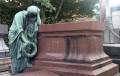
Montmartre Cemetery is one of the largest within the city limits of Paris. It is the final resting place of a vast number of prominent figures, particularly from the worlds of theatre and cinema, music and literature. This route winds its way through the cemetery to visit the graves of 82 of them – the largest number in this series on Parisian cemeteries.
Discovery tour of Haussmann's Paris
 2.15 mi
+13 ft
-46 ft
1h 00
Easy
Departure from Paris
2.15 mi
+13 ft
-46 ft
1h 00
Easy
Departure from Paris
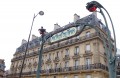
Baron Haussmann transformed Paris between 1852 and 1870. The 9th arrondissement of Paris is at the heart of this transformation: the new thoroughfares, grand boulevards and square-shaped junctions showcase buildings suited to life under the Second Empire: department stores, the Opéra, theatres, music halls, churches, press offices, banks, covered arcades, Morris columns, kiosks, etc. This tour will introduce you to the remnants of that era and how they have adapted to modern-day Paris.
The Petite Ceinture in the 16th arrondissement and the Serres d'Auteuil
 3.28 mi
+26 ft
-69 ft
1h 30
Easy
Departure from Paris
3.28 mi
+26 ft
-69 ft
1h 30
Easy
Departure from Paris
An eclectic journey through Paris's 16th arrondissement. After an initially urban start, the route takes you along the Sentier Nature trail, on the embankment of the former Petite Ceinture railway line. The walk ends with a stroll through the Square des Poètes and a visit to the Serres d'Auteuil, which will delight amateur botanists.
Le Vésinet between the Seine, rivers and lawns
 4.48 mi
+26 ft
-26 ft
2h 05
Easy
Departure from Le Vésinet (Yvelines)
4.48 mi
+26 ft
-26 ft
2h 05
Easy
Departure from Le Vésinet (Yvelines)
The commune of Le Vésinet enjoys a unique status in France as it is a "park town". It was designed with rivers and lawns, and houses surrounded by huge gardens. Its proximity to the Seine makes for a varied and very pleasant walk, easily accessible by RER. At the end of the walk, the Île des Ibis offers a reward for young and old alike: a children's playground and numerous water birds to observe.
From Le Vésinet to Poissy via the Forest of Saint-Germain-en-Laye
 8.62 mi
+249 ft
-256 ft
4h 10
Moderate
Departure from Le Vésinet (Yvelines)
8.62 mi
+249 ft
-256 ft
4h 10
Moderate
Departure from Le Vésinet (Yvelines)
A hike from station to station, crossing the southern part of the Saint-Germain-en-Laye national forest. The start and end of the route are in urban areas. In Poissy, the Collégiale Notre-Dame offers a superb touch of heritage.
Along the Seine from Le Vésinet to Cormeilles-en-Parisis
 7.47 mi
+171 ft
-30 ft
3h 35
Moderate
Departure from Le Vésinet (Yvelines)
7.47 mi
+171 ft
-30 ft
3h 35
Moderate
Departure from Le Vésinet (Yvelines)
A hike from station to station that runs mainly along the Seine, mostly on well-marked footpaths.
Walk in Montmartre
 3.79 mi
+335 ft
-351 ft
2h 00
Easy
Departure from Paris
3.79 mi
+335 ft
-351 ft
2h 00
Easy
Departure from Paris
Enjoy visiting one of Paris' gems and exploring legendary sites. There are a few nice hills to climb along the way.
Porte de la Chapelle – Porte de Montreuil
7.10 mi
+276 ft
-230 ft
3h 30
Moderate
Departure from Paris
A tour of north-east Paris today, taking in the Parc de la Villette, the Cité des Sciences and the Géode, the Philharmonie, the Butte du Chapeau Rouge, and ending with the charming Rue Saint-Blaise.
In the footsteps of Georges Brassens: Madeleine, Louvre and Cherche-Midi
 5.11 mi
+82 ft
-23 ft
2h 25
Easy
Departure from Paris
5.11 mi
+82 ft
-23 ft
2h 25
Easy
Departure from Paris
Crossing the Seine on the famous Pont des Arts, this third section takes us from the right bank to the left bank, which Brassens had a marked preference for. It is also an opportunity to visit some of the highlights of Parisian heritage: Place Beauvau and the Elysée Palace, Place Vendôme, the Louvre Museum (with its glass pyramid), the Institut de France, etc.
Un tour dans Paris depuis le Trocadéro
 8.19 mi
+98 ft
-115 ft
3h 50
Moderate
Departure from Paris
8.19 mi
+98 ft
-115 ft
3h 50
Moderate
Departure from Paris
Ce parcours vous amènera du Trocadero à Notre-Dame avec un retour par le Louvre et les Champs-Élysées. Vous pouvez le faire à la journée
Circular from station to station through the Montmorency Forest and the Château de la Chasse.
4.42 mi
+407 ft
-407 ft
2h 30
Easy
Departure from Bouffémont (Val-d'Oise)
A circular loop from station to station accessible via line H. Starting from the town of Bouffémont, it takes you into the Montmorency Forest and on to the Château de la Chasse and its pond. Before and after the château, the route follows various forest trails in the shade of century-old trees.
From Bouffémont to Taverny via the Montmorency Forest
 13.25 mi
+971 ft
-1,020 ft
6h 55
Difficult
Departure from Bouffémont (Val-d'Oise)
13.25 mi
+971 ft
-1,020 ft
6h 55
Difficult
Departure from Bouffémont (Val-d'Oise)
A very beautiful route from station to station in the Montmorency Forest, based in part on four themed trails: “Le Sentier des Lisières”, “Le Sentier de la Reine Hortense” and “Le Chemin des Philosophes” described on the Saint-Leu-la-Forêt tourist information website, plus “Taverny par les Sentes”. Thanks to a number of information boards, the route allows you to trace the region’s ancient and more recent history, admire many of its most interesting sites, and even engage in a bit of philosophy.
It can easily be shortened to 18 km by avoiding the return trip to the Statue of Notre-Dame de France at the start of the walk.
The New Athens in Paris’s 9th arrondissement
 4.25 mi
+98 ft
-98 ft
2h 00
Easy
Departure from Paris
4.25 mi
+98 ft
-98 ft
2h 00
Easy
Departure from Paris
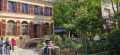
Discover the secrets of Paris’s 9th arrondissement.A lively and historic district of the capital, it is a must-see when visiting Paris. With its iconic monuments and magnificent views, this corner of Paris is well worth a visit.
A stroll around Passy Cemetery
 0.88 mi
+26 ft
-26 ft
0h 25
Easy
Departure from Paris
0.88 mi
+26 ft
-26 ft
0h 25
Easy
Departure from Paris
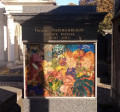
Passy Cemetery is one of the largest cemeteries within the city limits of Paris. It is the final resting place of many notable figures, including musicians and aviation pioneers. This route takes you on a stroll through this place of contemplation, where you can discover around sixty of these notable figures.
The Bestiary of Passy and Dauphine
 3.60 mi
+16 ft
-66 ft
1h 40
Easy
Departure from Paris
3.60 mi
+16 ft
-66 ft
1h 40
Easy
Departure from Paris
An urban walk that winds its way through the northern half of the 16th arrondissement, in search of numerous depictions of animals. It also offers an opportunity to pay tribute to Victor Hugo, with a stop at the place where he lived, on the avenue that bore his name during his lifetime.
The bestiary of the Trocadéro, the Gros Caillou and Chaillot
 4.26 mi
+121 ft
-148 ft
2h 05
Easy
Departure from Paris
4.26 mi
+121 ft
-148 ft
2h 05
Easy
Departure from Paris
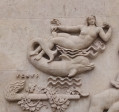
From the Trocadéro to the Étoile, on either side of the Seine, through the 16th, 7th and 8th arrondissements of Paris, discovering depictions of animals. The Arc de Triomphe at the Étoile alone features a great many of them!
Tours and detours in the Champs-Elysées and Tuileries gardens
 3.27 mi
+26 ft
-16 ft
1h 30
Easy
Departure from Paris
3.27 mi
+26 ft
-16 ft
1h 30
Easy
Departure from Paris
This walk allows you to stroll through the gardens that have been laid out in the heart of Paris and enjoy a relative calm that is hard to imagine so close to busy thoroughfares. Along the way, you will discover views of the Champs-Élysées and the Pont Alexandre III, some of Paris's most famous monuments and museums, and a rich and diverse collection of statues.
The Trocadéro esplanade and gardens, the Champs de Mars and the Invalides
 4.49 mi
+36 ft
-115 ft
2h 05
Easy
Departure from Paris
4.49 mi
+36 ft
-115 ft
2h 05
Easy
Departure from Paris
A route that takes you to some of Paris's famous monuments on both banks of the Seine. You will pass through numerous gardens, some well-known and popular, others more secluded and offering a welcome respite from the hustle and bustle.
Green spaces in Paris’s 9th arrondissement
 3.02 mi
+121 ft
-154 ft
1h 30
Easy
Departure from Paris
3.02 mi
+121 ft
-154 ft
1h 30
Easy
Departure from Paris
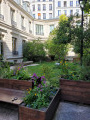
The ninth arrondissement of Paris is distinguished by its lively and central character. It has historical links to the world of entertainment, with numerous theatres, cinemas and concert halls. As a shopping district, it is home to department stores, boutiques and iconic covered arcades. It blends Haussmann-style architecture with more recent buildings, whilst remaining a residential area.After the first two arrondissements, the ninth has the least amount of green space. These are mainly local, much-frequented gardens that play an important social role. The area as a whole reflects an old urban fabric, not particularly conducive to the creation of large natural spaces.
The Faubourg Saint-Honoré Bestiary
 4.08 mi
+30 ft
-23 ft
1h 55
Easy
Departure from Paris
4.08 mi
+30 ft
-23 ft
1h 55
Easy
Departure from Paris
From Place de l’Alma to Place de l’Opéra, a walk through Paris’s 8th and 1st arrondissements to discover numerous depictions of animals. Place Vendôme, with its characteristic early 18th-century architecture and its richly decorated central column, is the highlight of this urban walk.
In the footsteps of Van Gogh in Auvers-sur-Oise
 8.78 mi
+466 ft
-607 ft
4h 25
Moderate
Departure from Méry-sur-Oise (Val-d'Oise)
8.78 mi
+466 ft
-607 ft
4h 25
Moderate
Departure from Méry-sur-Oise (Val-d'Oise)
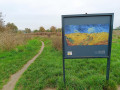
A pilgrimage in the footsteps of Van Gogh between Méry-sur-Oise station and Pontoise station, where you can visit the key sites of his stay in Auvers, along a route dotted with beautiful reproductions of his works, some of which are even set in open fields.
Whilst you’re there, a visit to the Château de Lévy museum in Auvers-sur-Oise is a must.
Although relatively straightforward, the walk can be enhanced – for the more curious – with a few additional excursions in the three towns along the route.
The bestiary of Chaussée d'Antin and the Palais Royal
 4.06 mi
+10 ft
-13 ft
1h 50
Easy
Departure from Paris
4.06 mi
+10 ft
-13 ft
1h 50
Easy
Departure from Paris
From Place de l'Opéra to Les Halles, via the Church of Notre-Dame de Lorette and the Palais Royal Gardens, this urban trail explores the1st,2nd and9th arrondissements of Paris in search of animal representations.
The covered passages of the Montmartre and Saint-Martin suburbs
 3.94 mi
+66 ft
-33 ft
1h 50
Easy
Departure from Paris
3.94 mi
+66 ft
-33 ft
1h 50
Easy
Departure from Paris
Between grand boulevards and covered passages, a walk through a lively neighbourhood of the capital.
A walk to avoid on Sundays and public holidays when the covered passages may be closed.
The Opera, Parc Monceau and the Chaillot district
 5.15 mi
+105 ft
-36 ft
2h 30
Easy
Departure from Paris
5.15 mi
+105 ft
-36 ft
2h 30
Easy
Departure from Paris
A journey through Haussmannian Paris, discovering the architecture of the second half of the 19th century, with a detour to Parc Monceau and a few sites celebrating Franco-American friendship.
Between Bougival and Chatou, in the footsteps of the Impressionists
5.17 mi
+33 ft
-33 ft
2h 25
Easy
Departure from Bougival (Yvelines)
A walk that allows you to discover the places favoured by the Impressionists and the beautiful old villas that dot the banks of the Seine. The route is perfectly passable even when it has rained.
The Bestiary of the Faubourgs of Saint-Martin, du Temple and Saint-Antoine
 5.05 mi
+23 ft
-52 ft
2h 20
Easy
Departure from Paris
5.05 mi
+23 ft
-52 ft
2h 20
Easy
Departure from Paris
A north-south walk through the 10th, 11th and 12th arrondissements of Paris, in search of depictions of animals. Throughout the first half of the route, these are mainly found in murals. The second half offers greater diversity in terms of animal subjects.
In the footsteps of Georges Brassens: La Goutte d'Or, Montmartre and Trinité
 4.72 mi
+272 ft
-305 ft
2h 25
Easy
Departure from Paris
4.72 mi
+272 ft
-305 ft
2h 25
Easy
Departure from Paris
This second section takes us to the old cabaret (Chez Patachou) where Georges Brassens performed in public for the first time. The walk through Montmartre, with its slopes, paths and stairways, is particularly pleasant (best done in the "low tourist season").
The Bestiary of the Louvre, the Tuileries and the Orsay
 5.05 mi
+26 ft
-26 ft
2h 20
Easy
Departure from Paris
5.05 mi
+26 ft
-26 ft
2h 20
Easy
Departure from Paris
This urban route focuses on the heart of Paris, in a neighbourhood rich in world-famous museums, exploring depictions of animals. In the Tuileries Garden, these are particularly numerous and offer a conflicting view of the animal world, undoubtedly that of their time.
The bestiary of Paris
 146.53 mi
+2,999 ft
-2,625 ft
33 days
Easy
Departure from Paris
146.53 mi
+2,999 ft
-2,625 ft
33 days
Easy
Departure from Paris
This guide brings together around thirty urban routes that allow you to discover representations of animals in the capital: sculptures, building decorations, murals, etc.
Sundials and astronomical curiosities in Paris
8.94 mi
+144 ft
-23 ft
4h 15
Moderate
Departure from Paris
A long urban trail on the theme of sundials and sites related to astronomy scattered throughout Paris: the Paris meridian, observatories, gnomons, etc. Best done on a sunny day so you can read the time along the way! The sundials are often high up, sometimes hidden by trees that have grown... you may have to search hard to find them.
The wildlife of Les Halles and Le Marais
 4.62 mi
+13 ft
-13 ft
2h 10
Easy
Departure from Paris
4.62 mi
+13 ft
-13 ft
2h 10
Easy
Departure from Paris
Discover numerous animal representations in the first arrondissements of Paris. The lively Les Halles district has seen modern architectural creations replace the former "belly of Paris". The Marais district still features many mansions built in the 17th century.
Green spaces in Paris’s 6th arrondissement
 5.04 mi
+171 ft
-200 ft
2h 30
Easy
Departure from Paris
5.04 mi
+171 ft
-200 ft
2h 30
Easy
Departure from Paris
The sixth arrondissement of Paris is emblematic of Parisian elegance. A chic neighbourhood with legendary cafés, it has historical links to writers, philosophers and artists. It is as renowned for its intellectual heritage as it is for its architectural heritage, with its museums, art galleries and prestigious cultural institutions.
It boasts a dozen public squares and municipal gardens, including the famous Jardin du Luxembourg, which is managed by the state and will not be discussed here.
From the Louvre to the Bastille via the Tour Saint-Jacques
 4.01 mi
+10 ft
-3 ft
1h 50
Easy
Departure from Paris
4.01 mi
+10 ft
-3 ft
1h 50
Easy
Departure from Paris
An urban route steeped in history, where 16th- and 17th-century buildings stand alongside modern architecture. This is how you will go from the Palais Royal to the Forum des Halles, from the Church of Saint-Eustache to the Centre Beaubourg, and from the Tour Saint-Jacques to the Opéra Bastille. The itinerary winds its way through streets, alleys, passageways and gardens, offering visitors the chance to discover a rich and diverse heritage.
The wildlife of the Opéra and Europe districts
 3.66 mi
+108 ft
-33 ft
1h 45
Easy
Departure from Paris
3.66 mi
+108 ft
-33 ft
1h 45
Easy
Departure from Paris
From the Louvre Museum to Place de Clichy, via Place de l'Opéra and Saint-Lazare station, this urban route explores the 1st, 2nd and 8th arrondissements of Paris in search of animal representations.
More walks in Argenteuil
Select a point of interest below: