Country:
 City:
City:


Departure from Pont de Levallois metro station, terminus of line 3.
Exit 2, Rue Anatole France, via the escalator.
(DA) At the top of the escalator, cross Avenue Georges Pompidou and continue straight ahead along Rue Anatole France, towards the Seine. Staying on the same pavement, turn left onto Rue du 19 mars 1962, then left again onto Quai Charles Pasqua. Stay on the left-hand pavement where the glass-fronted buildings reflect the trees. Cross Rue Danton on the left-hand side and continue along the quayside, passing imposing, recently built residential blocks.
(1) At the footbridge, turn left onto Rue Ernest Cognacq. Walk past Square Jean de Grissac on your left, then the Alfred de Musset school. Cross Allée Marcel Cerdan on the left and walk along the rear façade of the Palais des Sports. Turn left onto Rue Jean Gabin, in front of a building with small rounded terraces. At the end, turn left onto Rue Danton. Pass between the Palais des Sports Marcel Cerdan and the Éric Srecki gymnasium. Turn right onto Avenue Georges Pompidou and walk past the Lycée Léonard de Vinci on your right.
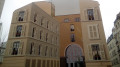
(S/E) Cross Rue Anatole France and then Place du Maréchal Juin. Continue straight ahead onto Avenue Georges Pompidou and note, on the right at No. 20, a contemporary building with distinctive architecture. Cross Place Pompidou, surrounded by large residential blocks, and continue straight ahead onto Avenue Georges Pompidou. At the end, turn right onto Rue du Président Wilson. Take thefirst left onto Rue Clément Bayard, then left again onto Rue Rivay. Note the elegant loft at no. 105bis. Turn right onto Rue Léon Jamin, running alongside the square of the same name.
(2) At the corner of the square, take thefirst right onto Rue Édouard Vaillant. Walk past the former Chocolaterie Meunier on your left, a building recognisable by its... chocolate-coloured façade! At the junction, turn right into Rue Baudin. At the junction with Rue Rivay, note on your left, at the start of the street, the majestic entrance to the Collège Jean Jaurès. Also note, on the corner at No. 74 Rue Baudin, the façade of a building beautifully decorated with blue ceramics. Cross Rue Rivay, continue along Rue Baudin and cross Rue du Président Wilson (turn round to see the renovated wing of the Jean Jaurès School Complex reserved for the nursery school). Continue along Rue Baudin, cross Rue du Parc and arrive at Place Marie Jeanne Bassot.
(3) Turn left onto Avenue de l’Europe, leaving the weathered entrance to the Résidence Sociale headquarters on your right. At the end, turn right onto Rue Paul Vaillant Couturier. Cross Rue Mathilde Girault opposite the imposing buildings of the former Hospice Antonin Raynaud, passing an entrance at No. 45 Rue Paul Vaillant Couturier. Turn right onto Rue Anatole France. At the next junction, turn left, back onto Rue Baudin. Cross Rue Marius Aufan on the left and continue to the next junction.
(4) Cross Rue Danton, walk a few more steps along Rue Baudin to see the Cognacq Jay Foundation building at nos. 3–5 and 4–6. Then turn back.
(4) Turn right onto Rue Danton and walk preferably on the left-hand pavement to get some perspective and admire the upper floors of nos. 127–129. Note the chequered ceramic tiles adorning the top of the building at no. 125. Cross Rue Paul Vaillant Couturier and, at the next junction, turn right onto Rue Kléber, passing Villa Chaptal on your left (a private lane lined with picturesque little houses). Continue along Rue Kléber and cross Rue Chaptal. Pass the new Franco-British Hospital on your left and the Ministry of the Interior on your right.
(5) Turn left onto Rue de Villiers, walk along Square Jean-Pierre Gratzer and note on your left a cluster of small houses with pastel-coloured façades and small pointed roofs. Cross Rue de l'Aspirant Dargent on the left, then Rue Voltaire, and admire the historic building of the Hertford British Hospital on the left, with its turret at the corner of Rue Barbès. Turn left into Rue Barbès and take thefirst right, Rue Chaptal.
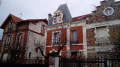
Follow this street straight ahead. Note at No. 44 a small, unusual house and, next to it, a townhouse. After crossing Rue Louis Rouquier, note at No. 41 a building dating from 1903. Note at No. 26, on the corner of Rue Marceau, a building constructed of millstone up tothe first floor and then of brick. At No. 29, a ceramic decoration adorns the façade. Note at No. 25 a building from 1899 and then at No. 11 an artist’s house. Cross Place du Maréchal De Lattre de Tassigny and continue opposite onto Rue Chaptal. At the end, turn left onto Rue Jacques Ibert.
(7) Take thefirst left, Rue Danton, and walk along the left-hand side of the square of the same name. Cross Rue Louise Michel, then pass Rue Marceau on your left. Continue straight on along Rue Danton and cross, in turn, Rue Louis Rouquier, Rue Aristide Briand, Rue Barbès (on the left) and Rue Voltaire. Walk past the Collège Danton on your left and turn right onto Rue Bara (pedestrian street). At the end, turn left onto Rue Marius Aufan, then right onto Rue Kléber.
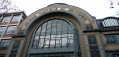
At the junction, turn left onto Rue Anatole France and continue to No. 110, the former building of the Société des Biscuits Milez. Turn around, cross Rue Kléber and continue along Rue Anatole France. Note here, as elsewhere in Levallois, the blend of old and new: at No. 92, the magnificent façade of the former Manufacture des Pianos J.Larry; at No. 86, an office block with bold architecture; at No. 84, a residential building in the somewhat imposing style of the 1930s. Walk past the Protestant church and arrive at Place du Général Leclerc.
(8) Cross the square and continue straight ahead along Rue Anatole France to No. 73, formerly the headquarters of the Alliance des Travailleurs. Step back to see the top of the building. Turn around and head back to Place du Général Leclerc.
(8) Turn right onto Rue Voltaire. Note, on the right-hand corner at No. 6, a two-tone building with a rounded façade and, on the left, a more recent building featuring the same rounded façade. Note at 55 Rue Voltaire an interesting façade with wooden balconies. Cross Rue Carnot, noting the beautiful old buildings at numbers 48 (1898) and 57 on the left and right corners, and, at number 50, the pink-brick façade decorated with ceramic tiles. Further on, at No. 59, look above the porch for a mascaron depicting a male face framed by branches bearing pine cones. Note at No. 61 a smiling female face framed by the same branches.
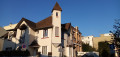
Continue along Rue Voltaire, which is mostly lined with old buildings. Cross Rue Gabriel Péri and walk along the right-hand side of Place de la Mairie, keeping an eye on the Church of Saint-Justin. Turn left onto Rue Maryse Hilsz. At the next junction, turn left onto Rue Pasteur and continue to No. 12, where you will find a neo-Gothic house.
Turn around, cross Rue Maryse Hilsz and follow Rue Pasteur to the end. Then turn right onto Rue du Président Wilson. Cross Rue Voltaire, leaving the Place de la Mairie on your right and the post office on your left. At the junction, turn right onto Rue Aristide Briand.
(9) At the junction with Rue Gabriel Péri, continue along Rue Aristide Briand to No. 64bis to see the amusing rear façade of the Conservatoire. Retrace your steps.
(9) Follow Rue Gabriel Péri to the right and walk past the main entrance to the Maurice Ravel Conservatoire; step back to see the top of the building. Cross Rue Louis Rouquier then take thefirst left, Rue Henri Barbusse (pedestrianised). Note at No. 14 the sign for J. Damoy’s grocery shop and the façade of the building, decorated with plant motifs and mosaics indicating the nature of the products sold in this former grocery shop.
Turn left onto Rue Trébois, at the corner of the grocery shop, and look out for the A. Petit building at No. 25, built in 1887; the mosaic decoration on the façade suggests that the ground floor of the building once housed a wine shop.
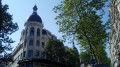
Retrace your steps and turn left onto Rue Henri Barbusse. Note at No. 6 the former Grand Bazar, built in the early 20th century, featuring a sign and mosaic decoration onthe first floor. Turn left into Rue du Président Wilson, then right into Rue Louis Rouquier. Cross Rue Rivay, Rue Édouard Vaillant and Rue Jules Guesde in succession. At the right-hand corner of the latter, the building at No. 114, with its rounded corner topped by a dome, is a typical example of recent construction in the town. At No. 115, note the large clock on the wall of the Jules Ferry school. Opposite, at No. 126, note the tall, narrow building in coloured brick.
(10) Opposite No. 136, turn left into Square Édith de Villepin (a sundial adorns the wall opposite). Cross the square, staying on the main path surrounded by contemporary buildings and keeping to the right. At the exit, turn right onto Rue Aristide Briand. Cross Rue Trezel; on the corner of the street on the right, at No. 4, stands a building dating from 1881, which offers a fine example of the architecture of the period. Then turn left onto Rue Bellanger, passing a building on the right with large rounded windows and gilded balconies.
At the end, turn left onto Rue Pierre Brossolette. Note the former Pereire Telephone Exchange building at no. 43. Cross Rue Trezel to the left, cross Place Jean Zay and continue along Rue Pierre Brossolette. Turn right onto Rue Marjolin and walk alongside Square Marjolin on your right.
(11) At the corner of the square, turn left into Rue Camille Pelletan. Note at No. 14 a curious little structure topped by a terrace in front of the building. Cross Rue Jules Guesde and then Rue Édouard Vaillant. Note the twin houses at Nos. 4 bis and 4 ter. Then turn right into Rue du Rivay.
At the next junction, turn left into Rue Paul Vaillant-Couturier. Continue to Rue du Président Wilson and note the Dépendance de la Planchette opposite. Turn around and follow Rue Paul Vaillant-Couturier, crossing Rue Rivay, Rue Édouard Vaillant and Rue Jules Guesde in turn. Walk along Square des Cinq Continents, cross Rue Marjolin and arrive at the junction with Rue Raspail.
(12) Continue straight ahead, ignoring Rue Belgrand on the left, and pass in front of the Église Sainte-Reine. Cross Rue Victor Hugo and note, on the corner at No. 148, a former food factory now housing offices. Continue straight ahead, then turn right onto Rue de la Gare until you reach the entrance to the cultural centre. Retrace your steps back to Rue Victor Hugo.
Cross the street, take Rue Collange diagonally to the right and walk alongside Sainte-Reine Church on your left. Then turn left onto Rue Belgrand, leaving a large glass and steel building on your right. Return to Rue Paul Vaillant-Couturier (note the façade of the École Buffon on the other side, adorned with a flock of birds) and follow it to the right until the next junction.
(12) Then turn right onto Rue Raspail, with the cemetery entrance in your sights. At the junction, turn left onto Rue Collange. Note at No. 14 a small, old-fashioned building with pale green shutters. Cross Place du 11 novembre 1918, where there used to be a garage belonging to the Compagnie Française des Automobiles de Place, the predecessor of Taxis G7. Note the imposing memorial stone paying tribute to the Levallois taxi drivers who contributed to the epic story of the Taxis de la Marne in September 1914.
Continue straight ahead along Rue Collange, a tree-lined street, passing the Saint-Exupéry school complex on your right, which bears the image of The Little Prince. Cross Rue Jules Guesde, passing the Collège Louis Blériot on your right (the famous aviator had set up a factory in the town to build his famous monoplane, with which he made thefirst crossing of the English Channel by aeroplane in 1909).
(2) At the junction you passed on the way there, turn right onto Rue Édouard Vaillant. Cross Rue Léon Jamin on the right-hand side and continue to the quay. Follow the quay to the left as far as the Pont de Levallois. Then turn left and follow Rue Anatole France to the metro station (S/E).



 Visorando Member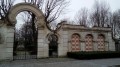
 Easy
Easy