Country:
 City:
City:


Start at Porte de Clichy. Access via the metro (lines 13 and 14) or the RER C.
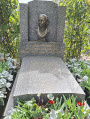
(S) Follow Avenue de la Porte de Clichy towards the ring road and the suburbs. Turn right onto Avenue du Cimetière des Batignolles to reach the entrance. This cemetery was opened in 1833 and is home to the graves of many famous people, some of whom we will see along the way. Once inside the cemetery, follow the Avenue Principale straight ahead, then take the second right onto Avenue Circulaire. On the left, you’ll find the grave of Jospéhin Péladan, a 19th-century occultist writer who is somewhat forgotten today, but whose tomb’s mosaic is well worth a look.
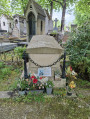
(1) We then take Avenue des Fortifications, running along the cemetery’s southern wall. We cross Avenue Lacombe on the left, and immediately on the left we find the grave of Vuillard, a Nabi painter, whose works can be seen at the Musée d’Orsay, amongst other places. Continue along Avenue des Fortifications and, at a Fork in the road, turn left into Avenue Latérale. Walk straight on to the very simple grave of Ray Ventura, musician and conductor (incidentally, Sacha Distel’s uncle).
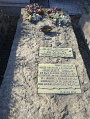
(2) We then turn left, making our way through the graves, to find that of Benjamin Péret, the only Surrealist who never fell out with the ‘pope of Surrealism’, André Breton. We turn left again to find, just a few metres away, the grave of André Breton himself. This grave is topped by a strange geometric figure, somewhat weathered by time.
(3) We head back towards the entrance, following a path to the south-west. We cross, in turn, the Allée des Jardins and the Avenue du Sud. At the next junction, we take the Avenue des Plantations to the right, and cross the Avenue Centrale. We then turn left onto the Avenue Principale. We arrive at a roundabout where the grave of Paul Verlaine is located, a famous poet who led a complicated life, constantly tormented by alcoholism, and who had a passionate relationship with Arthur Rimbaud.
(4) Retrace your steps and immediately turn left onto Avenue du Nord. Pass under the ring road and note, on the right-hand side, the graves of Léon Diers, a Parnassian poet and painter, and Marguerite Durand, whom we shall discuss a little later. At the end of the avenue, we leave the cemetery (note: this exit is only open from 10am to 5pm). We come out onto Boulevard Victor Hugo in Clichy-la-Garenne, cross it at the pedestrian crossing, and follow it to the right.
(5) After about 250 metres, turn left into Rue d’Alsace. At No. 36 was the practice of Louis-Ferdinand Céline, who worked there as a doctor in a very working-class neighbourhood, whilst also working at the Simonneau Dispensary. He later became a famous but extremely controversial writer due to his violently anti-Semitic views before and during the Second World War. Shortly afterwards, turn right onto Rue Henri Barbusse to reach a roundabout.
(6) Go round the roundabout on the left and take the first exit onto Boulevard du Général Leclerc (D110). After a few dozen metres, turn right into Parc Roger Salengro (formerly known as Parc Denain, named after the mother-in-law of Léo Delibes, a composer buried in Montmartre Cemetery in Paris). Head north and cross the park, keeping parallel to Rue du Général Roguet. Exit onto Rue Villeneuve and turn right to cross Rue du Général Roguet. Follow this road to the left until you reach the entrance to the northern cemetery in Clichy.
(7) Enter the cemetery, walk straight ahead, and take the first path on the right, at the corner of the mortuary. After about 150 metres, turn right onto a path. Cross a perpendicular path to find the grave of Jacques Mesrine, who died nearby at the Porte de Clignancourt. The perpetrator of numerous crimes (murders, robberies, etc.), Jacques Mesrine was a native of Clichy (is that why his grave is always adorned with flowers?). Retrace your steps and leave the cemetery.
(7) Cross Rue du Général Roguet at the pedestrian crossing and follow it to the right. Go round a roundabout on the left, cross Avenue Claude Debussy, and follow Route du Port de Gennevilliers. Just before the bridge over the Seine, go down a flight of steps and join Quai Éric Tabarly.
(8) Follow the quayside to the left, keeping the river on your right. Cross the river further on via the Pont de Clichy (this bridge, which also carries Metro Line 13, replaces an old bridge that was the scene of summary executions on 17 October 1961 during the crackdown on a demonstration by Algerians). On the other side, go down a flight of steps to pass under the bridge and reach the entrance to the Asnières dog cemetery. This cemetery was established in 1899 by a lawyer, Georges Harmois, and a journalist, Marguerite Durand, whose grave we saw earlier and who founded the newspaper La Fronde, the first French publication run entirely by women.
(9) We then first turn right then left to enter Parc Robinson. We walk through the park parallel to the Seine. Note a guinguette named after Rosa Bonheur, the famous animal painter. We leave the park at its south-western tip and continue along the Quai du Docteur Dervaux.
(10) We take the Pont d’Asnières to cross the Seine again. On the other side, we go round a roundabout on the left, cross the Quai de Clichy and follow it to the left for a few dozen metres. Take the first right, Rue du Bac d’Asnières. At the corner of Rue Gustave Eiffel, turn left into the Parc des Impressionnistes, which occupies the site of the former grounds painted by Paul Signac. Cross the park diagonally to the left, leaving the playgrounds on your left.
(11) Leave the park and follow Rue Pierre-Bérégovoy to the right. At the triangular junction, turn left to go under the railway bridge. On the other side, turn right into Rue Baudin. Continue straight on until you reach the entrance to Levallois-Perret Cemetery.
(12) Enter the cemetery, walk on for about twenty metres and you will find the grave of Maurice Ravel, the famous composer (notably of the Boléro), on your right. Continue straight on along the main path until you reach a roundabout where you will find the grave of Louise Michel, the anarchist muse of the Paris Commune and an iconic figure in the women’s rights movement. Although she died in Marseille, she was buried here on 22 January 1905, followed by a crowd of several thousand people.
(13) We retrace our steps and leave the cemetery.
(12) We follow Rue Baudin to the right. We continue straight on along this street until we reach Rue Anatole France (traffic lights). We then turn right and immediately come to the Pont de Levallois - Bécon metro station (line 3) (E).

 Visorando Member
 Moderate