


Refine your search for walks in Pleslin-Trigavou
Pleslin-Trigavou walks


 The Druid Cemetery at Pleslin-Trigavou
 Visorando Member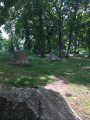
 3.92 mi
 +174 ft
 -200 ft
 1h 55
1h 55
 Easy
Easy
 Departure from Pleslin-Trigavou (Côtes-d'Armor)
Legend has it that fairies, who were supposed to deliver these stones to Mont Saint-Michel but were too tired, abandoned them here in the Champ des Roches, where the druids used to gather.Sixty-five menhirs dating from 2000 BC are gathered here, forming Brittany’sthird-largest megalithic site, which has been a listed site since 1887.The site has been planted with 60 different species of oak.
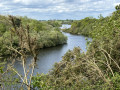
A viewpoint overlooking the Haut Frémur in Tréméreuc
 4.32 mi
+279 ft
-292 ft
2h 15
Easy
Departure from Tréméreuc (Côtes-d'Armor)
4.32 mi
+279 ft
-292 ft
2h 15
Easy
Departure from Tréméreuc (Côtes-d'Armor)
The upper reaches of the Frémur flow at the bottom of a lush green valley where, from a mere trickle, it transforms into a pretty river that feeds the Bois Joli dam, which serves as the water reservoir for the Dinard conurbation.The path descends to the valley floor, then climbs to form a balcony overlooking the valley, offering lovely views.The setting is peaceful, with its meadows, shaded paths and the golf course, just a few kilometres from Dinard.
Plouër-sur-Rance in shades of green and blue
 8.63 mi
+653 ft
-656 ft
4h 30
Easy
Departure from Plouër-sur-Rance (Côtes-d'Armor)
8.63 mi
+653 ft
-656 ft
4h 30
Easy
Departure from Plouër-sur-Rance (Côtes-d'Armor)
A lovely walk along the banks of the Rance and through the beautiful Bois de Rochel forest. This walk combines various routes suggested by Plouër-sur-Rance Town Hall.
It begins as a blue trail along the banks of the Rance, where the landscapes and views change with every tide. After passing through hamlets with traditional stone houses, it continues as a green trail through the forest, where beech and chestnut trees over 25 metres tall never fail to impress and where sunken paths await the walker.
Take care in winter, as some sections may be damp. But in summer, don’t hesitate – with its open, airy and shaded route, it offers a chance to enjoy a pleasant coolness in the heart of nature.
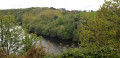
The hedgerows and ponds of the Frémur at the start of the Rues
 6.68 mi
+210 ft
-217 ft
3h 15
6.68 mi
+210 ft
-217 ft
3h 15
 Moderate
Departure from Ploubalay (Côtes-d'Armor)
Moderate
Departure from Ploubalay (Côtes-d'Armor)
The Pleurtuit ponds, fed by the Frémur, are a delight for anglers and stretch out in deep meanders through peaceful countryside, just a few kilometres from the Dinard-Saint Malo conurbation.
They provide the drinking water supply for the entire urban area thanks to the Bois Joli dam, which was filled in 1992
The path marked in yellow circles the area; it can be accessed from various starting points, including the hamlet of Les Rues.
Circular walk starting from Langrolay via La Souhaitier and Plouer
 Association / Club / Walk leader6.85 mi
+650 ft
-650 ft
3h 45
Moderate
Departure from Langrolay-sur-Rance (Côtes-d'Armor)
Association / Club / Walk leader6.85 mi
+650 ft
-650 ft
3h 45
Moderate
Departure from Langrolay-sur-Rance (Côtes-d'Armor)
A pleasant walk along the banks of the Rance and through the countryside. A circular route of around 11 km with the option to adjust the length.
Langrolay-sur-Rance route starting from the Souhaitier Chapel
 8.34 mi
+528 ft
-525 ft
4h 20
Moderate
Departure from Plouër-sur-Rance (Côtes-d'Armor)
8.34 mi
+528 ft
-525 ft
4h 20
Moderate
Departure from Plouër-sur-Rance (Côtes-d'Armor)
This hike follows the Rance river and the valleys around Langrolay-sur-Rance. It starts at the foot of the Souhaitier Chapel and follows a north-south route offering beautiful views of the Rance and the opposite bank, Saint-Suliac and Mont Gareau. The route is also dotted with some very pretty stone houses. The route follows a branch of the GR®34 to GR®37 trail.
The banks of the Rance near Saint-Samson and the Menhir de la Pierre Longue
4.80 mi
+190 ft
-213 ft
2h 20
Easy
Departure from Saint-Samson-sur-Rance (Côtes-d'Armor)
From the village of Saint-Samson, make your way to the Rance at Le Petit Lyvet via the Voie Verte and the Gallo-Roman track. Take a short detour to the menhir known as ‘La Pierre Longue’: standing 8.5 metres tall, it has stood there since 2,500 to 3,000 years before our era.
Between Langrolay-sur-Rance and Plouër-sur-Rance
7.30 mi
+568 ft
-548 ft
3h 50
Moderate
Departure from Plouër-sur-Rance (Côtes-d'Armor)
This is a circular route that allows you, on the one hand, to walk along the banks of the Rance from the Pont Saint-Hubert to the Grève du Roué near Langrolay-sur-Rance and, on the other hand, to explore the hinterland and visit the charming hamlets. There are also sections through woodland.
The Beauséjour walk
4.11 mi
+171 ft
-171 ft
2h 00
Moderate
Departure from Saint-Samson-sur-Rance (Côtes-d'Armor)
From the village of Saint-Samson-sur-Rance, set off to explore the Menhir de la Pierre Longue (car park at 48.49315 N, 2.01793 W) for a varied route through the countryside and along the banks of the Rance – first the river and then the sea. Walk through the Saint-Samson countryside and its granite hamlets, then follow the River Rance to admire the old fishing huts, the Lessard Bridge, a riverside forest and an oak plantation. A route rich in scenery and heritage, ideal for a nature walk in Brittany.
The mills of the Rance - The foreshores
 9.53 mi
+594 ft
-610 ft
4h 55
Moderate
Departure from Le Minihic-sur-Rance (Ille-et-Vilaine)
9.53 mi
+594 ft
-610 ft
4h 55
Moderate
Departure from Le Minihic-sur-Rance (Ille-et-Vilaine)
The first tidal mill on the Rance was built in 1181 (Moulin du Lupin near Rothéneuf). These mills flourished between the 16th and 17th centuries. Today, few of these renewable energy sources remain. This route allows you to see the remains of two mills (Fosse Mort and La Herviais) and to stroll through this estuary, which is ideal for the construction of mills.
The garden of Minihic-sur-Rance and its dry dock at La Landriais
 5.26 mi
+272 ft
-285 ft
2h 40
Easy
Departure from Le Minihic-sur-Rance (Ille-et-Vilaine)
5.26 mi
+272 ft
-285 ft
2h 40
Easy
Departure from Le Minihic-sur-Rance (Ille-et-Vilaine)
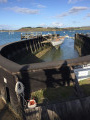
From the beautifully landscaped public garden, there is a remarkable view of the Rance and its right bank, from which the village of Saint-Suliac stands out. From the garden, you can easily reach Garel Beach and the Landriais shipyard with its specific equipment: the above-ground wooden dry dock, via the cliff-top path.
The wet Guérouse valley winds through the undergrowth that makes up the Domaine du Pièton.
A circular loop along the banks of the Rance, starting from Minihic
 11.75 mi
+594 ft
-607 ft
5h 55
Moderate
Departure from Le Minihic-sur-Rance (Ille-et-Vilaine)
11.75 mi
+594 ft
-607 ft
5h 55
Moderate
Departure from Le Minihic-sur-Rance (Ille-et-Vilaine)
This walk combines the routes suggested on Visorando around the Minihic, forming a double circular route around the Minihic and Langrolay further south. It is a pleasant walk along the banks of the Rance, with Mont Gareau, Saint-Suliac and the Pointe du Puits opposite. The path overlooks the Rance and offers numerous viewpoints. The route passes by the Landriais shipyards and dry dock, to the north of the Minihic. On the return journey, there are sunken paths via Langrolay and the Chapel of Sainte-Anne in Saint-Buc, dating from 1631. The walk is well shaded in summer and late spring.
The balconies of Minihic-sur-Rance
 7.12 mi
+423 ft
-453 ft
3h 40
Moderate
Departure from Le Minihic-sur-Rance (Ille-et-Vilaine)
7.12 mi
+423 ft
-453 ft
3h 40
Moderate
Departure from Le Minihic-sur-Rance (Ille-et-Vilaine)
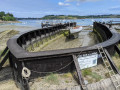
One of the classic walks in the Rance Basin. The path overlooks the Rance and offers numerous colourful views of the water, the riverbanks and river life. An opportunity to walk alongside the Minihic shipyards. A return via the sunken paths and the shaded valley of Saint-Buc takes us back to the Sainte-Anne Chapel, dating from 1631.
Very breezy and shaded in summer, very bright and open in early spring. High tide, low tide: you never see the same landscape.
A picturesque walk past the Bois Joli dam
 3.94 mi
+135 ft
-131 ft
1h 55
Easy
Departure from Pleurtuit (Ille-et-Vilaine)
3.94 mi
+135 ft
-131 ft
1h 55
Easy
Departure from Pleurtuit (Ille-et-Vilaine)
Located 5 km from Dinard, this route – which is easily suitable for families – runs along the western bank of the Bois Joli Dam reservoir. The route starts at the foot of a concrete embankment fitted with an eel ladder; the reservoir is a popular spot for anglers.After following the lower reaches of the Frémur, the route winds through the Breton bocage, passing through the pretty hamlet of La Ruais and its wash house. You then return to the riverbanks, against which the massive dam stands out. The idyllic path follows the contours of the reservoir.
Mordreuc - La Vicomté-sur-Rance circular loop
6.24 mi
+479 ft
-453 ft
3h 15
Moderate
Departure from Pleudihen-sur-Rance (Côtes-d'Armor)
A beautiful circular walk along the banks of the Rance, from the slipway at Mordreuc to La Vicomté-sur-Rance, passing by the charming Moulin du Prat, and returning through the countryside to explore the banks of the Rance.
The banks of the Rance at Mordreuc
 6.81 mi
+217 ft
-207 ft
3h 20
Moderate
Departure from Pleudihen-sur-Rance (Côtes-d'Armor)
6.81 mi
+217 ft
-207 ft
3h 20
Moderate
Departure from Pleudihen-sur-Rance (Côtes-d'Armor)
This route has two circular sections, allowing it to be completed in two stages. Both sections highlight the banks of the Rance and allow you to discover the hinterland, the former lands of the gabarriers and Cap-Horniers.
The Chapelle and Moulin du Prat circular in Mordreuc
 5.00 mi
+240 ft
-226 ft
2h 30
Easy
Departure from Pleudihen-sur-Rance (Côtes-d'Armor)
5.00 mi
+240 ft
-226 ft
2h 30
Easy
Departure from Pleudihen-sur-Rance (Côtes-d'Armor)
A circular route starting from the Mordreuc slipway via La Chapelle and Le Moulin du Prat. This route is not difficult and follows the banks of the Rance to begin and end its loop via country paths. Along the route, you will discover two tide mills as well as some beautiful houses and manor houses.
From the Mordreuc tide mill to the Prat tide mill
 3.63 mi
+220 ft
-200 ft
1h 50
Easy
Departure from Pleudihen-sur-Rance (Côtes-d'Armor)
3.63 mi
+220 ft
-200 ft
1h 50
Easy
Departure from Pleudihen-sur-Rance (Côtes-d'Armor)
From the Mordreuc tide mill, follow the shaded cliffs along the banks of the Rance, which will take you to the Prat tide mill. You will pass an old lime kiln and see the village of La Moinerie in Plouër-sur-Rance through the trees. On the mudflats, you will see common shelducks.
At the end of the Moulin du Prat pond, you will see Quincourbe Castle and its dovecote. You will pass by the ferruginous fountain.
Tour of the banks of the Rance via the Saint-Hubert and Pont du Châtelier bridges
 16.48 mi
+1,047 ft
-1,063 ft
8h 30
16.48 mi
+1,047 ft
-1,063 ft
8h 30
 Difficult
Departure from Pleudihen-sur-Rance (Côtes-d'Armor)
Difficult
Departure from Pleudihen-sur-Rance (Côtes-d'Armor)
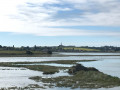
A lovely day’s hike, taking you around the Rance Maritime as far as the Chatelier lock, the boundary between the Rance Fluviale and the Rance Maritime. On the itinerary: exploring the flora and fauna along the banks of the Rance, magnificent views, small coves and anchorages, and lush valley floors. Depending on the tide, you’ll alternate between shallow waters and mudflats. Please note: some sections along the banks of the Rance are only accessible at low tide and can be quite slippery.
In the footsteps of the Rance bargemen
 6.68 mi
+220 ft
-223 ft
3h 15
Moderate
Departure from Pleudihen-sur-Rance (Côtes-d'Armor)
6.68 mi
+220 ft
-223 ft
3h 15
Moderate
Departure from Pleudihen-sur-Rance (Côtes-d'Armor)
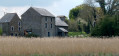
For centuries, right up until the 1920s, the Rance bargemen supplied the bread ovens of Saint-Malo with bundles of firewood. They built stone-paved crossings across the Rance so that they could load their barges.
These little paths leading out into the Rance will allow you to discover the village of Les Bas Champs from a unique perspective.
The banks of the Rance from Ville Ger to Mordreuc
 4.08 mi
+79 ft
-79 ft
1h 55
Easy
Departure from Pleudihen-sur-Rance (Côtes-d'Armor)
4.08 mi
+79 ft
-79 ft
1h 55
Easy
Departure from Pleudihen-sur-Rance (Côtes-d'Armor)
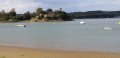
This hike will allow you to discover the flora and fauna of the Rance estuary.
The Rance is a wintering ground for migratory birds.
Mordreuc's mascot, seal L 214, will let you take photos with him if the water level allows him to lounge on the slipway. Otherwise, look in the water to see if a whiskered snout is peeking out.
In Mordreuc, if you continue 100 metres along the shore, you will discover the old lime kiln.
Loop between Rance and Terre, from Pont Saint-Jean to Pointe du Puits
 11.39 mi
+518 ft
-541 ft
5h 40
Easy
Departure from La Ville-ès-Nonais (Ille-et-Vilaine)
11.39 mi
+518 ft
-541 ft
5h 40
Easy
Departure from La Ville-ès-Nonais (Ille-et-Vilaine)
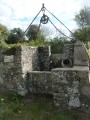
Walk in the Pays Malouin between the sea and the Rance around one of the most beautiful villages in France. To be done at low tide, check before you go.
Circular via Pointe du Puits and Clos de la Croix in Saint-Suliac.
 4.79 mi
+256 ft
-272 ft
2h 25
Easy
Departure from Saint-Suliac (Ille-et-Vilaine)
4.79 mi
+256 ft
-272 ft
2h 25
Easy
Departure from Saint-Suliac (Ille-et-Vilaine)
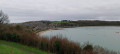
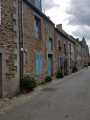
Saint-Suliac, a former fishing village, is located a stone's throw from Saint-Malo. The landscapes are varied, and this walk will allow you to discover the maritime side of Saint-Suliac and the narrow streets of the old part of the village. The steep side of the shore along the Rance is somewhat reminiscent of the GR®34 between Saint-Malo and Cancale, all things considered. There is a beautiful view of the Rance from the Pointe du Puits.
Saint-Suliac, North point
 3.97 mi
+151 ft
-167 ft
1h 55
Easy
Departure from Saint-Suliac (Ille-et-Vilaine)
3.97 mi
+151 ft
-167 ft
1h 55
Easy
Departure from Saint-Suliac (Ille-et-Vilaine)
A lovely walk around the northern tip of Saint-Suliac. Do it whatever the weather!
Moderator's note as of 06/04/2021: Some modifications on the ground since the creation of this hike: see the comments at the bottom of this page.
Moderator's note a description of June 2022 in reverse order to this one is available here
Circular walk from Saint-Suliac via Pointe du Puits and Mont Gareau
 7.16 mi
+515 ft
-515 ft
3h 45
Moderate
Departure from Saint-Suliac (Ille-et-Vilaine)
7.16 mi
+515 ft
-515 ft
3h 45
Moderate
Departure from Saint-Suliac (Ille-et-Vilaine)
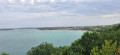
Just ten kilometres or so south of Saint-Malo, Saint-Suliac is a small village situated on the coast of the Rance estuary. It is a former fishing village. The route suggested here allows you to discover the rich variety of landscapes; it passes via Mont Garrot (or Gareau), which, at a height of 73 metres, offers a panoramic view of the Rance valley and the ‘Viking camp’. It runs alongside the river and passes through designated nature reserves. Along the route, you can admire two historic mills: a windmill overlooking the hill (which cannot be visited, as it stands on private land that is not accessible) and the old Boschet tide mill, built inthe 16th century and in operation until the 1940s. A local association has carried out its complete restoration.
Circular route to Saint-Suliac via Mont Gareau and Moulin du Tertre
 5.37 mi
+463 ft
-463 ft
2h 50
Easy
Departure from Saint-Suliac (Ille-et-Vilaine)
5.37 mi
+463 ft
-463 ft
2h 50
Easy
Departure from Saint-Suliac (Ille-et-Vilaine)
Shortly after setting off, you will come to the oratory, dedicated to the safety of sailors setting out to sea for the banks of Newfoundland. There is a magnificent view of the village, the Rance and the opposite bank as far as the Pont Chateaubriand bridge.
The walk continues along the banks of the Rance to the summit of Mont Gareau, where another viewpoint will surprise you.
Along the way, you can admire two old mills: a windmill overlooking the hill (not open to visitors, as it is on private land) and an old tide mill, built inthe 16th century, which was in operation until the 1940s. An association is working to restore it.
The mills of the Rance - Le Poudouvre
 10.34 mi
+705 ft
-696 ft
5h 20
Moderate
Departure from Pleurtuit (Ille-et-Vilaine)
10.34 mi
+705 ft
-696 ft
5h 20
Moderate
Departure from Pleurtuit (Ille-et-Vilaine)
The Rance once had many tide mills on its banks. Today, with the passage of time, erosion and lack of maintenance, little remains. This circuit allows you to discover the coastline, countryside, coastal path, remains of the Montmarin mills, the new mill and the dam that uses the movements of the tides for its tidal power plant.
Mont Gareau massif
 1.65 mi
+223 ft
-230 ft
0h 55
Easy
Departure from Saint-Suliac (Ille-et-Vilaine)
1.65 mi
+223 ft
-230 ft
0h 55
Easy
Departure from Saint-Suliac (Ille-et-Vilaine)
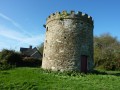
Mont Gareau, tomb of Gargantua. A historic site steeped in legends and mysteries. The highest point in the region, offering a magnificent 360° panorama from its height of 73 metres! It overlooks Saint-Suliac, ranked among the most beautiful villages in France, and in good weather you can see Mont-Saint-Michel, Granville and the Normandy coast.
Pointe de Cancaval and La Malouinière du Montmarin
 3.52 mi
+105 ft
-108 ft
1h 45
Easy
Departure from Pleurtuit (Ille-et-Vilaine)
3.52 mi
+105 ft
-108 ft
1h 45
Easy
Departure from Pleurtuit (Ille-et-Vilaine)
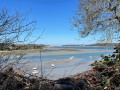
Jutting out into the Rance estuary, Pointe de Cancaval offers beautiful views of the right bank: from Saint-Servan to Saint-Malo, the dam and the moorings dotted along the coast.
During the walk, you will notice La Malouinière de Montmarin and its remarkable garden, which is one of the most beautiful private residences, and two tidal mill sites that bear witness to the industrial past linked to the tidal range.
Around Mont Garrot
 4.77 mi
+299 ft
-312 ft
2h 25
Easy
Departure from Saint-Suliac (Ille-et-Vilaine)
4.77 mi
+299 ft
-312 ft
2h 25
Easy
Departure from Saint-Suliac (Ille-et-Vilaine)
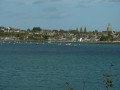
In the midst of this tide-changing natural environment, Mont Garrot, a true promontory above the river Rance maritime estuary, offers a panoramic view of Saint-Suliac to the north and Anse de Vigneux to the south, where the foundations of an ancient Viking camp emerge at low tide.
The medieval walls from Ville-es-Nonais
 4.11 mi
+171 ft
-177 ft
2h 00
Easy
Departure from La Ville-ès-Nonais (Ille-et-Vilaine)
4.11 mi
+171 ft
-177 ft
2h 00
Easy
Departure from La Ville-ès-Nonais (Ille-et-Vilaine)
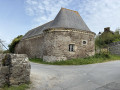
Did the Vikings settle in the Rance valley at the foot of Mont Garot? Nothing is less certain, but in any case, this is a theory put forward by the guides. From La Ville-es-Nonais, along the right bank of the Rance, make your way to the site of the supposed Viking camp. At low tide, you can see the site, covered in short vegetation.
The Prat and Livet paths in La Vicomté-sur-Rance
 8.01 mi
+367 ft
-364 ft
4h 00
Moderate
Departure from La Vicomté-sur-Rance (Côtes-d'Armor)
8.01 mi
+367 ft
-364 ft
4h 00
Moderate
Departure from La Vicomté-sur-Rance (Côtes-d'Armor)
Throughout this route, there are no fewer than five viewpoints from which you can admire this small coastal river, famous for its mouth between Saint-Malo and Dinard thanks to the tidal power plant dam. After following it first through fresh water and then salt water, you will end your route by taking sunken paths that will lead you to a monument dating back five thousand years.
The banks of the Frémur from Ploubalay
 4.56 mi
+89 ft
-102 ft
2h 10
Easy
Departure from Ploubalay (Côtes-d'Armor)
4.56 mi
+89 ft
-102 ft
2h 10
Easy
Departure from Ploubalay (Côtes-d'Armor)
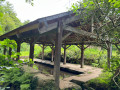
Starting from the centre of Ploubalay, this walk will take you through fields and woodland to the pretty hamlet of La Ruais with its wash house pond, a haven for frogs. You will then reach the left bank of the Frémur, a small coastal river that marks the boundary between the departments of Ille-et-Vilaine and Côtes-d’Armor, and which feeds the Bois Joli dam. At the entrance to Ploubalay, another (well-preserved) wash house is still supplied with running water diverted from another small coastal river, the Floubalay.
The marshes and polders of Beaussais-sur-Mer
 4.40 mi
+98 ft
-102 ft
2h 05
Easy
Departure from Ploubalay (Côtes-d'Armor)
4.40 mi
+98 ft
-102 ft
2h 05
Easy
Departure from Ploubalay (Côtes-d'Armor)
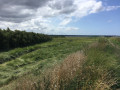
In a bucolic setting, follow the course of the Ru Le Floubalay, which flows into the polders of the Bay of Beaussais-sur-Mer. In Ville-ès-Prêtres, see the sculpture at the foot of the Ferme du Maris: "À l'abri dans le Marais"(Sheltered in the Marsh). It symbolises the work undertaken to regulate the devastating effects of the tides on this submersible area.
The Floubalay route in Ploubalay
 8.30 mi
+236 ft
-236 ft
4h 00
Moderate
Departure from Ploubalay (Côtes-d'Armor)
8.30 mi
+236 ft
-236 ft
4h 00
Moderate
Departure from Ploubalay (Côtes-d'Armor)
This route takes you along the Floubalay Stream through the woodland. After passing through a few villages, you arrive at Baie de la Beaussais, with Saint-Jacut-de-la-Mer and Île des Hébihens on the opposite bank. You will pass by Manoir de Bel-Être and Tour de Brenan. The second part of the walk takes you through the Ploubalay countryside before returning to the stream.
Circular walk via Pointe de Cancaval from La Richardais
 5.03 mi
+157 ft
-174 ft
2h 25
Easy
Departure from La Richardais (Ille-et-Vilaine)
5.03 mi
+157 ft
-174 ft
2h 25
Easy
Departure from La Richardais (Ille-et-Vilaine)
The route takes you along the banks of the Rance between La Richardais and the hamlet of Créhen, via the Pointe de Gronget. The Pointe de Cancaval offers a beautiful view of the Rance, the dam of the same name and the town of Alet towards Saint-Malo.
Around La Richardais
6.13 mi
+308 ft
-295 ft
3h 05
Easy
Departure from La Richardais (Ille-et-Vilaine)
Walk around the village of La Richardais. You start on the banks of the Rance, on the foreshore at La Richardais harbour, near an old tide mill at Pointe de Cancaval. Return via the most inland route possible, following paths through the woodland.
Around Saint-Jouan-des-Guérets
 10.60 mi
+351 ft
-381 ft
5h 10
Moderate
Departure from Saint-Malo (Ille-et-Vilaine)
10.60 mi
+351 ft
-381 ft
5h 10
Moderate
Departure from Saint-Malo (Ille-et-Vilaine)
From Saint-Jouan-des-Guérets to La Rance via theGRP® long-distance hiking trail and the countryside around Saint-Malo.
The Rance and the historic heart of Dinan
3.95 mi
+292 ft
-292 ft
2h 05
Easy
Departure from Lanvallay (Côtes-d'Armor)
Wind your way along the banks of the Rance, stopping off at the Abbaye Sainte-Magloire-de-Léhon to visit the fortified heights and historic heart of Dinan.
Tressaint on the banks of the Rance
 6.59 mi
+558 ft
-564 ft
3h 30
Moderate
Departure from Lanvallay (Côtes-d'Armor)
6.59 mi
+558 ft
-564 ft
3h 30
Moderate
Departure from Lanvallay (Côtes-d'Armor)
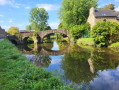
First, enjoy a breathtaking view of the Dinan viaduct with two passages under the arches, then stroll along the canalised Rance to reach the village of Tressaint and its woods. This route offers peace and serenity, even though it is very close to a popular tourist destination.
Estuary Left bank of the Rance - Loop starting from Dinan
 15.83 mi
+725 ft
-702 ft
7h 55
Difficult
Departure from Dinan (Côtes-d'Armor)
15.83 mi
+725 ft
-702 ft
7h 55
Difficult
Departure from Dinan (Côtes-d'Armor)
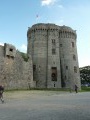
Loop around Dinan between Rance and Pays du Poudouvre via the Écluse du Châtelier to La Moinerie in the commune of Plouër-sur-Rance.
Quinard Mill and the Quelmer Boat Graveyard
 6.85 mi
+259 ft
-266 ft
3h 25
Moderate
Departure from Saint-Jouan-des-Guérets (Ille-et-Vilaine)
6.85 mi
+259 ft
-266 ft
3h 25
Moderate
Departure from Saint-Jouan-des-Guérets (Ille-et-Vilaine)
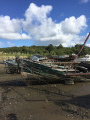
This section ofthe GRP®® Tour du Pays Malouin takes you to two sites emblematic of the historic activities along the banks of the Rance: the Quinard tide mill and the Quelmer boat graveyard.There are beautiful views of the Harteau and Chevet Islands, the anchorages and the left bank of the Rance.
Views of the islands of Saint-Jouan-des-Guérets
 5.88 mi
+276 ft
-266 ft
2h 55
Easy
Departure from Saint-Jouan-des-Guérets (Ille-et-Vilaine)
5.88 mi
+276 ft
-266 ft
2h 55
Easy
Departure from Saint-Jouan-des-Guérets (Ille-et-Vilaine)
A walk that allows you to explore the Rance estuary and a few islands. This is a shorter version of walk 88877, ‘Around Saint-Jouan-des-Guérets’.
The Green Belt of Dinan and the Rance Valley
 6.14 mi
+449 ft
-472 ft
3h 15
Moderate
Departure from Dinan (Côtes-d'Armor)
6.14 mi
+449 ft
-472 ft
3h 15
Moderate
Departure from Dinan (Côtes-d'Armor)
A town of art and history, Dinan is a place of great beauty. Its historic centre takes us back to the Middle Ages and from the top of its ramparts, visitors can look out over the Rance valley and the road viaduct which, with its 10 arches and 50-metre height, spans the Rance.
To this, we must add a stroll through the magnificent town centre of Léhon and finally a romantic walk along the Rance.
Circular loop of Saint-Jouan and La Chapelle du Val ès Bouillis
 5.56 mi
+400 ft
-390 ft
2h 55
Easy
Departure from Saint-Jouan-des-Guérets (Ille-et-Vilaine)
5.56 mi
+400 ft
-390 ft
2h 55
Easy
Departure from Saint-Jouan-des-Guérets (Ille-et-Vilaine)
This is a gentle hike that forms a double circular route, one around the hamlet of Le Val ès Bouilli and the second around La Livaudais. Much of the route runs alongside the Rance. The rest is divided between sunken paths and small roads. Along the way, you can see the Pointe du Puits and the Pont Chateaubriand to the south.
Route du patrimoine et de la nature de Dinan
5.03 mi
+269 ft
-253 ft
2h 35
Moderate
Departure from Dinan (Côtes-d'Armor)
The route takes you through the old town of Dinan and past several points of interest, then down into the Rance valley. It passes through Léhon, a picturesque little village, and ends along the Rance and the port of Dinan. For the tour of the walls, see the map on the Dinan Agglo website (see practical information). The journey time does not include breaks and stops for visits or sightseeing!
The Rance estuary on the Dinard side, then Saint-Malo
 9.52 mi
+489 ft
-518 ft
4h 50
Moderate
Departure from La Richardais (Ille-et-Vilaine)
9.52 mi
+489 ft
-518 ft
4h 50
Moderate
Departure from La Richardais (Ille-et-Vilaine)
Walking along the Chemin de Ronde between the dam and the pier, you will enjoy various panoramic views of Saint-Servan-sur-Mer and then Saint-Malo. A short boat trip will take you to an outer basin of the port of Saint-Malo. Continue on to the Cité d'Aleth, the Solidor Tower and the Rosais to complete this tour by crossing the dam.
Around Quelmer, starting from La Goëléterie
 5.92 mi
+387 ft
-358 ft
3h 05
Easy
Departure from Saint-Malo (Ille-et-Vilaine)
5.92 mi
+387 ft
-358 ft
3h 05
Easy
Departure from Saint-Malo (Ille-et-Vilaine)
A circular trail of about 10 km around Quelmer, starting from La Goëléterie. Points of interest: the banks of the Rance, La Passagère, the boat graveyard at La Passagère, the Pointe de la Roche du Port with its superb views of the Rance, and splendid malouinières (traditional houses) along the way.
The first part of this route follows the coastal path. The second part follows another route called "Around Quelmer and La Passagère".
La Rance at Quelmer, La Passagère and the boat graveyard.
 4.14 mi
+154 ft
-141 ft
2h 00
Easy
Departure from Saint-Malo (Ille-et-Vilaine)
4.14 mi
+154 ft
-141 ft
2h 00
Easy
Departure from Saint-Malo (Ille-et-Vilaine)
The path runs along the right bank of the Rance, overlooking its rocky coves, which resemble Mediterranean calanques. Along the way, stop at La Passagère, where you can see the Maison du Passeur and the house of Commander Jean Charcot. In the cove, you will find the boat graveyard, the only place where old hulls from the Rance valley are beached.
Dinard between land and sea
 9.31 mi
+410 ft
-420 ft
4h 40
Moderate
Departure from Dinard (Ille-et-Vilaine)
9.31 mi
+410 ft
-420 ft
4h 40
Moderate
Departure from Dinard (Ille-et-Vilaine)
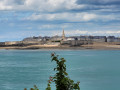
You will start by winding your way through the Dinard countryside to reach the sea. Take the customs officers' path, the Clair de Lune promenade, and discover the many islets of the Bay of Saint-Malo. You can also explore the Goule aux Fées cave, where the Lumière brothers took their first photographs in 1877.
Coëtquen Castle and its forest
 5.42 mi
+164 ft
-197 ft
2h 40
Easy
Departure from Saint-Hélen (Côtes-d'Armor)
5.42 mi
+164 ft
-197 ft
2h 40
Easy
Departure from Saint-Hélen (Côtes-d'Armor)
The highlight of this walk is exploring the remains of the feudal motte and Coëtquen Castle, built in the 15th century (private property). The route takes in small roads and beautiful forest paths.
The name Coëtquen can be translated as ‘white forest’. The Coëtquens were lords who became part of a branch of the Dinan family.
From Dinard to Saint-Briac
15.76 mi
+535 ft
-535 ft
7h 45
Difficult
Departure from Dinard (Ille-et-Vilaine)
A fantastic walk overlooking a multitude of beaches and coves via theGR®34. Most of the route follows a coastal path with a few sections of moderate difficulty. Return via a very pleasant little country road.
Please note: at Pointe du Moulinet and Port-Blanc, the path may be inaccessible at high tide.
From Lehon Abbey to Saint-Pern
 15.55 mi
+587 ft
-322 ft
7h 40
Moderate
Departure from Léhon (Côtes-d'Armor)
15.55 mi
+587 ft
-322 ft
7h 40
Moderate
Departure from Léhon (Côtes-d'Armor)
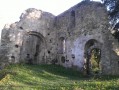
A long hike for experienced walkers, from Lehon (Côtes-d'Armor), starting at the old Saint-Magloire Abbey (founded in the 9th century) to Saint-Pern (Ille-et-Vilaine), the mother house of the Little Sisters of the Poor. A page of history and religious life waiting to be discovered.
Le littoral à Saint-Briac
 8.37 mi
+341 ft
-344 ft
4h 10
Moderate
Departure from Saint-Briac-sur-Mer (Ille-et-Vilaine)
8.37 mi
+341 ft
-344 ft
4h 10
Moderate
Departure from Saint-Briac-sur-Mer (Ille-et-Vilaine)
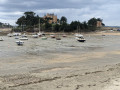
Ce circuit du littoral emprunte le GR® 34. Il permet la découverte des anciens chemins des douaniers et offre un point de vue exceptionnel, de l’embouchure de la Rivière du Frémur jusqu’au Cap Fréhel.
Lancieux via the Chemin des Poissonniers
 4.70 mi
+69 ft
-69 ft
2h 15
Easy
Departure from Lancieux (Côtes-d'Armor)
4.70 mi
+69 ft
-69 ft
2h 15
Easy
Departure from Lancieux (Côtes-d'Armor)
It is the morning light that reveals the full charm of Lancieux Bay, with its panoramic view of the Îles des Ebihens and the east coast of Saint-Jacut-de-la-Mer, as you walk along the lively beaches of Saint-Sieu and Les Briantais. The coastal path (GR® 34) overlooks the rocky shore, leading to the highest point on the coast at Tertre de Cordieu. The return journey takes you beneath a canopy of greenery that covers the Chemin des Poissonniers.
Following Lawrence of Arabia to Dinard
4.23 mi
+207 ft
-220 ft
2h 10
Easy
Departure from Dinard (Ille-et-Vilaine)
The environment we are taking you to is no longer the one that Thomas Edward Lawrence, known as Lawrence of Arabia, explored by bicycle. But although urbanisation has developed considerably, the charm of the Emerald Coast remains. Let's head to the village of Saint-Énogat, the birthplace of the tourist town of Dinard, and take the coastal path around the two headlands that frame it: Pointe de la Malouine and Pointe du Moulinet.
The banks of the Frémur from Saint-Briac-sur-Mer
 5.13 mi
+105 ft
-108 ft
2h 25
Easy
Departure from Saint-Briac-sur-Mer (Ille-et-Vilaine)
5.13 mi
+105 ft
-108 ft
2h 25
Easy
Departure from Saint-Briac-sur-Mer (Ille-et-Vilaine)
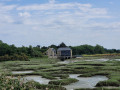
The Frémur estuary has two different aspects: the right bank is lined with mudflats and polders, which provide refuge for many species of birds during migration. The path is lined with hedges and undergrowth, providing a cool environment for walking.
The left bank is sandy, ideal for beach games in summer. It is also where boats moor. There is a beautiful view of the Roche-Good tide mill, nestled at the end of the estuary.
The Tour de Saint-Lunaire in Blue and Green, via Pointe du Décollé
 5.27 mi
+151 ft
-138 ft
2h 35
Easy
Departure from Saint-Lunaire (Ille-et-Vilaine)
5.27 mi
+151 ft
-138 ft
2h 35
Easy
Departure from Saint-Lunaire (Ille-et-Vilaine)
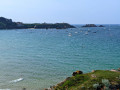
A superb hike, half by the sea and blue, half in the countryside and green. It is best to start at low tide or when the tide is going out.
This is an opportunity to cross the Grande Plage de Saint-Lunaire, which is largely exposed at low tide, then climb up to Pointe du Décollé and admire the entire Côte d'Émeraude, from Cap Fréhel to Saint-Malo and Cézembre. Why not stop for a picnic? On the sea side, you can also discover the magnificent Longchamp Beach, which is immense at low tide and much smaller at high tide.
This is also an opportunity to explore the south of Saint-Lunaire, where the countryside is just as beautiful, with its sunken lanes, gardens and old Breton houses.
The walk ends at the Vallée de l'Amitié, where you can stroll along the Crévelin river for almost a kilometre in the shade of oak trees.
Seaside walk in Saint-Briac-sur-Mer
5.53 mi
+226 ft
-236 ft
2h 45
Easy
Departure from Saint-Briac-sur-Mer (Ille-et-Vilaine)
Between Saint-Malo and Cap Fréhel, land and sea alternate between headlands and bays, offering walkers countless opportunities to explore the coastline. At the mouth of the Frémur, the village of Saint Briac occupies a well-sheltered spot where the coastline offers some of the rare south-facing beaches of the Côtes d'Armor. With unspoilt headlands, a few islands dotting the horizon, pretty holiday resorts and a seaside golf course, this is a very pleasant setting to take a stroll!
The three points of Saint-Briac to Saint-Lunaire
 7.47 mi
+348 ft
-331 ft
3h 45
Moderate
Departure from Saint-Briac-sur-Mer (Ille-et-Vilaine)
7.47 mi
+348 ft
-331 ft
3h 45
Moderate
Departure from Saint-Briac-sur-Mer (Ille-et-Vilaine)
From Bechay or Béchet Beach to Saint-Lunaire via Dinard Golf Course.
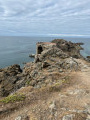
The outward journey follows the coast, along customs paths and part ofthe GR® 34; return via the boulevards with their maritime names, along departmental roads lined with beautiful granite houses.
The three headlands encountered along the route are Pointe de la Haye, Pointe de la Garde Guérin and Pointe du Décollé.
Magnificent views of the Breton coast.