


Refine your search for walks in Plonéour-Lanvern
Plonéour-Lanvern walks


 Kergonda and Kermorvan routes in Plonéour-Lanvern
 Visorando Member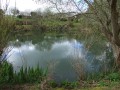
 7.18 mi
 +344 ft
 -371 ft
 3h 35
3h 35
 Moderate
 Departure from Plonéour-Lanvern (Finistère)
This route combines two shortPR® routes by linking them together: the Kergonda route, which follows part of the old railway line known as the "Carrot Train", and the Kermorvan route, which winds through the countryside along wide, often stony farm tracks and ends at the Raphalen botanical garden.
The link between these two routes allows you to discover the village of Plonéour-Lanvern, dominated by the imposing bell tower of Saint-Éneour Church (19th century).
The Moulin Neuf lake, starting from the Languivoa Chapel
 7.50 mi
+236 ft
-243 ft
3h 40
Moderate
Departure from Plonéour-Lanvern (Finistère)
7.50 mi
+236 ft
-243 ft
3h 40
Moderate
Departure from Plonéour-Lanvern (Finistère)
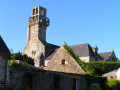
From the 13th-century Notre-Dame de Languivoa Chapel – whose troubled history led to it being abandoned for a very long time, and whose restoration was completed in 2017 – this route leads to the Moulin Neuf lake, created as a drinking water reservoir for much of the region.
Along the countryside route, you’ll pass the Manoir de Lestremec (1643), which has been beautifully restored by its new owners, and come close to a solitary menhir.
The Moulin Neuf lake walk
 4.57 mi
+23 ft
-26 ft
2h 05
4.57 mi
+23 ft
-26 ft
2h 05
 Easy
Departure from Plonéour-Lanvern (Finistère)
Easy
Departure from Plonéour-Lanvern (Finistère)
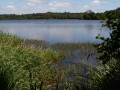
This is an easy walk around the reservoir, which supplies drinking water to eleven municipalities in the Pont-l'Abbé region. You can enjoy the peaceful, shaded surroundings and take the time to watch the birds that frequent this stretch of water: coots, gulls, grebes and a small colony of swans.
Route of the 2 churches and 3 chapels between Saint-Jean-Trolimon and Plomeur
 11.61 mi
+49 ft
-49 ft
5h 25
Moderate
Departure from Saint-Jean-Trolimon (Finistère)
11.61 mi
+49 ft
-49 ft
5h 25
Moderate
Departure from Saint-Jean-Trolimon (Finistère)
Discover two churches, three chapels and picturesque hamlets in the countryside between Saint-Jean-Trolimon and Plomeur via idyllic footpaths, farm tracks and quiet country lanes.
Moulin Neuf Pond from Bonne Nouvelle Chapel
 6.35 mi
+157 ft
-157 ft
3h 05
Easy
Departure from Plonéour-Lanvern (Finistère)
6.35 mi
+157 ft
-157 ft
3h 05
Easy
Departure from Plonéour-Lanvern (Finistère)
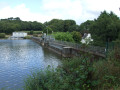
From the Bonne-Nouvelle Chapel, Kelou Mad in Breton, a route along a sunken lane and path bordering a wetland area where the Pont-l'Abbé River flows after passing through the Moulin Neuf reservoir leads to the edge of this body of water. The route continues around this reserve, created in 1977 to supply drinking water to eleven municipalities in the Pont-l'Abbé region. Visitors can enjoy the peaceful, shaded surroundings and take the time to observe the birds that frequent this stretch of water.
Around the Chapel of La Tréminou
 6.52 mi
+66 ft
-75 ft
3h 05
Moderate
Departure from Plomeur (Finistère)
6.52 mi
+66 ft
-75 ft
3h 05
Moderate
Departure from Plomeur (Finistère)
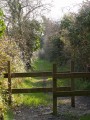
An easy route through the countryside along small roads and shaded country lanes.
This magnificent chapel also played an important role in the Bonnets Rouges revolt in 1675. This revolt was a violent protest against the new taxes imposed by King Louis XIV: the creation of a tax on stamped paper and a tax on the possession of pewter objects, but also a protest against the harshness and increase in seigneurial taxes.
Route des Vallons in Peumerit
 6.34 mi
+269 ft
-276 ft
3h 10
Easy
Departure from Peumérit (Finistère)
6.34 mi
+269 ft
-276 ft
3h 10
Easy
Departure from Peumérit (Finistère)
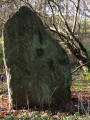
An easy, unmarked route through peaceful countryside, mostly on quiet minor roads.
Route via the Saint-Sébastien Chapel in Tréméoc
 5.77 mi
+98 ft
-82 ft
2h 45
Easy
Departure from Tréméoc (Finistère)
5.77 mi
+98 ft
-82 ft
2h 45
Easy
Departure from Tréméoc (Finistère)
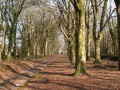
This countryside route alternates between sections on the old Quimper-Pont l'Abbé railway line, now converted for pedestrians and cyclists, small country roads and a long stretch through the woods.Along the way, discover the ruins of the Saint-Vital Chapel, lost in the middle of nature, as well as the better-known Saint-Sébastien Chapel.
Manor of Lestremec and Etang du Moulin Neuf
 6.15 mi
+171 ft
-164 ft
3h 00
Easy
Departure from Pont-l'Abbé (Finistère)
6.15 mi
+171 ft
-164 ft
3h 00
Easy
Departure from Pont-l'Abbé (Finistère)
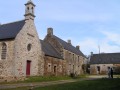
After walking along woodland paths to admire the manor "Manoir de Lestremec", we skirt the pond "Etang du Moulin Neuf".A short detour to enjoy the peace and quiet of the chapel "Chapelle de Kelou Mad" before returning along the greenway.
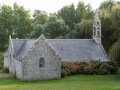
The Pont-L'Abbé water tower as a landmark.
Saint-Vio route
 6.90 mi
+49 ft
-49 ft
3h 15
Moderate
Departure from Tréguennec (Finistère)
6.90 mi
+49 ft
-49 ft
3h 15
Moderate
Departure from Tréguennec (Finistère)
Circuit in the Tréguennec marsh with the sound of the waves of Audierne Bay in the background. On the route, there are two beautiful isolated chapels: Saint-Vio and Saint-Évy.
Gardens, heritage, greenway and river around Pont-l'Abbé
 5.25 mi
+95 ft
-95 ft
2h 30
Easy
Departure from Pont-l'Abbé (Finistère)
5.25 mi
+95 ft
-95 ft
2h 30
Easy
Departure from Pont-l'Abbé (Finistère)
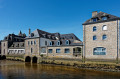
This semi-urban route begins with a visit to the Jardin des Camélias, which has been recently renovated but is little known despite its location in the heart of the town. It continues with a tour of the main monuments of Pont-l'Abbé before heading out into the countryside on the outskirts of Tréméoc and returning to the starting point via a greenway and the banks of the Pont-l'Abbé river.
Between the north and south of Pont-l'Abbé
 7.09 mi
+108 ft
-108 ft
3h 20
Moderate
Departure from Pont-l'Abbé (Finistère)
7.09 mi
+108 ft
-108 ft
3h 20
Moderate
Departure from Pont-l'Abbé (Finistère)
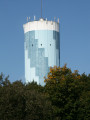
This route from north to south of Pont-l'Abbé allows you to discover pieces of the town's history. The Saint-Jacques de Lambour Chapel with its decapitated bell tower is a reminder of the Red Cap Revolt of 1675. The greenway follows a section of the old Transbigouden railway line that linked Pont-L'Abbé to Quimper and operated until 1963 the Château des Barons, built in the 13th and 14th centuries by the Barons of Pont, who became powerful lords, the inhabited bridge and, finally, the 19th-century towpath , built to cope with an increase in traffic and tonnage in the port.
Route of Tréguennec beach and its vast dune area
 7.59 mi
+72 ft
-72 ft
3h 35
Moderate
Departure from Tréguennec (Finistère)
7.59 mi
+72 ft
-72 ft
3h 35
Moderate
Departure from Tréguennec (Finistère)
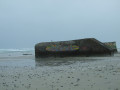
After passing the remains of the pebble crusher – a reminder of the construction of the ‘Atlantic Wall’ – walk for about 3 km along the beach overlooking Audierne Bay.Continue through the palud, a transitional zone between the dunes and the marshy areas which are heavily flooded in winter.There are some lovely heritage sites to discover along the way: the hamlets of Le Stang and Saint-Vio, the latter restored for the Maison de la Baie d’Audierne, as well as two charming chapels, each set in its own unique surroundings.
Around Tréguennec via the marshland and the Étang de Trunvel
 6.48 mi
+187 ft
-164 ft
3h 10
Easy
Departure from Tréguennec (Finistère)
6.48 mi
+187 ft
-164 ft
3h 10
Easy
Departure from Tréguennec (Finistère)
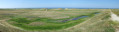
This easy route takes you through the Tréguennec marshland, overlooking the Trunvel coastal lagoon, before continuing through peaceful countryside.Don’t miss, at the start or finish, the remains of the imposing pebble crusher, a relic of the work undertaken for the construction of the Atlantic Wall from 1942 onwards.En route, near the Saint-Alour Chapel, note the protohistoric stele topped with an iron cross and its strange sculptures dating from 1869.
Beuzec-Cap-Caval Route
 8.10 mi
+98 ft
-102 ft
3h 50
Moderate
Departure from Saint-Jean-Trolimon (Finistère)
8.10 mi
+98 ft
-102 ft
3h 50
Moderate
Departure from Saint-Jean-Trolimon (Finistère)
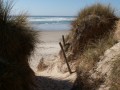
This route, starting from the Chapel of Tronoën, or Tronoan, known as the "cathedral of the dunes" and its famous calvary, will take us on a journey of discovery to see menhirs and dolmens. After passing the Chapel of Beuzec-Cap-Caval, we return along the coast and through the dune massif: a good breath of sea air in store.
Towpath and undergrowth along the Pont-l'Abbé River
 4.09 mi
+36 ft
-36 ft
1h 55
Easy
Departure from Pont-l'Abbé (Finistère)
4.09 mi
+36 ft
-36 ft
1h 55
Easy
Departure from Pont-l'Abbé (Finistère)
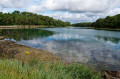
This short walk from Pont-l'Abbé offers a wealth of heritage. It starts on the towpath along the river and continues through the woods past the Manoir de Trévannec before returning to the starting point.
Heritage discoveries starting from Tronoën Chapel
 6.81 mi
+102 ft
-102 ft
3h 15
Moderate
Departure from Saint-Jean-Trolimon (Finistère)
6.81 mi
+102 ft
-102 ft
3h 15
Moderate
Departure from Saint-Jean-Trolimon (Finistère)
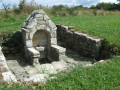
This route starts at Tronoën Chapel, known as the ‘Cathedral of the Dunes’, and its superb calvary, leading into the surrounding countryside rich in sights such as Saint-Budoc Chapel in the former parish of Beuzeg-Cap-Caval and its fountain.
Along the route, you’ll pass by menhirs and steles and walk along the seashore facing the open sea of Audierne Bay.
Vallée de Languidou
 6.64 mi
+230 ft
-223 ft
3h 15
Moderate
Departure from Plovan (Finistère)
6.64 mi
+230 ft
-223 ft
3h 15
Moderate
Departure from Plovan (Finistère)
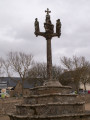
This route takes you into the valley that extends into the Étang de Kergalan.On the way back, you will pass by the Languidou Chapel, a ruined chapel that never fails to amaze with its architecture and magnificent stone lace rose window.
Around the Plovan ponds
 6.56 mi
+148 ft
-125 ft
3h 10
Easy
Departure from Plovan (Finistère)
6.56 mi
+148 ft
-125 ft
3h 10
Easy
Departure from Plovan (Finistère)
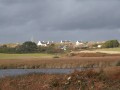
Discover the coastal lakes of Trunvel and Kergalan on the edge of Audierne Bay, which opens out onto the open sea.
The passage near the ruins of Languidou Chapel is always remarkable, not to mention the charm of the small village of Plovan.
Route of the towpath and tour of the lake
 6.07 mi
+39 ft
-39 ft
2h 50
Easy
Departure from Pont-l'Abbé (Finistère)
6.07 mi
+39 ft
-39 ft
2h 50
Easy
Departure from Pont-l'Abbé (Finistère)
After following the Pont-l'Abbé river, return to discover the lake and some of Pont-l'Abbé's historic sites, such as the Notre-Dame de Carmes Chapel and the old Lambour district with its partly ruined church.
Along the Plovan pebble beach
 6.97 mi
+62 ft
-62 ft
3h 15
Moderate
Departure from Plovan (Finistère)
6.97 mi
+62 ft
-62 ft
3h 15
Moderate
Departure from Plovan (Finistère)
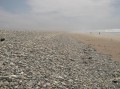
Following the pebble strip from Plovan to Penhors, you can enjoy views of the entire Bay of Audierne and its coastal lagoons. Return via small roads with the ocean always on the horizon.
Pont-l'Abbé towpath and Rosquerno Wood
 3.46 mi
+39 ft
-39 ft
1h 40
Easy
Departure from Pont-l'Abbé (Finistère)
3.46 mi
+39 ft
-39 ft
1h 40
Easy
Departure from Pont-l'Abbé (Finistère)
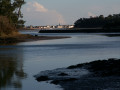
This easy route begins on the towpath of the Rivière de Pont-l'Abbé, where the landscape changes with the tide, then continues through the protected natural area of the Bois de Rosquerno. After passing near the Rosquerno equestrian centre, the route continues past the Manoir de Trévanec, a little gem of Pont-l'Abbé’s heritage dating back to the 15th century, before rejoining the towpath.
In the Tréméoc countryside
 6.75 mi
+135 ft
-144 ft
3h 15
Moderate
Departure from Combrit (Finistère)
6.75 mi
+135 ft
-144 ft
3h 15
Moderate
Departure from Combrit (Finistère)
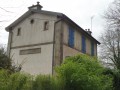
From the old Tréméoc railway station, once served by the Transbigouden line, we head to the Moulin Neuf reservoir, which supplies water to around ten towns in the Pont-l’Abbé area.
This is a chance to spot some birds on this 65ha reservoir. This countryside route alternates between small roads and sunken lanes.
The return journey follows the Voie Verte, which, in places, overlooks a wild and silent marshy area.
Route de Saint-Côme
 6.21 mi
+43 ft
-43 ft
2h 55
Easy
Departure from Plomeur (Finistère)
6.21 mi
+43 ft
-43 ft
2h 55
Easy
Departure from Plomeur (Finistère)
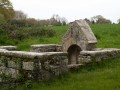
Countryside route allowing you to discover the Kerfland Menhirs as well as Saint-Côme Chapel and its fountain.
Heritage sites around Plomeur
 14.66 mi
+82 ft
-82 ft
6h 50
14.66 mi
+82 ft
-82 ft
6h 50
 Difficult
Departure from Plomeur (Finistère)
Difficult
Departure from Plomeur (Finistère)
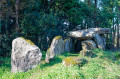
Discover an exceptional religious, megalithic and natural heritage between the village of Plomeur and Pointe de la Torche, via bucolic footpaths, farm tracks and quiet country lanes.
In the countryside from the Chapelle Saint-Germain
 6.65 mi
+315 ft
-331 ft
3h 20
Moderate
Departure from Plogastel-Saint-Germain (Finistère)
6.65 mi
+315 ft
-331 ft
3h 20
Moderate
Departure from Plogastel-Saint-Germain (Finistère)
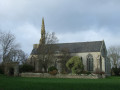
This route in the countryside of Plogastel-Saint-Germain mainly follows small roads.
Along the route, a highlight of the religious heritage is the Saint-Germain Chapel, one of the few in the region to have a parish enclosure with a Gothic-style triumphal arch.
Also along the route are a beautiful bread oven and wash house currently being restored, a menhir and the Moulin Neuf, a well-preserved building among the old mills on the Pont-l'Abbé River.
Along the Pont-L'Abbé river
 6.32 mi
+30 ft
-30 ft
2h 55
Easy
Departure from Pont-l'Abbé (Finistère)
6.32 mi
+30 ft
-30 ft
2h 55
Easy
Departure from Pont-l'Abbé (Finistère)
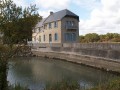
Wooded route following the right bank of the Pont-L'Abbé river towards its estuary between Île-Tudy and the port of Loctudy. The river is dotted with small private islands connected to the bank by a bridge.After passing by the Chapelle du Croaziou chapel, the return journey takes you through the countryside along a long farm track.The landscape in the first part of the route is completely different depending on the tide level.
Combrit Cove and the Lestremeur site
 5.19 mi
+213 ft
-184 ft
2h 35
Easy
Departure from Plomelin (Finistère)
5.19 mi
+213 ft
-184 ft
2h 35
Easy
Departure from Plomelin (Finistère)
A route through the woods along the Anse de Combrit and the banks of the Odet, passing through the Lestremeur site: manor house, dovecote, fountain and bread oven.
Return via small roads lined with majestic beech trees.
Discover the Roman baths at Pérennou
 6.46 mi
+325 ft
-308 ft
3h 15
Moderate
Departure from Plomelin (Finistère)
6.46 mi
+325 ft
-308 ft
3h 15
Moderate
Departure from Plomelin (Finistère)
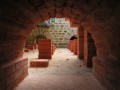
After walking through the countryside and along the Odet, visit the Roman baths at Le Perennou, which were restored in 2011, then return via the Lestremeur site and along Anse de Combrit.
Étang du Corroac'h circuit
 6.86 mi
+279 ft
-285 ft
3h 25
Moderate
Departure from Plomelin (Finistère)
6.86 mi
+279 ft
-285 ft
3h 25
Moderate
Departure from Plomelin (Finistère)
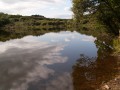
After passing the Lestremeur site, with its manor house and dovecote, continue through wooded areas to reach the Étang du Corroac'h. The return journey is via the greenway and then country lanes.
Pouldreuzic menhir route
 7.22 mi
+262 ft
-259 ft
3h 35
Moderate
Departure from Pouldreuzic (Finistère)
7.22 mi
+262 ft
-259 ft
3h 35
Moderate
Departure from Pouldreuzic (Finistère)
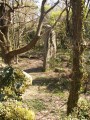
The bed and wardrobe of Saint-Kodelig, a possible menhir quarry, two menhirs separated by a stream... Explore the rolling countryside of Poudreuzic to discover these three megalithic sites, steeped in legend and historical reality.Along the way, you will encounter a few markers featuring excerpts from Pierre Jakez Hélias' masterpiece "Le cheval d'orgueil" (The Horse of Pride), combining biographical memories and ethnographic observations.
Route megalithique from Pointe de la Torche
 6.76 mi
+33 ft
-39 ft
3h 10
Moderate
Departure from Plomeur (Finistère)
6.76 mi
+33 ft
-39 ft
3h 10
Moderate
Departure from Plomeur (Finistère)
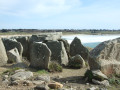
Starting at Pointe de la Torche, dominated by its eroded tumulus which reveals a dolmen and the remains of a covered passageway, the route runs along the coast and past the famous rocks of Saint-Guénolé.
Other megalithic monuments dot this route.
Route coastal and Lescors Marshes in Saint-Guénolé
 6.50 mi
+16 ft
-16 ft
3h 00
Moderate
Departure from Plomeur (Finistère)
6.50 mi
+16 ft
-16 ft
3h 00
Moderate
Departure from Plomeur (Finistère)
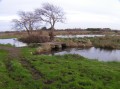
Easy coastal path facing the open sea: beach and imposing rocks.
Pass by the square tower of Saint-Guénolé.
Return via the marshes and dunes.
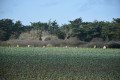
Between the sea and the marshes at Plomeur
 13.21 mi
+56 ft
-56 ft
6h 05
Difficult
Departure from Plomeur (Finistère)
13.21 mi
+56 ft
-56 ft
6h 05
Difficult
Departure from Plomeur (Finistère)
A circular route that begins by following theGR®34along the coast, then heads north towards the Lescors Marshes.
Megaliths, the seaside and marshes from the Chapelle de la Madeleine
 6.25 mi
+43 ft
-43 ft
2h 55
Easy
Departure from Penmarch (Finistère)
6.25 mi
+43 ft
-43 ft
2h 55
Easy
Departure from Penmarch (Finistère)
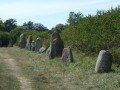
A varied, flat route starting from the beautiful Chapelle de la Madeleine with its modern stained-glass windows, the work of the painter Jean Bazaine, passing by two megalithic sites including the remains of a significant alignment of menhirs. The route continues through the dunes near Porzh Karn Beach, a surfer’s paradise, and returns via the Marias de Lescors, managed by the Conservatoire du Littoral.Sea and countryside with some wonderful heritage discoveries.
Around the village of Plogastel-Saint-Germain via the Bois du Quilliou
 4.52 mi
+338 ft
-318 ft
2h 20
Easy
Departure from Plogastel-Saint-Germain (Finistère)
4.52 mi
+338 ft
-318 ft
2h 20
Easy
Departure from Plogastel-Saint-Germain (Finistère)
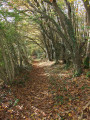
This short route takes you around the village of Plogastel-Saint-Germain, located on high ground (112 m). The Saint-Pierre church and its tall bell tower can be seen from afar.
Part of the route passes through the Quilliou deciduous forest.
Countryside around Plogastel-Saint-Germain
 6.24 mi
+440 ft
-443 ft
3h 15
Moderate
Departure from Plogastel-Saint-Germain (Finistère)
6.24 mi
+440 ft
-443 ft
3h 15
Moderate
Departure from Plogastel-Saint-Germain (Finistère)
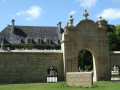
Dominated by the bell tower of Saint-Pierre Church, the large village of Plogastel-Saint-Germain offers pleasant countryside criss-crossed by sunken lanes and small tree-lined roads.
The route passes in front of the Manoir du Hilguy with its monumental gate, owned since 1987 by an English investment company.
Hills and valleys in the Plogastel-Saint-Germain countryside
 6.94 mi
+433 ft
-433 ft
3h 35
Moderate
Departure from Plogastel-Saint-Germain (Finistère)
6.94 mi
+433 ft
-433 ft
3h 35
Moderate
Departure from Plogastel-Saint-Germain (Finistère)
A long walk through the countryside around Plogastel-Saint-Germain, taking in cultivated hills and wooded valleys.
Countryside around Lababan in Pouldreuzic
 6.77 mi
+495 ft
-495 ft
3h 35
Moderate
Departure from Pouldreuzic (Finistère)
6.77 mi
+495 ft
-495 ft
3h 35
Moderate
Departure from Pouldreuzic (Finistère)
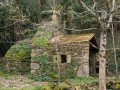
Set amongst trees, the church at Lababan and its cemetery, bearing witness to the history of this former parish now part of Poudreuzic, a fountain lost in the woods, a section of the old “Train Carottes” railway line, wild valleys and the restored bread oven near the Moulin de Crémenec – this is what awaits you on this hike through the peaceful countryside.
Saint-Demet route starting from Lababan
 7.18 mi
+367 ft
-367 ft
3h 35
Moderate
Departure from Pouldreuzic (Finistère)
7.18 mi
+367 ft
-367 ft
3h 35
Moderate
Departure from Pouldreuzic (Finistère)
Starting from the chapel of Lababan in Pouldreuzic, we will take the old "carrot train" railway line to return via the wetlands of Plozévet.
Discovering Pouldreuzic
 6.70 mi
+144 ft
-144 ft
3h 10
Moderate
Departure from Pouldreuzic (Finistère)
6.70 mi
+144 ft
-144 ft
3h 10
Moderate
Departure from Pouldreuzic (Finistère)
Pouldreuzic came to prominence following the publication, in 1975, of Pierre JaKez Hélias’s book *Le cheval d’Orgueil*, which was subsequently adapted into a film in 1980 by Claude Chabrol.Another local claim to fame: the little Hénaff pâté tin, produced since 1915, has its own eco-museum here. The top of the water tower even bears the image of the famous tin.This route also passes close to the “Kerné” cider house, another of the town’s flagship products.The route begins at Lababan Chapel and its cemetery, before heading out into the beautiful countryside.
In the rolling countryside of Plozévet and Pouldreuzic
 7.19 mi
+364 ft
-348 ft
3h 35
Moderate
Departure from Pouldreuzic (Finistère)
7.19 mi
+364 ft
-348 ft
3h 35
Moderate
Departure from Pouldreuzic (Finistère)
Route through the countryside of two neighbouring municipalities, along paths between fields and small roads offering regular views of the sea.Beautiful religious heritage along the way: chapels and calvaries.
Countryside and heritage from Lababan, a former parish of Pouldreuzic
 4.44 mi
+154 ft
-128 ft
2h 10
Easy
Departure from Pouldreuzic (Finistère)
4.44 mi
+154 ft
-128 ft
2h 10
Easy
Departure from Pouldreuzic (Finistère)
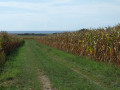
This short route along farm tracks offers beautiful panoramic views of the countryside and the coastal area.Several heritage sites along the way: wayside crosses and chapels.
Coast and marshes around Saint-Guénolé
5.83 mi
+26 ft
-26 ft
2h 40
Easy
Departure from Penmarch (Finistère)
Cap Caval stretches out into the sea facing the ocean waves. From this flat land where even the bell towers are low, only the two lighthouses at the tip emerge. This piece of land seems to be on the verge of being swallowed up by the waves, and the Chapelle de la Joie, standing on the sea wall, offers a fragile defence against the fury of the ocean.
 Île Tudy - Sainte-Marine - Combrit
 12.07 mi
+266 ft
-276 ft
2.5 hrs
Moderate
Departure from Île-Tudy (Finistère)
12.07 mi
+266 ft
-276 ft
2.5 hrs
Moderate
Departure from Île-Tudy (Finistère)
A short bike ride between the beach, the woods and the Bigouden countryside.
Via the ports of Loctudy
 5.26 mi
+20 ft
-20 ft
2h 25
Easy
Departure from Loctudy (Finistère)
5.26 mi
+20 ft
-20 ft
2h 25
Easy
Departure from Loctudy (Finistère)
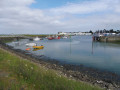
Three main points of interest on this route through Loctudy:- at the start, the marina with a ferry to Île-Tudy,- shortly afterwards, Saint-Tudy Church, which hides a very well-preserved Romanesque interior behind an 18th-century façade,- at the end of the route, the fishing port and its famous “Demoiselles de Loctudy” (langoustines).
Between these points, the route winds its way through narrow streets, connecting paths and along the seafront by the beach.
The Plozévet countryside and the seaside via Penhors
 6.86 mi
+102 ft
-102 ft
3h 15
Moderate
Departure from Plozévet (Finistère)
6.86 mi
+102 ft
-102 ft
3h 15
Moderate
Departure from Plozévet (Finistère)
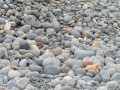
Chapels, an old mill, unspoilt countryside, a restored bread oven and the seaside via the small port of Penhors and its pebble beach. Return via paths through the fields.
From Saint-Demet to Penhors and the Menhir "Des Droits de l'Homme"
 6.66 mi
+138 ft
-167 ft
3h 10
Moderate
Departure from Plozévet (Finistère)
6.66 mi
+138 ft
-167 ft
3h 10
Moderate
Departure from Plozévet (Finistère)
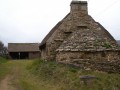
Starting from the Saint-Demet Chapel, you will reach the Notre-Dame-de-Penhors Chapel and follow the coastal path to the "Human Rights" menhir.
Greenway and Ster dunes via the port of Kérity
 6.54 mi
+23 ft
-23 ft
3h 00
Easy
Departure from Penmarch (Finistère)
6.54 mi
+23 ft
-23 ft
3h 00
Easy
Departure from Penmarch (Finistère)
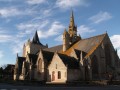
A leisurely walk along an old railway line through the Ster marshland.Return along the seashore on a path built below the dune to protect it. Numerous access points lead down to the sea, where the view is spectacular.The port of Kérity is imposing with its three breakwaters, but deep-sea fishing has ceased, giving way to daily fishing from small boats.Discover the imposing Church of Saint-Nonna in Penmarc’h and that of Sainte-Thumette in Kérity.
Loop via Kérity, the Pointe de Penmarch and the old Birinik train line
 6.77 mi
+30 ft
-30 ft
3h 10
Moderate
Departure from Penmarch (Finistère)
6.77 mi
+30 ft
-30 ft
3h 10
Moderate
Departure from Penmarch (Finistère)
From the market town of Penmarch, this route leads to the seafront, past the Port de Kérity, the Pointe de Penmarch with its imposing Eckmül lighthouse, and the Chapel of Notre-Dame de la Joie right on the seafront. The return journey takes you along the old railway line between Pont-l'Abbé and Saint-Guénolé.
Megalithic circuit
 7.42 mi
+39 ft
-39 ft
3h 25
Moderate
Departure from Plobannalec-Lesconil (Finistère)
7.42 mi
+39 ft
-39 ft
3h 25
Moderate
Departure from Plobannalec-Lesconil (Finistère)
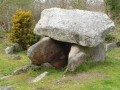
Discover the megaliths (dolmens, covered passageway, menhir) facing the open sea.
Return via the coastal path and Lesconil Port.
Countryside and woods around Plogastel-Saint-Germain
 6.68 mi
+394 ft
-394 ft
3h 25
Moderate
Departure from Plogastel-Saint-Germain (Finistère)
6.68 mi
+394 ft
-394 ft
3h 25
Moderate
Departure from Plogastel-Saint-Germain (Finistère)
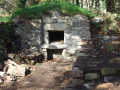
This route, along small roads and wooded paths, largely combines two small routes around the village of Plogastel-Saint-Germain:
Wooded circular in Plogastel-Saint-Germain.
- Around the village of Plogastel-Saint-Germain via the Bois du Quilliou (in the opposite direction).
Wooded circular in Plogastel-Saint-Germain
 3.54 mi
+128 ft
-138 ft
1h 45
Easy
Departure from Plogastel-Saint-Germain (Finistère)
3.54 mi
+128 ft
-138 ft
1h 45
Easy
Departure from Plogastel-Saint-Germain (Finistère)
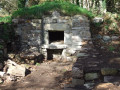
In the countryside around Plogastel-Saint-Germain, this short route mainly follows paths lined with wooded embankments and passes through small woods and wetlands, which can be crossed via a long wooden walkway.
During the walk, you will discover an old bread oven saved at the last minute, an old farmhouse and a well-maintained wash house.
Heritage discoveries around Guilvinec
 6.19 mi
+49 ft
-49 ft
2h 55
Easy
Departure from Guilvinec (Finistère)
6.19 mi
+49 ft
-49 ft
2h 55
Easy
Departure from Guilvinec (Finistère)
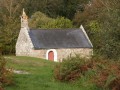
Let’s walk along the coast facing the Pointe de Penmarc’h, dominated by its lighthouse, then head inland to discover the Poulguen Tumulus.
After a short detour to the Chapelle Saint-Marc, nestled in its green setting, we return to the Chapelle Saint-Trémeur with its votive fountain and old bread oven.
Between megaliths and crosses in Plobannalec-Lesconil
 3.94 mi
+30 ft
-30 ft
1h 50
Easy
Departure from Plobannalec-Lesconil (Finistère)
3.94 mi
+30 ft
-30 ft
1h 50
Easy
Departure from Plobannalec-Lesconil (Finistère)
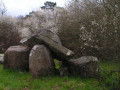
Follow this short route, created by the "Lire à Plobannalec" association, and head into the countryside to discover various elements of the local heritage: megalithic sites, crosses and fountains.
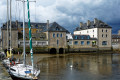
Heritage along the river, through the woods and countryside from Loctudy to Pont-l’Abbé
 9.90 mi
+43 ft
-43 ft
4h 35
Moderate
Departure from Loctudy (Finistère)
9.90 mi
+43 ft
-43 ft
4h 35
Moderate
Departure from Loctudy (Finistère)
This route, which follows the Pont-l’Abbé River on the outward leg and then winds through woods and countryside on the return, offers the chance to discover a rich historical heritage: churches, chapels, castles, manor houses, mills, old residences, bridges and menhirs, to name just a few of the most remarkable monuments that line the route.
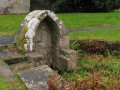
Discovering Loctudy
 5.42 mi
+33 ft
-33 ft
2h 30
Easy
Departure from Loctudy (Finistère)
5.42 mi
+33 ft
-33 ft
2h 30
Easy
Departure from Loctudy (Finistère)
Enjoy exploring Loctudy through its streets and alleys, beaches and shorelines.
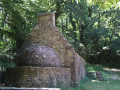
Tour of Pluguffan and the Bois des Korrigans
 5.69 mi
+226 ft
-256 ft
2h 50
Easy
Departure from Pluguffan (Finistère)
5.69 mi
+226 ft
-256 ft
2h 50
Easy
Departure from Pluguffan (Finistère)
A suburban walk taking you round Pluguffan and through wooded areas near the water catchment areas.
The little Bois des Korrigans offers the chance to discover a Neolithic dolmen.
Tradition often holds that dolmens are the homes of korrigans, the sprites of Breton folklore. Perhaps this is where the name of this wood comes from?
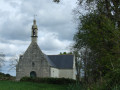
In the Pluguffan countryside
 6.36 mi
+279 ft
-279 ft
3h 10
Easy
Departure from Pluguffan (Finistère)
6.36 mi
+279 ft
-279 ft
3h 10
Easy
Departure from Pluguffan (Finistère)
Just a short walk from the village and the small airport, this route takes you through very peaceful countryside along numerous sunken paths winding through unspoilt valleys.Along this route, you can admire the Church of Saint-Cuffan in the village, as well as the Chapel of Notre-Dame des Grâces and its votive fountain, set in the heart of the countryside.
Circuit de la Fontaine Saint-Anne et campagne de Landudec
 6.59 mi
+285 ft
-305 ft
3h 15
Moderate
Departure from Landudec (Finistère)
6.59 mi
+285 ft
-305 ft
3h 15
Moderate
Departure from Landudec (Finistère)
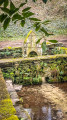
The route alternates between small country roads and numerous sunken paths in wooded areas.Passes by the Saint-Anne Fountain (1743) and part of the botanical trail near the water catchment protection area.The rest of the route follows various valleys where mills were once located.
Route of the old mills of Landudec
 6.47 mi
+322 ft
-305 ft
3h 15
Moderate
Departure from Landudec (Finistère)
6.47 mi
+322 ft
-305 ft
3h 15
Moderate
Departure from Landudec (Finistère)
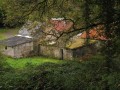
Follow the start of the Goyen valley, which joins the sea after about thirty kilometres, along a few small country roads and paths through the woods.
This river used to power several mills. The route will take you past three of them.
You can also enjoy the peace and quiet of the valley floor.
Walk from Saint-Ronan to Plozévet
 1.99 mi
+30 ft
-30 ft
0h 55
Easy
Departure from Plozévet (Finistère)
1.99 mi
+30 ft
-30 ft
0h 55
Easy
Departure from Plozévet (Finistère)
The Haut Pays Bigouden Community of Communes is responsible for managing the drinking water catchments in the area between Plozévet and Landudec. To this end, it manages a protection zone comprising wooded areas.
This walk takes you through this area of deciduous woodland (oaks, chestnut trees and beech trees) along a well-signposted path.
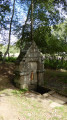
The walk also offers the chance to discover the idyllic site of the Saint-Ronan Chapel with its votive fountain.
From Saint Ronan Chapel to the wind turbines
 7.58 mi
+72 ft
-66 ft
3h 35
Moderate
Departure from Plozévet (Finistère)
7.58 mi
+72 ft
-66 ft
3h 35
Moderate
Departure from Plozévet (Finistère)
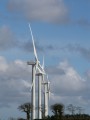
This walk, punctuated by stops for exercise, allows you to discover the Chapel of Saint Ronan in its setting with the fountain and the granite sarcophagus, and to stroll around the wind turbines and through the woodland.
Ria, countryside, seaside and Lesconil harbour
 6.40 mi
+23 ft
-23 ft
3h 00
Easy
Departure from Plobannalec-Lesconil (Finistère)
6.40 mi
+23 ft
-23 ft
3h 00
Easy
Departure from Plobannalec-Lesconil (Finistère)
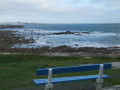
Walking up the Stêr estuary, an area ideal for bird watching in areas exposed at low tide, along paths and small country roads, the trail through the dunes and then along the seafront between large boulders, and finally the port of Lesconil, which has now lost its former aura.
Enough to satisfy the curiosity of hikers and give them the opportunity to enjoy a breath of fresh sea air.
Please note: diversion fromthe PR® (see practical information).
Heritage around Plonivel
 5.20 mi
+30 ft
-30 ft
2h 25
Easy
Departure from Plobannalec-Lesconil (Finistère)
5.20 mi
+30 ft
-30 ft
2h 25
Easy
Departure from Plobannalec-Lesconil (Finistère)
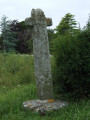
Plonivel is a former parish abolished during the Revolution, and the Saint-Brieuc Chapel was its parish church.
This route, which initially follows the Stêr estuary, a river in Lesconil, invites walkers to discover a rich heritage around this chapel: a manor house, various crosses, Gallic stelae, fountains and the ruins of an old chapel.
Seaside, built-up areas and countryside in Loctudy
 6.83 mi
+23 ft
-23 ft
3h 10
Moderate
Departure from Plobannalec-Lesconil (Finistère)
6.83 mi
+23 ft
-23 ft
3h 10
Moderate
Departure from Plobannalec-Lesconil (Finistère)
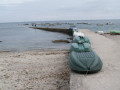
This flat route combines sections of coastal paths (GR®34 ), at least where the path is not diverted from the seafront due to buildings encroaching on the coastline, with small roads between built-up areas and the countryside. A lovely touch of heritage comes in the form of two small, unassuming chapels, each with its own votive fountain.
Between the old railway line and the wild valleys at Plozévet
 6.53 mi
+371 ft
-387 ft
3h 20
Moderate
Departure from Plozévet (Finistère)
6.53 mi
+371 ft
-387 ft
3h 20
Moderate
Departure from Plozévet (Finistère)
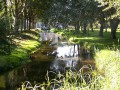
An old railway line called the "carrot train", a dark coniferous forest, small winding roads, a wide view of the Bigouden coast and a long passage at the bottom of a wild valley where only the murmur of the stream disturbs the silence.