


tonnoguh

 Visorando Member
 Premium user
 - Location: Fontain (25660)
- Gender: man
- Website: https://echiquierbisontin.fr/
Sign up:
Published route(s)
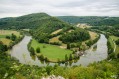
 The great meander of the Loue
 4.70 mi
 +495 ft
 -505 ft
 2h 35
2h 35
 Easy
Easy
 Departure from Busy (Doubs)
"To the south, there was no need for walls of wood or stone: the seigneurial tower spread its mismatched wings at the top of a steep cliff at the foot of which flows the Loue. The tranquil river continues to lap at the rocky escarpment, drawing the same green loops on the earth as it has done since time immemorial," writes Carole Martinez in her book Du domaine des murmures.
Come and listen to the murmur of the Loue in the shadow of the ancient castle.
The Old Wash House at Arguel
 4.11 mi
+791 ft
-791 ft
2h 35
Easy
Departure from Fontain (Doubs)
4.11 mi
+791 ft
-791 ft
2h 35
Easy
Departure from Fontain (Doubs)
A short walk through the Comté region on the estate of the Lords of Arguel, where their fortified castle once stood on a jagged ridge, and a visit to the old wash house.
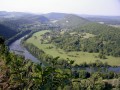
The Rock of Valmy
 5.30 mi
+896 ft
-892 ft
3h 15
Easy
Departure from Arguel (Doubs)
5.30 mi
+896 ft
-892 ft
3h 15
Easy
Departure from Arguel (Doubs)
On 26 September 1943, between 7.36am and 8.24am, 16 members of the Guy Mocquet and Marius Vallet resistance groups were shot at the citadel. Later, the German officer in charge of the operation reported the end of the shootings in these terms: " None of them agreed to be blindfolded. They all died bravely, shouting 'Long live France!'" Hike in tribute to the memorial stone located at one of the most beautiful viewpoints in the Besançon area.
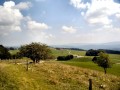
Le Crêt Monniot
 9.58 mi
+1,234 ft
-1,234 ft
5h 30
9.58 mi
+1,234 ft
-1,234 ft
5h 30
 Moderate
Departure from Arc-sous-Cicon (Doubs)
Moderate
Departure from Arc-sous-Cicon (Doubs)
You don't need to be as fit as an Alpine hunter to climb the high peaks and enjoy breathtaking views. This is a walk that is accessible to all. This 10km or 15km hike will take you to Crêt Monniot (1141m) where, on a clear day, a superb 360° panorama awaits you: lomont, the Loue valley, the Jura plateaus, the Vosges, Mont Blanc and the Bernese Alps. You will love this landscape of chaux (the medieval name for high-altitude wasteland) with its sinkholes and sharp limestone pavement.
The End of the World
 6.98 mi
+1,155 ft
-1,135 ft
4h 15
Moderate
Departure from Beure (Doubs)
6.98 mi
+1,155 ft
-1,135 ft
4h 15
Moderate
Departure from Beure (Doubs)
Twelve short kilometres to the end of the world: a great destination that won't tire you out. You will discover the old village of Beure, a waterfall, an old wash house, a charming little church and its cemetery, and several viewpoints over the Doubs valley. Perhaps you will also have time to spare a thought for the young men who died under Nazi bullets, whose memory is perpetuated by the memorial at Rocher de Valmy.
Boussières: Notre-Dame du Mont
 9.73 mi
+1,142 ft
-1,138 ft
5h 30
Moderate
Departure from Boussières (Doubs)
9.73 mi
+1,142 ft
-1,138 ft
5h 30
Moderate
Departure from Boussières (Doubs)
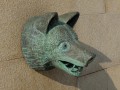
From Virgin to Virgin, not forgetting the big bad wolves, you will discover a superb panorama of the Doubs valley and its contrasting hills: warlike with the ruins of Montferrand Castle, peaceful with the protective Virgin of Notre-Dame du Mont, commercial with the Percée de Thoraise. As you climb the Éssart du Loup, you can dream of those distant times when the simple, tranquil beauty of our Comtois landscapes could be disturbed by sinister encounters.
The Feudal Castle of Montfaucon
 4.69 mi
+676 ft
-669 ft
2h 45
Easy
Departure from Montfaucon (Doubs) (Doubs)
4.69 mi
+676 ft
-669 ft
2h 45
Easy
Departure from Montfaucon (Doubs) (Doubs)
During this walk, you will pass through almost 1,000 years of military history, from the ruins of the old medieval castle to the Woirol military fort, built at the end of the 19th century, enjoying numerous views of the Bisontine valley and, on a clear day in the early morning or evening, the Bernese Oberland Alps and Mont Blanc.
The Montfaucon defensive mole
 7.83 mi
+830 ft
-856 ft
4h 20
Moderate
Departure from Montfaucon (Doubs) (Doubs)
7.83 mi
+830 ft
-856 ft
4h 20
Moderate
Departure from Montfaucon (Doubs) (Doubs)
Hike through the defensive wall of Montfaucon, a system of fortifications essential to the defence of Besançon. Built between 1870 and 1889 on a cliff, the site overlooks the city at an altitude of 617 metres. For walkers with less of a military bent, you will enjoy this woodland walk with its views of the Doubs valley, the Citadel, the Jura Mountains and, on a clear day, the Alps, from the Bernese Oberland to Mont Blanc.
The Nouailles Gorges and the Source of the Loue
 9.53 mi
+2,136 ft
-2,146 ft
6h 15
9.53 mi
+2,136 ft
-2,146 ft
6h 15
 Difficult
Departure from Mouthier-Haute-Pierre (Doubs)
Difficult
Departure from Mouthier-Haute-Pierre (Doubs)
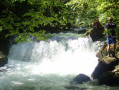
From the old village of Mouthier, you will climb to this major tourist attraction in Franche-Comté, one of the Doubs’ most significant natural sites: the Source de la Loue, as you make your way up through the Gorges de Nouailles. You’ll look down over its emerald-green waters, interspersed with rapids and waterfalls, as you climb a picturesque and challenging path, perhaps catching a glimpse along the way of the counterfeiters of yesteryear who used to strike fake coins in the shade of the caves, before returning via the cliff ridge and its viewpoints overlooking the valley.
The Viper Fountain
 6.46 mi
+879 ft
-876 ft
3h 45
Moderate
Departure from Ornans (Doubs)
6.46 mi
+879 ft
-876 ft
3h 45
Moderate
Departure from Ornans (Doubs)
This circuit will allow you to discover the setting of our small Franche-Comté town from three viewpoints: the Belvédère de Notre Dame du Mont, the Château d'Ornans and the Château du Grand, offering sweeping views of the Loue valley. This is a major site on the Courbet Trail, thanks to the famous 1855 painting Le Château d'Ornans, an oil on canvas kept at the Minneapolis Museum. You will discover the Fontaine aux Vipères (Viper Fountain), which still echoes with the gossip of our cancouaines (local women).
The Belvédère des Grands Ruins
 8.59 mi
+1,053 ft
-1,030 ft
4h 50
Moderate
Departure from Échay (Doubs)
8.59 mi
+1,053 ft
-1,030 ft
4h 50
Moderate
Departure from Échay (Doubs)
A peaceful walk in the Lison valley with its sandstone cliffs and three viewpoints. You will discover two typical Comtois villages, Echay and Cussey sur Lison, and its remote hamlet.
The Gouille Noire viewpoint
 9.99 mi
+1,060 ft
-1,056 ft
5h 30
Moderate
Departure from Amondans (Doubs)
9.99 mi
+1,060 ft
-1,056 ft
5h 30
Moderate
Departure from Amondans (Doubs)
Amondans, home of our regional musician Napoléon Coste, overlooks the Malans stream, which flows into the Gouille Noire, whose wild charm you will be able to admire from above. Passing by oratories and fountains, you will return to Lizine with its ancient houses covered with lauzes, the formidable stone tiles that required our carpenters of yesteryear to build solid frames. Two other viewpoints will allow you to discover the Lison and Loue valleys with their gorges and meanders.
The Feudal Castle of Montferrand
 6.62 mi
+640 ft
-640 ft
3h 35
Moderate
Departure from Montferrand-le-Château (Doubs)
6.62 mi
+640 ft
-640 ft
3h 35
Moderate
Departure from Montferrand-le-Château (Doubs)
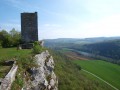
This hike offers magnificent views of the Doubs valley and its contrasting hills: warrior-like with the ruins of the feudal castle of Montferrand, peaceful with the protective Virgin of Notre-Dame du Mont, and will lead you through bucolic me anders towards the beautifully named Notre-Dame de l'Assomption des Champs, protecting you from demonic medieval gargoyles.
The Rocks of Château Loriot, the Chapel of Aigremont
 8.20 mi
+1,955 ft
-1,955 ft
5h 30
Moderate
Departure from Deluz (Doubs)
8.20 mi
+1,955 ft
-1,955 ft
5h 30
Moderate
Departure from Deluz (Doubs)
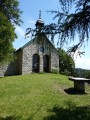
This is a challenging hike offering three viewpoints over the Doubs valley and its meanders, the Val de Roulans, the Jura mountains and, on a clear day, Mont Blanc. You will visit the two villages in the valley, Laissey and Deluz, which are peaceful today but still echo with the industrious sounds of the old mines and paper mills, and enjoy their genuine and simple riches: here a naive war memorial, there an ancient forgotten cul-de-four oven or an old wash house.
Wash houses, the botanical trail and the Rurey viewpoint
6.04 mi
+597 ft
-617 ft
3h 20
Easy
Departure from Rurey (Doubs)
A short forest walk through the Val de Cademène with beautiful, unobstructed views over the Loue Valley and the Jura Mountains, taking in our Comtois villages and their bell towers nestled in the hollows of the hills. Most of the route is unmarked, so this walk will help sharpen your sense of direction.
The Mercureaux Valley
 5.25 mi
+548 ft
-541 ft
2h 55
Easy
Departure from Fontain (Doubs)
5.25 mi
+548 ft
-541 ft
2h 55
Easy
Departure from Fontain (Doubs)
Fans of alpine races who chant the Sambre et Meuse song as they run, move along. If, on the other hand, you like to make long speeches to one of our good old Montbéliard cows encountered along the way and find them very witty, if you like to trudge along our Cambrousard trails, then enjoy the charm of this peaceful walk along the Mercureaux stream where, it is said, a temple dedicated to the god Mercury stood in ancient times.
The Marquis' Castle
 8.24 mi
+1,056 ft
-1,056 ft
4h 40
Moderate
Departure from Abbans-Dessous (Doubs)
8.24 mi
+1,056 ft
-1,056 ft
4h 40
Moderate
Departure from Abbans-Dessous (Doubs)
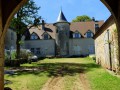
This hike, following in the footsteps of Marquis Claude François Dorothée de Jouffroy d'Abbans, naval architect and designer of the steamboat, will take you between the Loue and Doubs rivers, from oratories to churches, in the heart of our devout Comtois countryside, leaving you time to meditate on the twilight paths of our wooded mountains.
The Peusse and Baume Bourla waterfalls
 8.99 mi
+1,404 ft
-1,394 ft
5h 20
Moderate
Departure from Ornans (Doubs)
8.99 mi
+1,404 ft
-1,394 ft
5h 20
Moderate
Departure from Ornans (Doubs)
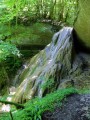
Set off to explore the mountains of Franche-Comté, accompanied by the murmur of our cool streams which, if you know how to listen, will tell you many forgotten stories. Discover the vegetation petrified by our limestone waters and the coolness of secret caves nestled in the wild greenery.
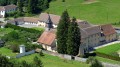
The Abbey of Grace of God
 4.66 mi
+407 ft
-387 ft
2h 30
Easy
Departure from Chaux-lès-Passavant (Doubs)
4.66 mi
+407 ft
-387 ft
2h 30
Easy
Departure from Chaux-lès-Passavant (Doubs)
A short, varied and shaded route to discover the ancient Hiboux valley, the old Cistercian abbey and the magnificent Audeux waterfall.
The Pierre Lamadou viewpoint
 6.89 mi
+1,024 ft
-1,030 ft
4h 05
Moderate
Departure from Plaimbois-Vennes (Doubs)
6.89 mi
+1,024 ft
-1,030 ft
4h 05
Moderate
Departure from Plaimbois-Vennes (Doubs)
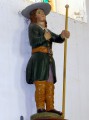
In 1747, Pierre arrived in the village and settled in a nearby cave on the edge of the cliff, where he lived for 45 years, making tinder from oak agaric mushrooms and carving Christs and Virgins from lime wood for the inhabitants. Discover this viewpoint over the wild Reverotte valley and our cool fir forests. An ideal walk for a beautiful summer afternoon.
Le Peu and the Grotte des Bougeottes
 11.09 mi
+1,119 ft
-1,119 ft
6h 05
Moderate
Departure from Laviron (Doubs)
11.09 mi
+1,119 ft
-1,119 ft
6h 05
Moderate
Departure from Laviron (Doubs)
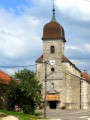
From the 860-metre-high Peu hill, you can enjoy a 270° panorama of the surrounding and distant mountains, and see 27 bell towers in the Doubs department. Nestled in lush greenery, the Grotte des Bougeottes is also steeped in history. It served as a refuge during the troubled times of the Ten Years' War and the Revolution.
La Roche d'Or
 7.22 mi
+1,309 ft
-1,319 ft
4h 30
Moderate
Departure from Besançon (Doubs)
7.22 mi
+1,309 ft
-1,319 ft
4h 30
Moderate
Departure from Besançon (Doubs)
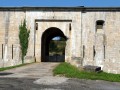
An urban hike to discover the hills of Besançon. Natural factors such as soil, climate and altitude, combined with the action of water, have shaped the hills of Chaudanne and Rosemont, which are remarkable natural areas. Let yourself be seduced by the beauty of unspoilt nature, proving that our provincial Besançon has managed to remain a city in the countryside.
The Belvédère de Norvaux
 10.40 mi
+709 ft
-709 ft
5h 25
Moderate
Departure from Flagey (Doubs)
10.40 mi
+709 ft
-709 ft
5h 25
Moderate
Departure from Flagey (Doubs)
Discover a unique feature of the Jura mountains: the reculées, narrow, deep valleys lined with high, steep walls, formed at the end of the ice age by a gradual retreat from the beginning of the valley into the plateau, ending in wild cirques. The first part of the walk takes you through woodland, past springs and streams, before returning via the Amancey plateau to discover two villages in the Comté region, Bolandoz and Flagey, and their richly decorated churches.
The Crêtes trail and the Pierre de Vorges
 9.78 mi
+1,444 ft
-1,453 ft
5h 45
Moderate
Departure from Busy (Doubs)
9.78 mi
+1,444 ft
-1,453 ft
5h 45
Moderate
Departure from Busy (Doubs)
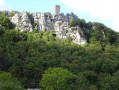
A short climb to warm up your legs and discover two villages and exceptional views over the Doubs and Loue valleys, the Chapel of Notre-Dame du Mont, overlooking the valley, the Château de Thoraise above the river, the feudal castle of Montferrand and its medieval keep overlooking the meanders and, on the horizon, Besançon. Then a more leisurely return via the towpath, along the banks of the Doubs in the protective shade of the ruins.
The source of the Lison and the Belvédère du Vieux Château
 9.13 mi
+1,998 ft
-1,991 ft
5h 55
Moderate
Departure from Nans-sous-Sainte-Anne (Doubs)
9.13 mi
+1,998 ft
-1,991 ft
5h 55
Moderate
Departure from Nans-sous-Sainte-Anne (Doubs)
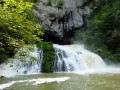
Discover the charm of Nans-sous-Sainte-Anne and its old houses, nestled in the natural setting of the remote valley, its Taillanderie. Then there is the Lison, mystical and wild at the foot of a vertiginous rocky cirque, after a tortuous underground journey, gushing forth in the blue-green plume of its never-ending waterfall, the wild cathedral of the Sarrazine cave, the Creux Billard and finally the belvedere of the Vieux Château.
The Source du Gour
 5.51 mi
+289 ft
-289 ft
2h 45
Moderate
Departure from Bouclans (Doubs)
5.51 mi
+289 ft
-289 ft
2h 45
Moderate
Departure from Bouclans (Doubs)
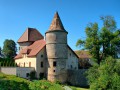
A peaceful walk in our Comtois countryside to discover the riches of two villages on the first step of the plateau: the remains of an ancient castle that allow us to dream of the lost beauty of our once fortified villages and the often overlooked treasures of their churches.
The ruins of the feudal castle of Chenecey
 4.59 mi
+820 ft
-814 ft
2h 50
Easy
Departure from Chenecey-Buillon (Doubs)
4.59 mi
+820 ft
-814 ft
2h 50
Easy
Departure from Chenecey-Buillon (Doubs)
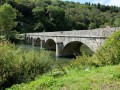
A ruined feudal castle dating from the 9th century overlooking the village and the Loue valley, the ruins of Charencey Castle are listed as a Historic Monument. From the church, located on the banks of the Loue, you will climb up to these secret ruins, continuing through a beautiful forest, perhaps imagining that you will come across a team of oxen pulling a cart up to the castle. Finally, you will return through the sunny pastures overlooking the valley.
La Roche de Hautepierre
 8.08 mi
+1,939 ft
-1,929 ft
5h 25
Moderate
Departure from Lods (Doubs)
8.08 mi
+1,939 ft
-1,929 ft
5h 25
Moderate
Departure from Lods (Doubs)
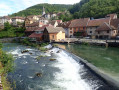
Formerly known as Roche du Soleil ( Sun Rock), because it is here that the sun, rising above the horizon, casts its first rays and bids its last farewell as it sets, it is through the pale or red hue with which it colours the rock that it predicts to the inhabitants whether the next day will bring serenity or tears from the sky. Discover two characterful towns in the Comté region and this royal viewpoint over the Loue valley, the Jura mountains and Mont Blanc.
Notre-Dame de la Libération and the Caves of Saint-Léonard
 5.76 mi
+945 ft
-945 ft
3h 30
Moderate
Departure from Morre (Doubs)
5.76 mi
+945 ft
-945 ft
3h 30
Moderate
Departure from Morre (Doubs)
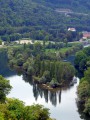
In 1940, the Archbishop of Besançon, Mgr Dubourg, vowed to erect a statue to the Virgin Mary if the city was not destroyed. From this splendid viewpoint overlooking the loop topped by its Citadel, you can continue on your pilgrimage to the Grotte-Ermitage de Saint-Léonard and Notre-Dame-des-Buis, before returning with a spring in your step via the foothills of the Citadel and the Forts des Buis, stopping off at the many viewpoints over the city and other more rugged spots overlooking the Doubs and Mercureaux valleys.
Fort Beauregard and Fort Bregille
 5.92 mi
+1,171 ft
-1,178 ft
3h 45
Moderate
Departure from Besançon (Doubs)
5.92 mi
+1,171 ft
-1,178 ft
3h 45
Moderate
Departure from Besançon (Doubs)
The forts of Beauregard and Bregille offer a special walk for residents of Besançon seeking greenery and sweeping views of the capital of Franche-Comté and its hills. They offer superb views of our Citadel. Then, just a stone's throw from the bustling city, you will find yourself on quiet paths, accompanied by the scent of boxwood.
The Boxwood Path
 6.89 mi
+997 ft
-988 ft
4h 00
Moderate
Departure from Besançon (Doubs)
6.89 mi
+997 ft
-988 ft
4h 00
Moderate
Departure from Besançon (Doubs)
A lion, small and large virgins. No! You are not in an arena, despite the Roman past of our Vesontio, but on the heights of the Chapelle des Buis with its splendid views of the Citadel overlooking the city of Besançon. You will then reach the charming little valley of Les Mercureaux via a ridge path winding through the box trees.
The belvederes at the end of the world
 6.62 mi
+1,467 ft
-1,480 ft
4h 20
Moderate
Departure from Beure (Doubs)
6.62 mi
+1,467 ft
-1,480 ft
4h 20
Moderate
Departure from Beure (Doubs)
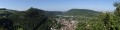
A Roman and medieval path leads from the Bout du Monde to the heights of the Doubs and Mercureaux valleys, allowing you to pass discreetly under the ruins of the castle, stronghold of the infamous Sir Jacques d'Arguel, the racketeer, and quickly placing you under the protection of our polychrome saints of Franche-Comté.
The Fort of Planoise
 3.92 mi
+869 ft
-850 ft
2h 35
Easy
Departure from Avanne-Aveney (Doubs)
3.92 mi
+869 ft
-850 ft
2h 35
Easy
Departure from Avanne-Aveney (Doubs)
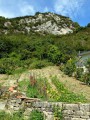
Starting from the church in Avanne, you will walk along the river, climb up to the cabordes, old dry stone winegrowers' huts, then on to Fort de Planoise or Fort Moncey, built in 1877, the first defensive rampart of the city of Besançon. You will pass numerous batteries and fortifications at a military pace, then stop at the superb viewpoints, one overlooking Besançon and its hills, the second to the south, overlooking the Doubs valley and the Jura mountains.
The Belvédère du Gratteris and the Saint-Maximin Chapel
 5.29 mi
+548 ft
-548 ft
2h 55
Easy
Departure from Le Gratteris (Doubs)
5.29 mi
+548 ft
-548 ft
2h 55
Easy
Departure from Le Gratteris (Doubs)
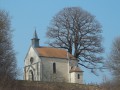
A short walk through the forest takes you from the very Catholic hermitage of Saint-Maximin to the prehistoric pagan dolmens. You will end up at the viewpoint overlooking Le Gratteris, whose name comes from the Celtic word kratt, meaning a stony field where you had to scratch hard to earn your livelihood.
The ridge line, Notre-Dame des Buis and La Libération
 4.67 mi
+571 ft
-581 ft
2h 40
Easy
Departure from Fontain (Doubs)
4.67 mi
+571 ft
-581 ft
2h 40
Easy
Departure from Fontain (Doubs)
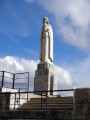
Head towards the Chapelle des Buis and Notre-Dame de la Libération viewpoints overlooking the city of Besançon and its citadel via a ridge path scented with boxwood, running alongside the walls of an old abandoned fort and the charming little Mercureaux valley.
Le Saut du Chevalier
 4.31 mi
+755 ft
-725 ft
2h 40
Easy
Departure from Bonnevaux-le-Prieuré (Doubs)
4.31 mi
+755 ft
-725 ft
2h 40
Easy
Departure from Bonnevaux-le-Prieuré (Doubs)
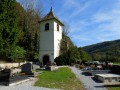
Starting from the bell tower of the former medieval priory, you will cross the cool Brème valley, so often painted by Courbet. Then, climbing back up to the Saut du Chevalier viewpoint, you will descend into the valley via a picturesque mule track.
Les Roches Fournièche, d'Ully and du Châtelet
 3.95 mi
+705 ft
-702 ft
2h 25
Easy
Departure from Ornans (Doubs)
3.95 mi
+705 ft
-702 ft
2h 25
Easy
Departure from Ornans (Doubs)
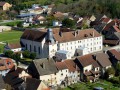
This route will allow you to discover the setting of our small Franche-Comté town from three viewpoints: Roche Fournièche, Rocher d'Ully and Châtelet.
The Belvédère de Gougnot, the Roche Bottine and the Saut du Chevalier
 8.10 mi
+1,053 ft
-1,037 ft
4h 40
Moderate
Departure from Ornans (Doubs)
8.10 mi
+1,053 ft
-1,037 ft
4h 40
Moderate
Departure from Ornans (Doubs)
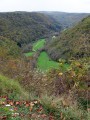
The Loue Valley, an inexhaustible source of hiking opportunities, offers the rugged, wild charm of its rocks, ending more peacefully at the Saut du Chevalier waterfall in the cool Brême Valley, so often painted by Courbet.
The Chemin de La Bro
 3.01 mi
+607 ft
-597 ft
1h 55
Easy
Departure from Morre (Doubs)
3.01 mi
+607 ft
-597 ft
1h 55
Easy
Departure from Morre (Doubs)
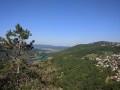
In just five kilometres, you will discover Notre-Dame de la Libération, overlooking Besançon from its altitude of 500 metres, built in gratitude for the city's preservation during the last war. Then you will cross the Monts des Buis, climbing towards wilder viewpoints over the Doubs valley.
The Belvédères de la Thuyère and La Verdotte
 5.43 mi
+840 ft
-833 ft
3h 15
Easy
Departure from Montgesoye (Doubs)
5.43 mi
+840 ft
-833 ft
3h 15
Easy
Departure from Montgesoye (Doubs)
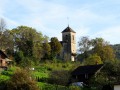
You will discover the Church of Saint-Gengoult and its old tombs, then climb to two viewpoints over Montgesoye, Ornans and the Loue Valley as you walk through a charming little valley.
La Grange Rouge and the Grand Méandre
 5.46 mi
+548 ft
-564 ft
3h 00
Easy
Departure from Larnod (Doubs)
5.46 mi
+548 ft
-564 ft
3h 00
Easy
Departure from Larnod (Doubs)
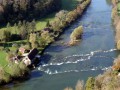
A forest walk, ideal for an autumn morning, where you might spot a few peaceful chamois in the depths of secret glades and discover, emerging from the forest setting, the superb Grand Méandre viewpoint over the Loue valley and the keep of the feudal castle of Chenecey.
The remains of Alésia and the Lison Gorges
 5.24 mi
+840 ft
-843 ft
3h 10
Easy
Departure from Éternoz (Doubs)
5.24 mi
+840 ft
-843 ft
3h 10
Easy
Departure from Éternoz (Doubs)
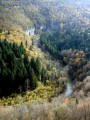
On 10 November 1855, during a meeting of the Société d'Émulation du Doubs, Alphonse Delacroix exclaimed: "There is a place which, until the 19th century, retained its name of Alésia and still reigns amid the remains of the largest battlefield known to man. It is there, in Alaise, that we place the memorable siege that ended the struggle of Vercingetorix." Far from this scholarly debate, discover these ruins and, above all, the magnificent view of the Lison Gorges.
The Château de Vaite viewpoint
 4.58 mi
+1,033 ft
-1,033 ft
3h 00
Easy
Departure from Champlive (Doubs)
4.58 mi
+1,033 ft
-1,033 ft
3h 00
Easy
Departure from Champlive (Doubs)
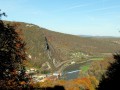
A rocky outcrop, a Bronze Age residence in Franche-Comté; a feudal castle destroyed during the Revolution for fear that it would become a hideout for bandits; views of the Doubs valley; a pretty waterfall created by human hands in a bright and airy woodland setting.
The Narpent viewpoint
 4.35 mi
+735 ft
-732 ft
2h 40
Easy
Departure from Malbrans (Doubs)
4.35 mi
+735 ft
-732 ft
2h 40
Easy
Departure from Malbrans (Doubs)
A wild getaway to discover the entire Loue valley from the top of the Malbrans plateau, from the Hautepierre rock to Mount Poupet, then from an equally wild viewpoint, the Scey en Varais valley and, silhouetted against the sky, the outline of the Saint-Denis castle.
The Thuyère, Verdotte and Val de Cornebouche viewpoints
 8.24 mi
+892 ft
-896 ft
4h 35
Moderate
Departure from Montgesoye (Doubs)
8.24 mi
+892 ft
-896 ft
4h 35
Moderate
Departure from Montgesoye (Doubs)
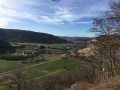
From Saint-Gengoult Church and its ancient tombs, you will climb to two viewpoints over Montgesoye, Ornans and the Loue Valley, passing through a charming little remote area, and return via the wild Cornebouche valley.
The Belvédère du Vieux-Château and the Pont du Diable
 5.92 mi
+1,050 ft
-1,056 ft
3h 40
Moderate
Departure from Crouzet-Migette (Doubs)
5.92 mi
+1,050 ft
-1,056 ft
3h 40
Moderate
Departure from Crouzet-Migette (Doubs)
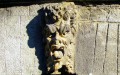
From Crouzet, you will climb up to the remains of one of the largest strongholds of the Chalon family, which are actually quite sparse. Blame Louis XIV, who destroyed a large part of our heritage in revenge! However, your efforts will be rewarded by the splendid view of Nans-sous-Sainte-Anne, nestled in the natural setting of its remote valley, by the pretty Saint-Thiébaud church and by the bold and supernatural bridge spanning the Diable waterfall.
The source of the Loue, the Nouailles Gorges and Notre-Dame des Anges
 7.67 mi
+1,693 ft
-1,696 ft
5h 00
Moderate
Departure from Ouhans (Doubs)
7.67 mi
+1,693 ft
-1,696 ft
5h 00
Moderate
Departure from Ouhans (Doubs)
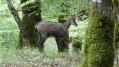
You will descend towards this regional tourist hotspot, one of the Doubs' major natural sites: the Source de la Loue. You will overlook the sumptuous and wild Gorges de Nouailles from the side of the cliff, then climb up a steep path to the Aiguillon de Brasse viewpoint. Finally, you will return to Ouhans through peaceful meadows and bright pine forests, stopping for a few moments at the Notre-Dame des Anges chapel to thank the heavens for being a resident of Franche-Comté
Mont Pelé
 4.24 mi
+781 ft
-761 ft
2h 40
Easy
Departure from Bugny (Doubs)
4.24 mi
+781 ft
-761 ft
2h 40
Easy
Departure from Bugny (Doubs)
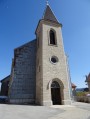
Climb Mont Pelé (1,045 m) through an open pine forest. At the summit, you will enjoy a 360° view. To the west, view Bugny and the Val des Usiers, the upper Jura mountain range. To the east, view of Crêt Monniot and, with a little luck, Mont Blanc will be visible on a clear day. To the north, above all, view of the magnificent upper Loue valley bordered by the cliffs of Moine de la Vallée and Roche de Hautepierre. Return via a superb rocky ridge with numerous viewpoints over the valley.
The Grand Méandre and Charencey Castle
 6.90 mi
+879 ft
-889 ft
3h 55
Moderate
Departure from Busy (Doubs)
6.90 mi
+879 ft
-889 ft
3h 55
Moderate
Departure from Busy (Doubs)
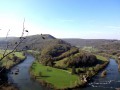
You will walk peacefully along the river towards Chenecey, with its old church and picturesque 18th-century turreted house, then climb up to the hidden ruins of the 9th-century feudal castle of Charencey, which dominates the village and the Loue valley. Finally, you will end your walk at the Grand Méandre viewpoint overlooking the valley and the castle keep, where you may even spot some chamois.
The Ravin du Puits Noir and the Belvédère du Tourbillon
 8.40 mi
+1,119 ft
-1,122 ft
4h 50
Moderate
Departure from Scey-Maisières (Doubs)
8.40 mi
+1,119 ft
-1,122 ft
4h 50
Moderate
Departure from Scey-Maisières (Doubs)
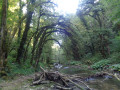
Following in the footsteps of Gustave Courbet, the Ravin du Puits Noir was one of the painter's favourite places. You will follow the course of the Brême, walk peacefully along the old Tacot road, climb the Roche du Tourbillon for superb views of the picturesque and steep-sided Brême valley, and finally end at the Prieuré de Bonnevaux, of which only a charming chapel and its 12th-century bell tower remain.