Country:

 City:
City:


Parking: follow the D49 after Villers-sous-Chalamont for 2.6 km, taking a small road on the right (at the Boujailles, Villers, route des Sapins signs) which leads you to a sign for "Passage antique de Chalamont" at the crossroads with a stone path (Promenade de Chalamont).
(S/E) Turn right down the gravel path and you will soon come to a fork at a post with a red roof. Continue to the right along the gravel path. At the next fork, turn left onto a new gravel path to reach a tarmac road.
(1) Walk up this road to the left for about 50 metres and take the path on the left, which is half stone and half grass, for a good climb up the wooded hillside. At the top, ignore a path leading down to the right and join the tarmac Route des Sapins.
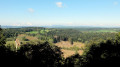
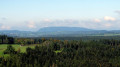
(2) Continue to the right, passing a deforested area offering views of Mont Poupet and the valley. Pass the sign for Chemin Neuf on your left, descending to the nearby Belvédère de la Roche viewpoint, with a bench and picnic table (small path on the right).
(3) Turn back for about 200 metres without returning all the way to Chemin Neuf and take the beautiful grassy forest path on the right, passing picnic tables to reach a small clearing.
(4) Head right towards another table and confidently take the slightly overgrown path for about a hundred metres. When it becomes impassable, it crosses a well-marked uphill path (Trail 5 route).
(5) Climb left along this path to reach a roughly stony track. Continue straight ahead along this farm track, which soon turns left. When it starts to descend, look out for the small sign on the right indicating the path that leads to a viewpoint on the Boujailles plateau.
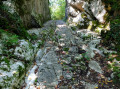
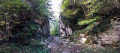
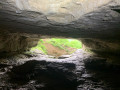
(6) Continue to reach the well-graveled path of the Promenade de Chalamont (sign). Continue to the right, soon leaving a path on your right, and go to a trail that climbs into the woods on the left between two concrete markers (sign "Passage antique") to arrive at this beautiful passage where ancient carts have carved deep into the rock.
(7) Cross to the other side and descend to the stone path of the Promenade de Chalamont, continuing downhill to the car park (S/E).

 Visorando Member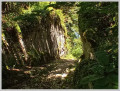

 Association / Club / Walk leader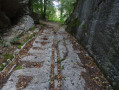
 Moderate
 Difficult