


FARGAS Jean-Claude

 Visorando Member
 Premium user
 - Location: Senonches (28250)
- Gender: man
Sign up:
Published route(s)
 The venerable trees of the Senonches forest
 7.23 mi
 +125 ft
 -125 ft
 3h 25
3h 25
 Moderate
 Departure from Senonches (Eure-et-Loir)
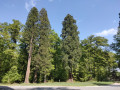
The ancients revered old trees. Like them, pay homage to the "elders" of the forest. After skirting Lake Arthur Rémy, then the Vente des Trous iron ore extraction site, this circuit will take you, via secret paths and long avenues, to the seniors of the forest.First, wish the Three Brothers a happy340th birthday. Younger, but just as sturdy, seven sequoias and a cedar have been watching over the Rond de Monsieur for over a century. After passing through this imposing circle, visit the King of the Forest, who is said to sometimes sit on the gigantic throne of the Chêne Fauteuil. Finally, don't forget to say hello to the chestnut tree at the Rond de Condé.Take the time to enjoy the peace and quiet of the woods by stopping at the rest areas you'll find along the way. At "L'Orée du Bois" (The Edge of the Woods), learn to use your five senses to better experience the forest. Complete your knowledge by discovering a "Forest of Stories" at the château.
Where does this lead us? To Manou!
 7.02 mi
+194 ft
-194 ft
3h 25
Moderate
Departure from Senonches (Eure-et-Loir)
7.02 mi
+194 ft
-194 ft
3h 25
Moderate
Departure from Senonches (Eure-et-Loir)
A pleasant circular, partly through the forest and partly across fields, ideal for a late morning walk, lunch in Manou or at the Moulin à Vent, and a return in the afternoon with a visit to the Froux peat bog.Departure from the Senonches national forest, from the Bois des Dames, formerly owned by the nuns of the neighbouring Belhomert Abbey. At the entrance to Manou, view of the castle known as Blanche de Castille. Garden near the church and the "Bon'Eure" pond in Manou, a pleasant place to relax and have a picnic.Cross the Froux bog site, developed by the Conservatoire des Espaces Naturels (Conservatory of Natural Areas) to showcase rare and protected animal and plant species.Return via the Forestiers pond, which is ideal for observing animals coming to drink in the evening.
Circular loop around the ponds from Les Ressuintes
 12.81 mi
+279 ft
-262 ft
6h 10
12.81 mi
+279 ft
-262 ft
6h 10
 Difficult
Departure from Les Ressuintes (Eure-et-Loir)
Difficult
Departure from Les Ressuintes (Eure-et-Loir)
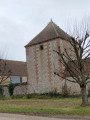
Starting from Les Ressuintes, between Senonches and La Ferté-Vidame, you will pass through La Puisaye and hamlets dotted with numerous tastefully renovated farmhouses. Set amongst woods and fields, this circular route takes you past several ponds, including the Bénette, a site protected by the Regional Conservatory of Sensitive Natural Areas due to its valuable biodiversity. Beautiful, straight paths wind through the Senonches State Forest, where you might just spot some large wildlife.
Tour des canards in Senonches
 3.41 mi
+52 ft
-52 ft
1h 35
3.41 mi
+52 ft
-52 ft
1h 35
 Easy
Departure from Senonches (Eure-et-Loir)
Easy
Departure from Senonches (Eure-et-Loir)
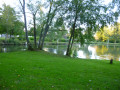
In Senonches, starting from the Jacques-Yves Cousteau School, there is a short circuit designed for families, leading from the Moinerie housing estate or the HLM social housing complex to the Arthur Rémy pond. Here you will find a whole happy flock of waterfowl, games for the little ones and picnic tables for the grown-ups. You can fish or follow a fitness trail. Crossing the town centre, you will pass by the main points of interest: the listed cinema, Town Hall, media library, castle museum and church.
Tour of the Bois de la Ferrière
 6.85 mi
+200 ft
-177 ft
3h 20
Moderate
Departure from Fontaine-Simon (Eure-et-Loir)
6.85 mi
+200 ft
-177 ft
3h 20
Moderate
Departure from Fontaine-Simon (Eure-et-Loir)
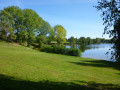
A forest hike starting from the Perche Water Park in Fontaine-Simon. The path leads into the Senonches State Forest after following the edge of the lake. A picturesque trail along the old railway line, a long forest line and then a path that descends into the Tourbière des Froux lead to this protected natural site, home to rare plant and animal species. Passing through hamlets and ponds, you return to La Ferrière, the site of former iron ore mining.
From Senonches to La Ferté-Vidame
 11.71 mi
+167 ft
-72 ft
5h 30
Moderate
Departure from Senonches (Eure-et-Loir)
11.71 mi
+167 ft
-72 ft
5h 30
Moderate
Departure from Senonches (Eure-et-Loir)
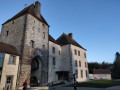
This first stage connects Senonches to La Ferté Vidame. Through the national forest, the route takes you to the village of La Framboisière, the Château de la Hézière, near which there was once a glassworks, and, via a long forest road, leads to La Puisaye. After skirting the Étang de Rouge, the path crosses farmland and arrives at La Ferté-Vidame, the stronghold of the Duke of Saint-Simon, famous chronicler of the court of Versailles. At the entrance to the park, in the Pavillon Saint-Dominique, home to the tourist office, the Maison Saint-Simon presents his life and work. A walk in the park allows you to contemplate the vast views, the ponds and the ruins of the castle of the Marquis de la Borde, which replaced the medieval fortress, the "favourite residence" of the memoirist, in the 18th century. Recently restored, the "little castle" once belonged to King Louis-Philippe, benefactor of the village. The classical-style Saint-Nicolas Church contains the tomb of the duke and his wife.
A weekend with the Duke of Saint-Simon
24.27 mi
+276 ft
-292 ft
2 days
Difficult
Departure from Senonches (Eure-et-Loir)
What if you were invited by the Duke of Saint-Simon, famous chronicler of the Court of Versailles, to celebrate his350th birthday in La Ferté-Vidame?
Imagine being able to accept this unlikely invitation and spending a weekend on this two-stage loop that will take you from Senonches, through forests and farmland, to his "favourite residence".
Since 1975, the Saint-Simon Prize has been awarded every September to a contemporary memoirist during the book festival. In 2025, it will be the50th edition and we will celebrate the 350th anniversary of the duke, who was born in 1675.
Set off to explore his estate and the "Petites Cités de Caractère" (small towns of character) of Senonches and La Ferté-Vidame along long forest paths, ponds and country lanes.
If you are unable to meet the duke and his beloved wife, the Maison Saint-Simon will tell you about his life and work. Visit the romantic ruins of the castle built by the Marquis de Laborde shortly before the Revolution in the park.
From La Ferté-Vidame to Senonches
 12.56 mi
+108 ft
-220 ft
5h 50
Difficult
Departure from La Ferté-Vidame (Eure-et-Loir)
12.56 mi
+108 ft
-220 ft
5h 50
Difficult
Departure from La Ferté-Vidame (Eure-et-Loir)
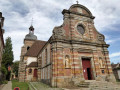
For this second stage, fromthe town hall in La Ferté-Vidame, the route leads to the park entrance. After visiting the part open to the public, you unfortunately have to follow the wall of the former Citroën test centre. It was the birthplace of the "deux chevaux", the "traction avant" and many other models. Enclosed by this 13 km wall, it is impossible to cross, so you have to follow the D941 and D15.The route then crosses an area of farmland and copses. It passes by some pretty, well-restored houses. At La Pommarié, it finally reaches the woods. The Allée du Maupas leads to the Senonches State Forest, which you will follow for a long time. We pass at the foot of two remarkable majestic trees to reach the Grand Rond, a majestic star-shaped crossroads. After the village of Tardais, the route returns to the forest and leads to the entrance to Senonches. It crosses the town via the recently renovated and flower-filled main street.
Wash houses, springs and streams around Senonches
 4.46 mi
+98 ft
-98 ft
2h 10
Easy
Departure from Senonches (Eure-et-Loir)
4.46 mi
+98 ft
-98 ft
2h 10
Easy
Departure from Senonches (Eure-et-Loir)
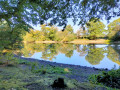
The name Senonches comes from the Latin Senunchia: land with marshy waterways. In fact, the area was once covered with ponds and waterways, making it a vast marshland.This circular allows you to discover the many places where water springs up and flows around the town. It is built on wet land that has had to be drained over the years by capturing springs, installing drainage systems and digging streams to carry water to the ponds that now give the town its charm. Along these streams, numerous wash houses were established at the end of the 19th century and still bear witness to the hard work of women at that time.Follow this route, which stays within the urban area but also sometimes passes along the edge of the woods.
The Chemin du Maupas
 4.25 mi
+36 ft
-36 ft
2h 00
Easy
Departure from Senonches (Eure-et-Loir)
4.25 mi
+36 ft
-36 ft
2h 00
Easy
Departure from Senonches (Eure-et-Loir)
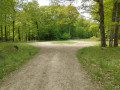
This circular loop in the Senonches State Forest, starting from the Grand Rond – a magnificent star-shaped junction of forest tracks – first follows long forest tracks leading to the Rond des Quatre Barrières and then to the Rond des Hussards. A path then winds its way between the state-owned forest and private woodland. After passing through the Rond de la Rachée, the route passes at the foot of the Chêne d’Hérissé, the sole survivor of the 1999 storm in this area. Shortly before the finish, the Hêtre du Haut Cornet stands a few metres from the path.
The Louvilliers arm
 3.30 mi
+105 ft
-105 ft
1h 35
Easy
Departure from Senonches (Eure-et-Loir)
3.30 mi
+105 ft
-105 ft
1h 35
Easy
Departure from Senonches (Eure-et-Loir)
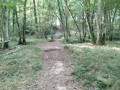
A circular path at the far end of the Bras de Louvilliers in the Senonches State Forest, taking in the valley of the Ruisseau de Saint-Cyr and the site of the Poste de Louvilliers forest lodge with its pond and magnificent oak tree. The path then winds its way above the Blaise valley before skirting the Bois du Paradis. Quite a journey!
Fontaine-Aubert lake in Belhomert
 3.90 mi
+233 ft
-203 ft
2h 00
Easy
Departure from Belhomert-Guéhouville (Eure-et-Loir)
3.90 mi
+233 ft
-203 ft
2h 00
Easy
Departure from Belhomert-Guéhouville (Eure-et-Loir)
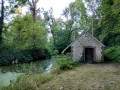
This short route starts in the village of Belhomert and takes you to the small lake at Fontaine-Aubert, a pleasant spot for fishing and picnics. The route through the fields offers beautiful views of the Eure valley.
Les Framboisiers de la Framboisière
 2.22 mi
+26 ft
-26 ft
1h 05
Easy
Departure from La Framboisière (Eure-et-Loir)
2.22 mi
+26 ft
-26 ft
1h 05
Easy
Departure from La Framboisière (Eure-et-Loir)
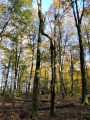
No raspberries in sight: for now, but where on earth have the raspberry bushes of La Framboisière gone?The village’s name is more likely to be linked to the Bois Francs – the free-hold woods.The Raspberry Festival takes place every two years. It brings together local artisans who showcase their products related to the preparation of dishes made with red berries.A short walk to explore the fields and woodland edge between the Senonches State Forest and the village. A stroll past the majestic oaks of La Framboisière and Le Grand Village. Reminders of an old railway line.
Mesnil-Thomas circular: the lovers' path
 6.92 mi
+69 ft
-69 ft
3h 15
Moderate
Departure from Le Mesnil-Thomas (Eure-et-Loir)
6.92 mi
+69 ft
-69 ft
3h 15
Moderate
Departure from Le Mesnil-Thomas (Eure-et-Loir)
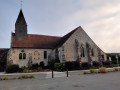
A circular loop between the village and the Senonches National Forest, passing through fields and copses. It goes through small hamlets with pretty farmhouses decorated with flowers in summer. After La Motte and La Petite Motte, places reminiscent of the ancient line of defence established between France and Normandy, the route becomes more romantic, crossing the Bois du Rouvray via a path which, it is said, was a meeting place for young lovers from the village. There weren't many other places nearby where they could meet discreetly!
Jaudrais circular via the Grande Vallée
 7.32 mi
+203 ft
-220 ft
3h 35
Moderate
Departure from Jaudrais (Eure-et-Loir)
7.32 mi
+203 ft
-220 ft
3h 35
Moderate
Departure from Jaudrais (Eure-et-Loir)
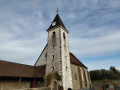
A walk half in the fields and half in the Châteauneuf-en-Thymerais State Forest, starting from the village of Jaudrais and passing through its hamlets. The circular route follows the Grande Vallée stream from a distance on both sides.
From the Senonches forest to the Boizard locks
 13.66 mi
+594 ft
-594 ft
6h 50
Difficult
Departure from Senonches (Eure-et-Loir)
13.66 mi
+594 ft
-594 ft
6h 50
Difficult
Departure from Senonches (Eure-et-Loir)
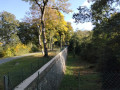
A beautiful hike, mostly in the woods around the Eure valley, starting from the Senonches State Forest and ending at the Boizard locks. Built in 1785 by Louis XIV's engineers, this structure was supposed to be the starting point of an unfinished aqueduct that would have carried water from the Eure to the fountains in the park of the Palace of Versailles. On the way back, discover the Château des Vaux and its gardens.
Verneuil-sur-Avre - La Ferté-Vidame
 15.72 mi
+423 ft
-194 ft
7h 35
Difficult
Departure from Verneuil-sur-Avre (Eure)
15.72 mi
+423 ft
-194 ft
7h 35
Difficult
Departure from Verneuil-sur-Avre (Eure)
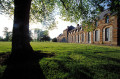
To mark the centenary of Maurice de Vlaminck's move to La Tourillière near Rueil-la-Gadelière, a few kilometres from Verneuil-sur-Avre, recently renamed Verneuil d'Avre et d'Iton, this tour offers a three-stage discovery of the region that inspired the painter.A hunter, fisherman, walker, cyclist, motorist and motorcyclist, he came to settle here to find peace and inspiration. From 1925 until his death in 1958, under an often changeable sky dotted with clouds, the painter tirelessly explored these landscapes of fields, copses and the vast forest of Senonches, in search of subjects for his many paintings.We will first go from Verneuil to La Ferté-Vidame, passing by his grave in the cemetery of Rueil, his bust sculpted by his friend Paul Belmondo in front of the town hall, and above all his home in La Tourillière, preserved in the state in which he lived.
In the land of Vlaminck
36.06 mi
+633 ft
-522 ft
3 days
Difficult
Departure from Verneuil-sur-Avre (Eure)
In the centenary year of Maurice de Vlaminck's move to La Tourillière near Verneuil-sur-Avre, here is a journey through his heartland between Verneuil-sur-Avre and La Loupe. These towns are both served by railway stations that can be reached from Paris Montparnasse. Woods, fields and forests were the inspiration for many of the painter's works. With cloudy skies guaranteed, take a stroll through the landscapes that so strongly inspired this colourful, versatile artist, where he welcomed the greatest celebrities of his time.
La Ferté-Vidame - Senonches
 12.03 mi
+3 ft
-112 ft
5h 30
Difficult
Departure from La Ferté-Vidame (Eure-et-Loir)
12.03 mi
+3 ft
-112 ft
5h 30
Difficult
Departure from La Ferté-Vidame (Eure-et-Loir)
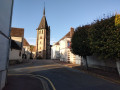
The second stage of this journey through Vlaminck country will take us from La Ferté-Vidame to Senonches via La Puisaye. After crossing an agricultural plain, the path takes us into the woods of La Saucelle, then into the Senonches State Forest. We will pass through Tardais, a small village where the painter often came to hunt with his friend Michel Erlisch, the village mayor, and where he painted a picture of the church as seen from the town hall. We will finally arrive in Senonches, a small town of character where he often went to enjoy joyful and hearty feasts with friends.
Senonches - La Loupe
 8.30 mi
+207 ft
-217 ft
4h 00
Moderate
Departure from Senonches (Eure-et-Loir)
8.30 mi
+207 ft
-217 ft
4h 00
Moderate
Departure from Senonches (Eure-et-Loir)
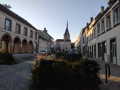
This last stage of our journey through the Vlaminck region takes us from Senonches to La Loupe. Initially mainly wooded, the route then crosses the Eure valley, passing close to the Fontaine-Simon water park, where you can stop for refreshments. La Loupe station provides a quick return to Paris-Montparnasse.
The Champs Élysées of the Perche
 3.65 mi
+26 ft
-26 ft
1h 40
Easy
Departure from La Puisaye (Eure-et-Loir)
3.65 mi
+26 ft
-26 ft
1h 40
Easy
Departure from La Puisaye (Eure-et-Loir)
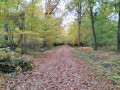
This short loop in the Bois de la Saucelle, near Puisaye, is mainly woodland. It confirms the toponymic meaning of the name Puisaye, which refers to a wetland area. Through private woods, the circuit follows wide avenues, including the Ligne Jacob, whose length, width and majesty could justify the mischievously pretentious name of "Champs Élysées du Perche". However, don't expect to find shops and noisy café terraces here. All you will hear is birdsong. Enjoy the peace and quiet of this unspoilt, authentic natural environment, exploring it on tiptoe so as not to disturb the many animals that you are sure to glimpse if you are discreet.Avoid this route on hunting days. Danger!
Circular Beauche via Boulay Saint-Clair in the footsteps of a "Fauve"
 6.33 mi
+233 ft
-256 ft
3h 05
Moderate
Departure from Beauche (Eure-et-Loir)
6.33 mi
+233 ft
-256 ft
3h 05
Moderate
Departure from Beauche (Eure-et-Loir)
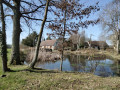
The painter Maurice de Vlaminck lived near Rueil-la-Gadelière from 1925 until his death in 1958. This year marks the centenary of his arrival in the area. A three-day itinerary already allows you to explore his homeland from Verneuil-sur-Avre to La Loupe. Walkers who are unable to undertake this crossing can take one or more of the short circulars "In the footsteps of a Fauve". These allow you to discover in detail the places that inspired the painter."Beauche is the village next to the hamlet of La Tourillière. Its origins are lost in the mists of time. One cannot imagine that its pleasant, wholesome appearance has ever changed. The spire of its bell tower pierces the clouds. It can be seen from far away because Beauche is built on flat ground in the plain..." Vlaminck.Starting from Beauche, this short route through fields and woods skirts the Château du Boulay Saint-Clair. On the way back, it passes by the Benne pond, which has recently been restored by the municipality of Rueil-la-Gadelière.
Tour du Gué au Chéron in the Senonches forest
 6.18 mi
+52 ft
-52 ft
2h 55
Easy
Departure from Senonches (Eure-et-Loir)
6.18 mi
+52 ft
-52 ft
2h 55
Easy
Departure from Senonches (Eure-et-Loir)
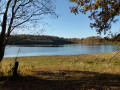
Le Gué au Chéron is a district of the Senonches National Forest. This tour starts in Tardais and leads through fields into the forest. It follows the edge of the forest, passing in front of the majestic Chêne de la Framboisière oak tree. After crossing the old La Loupe-Verneuil railway line, the trail follows the Gervaine, a stream that was canalised in the 18th century to float timber down the Avre and Seine rivers to Rouen.The trail then runs alongside the Étang de la Bénette, managed by the Conservatoire des Espaces Naturels, which preserves its exceptional flora and fauna. A long forest line crosses the Rond de Sauveloup, then joins the small road from Tardais to Laudigerie. It takes you past the lake and the Château de Tardais before reaching this picturesque village with its wash house, small church and tiny town hall. Vlaminck stayed here frequently and immortalised this view of "the road" in winter under the snow from the town hall to the church in one of his paintings.
Circular route from Fontaine-Simon to La Loupe
 8.63 mi
+121 ft
-108 ft
4h 05
Moderate
Departure from Fontaine-Simon (Eure-et-Loir)
8.63 mi
+121 ft
-108 ft
4h 05
Moderate
Departure from Fontaine-Simon (Eure-et-Loir)
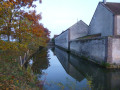
Circular route starting from Fontaine-Simon along quiet paths and small roads through farmland. Pass by the church in Meaucé then the beautiful La Grande Maison farm surrounded by moats still filled with water.
Memorial loop for those shot in Morvilliers
 5.20 mi
+72 ft
-66 ft
2h 25
Easy
Departure from Morvilliers (Eure-et-Loir) (Eure-et-Loir)
5.20 mi
+72 ft
-66 ft
2h 25
Easy
Departure from Morvilliers (Eure-et-Loir) (Eure-et-Loir)
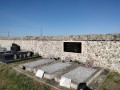
Starting from Morvilliers, this loop takes you to the sites where a tragic episode unfolded during the final days of the Maquis de La Ferté-Vidame in August 1944.It first leads to the farm of Mary Thibault, the instigator of the Maquis. It then crosses the Bois de Malassis, where the Maquisards hid after machine-gunning a German car, killing the driver and the secretary of the Kommandantur of La Ferté-Vidame This action triggered the fury of the SS, who, after searching the neighbouring farms in vain, arrested three young members of the Maquis in the hamlet of Les Rayers. They were taken to the nearby Château du Gland, where they were tortured. The first man was shot on 11 August in front of his comrades. The next day, the other two were also executed. They had to dig their own graves.
A commemoration takes place every year in the clearing and at the cemetery in Morvilliers, where the bodies were returned after the Liberation.
The strange trees of the Senonches forest
 5.97 mi
+171 ft
-141 ft
2h 55
Moderate
Departure from Senonches (Eure-et-Loir)
5.97 mi
+171 ft
-141 ft
2h 55
Moderate
Departure from Senonches (Eure-et-Loir)
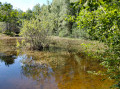
This entirely forest-based circuit takes you past several strange trees, unexplained natural curiosities. It runs alongside the Biquet valley, a favourite walking route for the people of Senon. After reaching the Froux peat bog, a natural site of great ecological richness, it passes close to the romantic Forestiers pond nestled in the heart of the forest. This is an ideal spot for observing the animals that come here to drink in the evening.
Circular Boissy-lès-Perche in the footsteps of a "Fauve"
 5.21 mi
+66 ft
-69 ft
2h 25
Easy
Departure from Boissy-lès-Perche (Eure-et-Loir)
5.21 mi
+66 ft
-69 ft
2h 25
Easy
Departure from Boissy-lès-Perche (Eure-et-Loir)
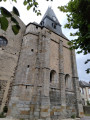
The painter Maurice de Vlaminck lived here, near Rueil-la-Gadelière, from 1925 until his death in 1958. This year marks the centenary of his arrival. A three-day itinerary already allows you to cross his country from the Verneuil-sur-Avre station to the La Loupe station. Walkers who are unable to undertake this crossing can take one or more of the short circulars "In the footsteps of a Fauve". These allow you to discover, in detail, the landscapes that inspired the painter. This one, starting from Boissy-lès-Perche, follows the valley of the Ruisseau de Buternay. After crossing the ponds near the Chapelle de Réveillon, it flows towards the Avre, joined by other streams. Their courses, partly underground, reappear at the source of the Vigne, where their waters are collected and carried to Paris via a 100 km aqueduct.Landscapes of cereal fields cut by the stream, wide horizons from which you can soon see the bell tower of the church of Verneuil.
Circular Rohaire in the footsteps of a "Fauve"
 3.96 mi
+69 ft
-66 ft
1h 55
Easy
Departure from Rohaire (Eure-et-Loir)
3.96 mi
+69 ft
-66 ft
1h 55
Easy
Departure from Rohaire (Eure-et-Loir)
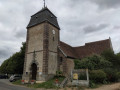
The painter Maurice de Vlaminck lived here, near Rueil-la-Gadelière, from 1925 until his death in 1958. This year marks the centenary of his arrival in the area. A three-day itinerary already allows you to cross his country from Verneuil-sur-Avre station to La Loupe station. Walkers who are unable to undertake this crossing can take one or more of the short circulars "In the footsteps of a Fauve". These allow you to discover the landscapes that inspired the painter."I love the countryside, not by accident, but continuously, and I spend my life there" This route, around the village of Rohaire, mainly crosses farmland. It partly follows the Buternay stream, coming from the ponds near the Chapelle de Réveillon and heading towards Rueil-la-Gadelière. After a stretch that is sometimes underground, it reappears at the Sources de la Vigne, where the streams from the vicinity of La Ferté-Vidame converge. Their waters are collected there and piped to Paris.
Chapelle-Fortin loop via La Ferté-Vidame
 7.15 mi
+89 ft
-89 ft
3h 20
Moderate
Departure from La Chapelle-Fortin (Eure-et-Loir)
7.15 mi
+89 ft
-89 ft
3h 20
Moderate
Departure from La Chapelle-Fortin (Eure-et-Loir)
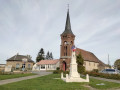
This loop, on the edge of the Perche region, leads from La Chapelle-Fortin to La Ferté-Vidame. Close to the Perche, it is divided between two types of landscape, both of which are represented by the painter Maurice de Vlaminck: vast expanses of crops under cloudy skies and woods with gnarled trees.
Living in La Tourillière near Rueil-la-Gadelière from 1925 to 1958, the artist frequently visited the neighbouring villages in search of inspiration: churches, villages buried under snow, paths lined with bare trees.
The circuit leads to La Ferté-Vidame, a town with a rich historical past: a medieval fortress where the Duke of Saint-Simon wrote his memoirs, which became the palace of the Marquis de Laborde, Louis XV's wealthy banker, a small château converted by Louis-Philippe into outbuildings and recently restored by the Eure-et-Loir Departmental Council, the new owner of the site.
La Ferté-Vidame is also home to horse races held in summer at the Pipe-Souris racecourse.
Water seeps at Les Ressuintes
 8.09 mi
+164 ft
-164 ft
3h 50
Moderate
Departure from Les Ressuintes (Eure-et-Loir)
8.09 mi
+164 ft
-164 ft
3h 50
Moderate
Departure from Les Ressuintes (Eure-et-Loir)
This very wet area drains water from the Senonches Forest. There are numerous streams and ponds. The route starts by following the Meuvette valley. The stream originates in the nearby private woods and flows through the Haron and Rouge ponds.After passing through a cultivated area, the return journey is along small roads. This walk is best done in winter, when the nearby forest paths are difficult to navigate.The commune is backed by private woods and bordered to the west by the walls of the park of the former château of the Marquis de La Borde, which became the Citroën Test Centre in the 20th century.Between the park and the forest, old farmhouses have been converted into attractive second homes, well maintained and decorated with flowers in summer. The village has a church which, since the 12th century, has undergone many vicissitudes.At the rear, the communal wash house has been restored, and a public space welcomes walkers who wish to take a moment's rest.
The Blaise flows through Louvilliers, if you don't mind!
 6.20 mi
+98 ft
-125 ft
2h 55
Easy
Departure from Louvilliers-lès-Perche (Eure-et-Loir)
6.20 mi
+98 ft
-125 ft
2h 55
Easy
Departure from Louvilliers-lès-Perche (Eure-et-Loir)
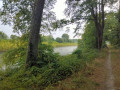
Let's go in search of the Blaise, a mischievous little river that hides so well from its source that geographers are perplexed. According to the elders, it originates near the Rond des Louvetiers, between Tardais and the Étang de la Bénette. Recent maps show it near the Grand Rond. In fact, these are "gouttiers", episodic streams that flow towards and cross the Tardais pond. It emerges under the dyke where a mill once operated, but suddenly disappears, sinking into a "chasm". It sometimes reappears.
At the edge of the forest, the Ruisseau de Saint-Cyr joins it. Together, the two waterways pass at the foot of Louvilliers-lès-Perche, flowing sometimes on the surface, sometimes underground. The Blaise reappears definitively in the Étang de Dampierre. In the past, it enabled the establishment of a very important steel complex. It then flows towards Dreux, which it crosses, before joining the Eure at Fermaincourt.
Circular des Templiers à la Saucelle
 5.32 mi
+66 ft
-66 ft
2h 30
Easy
Departure from La Saucelle (Eure-et-Loir)
5.32 mi
+66 ft
-66 ft
2h 30
Easy
Departure from La Saucelle (Eure-et-Loir)
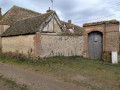
On the edge of the Senonches Forest, north of Perche, La Saucelle is a real crossroads between different historical and natural sites. On this short route, come and discover what the Knights Templar brought to the village. It was here, in La Saucelle, that they first settled in the Drouais region, and even in Eure-et-Loir. This settlement, in 1165, was made possible thanks to donations from local lords. These were largely plots of land in the Carnutes Forest. The Knights Templar cleared these plots and all those that followed, creating the vast plain that surrounds the village.
Grand tour of the Château des Vaux
 9.24 mi
+312 ft
-325 ft
4h 30
Moderate
Departure from Saint-Maurice-Saint-Germain (Eure-et-Loir)
9.24 mi
+312 ft
-325 ft
4h 30
Moderate
Departure from Saint-Maurice-Saint-Germain (Eure-et-Loir)
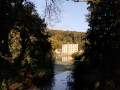
A route taking in the Boizard Locks and the Château des Vaux, passing through woods and fields around the Eure valley. The path first climbs to offer views of the Eure valley flowing between the forests of Senonches and Montécot towards Chartres. At the end of the17th century, Louis XIV and his engineers had hoped to channel the river’s waters as far as Versailles to supplement the insufficient water supply for the park’s fountains. The works could not be completed. A few remnants of this monumental project remain: the colossal embankment blocking the course of the Eure, a few traces of the canal, the gigantic embankment of the ‘terraces’ and the first storey of the aqueduct at the far end of the grounds of the Château de Maintenon. Charmed by this beautiful valley, the d’Alligre family, who had initially settled at the Château de la Rivière, expanded their estate by commissioning the splendid Château des Vaux, which today serves as a major vocational college run by the Fondation des Apprentis d’Auteuil.
From frescoes to escapades in La Ferté-Vidame
 7.62 mi
+95 ft
-95 ft
3h 35
Moderate
Departure from La Ferté-Vidame (Eure-et-Loir)
7.62 mi
+95 ft
-95 ft
3h 35
Moderate
Departure from La Ferté-Vidame (Eure-et-Loir)
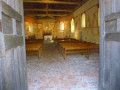
On this largely forest-based tour, discover the Chapelle de Réveillon and its frescoes, then the site of La Ferté-Vidame where Saint-Simon, the famous chronicler of the court of Versailles, wrote his memoirs, recounting the escapades of his time. Near his "favourite residence" in the Church of Saint-Nicolas, he had wanted to rest alongside his beloved wife. The revolutionaries decided otherwise and desecrated the tomb, scattering the remains and putting an end to their desire to be together forever, their coffins "bound so closely that no one could separate them". A beautiful love story, already romantic at a time when marriages were rather conventional.
Paradoxically, the wealthy Marquis de Laborde built a sumptuous palace on the site of the demolished medieval castle, where he wanted to invite the elite of his time and resume the escapades that the Duke had so strongly condemned. The Revolution passed and the Marquis, once so powerful, lost his property and his head!
In Senonches, I go to Les Evés!
 3.91 mi
+89 ft
-89 ft
1h 50
Easy
Departure from Senonches (Eure-et-Loir)
3.91 mi
+89 ft
-89 ft
1h 50
Easy
Departure from Senonches (Eure-et-Loir)
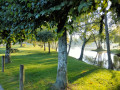
The name "Les Evés" refers, locally, to places where water is abundant. This water, which is everywhere, is particularly present in this "district" of the forest, south of the village. It is carried by gutters and streams from the forest to the ponds and wash houses. This short route takes you on a tour of places where water has been collected over the years, not far from the town, to be regulated and used for the activities of the Senonchois.After inspiring dreams of a spa resort in 1936-37, the water has nevertheless contributed to the town's development as a tourist destination. Successive municipal councils have worked to develop what was once a marshy area, which has now become a tourist complex with sports and leisure facilities, ideally located near the new La Loge des Bois secondary school.
Around Tardais
 7.23 mi
+66 ft
-82 ft
3h 25
Moderate
Departure from Senonches (Eure-et-Loir)
7.23 mi
+66 ft
-82 ft
3h 25
Moderate
Departure from Senonches (Eure-et-Loir)
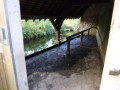
Allow a day to complete this route and visit Senonches. As it is easier to find shelter in town for lunch in winter or in case of bad weather, this route suggests setting off from Tardais in the morning, heading towards Senonches where you can picnic or eat in a restaurant, and, after visiting the town and the castle, returning to Tardais at the end of the afternoon. The route takes you around Tardais and connects it to Senonches. It is varied, passing between the castle and the lake, crossing the forest, taking you through the recently developed town centre and leading to Lake Arthur Rémy. After passing by the castle and the church, it returns across fields and through the forest again. It follows the edge of the village. Here you will find the magnificent Tardais Beech, a remarkable listed tree. At 185 years old, it is suffering, like all the beech trees in the forest, from global warming, which will cause them to disappear in the short term. So don't delay in going to see it.
Take a circular walk in the lower Senonches Forest
 11.06 mi
+404 ft
-381 ft
5h 25
Difficult
Departure from Senonches (Eure-et-Loir)
11.06 mi
+404 ft
-381 ft
5h 25
Difficult
Departure from Senonches (Eure-et-Loir)
This grand tour of the lower Senonches state-owned forest follows the forest’s edge, moving from Rond to Rond – these large crossroads connecting the forest paths. Whilst the surrounding landscape is occasionally visible, the route mostly remains within the woods.Starting from Parc Arthur Rémy or the holiday village, it heads south through the forest, descending and then ascending the geological fault that forced the River Eure to flow eastwards, whereas its natural course was to head north to join the River Seine. It is only able to do so as it approaches Chartres.The route passes very close to Belhomert and Fontaine-Simon, villages which can be reached and from which you can also set off. The return journey follows a picturesque path along the disused La Loupe–Verneuil railway line via Senonches. This route is not recommended for those seeking noise and bustle, or who are averse to the tranquillity of the woodland!
The Senonchoises "Alps"
 5.07 mi
+220 ft
-213 ft
2h 30
Easy
Departure from Fontaine-Simon (Eure-et-Loir)
5.07 mi
+220 ft
-213 ft
2h 30
Easy
Departure from Fontaine-Simon (Eure-et-Loir)
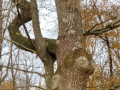
There is so little relief in the Senonches Forest! So, with a lot of imagination and a little humour, let's have fun transforming this walk through the slight relief caused by a geological fault in the south of the forest into an alpine trail: the 90D!The trail starts, as it should, at the bottom of the "valley", on the banks of the Eure, at the edge of the "lake" of Fontaine-Simon. During the ascent, without ropes or ice axes of course, towards the Fontaine aux Liards at an altitude of 249 m, we will have to cross miniature "torrents", pass through tiny "passes" and follow a ridge path along a "vertiginous ravine"... railway. Then, after a descent into a "deep" valley, you will have to climb the Route de La Ferrière to finally tumble down towards La Billette, where you will begin to see the water ski lift installed on the pond, like a ski lift. If this description doesn't convince you, rest assured that you will at least enjoy a beautiful walk in the forest!
From Rueil-la-Gadelière to Montigny-sur-Avre in the footsteps of a "Fauve"
 8.92 mi
+174 ft
-203 ft
4h 15
Moderate
Departure from Rueil-la-Gadelière (Eure-et-Loir)
8.92 mi
+174 ft
-203 ft
4h 15
Moderate
Departure from Rueil-la-Gadelière (Eure-et-Loir)
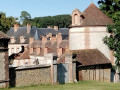
The painter Maurice de Vlaminck lived near Rueil-la-Gadelière from 1925 until his death in 1958. This year marks the centenary of his arrival in the area. Six circular loops named "Sur les traces d'un Fauve" (In the footsteps of a Fauve) allow you to discover the places that inspired the painter."I liked the countryside: slightly hilly, with endless fields and meadows planted with twisted apple trees. Here and there were copses, woods and farms surrounded by thorny hedges. It was on the edge of the Perche, a region where the plains of Beauce come to an end in a series of undulations, a region that has retained the appearance that the ages have shaped. Nothing modern alters its structure or disturbs the harmony of the landscape." Maurice de Vlaminck.This circular, between Beauce and Thimerais, crosses the agricultural plain near Verneuil, following the Avre valley to Montigny and returning to Rueil-la-Gadelière through fields and copses. You can visit the Château de Montigny (open to visitors by appointment).
No hills or mountains in Montécot
 6.55 mi
+105 ft
-105 ft
3h 05
Moderate
Departure from Le Favril (Eure-et-Loir) (Eure-et-Loir)
6.55 mi
+105 ft
-105 ft
3h 05
Moderate
Departure from Le Favril (Eure-et-Loir) (Eure-et-Loir)
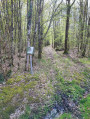
In fact, here you will only find a few undulations caused by the streams flowing towards the nearby Eure. This small 637-hectare national forest is surrounded by a bridle path and criss-crossed by straight paths. The D103 crosses it from east to west and is not very busy. A high-voltage power line divides the forest. Parallel to the D103, it overlooks a large clearing and is bordered by a well-maintained path. A long north-south lane, formerly part of the GR®35 hiking trail, marks the boundary of the private woods to the west. Finally, the Merise forest road connects the D920 to the D103: closed to cars from Rond de la Félicité to Rond de Diane.This network of paths allows you to combine numerous circular paths or take shortcuts. Just make sure you don't leave the state-owned forest, which is bordered by an embankment. Private woods are located all around. These woods are rich in game, and large animals are shot there, so it is wise not to venture in on hunting days!
Saint-Éliph circular: Be open to Vaufermé
 4.78 mi
+279 ft
-266 ft
2h 25
Easy
Departure from Saint-Éliph (Eure-et-Loir)
4.78 mi
+279 ft
-266 ft
2h 25
Easy
Departure from Saint-Éliph (Eure-et-Loir)
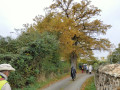
This circular loop takes you along the most beautiful paths in the commune, but returns via roads. Don't hesitate to take this route, as the beautiful site of the Saint-Éliph wash house with its picnic area, the pretty hamlet of Vaufermé, the sunken path leading up to La Haisonnière, and the views of the Perruchet and Théllière ponds, a protected bird sanctuary, make for a varied and enjoyable walk.
Circular La Loupe, La Trinité without Trinitrine
 6.18 mi
+121 ft
-121 ft
2h 55
Moderate
Departure from La Loupe (Eure-et-Loir)
6.18 mi
+121 ft
-121 ft
2h 55
Moderate
Departure from La Loupe (Eure-et-Loir)
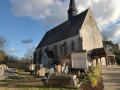
Don't worry, no strenuous effort is required to complete this circular around La Loupe, linking the three parishes formerly known as "La Trinité des Bois": La Loupe, Vaupillon and Saint-Eliph. And if your heart races, it can only be from the emotion of remembering the terrible bombing that the town suffered on 17 June 1944. You will pass through woods and fields near the three churches of the former parish. If you want to see them more closely, you will need to make a small detour to reach them. Two of them are often closed and can only be visited on rare occasions. You could also visit the Gros Chêne de Meaucé (the big oak tree of Meaucé). It is a venerable old tree that has many stories to tell before reaching the end of its long life. After walking along the Étang du Gallou (Gallou Pond), you will arrive at the château, where a museum has been set up to commemorate the tragedy of 1944. Be sure to visit it.
Between Rueil-la-Gadelière and Saint-Martin in the footsteps of a "Fauve"
 6.28 mi
+105 ft
-102 ft
3h 00
Moderate
Departure from Rueil-la-Gadelière (Eure-et-Loir)
6.28 mi
+105 ft
-102 ft
3h 00
Moderate
Departure from Rueil-la-Gadelière (Eure-et-Loir)
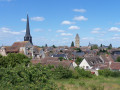
These circular loops will not take you into the bush in search of large predators, but along good paths through woods and fields on the outskirts of the Perche, in this transitional region known as the Thimerais. You will pass through the landscapes that inspired the painter Maurice de Vlaminck, who founded Fauvism in the early 20th century with his friends Derain and Matisse.Having settled in La Tourillère, near Rueil-la-Gadelière, 100 years ago, the artist fell in love with this region, which he tirelessly explored until his death in 1958 in search of places of inspiration.These circular loops starting from neighbouring villages aim to give you a feel for the landscapes "where the wind bends the trees and chases the clouds across a dark sky" that captivated the painter, reminding him of his paternal family's homeland of Flanders.This hike takes you from Rueil to Saint-Martin aux Portes de Verneuil, where the "Fauve" often visited.
Circular Saint-Lubin-de-Cravant in the footsteps of a "Fauve"
 5.26 mi
+243 ft
-240 ft
2h 40
Easy
Departure from Saint-Lubin-de-Cravant (Eure-et-Loir)
5.26 mi
+243 ft
-240 ft
2h 40
Easy
Departure from Saint-Lubin-de-Cravant (Eure-et-Loir)
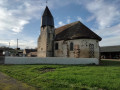
These circulars will not take you into the bush in search of large predators, but along good paths through woods and fields on the outskirts of the Perche, in this transitional region known as the Thimerais. You will pass through the landscapes that inspired the painter Maurice de Vlaminck, who founded Fauvism at the beginning of the 20th century with his friends Derain and Matisse.Having settled in La Tourillère, near Rueil-la-Gadelière, 100 years ago, the artist fell in love with this region, which he tirelessly explored until his death in 1958 in search of places of inspiration.These circular loops take you through the landscapes "where the wind bends the trees and chases the clouds across a dark sky" that captivated the painter.This route starts in Saint-Lubin de Cravant, where the church inspired the painter. It follows the Meuvette valley, which was once canalised. The Avre Aqueduct crosses the valley on imposing arches. It supplies Paris with drinking water.
Circular Digny via the Château de la Hallière
 7.89 mi
+154 ft
-151 ft
3h 45
Moderate
Departure from Digny (Eure-et-Loir)
7.89 mi
+154 ft
-151 ft
3h 45
Moderate
Departure from Digny (Eure-et-Loir)
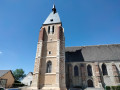
Digny is located on the border between Perche and Thimerais. This route through the fields starts at the foot of the bell tower of Saint-Germain Church, built in 1525 and recently beautifully restored. In 2025, a local association organised various events to celebrate the500th anniversary of its construction. The route takes you to the 16th-century Ferme du Romphaye farm and the Château de la Hallière castle, built in 1770. The return journey takes you through the hamlets of La Richardière and Bellandas, allowing you to return quickly to Digny or extend your walk to Mille Champs along paths offering beautiful views of the village.
Short circular loop around Lamblore via the Chemin du Mortripié
 5.20 mi
+180 ft
-197 ft
2h 35
Easy
Departure from Lamblore (Eure-et-Loir)
5.20 mi
+180 ft
-197 ft
2h 35
Easy
Departure from Lamblore (Eure-et-Loir)
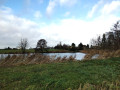
Starting from Lamblore Town Hall, this circular leads to La Ferté-Vidame, where you will find reminders of historical figures: The Dukes of Saint-Simon, the father, who after acquiring the estate had the parish church built, and the son, the famous memoirist, the Marquis de Laborde, who had a sumptuous palace built, the romantic ruins of which still remain, and laid out a huge park. King Louis-Philippe wanted to restore this building, which had been dismantled after the Revolution, to its former glory, but he was only able to build the "Petit Château" (small castle)...A detailed tour of the village and park is a must. The return journey takes you past the former Citroën test centre, a mecca for the automotive industry. This is where the most famous models of the chevron brand were developed: the Traction Avant, the 2CV, the DS, the Ami 6, the SM... After passing the Champ-Brulé equestrian centre, the route returns to the village via the beautiful Chemin du Mortripié, which has been reopened by the local council.
Circular route from La Ville-aux-Nonains to Senonches
 9.62 mi
+85 ft
-85 ft
4h 30
Moderate
Departure from Senonches (Eure-et-Loir)
9.62 mi
+85 ft
-85 ft
4h 30
Moderate
Departure from Senonches (Eure-et-Loir)
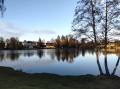
Don't be fooled by the name of this route: the "town" in question is just a small village attached to Senonches. The nuns and monks left it long ago! This circular route, starting from Ville-aux-Nonains, follows quiet paths and roads and leads to Senonches, a "Petite Cité de Caractère" (Small Town of Character) that is well worth a detailed visit. On the way back, it follows the edge of the national forest. This route also serves as a reminder, through its place names, of the activities that once took place in this other part of the Senonches area, better known for its forest, and evokes activities that have now disappeared: marl pits, tile works, lime kilns, forges and mechanical workshops, which played a major role in the economic development of the commune. These have now been replaced by intensive farming in vast fields reorganised after the consolidation of the old bocage. The hedges have disappeared, with only a few small woods remaining as refuges for game.
Touraille circular starting from Saint-Éliph
 7.92 mi
+102 ft
-102 ft
3h 45
Moderate
Departure from Saint-Éliph (Eure-et-Loir)
7.92 mi
+102 ft
-102 ft
3h 45
Moderate
Departure from Saint-Éliph (Eure-et-Loir)
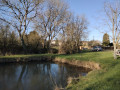
This route, starting from the wash house in Saint-Éliph, allows you to discover the two aspects of the countryside around the village. It passes through Auberdière and Grande Cour, then Petite Butte and follows Chemin de César to Touraille through a landscape of meadows and hedgerows typical of the Perche region. It returns to Saint-Eliph along roads and paths on the plain, the first signs of the Beauce region. With many quiet, small tarmac roads, it is recommended as a winter route when the nearby forest paths become difficult.
Circular starting from Mare de l'Augerie
 5.31 mi
+98 ft
-115 ft
2h 30
Easy
Departure from Saint-Éliph (Eure-et-Loir)
5.31 mi
+98 ft
-115 ft
2h 30
Easy
Departure from Saint-Éliph (Eure-et-Loir)
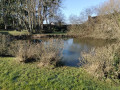
At the edge of the Montécot Forest, this circular route takes you past pretty little farms connected by winding roads. The bridle path on the western edge of the forest offers beautiful views of the countryside towards La Loupe.
Circular of the ponds starting from Perruchet
 5.88 mi
+167 ft
-184 ft
2h 50
Easy
Departure from Saint-Victor-de-Buthon (Eure-et-Loir)
5.88 mi
+167 ft
-184 ft
2h 50
Easy
Departure from Saint-Victor-de-Buthon (Eure-et-Loir)
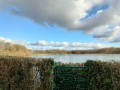
Although many birds can be found here despite global warming, parakeets have not yet colonised the site! Discover these ponds, an integral part of the Perche landscape. Although medium-sized (20 hectares), they constitute a wetland of great importance. Starting from the hamlet of Perruchet between the ponds, the route offers beautiful views of the lakes from the small road overlooking the valley. A road, believed to be Roman, the Chemin de Jules César, approaches the Étang de Perruchet. Leave it to go around it to the south. The route then leads to the Touraille farm and returns via Haut Coudray and the heights of the Teillière Pond, where an information board provides a better understanding of these landscapes between Beauce and Perche.