


Refine your search for walks in Pouilley-les-Vignes
Pouilley-les-Vignes walks


 Mont de Pouilley
 Visorando Member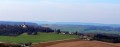
 3.38 mi
 +184 ft
 -184 ft
 1h 45
1h 45
 Easy
Easy
 Departure from Pouilley-les-Vignes (Doubs)
A walk around Mont de Pouilley-les-Vignes along the botanical trail, then the fitness trail through paths winding between beautiful moss-covered rocks, dotted with snowdrops and daffodils in spring. At both ends: a viewpoint overlooking the church spires of the surrounding villages and the Haute-Saône; the fortifications built after the defeat of 1870.
Pirey towards Mont and Fort de Pouilley
5.54 mi
+581 ft
-587 ft
3h 05
Easy
Departure from Pirey (Doubs)
A peaceful family route near Besançon. Discover a restored caborde (stone shelter) and a wide viewpoint with an orientation table.
The Franois and Pouilley Woods via the Pirey ridge circuit
9.20 mi
+699 ft
-722 ft
4h 50
 Moderate
Departure from Serre-les-Sapins (Doubs)
Moderate
Departure from Serre-les-Sapins (Doubs)
This is a lovely walk that starts in the Franois woods, where you will find pretty wooden buildings belonging to the nursery school on either side of the path. Then, via a small path through the forest, you will reach the equestrian centre. You will follow the Pirey ridge path, with a view of the "shooting range". You will cross Mont de Pouilley, with its military ruins, its old aviary and its view of the village. Then return to the starting point in Serre.
Menère Forest - Besançon - Tilleroyes
 4.57 mi
+207 ft
-203 ft
2h 15
Easy
Departure from Serre-les-Sapins (Doubs)
4.57 mi
+207 ft
-203 ft
2h 15
Easy
Departure from Serre-les-Sapins (Doubs)
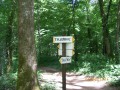
For a change from the crowds in Chailluz Forest, this is a peaceful little walk on the outskirts of Besançon, best done in dry weather.
The Bois de la Chaille
2.68 mi
+180 ft
-177 ft
1h 25
Easy
Departure from Besançon (Doubs)
A short family walk best enjoyed in dry weather.
The Tilleroyes Forest
 4.32 mi
+230 ft
-223 ft
2h 10
Easy
Departure from Besançon (Doubs)
4.32 mi
+230 ft
-223 ft
2h 10
Easy
Departure from Besançon (Doubs)
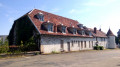
According to Besançon tradition, the Sun King, Louis XIV, sat under a lime tree during the capture of Besançon by his troops: "the king's lime tree". But "Les Tilleroyes" is undoubtedly an old variant of tilleraie, a forest of lime trees. I don't know if you'll still find any lime trees, but there will be plenty of shade and coolness for city dwellers looking for a breath of fresh air just a stone's throw from the city.
Gentle circular in Chemaudin and Vaux
 3.36 mi
+125 ft
-125 ft
1h 40
Easy
Departure from Chemaudin (Doubs)
3.36 mi
+125 ft
-125 ft
1h 40
Easy
Departure from Chemaudin (Doubs)
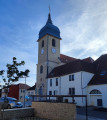
As its name suggests, this is a short, very easy walk starting from the church in Chemaudin and Vaux. It follows small paths in open countryside and woods. It passes by the Pote farm, which breeds Salers cattle and keeps horses.
 Les Auxons – Moncley – Sauvagney circular loop
13.00 mi
+367 ft
-348 ft
1.5 hrs
Moderate
Departure from Auxon-Dessus (Doubs)
A very varied mountain bike ride. Small roads and trails.
The Planoise Coast
 5.04 mi
+958 ft
-948 ft
3h 10
Moderate
Departure from Besançon (Doubs)
5.04 mi
+958 ft
-948 ft
3h 10
Moderate
Departure from Besançon (Doubs)
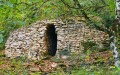
See Practical Information. Besançon, France's first green city, surrounded by wooded hills, is a city in the countryside. This route, from the Malcombe sports complex to Fort de Planoise, will convince you. You will climb picturesque and peaceful paths to two belvederes and cabordes, dry stone huts that bear witness to a time when vineyards stretched across our hillsides.
Fort Moncey
 3.82 mi
+1,073 ft
-1,079 ft
2h 40
Moderate
Departure from Besançon (Doubs)
3.82 mi
+1,073 ft
-1,079 ft
2h 40
Moderate
Departure from Besançon (Doubs)
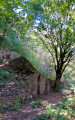
Info: Fort Moncey, better known to the people of Besançon as Fort de Planoise, was built between 1877 and 1892. Surrounded by shelters, four large batteries and barracks, it is open to the public but should be visited with caution. Walkers less interested in military history will appreciate this leafy setting and can stop off at the superb viewing points – one overlooking Besançon and its hills, the other to the south, looking out over the Doubs valley and the Jura mountains – before returning via the bucolic vineyard paths of Les Équegney.
The Cabordes Trail
 6.22 mi
+1,795 ft
-1,821 ft
4h 25
Moderate
Departure from Besançon (Doubs)
6.22 mi
+1,795 ft
-1,821 ft
4h 25
Moderate
Departure from Besançon (Doubs)
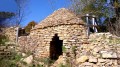
Present on the hills of Besançon since the 16th century, these dry stone constructions without mortar are a reminder of a time when vineyards stretched across the hillsides. A niche, a bench, a fireplace, they allowed the winegrower to store his tools, shelter in case of a storm and perhaps sleep there for a night, as the city gates closed every evening at 10:45 p.m. until 1875. Along the way, you will discover no fewer than five belvederes and the forts of Rosemont and Planoise.
Le Rosemont
 3.12 mi
+1,063 ft
-1,063 ft
2h 20
Easy
Departure from Besançon (Doubs)
3.12 mi
+1,063 ft
-1,063 ft
2h 20
Easy
Departure from Besançon (Doubs)
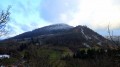
An urban hike, you might say, but one which, as you climb Rosemont and La Roche d’Or, will offer you a wealth of nature just a stone’s throw from the old town and the new town, with its steep cliff-top paths, the beautifully named Combe de l'Oeillet, its old cabordes, and its scree slopes formed by the natural weathering of the cliffs and the piles of stones left by our forebears, who cultivated our Besançon hillsides in terraces.
The Rosemont Cabordes
 1.83 mi
+705 ft
-699 ft
1h 25
Easy
Departure from Besançon (Doubs)
1.83 mi
+705 ft
-699 ft
1h 25
Easy
Departure from Besançon (Doubs)
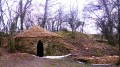
A short, challenging walk to climb up to the Combe des Œillets vineyard huts, these dry-stone structures built without mortar, where winegrowers stored their tools, took shelter during storms and sometimes slept when working late. Return via the Rosemont viewpoint overlooking the upper Doubs valley and the Jura mountains.
The Combe de l’Œillet
 2.99 mi
+715 ft
-732 ft
2h 00
Easy
Departure from Besançon (Doubs)
2.99 mi
+715 ft
-732 ft
2h 00
Easy
Departure from Besançon (Doubs)
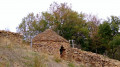
You’ll climb up to the winegrowers’ huts in the Combe des Œillets – these dry-stone structures built without mortar, where winegrowers used to store their tools and take shelter in the event of a storm. Return via the Rosemont cliffs and their views over the upper Doubs valley and the Jura mountains. Just a stone’s throw from the “Rosemont” tram stop, this short, challenging walk will prove – if proof were needed – that Besançon is a city in the countryside!
The cabordes of the Combe de l’Œillet
 1.42 mi
+617 ft
-617 ft
1h 10
Easy
Departure from Besançon (Doubs)
1.42 mi
+617 ft
-617 ft
1h 10
Easy
Departure from Besançon (Doubs)
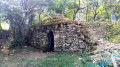
Until the 19th century, Rosemont Hill was cultivated using dry-stone terraces, on which vines, amongst other crops, were grown. The ‘cabordes’ served as shelters for the winegrowers. In the 20th century, these steep slopes were gradually abandoned. This walk allows you to explore the ledges, scree slopes and beautiful panoramic views over the Doubs valley, bearing witness to a landscape shaped by human hands.