


Refine your search for walks in Perche
Perche walks


 Étang de la Herse lake at the start of Bellême
 Association / Club / Walk leader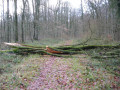
 6.18 mi
 +525 ft
 -522 ft
 3h 20
3h 20
 Easy
Easy
 Departure from Bellême (Orne)
A lovely walk in the beautiful Bellême national forest, where you can admire the Étang de la Herse lake and its fountain.
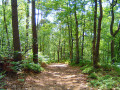
The Bresolettes clearing
 Visorando Member
 4.32 mi
+125 ft
-125 ft
2h 05
Easy
Departure from Bresolettes (Orne)
4.32 mi
+125 ft
-125 ft
2h 05
Easy
Departure from Bresolettes (Orne)
A trail in the heart of the Perche Regional Nature Park, in the Bresolettes Forest Glade Regional Nature Reserve.
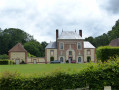
Circular in the Réno Valdieu forest
 14.34 mi
+883 ft
-896 ft
7h 20
14.34 mi
+883 ft
-896 ft
7h 20
 Difficult
Departure from La Chapelle-Montligeon (Orne)
Difficult
Departure from La Chapelle-Montligeon (Orne)
A lovely walk, mostly on good paths, which allows you to visit a magnificent forest, admire a few ponds and pass by some religious buildings. The only difficulty is the length.
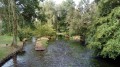
Along the Avre and in the Bois des Brouillets
 5.68 mi
+210 ft
-226 ft
2h 50
5.68 mi
+210 ft
-226 ft
2h 50
 Moderate
Departure from Acon (Eure)
Moderate
Departure from Acon (Eure)
Starting from the charming church of Acon, on the border between Normandy and Île-de-France, the route first takes you through the Avre valley and follows the river for a good distance. Then, higher up, it passes through a forest of oak and birch trees with fern undergrowth. This is a relatively short hike, but it can be extended by following another route that starts and ends at the same point.
The secret of Les Genettes
 3.46 mi
+174 ft
-174 ft
1h 45
Easy
Departure from Les Genettes (Orne)
3.46 mi
+174 ft
-174 ft
1h 45
Easy
Departure from Les Genettes (Orne)
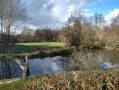
This hike, known mostly only to locals, is a little gem for a relaxing walk with friends or as a couple. There are lots of animals along the way, including wild animals, but also donkeys, Percheron horses, sheep and goats.
Village of Gemages at the start of the Chêne Vert
 4.87 mi
+453 ft
-440 ft
2h 40
Easy
Departure from Le Theil (Orne) (Orne)
4.87 mi
+453 ft
-440 ft
2h 40
Easy
Departure from Le Theil (Orne) (Orne)
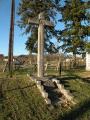
A hike through woods, sunken paths and hills that will introduce you to the Même valley, a panoramic view of Saint-Germain-de-la-Coudre and the church of Gemages. Along the way, you will admire the charming village of L'Hermitière, its castle and its church perched proudly on a hill.
The sunken lanes of Préval
 3.08 mi
+105 ft
-105 ft
1h 30
Easy
Departure from Préval (Sarthe)
3.08 mi
+105 ft
-105 ft
1h 30
Easy
Departure from Préval (Sarthe)
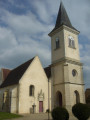
Discover this peaceful village, its countryside and its hedgerows by following its sunken lanes, which offer beautiful panoramic views of the Même valley and the hills of the Perche.
The hills of Ceton
 10.90 mi
+781 ft
-771 ft
5h 40
Moderate
Departure from Ceton (Orne)
10.90 mi
+781 ft
-771 ft
5h 40
Moderate
Departure from Ceton (Orne)
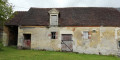
Taking beautiful sunken paths, over hill and dale, you will discover magnificent panoramic views of the Cétonais countryside and be amazed by its diversity: woods, meadows, hedgerows and cultivated fields.
Manor houses and dolmens from the priory of Sainte-Gauburge
 8.78 mi
+571 ft
-574 ft
4h 30
Moderate
Departure from Saint-Cyr-la-Rosière (Orne)
8.78 mi
+571 ft
-574 ft
4h 30
Moderate
Departure from Saint-Cyr-la-Rosière (Orne)
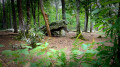
Starting from the 13th-century priory of Sainte-Gauburge, this route leads along sunken paths to the Dolmen de la Pierre Procureuse, the site of several legends, then passes in front of a feudal motte at the Tour du Sablon and several fortified farms, before reaching the Angenardière manor house.
Montmirail Castle and its countryside
 Tourism professional
 6.17 mi
+295 ft
-312 ft
3h 05
Easy
Departure from Montmirail (Sarthe) (Sarthe)
6.17 mi
+295 ft
-312 ft
3h 05
Easy
Departure from Montmirail (Sarthe) (Sarthe)
This hike allows you to discover Montmirail, a "small town of character", and its green countryside through woods and sunken paths.
Route de Châteauneuf-en-Thymerais
5.00 mi
+49 ft
-49 ft
2h 20
Easy
Departure from Châteauneuf-en-Thymerais (Eure-et-Loir)
Route in the Châteauneuf-en-Thymerais National Forest
Panoramic views over the Prairies d'Avezé
 6.80 mi
+377 ft
-384 ft
3h 25
Moderate
Departure from Avezé (Sarthe) (Sarthe)
6.80 mi
+377 ft
-384 ft
3h 25
Moderate
Departure from Avezé (Sarthe) (Sarthe)
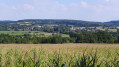
This route, which alternates between sunken lanes, forest paths and flat sections, will take you to the hill overlooking the Huisne Valley to the west. Along the way, several panoramic views allow you to admire the meadows of Avezé, a veritable hay barn that has provided for generations of farmers.
The woods of Beauvais
 7.14 mi
+548 ft
-538 ft
3h 45
Moderate
Departure from Avezé (Sarthe) (Sarthe)
7.14 mi
+548 ft
-538 ft
3h 45
Moderate
Departure from Avezé (Sarthe) (Sarthe)
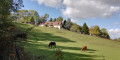
A lovely walk along sunken paths, through woodland and across the gentle hills of the Perche. Panoramic views of the Huisne and Maroisse valleys.
From Tourouvre to Mortagne-au-Perche
 16.23 mi
+1,030 ft
-1,083 ft
8h 20
Difficult
Departure from Tourouvre (Orne)
16.23 mi
+1,030 ft
-1,083 ft
8h 20
Difficult
Departure from Tourouvre (Orne)
This hike is the fifth stage of an eight-day, 220 km route, the Tour des Collines du Perche.
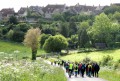
The hike takes a long detour via Autheuil and the Réno-Valdieu forest before heading towards Mortagne-au-Perche, one of the three historic capitals of the former province of Perche.
Huisne Valley and the hills of Val-au-Perche
 11.52 mi
+787 ft
-778 ft
6h 00
Moderate
Departure from Le Theil (Orne) (Orne)
11.52 mi
+787 ft
-778 ft
6h 00
Moderate
Departure from Le Theil (Orne) (Orne)
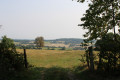
Lush green valleys, steep hillsides, majestic panoramas, sunken lanes and their gnarled pollarded trees are all part of this beautiful countryside walk, which crosses the wide Huisne valley and takes you through the villages of Mâle and La Rouge.
The Priory of Sainte-Gauburge, starting from L’Hermitière
 14.55 mi
+935 ft
-935 ft
7h 30
Moderate
Departure from L'Hermitière (Orne)
14.55 mi
+935 ft
-935 ft
7h 30
Moderate
Departure from L'Hermitière (Orne)
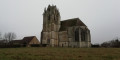
Following the sunken lanes of the Perche and the rolling hills, the route passes through the village of Gemages, the Angenardière Manor and the Priory of Sainte-Gauburge with its Ecomuseum. The return journey to L’Hermitière takes you through the Bois des Baronnières, which overlooks Le Theil.
The Berthe Valley starting from Rougemont
4.66 mi
+512 ft
-518 ft
2h 35
Easy
Departure from Vichères (Eure-et-Loir)
From the Church of Notre-Dame (listed building), you can admire the traditional architecture of Vichères, built from red sandstone and white stone. This rural route, with its ups and downs, links Rougemont Hill (the highest point in Eure-et-Loir at 285 m) to the picturesque Berthe Valley via sunken paths.
The Perche region and its hills as seen from Rémalard
 14.04 mi
+945 ft
-945 ft
7h 15
Difficult
Departure from Rémalard (Orne)
14.04 mi
+945 ft
-945 ft
7h 15
Difficult
Departure from Rémalard (Orne)
This walk through the Rémalard countryside will allow you to discover the Perche landscapes: hills, woods, streams, traditional houses and châteaux.
 Route des Étangs starting from Tourouvre au Perche
17.00 mi
+653 ft
-656 ft
2 hrs
Moderate
Departure from Tourouvre (Orne)
Mountain bike route alternating between forest tracks, narrow single tracks and a few sections of forest roads.
You’ll discover the Trappe Forest and its magnificent lakes.
Mansonnière Cave
 3.83 mi
+249 ft
-249 ft
2h 00
Easy
Departure from Bellou-sur-Huisne (Orne)
3.83 mi
+249 ft
-249 ft
2h 00
Easy
Departure from Bellou-sur-Huisne (Orne)
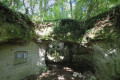
A lovely walk along a former railway line, converted into a footpath and cycle route, through charming rolling countryside, then along paths and small tarmac roads with beautiful views over the Huisne Valley.
In the Senonch region
 3.16 mi
+66 ft
-66 ft
1h 30
Easy
Departure from Senonches (Eure-et-Loir)
3.16 mi
+66 ft
-66 ft
1h 30
Easy
Departure from Senonches (Eure-et-Loir)
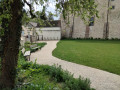
A town of water and greenery, Senonches invites you to explore its winding paths along the forest edge, beside springs, and through narrow streets lined with beautiful ‘grison’ buildings.
La Grande Trappe Abbey Circular Route
 5.22 mi
+167 ft
-171 ft
2h 35
Easy
Departure from Les Genettes (Orne)
5.22 mi
+167 ft
-171 ft
2h 35
Easy
Departure from Les Genettes (Orne)
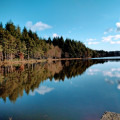
The Abbey walk is the perfect summer walk as you are sheltered from the sun by the trees for most of the route, with magnificent hundred-year-old trees along the way, absolute tranquillity and plenty of greenery.
Perche heritage in Saint-Cyr-le-Rosière
 7.40 mi
+413 ft
-417 ft
3h 45
Moderate
Departure from Saint-Cyr-la-Rosière (Orne)
7.40 mi
+413 ft
-417 ft
3h 45
Moderate
Departure from Saint-Cyr-la-Rosière (Orne)
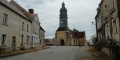
A countryside trail exploring the built heritage of the Perche region and its gems, notably the hamlet of Saint-Gauburge and its priory, the Manoir de l'Angenardière, the Manoir des Chaponnières, and the hamlet of Clémencé. Discover exceptional buildings constructed from cut stone and finished with lime plaster coloured with local sand.
From Mâle to the outskirts of Ceton
 8.80 mi
+764 ft
-758 ft
4h 45
Moderate
Departure from Orne
8.80 mi
+764 ft
-758 ft
4h 45
Moderate
Departure from Orne
Through sunken lanes, hedgerows and woods, discover the landscapes of the Perche region as far as Ceton, the Jambette Valley and the Huisne Valley.
The Boisvinet Ponds
 7.59 mi
+302 ft
-308 ft
3h 45
Moderate
Departure from Le Plessis-Dorin (Loir-et-Cher)
7.59 mi
+302 ft
-308 ft
3h 45
Moderate
Departure from Le Plessis-Dorin (Loir-et-Cher)
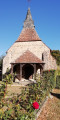
This route takes you along quiet country lanes, paths through the bocage and forest trails, and will introduce you to the Étangs de Boisvinet. You will also pass the glassworks, which operated until 1952 and was the subject of a book by Daphne du Maurier, *The Glass Blowers*.
In the footsteps of the Maquis fighters in Plainville
 7.41 mi
+630 ft
-600 ft
3h 55
Easy
Departure from Marolles-les-Buis (Eure-et-Loir)
7.41 mi
+630 ft
-600 ft
3h 55
Easy
Departure from Marolles-les-Buis (Eure-et-Loir)
As you walk along the paths once used by the Maquis fighters, discover a key site of the Resistance in Eure-et-Loir: the Plainville Maquis.
In the footsteps of Vlaminck
8.62 mi
+197 ft
-197 ft
4h 10
Moderate
Departure from Rueil-la-Gadelière (Eure-et-Loir)
This walking route follows paths that pass close to sites associated with Vlaminck, a painter from the early 20th century. Slightly undulating, the route crosses back and forth over the Avre aqueduct, which carries drinking water to Paris. Passing through the valleys of the Buternay, Lamblore and Nouvet, this walk is characterised by water that is either visible or sometimes just hinted at.
Frazé Castle and manor houses
7.32 mi
+131 ft
-131 ft
3h 30
Moderate
Departure from Frazé (Eure-et-Loir)
Frazé’s architectural heritage is exceptional. Frazé Castle and Carcahu Manor are prime examples of this. The castle comprises various structures (15th, 17th and 19th centuries), whilst Carcahu Manor (16th–17th centuries) is unlike any other…
Near Thiron-Gardais Abbey
7.06 mi
+233 ft
-210 ft
3h 25
Moderate
Departure from Thiron-Gardais (Eure-et-Loir)
At the start, visit Thiron-Gardais Abbey, its themed gardens and the Grange aux Dîmes, then the route continues through the Perche countryside to Saint-Denis-d’Authou.
La Tuilerie des Saules via the hills of Souvigné-sur-Même
 8.10 mi
+659 ft
-653 ft
4h 20
Moderate
Departure from Souvigné-sur-Même (Sarthe)
8.10 mi
+659 ft
-653 ft
4h 20
Moderate
Departure from Souvigné-sur-Même (Sarthe)
This walk starts in the village of Souvigné-sur-Même and follows sunken paths lined with pollarded trees, allowing you to explore the bocage, the grazing meadows, the woods and the surrounding countryside. The rolling hills offer views from their summits of the villages of Préval and Avezé and the Huisne and Même valleys.
The Abbeys of the Loir
 6.58 mi
+98 ft
-98 ft
3h 05
Moderate
Departure from Champrond-en-Gâtine (Eure-et-Loir)
6.58 mi
+98 ft
-98 ft
3h 05
Moderate
Departure from Champrond-en-Gâtine (Eure-et-Loir)
On the edge of the Perche region, the Chemin de César winds its way through the forest to the Abbayes du Loir.
The Chemin des Demoiselles
5.25 mi
+236 ft
-230 ft
2h 35
Easy
Departure from Saint-Victor-de-Buthon (Eure-et-Loir)
A walk offering numerous views of the Perche countryside: orchards, sunken lanes lined with hedgerows, and Normandy or Limousin cattle.
The Avezé and Souvigné plateau, starting from L’Orgerie
3.62 mi
+30 ft
-30 ft
1h 40
Easy
Departure from Souvigné-sur-Même (Sarthe)
A pleasant walk through the woods and countryside of Avezé along sunken paths.
In the footsteps of Vlaminck in Rueil-la-Gadelière
5.07 mi
+69 ft
-98 ft
2h 25
Easy
Departure from Rueil-la-Gadelière (Eure-et-Loir)
Vlaminck, the famous Fauvist painter, greets walkers as soon as they arrive, as his bust, sculpted by Paul Belmondo, stands in the Town Hall Square. He is then commemorated at La Tourillière, where he lived before being buried in the local cemetery.
Route de l'Iton in Bonsmoulins
2.70 mi
+46 ft
-49 ft
1h 15
Easy
Departure from Bonsmoulins (Orne)
An easy walk around the village of Bonsmoulins, crossing the Iton and passing in front of the old station. Wear waterproof footwear in wet weather.
Castles and Calvary Sights starting from Le Thieulin
6.34 mi
+98 ft
-98 ft
3h 00
Moderate
Departure from Le Thieulin (Eure-et-Loir)
The open space beyond the village offers views of the traditional buildings and the châteaux that dot the route: La Couture, Le Châtaignier and Lignerolles. The latter estate was vast in the 19th century; it stretched into the village and also included numerous woodlands. This route was developed in collaboration with the Eure-et-Loir Departmental Hiking Committee. Follow the yellow markings.
The Abadie factory, the Saules tile works and the Jambette Valley
 17.33 mi
+1,158 ft
-1,161 ft
9h 00
Difficult
Departure from Avezé (Sarthe) (Sarthe)
17.33 mi
+1,158 ft
-1,161 ft
9h 00
Difficult
Departure from Avezé (Sarthe) (Sarthe)
This walk takes you through the Avezé forest to the outskirts of Saint-Germain-de-la-Coudre, passing by the Saules tile works. Winding through the hills, the route passes through Le Theil, a once-thriving industrial town and home to the former Abadie factories, now listed as heritage sites. Then, following the sunken paths, you’ll explore the Jambette Valley before returning to Avezé via the Beauvais woods and the panoramic views over the Huisne Valley.
From La Perrière to Saint-Germain-de-la-Coudre via Igé
 17.09 mi
+951 ft
-1,214 ft
8h 40
Difficult
Departure from La Perrière (Orne)
17.09 mi
+951 ft
-1,214 ft
8h 40
Difficult
Departure from La Perrière (Orne)
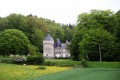
This walk is one of two variants of the seventh stage of an eight-day, 220-km route, the Tour des Collines du Perche.
After leaving La Perrière, the walk enters the Bellême national forest, emerges to the south into very hilly countryside and arrives in the village of Vaunoise with its Cenomanian cuesta terrain. After Igé, the route continues along quiet country lanes, then some very beautiful sunken paths.
No hills or mountains in Montécot
 6.55 mi
+105 ft
-105 ft
3h 05
Moderate
Departure from Le Favril (Eure-et-Loir) (Eure-et-Loir)
6.55 mi
+105 ft
-105 ft
3h 05
Moderate
Departure from Le Favril (Eure-et-Loir) (Eure-et-Loir)
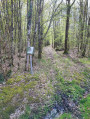
In fact, here you will only find a few undulations caused by the streams flowing towards the nearby Eure. This small 637-hectare national forest is surrounded by a bridle path and criss-crossed by straight paths. The D103 crosses it from east to west and is not very busy. A high-voltage power line divides the forest. Parallel to the D103, it overlooks a large clearing and is bordered by a well-maintained path. A long north-south lane, formerly part of the GR®35 hiking trail, marks the boundary of the private woods to the west. Finally, the Merise forest road connects the D920 to the D103: closed to cars from Rond de la Félicité to Rond de Diane.This network of paths allows you to combine numerous circular paths or take shortcuts. Just make sure you don't leave the state-owned forest, which is bordered by an embankment. Private woods are located all around. These woods are rich in game, and large animals are shot there, so it is wise not to venture in on hunting days!
In Senonches, I go to Les Evés!
 3.91 mi
+89 ft
-89 ft
1h 50
Easy
Departure from Senonches (Eure-et-Loir)
3.91 mi
+89 ft
-89 ft
1h 50
Easy
Departure from Senonches (Eure-et-Loir)
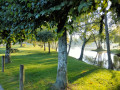
The name "Les Evés" refers, locally, to places where water is abundant. This water, which is everywhere, is particularly present in this "district" of the forest, south of the village. It is carried by gutters and streams from the forest to the ponds and wash houses. This short route takes you on a tour of places where water has been collected over the years, not far from the town, to be regulated and used for the activities of the Senonchois.After inspiring dreams of a spa resort in 1936-37, the water has nevertheless contributed to the town's development as a tourist destination. Successive municipal councils have worked to develop what was once a marshy area, which has now become a tourist complex with sports and leisure facilities, ideally located near the new La Loge des Bois secondary school.
The Étang Chiot lake in Longny-au-Perche
 3.57 mi
+184 ft
-184 ft
1h 50
Easy
Departure from Longny-au-Perche (Orne)
3.57 mi
+184 ft
-184 ft
1h 50
Easy
Departure from Longny-au-Perche (Orne)
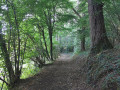
This is an easy circular loop starting from Longny-au-Perche, which follows a small road and shaded paths.Étang Chiot is not a pond but the name of a stream and a hamlet!
Nogent-le-Rotrou, town of the Counts of Rotrou
 2.25 mi
+157 ft
-171 ft
1h 10
Easy
Departure from Nogent-le-Rotrou (Eure-et-Loir)
2.25 mi
+157 ft
-171 ft
1h 10
Easy
Departure from Nogent-le-Rotrou (Eure-et-Loir)
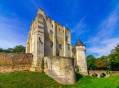
A historical and heritage tour of the capital of the Perche region, following in the footsteps of Rotrou III, Count of the Perche, Maximilien de Béthune, Duke of Sully, and Rémy Belleau, poet of the Pléiade.
Tour of the Perche Hills
 289.61 mi
+14,616 ft
-14,731 ft
8 days
Difficult
Departure from Nogent-le-Rotrou (Eure-et-Loir)
289.61 mi
+14,616 ft
-14,731 ft
8 days
Difficult
Departure from Nogent-le-Rotrou (Eure-et-Loir)
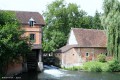
The Tour des Collines du Perche will take you on a journey through the Perche regions of Orne and Eure-et-Loir, with its bocage, hills, valleys and forests (offspring of the famous Forêt des Carnutes), all set against the backdrop of its many manor houses, churches, chapels and a thousand other sites.
You are sure to be amazed by the diversity of the landscapes you will pass through during a journey that takes you through typical Perche towns and villages, steeped in history.
The strange trees of the Senonches forest
 5.97 mi
+171 ft
-141 ft
2h 55
Moderate
Departure from Senonches (Eure-et-Loir)
5.97 mi
+171 ft
-141 ft
2h 55
Moderate
Departure from Senonches (Eure-et-Loir)
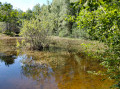
This entirely forest-based circuit takes you past several strange trees, unexplained natural curiosities. It runs alongside the Biquet valley, a favourite walking route for the people of Senon. After reaching the Froux peat bog, a natural site of great ecological richness, it passes close to the romantic Forestiers pond nestled in the heart of the forest. This is an ideal spot for observing the animals that come here to drink in the evening.
Around the drystone shelters in Soligny-la-Trappe
3.47 mi
+164 ft
-164 ft
1h 45
Easy
Departure from Soligny-la-Trappe (Orne)
A short, peaceful walk through the Perche countryside in Soligny-la-Trappe.
Tour of the Bois de la Ferrière
 6.85 mi
+200 ft
-177 ft
3h 20
Moderate
Departure from Fontaine-Simon (Eure-et-Loir)
6.85 mi
+200 ft
-177 ft
3h 20
Moderate
Departure from Fontaine-Simon (Eure-et-Loir)
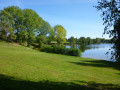
A forest hike starting from the Perche Water Park in Fontaine-Simon. The path leads into the Senonches State Forest after following the edge of the lake. A picturesque trail along the old railway line, a long forest line and then a path that descends into the Tourbière des Froux lead to this protected natural site, home to rare plant and animal species. Passing through hamlets and ponds, you return to La Ferrière, the site of former iron ore mining.
Circular route from Longny-au-Perche to Étang du Chevreuil via Rainville
7.09 mi
+436 ft
-427 ft
3h 40
Moderate
Departure from Longny-au-Perche (Orne)
A hike that combines villages, plains and forests. Without any particular difficulties, this hike is suitable even in wet weather. It can also easily be done by bike and with the family.
Walk along the Ozanne in Brou
3.20 mi
+36 ft
-36 ft
1h 30
Easy
Departure from Brou (Eure-et-Loir)
The Ozanne and its riverside walk offer a relaxing route to explore the old wash houses. Brou ‘la Noble’, a barony of Perche Gouet, has preserved its beautiful architecture, including two listed half-timbered houses.
Views of the Eure Valley through the Senonches State Forest
 5.26 mi
+299 ft
-295 ft
2h 40
Easy
Departure from Senonches (Eure-et-Loir)
5.26 mi
+299 ft
-295 ft
2h 40
Easy
Departure from Senonches (Eure-et-Loir)
This beautiful woodland route includes a circular stretch halfway along the route, offering views of the Belhomert countryside. The village owes its name to Saint Laumer, who settled on the banks of the River Eure around 630. The hermit’s priory was attached to the important Abbey of Fontevrault around 1080.
Bois Landry
7.71 mi
+171 ft
-174 ft
3h 40
Moderate
Departure from Champrond-en-Gâtine (Eure-et-Loir)
The route alternates between open countryside and woodland. The private Bois Landry forest is managed sustainably. It also serves as a venue for forest school and nature discovery trips. Along the way stands the fortified farm of Grand Bois Landry (17th century), still surrounded by moats.