


Refine your search for walks in Valais
Valais walks


 Le Grammont
 Visorando Member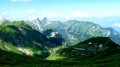
 7.83 mi
 +3,776 ft
 -3,776 ft
 6h 55
6h 55
 Difficult
 Departure from Vouvry (Valais)
Passing through the preserved site of Tanay, with its lake, you climb to a summit that offers a unique view of Lake Geneva and a wide panorama of the surrounding mountains. A popular hike with steep sections but no technical difficulty.N.B. The calculated elevation gain is slightly overestimated; the actual cumulative elevation gain is close to 1,000 metres.
Along the Bisse du Trient
 3.99 mi
+1,175 ft
-1,191 ft
2h 50
3.99 mi
+1,175 ft
-1,191 ft
2h 50
 Easy
Departure from Valais
Easy
Departure from Valais
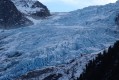
Starting from Col de la Forclaz (1527m), a short and easy out-and-back walk along the Bisse du Trient (irrigation channel) to the Chalet du Glacier (1583m), which offers a fine view of the Glacier du Trient and the Petite Pointe d'Orny (3187m).
⚠️ Part of the trail has been damaged by a landslide. Bypassing is possible, but the walk is not accessible for baby carriages and wheelchairs (see practical info).
Pointe de Bellevue from Morgins
 7.47 mi
+2,326 ft
-2,303 ft
5h 30
7.47 mi
+2,326 ft
-2,303 ft
5h 30
 Average
Departure from Troistorrents (Valais)
Average
Departure from Troistorrents (Valais)
As its name suggests, this summit offers a superb panorama, particularly of the nearby Dents du Midi. The proposed route offers a pleasant walk mainly through mountain pastures.
Walk in Savièse
3.67 mi
+502 ft
-502 ft
2h 05
Easy
Departure from Savièse (Valais)
An easy walk in the hills above Savièse, combining bisses and fields.
Route to the Charles Kuonen footbridge
 3.97 mi
+2,215 ft
-2,211 ft
3h 45
Average
Departure from Randa (Valais)
3.97 mi
+2,215 ft
-2,211 ft
3h 45
Average
Departure from Randa (Valais)
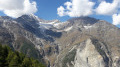
After passing through Swiss stone pine forests, this circular hike leads to an impressive record-breaker: the Charles Kuonen Footbridge, the longest pedestrian suspension bridge in the world.
La Grande Jumelle
 8.10 mi
+3,829 ft
-3,829 ft
7h 05
Difficult
Departure from Vouvry (Valais)
8.10 mi
+3,829 ft
-3,829 ft
7h 05
Difficult
Departure from Vouvry (Valais)
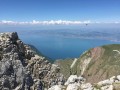
A not too busy hike up to a summit offering a vast panoramic view. A relatively challenging route with some aerial passages requesting a certain sense of itinerary at times. The beginning of the hikes passes through Tanay site and its lake.
Route des cinq lacs, above Zermatt
5.65 mi
+1,152 ft
-1,375 ft
3h 35
Easy
Departure from Zermatt (Valais)
Imagine a world-famous postcard backdrop and a route along five lakes perched above Zermatt. What's more, it's effortless, as you go up by funicular and come down by train. The only downside is the cost of transport!
The Bisses of Nendaz
5.71 mi
+1,115 ft
-1,122 ft
3h 35
Easy
Departure from Nendaz (Valais)
The Nendaz plateau was once a productive orchard before being overdeveloped. This productivity was partly due to the water supply provided by the four irrigation channels diverted from the River Printse. The suggested route follows the course of two of these man-made channels and also links two village chapels. An easy, shaded and refreshing route for a hot day.
6th stage of the Tour du Mont Blanc (TMB)
 7.75 mi
+4,652 ft
-4,564 ft
7h 35
Difficult
Departure from Orsières (Valais)
7.75 mi
+4,652 ft
-4,564 ft
7h 35
Difficult
Departure from Orsières (Valais)
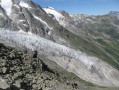
6th stage of the Mont Blanc tour: from the Relais d'Arpette to the Forclaz Pass via la Fenêtre d'Arpette.
Chemin des Ponts in Morgins
 6.37 mi
+860 ft
-869 ft
3h 40
Average
Departure from Troistorrents (Valais)
6.37 mi
+860 ft
-869 ft
3h 40
Average
Departure from Troistorrents (Valais)
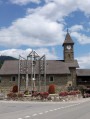
This easy round trip could have continued towards Lake Chésery, or even Lake Vert, to form a circular route returning via Tovassière, but the rain and thunderstorm forced us to turn back. It remains a lovely walk along the banks of the stream, featuring several welcome shelters for a picnic in changeable weather.
Tête de Chalin
 7.86 mi
+3,757 ft
-3,737 ft
6h 55
Difficult
Departure from Monthey (Valais)
7.86 mi
+3,757 ft
-3,737 ft
6h 55
Difficult
Departure from Monthey (Valais)
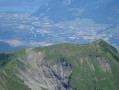
An uphill hike taking you to the foot of the Eastern Peak (Cime de l'Est), eastern peninsular of "les Dents du Midi", with mind-blowing mountain view points and a panoramic view extending towards the Vaudois Alps. A challenging itinerary with a short aerial path through ridges.
The Cabane du Vélan from Bourg-Saint-Pierre
 3.93 mi
+3,192 ft
-10 ft
4h 35
Difficult
Departure from Bourg-Saint-Pierre (Valais)
3.93 mi
+3,192 ft
-10 ft
4h 35
Difficult
Departure from Bourg-Saint-Pierre (Valais)
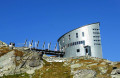
The Cabane du Vélan (2,642 m) is nothing like a traditional Swiss hut. Its bold, futuristic architecture, adorned with solar panels (inaugurated in 1993), makes it look more like a ship than a refuge and has earned it the Ligue de Protection du Patrimoine award. It enjoys an exceptional location above moraines and glaciers, with magnificent views of the Grand Combin massif (4,312 m) and Mont Vélan (3,727 m).
Loop between the lakes of Emosson and Salanfe.
 17.42 mi
+9,701 ft
-9,688 ft
2 days
Difficult
Departure from Finhaut (Valais)
17.42 mi
+9,701 ft
-9,688 ft
2 days
Difficult
Departure from Finhaut (Valais)
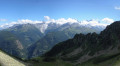
Lac de Salanfe is located in a large cirque, which is most easily accessed from the east via the Vallon de Van d'En Haut. From the Emosson dam, two passes offer access to this magnificent lake.
In a high mountain setting, you can admire the Ruan massif to the south-west and the Dents du Midi massif to the north-west. During these two days, you will cross the Barberine, Emaney and Fenestral passes.
Salvan - Auberge de Salanfe
 5.21 mi
+3,504 ft
-646 ft
5h 25
Difficult
Departure from Salvan (Valais)
5.21 mi
+3,504 ft
-646 ft
5h 25
Difficult
Departure from Salvan (Valais)
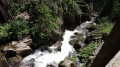
From the hamlet of Les Granges to Van d’en Bas, you’ll make your way up through the Dailley Gorges via daring structures, footbridges, tunnels and vertiginous staircases. The Salanfe river cascades down the steep gorges in a series of terraces. The view is breathtaking. You’ll enjoy numerous vantage points overlooking the Alpine peaks.You’ll cross the magnificent Vallon de Van. In the evening in Salanfe, you’ll already be able to admire the Dents du Midi standing out against the backdrop of the lake
Bisse du Tsittoret
 10.74 mi
+2,457 ft
-2,451 ft
7h 05
Average
Departure from Randogne (Valais)
10.74 mi
+2,457 ft
-2,451 ft
7h 05
Average
Departure from Randogne (Valais)
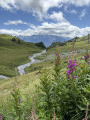
An accessible hike without any major difficulties, this is a beautiful hike starting from Aminona, with spectacular waterfalls and beautiful landscapes along the way. You can take a break along the way at the Colombire relay station (credit cards accepted) or at the Sex cave (no credit cards).
Grand Chavalard Circuit starting from L’Erié
 7.34 mi
+2,940 ft
-2,943 ft
5h 55
Average
Departure from Fully (Valais)
7.34 mi
+2,940 ft
-2,943 ft
5h 55
Average
Departure from Fully (Valais)
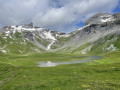
A very beautiful circular walk, offering magnificent views of the Grande Dent de Morcles, the lakes of Fully and the Mont Blanc massif, before finishing with a panoramic view over the Rhône Valley and the peaks of Valais.
Cornettes de Bise from Miex
 9.83 mi
+4,721 ft
-4,705 ft
8 hrs
9.83 mi
+4,721 ft
-4,705 ft
8 hrs
 Very difficult
Departure from Vouvry (Valais)
Very difficult
Departure from Vouvry (Valais)
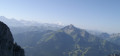
A very varied route for climbing the Cornettes de Bise from Switzerland. The summit, the highest in the region alongside the neighbouring Mont de Grange (2,432 m), offers a superb panorama. The descent through the Combe de la Chaux du Milieu takes place in a stunning, unspoilt setting, and the village of Tanay is enchanting.
A long hike with significant elevation gain, which requires a good level of fitness.
Above Leukerbad via the Heilbadweg and Weidenweg
 2.08 mi
+545 ft
-558 ft
1h 25
Easy
Departure from Leukerbad (Valais)
2.08 mi
+545 ft
-558 ft
1h 25
Easy
Departure from Leukerbad (Valais)
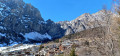
A short walk offering a variety of views of the surroundings of Leukerbad. The vantage point is high enough to provide an exceptional view of the Gemmi cliffs. On this route, you can also admire the peaks of the Vallon de Réchy.
Louvie Hut - Prafleuri Hut
 6.32 mi
+3,501 ft
-2,103 ft
8 hrs
Very difficult
Departure from Bagnes (Valais)
6.32 mi
+3,501 ft
-2,103 ft
8 hrs
Very difficult
Departure from Bagnes (Valais)
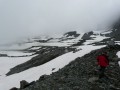
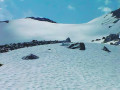
The second stage of the route involves crossing two passes, the Louvie and the Prafleuri, both of which were snow-covered.
Louvie Hut - Prafleuri Hut
 7.26 mi
+4,019 ft
-2,654 ft
6h 50
Difficult
Departure from Bagnes (Valais)
7.26 mi
+4,019 ft
-2,654 ft
6h 50
Difficult
Departure from Bagnes (Valais)
This sixth stage takes place in the high mountains and, depending on the season, may involve crossing snowfields.From Lake Louvie, climb up to Col Termin and rejoin the balcony path that comes from the Montfort Hut. Continue to Col de Louvie (possibility of snowfields). After descending Col de Louvie, the path passes at the foot of the Grand Désert Glacier. The trail then crosses scree; look out for the red and white markings and follow the signs for Prafleuri. Climb Col de Prafleuri. Descend to Torrent de Prafleuri (small bridge); on the left, a trail leads to the Prafleuri Hut.
Bisse du Ro and Tseuzier dam
10.26 mi
+4,908 ft
-4,908 ft
9h 00
Difficult
Departure from Icogne (Valais)
The climb up the Bisse du Ro to Lake Tseuzier is fairly easy
The return trip is more difficult, with a steep descent at the beginning and a steep climb at the end of the walk
In the middle there is a field with cows, so remember to close the gates behind you
Circular Marecot from Salvan
 2.15 mi
+623 ft
-604 ft
1h 30
Easy
Departure from Salvan (Valais)
2.15 mi
+623 ft
-604 ft
1h 30
Easy
Departure from Salvan (Valais)
A circular route around Salvan, passing through Le Marecot.
Follow the route with the Visorando app
The Five Lakes Trail to Zermatt with a view of the Matterhorn
6.33 mi
+1,526 ft
-1,512 ft
4h 15
Average
Departure from Zermatt (Valais)
In breathtaking surroundings, you will follow a route leading to five lakes below the Matterhorn (Stellisee, Grindjisee, Grünsee, Mosjesee and Leisee). In fine weather during the summer, you can swim in the Grünsee and Leisee lakes.
Circular Tour of Sex Rouge including the Summit
 11.73 mi
+2,792 ft
-5,417 ft
7h 50
Difficult
Departure from Arbaz (Valais)
11.73 mi
+2,792 ft
-5,417 ft
7h 50
Difficult
Departure from Arbaz (Valais)
This walk starts in Anzere and uses the cable car to the Pas de Maimbre.
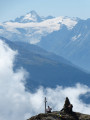
The walk takes you around the Sex Rouge and includes the short but steep ascent to the summit for the great views across the Pennine Alps. It descends to pass the Cabane de Audannes and then through the Combe des Andins to Serin. After this is uses one of the established Bisse walks to return to Anzere.
⚠️(Note in 2024 the path between point 2616m and the col at La Selle was affected by a landslide and is unsafe. This route uses a deviation set up by local mountain guides; it is marked with posts but is not yet as obvious as it will be, once it is used by many people)
Le Belvedere
 4.53 mi
+2,110 ft
-2,093 ft
3h 55
Average
Departure from Orsières (Valais)
4.53 mi
+2,110 ft
-2,093 ft
3h 55
Average
Departure from Orsières (Valais)
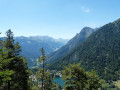
This is a variation on the Sentier Le Belvedere walk which is described in the Pays du St-Bernard tourist booklet.
Auberge de Salanfe - Cabane du Vieux Emosson
 10.52 mi
+6,050 ft
-4,813 ft
7 hrs
Very difficult
Departure from Evionnaz (Valais)
10.52 mi
+6,050 ft
-4,813 ft
7 hrs
Very difficult
Departure from Evionnaz (Valais)
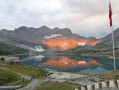
A long day leading to Lac d'Emosson via the Col d'Emaney and Col de Barberine. Descent to Lac d'Emosson, then Col de la Gueulaz and the final climb to the Cabane du Vieux Emosson.
Vieux Emosson Refuge - Refuge de la Pierre à Bérard
 7.85 mi
+3,921 ft
-4,715 ft
7 hrs
Very difficult
Departure from Finhaut (Valais)
7.85 mi
+3,921 ft
-4,715 ft
7 hrs
Very difficult
Departure from Finhaut (Valais)
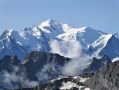
Pass through the listed site of dinosaur footprints, then climb up to Cheval Blanc and reach the summit of Buet via the ridges. A difficult alpine route classified as T4 with breathtaking views of the Aiguilles Rouges.
Saas-Almagell - Gspon
 14.96 mi
+4,616 ft
-3,953 ft
10 hrs
Very difficult
Departure from Saas Almagell (Valais)
14.96 mi
+4,616 ft
-3,953 ft
10 hrs
Very difficult
Departure from Saas Almagell (Valais)
You will return to Almageller Alp via the Almagellerhorn adventure trail, which is marked with ladders, steps and a suspension bridge. The trail returns to the Saas Valley and remains at almost the same altitude until Kreuzboden. From this balcony, you can admire the Mischabel massif and the resort of Saas Fee. Overlooking the Saastal and at the foot of the Fletschorn, you will walk through old pastures. You will pass through several Walser hamlets before arriving in Gspon.
Chindonne - Refuge d'Antème
 7.64 mi
+3,061 ft
-1,677 ft
6h 10
Difficult
Departure from Monthey (Valais)
7.64 mi
+3,061 ft
-1,677 ft
6h 10
Difficult
Departure from Monthey (Valais)
During this fourth stage of the Tour des Dents du Midi, the route offers more magnificent views overlooking the Val-d'Illiez. At Signal de Soi, you can admire the Tête de Chalin, the Cime de l'Est, the cathedral and the Dent Jaune. At the Cabane d'Antème, wonderfully located at the foot of the Haute Cime, you can enjoy a sunset over the Dents du Midi and the Portes du Soleil.
Auberge de Salanfe - Mex
 5.95 mi
+1,952 ft
-4,180 ft
4h 25
Average
Departure from Evionnaz (Valais)
5.95 mi
+1,952 ft
-4,180 ft
4h 25
Average
Departure from Evionnaz (Valais)
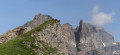
During this stage of the Tour des Dents du Midi, at the Col du Jorat you will enjoy a panoramic view to the south of the peaks on the border with Italy. You will probably recognise the Matterhorn. You will also have a bird's eye view of the Lac de Salanfe, with the Dôme de la Sallière in the background. To the north, the Rhône valley awaits you. In the small village of Mex, nestled on a plateau, several viewpoints offer views of the villages in the valley, all the way to Lake Geneva.
From the Cabane du Vélan to Bourg-Saint-Pierre
 4.57 mi
+282 ft
-3,471 ft
2h 20
Difficult
Departure from Bourg-Saint-Pierre (Valais)
4.57 mi
+282 ft
-3,471 ft
2h 20
Difficult
Departure from Bourg-Saint-Pierre (Valais)
The second stage of this hike starts at the Cabane du Vélan and follows the right bank of the Valsorey torrent.
Col des Planches - La Tzoumaz
 8.55 mi
+3,048 ft
-2,720 ft
6h 35
Difficult
Departure from Vollèges (Valais)
8.55 mi
+3,048 ft
-2,720 ft
6h 35
Difficult
Departure from Vollèges (Valais)
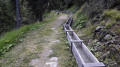
During this first stage, you will discover part of the Old Saxon Bisse (the longest of the bisse: 26 km from its water source in Siviez to La Boveresse). The bisse starts at the point (6). Built in the 1850s, the pipes no longer exist, so you will have to wait until you reach La Tzoumaz to finally see water flowing along the path. The bisse is currently being restored in sections.
La Tzoumaz - Nendaz
 9.23 mi
+2,001 ft
-2,372 ft
6h 00
Average
Departure from Riddes (Valais)
9.23 mi
+2,001 ft
-2,372 ft
6h 00
Average
Departure from Riddes (Valais)
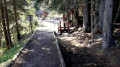
The elevation profile says it all about this day. Most of the route runs along the Grand Bisse de Saxon. This section has been beautifully restored. In Taillay, you will discover a water wheel and a hammer powered by the stream. This ingenious invention was an alarm signal. The sound of the hammer could be heard 2 km away. The absence of sound alerted the bisse guard. You will recognise the Muverans massif on the other side of the Rhône valley.
Auberge de Bonavau - Auberge de Salanfe
 9.16 mi
+6,831 ft
-6,001 ft
7 hrs
Very difficult
Departure from Champéry (Valais)
9.16 mi
+6,831 ft
-6,001 ft
7 hrs
Very difficult
Departure from Champéry (Valais)
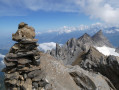
A big day with spectacular scenery. The Pas d'Encel pass is a little tricky to navigate to reach the foot of Mont Ruan. Reach Haute Cime, the highest point of the Dents du Midi at 3,257 metres, via the Col de Susanfe, then descend to the Auberge de Salanfe on the edge of the lake.
The Rhône plain and the vineyards of Vionnaz
 3.27 mi
+522 ft
-515 ft
1h 55
Easy
Departure from Vionnaz (Valais)
3.27 mi
+522 ft
-515 ft
1h 55
Easy
Departure from Vionnaz (Valais)
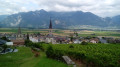
Between two ascents of the surrounding peaks, or when these are shrouded in clouds or under snow, a short, easy walk across the plain and along the boundary between vineyards and forest, exploring the rich heritage of the old village of Vionnaz.
Fionay - Cabane de Louvie
 2.01 mi
+2,592 ft
-177 ft
3h 10
Average
Departure from Bagnes (Valais)
2.01 mi
+2,592 ft
-177 ft
3h 10
Average
Departure from Bagnes (Valais)
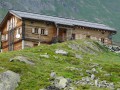
First stage of the trek linking the village of Fionay to Saas Fee. A pleasant stage to reach the Cabane de Louvie, built on the edge of the lake of the same name.
Mex - Chindonne
 7.95 mi
+3,996 ft
-2,421 ft
7h 10
Difficult
Departure from Mex (Valais)
7.95 mi
+3,996 ft
-2,421 ft
7h 10
Difficult
Departure from Mex (Valais)
During this beautiful stage of the Tour des Dents du Midi, you will cross pastures and forests to reach Chindonne. As the stage is quite short, you will not miss climbing the Dent de Valerette, a magnificent viewpoint. You will then enjoy a panoramic view of the Dents du Midi and the Rhône valley.
From Champéry to the Susanfe hut
4.78 mi
+4,219 ft
-823 ft
5h 50
Difficult
Departure from Champéry (Valais)
The usual route to the Susanfe hut from Campéry starts in the forest before emerging onto the Bonavau mountain pasture. Below the imposing peak of the same name, the trail climbs up a path with a few equipped sections and crosses the Pas d'Encel. The final ascent of the Susanfe valley takes place in a high mountain setting.
Arolla - Prarayer Refuge
 10.43 mi
+3,970 ft
-3,871 ft
10 hrs
Very difficult
Departure from Evolène (Valais)
10.43 mi
+3,970 ft
-3,871 ft
10 hrs
Very difficult
Departure from Evolène (Valais)
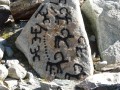
Today's high mountain stage requires the use of crampons to cross the Arolla glacier. This long stage requires an early start.
Champex - Trient
 10.17 mi
+3,022 ft
-3,573 ft
7h 20
Average
Departure from Orsières (Valais)
10.17 mi
+3,022 ft
-3,573 ft
7h 20
Average
Departure from Orsières (Valais)
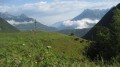
stage 7 of the Tour du Mont Blanc from Champex (Switzerland) to Trient via the Col de la Forclaz.
Visit Täsch and its lake
3.62 mi
+312 ft
-335 ft
1h 55
Easy
Departure from Täsch (Valais)
Far from the hustle and bustle of Zermatt and away from the tourists, this flat walk allows you to discover the village and its recreational lake. Numerous granaries can be seen along this loop
Savièse Bisse or Bisse du Torrent Neuf
5.46 mi
+2,933 ft
-2,920 ft
5h 05
Average
Departure from Savièse (Valais)
A very well-signposted ‘tourist’ route with informative and historical signs explaining the historical role and construction methods of the bisses – these irrigation channels that carried water to the farmland. No difficulties for those with a head for heights, but even though the route is well-maintained and safe, the drop below is sometimes very noticeable and there are several footbridges that may be daunting.
Becs de Bosson Hut and Pas de Lona from La Bendolla
8.36 mi
+3,084 ft
-3,074 ft
6h 30
Difficult
Departure from Grimentz (Valais)
This beautiful walk offers one of the finest panoramic views in the region from the Becs de Bosson hut. It’s well worth doing in fine weather to see as far as Mont Blanc. The walk is challenging due to the 900 m elevation gain and because the path is a bit tricky near the hut. The path is also somewhat exposed after the Lona mountain pasture.
Circular route to the Cabane des Aiguilles Rouges via Lac Bleu
 8.65 mi
+3,914 ft
-3,894 ft
7h 25
Difficult
Departure from Evolène (Valais)
8.65 mi
+3,914 ft
-3,894 ft
7h 25
Difficult
Departure from Evolène (Valais)
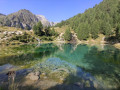
A lovely circular hike with magnificent scenery. Among the highlights of the hike are theview of the Aiguilles Rouges (a striking rocky landscape), theview of the glaciers throughout the descent, thefragrantforestsof larch and European larch, and a brief stop at Lac Bleu with its intense blue colour (and its many tourists)
Circular Ferpecle and views of the glaciers
3.19 mi
+722 ft
-722 ft
2h 05
Easy
Departure from Evolène (Valais)
A short hike/walk around Ferpecle with views of the Swiss glaciers halfway along the route. The route starts in the heart of the mountains, with accessible car parks on several levels. You can also take a bus. There is a slight incline and a section alongside the dam. You’re bound to come across some cows (very friendly ones). Please do open the gates – they’re there to stop the animals from escaping.
Staldhorn from the Simplonstrasse
 4.41 mi
+1,663 ft
-1,667 ft
3h 30
Average
Departure from Simplon (Valais)
4.41 mi
+1,663 ft
-1,667 ft
3h 30
Average
Departure from Simplon (Valais)
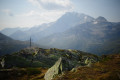
This walk from the Simplon Road (which is very busy), slightly below the pass, allows you to enjoy a fairly wild environment. The summit of the Staldhorn, which is relatively low in altitude, offers a superb 360° panorama of Monte Leone and its glacier, the Fletschhorn, as well as the peaks of the Bernese Alps, including the Aletschhorn (4,194 m) and the impressive Bietschorn!
Lake Téné circular walk
 7.97 mi
+3,724 ft
-3,724 ft
6h 55
Difficult
Departure from Ayent (Valais)
7.97 mi
+3,724 ft
-3,724 ft
6h 55
Difficult
Departure from Ayent (Valais)
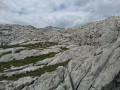
The walk starts and ends at the Tseuzier dam. It begins by skirting the lake, then continues uphill tothesmallLac de Téné. The ascent to the pass takes place on a route consisting entirely of rock (the glacier is no longer visible). The descent follows a different path, offering some stunning views, particularly along sections over the sharp limestone pavement (a geological formation).
Grüben – Zinal
8.56 mi
+3,284 ft
-3,845 ft
6h 50
Very difficult
Departure from Oberems (Valais)
Stage2 of the northern section of the Tour du Cervin: this takes you to the Val d’Anniviers.NB: Originally, we had planned to walk all the way from Grüben to Zinal, but in two stages: stage 1 from Grüben to the Hôtel Weisshorn, and stage 2 from the Hôtel Weisshorn to Zinal. For financial reasons, this wasn’t possible; so we carried on to Saint-Luc, from where a bus service took us to Zinal.The first section (up to Meidu) does not follow the classic Tour du Cervin route; the section through the forest and mountain pastures between the end of the track and the buildings at Jäniltigu Oberstafil is no longer marked at all; that said, there are no particular difficulties: the track reflects the route I took, based on the path as shown on the maps and the terrain.
Jungu – Grüben
7.79 mi
+3,848 ft
-4,318 ft
6h 55
Difficult
Departure from St. Niklaus (Valais)
The first of the three stages that make up the northern traverse of the massif from east to west.No particular difficulties: you just need to take care on the first section, which follows a narrow path along the cliff face. Fixed equipment (ropes) secures the most exposed sections.The route starts from the same cable car used on the previous stage to descend to St-Niklaus.
Topalihütte – Jungu
6.94 mi
+1,860 ft
-4,055 ft
4h 50
Difficult
Departure from St. Niklaus (Valais)
Jungu/Jungen (1,954 m) is a village situated above St-Niklaus. The journey is made by cable car. If the cable cars are not running, an intercom at the Jungu station allows you to contact the operator: payment is made at the bottom.The descent down the Wasulicke features several sections secured with fixed ropes and ladders, as the ground is quite unstable and sloping. The descent is currently not particularly exposed: a 45° slope, which allows for a fairly safe descent with the safety measures in place. There is currently no route across what remains of the glacier. This forms the second stage of the Tour du Cervin, passing through the western part of the Matter Vispa valley.
More walks in Valais
Select an area below: