


GCTourisme

 Local authority
 Premium user
Sign up:
Published route(s)
 Gimeux - Sentier du Fanaud
 6.44 mi
 +377 ft
 -374 ft
 3h 15
3h 15
 Easy
Easy
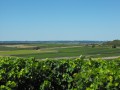
 Departure from Gimeux (Charente)
Gimeux was built on a hillside overlooking the valley and marshlands of the river Né and enjoys a flourishing farming activity: meadows and cereal fields in the valley, vineyards on the hills. Ancient burial sites and the outline of the old Roman road called ‘Chemin Boisné’ are revealing of the ancestral occupation of the land. The parish church dates back to the 12th century. Also marking the landscape are an old chapel as well as the remains of a windmill on the Fanaud hillside.
Saint-Laurent-de-Cognac / Louzac-Saint-André - Sentier des Combes
 6.00 mi
+328 ft
-318 ft
3h 05
Easy
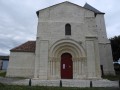
Departure from Saint-Laurent-de-Cognac (Charente)
6.00 mi
+328 ft
-318 ft
3h 05
Easy
Departure from Saint-Laurent-de-Cognac (Charente)
Bordered to the South by the Charente river, theSaint-Laurent area consists of a small town gathered around its church and its 11th century portal, several villages spread across the valleys and the hills as well as farms and secluded dwellings.
Merpins - Sentier François Ier
 5.68 mi
+62 ft
-62 ft
2h 40
Easy
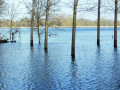
Departure from Merpins (Charente)
5.68 mi
+62 ft
-62 ft
2h 40
Easy
Departure from Merpins (Charente)
Located at the confluence of the Né and Charente rivers, the Merpins commune has been permanently occupied by men from very early times: arrowheads, pottery shards, and later an imposing medieval fortress, an 11th century church and an abbey dating back to the 12th century are the living proof. These fertile lands are home to meadows, cereal fields and a Grande-Champagne listed vineyard.
Saint-Sulpice-de-Cognac / Cherves-Richemont - Sentier des Chauffeurs
 7.45 mi
+381 ft
-377 ft
3h 45
7.45 mi
+381 ft
-377 ft
3h 45
 Moderate
Departure from Saint-Sulpice-de-Cognac (Charente)
Moderate
Departure from Saint-Sulpice-de-Cognac (Charente)
Saint-Sulpice-de-Cognac is pleasantly located between the marshlands of the Antenne River and limestone hillsides. There, are hidden the remains of the Agrippa Roman road as well as forgotten local railroad.
Cherves-Richemont is graced with the Antenne River and offers an unexpected diversity of landscapes. Its historic heritage is particularly rich: Romanesque churches, Château Chesnel, watermills, manor houses….
Saint-Brice - Sentier de l'Abbaye
 6.63 mi
+243 ft
-240 ft
3h 15
Moderate
Departure from Saint-Brice (Charente)
6.63 mi
+243 ft
-240 ft
3h 15
Moderate
Departure from Saint-Brice (Charente)
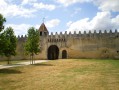
Thanks to the natural beauty of its location and the richness of its heritage, Saint-Brice is one of the most picturesque areas of Cognac region. At the heart of the Charente and Soloire rivers valley, man has erected many symbolic buildings: dolmens, churches, abbeys, castles and manors, all expertly crafted.
Interpretive trail at La Magdeleine
 0.87 mi
+3 ft
-7 ft
0h 25
Easy
Departure from Criteuil-la-Magdeleine (Charente)
0.87 mi
+3 ft
-7 ft
0h 25
Easy
Departure from Criteuil-la-Magdeleine (Charente)
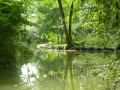
Discover the rich fauna and flora of the Né valley in this Natura 2000 classified area - a nature protected zone with many diverse and protected species and plants, such as the European Mink (a little known species near extinction) and wild orchids, as well as many other species naturally found in a preserved environment.
Circuit of Open-air Wash Houses and Water Sources
 12.11 mi
+840 ft
-843 ft
6h 20
Moderate
Departure from Saint-Preuil (Charente)
12.11 mi
+840 ft
-843 ft
6h 20
Moderate
Departure from Saint-Preuil (Charente)
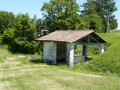
This circuit gives you the chance to discover rural heritage (springs, water sources, open air wash houses); and at each place, a description of its history is displayed. The route also highlights the architectural and historical heritage of the 13th century (Eglise Saint-Prohet, the Place Jacquaire, the protestant stele, the Chateau de Segeville) plus the various hamlets in the locality, flora and fauna.
Fountains and vineyards
 5.72 mi
+335 ft
-351 ft
2h 55
Easy
Departure from Moulidars (Charente)
5.72 mi
+335 ft
-351 ft
2h 55
Easy
Departure from Moulidars (Charente)
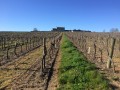
A varied circuit, sometimes in the sun in the vineyards sometimes in the forest. A very pleasant walk in the middle of the countryside.
Discovering the vineyard cottages
 6.01 mi
+220 ft
-230 ft
2h 55
Easy
Departure from Moulidars (Charente)
6.01 mi
+220 ft
-230 ft
2h 55
Easy
Departure from Moulidars (Charente)
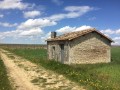
Throughout this route, you’ll come across small cottages amongst the vineyards; these were used by winegrowers to store equipment and also to take shelter during breaks. One of them is open to the public.
Around Champmillon
 4.91 mi
+282 ft
-272 ft
2h 30
Easy
Departure from Champmillon (Charente)
4.91 mi
+282 ft
-272 ft
2h 30
Easy
Departure from Champmillon (Charente)
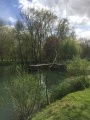
This walk takes you along the Charente river before returning to the starting point through the vineyards. A very peaceful and pleasant route.
The Donkey Trail
 3.43 mi
+164 ft
-167 ft
1h 45
Easy
Departure from Viville (Charente)
3.43 mi
+164 ft
-167 ft
1h 45
Easy
Departure from Viville (Charente)
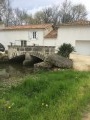
There’s plenty of variety along this route, which takes you up and down the small hills of Viville. You’ll pass close to the old windmill and alongside an old mill on the River Né.
The Cuckoo Trail
 3.19 mi
+230 ft
-223 ft
1h 40
Easy
Departure from Bonneuil (Charente)
3.19 mi
+230 ft
-223 ft
1h 40
Easy
Departure from Bonneuil (Charente)
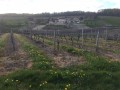
A route alternating between open landscapes and woodland. Very pleasant to walk.
The Pierre Levée path
 5.41 mi
+184 ft
-184 ft
2h 40
Easy
Departure from Châteauneuf-sur-Charente (Charente)
5.41 mi
+184 ft
-184 ft
2h 40
Easy
Departure from Châteauneuf-sur-Charente (Charente)
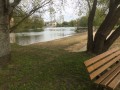
The landscape varies along this route, first along the Charente river, then through vineyards, and now we are in the forest.
The shepherds' path in Châteauneuf
 3.98 mi
+151 ft
-151 ft
2h 00
Easy
Departure from Châteauneuf-sur-Charente (Charente)
3.98 mi
+151 ft
-151 ft
2h 00
Easy
Departure from Châteauneuf-sur-Charente (Charente)
The shepherds who lived here built the Church of Saint-Surin in the 9th century. After the Revolution, this church was attached to Châteauneuf. Climbing a little higher, you can see the diversity of the surrounding landscapes, then descend along the Charente.
Vineyard path in Mosnac
 7.28 mi
+121 ft
-121 ft
3h 25
Moderate
Departure from Mosnac (Charente)
7.28 mi
+121 ft
-121 ft
3h 25
Moderate
Departure from Mosnac (Charente)
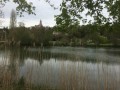
Vineyards and more vineyards, the Charente, a bit of woodland – that’s a great mix for this magnificent walk.
Chemin des Chaumes around Saint-Amant-de-Graves
 8.64 mi
+256 ft
-256 ft
4h 10
Moderate
Departure from Graves-Saint-Amant (Charente)
8.64 mi
+256 ft
-256 ft
4h 10
Moderate
Departure from Graves-Saint-Amant (Charente)
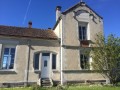
Meadows around the Charente river to the forest a little higher up. Beautiful landscapes and a variety of pleasant environments to walk through.
Path through the meadows of Saint-Amant-de-Graves
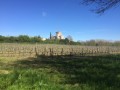 3.98 mi
+26 ft
-26 ft
1h 50
Easy
Departure from Graves-Saint-Amant (Charente)
3.98 mi
+26 ft
-26 ft
1h 50
Easy
Departure from Graves-Saint-Amant (Charente)
This route takes you through the meadows of the Charente near Graves. Beautiful churches and meadows with a variety of crops punctuate this lovely walk.
The Chemin du Champ de Mars in Bonneuil
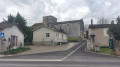 5.40 mi
+348 ft
-348 ft
2h 45
Easy
Departure from Bonneuil (Charente)
5.40 mi
+348 ft
-348 ft
2h 45
Easy
Departure from Bonneuil (Charente)
Much of this walk takes place in the forest, which is pleasant in summer. The rest of the route is through the vineyards, offering something for everyone.
Six-Seven from Birac
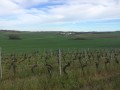 4.10 mi
+171 ft
-154 ft
2h 00
Easy
Departure from Birac (Charente)
4.10 mi
+171 ft
-154 ft
2h 00
Easy
Departure from Birac (Charente)
A short walk through the Birac countryside and its small hamlets.
Bouteville Vineyard Route
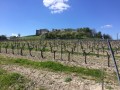 4.88 mi
+194 ft
-194 ft
2h 25
Easy
Departure from Bouteville (Charente)
4.88 mi
+194 ft
-194 ft
2h 25
Easy
Departure from Bouteville (Charente)
A route that runs mostly through the vineyards, which are ubiquitous in the commune of Bouteville, situated in the prestigious Grande Champagne region of the Cognac region. Almost all the winegrowers in Bouteville are also ‘distillers’.
The Bouteville Mill Route
 5.24 mi
+354 ft
-354 ft
2h 45
Easy
Departure from Bouteville (Charente)
5.24 mi
+354 ft
-354 ft
2h 45
Easy
Departure from Bouteville (Charente)
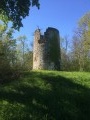
This route takes you uphill to the old mill before winding your way through the surrounding vineyards.
Tour of the plateau via the hamlets
 10.53 mi
+417 ft
-400 ft
5h 10
Moderate
Departure from Saint-Simeux (Charente)
10.53 mi
+417 ft
-400 ft
5h 10
Moderate
Departure from Saint-Simeux (Charente)
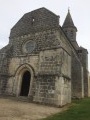
Starting from the charming little village of Saint-Simeux, discover the plateau where vines grow in abundance, dotted with small hamlets, each one more charming than the last, with their large old stone buildings.
Network of stones and vines
 1.88 mi
+164 ft
-164 ft
1h 00
Easy
Departure from Saint-Simeux (Charente)
1.88 mi
+164 ft
-164 ft
1h 00
Easy
Departure from Saint-Simeux (Charente)
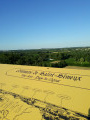
Also known as the "small heritage trail", you will discover this heritage through a short route on the heights but also on the banks of the Charente.
Circuit de la Motte
 1.24 mi
+102 ft
-105 ft
0h 40
Easy
Departure from Ambleville (Charente)
1.24 mi
+102 ft
-105 ft
0h 40
Easy
Departure from Ambleville (Charente)
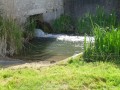
The commune of Ambleville is crossed by the Collinaud, a stream tributary of the River Né, which includes wash-houses typically found in this area of Grande Champagne. During your walk you will have the chance to discover La Motte, a hamlet in this commune. Take the time to admire the rolling countryside and La Motte wash-house.
This walk can be enjoyed with all the family, because children will find it fun to cross the Collinaud by way of the stepping stones.
Circuit du Dolmen
 7.20 mi
+236 ft
-236 ft
3h 30
Moderate
Departure from Saint-Fort-sur-le-Né (Charente)
7.20 mi
+236 ft
-236 ft
3h 30
Moderate
Departure from Saint-Fort-sur-le-Né (Charente)
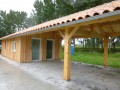
Situated at 25m altitude - the river Né and the Motte stream are the principal water courses which cross the locality.
In certain places there are excellent views towards and from the village, the Dolmen, of the vineyards, the landscape of the Grande Champagne and surrounding villages. In every season you can discover a certain charm and appeal in St. Fort.
Circuit Romain in Segonzac
 8.92 mi
+482 ft
-459 ft
4h 30
Moderate
Departure from Segonzac (Charente)
8.92 mi
+482 ft
-459 ft
4h 30
Moderate
Departure from Segonzac (Charente)
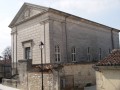
Segonzac: the root of its name means 'strength, courage' in Gaulish.
Archaeological digs have revealed a Neolithic inhabitation (approx. 5000 B.C)
The Hundred Years' War persuaded the construction of numerous underground passages, which enabled the inhabitants to take refuge from extreme violence.
Protestantism has, without a doubt, left its mark in the area, particularly with the Segonzacais. The first Reformed church was founded in 1558. Troubles occurred in 1562 and the parish church was burnt down. Today's Temple is the third constructed since the Edict of Nantes.
According to a legend at the start of the 17th century, it was at Segonzac that a vintner named Chevalier de la Croix Maron invented double distillation.
Circuit des Trois Pierres
 5.91 mi
+125 ft
-125 ft
2h 50
Easy
Departure from Angeac-Champagne (Charente)
5.91 mi
+125 ft
-125 ft
2h 50
Easy
Departure from Angeac-Champagne (Charente)
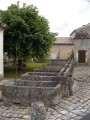
A lovely walk through the Charentais vineyards, passing beautiful buildings and around the village of Roissac.
Angeac- Champagne counts numerous prosperous-looking Charentais houses, witness to the wealth which lies in the local economy producing cognac, its principal occupation. The entrances to the estates are marked by a gate or porch way: there are at least 50. They are unique and typical of our local heritage. At Roissac village they embellish the main street.
Crêtes de Segonzac circuit
 6.08 mi
+358 ft
-341 ft
3h 05
Moderate
Departure from Segonzac (Charente)
6.08 mi
+358 ft
-341 ft
3h 05
Moderate
Departure from Segonzac (Charente)
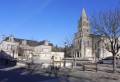
The Gaul root of its name means 'strength, courage'. The Hundred Years War persuaded the construction of numerous underground passages, which enabled the inhabitants to take refuge from extreme violence. Without a doubt Protestantism has left its mark in the area, particularly with the Segonzacais. The first Reformed church was founded in 1558. Troubles occurred in 1562 and the parish church was burnt down. Today's Temple church is the third constructed since the Edict of Nantes.
Route du Gouffre au Marais
 10.28 mi
+56 ft
-56 ft
4h 45
Moderate
Departure from Gensac-la-Pallue (Charente)
10.28 mi
+56 ft
-56 ft
4h 45
Moderate
Departure from Gensac-la-Pallue (Charente)
Gensac-la-Pallue is notable for its marshes, to which the locals are deeply attached. La Pallue comes from ‘palus’: marshes. This wetland was once an extension of a branch of the Charente. La Pallue, an enclave within the parish of Gensac, became an independent commune during the Revolution. The two communes of Gensac and La Pallue were merged in 1857, with the exception of the villages of Roissac.
The Templars’ Route in Angles
 6.27 mi
+236 ft
-207 ft
3h 05
Easy
Departure from Salles-d'Angles (Charente)
6.27 mi
+236 ft
-207 ft
3h 05
Easy
Departure from Salles-d'Angles (Charente)
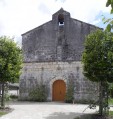
It was in December 1856 that Salles de Segonzac joined forces with the Commanderie d'Angles, a small village nestled in a bend of the River Le Né. Angles lived in harmony with the river, whilst Salles, resembling a large village, centred its life around wine-growing.
"Step by Step" through the village centre of Saint-Fort-sur-le-Né
 2.62 mi
+98 ft
-72 ft
1h 15
Easy
Departure from Saint-Fort-sur-le-Né (Charente)
2.62 mi
+98 ft
-72 ft
1h 15
Easy
Departure from Saint-Fort-sur-le-Né (Charente)
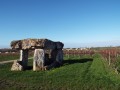
Situated at an altitude of 25 metres, the River Né and the Motte stream are the main watercourses flowing through the commune of Saint-Fort-sur-le-Né.
From certain vantage points, there are excellent views of the village, the dolmen, the vineyards, the Grande Champagne countryside and the other surrounding villages.
Each season offers a chance to discover its own unique charms.
Route du Chemin 101
 6.04 mi
+285 ft
-299 ft
3h 00
Moderate
Departure from Genté (Charente)
6.04 mi
+285 ft
-299 ft
3h 00
Moderate
Departure from Genté (Charente)
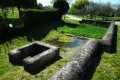
Built on the lower slopes of Grande Champagne, Genté offers its residents proximity to the town of Cognac, 8 km away, and the charms of rural life. Point 101 is an iconic location in the commune of Genté, where the orientation table is located. This site was once home to an old mill, some remains of which are still buried in the ground around the site. Point 101 is also the reference point for sea level.
Route des Petaux
 6.71 mi
+361 ft
-384 ft
3h 25
Moderate
Departure from Ambleville (Charente)
6.71 mi
+361 ft
-384 ft
3h 25
Moderate
Departure from Ambleville (Charente)
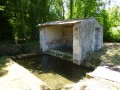
The village is crossed by the Collinaud, a tributary of the Né. Primarily focused on wine-growing, Ambleville also has fertile land for growing cereals.
Route between Lin and Vigne
 12.70 mi
+843 ft
-820 ft
6h 35
12.70 mi
+843 ft
-820 ft
6h 35
 Difficult
Departure from Lignières-Sonneville (Charente)
Difficult
Departure from Lignières-Sonneville (Charente)
Lignière-Sonneville is a village with the rolling hills typical of the Grande Champagne region, formed by the merger of Lignières and Sonneville in 1845. Nestled in the heart of the Grande Champagne, it has a population of 613.
Côt Route
 10.86 mi
+463 ft
-453 ft
5h 25
Difficult
Departure from Juillac-le-Coq (Charente)
10.86 mi
+463 ft
-453 ft
5h 25
Difficult
Departure from Juillac-le-Coq (Charente)
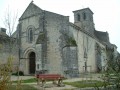
Juillac-Le-Coq is crossed by the Mothe stream, a tributary of the Charente. The village has a population of around 667. Wine-growing is its main industry.
Ugni Blanc Route
 4.63 mi
+141 ft
-138 ft
2h 15
Easy
Departure from Criteuil-la-Magdeleine (Charente)
4.63 mi
+141 ft
-138 ft
2h 15
Easy
Departure from Criteuil-la-Magdeleine (Charente)
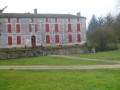
Set slightly apart from the main roads, the village seems to have fallen asleep… And yet, at the start of the last century, it was home to numerous shops and craftsmen who made it famous throughout the surrounding area. Criteuil-la-Magdeleine boasts a wealth of large houses, known as ‘logis’, and around ten mills (no longer in operation today) situated on the River Né. Some of these can be seen from the walking trail.
The Petaux Route (short circular route)
 4.13 mi
+207 ft
-200 ft
2h 05
Easy
Departure from Ambleville (Charente)
4.13 mi
+207 ft
-200 ft
2h 05
Easy
Departure from Ambleville (Charente)
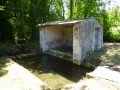
The Collinaud, a tributary of the Né, flows through the village. Whilst Ambleville is primarily focused on wine-growing, it also has fertile land suitable for growing cereals.
The Côt Route (short circular route)
3.77 mi
+69 ft
-69 ft
1h 45
Easy
Departure from Juillac-le-Coq (Charente)
Juillac-Le-Coq is crossed by the Mothe stream, a tributary of the Charente. The village has a population of around 667. Wine-growing is its main industry.
Route between flax and vineyards (short circular route)
5.55 mi
+256 ft
-246 ft
2h 45
Easy
Departure from Lignières-Sonneville (Charente)
Lignière-Sonneville is a village with the rolling hills typical of the Grande Champagne region, formed by the merger of Lignières and Sonneville in 1845. Nestled in the heart of the Grande Champagne, it has a population of 613.
Route of Fountains and Washhouses – Purple-marked variant
 7.95 mi
+482 ft
-512 ft
4h 05
Moderate
Departure from Saint-Preuil (Charente)
7.95 mi
+482 ft
-512 ft
4h 05
Moderate
Departure from Saint-Preuil (Charente)
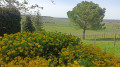
This route allows you to discover the area’s small-scale rural heritage (fountains, wash houses). Each water point features a historical and/or anecdotal description. The route also incorporates architectural and historical heritage (the 13th-century Saint-Projet Church, Place Jacquaire, Ségeville Castle and the scattered hamlets of the commune).
Exploring this route also allows you to appreciate the area’s scenic, floral and wildlife attractions.
Route of Fountains and Washhouses – Orange-marked variant
3.31 mi
+190 ft
-190 ft
1h 40
Easy
Departure from Saint-Preuil (Charente)
This route offers the chance to discover small-scale rural heritage (fountains, wash houses). Exploring this route also allows you to appreciate the area’s scenic, floral and wildlife features.