


Refine your search for walks in Neuilly-lès-Dijon
Neuilly-lès-Dijon walks


 Circular along the banks of the Ouche starting from Neuilly-lès-Dijon
 Visorando Member
 6.81 mi
 +33 ft
 -43 ft
 3h 10
3h 10
 Easy
Easy
 Departure from Neuilly-lès-Dijon (Côte-d'Or)
The Ouche has been redeveloped, making it a great place for a walk in spring or autumn. You can collect walnuts in season. A very pleasant bucolic setting where you can watch the birds. Picnics are possible by the pond.Note:La Gaule de Neuilly is organising its Enduro Carpes from 23 to 25 May (2025) at theNeuilly-Crimoloispond.
Walk along the banks of the Ouche from Longvic
 7.19 mi
+39 ft
-36 ft
3h 20
7.19 mi
+39 ft
-36 ft
3h 20
 Moderate
Departure from Longvic (Côte-d'Or)
Moderate
Departure from Longvic (Côte-d'Or)
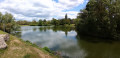
Étang Royal, a little corner of paradise.
Walkers, joggers and other nature lovers appreciate this site for its calm, beauty and balance.
An easy walk to enjoy the green charm of the ponds and banks of the Ouche.
Circular route through the plains on the outskirts of Dijon
11.73 mi
+79 ft
-79 ft
5h 30
Moderate
Departure from Quetigny (Côte-d'Or)
A circular route with no technical difficulty starting from Quétigny, taking you to the outskirts of the residential areas of Saint-Apollinaire, Varois and Chaignot, Couternon, and Chevigny-Saint-Sauveur. A very pleasant route in fine weather when the path runs alongside the Vieille Tille and then the Norges between Couternon and Chevigny.
The banks of the Oscara from Fauverney
 6.87 mi
+26 ft
-26 ft
3h 10
Moderate
Departure from Fauverney (Côte-d'Or)
6.87 mi
+26 ft
-26 ft
3h 10
Moderate
Departure from Fauverney (Côte-d'Or)
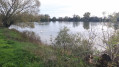
This walk takes place partly along the Ouche river (Oscara in Latin). It has its source in Lusigny-sur-Ouche. This commune is the guardian of the sources of the Ouche. The village is particularly charming with its stone houses.
Marais Trail in Magny-sur-Tille
3.07 mi
+13 ft
-13 ft
1h 25
Easy
Departure from Magny-sur-Tille (Côte-d'Or)
An easy, well-signposted family walk around the ponds of Magny-sur-Tille
From Domois to Cîteaux Abbey
 12.14 mi
+33 ft
-131 ft
5h 35
Moderate
Departure from Perrigny-lès-Dijon (Côte-d'Or)
12.14 mi
+33 ft
-131 ft
5h 35
Moderate
Departure from Perrigny-lès-Dijon (Côte-d'Or)
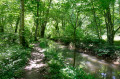
This very pleasant walk will take you to Cîteaux Abbey, following the Cent Fonts river, which will serve as your guide. There are a few picnic areas along this lovely walk.
From one Saulon to another
 5.85 mi
+151 ft
-148 ft
2h 50
Easy
Departure from Saulon-la-Rue (Côte-d'Or)
5.85 mi
+151 ft
-148 ft
2h 50
Easy
Departure from Saulon-la-Rue (Côte-d'Or)
Winter hike with limited risk of mud and hunting, but to be avoided in case of flooding due to the Sans Fond river.
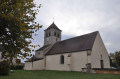
This hike will allow you to see the castle of Saulon-la-Rue, the church of Saulon-la-Chapelle with its two turrets, and to walk along part of the river "La Sans Fond" with the mill of Saulon-la-Chapelle.
Due to private property issues, a change to the route is currently being considered.
In search of greenery in Dijon
 4.53 mi
+262 ft
-240 ft
2h 20
Easy
Departure from Dijon (Côte-d'Or)
4.53 mi
+262 ft
-240 ft
2h 20
Easy
Departure from Dijon (Côte-d'Or)
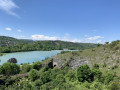
I suggest a short walk that will take you through some of Dijon's parks, passing by a beautiful viewpoint overlooking Lac Kir.
Around Couternon
 5.84 mi
+39 ft
-39 ft
2h 45
Easy
Departure from Couternon (Côte-d'Or)
5.84 mi
+39 ft
-39 ft
2h 45
Easy
Departure from Couternon (Côte-d'Or)
A leisurely walk around Courternon. This route will take you round the village and allow you to discover it in a different light.
The route is in open countryside with little shade. Make sure you bring suitable gear if the sun is strong.
Around Varois-et-Chaignot
5.40 mi
+82 ft
-82 ft
2h 35
Easy
Departure from Varois-et-Chaignot (Côte-d'Or)
An easy walk with no significant elevation gain in the Dijon plain
Chenôve vineyard
 2.85 mi
+194 ft
-194 ft
1h 30
Easy
Departure from Chenôve (Côte-d'Or)
2.85 mi
+194 ft
-194 ft
1h 30
Easy
Departure from Chenôve (Côte-d'Or)
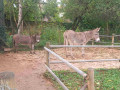
A short walk well suited to families with children, through the vineyards, then through woodland, and ending in a park with a children’s play area and animals.
The Bois de la Combe du Pré
 5.83 mi
+696 ft
-682 ft
3h 15
Easy
Departure from Marsannay-la-Côte (Côte-d'Or)
5.83 mi
+696 ft
-682 ft
3h 15
Easy
Departure from Marsannay-la-Côte (Côte-d'Or)
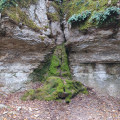
A pleasant forest walk offering lovely views in places.
In the heart of the Dijon vineyards
 Association / Club / Walk leader
 11.94 mi
+1,263 ft
-1,263 ft
6h 35
11.94 mi
+1,263 ft
-1,263 ft
6h 35
 Difficult
Departure from Chenôve (Côte-d'Or)
Difficult
Departure from Chenôve (Côte-d'Or)
This day-long hike allows you to discover the vineyards that will eventually make up the Dijon appellation. You will regularly enjoy beautiful views of the plain or Dijon, but also more mysterious passages in the undergrowth and at the bottom of the valley. It is a varied route rich in heritage, on terrain that can be very different at times.
Dijon, from the Valois to Art Nouveau
 4.92 mi
+30 ft
-20 ft
2h 15
Easy
Departure from Dijon (Côte-d'Or)
4.92 mi
+30 ft
-20 ft
2h 15
Easy
Departure from Dijon (Côte-d'Or)
Dijon is a remarkable city, shaped by its history. Since its Gallo-Roman origins (3rd century), three major periods have shaped this city: the Middle Ages, with its churches; then the Valois, Grand Dukes of Burgundy; and the Renaissance, reflected in the splendour of the parliamentarians’ mansions; and Art Nouveau, with its inventive decorations. The aim of this discovery walk is to take you through these different periods.
Through the Bois des Francs via the Combe Pénevelle
 5.74 mi
+958 ft
-942 ft
3h 30
Moderate
Departure from Marsannay-la-Côte (Côte-d'Or)
5.74 mi
+958 ft
-942 ft
3h 30
Moderate
Departure from Marsannay-la-Côte (Côte-d'Or)
Fancy exploring the forest, the Bois des Francs and its paths, seeing Marsannay-la-Côte Castle and its church, and strolling along the vineyards? Then let’s go.
The vineyards of Marsannay-la-Côte are part of the Climats of the Burgundy vineyards, listed as a UNESCO World Heritage Site. Thanks to the combined effect of the geology, the exposure and human labour, these vineyards produce a wine distinct from those of the neighbouring Climats.
Les Six Filles
 4.86 mi
+79 ft
-79 ft
2h 20
Easy
Departure from Cessey-sur-Tille (Côte-d'Or)
4.86 mi
+79 ft
-79 ft
2h 20
Easy
Departure from Cessey-sur-Tille (Côte-d'Or)
A short, easy walk offering the chance to see a remarkable tree, ‘Les Six Filles’, and to pay tribute to the Maquis des Lochères.
From the Hauts du Suzon to the crocodiles of the Ouche
 10.45 mi
+413 ft
-554 ft
5h 10
Moderate
Departure from Dijon (Côte-d'Or)
10.45 mi
+413 ft
-554 ft
5h 10
Moderate
Departure from Dijon (Côte-d'Or)
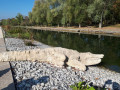
The Suzon and the Ouche, two rivers of great importance to Dijon. This route runs from one to the other through a patchwork of gardens, avenues and small paths. Historical and artistic points of interest and viewpoints.
Access by tram; access by car is also possible.
Batier circular route
 10.27 mi
+948 ft
-961 ft
5h 35
Moderate
Departure from Dijon (Côte-d'Or)
10.27 mi
+948 ft
-961 ft
5h 35
Moderate
Departure from Dijon (Côte-d'Or)
A short section of the Parcours Batier, allowing you to return to the starting point. This route, created in 1965 by Félix Batier, president of the CAF, is a challenging cycle route running from Dijon to Nuits-Saint-Georges; it is 52 km long and has an elevation gain of 1,998 m, said to be equivalent to that of Mont Blanc.
Between Tille and Gourmerault
9.92 mi
+33 ft
-33 ft
4h 35
Moderate
Departure from Arc-sur-Tille (Côte-d'Or)
This circular walk, between the two rivers that flow through our villages, takes you along these waterways and allows you to explore the church and the old mill at Arc-sur-Tille, Bressey-sur-Tille Castle, and the ponds at Remilly-sur-Tille.Did you know that the bell tower of the church at Arc-sur-Tille owes its flat roof to the Chape telegraph (1841)?
Around the lake and green spaces of Arc-sur-Tille
6.30 mi
+16 ft
-16 ft
2h 55
Easy
Departure from Arc-sur-Tille (Côte-d'Or)
This hike will take you through the town's green spaces, around the lake and along the Tille river.
The mill at Arc-sur-Tille
1.69 mi
+10 ft
-10 ft
0h 45
Easy
Departure from Arc-sur-Tille (Côte-d'Or)
A superb walk along the River Tille, during which you’ll discover the watermill and the church at Arc-sur-Tille.
From one mill to another in Arc-sur-Tille
6.65 mi
+66 ft
-79 ft
3h 05
Moderate
Departure from Arc-sur-Tille (Côte-d'Or)
Country walk between Arc-sur-Tille and Remilly-sur-Tille, taking in their mills.
Around the Combe à la Serpent, off the beaten track
5.43 mi
+682 ft
-656 ft
3h 05
Easy
Departure from Dijon (Côte-d'Or)
A short route offering unique views of the Combe à la Serpent, following little-used paths. Minimal elevation gain. Don’t always follow the markings (red and yellow); the route sometimes follows them and sometimes veers off.
Plains and woods around Orgeux
 5.16 mi
+46 ft
-46 ft
2h 25
Easy
Departure from Orgeux (Côte-d'Or)
5.16 mi
+46 ft
-46 ft
2h 25
Easy
Departure from Orgeux (Côte-d'Or)
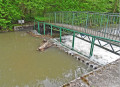
Does the village of Orgeux owe its name to ancient barley fields (Hordeu)? The Church of the Assumption dates back to the 13th century and features beautiful stained-glass windows in the choir. In the cemetery, there is a 17th-century calvary with a stone plaque. Adjacent to a small stone bridge, the wash house is built straddling a stream. A needle weir on the Norges slows the flow of the water just a stone’s throw away. A Roman road once crossed the area and, in 1967, a hoard of Gallo-Roman coins was unearthed in a sand pit.
Fontaine-lès-Dijon Circular
 5.18 mi
+456 ft
-436 ft
2h 45
Easy
Departure from Fontaine-lès-Dijon (Côte-d'Or)
5.18 mi
+456 ft
-436 ft
2h 45
Easy
Departure from Fontaine-lès-Dijon (Côte-d'Or)
A short walk on the outskirts of Dijon. Lovely views of the villages along the route.
The Norges Valley between Orgeux and Saint-Julien
9.12 mi
+56 ft
-56 ft
4h 15
Moderate
Departure from Orgeux (Côte-d'Or)
A walk starting from Orgeux, with no technical difficulty, which follows the pleasant Norges valley and leads to Saint-Julien. The return route takes you through woods and fields, away from the road.
The plain, the Norges and the Longeault-Pluvault pond from Genlis
6.51 mi
+26 ft
-26 ft
3h 00
Easy
Departure from Genlis (Côte-d'Or)
An easy walk along the banks of the River Norges, crossing the plain south of Genlis and passing by the Longeault-Pluvault pond. The route has little shade and is mostly on stony paths.
Circular route via the Ogny farm, starting from Orgeux
11.51 mi
+217 ft
-207 ft
5h 30
Moderate
Departure from Orgeux (Côte-d'Or)
A circular route with no technical difficulties, starting from Orgeux, which takes us to the Ogny farm, then passes close to Brétigny, Ruffey-Lès-Echirey and Varois-et-Chaignot before returning to the starting point.
Longecourt Castle and Burgundy Canal
 5.83 mi
+30 ft
-30 ft
2h 40
Easy
Departure from Longecourt-en-Plaine (Côte-d'Or)
5.83 mi
+30 ft
-30 ft
2h 40
Easy
Departure from Longecourt-en-Plaine (Côte-d'Or)
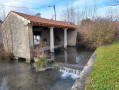
A circular route through the Domaniale d'Izeure forest and along the Burgundy Canal with three locks, which may be in operation when you visit. In Longecourt, you can see the castle, the wash house and the church.
Fountain in Hauteville
5.81 mi
+472 ft
-446 ft
3h 05
Easy
Departure from Fontaine-lès-Dijon (Côte-d'Or)
From the Basilica of Saint Bernard to the Hauteville-lès-Dijon viewpoint.
Between Thorey-en-Plaine and Longecourt-en-Plaine
4.30 mi
+30 ft
-30 ft
2h 00
Easy
Departure from Longecourt-en-Plaine (Côte-d'Or)
A short family walk between woods and the Burgundy Canal.
Lac Chanoine Kir loop - French alpine club (CAF) route and variants
 7.18 mi
+840 ft
-853 ft
4h 00
Moderate
Departure from Talant (Côte-d'Or)
7.18 mi
+840 ft
-853 ft
4h 00
Moderate
Departure from Talant (Côte-d'Or)
Lac Chanoine Kir loop through the heights of Talant, Plombières-lès-Dijon and Fontaine d'Ouche.A route between town and nature, with beautiful views over the lake.
The heights of Talant-Plombières and the Bonvaux tour
 5.33 mi
+587 ft
-577 ft
3h 00
Easy
Departure from Talant (Côte-d'Or)
5.33 mi
+587 ft
-577 ft
3h 00
Easy
Departure from Talant (Côte-d'Or)
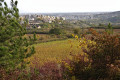
A beautiful walk, two-thirds of it shaded, in the countryside at the gateway to Dijon, between Talant and Plombières, between valleys and vineyards, with beautiful views over Talant, the Ouche valley and Mont Afrique in the distance. The incline is reasonable and broken down into three short climbs, making this a very easy and relatively fast walk.
The Tille Valley between Arcelot and Beire-Le-Châtel
12.19 mi
+131 ft
-135 ft
5h 45
Moderate
Departure from Arceau (Côte-d'Or)
A circular walk with no technical difficulties in the Tille valley, between Arcelot and Beire-le-Châtel, offering a lovely stroll through woods and fields, skirting the Tille on the return leg and passing buildings and monuments worth seeing or revisiting as you pass through the villages.
Boucle de Tart-le-haut - Tart l'Abbaye et Tart-le-bas
6.64 mi
+135 ft
-135 ft
3h 10
Moderate
Departure from Tart-le-Haut (Côte-d'Or)
Randonnée au départ de Tart le haut en passant par plaines et bois afin de rejoindre les communes avoisinantes.
The two springs at the start of Hauteville-lès-Dijon
 5.74 mi
+732 ft
-712 ft
3h 15
Moderate
Departure from Hauteville-lès-Dijon (Côte-d'Or)
5.74 mi
+732 ft
-712 ft
3h 15
Moderate
Departure from Hauteville-lès-Dijon (Côte-d'Or)
This circular route allows you to explore the village of Hauteville-lès-Dijon and see the recently restored Ronge fountain and the Chêneaux spring, which is still undergoing restoration.
Both springs are sensitive natural areas with protected species. Please respect these species and, in particular, keep your pets away from these areas.
Circular route in the Bois de Vantoux starting from Ahuy
5.61 mi
+564 ft
-577 ft
3h 05
Easy
Departure from Ahuy (Côte-d'Or)
Forest walk starting from Ahuy and heading towards Vantoux.
Around Arcelot Castle
 5.17 mi
+46 ft
-49 ft
2h 25
Easy
Departure from Arceau (Côte-d'Or)
5.17 mi
+46 ft
-49 ft
2h 25
Easy
Departure from Arceau (Côte-d'Or)
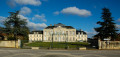
Arcelot Castle is situated in the commune of Arceau, in the Côte d’Or department, in the canton of Mirebeau-sur-Bèze. It has been listed as a Historic Monument since 22 September 1948, with the gardens listed on 30 April 1999. Behind the18th-century château lies one of Burgundy’s very first English-style parks.
The cabiotes and winegrowers' huts around Hauteville-lès-Dijon
 6.85 mi
+797 ft
-787 ft
3h 50
Moderate
Departure from Hauteville-lès-Dijon (Côte-d'Or)
6.85 mi
+797 ft
-787 ft
3h 50
Moderate
Departure from Hauteville-lès-Dijon (Côte-d'Or)
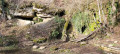
In our region, there are many stone structures called cadoles, cabotes or cabiotes, which were once used as shelters by farmers. Winegrowers' huts are piles of stones gathered from fields, and a similar structure, murgers, refers to piles of stones left over from clearing fields. The proposed route allows you to discover some of these structures, which have been restored by a local association. You can find out more about their work and explanations on their website, with the participation of the "Sentiers" integration association. This is our small rural heritage. It is important to know about it (and to preserve it), as well as the customs of a bygone era, which have nevertheless shaped our landscapes.
In the region, the terms "cadoles" and "cabotes" refer to the same type of construction, often found near vineyards. However, the term "cabiote" is used very locally in the Hauteville-les-Dijon area.