


Refine your search for walks in Orgeux
Orgeux walks


 Circular route via the Ogny farm, starting from Orgeux
 Visorando Member
 11.51 mi
 +217 ft
 -207 ft
 5h 30
5h 30
 Moderate
 Departure from Orgeux (Côte-d'Or)
A circular route with no technical difficulties, starting from Orgeux, which takes us to the Ogny farm, then passes close to Brétigny, Ruffey-Lès-Echirey and Varois-et-Chaignot before returning to the starting point.
The Norges Valley between Orgeux and Saint-Julien
9.12 mi
+56 ft
-56 ft
4h 15
Moderate
Departure from Orgeux (Côte-d'Or)
A walk starting from Orgeux, with no technical difficulty, which follows the pleasant Norges valley and leads to Saint-Julien. The return route takes you through woods and fields, away from the road.
Plains and woods around Orgeux
 5.16 mi
+46 ft
-46 ft
2h 25
5.16 mi
+46 ft
-46 ft
2h 25
 Easy
Departure from Orgeux (Côte-d'Or)
Easy
Departure from Orgeux (Côte-d'Or)
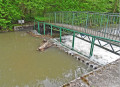
Does the village of Orgeux owe its name to ancient barley fields (Hordeu)? The Church of the Assumption dates back to the 13th century and features beautiful stained-glass windows in the choir. In the cemetery, there is a 17th-century calvary with a stone plaque. Adjacent to a small stone bridge, the wash house is built straddling a stream. A needle weir on the Norges slows the flow of the water just a stone’s throw away. A Roman road once crossed the area and, in 1967, a hoard of Gallo-Roman coins was unearthed in a sand pit.
The Tille Valley between Arcelot and Beire-Le-Châtel
12.19 mi
+131 ft
-135 ft
5h 45
Moderate
Departure from Arceau (Côte-d'Or)
A circular walk with no technical difficulties in the Tille valley, between Arcelot and Beire-le-Châtel, offering a lovely stroll through woods and fields, skirting the Tille on the return leg and passing buildings and monuments worth seeing or revisiting as you pass through the villages.
Around Varois-et-Chaignot
5.40 mi
+82 ft
-82 ft
2h 35
Easy
Departure from Varois-et-Chaignot (Côte-d'Or)
An easy walk with no significant elevation gain in the Dijon plain
Around Couternon
 5.84 mi
+39 ft
-39 ft
2h 45
Easy
Departure from Couternon (Côte-d'Or)
5.84 mi
+39 ft
-39 ft
2h 45
Easy
Departure from Couternon (Côte-d'Or)
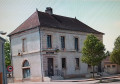
A leisurely walk around Courternon. This route will take you round the village and allow you to discover it in a different light.
The route is in open countryside with little shade. Make sure you bring suitable gear if the sun is strong.
Around Arcelot Castle
 5.17 mi
+46 ft
-49 ft
2h 25
Easy
Departure from Arceau (Côte-d'Or)
5.17 mi
+46 ft
-49 ft
2h 25
Easy
Departure from Arceau (Côte-d'Or)
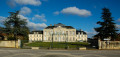
Arcelot Castle is situated in the commune of Arceau, in the Côte d’Or department, in the canton of Mirebeau-sur-Bèze. It has been listed as a Historic Monument since 22 September 1948, with the gardens listed on 30 April 1999. Behind the18th-century château lies one of Burgundy’s very first English-style parks.
Between Tille and Gourmerault
9.92 mi
+33 ft
-33 ft
4h 35
Moderate
Departure from Arc-sur-Tille (Côte-d'Or)
This circular walk, between the two rivers that flow through our villages, takes you along these waterways and allows you to explore the church and the old mill at Arc-sur-Tille, Bressey-sur-Tille Castle, and the ponds at Remilly-sur-Tille.Did you know that the bell tower of the church at Arc-sur-Tille owes its flat roof to the Chape telegraph (1841)?
Around the lake and green spaces of Arc-sur-Tille
6.30 mi
+16 ft
-16 ft
2h 55
Easy
Departure from Arc-sur-Tille (Côte-d'Or)
This hike will take you through the town's green spaces, around the lake and along the Tille river.
From one mill to another in Arc-sur-Tille
6.65 mi
+66 ft
-79 ft
3h 05
Moderate
Departure from Arc-sur-Tille (Côte-d'Or)
Country walk between Arc-sur-Tille and Remilly-sur-Tille, taking in their mills.
Circular Arceau
 5.51 mi
+69 ft
-66 ft
2h 35
Moderate
Departure from Arceau (Côte-d'Or)
5.51 mi
+69 ft
-66 ft
2h 35
Moderate
Departure from Arceau (Côte-d'Or)
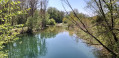
Arcelot, Arceau, Fouchanges; three villages that have always formed a single commune, crossed by the River Tille. Arceau is a rural commune situated 15 minutes from Dijon in a protected environment. Once situated on the Roman road linking Mirebeau to Dijon, the town was undoubtedly provided very early on with a single-arched bridge spanning the River Tille, which gave its name to the village. In the 17th century, General Gallas’s troops pillaged and burned the town.
The mill at Arc-sur-Tille
 Association / Club / Walk leader1.69 mi
+10 ft
-10 ft
0h 45
Easy
Departure from Arc-sur-Tille (Côte-d'Or)
Association / Club / Walk leader1.69 mi
+10 ft
-10 ft
0h 45
Easy
Departure from Arc-sur-Tille (Côte-d'Or)
A superb walk along the River Tille, during which you’ll discover the watermill and the church at Arc-sur-Tille.
The Clénay State Forest, starting from Saint-Julien
9.95 mi
+184 ft
-171 ft
4h 45
Moderate
Departure from Saint-Julien (Côte-d'Or)
A walk that combines a stroll through the old village of Saint-Julien and a visit to the surrounding area, before crossing part of the Clénay National Forest, following an active railway line, and returning via the Fontaine aux Lions in Saint-Julien, skirting Clénay.
Please note: the route on the ground does not always correspond to the route on the IGN map due to forestry operations.
A long circular route through the Clénay Forest
 9.90 mi
+164 ft
-164 ft
4h 40
Moderate
Departure from Clénay (Côte-d'Or)
9.90 mi
+164 ft
-164 ft
4h 40
Moderate
Departure from Clénay (Côte-d'Or)
Do you enjoy wide open spaces, nature and peace and quiet, away from the beaten route?
Then come and take a walk in the Clénay state-owned forest; we’ll walk along the River La Flacière to the village of Flacey, where we can admire the wash house, the castle and its church. Then we’ll return to Clénay through the forest.
Circular route through the plains on the outskirts of Dijon
11.73 mi
+79 ft
-79 ft
5h 30
Moderate
Departure from Quetigny (Côte-d'Or)
A circular route with no technical difficulty starting from Quétigny, taking you to the outskirts of the residential areas of Saint-Apollinaire, Varois and Chaignot, Couternon, and Chevigny-Saint-Sauveur. A very pleasant route in fine weather when the path runs alongside the Vieille Tille and then the Norges between Couternon and Chevigny.
From Beire-le-Châtel to Spoy and back
 5.56 mi
+72 ft
-79 ft
2h 35
Easy
Departure from Beire-le-Châtel (Côte-d'Or)
5.56 mi
+72 ft
-79 ft
2h 35
Easy
Departure from Beire-le-Châtel (Côte-d'Or)
Beire-le-Châtel: canton of Saint-Apollinaire (formerly canton of Mirebeau).
The village takes its name from the Gaulish word "Beire", meaning "plain". The discovery of a temple dedicated to Januaria recalls the position of Beire-le-Châtel in Gallo-Roman times, at the crossroads of ancient roads where the remains of two Roman roads can be found. In addition, six Gallo-Roman burials were found in 2019.