


Refine your search for walks in Bassac
Bassac walks


 From Bassac Abbey to the Prince of Condé’s Pyramid
 Visorando Member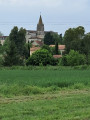
 6.76 mi
 +59 ft
 -59 ft
 3h 10
3h 10
 Moderate
 Departure from Bassac (Charente)
A long walk along the banks of the Charente to the Pyramide du Prince de Condé, where the prince’s story is explained. Another significant date is 16 December 1942, involving British Royal Marine commandos and Operation Frankton. A chapter in our history that deserves a great deal of explanation,
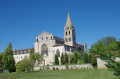
The banks of the Charente and Saint-Étienne Abbey in Bassac
 3.67 mi
+26 ft
-26 ft
1h 45
3.67 mi
+26 ft
-26 ft
1h 45
 Easy
Departure from Bassac (Charente)
Easy
Departure from Bassac (Charente)
Walk along the banks of the Charente, passing through the village of Bassigeau and returning to Bassac.
The banks of the Charente from the Vinade Bridge
5.58 mi
+39 ft
-39 ft
2h 35
Easy
Departure from Bassac (Charente)
A ride along the Charente, passing through two picturesque little villages, Lautrait and Triac.
Path through the meadows of Saint-Amant-de-Graves
 Local authority
 3.98 mi
+26 ft
-26 ft
1h 50
Easy
Departure from Graves-Saint-Amant (Charente)
3.98 mi
+26 ft
-26 ft
1h 50
Easy
Departure from Graves-Saint-Amant (Charente)
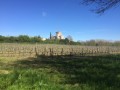
This route takes you through the meadows of the Charente near Graves. Beautiful churches and meadows with a variety of crops punctuate this lovely walk.
Chemin des Chaumes around Saint-Amant-de-Graves
 8.64 mi
+256 ft
-256 ft
4h 10
Moderate
Departure from Graves-Saint-Amant (Charente)
8.64 mi
+256 ft
-256 ft
4h 10
Moderate
Departure from Graves-Saint-Amant (Charente)
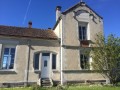
Meadows around the Charente river to the forest a little higher up. Beautiful landscapes and a variety of pleasant environments to walk through.
Route de la Tonnelle in Saint-Même-les-Carrières
2.91 mi
+115 ft
-115 ft
1h 25
Easy
Departure from Saint-Même-les-Carrières (Charente)
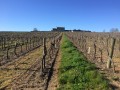
A pleasant walk through the vineyards with a gentle gradient.
Fountains and vineyards
 5.72 mi
+335 ft
-351 ft
2h 55
Easy
Departure from Moulidars (Charente)
5.72 mi
+335 ft
-351 ft
2h 55
Easy
Departure from Moulidars (Charente)
A varied circuit, sometimes in the sun in the vineyards sometimes in the forest. A very pleasant walk in the middle of the countryside.
Discovering the vineyard cottages
 6.01 mi
+220 ft
-230 ft
2h 55
Easy
Departure from Moulidars (Charente)
6.01 mi
+220 ft
-230 ft
2h 55
Easy
Departure from Moulidars (Charente)
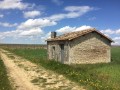
Throughout this route, you’ll come across small cottages amongst the vineyards; these were used by winegrowers to store equipment and also to take shelter during breaks. One of them is open to the public.
The Bouteville Mill Route
 5.24 mi
+354 ft
-354 ft
2h 45
Easy
Departure from Bouteville (Charente)
5.24 mi
+354 ft
-354 ft
2h 45
Easy
Departure from Bouteville (Charente)
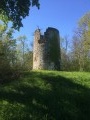
This route takes you uphill to the old mill before winding your way through the surrounding vineyards.
Bouteville Vineyard Route
 4.88 mi
+194 ft
-194 ft
2h 25
Easy
Departure from Bouteville (Charente)
4.88 mi
+194 ft
-194 ft
2h 25
Easy
Departure from Bouteville (Charente)
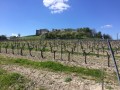
A route that runs mostly through the vineyards, which are ubiquitous in the commune of Bouteville, situated in the prestigious Grande Champagne region of the Cognac region. Almost all the winegrowers in Bouteville are also ‘distillers’.
Network of stones and vines
 1.88 mi
+164 ft
-164 ft
1h 00
Easy
Departure from Saint-Simeux (Charente)
1.88 mi
+164 ft
-164 ft
1h 00
Easy
Departure from Saint-Simeux (Charente)
Also known as the "small heritage trail", you will discover this heritage through a short route on the heights but also on the banks of the Charente.
Tour of the plateau via the hamlets
 10.53 mi
+417 ft
-400 ft
5h 10
Moderate
Departure from Saint-Simeux (Charente)
10.53 mi
+417 ft
-400 ft
5h 10
Moderate
Departure from Saint-Simeux (Charente)
Starting from the charming little village of Saint-Simeux, discover the plateau where vines grow in abundance, dotted with small hamlets, each one more charming than the last, with their large old stone buildings.
The shepherds' path in Châteauneuf
 3.98 mi
+151 ft
-151 ft
2h 00
Easy
Departure from Châteauneuf-sur-Charente (Charente)
3.98 mi
+151 ft
-151 ft
2h 00
Easy
Departure from Châteauneuf-sur-Charente (Charente)
The shepherds who lived here built the Church of Saint-Surin in the 9th century. After the Revolution, this church was attached to Châteauneuf. Climbing a little higher, you can see the diversity of the surrounding landscapes, then descend along the Charente.
Vineyard path in Mosnac
 7.28 mi
+121 ft
-121 ft
3h 25
Moderate
Departure from Mosnac (Charente)
7.28 mi
+121 ft
-121 ft
3h 25
Moderate
Departure from Mosnac (Charente)
Vineyards and more vineyards, the Charente, a bit of woodland – that’s a great mix for this magnificent walk.
Hills and banks of the Charente around Champmillon
5.50 mi
+233 ft
-246 ft
2h 45
Easy
Departure from Champmillon (Charente)
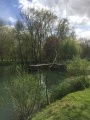
A walk through the hills and valleys of Champmillon, returning along the River Charente.
Around Champmillon
 4.91 mi
+282 ft
-272 ft
2h 30
Easy
Departure from Champmillon (Charente)
4.91 mi
+282 ft
-272 ft
2h 30
Easy
Departure from Champmillon (Charente)
This walk takes you along the Charente river before returning to the starting point through the vineyards. A very peaceful and pleasant route.
The Pierre Levée path
 5.41 mi
+184 ft
-184 ft
2h 40
Easy
Departure from Châteauneuf-sur-Charente (Charente)
5.41 mi
+184 ft
-184 ft
2h 40
Easy
Departure from Châteauneuf-sur-Charente (Charente)
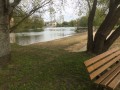
The landscape varies along this route, first along the Charente river, then through vineyards, and now we are in the forest.
Paths through sparse woodland
 8.12 mi
+95 ft
-98 ft
3h 50
Moderate
Departure from Sigogne (Charente)
8.12 mi
+95 ft
-98 ft
3h 50
Moderate
Departure from Sigogne (Charente)
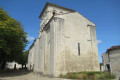
A route to explore the Charente wine-growing landscape of the Fins Bois and traces of the past (Gallo-Roman era, 12th-century church, lime kiln, porches of Charente properties).
Route of Fountains and Washhouses – Orange-marked variant
3.31 mi
+190 ft
-190 ft
1h 40
Easy
Departure from Saint-Preuil (Charente)
This route offers the chance to discover small-scale rural heritage (fountains, wash houses). Exploring this route also allows you to appreciate the area’s scenic, floral and wildlife features.
Circuit of Open-air Wash Houses and Water Sources
 12.11 mi
+840 ft
-843 ft
6h 20
Moderate
Departure from Saint-Preuil (Charente)
12.11 mi
+840 ft
-843 ft
6h 20
Moderate
Departure from Saint-Preuil (Charente)
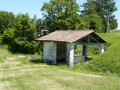
This circuit gives you the chance to discover rural heritage (springs, water sources, open air wash houses); and at each place, a description of its history is displayed. The route also highlights the architectural and historical heritage of the 13th century (Eglise Saint-Prohet, the Place Jacquaire, the protestant stele, the Chateau de Segeville) plus the various hamlets in the locality, flora and fauna.
Route of Fountains and Washhouses – Purple-marked variant
 7.95 mi
+482 ft
-512 ft
4h 05
Moderate
Departure from Saint-Preuil (Charente)
7.95 mi
+482 ft
-512 ft
4h 05
Moderate
Departure from Saint-Preuil (Charente)
This route allows you to discover the area’s small-scale rural heritage (fountains, wash houses). Each water point features a historical and/or anecdotal description. The route also incorporates architectural and historical heritage (the 13th-century Saint-Projet Church, Place Jacquaire, Ségeville Castle and the scattered hamlets of the commune).
Exploring this route also allows you to appreciate the area’s scenic, floral and wildlife attractions.
From the Château de Bourg-Charente to the banks of the Charente
 6.62 mi
+174 ft
-174 ft
3h 10
Moderate
Departure from Bourg-Charente (Charente)
6.62 mi
+174 ft
-174 ft
3h 10
Moderate
Departure from Bourg-Charente (Charente)
Beautiful views of Château de Bourg and the Cognac vineyards. A very pleasant return journey along the banks of the Charente.
The Cuckoo Trail
 3.19 mi
+230 ft
-223 ft
1h 40
Easy
Departure from Bonneuil (Charente)
3.19 mi
+230 ft
-223 ft
1h 40
Easy
Departure from Bonneuil (Charente)
A route alternating between open landscapes and woodland. Very pleasant to walk.
Crêtes de Segonzac circuit
 6.08 mi
+358 ft
-341 ft
3h 05
Moderate
Departure from Segonzac (Charente)
6.08 mi
+358 ft
-341 ft
3h 05
Moderate
Departure from Segonzac (Charente)
The Gaul root of its name means 'strength, courage'. The Hundred Years War persuaded the construction of numerous underground passages, which enabled the inhabitants to take refuge from extreme violence. Without a doubt Protestantism has left its mark in the area, particularly with the Segonzacais. The first Reformed church was founded in 1558. Troubles occurred in 1562 and the parish church was burnt down. Today's Temple church is the third constructed since the Edict of Nantes.
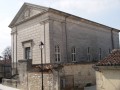
Circuit Romain in Segonzac
 8.92 mi
+482 ft
-459 ft
4h 30
Moderate
Departure from Segonzac (Charente)
8.92 mi
+482 ft
-459 ft
4h 30
Moderate
Departure from Segonzac (Charente)
Segonzac: the root of its name means 'strength, courage' in Gaulish.
Archaeological digs have revealed a Neolithic inhabitation (approx. 5000 B.C)
The Hundred Years' War persuaded the construction of numerous underground passages, which enabled the inhabitants to take refuge from extreme violence.
Protestantism has, without a doubt, left its mark in the area, particularly with the Segonzacais. The first Reformed church was founded in 1558. Troubles occurred in 1562 and the parish church was burnt down. Today's Temple is the third constructed since the Edict of Nantes.
According to a legend at the start of the 17th century, it was at Segonzac that a vintner named Chevalier de la Croix Maron invented double distillation.
The Gallo-Roman tracks of Éraville
5.31 mi
+207 ft
-203 ft
2h 35
Easy
Departure from Éraville (Charente)
Path, marked in red, following ancient Roman roads.
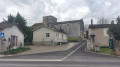
The Chemin du Champ de Mars in Bonneuil
 5.40 mi
+348 ft
-348 ft
2h 45
Easy
Departure from Bonneuil (Charente)
5.40 mi
+348 ft
-348 ft
2h 45
Easy
Departure from Bonneuil (Charente)
Much of this walk takes place in the forest, which is pleasant in summer. The rest of the route is through the vineyards, offering something for everyone.
A short tour of Sireuil
 Tourist office
 2.93 mi
+112 ft
-112 ft
1h 25
Easy
Departure from Sireuil (Charente)
2.93 mi
+112 ft
-112 ft
1h 25
Easy
Departure from Sireuil (Charente)
Discover the elegant town hall of Sireuil and its church, then enjoy the tranquillity of the banks of the Charente before heading up into the hills for an immersion in the heart of the Cognac vineyards.
Circular route around the village of Saint-Estèphe
6.56 mi
+167 ft
-171 ft
3h 10
Moderate
Departure from Roullet-Saint-Estèphe (Charente)
A varied walk through vineyards, various crops and woodland, with no great difficulty or significant elevation gain, offering the chance to see ‘cribs’ (open-air drying racks for maize cobs).