


Refine your search for walks in Trévillach
Trévillach walks


 Séquières plateau from the Col des Auzines
 Association / Club / Walk leader
 8.88 mi
 +906 ft
 -892 ft
 4h 50
4h 50
 Average
 Departure from Trévillach (Pyrénées-Orientales)
A surprising and pleasant hike on the Séquières Plateau, a former mixed farming area. See the highest point of the plateau, the medieval village of Séquières (its name could be translated as "the high rock") with its restored and inhabited sheepfolds, its castle (12th century), or rather a fortified house, with two strange pillars over 12 metres high nicknamed "les demoiselles" (the young ladies). Visit the ruins of the Romanesque church of Saint-Vincent (12th century). An easy hike.
Puig Pedrous from Montalba-le-Château
 Visorando Member
 5.15 mi
+801 ft
-804 ft
3h 05
Average
Departure from Montalba-le-Château (Pyrénées-Orientales)
5.15 mi
+801 ft
-804 ft
3h 05
Average
Departure from Montalba-le-Château (Pyrénées-Orientales)
A lovely circular of two hours starting from Montalba-le-Château and passing through Puig Pedrous.
Around Montalba-le-Château
 3.37 mi
+164 ft
-151 ft
1h 40
3.37 mi
+164 ft
-151 ft
1h 40
 Easy
Departure from Montalba-le-Château (Pyrénées-Orientales)
Easy
Departure from Montalba-le-Château (Pyrénées-Orientales)
A short walk around Montalba-le-Château to enjoy the diversity of the landscapes.
Pic Arnau and Les Séquières from Tarerach
 8.68 mi
+1,355 ft
-1,332 ft
5h 10
Average
Departure from Tarerach (Pyrénées-Orientales)
8.68 mi
+1,355 ft
-1,332 ft
5h 10
Average
Departure from Tarerach (Pyrénées-Orientales)
After a fairly steep climb from the village of Tarerach, a hike through the hills to discover a few rocks, peaks and the ruins of a church, a sheepfold and a fortified house. Vast landscapes throughout this circular route.
Around Lake Caramany
 6.13 mi
+745 ft
-761 ft
3h 30
Average
Departure from Caramany (Pyrénées-Orientales)
6.13 mi
+745 ft
-761 ft
3h 30
Average
Departure from Caramany (Pyrénées-Orientales)
A beautiful approach to Lake Caramany with views along the route.
The Col de Quitou, Trilla and the Col de Saint-Jean from Pézilla-de-Conflent
 7.35 mi
+1,946 ft
-1,926 ft
5h 05
Average
Departure from Pézilla-de-Conflent (Pyrénées-Orientales)
7.35 mi
+1,946 ft
-1,926 ft
5h 05
Average
Departure from Pézilla-de-Conflent (Pyrénées-Orientales)
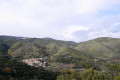
A walk with no particular difficulties, which can be shortened.
Hike named: “Village Memories”, properly signposted by the Agly-Fenouilledes inter-communal committee.
Beautiful scenery and paths on this mid-mountain circular route.
The dolmens of Trilla
 4.56 mi
+912 ft
-922 ft
2h 55
Average
Departure from Ansignan (Pyrénées-Orientales)
4.56 mi
+912 ft
-922 ft
2h 55
Average
Departure from Ansignan (Pyrénées-Orientales)
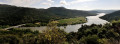
On the heights between Ansignan and Lac de Caramany, the village of Truilla clings to its granite mountain. The first inhabitants used the boulders scattered across the area to build their tombs. The trail winds through this landscape of ridges and granite chaos, connecting two of these dolmens lost in the heart of the vineyards.
Recent information: fences have been installed between points 6 and 7, preventing access.
Pic Vergès and Saint-Arnac
 9.10 mi
+1,768 ft
-1,768 ft
5h 45
Average
Departure from Ansignan (Pyrénées-Orientales)
9.10 mi
+1,768 ft
-1,768 ft
5h 45
Average
Departure from Ansignan (Pyrénées-Orientales)
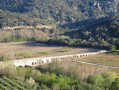
An exceptional route starting from Ansignan and its famous Roman aqueduct, where you will discover the beautiful village of Saint-Arnac and a sumptuous panorama at Pic Vergès.
Pic Aubeill
 4.90 mi
+755 ft
-719 ft
2h 55
Easy
Departure from Bélesta (Pyrénées-Orientales) (Pyrénées-Orientales)
4.90 mi
+755 ft
-719 ft
2h 55
Easy
Departure from Bélesta (Pyrénées-Orientales) (Pyrénées-Orientales)
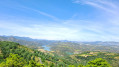
This circular route, marked in yellow, starts from the village of Belesta and climbs up to Pic d'Aubeil, then descends towards the sheepfold, the dolmen and finally the village.
In search of the boundary markers of 1258
 6.90 mi
+938 ft
-945 ft
4h 00
Average
Departure from Bélesta (Pyrénées-Orientales) (Pyrénées-Orientales)
6.90 mi
+938 ft
-945 ft
4h 00
Average
Departure from Bélesta (Pyrénées-Orientales) (Pyrénées-Orientales)
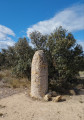
Before the current border was established, Roussillon was officially part of Spain between 1258 and 1659.
Very few boundary markers from this original border remain.
The trail allows you to discover three of them, as well as a cave and an ice well; it also offers superb views of the Pyrenees and the Corbières.
The abandoned villages of Casesnoves and Las Cases
 10.19 mi
+2,136 ft
-2,146 ft
6h 35
10.19 mi
+2,136 ft
-2,146 ft
6h 35
 Difficult
Departure from Rodès (Pyrénées-Orientales)
Difficult
Departure from Rodès (Pyrénées-Orientales)
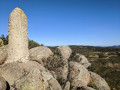
We are between the former kingdoms of Aragon and France, a superb circular hike of just over 17 km that will take you to two abandoned villages and up to Puig Pedros and its border marker. A region that is always sunny, with a splendid view of Mont Canigou through the fragrant maquis vegetation.
Ruins of the old village of Las Cases
 5.31 mi
+906 ft
-906 ft
3h 15
Average
Departure from Rodès (Pyrénées-Orientales)
5.31 mi
+906 ft
-906 ft
3h 15
Average
Departure from Rodès (Pyrénées-Orientales)
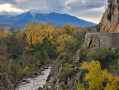
This is a hike that can be done even in winter and in the sunshine. We are in a region with a privileged climate. This easy circular hike of just over 8 km takes you through fragrant and colourful scrubland vegetation with the majestic Canigou massif as a backdrop.
The Priory of Marcevol
5.47 mi
+459 ft
-486 ft
2h 55
Easy
Departure from Arboussols (Pyrénées-Orientales)
A beautiful heritage-filled family getaway that will allow you to discover the Priory of Marcevol, listed as a Historic Monument.
The Castle, the Guillera Gorges and Pic Pedrous via Casesnoves
 9.77 mi
+2,211 ft
-2,205 ft
6h 25
Average
Departure from Rodès (Pyrénées-Orientales)
9.77 mi
+2,211 ft
-2,205 ft
6h 25
Average
Departure from Rodès (Pyrénées-Orientales)
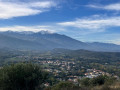
With Rodès Castle and the Guillera Gorges to start the hike, the diversity of the next section offers spectacular heath and rock landscapes in the midst of a unique mineral environment. It feels like wandering through a world of giants who have placed rounded blocks of rock, forming piles of monumental boulders scattered among the broom and rockroses that dot the area.
El Borboner, Cortal Grau, Sant Féliu and La Cogulera from Rodès
 9.41 mi
+1,749 ft
-1,739 ft
5h 50
Difficult
Departure from Rodès (Pyrénées-Orientales)
9.41 mi
+1,749 ft
-1,739 ft
5h 50
Difficult
Departure from Rodès (Pyrénées-Orientales)
This hike in the north-western sector of Rodès mainly follows little-used paths. This circular route sometimes requires walking on poorly marked paths overgrown with vegetation (trousers recommended), and sometimes on well-marked paths or tracks (but as little as possible, as we prefer the paths). The "common thread" of the day is the almost constant view of Canigou. Some parts are not easy to walk, so they are reserved for walkers who are not afraid to "wear out their shoes".
Visorando app recommended.
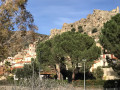
The Guillera Gorges, the castle and the village of Rodès
 2.51 mi
+381 ft
-351 ft
1h 30
Easy
Departure from Rodès (Pyrénées-Orientales)
2.51 mi
+381 ft
-351 ft
1h 30
Easy
Departure from Rodès (Pyrénées-Orientales)
This is a short, easy loop that offers beautiful views.
Pic Pédrous via a little-used path
 10.13 mi
+2,257 ft
-2,247 ft
6h 35
Average
Departure from Rodès (Pyrénées-Orientales)
10.13 mi
+2,257 ft
-2,247 ft
6h 35
Average
Departure from Rodès (Pyrénées-Orientales)
Puig Pedrós is a classic hike in Rodès. We wanted to climb it via a path that is no longer used. It runs around the Vallagra Ravine. As it was poorly marked, if at all, we reopened the middle section of the path, before and after crossing the Còrrec de Vallagra, on the right and left banks (lots of brambles and Mediterranean vegetation). We crossed the stream (elevation 319) using tree trunks deposited by the recent floods. This part of the route is a bit adventurous and is intended for adventurers. The rest of the circular route is uneventful.The GPX track is highly recommended.
Sant Feliu Church – Serrat Blanc – La Devesa from Rodès
7.37 mi
+1,234 ft
-1,234 ft
4h 30
Average
Departure from Rodès (Pyrénées-Orientales)
A pleasant route above Rodès, with stunning views of the Canigou massif and the Vinça Dam.
Places to see: the ruins of Sant Feliu de les Cases, the old Devesa de Rodès quarry, where a jazz festival is held in summer. Tracks, paths and dirt tracks. Some sections are a bit rough, but the route is not difficult.
Moderator’s note: on some sections, the paths have disappeared; see the reviews for this hike for alternative routes
Roc de Lansac
3.47 mi
+659 ft
-673 ft
2h 10
Easy
Departure from Lansac (Pyrénées-Orientales) (Pyrénées-Orientales)
Nestled amongst the granite and limestone hills of the Fenouillèdes, Lansac is a peaceful little wine-growing village. The walk, starting from the winery, circles Roc de Lansac before returning to the village. A landscape of limestone and granite heath.
Around Vinça
 6.61 mi
+440 ft
-436 ft
3h 25
Easy
Departure from Vinça (Pyrénées-Orientales)
6.61 mi
+440 ft
-436 ft
3h 25
Easy
Departure from Vinça (Pyrénées-Orientales)
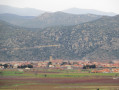
A beautiful excursion in the Terres du Bas Conflent region, allowing you to discover four of its villages: Vinça, Finestret, Joch and Rigarda.
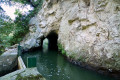
Ille-sur-Têt - Montalba-le-Château - Rodès via old paths and canals
 12.77 mi
+1,660 ft
-1,670 ft
7h 20
Difficult
Departure from Ille-sur-Têt (Pyrénées-Orientales)
12.77 mi
+1,660 ft
-1,670 ft
7h 20
Difficult
Departure from Ille-sur-Têt (Pyrénées-Orientales)
A hike to explore this low-lying mountain range, which was once farmed by humans. Numerous terraces bear witness to this past. Vines were once cultivated here. Mechanisation brought an end to farming in these wild and hard-to-reach areas.Yellow markings are virtually non-existent, and recent directional posts have been installed (as observed at the end of January 2024). These are not particularly relevant to the route. A GPX track is essential for this route, which features numerous paths.
Author’s note: The main sites of the fires in early July 2026 in the Pyrénées-Orientales were Ille-sur-Têt and Rodès. This walk has been affected by them. Much of the vegetation has been destroyed.
Walk around the Desix
 7.50 mi
+1,322 ft
-1,322 ft
4h 35
Average
Departure from Sournia (Pyrénées-Orientales)
7.50 mi
+1,322 ft
-1,322 ft
4h 35
Average
Departure from Sournia (Pyrénées-Orientales)
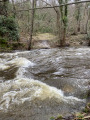
The ancient Gallo-Celtic oppidum of Sournia and Campoussy enjoy a remarkable mid-mountain setting. In this contrasting landscape of the Desix Valley, the land preserves Roman (bridge), Roman-Mozarabic and Templar remains. The route alternates between footpaths (GR®36,PR®) and forest tracks.
Circular walk from Sournia to Campoussy via Font and the Dolmen de l'Arca
 9.55 mi
+1,391 ft
-1,394 ft
5h 35
Average
Departure from Sournia (Pyrénées-Orientales)
9.55 mi
+1,391 ft
-1,394 ft
5h 35
Average
Departure from Sournia (Pyrénées-Orientales)
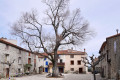
Starting from the village of Sournia, this circular route takes you to the beautiful village of Campoussy. It also allows you to discover lovely paths, stone huts, springs, wayside shrines, a memorial stone, and vast landscapes covered in low vegetation. The GR®36 and the GRP® Tour des Fenouillèdes are among the paths taken.Although almost the entire circular route is signposted, you must be extra vigilant as it features three different types of signposting!
Please note: on several occasions the IGN base map is inaccurate; the OSM base map may be helpful. There are many changes in direction and signposting. Total elevation gain closer to 550 m.The GPX track is strongly recommended.
Arboussols and Marcèvol from Eus
 11.36 mi
+1,821 ft
-1,821 ft
6h 50
Difficult
Departure from Eus (Pyrénées-Orientales)
11.36 mi
+1,821 ft
-1,821 ft
6h 50
Difficult
Departure from Eus (Pyrénées-Orientales)
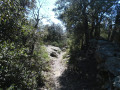
This walk, through a mid-mountain heath landscape, will take you from Eus to visit Arboussols and then Marcèvol, two picturesque mid-mountain villages in the Conflent region.
The path from Eus initially climbs northwards along the Chemin de Coma, then winds through the heath towards the village of Arboussols and on to Marcèvol, where you can visit the priory. This walk is a great way to discover the heritage and typical flora of the Conflent region.
Circular Pic de Bau starting from Eus
 10.82 mi
+2,507 ft
-2,507 ft
7h 10
Difficult
Departure from Eus (Pyrénées-Orientales)
10.82 mi
+2,507 ft
-2,507 ft
7h 10
Difficult
Departure from Eus (Pyrénées-Orientales)
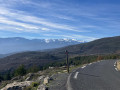
This hike takes place on a south-facing slope, allowing you to spend a day in the sun, with the Canigou massif in your sights.
Pic de Bau, Tour de Guet, Pic Jalère and Coma from Eus
 10.57 mi
+2,785 ft
-2,782 ft
7h 15
Difficult
Departure from Eus (Pyrénées-Orientales)
10.57 mi
+2,785 ft
-2,782 ft
7h 15
Difficult
Departure from Eus (Pyrénées-Orientales)
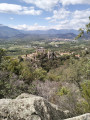
This hike is classified as difficult due to its length, a steep climb and the need for a good sense of direction.
However, the route follows beautiful paths and tracks that are almost always uncovered.
It is a discovery of a landscape that is still occupied by humans, goats and sheep.
A mountain water catchment supplies water to the magnificent Catalan village of Eus.
The Col Benta Fride from Le Vivier via Prats-de-Sournia
 9.50 mi
+2,274 ft
-2,274 ft
6h 20
Average
Departure from Le Vivier (Pyrénées-Orientales)
9.50 mi
+2,274 ft
-2,274 ft
6h 20
Average
Departure from Le Vivier (Pyrénées-Orientales)
A hike for autumn and winter. From the church at Le Vivier, head to Prats-de-Sournia via the Col de Guza.Then, after passing Al Carmeill and its orientation points, head for the Col de Benta Fride.After a stretch of open terrain, there follows a long descent through the beech forest of the Forêt Communale du Vivier, following theGR®®36. The total elevation gain is around 750 m.This walk is unmarked at the start. The GPX track may therefore prove useful (S/E) at (6).
The Fajas d'en Baillette
 6.95 mi
+1,772 ft
-1,772 ft
4h 45
Average
Departure from Le Vivier (Pyrénées-Orientales)
6.95 mi
+1,772 ft
-1,772 ft
4h 45
Average
Departure from Le Vivier (Pyrénées-Orientales)
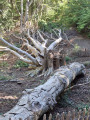
This splendid hike invites you to discover a magnificent forest with its springs, its view of the Canigou massif... and of course this truly remarkable beech tree: the 500-year-old Fajas d'en Baillette!
Circular Saint-Jacques de Calahons starting from Eus
6.63 mi
+1,407 ft
-1,417 ft
4h 15
Average
Departure from Eus (Pyrénées-Orientales)
This hike will take us from the village of Eus to the restored hermitage of Saint-Jacques de Calahons via a path that runs partly through the woods. We will follow part of the Chemin des Cabanes, the remains of pastoral activity. The Canigou mountain range accompanies us along the entire route.
The heights of Taïchac in Saint-Martin-de-Fenouillet
 4.01 mi
+741 ft
-758 ft
2h 30
Easy
Departure from Saint-Martin (Pyrénées-Orientales) (Pyrénées-Orientales)
4.01 mi
+741 ft
-758 ft
2h 30
Easy
Departure from Saint-Martin (Pyrénées-Orientales) (Pyrénées-Orientales)
At the meeting point of the African-Iberian and European tectonic plates, this interpretive trail offers many geological, natural and scenic attractions through vineyards, fir trees and heathland.
The Croix loop from the village of Joch
 5.47 mi
+1,722 ft
-1,752 ft
4h 00
Average
Departure from Joch (Pyrénées-Orientales)
5.47 mi
+1,722 ft
-1,752 ft
4h 00
Average
Departure from Joch (Pyrénées-Orientales)
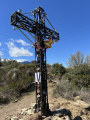
A beautiful half-day circular hike from this village.The climb is via the Way of the Cross to the large Croix de Joch.The return journey is via the very pretty balcony path that connects Joch (Jóc) to Baillestavy (Vallestàvia).A variant towards the canal is now accessible from wp (11).See practical information before setting out on this hike.
La Croix de Joch – Baillestavy – Marbet crossroads from Joch
 11.80 mi
+3,081 ft
-3,104 ft
8h 05
Difficult
Departure from Joch (Pyrénées-Orientales)
11.80 mi
+3,081 ft
-3,104 ft
8h 05
Difficult
Departure from Joch (Pyrénées-Orientales)
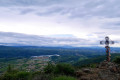
A long and beautiful walk starting from the village of Joch (Jòc).
The ascent follows an unmarked route via the Way of the Cross, then via La Volta de Santa Anna.
The return journey from the hamlet of Baillestavy (Vallestàvia) follows the very scenicGR®36.
This circular route overlooks the Llentillà, on the right bank on the way out and on the left bank on the way back.
This walk can be considered difficult.
You can start it at Finestret D25: there’s a small car park at (17) or a large car park 200 metres further on to the right.
See the practical information and route description for possible alternatives.
Pic des Maurous via Pic de Marbet and Roc de l'Agle
 8.85 mi
+3,425 ft
-3,399 ft
7h 05
Difficult
Departure from Finestret (Pyrénées-Orientales)
8.85 mi
+3,425 ft
-3,399 ft
7h 05
Difficult
Departure from Finestret (Pyrénées-Orientales)
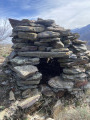
In the first part of the hike from Finestret to Pic des Maurous, the climb from the point (1) is quite demanding. The steep slope throughout this section requires a good level of fitness. It offers beautiful views of the north and east of the area, from the Madres Massif to the sea, passing through the plain and its villages, the Fenouillèdes and the Corbières in the distance.
The GPX track can be very useful.
Pic Marbet via Espira-de-Conflent
 6.22 mi
+1,526 ft
-1,499 ft
4h 10
Average
Departure from Finestret (Pyrénées-Orientales)
6.22 mi
+1,526 ft
-1,499 ft
4h 10
Average
Departure from Finestret (Pyrénées-Orientales)
A pleasant walk that gets a little challenging towards the end. This section will allow you to discover three villages in Bas Conflent: Espira-de-Conflent, Estoher and Finistret.
 From Saint-Paul-de-Fenouillet to Caudiès-de-Fenouillèdes via Ansignan
24.50 mi
+1,194 ft
-1,135 ft
2h 02
Average
Departure from Saint-Paul-de-Fenouillet (Pyrénées-Orientales)
A cycle ride through the Fenouillet region, along small roads offering varied landscapes ranging from vineyards to forests. The villages are small and seem frozen in a bygone era. This route features some steep climbs and fairly fast descents.
Lake Caramany, via the Agly Valley and the Wine Route
20.47 mi
+1,345 ft
-1,371 ft
1h 36
Average
Departure from Saint-Paul-de-Fenouillet (Pyrénées-Orientales)
A pleasant 33 km route through the Fenouillèdes, following the Agly as far as Ansignan and Lake Caramany, then climbing towards the villages of Lansac and Lesquerde. This is part of the Wine Route. For enthusiasts, there are numerous dolmens to see.
From Saint-Paul-de-Fenouillet to Lesquerde via Saint-Arnac
10.49 mi
+1,480 ft
-1,490 ft
1 hr
Average
Departure from Saint-Paul-de-Fenouillet (Pyrénées-Orientales)
A cycle ride through the Fenouille region. Initially, you follow the River Agly, then cycle through the vineyards, with the added bonus of a beautiful view of the Canigou massif. All the villages produce wine bearing the ‘Agly’ appellation followed by the village name.
Through vineyards and orchards via Caudiès-de-Fenouillèdes
15.61 mi
+587 ft
-614 ft
1h 15
Average
Departure from Saint-Paul-de-Fenouillet (Pyrénées-Orientales)
A short cycle ride through the vineyards and orchards. No particular difficulties apart from a steep descent before reaching Caudiès-de-Fenouillèdes, and the final section being along the D117,
The Agly Valley and the Wine Route via Maury
14.22 mi
+1,060 ft
-1,086 ft
2 hrs
Average
Departure from Saint-Paul-de-Fenouillet (Pyrénées-Orientales)
A pleasant cycle ride through part of the Fenouillèdes region, taking in the ancient thermal baths of Saint-Paul, its hot springs at 28°C and its Via Ferrata. The route follows part of the River Agly, then climbs to offer views of the Canigou mountain range and the village of Maury with its trompe-l’œil murals and its AOP wine.
Ansignan–Le Vivier circular route, starting from Saint-Paul-de-Fenouillet
19.39 mi
+1,017 ft
-1,253 ft
1h 34
Average
Departure from Saint-Paul-de-Fenouillet (Pyrénées-Orientales)
A cycle ride through the Fenouillet region along small roads offering varied landscapes ranging from vineyards to forests. The villages are small and seem frozen in a bygone era. This route features some steep climbs and fairly fast descents.
The Galamus Gorges via Cucugnan
26.77 mi
+3,156 ft
-3,179 ft
2.5 hrs
Average
Departure from Saint-Paul-de-Fenouillet (Pyrénées-Orientales)
A walk between the Corbières and the Fenouillèdes in the Corbières-Fenouillèdes Regional Nature Park. The walk through the gorges is impressive *. A touch of history with the castles of Peyrepertuse and Quéribus, listed as UNESCO World Heritage Sites.
From Cattlar to Campôme via beautiful sites
 11.62 mi
+2,500 ft
-2,520 ft
7h 30
Average
Departure from Catllar (Pyrénées-Orientales)
11.62 mi
+2,500 ft
-2,520 ft
7h 30
Average
Departure from Catllar (Pyrénées-Orientales)
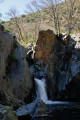
This hike takes place on paths that are rarely or never used. The route is enhanced by passing through various sites. This long hike ² should be avoided in hot weather despite the low vegetation cover.
Arca de Calàhons Dolmen and Pla de l'Arca – PNR boundary from Cattlar
 10.50 mi
+2,674 ft
-2,674 ft
7h 10
Average
Departure from Catllar (Pyrénées-Orientales)
10.50 mi
+2,674 ft
-2,674 ft
7h 10
Average
Departure from Catllar (Pyrénées-Orientales)
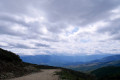
A circular hike from this Catalan village in the Conflent region – Canigó, as well as the Regional Nature Park.Numerous huts (orris), built entirely of stone, suggest that this mountain was extensively used for livestock farming and some cereal crops.The climb to the Coll de Tribes joins the GRP® Tour des Fenouillèdes and offers a 360° view.This hike requires a good sense of direction. Use of the GPX track is essential.
Trail of the cabins and Chapelle Saint-Jacques from Catllar
 6.23 mi
+1,644 ft
-1,673 ft
4h 20
Average
Departure from Catllar (Pyrénées-Orientales)
6.23 mi
+1,644 ft
-1,673 ft
4h 20
Average
Departure from Catllar (Pyrénées-Orientales)
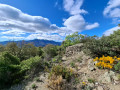
Beautiful circular with views of Canigou and the valley. Don't miss the Saint-Jacques Chapel.
Catllar Waterfall
 1.41 mi
+102 ft
-105 ft
0h 45
Easy
Departure from Catllar (Pyrénées-Orientales)
1.41 mi
+102 ft
-105 ft
0h 45
Easy
Departure from Catllar (Pyrénées-Orientales)
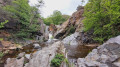
This short walk takes you to see the Catllar Waterfall on the Castellane, near Prades. It is a return trip along the same path. Enjoyable at any time of day.
From Prades to Fillols
5.03 mi
+1,453 ft
-69 ft
3h 35
Average
Departure from Prades (Pyrénées-Orientales) (Pyrénées-Orientales)
A shaded and varied walk offering the most direct route from Prades to Fillols. Once you’ve left the town, you’ll follow paths that are mostly signposted, with the exception of a short stretch of road before the Roc del Ram.