Country:

 City:
City:


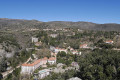
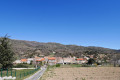
From Perpignan, head towards Andorra on the N116 dual carriageway. Pass through Ille-sur-Têt, Vinça and Marquixanes. At the entrance to Prades, follow the bypass towards Villefranche-de-Conflent. At the third roundabout, turn right towards Cattlar. At the small roundabout on the outskirts of Cattlar, turn right onto the Route d’Eus (D24). Park as soon as possible in the car parks. Spaces are also available at the church and in the town centre.
(S/E) From the Route d’Eus, turn right past the church. You’ll come to a square¹. First turn left then right and follow the Rue d’en Bas, which curves to the right. Join the Route Nationale D619.
(1) At the pedestrian crossing, cross this national road with care. Walk downhill a short way until you reach an irrigation canal in excellent condition, which is still very much in use.
Continue along this canal via the Chemin Rec de Baix, passing by some beautiful, perfectly maintained family vegetable gardens. Join the Chemin du Salt Gros. Turn left onto this wide path. Cross the bridge over the Castallane. There is a signpost here.
(2) Turn right after the bridge. Continue along the stony track which climbs up to a left-hand bend.
Please note: keep the farm on your left. Do not enter the property.
Head straight ahead, following a wire fence. Descend towards a small ford over the Còrrec de les Eres, which is very often dry.
(3) Head straight ahead, then immediately turn left, climbing up a small path that is nevertheless clearly marked on the ground. Pass the first path on the right, marked in yellow (return route), then two further paths on the right (visible on the OSM map). Continue along the southern slope of the Tamborines.
The path, which is clearly marked on the ground, climbs westwards, then turns right towards the north-west. Cairns may also help you find your way to the fork.
Yellow markings
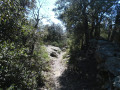
(4) Turn left onto a wider path that is also clearly marked on the ground. The path continues to climb through a Mediterranean-style forest with low vegetation. You’ll reach a clear, open area.
(5) Junction. There is a roundabout with a fine oak tree in the centre and a signpost.
Turn left towards Llugols. The path descends a few metres, then climbs very steeply through a clearly visible pasture. The path becomes straight after turning right towards the north-west (elevation 623).
Signpost.
Note: many paths have been trodden by animals. However, simply continue north-west along a track. Pass a large enclosure and an old bulldozer on your left.
(6) Engraved rock. It is difficult to find without a GPS. There is no signpost.
Please note: on 2 January 2020, new signposting and directional posts were being installed.
After passing a very large enclosure where a piece of construction machinery has been abandoned, follow a small path on the right for a few metres within the area marked on the IGN map. Return to the signposted path and then continue along the track heading due west.
(7) Leave the track on your left. Take a wide bend to the right. Old markings are still visible. ³
Leave a well-marked path on your left. Please note: end of the yellow markings.
After 200 m, turn right at a right angle and head towards an area with numerous tracks and the ruins of an old farmhouse.
(8) At the first fork in this area, turn left heading due west. The track then bends left towards the south-west. Continue along this track, passing the Còrrec de la Serrania (at around 700m). Then continue due north until the next fork.
(9) Continue along the track heading due west, ignoring a path on the left (shown on OSM and IGN satellite maps). Pass the Còrrec de les Serrianes. Pass the Còrrec de les Escomes. Then continue due north to the next junction with a much larger track.
Yellow markings; signpost
(10) Turn right onto this wide track, heading north-east, for 350 metres.
(11) Please note: the signpost is on the left-hand side of the track at this junction. Leave the wide track. Descend steeply to the right through the woodland along a path towards the Orri de Carmajó, which you’ll reach in 150m.
Continue for a further 150m and pass the path on your left heading towards the Bosc de Trenyer, which descends to Campôme. Continue south-east.
At around 670m, the path turns left, heading due north, and joins a track suitable for vehicles coming from Campôme. There is a signpost and a large, attractive retaining wall belonging to La Feixe. ⁴
(12) Turn right onto this track, which now climbs up to a fork. ‘
Alternative route: From here, if you turn left and then immediately right, you can visit the charming Catalan village of Campôme.
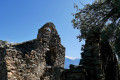
(13) Turn left and head downhill towards Paracolls Castle (marked ‘Paracols’ on the sign). Gaps in the vegetation occasionally reveal beautiful views. Ignore the track that branches off to the right as it descends and continue to the foot of the castle ruins. Then climb up towards the ruins.
(14) Caution: there is a path through the castle ruins, but there are no safety barriers. The ruins have not been stabilised.
There is a small chapel still covered by a vaulted roof. Access is not prohibited, but please do take care. From this chapel, a very beautiful stony path leads down to the thermal baths at Molitg-les-Bains.
There are some stunning views to be enjoyed. After your visit, retrace your steps back to the previous junction.
(13) Now turn left and head uphill along the track. You will reach an area with mobile phone masts.
Continue along the same track, which turns south-west. Ford the Còrrec del Solà and turn due south at the flat section. The track climbs again. Ford the Còrrec de la Serrania. Then turn due east, climbing up to the start of a right-hand bend.
(15) Signpost. Leave the wide track by turning left onto a smaller track that descends eastwards. Pass through a fenced enclosure which is a feeding area for livestock. However, there is an old yellow marker here. Follow the signs for Sant Cristau de Fornols.
(16) Ruined church. This beautiful landscape makes it a good spot for a break. Go round the ruins to the right, following a small grassy track for 50 metres until you reach a left-hand bend. You will need to leave the track here.
End of the yellow markings.
Please note: at this bend, look out for a cairn and an engraved stone on the ground on the right, marked ‘Cattlar’. Turn right onto this path, which is very clearly marked on the ground. Descend towards a small còrrec and cross it. Cross the Còrrec de Fornollica (altitude 586m) very quickly and continue south-east.
Yellow markings
(5) You’ll come to a sort of roundabout with a fine oak tree in the centre. There’s a signpost here. Turn left towards Cattlar, taking the path in the opposite direction to the way you came.
(4) Turn left. Ignore the path leading downwards that you took on the way there, which is normally marked with a Yellow Cross.
Further on (altitude 435m), ignore the path leading uphill to the right.
The path to follow turns left , descending very steeply towards La Castellane. The path then turns right, running high above this large torrent. Do not cross it under any circumstances or at any time.
Old yellow markings, still visible, help guide you along the path as it follows the meandering course of the stream below. As you emerge from the bend to the right, you’ll reach a cleared area with two wooden benches, a wooden guardrail to prevent falls, and steps fitted with wooden crossbars.
It’s a lovely spot for a break or to take a few photos.
(17) From this viewpoint, head down to the left via the steps.
Caution: the descent is steep. You’ll soon reach a first fork in the path. A signpost points towards a traditional mountain hut. You can make a round trip there if you wish.
Return to the fork. A few metres further on, another fork with a signpost points towards the Waterfall du Salt Gros. Head down to the left along a well-maintained path.
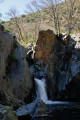
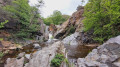
(18) After a few rocky sections, the waterfall comes into view. A lovely spot for a break and some lovely photos of the waterfall. Retrace your steps to the fork and continue straight ahead along the well-marked path, with the Castallane stream to your left below. When you reach an open area, head slightly to the right and rejoin a fork you passed on the way out.
(3) Turn left, crossing the còrrec again – which is often dry. But this time (on the return journey), follow a well-marked path to the left which runs alongside the track you took on the way out, just above it on your right. Continue in this direction, passing a wooden bridge and wooden fall protection barriers. Further on, rejoin the track you took on the way out and reach the bridge.
(2) Turn left to cross the Castellane and immediately turn right, heading in the opposite direction to the outward journey. Follow the canal and join the D619 main road.
(1) At the pedestrian crossing, cross this main road with care and head for the car park at Cattlar (S/E).


 Visorando Member

 Easy
Easy 
 Difficult