Ille-sur-Têt - Montalba-le-Château - Rodès via old paths and canals

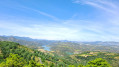
Hike to discover this low mountain range that was once exploited by humans. Numerous terraces bear witness to this past. Vines were cultivated here. Mechanisation marked the end of the exploitation of these wild and difficult-to-access areas.
Yellow markings are virtually non-existent, and recent directional posts have been installed (observed at the end of January 2024). They are not really relevant. A GPX track is necessary on this route with its many paths.

Details

1538198
Creation:
Last update:
Last review:
  • Walking
    Activity: Walking
  • ↔
    Distance: 20.55 km
  • ◔
    Average duration: 7h 20 
  • ▲
    Difficulty: Difficult

  • ⚐
    Back to start: Yes
  • ↗
    Ascent: + 506 m
  • ↘
    Descent: - 509 m

  • ▲
    Highest point: 479 m
  • ▼
    Lowest point: 134 m

Photos

Description of the walk

From Perpignan, head towards Andorra on the N116 dual carriageway. Take the first exit for Ille-sur-Têt, cross the village of Ille and follow the signs in town for Montalba-le-Château, Sournia. Cross the bridge over the dual carriageway and the Têt river, then turn left at the roundabout. The road quickly becomes a track (Chemin de Cazenovas). Park immediately in the new car park on the right. (Tables and a designated barbecue area are available on the left in the old, refurbished car park).

(S/E) From the car park south of the Orgues d'Ille-sur-Têt, take the track heading due west, with the Orgues on your right, for 500 metres until you reach a ford.

(1) Turn right just after the ford and climb steeply up a very rugged path. Old, scattered yellow markings may help you find your way. Ignore all the small paths on the left. Pass the altitude 267.

(2) Leave the old yellow markings. Continue straight ahead on a path that is very well marked on the ground. Cut across the track. Continue straight ahead on the path. There are cairns. Pick up the yellow-marked path and turn left.

(3) Turn right, still following the beautiful, well-marked path.

Alternative: from this point, you can climb up to the left towards the rock face where a large, attractive cairn is clearly visible (Serrat dels Mallols). You will then need to descend along the ridge, north-west, towards a large, clearly visible crossroads of tracks. Attractive viewpoint.

(4) Turn right and follow the track for 150 metres. At the next fork, continue left along the track for 500 metres.

(5) At the large crossroads, continue straight ahead along a track that is somewhat overgrown with vegetation. End of the yellow markings (see practical information ¹).
At the next crossroads, at an altitude of 361m, leave the tracks on your left and right and continue climbing. Leave the small adjacent tracks.

(6) Turn left onto a narrower, resurfaced track (observed in October 2018). There is a cairn here. The track remains more or less level as it heads due west. This track becomes a path and then describes a large circular loop to the right to go around a hill. You will arrive at the right-hand edge of a cultivated field.
Leave the tracks on your left and turn right again onto a track for 1.5 km. Join a wide track at around 430 m. There are two wooden pallets acting as barriers before you reach the track.

(7) Turn left onto the track, which becomes a small tarmac road, towards the D2.

(8) Continue left along a dirt and gravel track towards the houses. On the left-hand side of the D2, in front of the entrance to the house, regional products are on sale. Caution: traffic.
At the entrance to the village, take thethird narrow street, which climbs steeply. Climb towards the castle via Rue du Cers and Rue du Carlit. You can climb the stairs to visit the village and the garden.
Descend by continuing along Rue du Carlit towards a large open area.

(9) Turn left at the end of the road. Pass the first road on the right. Continue towards the village along Cami de Vinça (D17) for 200 metres.

(10) Turn right between the houses, heading south, onto a narrow road lined with high walls. There are signposts (llama farm) and letterboxes fixed to the wall of the first house on the right. You are now on Cami de Montalba.

(11) Continue left, heading south, still on this narrow road which descends slightly. Orchards line both sides of this road. Leave the adjacent tracks. Leave the small road which climbs to the left.

(12) Turn right, continuing along this narrow road, which now descends a little more. Continue along this narrow road, which quickly turns into a track suitable for vehicles. Continue south, ignoring the adjacent tracks.

(13) Continue left, leaving the track on the right which turns west. Continue downhill towards the south-east. Leave a narrow track on the left which descends towards orchards in the direction of the Ravin de l'Oulibastre.

(14) Caution: there is a cairn here. Turn right, heading due south, before a ruined hut on your left, descending steeply along a wide, deeply rutted path that leads to the bottom of the valley.

(15) Turn completely left, just after a ruined hut on your right. Cross the Còrrec de Vallaga via a ford and climb up the track for 400 m.

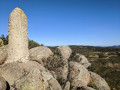
(16) Before the track turns right, first turn left then right, and take a small path that is well marked and signposted in yellow, below the track on your right. There is a cairn and some remains of yellow markings. The path passes through an area full of rock piles where, despite everything, people had built hundreds of terraces to grow vines and cereals that require little water. There are numerous oris (stone shelters) still in very good condition.
Cross a first còrrec, which is often dry. Leave a fork on the right leading to Sant Feliu de les Cases.
Cross the Còrrec de Borboner. The path climbs slightly towards a kind of pass.
(see Practical information ¹)

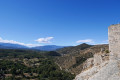
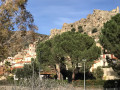
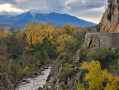
(17) Turn right and descend steeply along a path that has been stabilised with steps. Descend towards the old Devesa quarry. The path is very pretty. It overlooks the Guillera Gorges, where the Têt river flows below on the left. The ruins of Rodès Castle are clearly visible on the opposite slope, above the village.

(18) Turn left onto a track on the left bank. Cross the Têt via the road bridge.

Alternative: from this point, you can shorten the hike by turning left along the Rec de Corbera via a path that runs alongside the canal, which is in perfect condition and still plays a vital role.

Enter the village. Immediately turn left up Rue de Las Femades. Then climb the wide steps leading up to the castle. Above the last houses, the steps turn into a steep path with steps to prevent erosion due to the steep slope. Follow the signs for Casteil (castle).
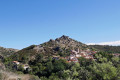
The unique feature of this village is that it is clinging to the mountain below the castle.
You will arrive at the castle ruins on your left. Continue a few metres uphill to a kind of pass. Turn right, leaving the Catalan flag above you on your left. You will find yourself on a pretty path after passing through a secure, safe escarpment.
The path leads to a track which you should follow for 100 metres.

(19) Turn left onto a steep, rutted path. There are two pretty cairns. Leave the track. Descend due east. The path turns left due north towards the canal. You will arrive at Rec de Corbera.
Alternative: From this point, cross the footbridge and you can make a return trip (200 m) to the old aqueduct of en Laba, which is on the left, along the canal.
Note: access to the left bank is prohibited to persons not employed by the maintenance service.
Continue right on the right bank of the canal for 750 m.
Please note: you will need to leave the track that follows the canal to Bouleternère (also known as Rec de Corbera).

(20) First turn left then right onto a very small footbridge over the Rec de Corbera. Walk along an orchard.
When you reach a track, turn left and go down this track, passing through a gate that is often open.
First turn left-right via a wide bridge over the Rec d'Illa, which feeds Ille-sur-Têt.
Now continue along the left bank of this canal. The Têt is on your left.
The route then runs between the Thuir stream (Rec de Tuïr) on the left and the Illa canal (Rec d'Illa) on the right. The Têt is on your left.
The Thuir stream required numerous aqueducts and various structures. The canal also required numerous tunnels, levelling, walls and locks.
Note: the path is secure in certain places. There are no particular dangers.
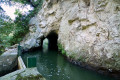
Pass a small building with a plaque in honour of the foreign workers who built these structures between 1940 and 1943. Pass the Sant Juli (Saint Jules) fountain on your right, on the other side of the canal.
You will arrive at a car park. Continue straight ahead. Pass under the dual carriageway by turning right and then left.

(21) Turn left onto a street running alongside the Rec d'Illa on your right. Then continue to the right along Chemin de la Sini towards Ille-sur-Têt, heading north-east.
Atthe first crossroads, continue straight ahead. At the next fork, at the "give way" sign, turn right towards a small car park on your left before the roundabout.

Alternative: you can turn left directly onto the safe hard shoulder on the left-hand side of the D2.

::22: Continue straight ahead. At the first crossroads, turn left onto Rue du Prats de la Fabrica. Pass a wash house on your right. At the fork, turn left.
Caution: traffic. Cross the Route de Montalba (D2).
Turn right, staying on the safe left-hand side. Cross the dual carriageway and the Têt river, staying on the raised pavement. At the next roundabout, turn left onto Chemin de Cazenovas, with the Têt river on your left. Join the (S/E).

Waypoints

  1. S/E : km 0 - alt. 140 m - Orgues car park
  2. 1 : km 0.44 - alt. 143 m - Fork in the road. Turn right and climb steeply. - Têt (fleuve)
  3. 2 : km 1.41 - alt. 290 m - Crossroads. Sign. Opposite
  4. 3 : km 2.18 - alt. 358 m - Fork in the road. Turn right. Possible alternative route
  5. 4 : km 2.63 - alt. 358 m - Fork in the road. Track path, on the right
  6. 5 : km 3.12 - alt. 369 m - Crossroads, opposite
  7. 6 : km 4.24 - alt. 412 m - Fork in the road. Turn left. Otherwise, continue straight ahead towards the D2.
  8. 7 : km 5.39 - alt. 430 m - Fork in the track, small road on the left
  9. 8 : km 6.04 - alt. 450 m - Road junction. On the left
  10. 9 : km 6.64 - alt. 469 m - Crossroads of tracks and roads. Turn left 180°.
  11. 10 : km 6.92 - alt. 465 m - Fork in the road. Narrow street on the right.
  12. 11 : km 7.06 - alt. 459 m - Fork in the road. To the left
  13. 12 : km 7.61 - alt. 443 m - Fork in the road. To the right
  14. 13 : km 8.36 - alt. 429 m - Fork in the road. To the left
  15. 14 : km 8.68 - alt. 411 m - Fork in the road. Steep, rutted path on the right.
  16. 15 : km 9.49 - alt. 345 m - Fork in the road. Tracks on the left
  17. 16 : km 9.82 - alt. 364 m - Crossroads. Leave the track. Left-right.
  18. 17 : km 11.22 - alt. 356 m - Fork in the road. To the right
  19. 18 : km 12.48 - alt. 212 m - Track-path junction. Track on the left - Têt (fleuve)
  20. 19 : km 13.67 - alt. 294 m - Fork in the road. To the left
  21. 20 : km 14.73 - alt. 191 m - Fork in the road. To the left
  22. 21 : km 17.82 - alt. 158 m - Fork in the road after the dual carriageway. To the left
  23. 22 : km 19.41 - alt. 144 m - Crossing the D2
  24. S/E : km 20.55 - alt. 140 m - Orgues car park

Notes

¹ This hike can be shortened. From (5), it is possible to go directly to (16).
The hike is classified as difficult due to its 20 km length, but can be reduced to moderate (see above).

Drinking water is available at the car park at the start of the hike, in Montalba-le-Château, and in Rodès.
There are many places to stop for breaks. The landscape is open.

Even though this is a low mountain area, you will need: rain gear, water, snacks, route map, description, map, GPS, camera, good walking shoes, and a walking stick.

The flat, fertile areas, made more accessible by firebreaks, are still used for human activity. They are orchards and grazing areas for goats and sheep.

Public transport: bus, TER regional train in Occitanie

New directional signs are in place (end of January 2024) but are not indicated as they are not really relevant to the proposed route. They may be useful for a quick return if necessary.

Worth a visit

Note: this hike can be shortened.
- From (5), it is possible to go directly to (16).
- From (17) (new sign), turn left to reach the car park much more quickly.
This hike is not recommended from June to the end of August due to the high temperatures in this area.

Ille-sur-Têt
The Orgues d'Ille-sur-Têt
Rodès
Montalba-le-Château

Reviews and comments

4.6 / 5
Based on 10 reviews

Reliability of the description
4.4 / 5
Ease of following the route
4.3 / 5
Route interest
4.9 / 5
LEFRANC Sylvie
LEFRANC Sylvie

Overall rating : 5 / 5

Date of your route : Aug 25, 2025
Reliability of the description : ★★★★★ Very good
Ease of following the route : ★★★★★ Very good
Route interest : ★★★★★ Very good
Very busy route : No

A superb hike that allowed us to discover a variety of landscapes.
We finished the hike by passing through the Guillera Gorge and the Corbera Rec.
In winter, this hike must be superb with views of the snow-capped mountains.

Machine-translated

Betph01
Betph01

Overall rating : 5 / 5

Date of your route : Feb 17, 2025
Reliability of the description : ★★★★★ Very good
Ease of following the route : ★★★★★ Very good
Route interest : ★★★★★ Very good
Very busy route : No

A beautiful discovery of the gorges near Rodez

Machine-translated

lemarcheur65
lemarcheur65 ★
• Edited:

Overall rating : 5 / 5

Date of your route : Jan 25, 2024
Reliability of the description : Not used / Not applicable
Ease of following the route : Not used / Not applicable
Route interest : ★★★★★ Very good
Very busy route : No

Group hike. Beautiful weather and 20°C for the end of January. Area suffering from water shortage.
Observation: paths clearly visible, but yellow markings almost entirely gone. New directional posts have been installed, but they do not really concern the route.
Given the number of paths present and clearly marked on the ground, the GPX track is necessary at each fork.

Machine-translated

alarmajf
alarmajf

Overall rating : 5 / 5

Date of your route : May 19, 2023
Reliability of the description : ★★★★★ Very good
Ease of following the route : ★★★★★ Very good
Route interest : ★★★★★ Very good
Very busy route : No

A very beautiful hike in Ille sur Têt.
Several different landscapes
Very few roads, beautiful single tracks

Machine-translated

Pyrescom Elles Marchent

Overall rating : 3.7 / 5

Date of your route : Jan 15, 2023
Reliability of the description : ★★★☆☆ Average
Ease of following the route : ★★★☆☆ Average
Route interest : ★★★★★ Very good
Very busy route : No

A superb and very varied hike.
We encountered a few motocross bikes, but they were very friendly.
However, despite the explanations and the map, we never found the tarmac road that joins the D2, so we are still looking for Montalba le Château
. GPS essential.

Machine-translated

uraeus21
uraeus21

Overall rating : 4.3 / 5

Date of your route : Nov 14, 2022
Reliability of the description : ★★★★☆ Good
Ease of following the route : ★★★★☆ Good
Route interest : ★★★★★ Very good
Very busy route : Yes

The path is very well marked. From Rodès, head straight towards the Gorges de la Guillera. There is a footbridge on the right. When you reach the orchard, take care. Take the footbridge on the left and go behind the stone hut; there is a small path leading into the woods just to the left.
You will arrive at the canals and continue straight ahead.
You will arrive at Ille-sur-Têt by going under the tunnel with graffiti. Do not take the blue footbridge.
Do not do this hike in direct sunlight as there is little shade.

Machine-translated

titi670
titi670

Overall rating : 5 / 5

Date of your route : Oct 10, 2022
Reliability of the description : ★★★★★ Very good
Ease of following the route : ★★★★★ Very good
Route interest : ★★★★★ Very good
Very busy route : No

Very beautiful hike. Lots of points of interest.

Machine-translated

Nicolas MAIXENT
Nicolas MAIXENT

Overall rating : 4 / 5

Date of your route : Oct 25, 2020
Reliability of the description : ★★★★☆ Good
Ease of following the route : ★★★★☆ Good
Route interest : ★★★★☆ Good
Very busy route : No

Hello,

I did the route without a GPS, just with the map and the description. As a result, I got lost three times but then found my way back onto the route. So, in the end, the explanations were very good, even if, two years after the description was written, some places were different between the reality on the ground and the description.
In any case, it's a beautiful hike.

Enjoy your walks!

Machine-translated

Mali2
Mali2

Overall rating : 5 / 5

Date of your route : May 13, 2019
Reliability of the description : ★★★★★ Very good
Ease of following the route : ★★★★★ Very good
Route interest : ★★★★★ Very good

Very well!

Machine-translated

henri57
henri57 ★

Hello,

Thank you for taking the time to give your opinion.

By "route on map", we mean assessing the accuracy of the route as it appears on the map in relation to the actual terrain.

And even if we get the markings wrong (as has happened to us)

Finding your way while hiking is not easy, as it is sometimes difficult to match the map to the terrain. In this specific case, we recommend using the GPS application in addition to the description and map route.

This tool, provided by Visorando, allows you to validate waypoints and thus remove any doubts about your orientation.

See you soon!

Machine-translated

mamipoule
mamipoule

Overall rating : 4 / 5

Date of your route : Feb 04, 2019
Reliability of the description : ★★★★☆ Good
Ease of following the route : ★★★☆☆ Average
Route interest : ★★★★★ Very good

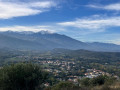
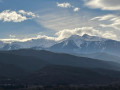
A lovely outing with magnificent views, particularly of the snow-capped Canigou and the Ille sur Têt rock formations below. And even if you take a wrong turn (as we did), there are other routes within easy walking distance that are also very interesting. I would like to point out a ruined house that can shelter you from the tramontane wind... for a snack, for example.

Machine-translated

Other walks in the area

For more walks, use our search engine .

The GPS track and description are the property of this route's author. Please do not copy them without permission.