


Refine your search for walks in Sacquenay
Sacquenay walks


 From Sacquenay to the Canal between Champagne and Burgundy
 Visorando Member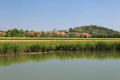
 10.04 mi
 +312 ft
 -312 ft
 4h 55
4h 55
 Moderate
 Departure from Sacquenay (Côte-d'Or)
A walk in the Vingeanne area that will take you to discover the 15th-century fountains in Sacquenay as well as the canal between Champagne and Burgundy. Diverse landscapes and a well-preserved environment.
The short circular loop of the Grandes Charmes
4.30 mi
+535 ft
-528 ft
2h 25
Moderate
Departure from Vaux-sous-Aubigny (Haute-Marne)
A lovely walk offering superb panoramic views, leafy arches and, depending on the season, birdsong.
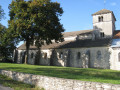
A walk in the Montsaugeonnais at the crossroads of three provinces
 11.02 mi
+804 ft
-814 ft
5h 45
Moderate
Departure from Vaux-sous-Aubigny (Haute-Marne)
11.02 mi
+804 ft
-814 ft
5h 45
Moderate
Departure from Vaux-sous-Aubigny (Haute-Marne)
On the borders of Champagne, Burgundy and Franche-Comté, the Domaine du Muid Montsaugeonnais covers 13 hectares, spread across the territories of four communes: Chatoillenot, Montsaugeon, Rivière-les-Fosses and Vaux-sous-Aubigny.
Abandoned since the outbreak of phylloxera in the late 19th century, the vineyard was revived in 1988 thanks to the Chevaliers du Montsaugeonnais.
In the footsteps of Henry IV at Fontaine-Française
6.42 mi
+79 ft
-98 ft
3h 00
 Easy
Departure from Fontaine-Française (Côte-d'Or)
Easy
Departure from Fontaine-Française (Côte-d'Or)
In the Vingeanne valley, a walk amongst ponds, springs, canals, streams and the river, exploring the châteaux of Fontaine-Française and Rosières, the ruins of an old blast furnace, and observing resident birds (such as the reed warbler) or migratory birds in a reed bed or meadow.
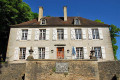
The three communes of the Montsaugeonnais
 10.47 mi
+797 ft
-804 ft
5h 30
Moderate
Departure from Montsaugeon (Haute-Marne)
10.47 mi
+797 ft
-804 ft
5h 30
Moderate
Departure from Montsaugeon (Haute-Marne)
The Montsaugeonnais Community of Communes. Established by a prefectural decree of 19 November 2015, it was formed from the merger of the three communes of Montsaugeon, Prauthoy and Vaux-sous-Aubigny, which became delegated communes. Its administrative centre is in Prauthoy.
The route of the three municipalities will take you through the Montanson woods, which are very popular when the daffodils are in bloom from March to the end of April. You will also be able to explore the vineyards of the Montsaugeonnais.
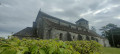
The Prauthoy Massif
 3.59 mi
+315 ft
-246 ft
1h 55
Easy
Departure from Vaux-sous-Aubigny (Haute-Marne)
3.59 mi
+315 ft
-246 ft
1h 55
Easy
Departure from Vaux-sous-Aubigny (Haute-Marne)
The walk starts not far from Aubigny Church and takes you on a lovely, easy circular route entirely through the Prauthoy Forest. Ideal for hot days. At the start or finish, enjoy the view from Aubigny Church of Mont Poupet and Mont Blanc, weather permitting.
Between Boussenois and Rivière-les-Fosses
 9.41 mi
+787 ft
-758 ft
5h 00
9.41 mi
+787 ft
-758 ft
5h 00
 Difficult
Departure from Boussenois (Côte-d'Or)
Difficult
Departure from Boussenois (Côte-d'Or)
A walk between Boussenois and Rivière-les-Fosses via La Montagne and the woods of Grand Maisonnais
Foncegrive and Selongey as seen from Boussenois
 10.98 mi
+869 ft
-866 ft
5h 50
Moderate
Departure from Boussenois (Côte-d'Or)
10.98 mi
+869 ft
-866 ft
5h 50
Moderate
Departure from Boussenois (Côte-d'Or)
From Boussenois, head towards Foncegrive, partly through the woods; pass through Foncegrive and continue to Selongey, also via a small woodland path; pass through Selongey and head back up via the Sainte-Anne Chapel to return to Boussenois.
From Boussenois to Vernois-lès-Vesvres in the Chamberceau Forest
 10.09 mi
+787 ft
-791 ft
5h 20
Moderate
Departure from Boussenois (Côte-d'Or)
10.09 mi
+787 ft
-791 ft
5h 20
Moderate
Departure from Boussenois (Côte-d'Or)
A circular walk starting from Boussenois and heading to Vernois through the woods.
A tour of Selongey’s chapels
 5.39 mi
+404 ft
-384 ft
2h 50
Easy
Departure from Selongey (Côte-d'Or)
5.39 mi
+404 ft
-384 ft
2h 50
Easy
Departure from Selongey (Côte-d'Or)
Selongey takes its name from a Roman estate once situated at the ‘Champ de Mars’. Centuries of history have left it with some remarkable monuments: a 13th-century church housing a carillon of 48 bells, listed as a historic monument, and a 19th-century organ, the Chapel of Saint Gertrude (1530) and the Chapel of Saint Anne (1637). There are also a few old houses dating from the 15th and 16th centuries.
The Valley at Selongey
 Local authority
 7.32 mi
+696 ft
-715 ft
4h 00
Moderate
Departure from Selongey (Côte-d'Or)
7.32 mi
+696 ft
-715 ft
4h 00
Moderate
Departure from Selongey (Côte-d'Or)
Gradually leave Selongey behind as you climb higher to discover the Venelle valley from a different perspective.
This circular route links Selongey to Foncegrive, alternating between country lanes, woodland paths and village crossings. After an initial section through the woods, the route reaches the heights of Foncegrive and its viewpoint. The walk then passes through the village before gaining altitude again via the paths and woods of Gency.
The return journey to Selongey offers one final change of scenery. The natural landscapes gradually give way to the urban and industrial heritage of a town closely linked to the history of SEB and the famous Cocotte-Minute.
The Tertre Trail in Selongey
 6.98 mi
+591 ft
-577 ft
3h 45
Moderate
Departure from Selongey (Côte-d'Or)
6.98 mi
+591 ft
-577 ft
3h 45
Moderate
Departure from Selongey (Côte-d'Or)
The Selongey area, home to the SEB pressure cooker, invites you to explore its Tertre hiking trail. Its name comes from the woodland you will pass through during this hike, which reaches a highest point of 415 m.
You will pass by the statue of the Virgin Mary, along the Tille and Venelle wind farm, before descending into the village. You will continue the walk along Rue du Mont and pass by the Church of Saint-Rémy de Foncegrive on your return to Selongey.
Short version of the Tertre hike from Selongey
 Association / Club / Walk leader
 4.93 mi
+449 ft
-436 ft
2h 40
Easy
Departure from Selongey (Côte-d'Or)
4.93 mi
+449 ft
-436 ft
2h 40
Easy
Departure from Selongey (Côte-d'Or)
The Selongey area, home to the SEB pressure cooker, invites you to explore its Tertre hiking trail. Its name comes from the woodland you will pass through during this hike, which reaches a highest point of 415 m.You’ll pass by the statue of the Virgin Mary, along the Tille and Venelle wind farm, before descending a beautiful path to join the track that will take you back to Selongey. You’ll finish this hike by passing near the pressure cooker factory.
The Gency to Selongey Trail
 4.96 mi
+377 ft
-394 ft
2h 35
Easy
Departure from Selongey (Côte-d'Or)
4.96 mi
+377 ft
-394 ft
2h 35
Easy
Departure from Selongey (Côte-d'Or)
The area around Selongey, the birthplace of the Seb pressure cooker, invites you to explore its Gency walking trail. Its name is taken from one of the three hills overlooking the village. This easy, signposted trail will take you through the forest that covers much of this hill.You’ll cross the Venelle before reaching the hill. You’ll finish this walk by passing near the pressure cooker factory.
The valley on either side of the Venelle between Selongey and Foncegrive
 7.36 mi
+755 ft
-738 ft
4h 00
Moderate
Departure from Selongey (Côte-d'Or)
7.36 mi
+755 ft
-738 ft
4h 00
Moderate
Departure from Selongey (Côte-d'Or)
This signposted route is one of four trails starting from the Courvelles Sports Complex in Selongey. It will take you from the home of the pressure cooker to Foncegrive, a small village nestled at the bottom of its valley. You’ll return to Selongey via the beautiful Gency Forest. This route is not particularly difficult. Only a short, steep 100-metre stretch will set your heart racing a little faster.
The Velours Forest and its picturesque surroundings
11.68 mi
+420 ft
-423 ft
5h 45
Moderate
Departure from Bourberain (Côte-d'Or)
A circular walk starting from Bourberain, passing near the Étang de Bessey, leading to a visit to Bèze (spring and caves) and a partial traverse of the Forêt de Velours, including the Creux du Diable and its star-shaped junctions.
Le Creux de la Chaudière depuis Dommarien
9.20 mi
+574 ft
-568 ft
4h 45
Moderate
Departure from Dommarien (Haute-Marne)
This route invites you to discover the heritage of the village of Dommarien. You will then continue through the Bois de la Côte Aubert to return to your starting point, crossing the plain and passing close to the village of Chassigny.Along the way, you’ll discover Dommarien’s bridge, wash houses and ‘patouillets’.
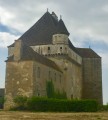
In the Vingeanne region, the Château de Rosières
 7.12 mi
+66 ft
-66 ft
3h 20
Moderate
Departure from Fontenelle (Côte-d'Or) (Côte-d'Or)
7.12 mi
+66 ft
-66 ft
3h 20
Moderate
Departure from Fontenelle (Côte-d'Or) (Côte-d'Or)
This easy hike will take you between Vingeanne and the canal to the Château de Rosières, a 15th-century fortified manor house that is still inhabited and operates as a bed and breakfast. It is open to visitors.
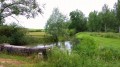
In the Pays de Vingeanne around Dampierre-et-Fley
 8.57 mi
+262 ft
-266 ft
4h 10
Moderate
Departure from Dampierre-et-Flée (Côte-d'Or)
8.57 mi
+262 ft
-266 ft
4h 10
Moderate
Departure from Dampierre-et-Flée (Côte-d'Or)
A beautiful hike that will take you from the banks of the Vingeanne and the Champagne-Burgundy Canal to the forests of the Val de Vingeanne.
Circular walk between Tille, the Romanesque church and the Templars’ site, starting from Lux
9.24 mi
+262 ft
-243 ft
4h 30
Easy
Departure from Lux (Côte-d'Or)
Starting from Lux-sur-la-Tille, a nearly entirely flat circular route along dirt tracks to explore the Tille valley, the River Ignon and the leats of Tilchâtel. The walk takes you past the Ferme de Fontenotte, a former Templar commandery, and the beautiful Church of Saint-Florent in Tilchâtel, a Romanesque church adorned with fine capitals and bearing an inscription on its portal.
The banks of the Tille and the Perte de la Venelle in Lux
 5.35 mi
+62 ft
-62 ft
2h 30
Easy
Departure from Lux (Côte-d'Or)
5.35 mi
+62 ft
-62 ft
2h 30
Easy
Departure from Lux (Côte-d'Or)
This circular walk will take you around the charming village of Lux, its dam, the banks of the Tille, its fountains, its church, its park along the Tille, and the peaceful spot known as the Perte de la Venelle.
Why not combine a walk with a picnic by the water (the Tille) in Lux, perhaps in the landscaped park?
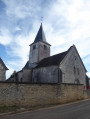
Between Vernois-lès-Vesvres and Chalancey
 9.07 mi
+659 ft
-636 ft
4h 45
Moderate
Departure from Vernois-lès-Vesvres (Côte-d'Or)
9.07 mi
+659 ft
-636 ft
4h 45
Moderate
Departure from Vernois-lès-Vesvres (Côte-d'Or)
A walk between Vernois-lès-Vesvres and Chalancey, setting off via the Champberceau Forest and returning via the plateau, including a visit to Chalancey Castle.
From Vernois-lès-Vesvres to Cussey-les-Forges via the woods
 8.28 mi
+906 ft
-896 ft
4h 35
Moderate
Departure from Vernois-lès-Vesvres (Côte-d'Or)
8.28 mi
+906 ft
-896 ft
4h 35
Moderate
Departure from Vernois-lès-Vesvres (Côte-d'Or)
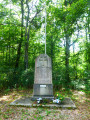
A circular route between the two villages, mainly through woodland. Unfortunately, on leaving Cussey-les-Forges, you have to take a section of the D120e as the Cussey Forest is completely fenced off.
Around Bèze
 5.84 mi
+220 ft
-213 ft
2h 55
Easy
Departure from Bèze (Côte-d'Or)
5.84 mi
+220 ft
-213 ft
2h 55
Easy
Departure from Bèze (Côte-d'Or)
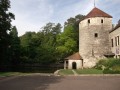
Superb village around the Bèze resurgence and its cave, which can be visited by boat.
Circular in Vingeanne starting from Chevigny
11.29 mi
+466 ft
-436 ft
5h 35
Moderate
Departure from Bèze (Côte-d'Or)
A walk through woodland and along the canal, passing through charming villages – a pleasant family outing with no difficulty.
Route around Rosières Castle
 9.42 mi
+217 ft
-194 ft
4h 30
Moderate
Departure from Autrey-lès-Gray (Haute-Saône)
9.42 mi
+217 ft
-194 ft
4h 30
Moderate
Departure from Autrey-lès-Gray (Haute-Saône)
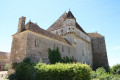
This walk will take you around the Château de Rosières, passing through Verfontaine and Saint-Seine-la-Tour, alongside two ponds where you can see plenty of birds and ducks. The Château de Rosières, currently run as a guesthouse, is open to visitors.
Avoid this route in very hot weather as a large part of it is in the open.
See the reviews; some sections of the trail are difficult to navigate.
Villegusien to Domarien circular loop
 10.51 mi
+541 ft
-545 ft
5h 20
Moderate
Departure from Villegusien-le-Lac (Haute-Marne)
10.51 mi
+541 ft
-545 ft
5h 20
Moderate
Departure from Villegusien-le-Lac (Haute-Marne)
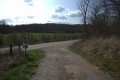
An idyllic walk through the woods and countryside of southern Haute-Marne.
With a bit of exploration to discover the paths through the woods.
A circular starting from Gemeaux, a picturesque village.
 5.58 mi
+141 ft
-131 ft
2h 40
Easy
Departure from Gemeaux (Côte-d'Or)
5.58 mi
+141 ft
-131 ft
2h 40
Easy
Departure from Gemeaux (Côte-d'Or)
Circular route around and through Gemeaux to discover this picturesque little village in the Côte d'Or, rich in architectural heritage: its market halls, medieval house, church, castle, fountain and wash house.
Source du Bué in Pichanges
 5.07 mi
+148 ft
-161 ft
2h 25
Easy
Departure from Pichanges (Côte-d'Or)
5.07 mi
+148 ft
-161 ft
2h 25
Easy
Departure from Pichanges (Côte-d'Or)
This circular route will take you to the Source du Bué with its curious legend. You can also explore the village, its chapel and its equally fascinating history, the Templars’ house, the manor house and the fortified church.In spring, you can see wild orchids in bloom.