


Refine your search for walks in Saint-Méloir-des-Ondes
Saint-Méloir-des-Ondes walks


 The Bay of Mont-Saint-Michel from Saint-Méloir-des-Ondes to Cancale
 Visorando Member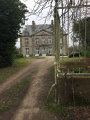
 5.39 mi
 +131 ft
 -135 ft
 2h 35
2h 35
 Easy
Easy
 Departure from Saint-Méloir-des-Ondes (Ille-et-Vilaine)
Discover the Bay of Mont-Saint-Michel along the coast from the village of Saint-Méloir-des-Ondes to Cancale. Choose a day when the tide is ebbing or at low tide to walk the outward leg along the foreshore; the return journey follows theGR® 34, which overlooks the bay and offers stunning views of its vast expanse, its oyster beds and Mont-Saint-Michel in the distance.
Circular route via La Ville ès Gris to Cancale
 Association / Club / Walk leader
 5.53 mi
+328 ft
-328 ft
2h 50
Easy
Departure from Saint-Méloir-des-Ondes (Ille-et-Vilaine)
5.53 mi
+328 ft
-328 ft
2h 50
Easy
Departure from Saint-Méloir-des-Ondes (Ille-et-Vilaine)
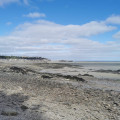
A pleasant little walk that takes you across the fields to the Cancale plateau, then heads back towards the beach to return along the coast via Les Roches Noires and Le Vauleraud. A beautiful view of the bay from the top of the cliff above Cancale.This route is not difficult.
La Gouesnière circular via Bois Renou
5.04 mi
+164 ft
-174 ft
2h 30
Easy
Departure from La Gouesnière (Ille-et-Vilaine)
This is a short, peaceful walk, partly through built-up areas and partly through what is known locally as the white marsh. In fact, the only remaining evidence of the marsh is the leat Jean. The route follows part of the GRP® Tour du Pays Malouin.
Route des Malouinières de Saint-Coulomb
 4.49 mi
+105 ft
-105 ft
2h 10
Easy
Departure from Saint-Coulomb (Ille-et-Vilaine)
4.49 mi
+105 ft
-105 ft
2h 10
Easy
Departure from Saint-Coulomb (Ille-et-Vilaine)
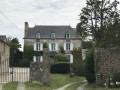
The commune of Saint-Coulomb had twenty malouinières spread across its territory. Malouinières are the country residences of Saint-Malo shipowners. Most were built between 1680 and 1730. Their architecture was strongly influenced by military engineers. Their style is uniform (granite from the Chausey Islands).
This route, in a vegetable-growing countryside, allows you to discover some of them in different sizes. Only the one in Ville Bague is open to visitors.
The heights of Cancale, Rocher Gaut and the points
 5.18 mi
+371 ft
-384 ft
2h 40
5.18 mi
+371 ft
-384 ft
2h 40
 Moderate
Departure from Cancale (Ille-et-Vilaine)
Moderate
Departure from Cancale (Ille-et-Vilaine)
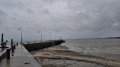
Circular route around Cancale following the GR®34 and GRP® du Pays Malouin and the PR® de Cancale. The route passes by the points that offer beautiful views of the Bay of Mont Saint-Michel. Along the way, you can sample some oysters in season.
Pointes des Grands Nez et du Meinga, Île Besnard au départ de Saint-Coulomb
 8.22 mi
+459 ft
-469 ft
4h 10
Moderate
Departure from Saint-Coulomb (Ille-et-Vilaine)
8.22 mi
+459 ft
-469 ft
4h 10
Moderate
Departure from Saint-Coulomb (Ille-et-Vilaine)
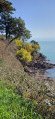
Cette randonnée de 12 km vous fera découvrir les pointes des Grands Nez et du Meinga ainsi que l'Île Besnard.
Saint-Coulomb and the circular route around La Touesse
 7.69 mi
+584 ft
-584 ft
4h 05
Moderate
Departure from Saint-Coulomb (Ille-et-Vilaine)
7.69 mi
+584 ft
-584 ft
4h 05
Moderate
Departure from Saint-Coulomb (Ille-et-Vilaine)
A nice little walk, partly on the Sentier des Douaniers on the GR®34. Superb view from the headlands, especially at low tide when the rocks are exposed and covered with sea spray. In good weather, the view stretches as far as Cap Fréhel to the west and Pointe du Grouin and the Herpin lighthouse to the east.
The Guesclin Cove from Pointe des Grands Nez to Pointe du Nid
 5.90 mi
+312 ft
-295 ft
3h 00
Moderate
Departure from Saint-Coulomb (Ille-et-Vilaine)
5.90 mi
+312 ft
-295 ft
3h 00
Moderate
Departure from Saint-Coulomb (Ille-et-Vilaine)
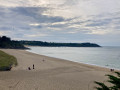
This section ofthe GR® 34trail, which leads to the legendary Pointe du Grouin, has been used by some of the great names in French history: the family of Constable Bertrand du Guesclin, the writer Colette and the singer Léo Ferré.
Follow in their footsteps from Touesse Beach along theGR® 34 from Pointe des Grands Nez to Pointe du Nid.
On the way back, you will pass by the Malouinière La Motte aux Chauff.
Pointe des Grands Nez - Pointe du Grouin
 12.06 mi
+643 ft
-663 ft
6h 05
12.06 mi
+643 ft
-663 ft
6h 05
 Difficult
Departure from Saint-Coulomb (Ille-et-Vilaine)
Difficult
Departure from Saint-Coulomb (Ille-et-Vilaine)
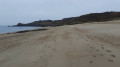
A superb coastal walk towards a major tourist attraction: Pointe du Grouin. During this round-trip route, you’ll discover the beauty of this coastline from different angles, depending on the light and the tide. The view of Fort Du Guesclin, which becomes an island at high tide, perfectly illustrates these varied landscapes.
Circular around the Fort de Saint-Père-Marc-en-Poulet
5.13 mi
+148 ft
-174 ft
2h 30
Easy
Departure from Saint-Père (Ille-et-Vilaine)
The main attraction of this hike is the Fort de Saint-Père, built between 1777 and 1785 to protect Saint-Malo from English attacks by land and to complete the defence system designed by the famous Vauban. Part of its enclosure was destroyed in 1944 by the Germans as they fled during the Liberation. Today, the fort has become a cultural and leisure space. Every year, it hosts various trail events, flower markets, festivals and concerts. The fort is open to the public during the events it hosts, but the outer rampart walk is accessible to walkers all year round.
The Fort of Saint-Père-Marc-en-Poulet
 4.56 mi
+167 ft
-171 ft
2h 15
Easy
Departure from Saint-Père (Ille-et-Vilaine)
4.56 mi
+167 ft
-171 ft
2h 15
Easy
Departure from Saint-Père (Ille-et-Vilaine)
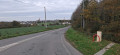
Built in the 18th century, the fort completes the coastal fortifications designed by Vauban to protect the bay of Saint-Malo from English attacks. With a capacity of 3,000 men, 26 casemates and a 46-metre-long powder magazine, it was delivered too late to play a defensive role. During the 1914-1918 war, it housed German prisoners and, during the last war, it was converted into an ammunition depot by the Germans, who blew up part of the casemates during their evacuation. Decommissioned in 1988, it is now owned by the municipality of Saint-Père-Marc-en-Poulet, which has restored it; shows are organised there.
Between land and sea towards the chapels of Saint-Vincent and Notre-Dame des Flots
 4.02 mi
+171 ft
-177 ft
2h 00
Easy
Departure from Saint-Coulomb (Ille-et-Vilaine)
4.02 mi
+171 ft
-177 ft
2h 00
Easy
Departure from Saint-Coulomb (Ille-et-Vilaine)
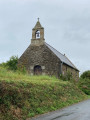
Between the land and the Emerald Coast, this protected natural area invites you to go hiking and enjoy its ever-changing panoramic views. Breathe in the air of Brittany between Saint-Malo and Saint-Coulomb for a breath of fresh air along the customs officers' path, its beaches, windy points and inland areas. Set off to explore its secret chapels and magnificent manor houses.
Pointe du Meinga and Roz Ven Beach
 4.24 mi
+289 ft
-299 ft
2h 10
Moderate
Departure from Saint-Coulomb (Ille-et-Vilaine)
4.24 mi
+289 ft
-299 ft
2h 10
Moderate
Departure from Saint-Coulomb (Ille-et-Vilaine)
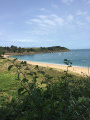
This section ofthe GR® 34 leading to Pointe du Meinga is a must-do walk when staying in the Saint-Malo–Saint-Coulomb area.
From the top of the 46-metre cliff, the view stretches from Cap Fréhel to the Pointe du Grouin, with the Chausey Islands on the horizon.
Pointe du Meinga is bordered to the west by the large beach of La Guimorais (part of which is a naturist beach) and to the east, in the Anse de la Touesse, by Roz Ven beach.
The Pointe du Meinga and the Malouinière de la Vieille Bague
 7.65 mi
+318 ft
-341 ft
3h 50
Moderate
Departure from Saint-Coulomb (Ille-et-Vilaine)
7.65 mi
+318 ft
-341 ft
3h 50
Moderate
Departure from Saint-Coulomb (Ille-et-Vilaine)
The Pointe du Meinga and Île Besnard areas are ideal for beautiful hikes in any season. This hike starts on the GR®34 and then turns inland to discover some of the malouinières near the Étang Sainte-Suzanne. You can extend the hike by going around Île Besnard.
Pointe du Meinga, Île Besnard and Havre de Rothéneuf
 4.63 mi
+249 ft
-249 ft
2h 20
Easy
Departure from Saint-Coulomb (Ille-et-Vilaine)
4.63 mi
+249 ft
-249 ft
2h 20
Easy
Departure from Saint-Coulomb (Ille-et-Vilaine)
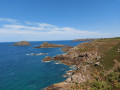
The rocky Pointe du Meinga, the large Plage des Chevrets beach, Île Besnard, which has become a peninsula closing off the Havre de Rothéneuf, offer a magnificent panorama that changes with the tides.The harbour of Rothéneuf or Lupin is a renowned site for birdwatching in lagoon areas.
Pointe du Nid and Anse du Verger
 3.48 mi
+200 ft
-177 ft
1h 45
Easy
Departure from Saint-Coulomb (Ille-et-Vilaine)
3.48 mi
+200 ft
-177 ft
1h 45
Easy
Departure from Saint-Coulomb (Ille-et-Vilaine)
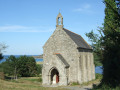
Short walk along the coastal path between beautiful beaches and return via Anse du Verger, owned by the Conservatoire du Littoral.
Along the route, you will find Fort du Guesclin, the Gaudes guardhouse and the Chapelle Notre-Dame du Verger, remarkable for its marine paintings offered as ex-votos.
From Fort du Guesclin to Pointe du Grouin
 7.96 mi
+669 ft
-676 ft
4h 15
Difficult
Departure from Saint-Coulomb (Ille-et-Vilaine)
7.96 mi
+669 ft
-676 ft
4h 15
Difficult
Departure from Saint-Coulomb (Ille-et-Vilaine)
A walk along the Sentier des Douaniers between Guesclin Beach, Saint-Coulomb, to the west, and Pointe du Grouin, Cancale, to the east. The route follows the coastline along a well-signposted and accessible but uneven path. There are a succession of superb viewpoints all along the route. Although the route is a return walk, the paths have very different characteristics and equally pleasant scenery.
Pointe du Meinga at Saint-Coulomb
 2.01 mi
+240 ft
-210 ft
1h 10
Easy
Departure from Saint-Coulomb (Ille-et-Vilaine)
2.01 mi
+240 ft
-210 ft
1h 10
Easy
Departure from Saint-Coulomb (Ille-et-Vilaine)
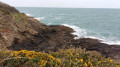
Hike along a coastal path overlooking the sea to Pointe du Meinga, with views of the superb Plage de l'Anse de la Touesse and Pointe du Grouin to the right and Rothéneuf to the left of the tip.
On the Emerald Coast between Pointes de la Varde and Pointes du Grouin
 4.78 mi
+289 ft
-312 ft
2h 25
Moderate
Departure from Saint-Coulomb (Ille-et-Vilaine)
4.78 mi
+289 ft
-312 ft
2h 25
Moderate
Departure from Saint-Coulomb (Ille-et-Vilaine)
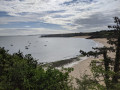
A magnificent GR®34 that, at times, offers passages worthy of a mountain GR®, with magnificent views over the beaches, rocks and sea, not forgetting the multitude of rocky islets visible at low tide but covered at high tide. This short tour of the Côte d'Émeraude gives a magnificent overview.
The Pointe du Grouin circular tour from La Gaudichais
 7.67 mi
+568 ft
-564 ft
4h 00
Moderate
Departure from Cancale (Ille-et-Vilaine)
7.67 mi
+568 ft
-564 ft
4h 00
Moderate
Departure from Cancale (Ille-et-Vilaine)
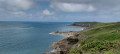
This route follows part of the GR®34 along the coast, an old customs officers' path, and the trails that cross the point between the hamlet of Le Verger and Cancale. The route offers beautiful views of the bay of Mont Saint-Michel and a string of islands to the west. In good weather, you can see Cap Fréhel.
Around Rotheneuf and Pointe de La Varde
 6.60 mi
+174 ft
-171 ft
3h 10
Moderate
Departure from Saint-Malo (Ille-et-Vilaine)
6.60 mi
+174 ft
-171 ft
3h 10
Moderate
Departure from Saint-Malo (Ille-et-Vilaine)
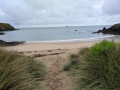
Walk between land and sea dotted with numerous historical, cultural and tourist attractions.Urban start, then green countryside through Saint-Coulomb.Return via the Emerald Coast and its magnificent sandy beaches.Discover the protected natural site of Pointe de la Varde, offering a panoramic view of Saint-Malo and Cap Fréhel.
The Eastern Emerald Coast of the Saint-Malo region
 9.27 mi
+272 ft
-266 ft
4h 30
Moderate
Departure from Saint-Malo (Ille-et-Vilaine)
9.27 mi
+272 ft
-266 ft
4h 30
Moderate
Departure from Saint-Malo (Ille-et-Vilaine)
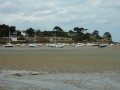
A getaway between land and sea. Landscapes, heritage and a coastal path offering sweeping views of the entire coastline from the pirate city to Cap Fréhel.
Tour of Île Besnard via the coastal path
 0.96 mi
+102 ft
-102 ft
0h 30
Easy
Departure from Saint-Coulomb (Ille-et-Vilaine)
0.96 mi
+102 ft
-102 ft
0h 30
Easy
Departure from Saint-Coulomb (Ille-et-Vilaine)
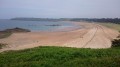
This short route offers superb views of Le Havre de Rothéneuf, the islands and Chevrets Beach.
The Rothéneuf and Varde headlands
 5.23 mi
+213 ft
-213 ft
2h 35
Easy
Departure from Saint-Malo (Ille-et-Vilaine)
5.23 mi
+213 ft
-213 ft
2h 35
Easy
Departure from Saint-Malo (Ille-et-Vilaine)
This route will take you along the customs officers' path between Rothéneuf and Pont beach, via Pointe de la Varde. Beautiful views of St-Malo bay, with Cézembre and Fort de la Conchée to the west, Île Besnard and Les Chevrets (large and small) to the east.
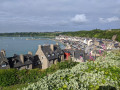
Cancale and its surroundings
 14.18 mi
+1,033 ft
-1,007 ft
7h 25
Moderate
Departure from Cancale (Ille-et-Vilaine)
14.18 mi
+1,033 ft
-1,007 ft
7h 25
Moderate
Departure from Cancale (Ille-et-Vilaine)
Loop between land and sea around Cancale via St Coulomb, following theGR®34andGR®34Atrails.
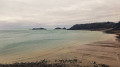
Route of the Notre-Dame du Haut Bout Chapel from Port Briac
 4.75 mi
+344 ft
-325 ft
2h 15
Moderate
Departure from Cancale (Ille-et-Vilaine)
4.75 mi
+344 ft
-325 ft
2h 15
Moderate
Departure from Cancale (Ille-et-Vilaine)
This route follows part of the customs officers' path between Port Briac and Port Mer. It then winds its way between the hamlets of Haut Bout, Basse Cancale and Ville ès Péniaux, where you can see old, modest stone houses and other less modest but equally picturesque dwellings. A few passages through the undergrowth add to the charm of the route.
Circular loop of Saint-Jouan and La Chapelle du Val ès Bouillis
 5.56 mi
+400 ft
-390 ft
2h 55
Easy
Departure from Saint-Jouan-des-Guérets (Ille-et-Vilaine)
5.56 mi
+400 ft
-390 ft
2h 55
Easy
Departure from Saint-Jouan-des-Guérets (Ille-et-Vilaine)
This is a gentle hike that forms a double circular route, one around the hamlet of Le Val ès Bouilli and the second around La Livaudais. Much of the route runs alongside the Rance. The rest is divided between sunken paths and small roads. Along the way, you can see the Pointe du Puits and the Pont Chateaubriand to the south.
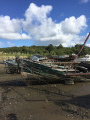
Quinard Mill and the Quelmer Boat Graveyard
 6.85 mi
+259 ft
-266 ft
3h 25
Moderate
Departure from Saint-Jouan-des-Guérets (Ille-et-Vilaine)
6.85 mi
+259 ft
-266 ft
3h 25
Moderate
Departure from Saint-Jouan-des-Guérets (Ille-et-Vilaine)
This section ofthe GRP®® Tour du Pays Malouin takes you to two sites emblematic of the historic activities along the banks of the Rance: the Quinard tide mill and the Quelmer boat graveyard.There are beautiful views of the Harteau and Chevet Islands, the anchorages and the left bank of the Rance.
Views of the islands of Saint-Jouan-des-Guérets
 5.88 mi
+276 ft
-266 ft
2h 55
Easy
Departure from Saint-Jouan-des-Guérets (Ille-et-Vilaine)
5.88 mi
+276 ft
-266 ft
2h 55
Easy
Departure from Saint-Jouan-des-Guérets (Ille-et-Vilaine)
A walk that allows you to explore the Rance estuary and a few islands. This is a shorter version of walk 88877, ‘Around Saint-Jouan-des-Guérets’.
Pointe du Grouin: large circular
5.68 mi
+446 ft
-466 ft
3h 00
Moderate
Departure from Cancale (Ille-et-Vilaine)
This circular follows the GR®34 (Tour de la Bretagne) route from Port Picain to Verger beach, via Pointe du Grouin.
The Grouin Tip (La Pointe du Grouin)
 5.92 mi
+387 ft
-387 ft
3h 05
Moderate
Departure from Cancale (Ille-et-Vilaine)
5.92 mi
+387 ft
-387 ft
3h 05
Moderate
Departure from Cancale (Ille-et-Vilaine)
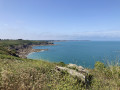
A rocky headland close to Cancale to discover thanks to the customs trails (GR®34). The coastline, interspersed with small sandy coves, is ideal for all kinds of summer activities. Walkers will be surprised if they expect a flat, unattractive trail. If there are occasional sunken paths, it's to allow a rest before rocky areas and steep gradients.
La Rance at Quelmer, La Passagère and the boat graveyard.
 4.14 mi
+154 ft
-141 ft
2h 00
Easy
Departure from Saint-Malo (Ille-et-Vilaine)
4.14 mi
+154 ft
-141 ft
2h 00
Easy
Departure from Saint-Malo (Ille-et-Vilaine)
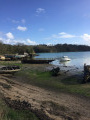
The path runs along the right bank of the Rance, overlooking its rocky coves, which resemble Mediterranean calanques. Along the way, stop at La Passagère, where you can see the Maison du Passeur and the house of Commander Jean Charcot. In the cove, you will find the boat graveyard, the only place where old hulls from the Rance valley are beached.
Around Quelmer, starting from La Goëléterie
 5.92 mi
+387 ft
-358 ft
3h 05
Easy
Departure from Saint-Malo (Ille-et-Vilaine)
5.92 mi
+387 ft
-358 ft
3h 05
Easy
Departure from Saint-Malo (Ille-et-Vilaine)
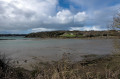
A circular trail of about 10 km around Quelmer, starting from La Goëléterie. Points of interest: the banks of the Rance, La Passagère, the boat graveyard at La Passagère, the Pointe de la Roche du Port with its superb views of the Rance, and splendid malouinières (traditional houses) along the way.
The first part of this route follows the coastal path. The second part follows another route called "Around Quelmer and La Passagère".
Route of Street Art in Saint-Malo
 5.23 mi
+69 ft
-69 ft
2h 30
Easy
Departure from Saint-Malo (Ille-et-Vilaine)
5.23 mi
+69 ft
-69 ft
2h 30
Easy
Departure from Saint-Malo (Ille-et-Vilaine)
Since 2013, the cities of Rennes and Saint-Malo have been joining forces every two years for a new street art event. On this occasion, works by urban artists adorn the city’s walls, transforming them into giant, colourful murals. Thus, this ephemeral art form emerges and disappears with each edition. The most recent event took place in 2022. This purely urban walking route, created in August 2024, winds its way through various neighbourhoods of the city and allows you to discover a number of works – often panoramic in nature – some of which have vanished from the landscape, hidden beneath a layer of insulation or following façade renovation, notably on Quai Duguay Trouin. Wander through this open-air gallery – the perfect opportunity to get some fresh air whilst drifting between dreams and imagination.
Short circular loop of Pointe du Grouin
3.47 mi
+830 ft
-817 ft
2h 20
Easy
Departure from Cancale (Ille-et-Vilaine)
This circular route starts at the Port Mer seafront and follows the GR®34 (Tour de la Bretagne) from Port Mer to Saussaye Beach via Pointe du Grouin.
Around Saint-Jouan-des-Guérets
 10.60 mi
+351 ft
-381 ft
5h 10
Moderate
Departure from Saint-Malo (Ille-et-Vilaine)
10.60 mi
+351 ft
-381 ft
5h 10
Moderate
Departure from Saint-Malo (Ille-et-Vilaine)
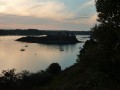
From Saint-Jouan-des-Guérets to La Rance via theGRP® long-distance hiking trail and the countryside around Saint-Malo.
The forts of Saint-Malo at low tide with a high tidal range
4.54 mi
+66 ft
-89 ft
2h 10
Easy
Departure from Saint-Malo (Ille-et-Vilaine)
We invite you to explore the three main fortified islets in the Bay of Saint-Malo: Fort du Petit Bé, Grand Bé—which houses Chateaubriand’s tomb—and Fort National. Access to these islets is only safe at low tide and when the tidal range is at least 80. Extend your exploration with a stroll along the foreshore and its wooden breakwaters, admiring the beautiful buildings and hotels lining the Sillon.Before setting off on the walk, check the day’s weather forecast.
Saint-Malo intramural city and Solidor Tower
 7.71 mi
+390 ft
-384 ft
3h 55
Moderate
Departure from Saint-Malo (Ille-et-Vilaine)
7.71 mi
+390 ft
-384 ft
3h 55
Moderate
Departure from Saint-Malo (Ille-et-Vilaine)
Discover the pirate town and the personalities who played a part in its history.
Circular walk from Saint-Suliac via Pointe du Puits and Mont Gareau
 7.16 mi
+515 ft
-515 ft
3h 45
Moderate
Departure from Saint-Suliac (Ille-et-Vilaine)
7.16 mi
+515 ft
-515 ft
3h 45
Moderate
Departure from Saint-Suliac (Ille-et-Vilaine)
Just ten kilometres or so south of Saint-Malo, Saint-Suliac is a small village situated on the coast of the Rance estuary. It is a former fishing village. The route suggested here allows you to discover the rich variety of landscapes; it passes via Mont Garrot (or Gareau), which, at a height of 73 metres, offers a panoramic view of the Rance valley and the ‘Viking camp’. It runs alongside the river and passes through designated nature reserves. Along the route, you can admire two historic mills: a windmill overlooking the hill (which cannot be visited, as it stands on private land that is not accessible) and the old Boschet tide mill, built inthe 16th century and in operation until the 1940s. A local association has carried out its complete restoration.
Circular route to Saint-Suliac via Mont Gareau and Moulin du Tertre
 5.37 mi
+463 ft
-463 ft
2h 50
Easy
Departure from Saint-Suliac (Ille-et-Vilaine)
5.37 mi
+463 ft
-463 ft
2h 50
Easy
Departure from Saint-Suliac (Ille-et-Vilaine)
Shortly after setting off, you will come to the oratory, dedicated to the safety of sailors setting out to sea for the banks of Newfoundland. There is a magnificent view of the village, the Rance and the opposite bank as far as the Pont Chateaubriand bridge.
The walk continues along the banks of the Rance to the summit of Mont Gareau, where another viewpoint will surprise you.
Along the way, you can admire two old mills: a windmill overlooking the hill (not open to visitors, as it is on private land) and an old tide mill, built inthe 16th century, which was in operation until the 1940s. An association is working to restore it.
Saint-Suliac, North point
 3.97 mi
+151 ft
-167 ft
1h 55
Easy
Departure from Saint-Suliac (Ille-et-Vilaine)
3.97 mi
+151 ft
-167 ft
1h 55
Easy
Departure from Saint-Suliac (Ille-et-Vilaine)
A lovely walk around the northern tip of Saint-Suliac. Do it whatever the weather!
Moderator's note as of 06/04/2021: Some modifications on the ground since the creation of this hike: see the comments at the bottom of this page.
Moderator's note a description of June 2022 in reverse order to this one is available here
Circular via Pointe du Puits and Clos de la Croix in Saint-Suliac.
 4.79 mi
+256 ft
-272 ft
2h 25
Easy
Departure from Saint-Suliac (Ille-et-Vilaine)
4.79 mi
+256 ft
-272 ft
2h 25
Easy
Departure from Saint-Suliac (Ille-et-Vilaine)
Saint-Suliac, a former fishing village, is located a stone's throw from Saint-Malo. The landscapes are varied, and this walk will allow you to discover the maritime side of Saint-Suliac and the narrow streets of the old part of the village. The steep side of the shore along the Rance is somewhat reminiscent of the GR®34 between Saint-Malo and Cancale, all things considered. There is a beautiful view of the Rance from the Pointe du Puits.
Around Mont Garrot
 4.77 mi
+299 ft
-312 ft
2h 25
Easy
Departure from Saint-Suliac (Ille-et-Vilaine)
4.77 mi
+299 ft
-312 ft
2h 25
Easy
Departure from Saint-Suliac (Ille-et-Vilaine)
In the midst of this tide-changing natural environment, Mont Garrot, a true promontory above the river Rance maritime estuary, offers a panoramic view of Saint-Suliac to the north and Anse de Vigneux to the south, where the foundations of an ancient Viking camp emerge at low tide.
Mont Gareau massif
 1.65 mi
+223 ft
-230 ft
0h 55
Easy
Departure from Saint-Suliac (Ille-et-Vilaine)
1.65 mi
+223 ft
-230 ft
0h 55
Easy
Departure from Saint-Suliac (Ille-et-Vilaine)
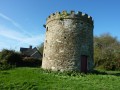
Mont Gareau, tomb of Gargantua. A historic site steeped in legends and mysteries. The highest point in the region, offering a magnificent 360° panorama from its height of 73 metres! It overlooks Saint-Suliac, ranked among the most beautiful villages in France, and in good weather you can see Mont-Saint-Michel, Granville and the Normandy coast.
The balconies of Minihic-sur-Rance
 7.12 mi
+423 ft
-453 ft
3h 40
Moderate
Departure from Le Minihic-sur-Rance (Ille-et-Vilaine)
7.12 mi
+423 ft
-453 ft
3h 40
Moderate
Departure from Le Minihic-sur-Rance (Ille-et-Vilaine)
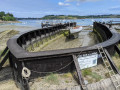
One of the classic walks in the Rance Basin. The path overlooks the Rance and offers numerous colourful views of the water, the riverbanks and river life. An opportunity to walk alongside the Minihic shipyards. A return via the sunken paths and the shaded valley of Saint-Buc takes us back to the Sainte-Anne Chapel, dating from 1631.
Very breezy and shaded in summer, very bright and open in early spring. High tide, low tide: you never see the same landscape.
The mills of the Rance - The foreshores
 9.53 mi
+594 ft
-610 ft
4h 55
Moderate
Departure from Le Minihic-sur-Rance (Ille-et-Vilaine)
9.53 mi
+594 ft
-610 ft
4h 55
Moderate
Departure from Le Minihic-sur-Rance (Ille-et-Vilaine)
The first tidal mill on the Rance was built in 1181 (Moulin du Lupin near Rothéneuf). These mills flourished between the 16th and 17th centuries. Today, few of these renewable energy sources remain. This route allows you to see the remains of two mills (Fosse Mort and La Herviais) and to stroll through this estuary, which is ideal for the construction of mills.
The garden of Minihic-sur-Rance and its dry dock at La Landriais
 5.26 mi
+272 ft
-285 ft
2h 40
Easy
Departure from Le Minihic-sur-Rance (Ille-et-Vilaine)
5.26 mi
+272 ft
-285 ft
2h 40
Easy
Departure from Le Minihic-sur-Rance (Ille-et-Vilaine)
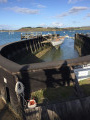
From the beautifully landscaped public garden, there is a remarkable view of the Rance and its right bank, from which the village of Saint-Suliac stands out. From the garden, you can easily reach Garel Beach and the Landriais shipyard with its specific equipment: the above-ground wooden dry dock, via the cliff-top path.
The wet Guérouse valley winds through the undergrowth that makes up the Domaine du Pièton.
A circular loop along the banks of the Rance, starting from Minihic
 11.75 mi
+594 ft
-607 ft
5h 55
Moderate
Departure from Le Minihic-sur-Rance (Ille-et-Vilaine)
11.75 mi
+594 ft
-607 ft
5h 55
Moderate
Departure from Le Minihic-sur-Rance (Ille-et-Vilaine)
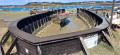
This walk combines the routes suggested on Visorando around the Minihic, forming a double circular route around the Minihic and Langrolay further south. It is a pleasant walk along the banks of the Rance, with Mont Gareau, Saint-Suliac and the Pointe du Puits opposite. The path overlooks the Rance and offers numerous viewpoints. The route passes by the Landriais shipyards and dry dock, to the north of the Minihic. On the return journey, there are sunken paths via Langrolay and the Chapel of Sainte-Anne in Saint-Buc, dating from 1631. The walk is well shaded in summer and late spring.
L’Anse des Bas Champs, the bridges over the Rance from La Ville-ès-Nonais
 4.55 mi
+282 ft
-279 ft
2h 20
Easy
Departure from La Ville-ès-Nonais (Ille-et-Vilaine)
4.55 mi
+282 ft
-279 ft
2h 20
Easy
Departure from La Ville-ès-Nonais (Ille-et-Vilaine)
The Anse des Bas Champs in La Ville-es-Nonais is a coastal marsh whose reed beds are home to numerous species of birds. Nestled at the far end of the cove is the peaceful hamlet of La Chapelle Saint-Magloire.
This section ofthe GR® Tour du Pays Malouin takes you to the foot of the two iconic bridges of the Rance Valley: the Pont Saint-Hubert and its counterpart, the Pont Chateaubriand. Both span the Rance where it narrows, linking Plouër-sur-Rance (Côtes d’Armor department) to La Ville-ès-Nonais (Ille-et-Vilaine department).
The medieval walls from Ville-es-Nonais
 4.11 mi
+171 ft
-177 ft
2h 00
Easy
Departure from La Ville-ès-Nonais (Ille-et-Vilaine)
4.11 mi
+171 ft
-177 ft
2h 00
Easy
Departure from La Ville-ès-Nonais (Ille-et-Vilaine)
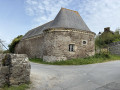
Did the Vikings settle in the Rance valley at the foot of Mont Garot? Nothing is less certain, but in any case, this is a theory put forward by the guides. From La Ville-es-Nonais, along the right bank of the Rance, make your way to the site of the supposed Viking camp. At low tide, you can see the site, covered in short vegetation.
Circular route to Mont-Dol via the river and the two Biez
 9.34 mi
+7 ft
-7 ft
4h 20
Moderate
Departure from Mont-Dol (Ille-et-Vilaine)
9.34 mi
+7 ft
-7 ft
4h 20
Moderate
Departure from Mont-Dol (Ille-et-Vilaine)
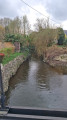
This walk takes you along the paths of the Marais Blanc, and alongside the Guyolut, as well as the Cardequin and Ceinture Nord watercourses. The terrain is flat and easy, but can be exposed to the wind.The section of the route through the Marais Blanc allows you to discover old stone farmhouses that have retained the charm of their original stone construction. Some are listed as heritage sites.
Loop between Rance and Terre, from Pont Saint-Jean to Pointe du Puits
 11.39 mi
+518 ft
-541 ft
5h 40
Easy
Departure from La Ville-ès-Nonais (Ille-et-Vilaine)
11.39 mi
+518 ft
-541 ft
5h 40
Easy
Departure from La Ville-ès-Nonais (Ille-et-Vilaine)
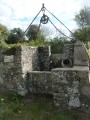
Walk in the Pays Malouin between the sea and the Rance around one of the most beautiful villages in France. To be done at low tide, check before you go.
Between Langrolay-sur-Rance and Plouër-sur-Rance
7.30 mi
+568 ft
-548 ft
3h 50
Moderate
Departure from Plouër-sur-Rance (Côtes-d'Armor)
This is a circular route that allows you, on the one hand, to walk along the banks of the Rance from the Pont Saint-Hubert to the Grève du Roué near Langrolay-sur-Rance and, on the other hand, to explore the hinterland and visit the charming hamlets. There are also sections through woodland.
Circular walk starting from Langrolay via La Souhaitier and Plouer
6.85 mi
+650 ft
-650 ft
3h 45
Moderate
Departure from Langrolay-sur-Rance (Côtes-d'Armor)
A pleasant walk along the banks of the Rance and through the countryside. A circular route of around 11 km with the option to adjust the length.
Langrolay-sur-Rance route starting from the Souhaitier Chapel
 8.34 mi
+528 ft
-525 ft
4h 20
Moderate
Departure from Plouër-sur-Rance (Côtes-d'Armor)
8.34 mi
+528 ft
-525 ft
4h 20
Moderate
Departure from Plouër-sur-Rance (Côtes-d'Armor)
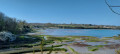
This hike follows the Rance river and the valleys around Langrolay-sur-Rance. It starts at the foot of the Souhaitier Chapel and follows a north-south route offering beautiful views of the Rance and the opposite bank, Saint-Suliac and Mont Gareau. The route is also dotted with some very pretty stone houses. The route follows a branch of the GR®34 to GR®37 trail.