


Refine your search for walks in Marcilly-sur-Tille
Marcilly-sur-Tille walks


 In the footsteps of Gargantua around Marcilly-sur-Tille
 Visorando Member
 4.73 mi
 +174 ft
 -180 ft
 2h 20
2h 20
 Easy
Easy
 Departure from Marcilly-sur-Tille (Côte-d'Or)
A short, easy walk around the village of Marcilly-sur-Tille, which is situated on the River Ignon and not on the River Tille as its name suggests, passing by the Étang de Venarde where you can see many birds (depending on the season). You’ll walk along the River Ignon, with its wash house and old mill, and reach Mont de Marcilly, where you’ll enjoy a magnificent view over the Tille Valley.
La Combe Marey, starting from Is-sur-Tille
 Tourist office
 5.24 mi
+486 ft
-472 ft
2h 50
Easy
Departure from Is-sur-Tille (Côte-d'Or)
5.24 mi
+486 ft
-472 ft
2h 50
Easy
Departure from Is-sur-Tille (Côte-d'Or)
As you walk along the Combe Marey trail, some of Is-sur-Tille’s natural treasures are revealed to you. They lie hidden in the woods… This route will allow you to discover the limestone plateau overlooking Is-sur-Tille, the old Montchevreuil house and the small bell tower. Route recommended by the Tille and Ignon Valleys Tourist Office. Official route listed in the Côte-d’Or PDIPR.
Hunting days: Sundays and public holidays.
Les Mauritaines, departing from Is-sur-Tille
 6.71 mi
+574 ft
-571 ft
3h 35
6.71 mi
+574 ft
-571 ft
3h 35
 Moderate
Departure from Is-sur-Tille (Côte-d'Or)
Moderate
Departure from Is-sur-Tille (Côte-d'Or)
This forest route will allow you to discover the limestone plateau overlooking Is-sur-Tille, a wayside cross, a spring: the Marcevau fountain, and the small bell tower. The route, proposed by the Tille and Ignon Valleys Tourist Office, is listed in the Côte-d’Or PDIPR.
PDIPR: Departmental Plan for Walking and Hiking Routes.
Hunting days: Sundays and public holidays.
The Meuley Circuit in Is-sur-Tille
 4.46 mi
+325 ft
-328 ft
2h 20
Easy
Departure from Is-sur-Tille (Côte-d'Or)
4.46 mi
+325 ft
-328 ft
2h 20
Easy
Departure from Is-sur-Tille (Côte-d'Or)
This route, partly through woodland, will allow you to discover the leat des Courtines, the market halls, the medieval defensive ditch and a viewpoint overlooking Mont de Marcilly
Hunting days: Sundays and public holidays. Côte-d’Or PDIPR route.
In the forest of Crécey-sur-Tille via the Vornay valley
 4.41 mi
+417 ft
-410 ft
2h 25
Easy
Departure from Crécey-sur-Tille (Côte-d'Or)
4.41 mi
+417 ft
-410 ft
2h 25
Easy
Departure from Crécey-sur-Tille (Côte-d'Or)
This route will take you to Crécey-sur-Tille Castle and its dovecote, wash houses, wayside crosses and the Church of Notre-Dame de la Nativité. This walk will also take you through the forest via the Combe Vornay to the north-east of the village.
Route from Montaigu to Crécey-sur-Tille
 3.65 mi
+449 ft
-436 ft
2h 05
Easy
Departure from Crécey-sur-Tille (Côte-d'Or)
3.65 mi
+449 ft
-436 ft
2h 05
Easy
Departure from Crécey-sur-Tille (Côte-d'Or)
At the gateway to the Tille Valley, Le Montaigu is a hamlet situated deep within the forest at Crécey-sur-Tille. This route will take you past the castle and its dovecote (visible from the road), the wash houses, the church and the natural heritage found in the forest. This is the ideal spot to enjoy a peaceful walk.
Hunting days: Saturdays, Sundays and public holidays. Côte-d’Or PDIPR route.
Wind and stars as you set off from Crécey-sur-Tille
7.99 mi
+499 ft
-512 ft
4h 05
Moderate
Departure from Crécey-sur-Tille (Côte-d'Or)
From Crécey-sur-Tille, a circular route that takes you through the Tille Valley, the deciduous forests with their criss-crossing paths, and past the wind turbines that dominate the plateau. A route that’s mostly in the shade, but with a sunnier return journey along the Tille Valley.
A circular starting from Gemeaux, a picturesque village.
 5.58 mi
+141 ft
-131 ft
2h 40
Easy
Departure from Gemeaux (Côte-d'Or)
5.58 mi
+141 ft
-131 ft
2h 40
Easy
Departure from Gemeaux (Côte-d'Or)
Circular route around and through Gemeaux to discover this picturesque little village in the Côte d'Or, rich in architectural heritage: its market halls, medieval house, church, castle, fountain and wash house.
La Combe Henri and Montchevreuil, starting from Villey-sur-Tille
12.43 mi
+663 ft
-656 ft
6h 20
 Difficult
Departure from Villey-sur-Tille (Côte-d'Or)
Difficult
Departure from Villey-sur-Tille (Côte-d'Or)
A walk through plains and wooded areas in the north-western communes of Is-sur-Tille. Passing through little-known villages with a few points of interest (wash houses, fountains, churches).
Bois de la Brosse, starting from Dienay
7.76 mi
+899 ft
-899 ft
4h 20
Moderate
Departure from Diénay (Côte-d'Or)
A pleasant walk through the Bois de la Brosse, starting from the wash house in the centre of Dienay.
Source du Bué in Pichanges
 5.07 mi
+148 ft
-161 ft
2h 25
Easy
Departure from Pichanges (Côte-d'Or)
5.07 mi
+148 ft
-161 ft
2h 25
Easy
Departure from Pichanges (Côte-d'Or)
This circular route will take you to the Source du Bué with its curious legend. You can also explore the village, its chapel and its equally fascinating history, the Templars’ house, the manor house and the fortified church.In spring, you can see wild orchids in bloom.
The Creux Bleu Spring, starting from Chaignay
 9.70 mi
+925 ft
-896 ft
5h 15
Moderate
Departure from Chaignay (Côte-d'Or)
9.70 mi
+925 ft
-896 ft
5h 15
Moderate
Departure from Chaignay (Côte-d'Or)
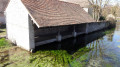
This circular walk allows you to discover or revisit this magnificent resurgence with its bluish hue. This spring flows into the Ignon at the site, which has been developed into a small park with picnic tables, a children’s playground and a wash house.
Villecomte is also steeped in history, notably with the Surcouf group’s maquis. A commemorative plaque on the town hall, next to the resurgence, marks these historical events.
The Chaugey Well in Chaignay
8.94 mi
+558 ft
-581 ft
4h 35
Moderate
Departure from Chaignay (Côte-d'Or)
A circular route around the village of Chaignay, taking in the magnificent ‘Puits de Chaugey’ washhouse (19th century). Also on this route is the Médepain Fountain with its copse, which serves as a bird sanctuary (Bird Protection League). The paths through the woods and the Laverottes forest are also very pleasant.
Circular walk between Tille, the Romanesque church and the Templars’ site, starting from Lux
9.24 mi
+262 ft
-243 ft
4h 30
Easy
Departure from Lux (Côte-d'Or)
Starting from Lux-sur-la-Tille, a nearly entirely flat circular route along dirt tracks to explore the Tille valley, the River Ignon and the leats of Tilchâtel. The walk takes you past the Ferme de Fontenotte, a former Templar commandery, and the beautiful Church of Saint-Florent in Tilchâtel, a Romanesque church adorned with fine capitals and bearing an inscription on its portal.
The banks of the Tille and the Perte de la Venelle in Lux
 5.35 mi
+62 ft
-62 ft
2h 30
Easy
Departure from Lux (Côte-d'Or)
5.35 mi
+62 ft
-62 ft
2h 30
Easy
Departure from Lux (Côte-d'Or)
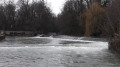
This circular walk will take you around the charming village of Lux, its dam, the banks of the Tille, its fountains, its church, its park along the Tille, and the peaceful spot known as the Perte de la Venelle.
Why not combine a walk with a picnic by the water (the Tille) in Lux, perhaps in the landscaped park?
The Creux Bleu walk in Villecomte
 5.69 mi
+699 ft
-699 ft
3h 15
Easy
Departure from Villecomte (Côte-d'Or)
5.69 mi
+699 ft
-699 ft
3h 15
Easy
Departure from Villecomte (Côte-d'Or)
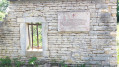
Le Creux Bleu is the resurgence (kastic massif) of the Francheville stream, which disappears a few kilometres upstream and is located 20 metres from the Ignon river in the centre of the village.
The Valley at Selongey
 Local authority
 7.32 mi
+696 ft
-715 ft
4h 00
Moderate
Departure from Selongey (Côte-d'Or)
7.32 mi
+696 ft
-715 ft
4h 00
Moderate
Departure from Selongey (Côte-d'Or)
Gradually leave Selongey behind as you climb higher to discover the Venelle valley from a different perspective.
This circular route links Selongey to Foncegrive, alternating between country lanes, woodland paths and village crossings. After an initial section through the woods, the route reaches the heights of Foncegrive and its viewpoint. The walk then passes through the village before gaining altitude again via the paths and woods of Gency.
The return journey to Selongey offers one final change of scenery. The natural landscapes gradually give way to the urban and industrial heritage of a town closely linked to the history of SEB and the famous Cocotte-Minute.
The Tertre Trail in Selongey
 6.98 mi
+591 ft
-577 ft
3h 45
Moderate
Departure from Selongey (Côte-d'Or)
6.98 mi
+591 ft
-577 ft
3h 45
Moderate
Departure from Selongey (Côte-d'Or)
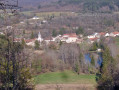
The Selongey area, home to the SEB pressure cooker, invites you to explore its Tertre hiking trail. Its name comes from the woodland you will pass through during this hike, which reaches a highest point of 415 m.
You will pass by the statue of the Virgin Mary, along the Tille and Venelle wind farm, before descending into the village. You will continue the walk along Rue du Mont and pass by the Church of Saint-Rémy de Foncegrive on your return to Selongey.
Short version of the Tertre hike from Selongey
 Association / Club / Walk leader
 4.93 mi
+449 ft
-436 ft
2h 40
Easy
Departure from Selongey (Côte-d'Or)
4.93 mi
+449 ft
-436 ft
2h 40
Easy
Departure from Selongey (Côte-d'Or)
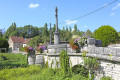
The Selongey area, home to the SEB pressure cooker, invites you to explore its Tertre hiking trail. Its name comes from the woodland you will pass through during this hike, which reaches a highest point of 415 m.You’ll pass by the statue of the Virgin Mary, along the Tille and Venelle wind farm, before descending a beautiful path to join the track that will take you back to Selongey. You’ll finish this hike by passing near the pressure cooker factory.
The valley on either side of the Venelle between Selongey and Foncegrive
 7.36 mi
+755 ft
-738 ft
4h 00
Moderate
Departure from Selongey (Côte-d'Or)
7.36 mi
+755 ft
-738 ft
4h 00
Moderate
Departure from Selongey (Côte-d'Or)
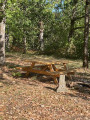
This signposted route is one of four trails starting from the Courvelles Sports Complex in Selongey. It will take you from the home of the pressure cooker to Foncegrive, a small village nestled at the bottom of its valley. You’ll return to Selongey via the beautiful Gency Forest. This route is not particularly difficult. Only a short, steep 100-metre stretch will set your heart racing a little faster.
The Gency to Selongey Trail
 4.96 mi
+377 ft
-394 ft
2h 35
Easy
Departure from Selongey (Côte-d'Or)
4.96 mi
+377 ft
-394 ft
2h 35
Easy
Departure from Selongey (Côte-d'Or)
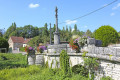
The area around Selongey, the birthplace of the Seb pressure cooker, invites you to explore its Gency walking trail. Its name is taken from one of the three hills overlooking the village. This easy, signposted trail will take you through the forest that covers much of this hill.You’ll cross the Venelle before reaching the hill. You’ll finish this walk by passing near the pressure cooker factory.
A tour of Selongey’s chapels
 5.39 mi
+404 ft
-384 ft
2h 50
Easy
Departure from Selongey (Côte-d'Or)
5.39 mi
+404 ft
-384 ft
2h 50
Easy
Departure from Selongey (Côte-d'Or)
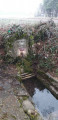
Selongey takes its name from a Roman estate once situated at the ‘Champ de Mars’. Centuries of history have left it with some remarkable monuments: a 13th-century church housing a carillon of 48 bells, listed as a historic monument, and a 19th-century organ, the Chapel of Saint Gertrude (1530) and the Chapel of Saint Anne (1637). There are also a few old houses dating from the 15th and 16th centuries.
Circular route around Flacey
 5.81 mi
+236 ft
-230 ft
2h 55
Moderate
Departure from Flacey (Côte-d'Or)
5.81 mi
+236 ft
-230 ft
2h 55
Moderate
Departure from Flacey (Côte-d'Or)
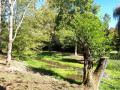
A pretty little village, with a stream and a mix of forest paths and open stretches. You can cover fewer kilometres by, for example, avoiding the loop around the grassy area.
This route is described for Nordic walking but is also suitable for hiking.
In the woods of Savigny-le-Sec
 6.35 mi
+554 ft
-522 ft
3h 25
Moderate
Departure from Savigny-le-Sec (Côte-d'Or)
6.35 mi
+554 ft
-522 ft
3h 25
Moderate
Departure from Savigny-le-Sec (Côte-d'Or)
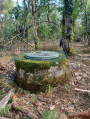
A pleasant walk through the woods of Savigny-le-Sec in search of the Puits de l’Ermitage.
The Puits de l’Ermitage is located at GPS coordinates 47.455 N 5.0064 E
Les Grandes Charrières via the valleys at Savigny-le-Sec
6.12 mi
+509 ft
-495 ft
3h 15
Moderate
Departure from Savigny-le-Sec (Côte-d'Or)
A walk through the woods, known as the Grandes Charrières, taking in several valleys, including notably the Combe Froidevau and the Combe Pensa.
Circular walk starting from Viévigne via Bèze
12.34 mi
+433 ft
-453 ft
6h 05
Difficult
Departure from Viévigne (Côte-d'Or)
A circular walk starting from Viévigne that leads to Bèze through fields and woods. Enjoyable scenery throughout the walk and a close-up view of the beautiful Dame Alix ponds.
Path from En Nachot to Avot
 5.88 mi
+692 ft
-709 ft
3h 20
Easy
Departure from Avot (Côte-d'Or)
5.88 mi
+692 ft
-709 ft
3h 20
Easy
Departure from Avot (Côte-d'Or)
Starting from the central square of the village of Avot, where the statue of Diana the Huntress (1837) stands, the En Nachot footpath takes you through part of the village. Here you can admire examples of architectural heritage (a house and its leat on the River Tille) and industrial heritage (the chimney of the old sawmill) before winding your way along the northern slope of the Nachot woodland. This forest, situated on the hill overlooking the village, offers the chance to discover some remains of the old game reserve and to find a few mushrooms in season.
The Maquis Trail in Avot
 8.14 mi
+1,093 ft
-1,079 ft
4h 40
Moderate
Departure from Avot (Côte-d'Or)
8.14 mi
+1,093 ft
-1,079 ft
4h 40
Moderate
Departure from Avot (Côte-d'Or)
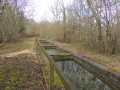
Starting from Avot, this walk takes you in the footsteps of the Maquis Lucius and the local Resistance during the Second World War. Taking in forest tracks, a section of the GR®7, rural heritage and rolling countryside, the route passes several sites linked to the history of the Maquis: a former command post, an equipment depot and a parachute drop zone known as ‘Sacristie’. The route also passes through Avelanges before returning to Avot, offering a beautiful view of the village at the end of the walk.
Circular route between Avot and Salives
 14.06 mi
+1,404 ft
-1,398 ft
7h 40
Difficult
Departure from Avot (Côte-d'Or)
14.06 mi
+1,404 ft
-1,398 ft
7h 40
Difficult
Departure from Avot (Côte-d'Or)
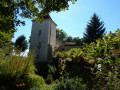
A lovely walk around one of the four sources of the River Tille, taking in significant medieval remains in the villages of Le Meix, Salives and Barjon.
Avot circular route to Courlon
11.27 mi
+1,352 ft
-1,207 ft
6h 20
Moderate
Departure from Avot (Côte-d'Or)
Hike starting from towns north-west of Is-sur-Tille. You will hike through forests and plains, passing through two towns with a rich heritage: Courlon Castle, an old mill, a foundry and beautiful buildings.