Refine your search for walks in Pouldouran
Pouldouran walks


 A journey back in time with the Trégor routoirs
 Visorando Member
 7.08 mi
 +315 ft
 -292 ft
 3h 30
3h 30
 Moderate
 Departure from Pouldouran (Côtes-d'Armor)
After walking along the Bizien Mill Stream, you will come across the first routoirs. Then, after crossing the Rolland Mill, there is a whole route to explore the main routoirs of the Trégorrois region.
Walk through the heart of Trégor between Pouldouran and Troguéry
 4.91 mi
+171 ft
-154 ft
2h 25
4.91 mi
+171 ft
-154 ft
2h 25
 Easy
Departure from Pouldouran (Côtes-d'Armor)
Easy
Departure from Pouldouran (Côtes-d'Armor)
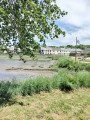
An easy walk offering typical landscapes between the river and the countryside, as well as numerous examples of Trégor’s heritage, including the famous flax-drying sheds, the cultivation of which brought prosperity to this corner of Trégor.
Hent Glas route around Hengoat
 6.07 mi
+243 ft
-236 ft
3h 00
Moderate
Departure from Hengoat (Côtes-d'Armor)
6.07 mi
+243 ft
-236 ft
3h 00
Moderate
Departure from Hengoat (Côtes-d'Armor)
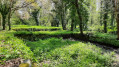
A walk through the Hengoat countryside: a peaceful, quiet route with no particular difficulties. You can take the time to listen, hear and admire the birds!The route is well signposted; the blue markings were put in place by volunteers from the Glad war dro Hengoad association (Hengoat heritage). A map of the route is available outside the town hall at the start of the walk.
The sunken paths north of Hengoat
7.33 mi
+262 ft
-266 ft
3h 35
Moderate
Departure from Hengoat (Côtes-d'Armor)
Hengoat, a small commune in the Côtes-d’Armor whose name can be translated into French as “The Old Wood” (hen = old and goat = wood), was voted “Commune of the World” in 2012.
This route, which unfortunately runs on tarmac for too much of the way, allows you to explore the surroundings of this Breton village via some very beautiful sunken paths.
Tréguier and its surroundings
 7.32 mi
+525 ft
-545 ft
3h 50
Moderate
Departure from Minihy-Tréguier (Côtes-d'Armor)
7.32 mi
+525 ft
-545 ft
3h 50
Moderate
Departure from Minihy-Tréguier (Côtes-d'Armor)
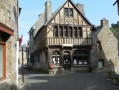
During this walk, you will discover Tréguier with its Saint-Yves cathedral, narrow cobbled streets and stone houses, including that of Ernest Renan, a famous writer of the late 19th century. You will also enjoy the banks of the Guindy, a small river that flows into the Jaudy. As both rivers are subject to tidal influences, it is advisable to set off an hour before high tide to make the most of the scenery.
The banks of the Guindy, the Kélomad Chapel and an old railway line
 7.06 mi
+338 ft
-322 ft
3h 35
Moderate
Departure from Tréguier (Côtes-d'Armor)
7.06 mi
+338 ft
-322 ft
3h 35
Moderate
Departure from Tréguier (Côtes-d'Armor)
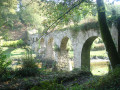
From Tréguier, the town of Ernest Renan and capital of Trégor with its Saint-Yves Cathedral, come and stroll along the Guindy. You will then discover the small Kélomad Chapel, rebuilt in the early 19th century, and walk along the old Nord-Trégor railway line.
Banks of the Trieux and Pleudaniel countryside
 6.96 mi
+387 ft
-384 ft
3h 30
Moderate
Departure from Pleudaniel (Côtes-d'Armor)
6.96 mi
+387 ft
-384 ft
3h 30
Moderate
Departure from Pleudaniel (Côtes-d'Armor)
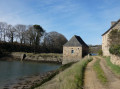
A pleasant route through the Pleudaniel countryside and along the Trieux, either overlooking it or running alongside it.Several beautiful wayside crosses mark this route, as well as two chapels.Discover a tide mill and oyster farming.
La Roche Jagu Park and its surroundings
4.60 mi
+535 ft
-535 ft
2h 30
Easy
Departure from Ploëzal (Côtes-d'Armor)
A circular route starting from the car park at Château de la Roche Jagu, allowing you to explore the château grounds (open all year round), the surrounding countryside and the banks of the Trieux, whilst enjoying beautiful views of the river. The duration and distance are approximate; it all depends on how long you fancy wandering around the grounds.
From Traounez to Frynaudour in the Bois de Penhoat-Lancerf
 6.21 mi
+518 ft
-525 ft
3h 20
Moderate
Departure from Plourivo (Côtes-d'Armor)
6.21 mi
+518 ft
-525 ft
3h 20
Moderate
Departure from Plourivo (Côtes-d'Armor)
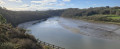
A relatively easy hike, but with some elevation changes. Half of the route runs along the Trieux River, with higher sections offering views of Château de la Roche Jagu and even the Lézardrieux bridge in the distance.
In the woods of Penhouat-Lancerf
 5.49 mi
+482 ft
-489 ft
2h 55
Easy
Departure from Plourivo (Côtes-d'Armor)
5.49 mi
+482 ft
-489 ft
2h 55
Easy
Departure from Plourivo (Côtes-d'Armor)
A magnificent walk through a pine forest. After following the Trieux river and passing through a tunnel through the hill, we walk alongside the Trieux tourist railway line to admire the chimneys of the Château de la Roche Jagu in the distance and reach the Saint-Jean Chapel. Don't be alarmed by the sound of gunshots: there is a clay pigeon shooting range nearby.
From Camarel to the Château de la Roche Jagu
 6.21 mi
+541 ft
-351 ft
3h 20
Moderate
Departure from Pleudaniel (Côtes-d'Armor)
6.21 mi
+541 ft
-351 ft
3h 20
Moderate
Departure from Pleudaniel (Côtes-d'Armor)
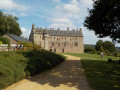
A unique walk set mainly within the commune of Pleudaniel, offering scenic views along the left bank of the Trieux and culminating in the grounds of the Château de la Roche Jagu.
It requires two cars: one parked in the château car park and the other at the starting point in a small car park at the far end of Anse de Camarel.
This walk is best undertaken outside the rainy months due to muddy sections.
The three chapels of Plourivo (red route)
 Local authority
 7.19 mi
+446 ft
-440 ft
3h 45
Moderate
Departure from Plourivo (Côtes-d'Armor)
7.19 mi
+446 ft
-440 ft
3h 45
Moderate
Departure from Plourivo (Côtes-d'Armor)
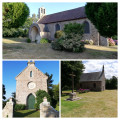
The three chapels of Plourivo are finally united in a single hike! Lancerf overlooks the Trieux, Saint-Ambroise has its miraculous fountain, and Saint-Jean is nestled in the hamlet of Penhoat. Three chapels, three different environments. A modest heritage, but one worth discovering. Hike along the edges of fields, farm tracks and pine woods. Finish your tour by sitting down at a picnic table facing the Trieux, just across the railway line. The setting is peaceful and relaxing.
La Roche-Derrien and the Hortence Garden
7.58 mi
+469 ft
-472 ft
3h 55
Moderate
Departure from Langoat (Côtes-d'Armor)
This walk begins and ends on the banks of the ponds at La Roche-Derrien (Crec’h an Goué). The route first takes us to St Anne’s Chapel, which is part of Kermézen Castle. We then cross the Hortence Garden (10ha), where a Dutch couple grow hydrangeas to export to the land of tulips. We finish by admiring the view of Le Jaudy from a promontory, the Oppidum de La Roche, with the Calvaire Chapel.
From Lancerf to the Trieux
8.16 mi
+636 ft
-636 ft
4h 20
Moderate
Departure from Plourivo (Côtes-d'Armor)
The magnificent Penhoat-Lancerf pine forest and the majestic banks of the Trieux are the two main attractions of this hike. In addition to the Lancerf Chapel, this hike allows you to discover the Maison de l'Estuaire. This is infamous because, in 1924, the Traou-Nez site belonged to Pierre Quemeneur and Guillaume Seznec had agreed to buy it: this is where one of the very first episodes of the Seznec Affair took place...
Along the Trieux via the Penhoat woods
 11.08 mi
+1,063 ft
-1,070 ft
6h 00
Moderate
Departure from Plourivo (Côtes-d'Armor)
11.08 mi
+1,063 ft
-1,070 ft
6h 00
Moderate
Departure from Plourivo (Côtes-d'Armor)
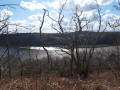
Wander along the eastern bank of the Trieux through heathland, pine forests and magnificent viewpoints. You’ll be immersed in its unique historical and natural heritage: Château de la Roche-Jagu, flax drying sheds, the steam railway line, the Maison de l’Estuaire, and protected flora and fauna.
The cross-country trails of Plourivo (Orange Trail)
 7.18 mi
+564 ft
-564 ft
3h 50
Moderate
Departure from Plourivo (Côtes-d'Armor)
7.18 mi
+564 ft
-564 ft
3h 50
Moderate
Departure from Plourivo (Côtes-d'Armor)
This walk takes you through deciduous and coniferous woods where you can take the time to enjoy the cool air. You will also walk along farm tracks and past crops. After a few sections of road, which are nevertheless peaceful, you will return to the undergrowth and the coolness of the stream. This first part is fairly easy going. Then you will walk along the Leff river, with a few more technical sections, and the final climb will bring you to an unexpected finish. You will discover another part of the commune, not far from the Penhoat-Lancerf massif.
Around the Roche Jaune
 7.15 mi
+387 ft
-387 ft
3h 40
Moderate
Departure from Plouguiel (Côtes-d'Armor)
7.15 mi
+387 ft
-387 ft
3h 40
Moderate
Departure from Plouguiel (Côtes-d'Armor)
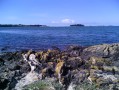
What could be more unusual than a hike in the bed of an estuary? What could be more romantic than a walk up the bed of a rushing stream? What could be more relaxing than a stroll through the green countryside of Trégor? What could be more spectacular than a panoramic view of an estuary?
You will discover all this during this walk, which we recommend you do at high tide with low or medium coefficients (below 80).
From Lédano to Lancerf, following the Trieux
 4.97 mi
+144 ft
-148 ft
2h 25
Easy
Departure from Paimpol (Côtes-d'Armor)
4.97 mi
+144 ft
-148 ft
2h 25
Easy
Departure from Paimpol (Côtes-d'Armor)
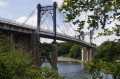
An easy walk along the water’s edge through a landscape typical of Goëlo. Half the route follows the banks of the Ria du Trieux, which is flooded by the sea with the tides.In the second part, you’ll walk through fields of vegetables (artichokes, cauliflowers, potatoes...) – crops that are emblematic of this rich agricultural region.Please note that parts of this route may be impassable during high tides.
The Trieux and its tributary, the Leff: between sea and countryside
 5.50 mi
+459 ft
-466 ft
2h 55
Moderate
Departure from Quemper-Guézennec (Côtes-d'Armor)
5.50 mi
+459 ft
-466 ft
2h 55
Moderate
Departure from Quemper-Guézennec (Côtes-d'Armor)
This hike has three parts, each offering a different landscape. First, there is a long walk along the Trieux. This leads to the remarkable site of Frynaudour (confluence, blue viaduct, wreck).
The trail then follows the banks of the Leff with a few slopes. Finally, a walk along sunken paths and small roads will take you to the Trieux.
From Kerbors, the banks of the Jaudy and the early vegetable fields.
7.60 mi
+233 ft
-233 ft
3h 40
Moderate
Departure from Kerbors (Côtes-d'Armor)
The Jaudy, along with the Guindy, are the two coastal rivers that form the Lézardrieux peninsula. This ends in the English Channel via the famous Sillon de Talbert (a strip of sand 3 km long and 100 m wide). Come and discover, on the way out, the Ria du Jaudy and its rugged coastline, and on the way back, follow the vegetable fields (mainly artichokes and cauliflowers).
Trieux peninsula between Kerbors and Brestan
 7.97 mi
+308 ft
-308 ft
3h 55
Moderate
Departure from Kerbors (Côtes-d'Armor)
7.97 mi
+308 ft
-308 ft
3h 55
Moderate
Departure from Kerbors (Côtes-d'Armor)
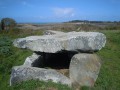
A sea and land circuit on the wild peninsula, to discover the mouth of the Jaudy and the oldest granite rocks in France, at Port-Béni (1.7 billion years old).
Always check the tide times.
Lézardrieux and the Trieux
 7.09 mi
+584 ft
-571 ft
3h 45
Moderate
Departure from Lézardrieux (Côtes-d'Armor)
7.09 mi
+584 ft
-571 ft
3h 45
Moderate
Departure from Lézardrieux (Côtes-d'Armor)
Lézardrieux is situated on the left bank of the Trieux estuary, which, together with the Jaudy, forms the Pleubian peninsula. This extends into the English Channel via the Sillon de Talbert. Furthermore, with the town of Tréguier to the west, Pontrieux to the south and Paimpol to the east, Lézardrieux is the ideal base from which to explore this part of the Trégor region, close to the Île de Bréhat.
This route allows you to discover the Trieux with its lighthouses as well as the Chapel of Kermaria.
Along the Trieux de Lézardrieux to Kermouster
8.90 mi
+564 ft
-561 ft
4h 35
Moderate
Departure from Lézardrieux (Côtes-d'Armor)
From the small tourist harbour at Lézardieux, come and explore the Trieux estuary, which is navigable as far as Pontrieux. Here you’ll find the lights that guide night-time navigation on the river, as well as an unobstructed view towards the Île de Bréhat. On the return journey inland, two small chapels line the route.
The Trieux Mills, starting from Pontrieux
 5.59 mi
+404 ft
-387 ft
2h 55
Easy
Departure from Pontrieux (Côtes-d'Armor)
5.59 mi
+404 ft
-387 ft
2h 55
Easy
Departure from Pontrieux (Côtes-d'Armor)
Pontrieux, a charming little town, serves as the starting point for this idyllic walk along the Trieux upstream.
There used to be twenty-five mills between Pontrieux and Guingamp. Many of them still remain. Let’s set off to explore this river.
Trieux Loop part 1 (Boucle du Trieux)
 5.20 mi
+436 ft
-446 ft
2h 45
Moderate
Departure from Paimpol (Côtes-d'Armor)
5.20 mi
+436 ft
-446 ft
2h 45
Moderate
Departure from Paimpol (Côtes-d'Armor)
Loop along part of the Trieux river towards the sea and back through the countryside.
The Jaudy estuary and the covered walkway of Men ar Rompet
 1.93 mi
+125 ft
-125 ft
1h 00
Easy
Departure from Kerbors (Côtes-d'Armor)
1.93 mi
+125 ft
-125 ft
1h 00
Easy
Departure from Kerbors (Côtes-d'Armor)
A very short hike that starts off the trail, following the right bank of the Jaudy estuary. It then quickly heads inland, offering some beautiful views of the sea. At the end of the trail, you can visit a very beautiful covered alley, which is well preserved.
N.B. Do not undertake this hike at high tide (see practical information).
The Pointe de Plougrescant
 8.20 mi
+308 ft
-315 ft
4h 00
Moderate
Departure from Plougrescant (Côtes-d'Armor)
8.20 mi
+308 ft
-315 ft
4h 00
Moderate
Departure from Plougrescant (Côtes-d'Armor)
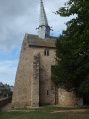
The Pointe de Plougrescant is recognised around the world due to Castel-Meur: the house between the rocks. The hike starts at Saint-Gonery Chapel, equally famous for its crooked lead bell tower. The hike continues via the Baie de l'Enfer where you can admire the Jaudy estuary, then on to Pointe du Château - the most northerly point of this route - to see Castel Meur (private property) and finally to discover the gulf before returning to the departure point along the west coast of the point.
The Buguélès foreshore
 6.77 mi
+210 ft
-203 ft
3h 20
Moderate
Departure from Plougrescant (Côtes-d'Armor)
6.77 mi
+210 ft
-203 ft
3h 20
Moderate
Departure from Plougrescant (Côtes-d'Armor)
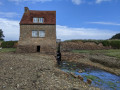
The Buguéles foreshore is a labyrinth covering more than 2,000 hectares, submerged at high tide but accessible at low tide. A maze of rocks, centred around six main islands – some of which are inhabited – criss-crossed by more or less defined paths.A real treat for exploring, for the views, and for taking photos.The circular walk returns via sunken paths beneath the trees.At high tide: do not venture onto the foreshore.
Between land and river at Quemper-Guézennec
 6.84 mi
+492 ft
-492 ft
3h 35
Moderate
Departure from Quemper-Guézennec (Côtes-d'Armor)
6.84 mi
+492 ft
-492 ft
3h 35
Moderate
Departure from Quemper-Guézennec (Côtes-d'Armor)
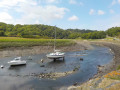
Starting from the heights of the village of Qemper-Guézennec, a long descent through the fields will take you to the Trieux.
Then, from the port of Goas Vilinic, following the towpath for almost two kilometres, you will reach the confluence of the Leff and the Trieux, spanned by a blue viaduct.
On the banks of the Leff and Trieux rivers
 8.84 mi
+525 ft
-525 ft
4h 30
Moderate
Departure from Quemper-Guézennec (Côtes-d'Armor)
8.84 mi
+525 ft
-525 ft
4h 30
Moderate
Departure from Quemper-Guézennec (Côtes-d'Armor)
A sometimes uneven walk through the undergrowth along two Breton rivers, offering a different view depending on the tide level.
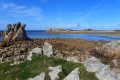
From east to west, Estuary, Islets and Craggy rocks at Plougrescant
 5.85 mi
+108 ft
-102 ft
2h 45
Easy
Departure from Plougrescant (Côtes-d'Armor)
5.85 mi
+108 ft
-102 ft
2h 45
Easy
Departure from Plougrescant (Côtes-d'Armor)
This route takes you on a tour of the different faces of the Plougrescant coastline, with a variety of landscapes. The islands of Loaven and Er, which punctuate the Jaudy estuary, are the scene of major oyster-farming activity at low tide. At high tide, the islands are popular for water sports, especially kayaking.Then there's the rugged coastline of the northern tip, where raw nature and moorland take on their full character.
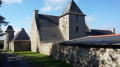
Port Béni circular from Pleubian
 5.40 mi
+161 ft
-190 ft
2h 35
Easy
Departure from Pleubian (Côtes-d'Armor)
5.40 mi
+161 ft
-190 ft
2h 35
Easy
Departure from Pleubian (Côtes-d'Armor)
The village of Pleubian is known for its 15th-century Calvary pulpit, considered the first attempt at a narrative Calvary preceding the great Breton Calvaries that were built throughout the 16th century.This route also takes you through the countryside, where market gardening is the main activity, before following the coast along the Grève de Brestan to end at Port Béni.On the return journey, you can discover the Manoir de Kermoda and the Chapel of Notre-Dame de Brestan.
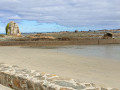
Pointe du Château in Plougrescant
 6.41 mi
+141 ft
-135 ft
3h 05
Moderate
Departure from Plougrescant (Côtes-d'Armor)
6.41 mi
+141 ft
-135 ft
3h 05
Moderate
Departure from Plougrescant (Côtes-d'Armor)
This hike offers stunning views of the rocks sculpted by the sea over the centuries.
You can imagine Napoleon, Mayan masks, dolphins... You'll shiver at the edge of the Castel Meur chasm.
Let yourself be carried away by these sublime landscapes.
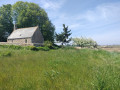
From the village of Lanmodez to the banks of the Trieux
 3.90 mi
+144 ft
-148 ft
1h 55
Easy
Departure from Lanmodez (Côtes-d'Armor)
3.90 mi
+144 ft
-148 ft
1h 55
Easy
Departure from Lanmodez (Côtes-d'Armor)
A walk that begins with a stroll through the typical Trégor countryside, continuing for 40% of the route along the banks of the Trieux ria, before returning to the village of Lanmodez. Much of the walk follows grassy paths between fields and along the shore.
The path is poorly signposted, so don’t hesitate to use your GPS.
Sea and land between Kermagen, Porz Ran and Chapelle Bouan
 7.62 mi
+233 ft
-207 ft
3h 40
Moderate
Departure from Pleubian (Côtes-d'Armor)
7.62 mi
+233 ft
-207 ft
3h 40
Moderate
Departure from Pleubian (Côtes-d'Armor)
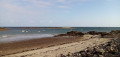
The first third of this hike takes place entirely along the coast, offering superb panoramic views. You then head inland, along pleasant paths or small roads with little traffic, to discover some beautiful heritage sites. You can extend this hike by exploring the Sillon de Talbert.
Pommelin Bay
 7.25 mi
+446 ft
-433 ft
3h 45
Moderate
Departure from Lézardrieux (Côtes-d'Armor)
7.25 mi
+446 ft
-433 ft
3h 45
Moderate
Departure from Lézardrieux (Côtes-d'Armor)
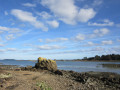
We are now on theGR®34, a long-distance hiking trail dear to the Bretons as it runs along the entire coastline of our region. On this hike, we follow it northwards and, when we leave it, cross Le Paradis and finally rejoin it to admire the Trieux estuary.
Port Blanc le Royau loop
 4.71 mi
+69 ft
-66 ft
2h 15
Easy
Departure from Penvénan (Côtes-d'Armor)
4.71 mi
+69 ft
-66 ft
2h 15
Easy
Departure from Penvénan (Côtes-d'Armor)
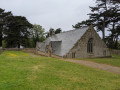
Between the communes of Penvénan and Trévou Tréguignec, the circuit takes you from Port Blanc to Plage du Royau, where you'll discover a beautiful coastline and local history.
Country route in Saint-Clet
 4.82 mi
+354 ft
-331 ft
2h 30
Moderate
Departure from Saint-Clet (Côtes-d'Armor)
4.82 mi
+354 ft
-331 ft
2h 30
Moderate
Departure from Saint-Clet (Côtes-d'Armor)
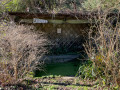
This is a magnificent route through the Breton countryside, with everything we love: short steep climbs, sunken paths, undergrowth and a sublime riverside.
From Poulloguer Pond to Coatascorn
 6.98 mi
+469 ft
-479 ft
3h 35
Moderate
Departure from Prat (Côtes-d'Armor)
6.98 mi
+469 ft
-479 ft
3h 35
Moderate
Departure from Prat (Côtes-d'Armor)
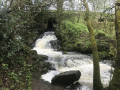
Although this walk uses a few tarmac roads, priority has been given here to forest paths and tracks open to farm machinery. In return, it offers magnificent scenery both around Poulloguer Pond and along the stream of the same name, with a very pleasant walk through the village of Coatascorn, a quintessential Trégor village with all its stone houses.