


Refine your search for walks in Luemschwiller
Luemschwiller walks


 Around Luemschwiller - Illfurth
 Visorando Member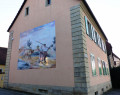
 6.19 mi
 +666 ft
 -656 ft
 3h 25
3h 25
 Easy
Easy
 Departure from Luemschwiller (Haut-Rhin)
Here, you can easily travel through the centuries, from the Britzgyberg oppidum to the German military cemetery in Illfurth. However, as you cross the vast Altenberg massif and the unspoilt village of Luemschwiller, you might think for a moment that you have managed to suspend time.
Haulenwald circuit (First World War)
 3.24 mi
+381 ft
-381 ft
1h 50
Easy
Departure from Illfurth (Haut-Rhin)
3.24 mi
+381 ft
-381 ft
1h 50
Easy
Departure from Illfurth (Haut-Rhin)
The fighting of the First World War raged in the Sundgau region from August 1914 onwards. The French blew up the Dannemarie viaduct and the front stabilised and extended from the Vosges to the Swiss border. The front line ran a few kilometres from Illfurth, near Heidwiller. During this tour, you will discover several bunkers that served a variety of purposes, including ammunition depots, observation posts and artillery emplacements, as well as several casemates.
The Nieder Weiher pond in Obermorschwiller
 4.36 mi
+171 ft
-157 ft
2h 10
Easy
Departure from Obermorschwiller (Haut-Rhin)
4.36 mi
+171 ft
-157 ft
2h 10
Easy
Departure from Obermorschwiller (Haut-Rhin)
On this route through the fields, you will take a small section of the Circuit de la Mémoire (Memorial Trail) with signs recounting the military exploits of the First World War. You will also have the opportunity to walk around the lake, which is impressive in size and pleasant in all seasons, with numerous benches dotted along the route.
The tour of the large cannon in Zillisheim
 6.88 mi
+794 ft
-771 ft
3h 50
6.88 mi
+794 ft
-771 ft
3h 50
 Average
Departure from Zillisheim (Haut-Rhin)
Average
Departure from Zillisheim (Haut-Rhin)
A short hike in the foothills of the Jura to discover the renovated Grand Canyon in Zillisheim, passing by the German cemetery from World War I and the Saint-Brice Chapel in Illfurth.
The Talrain Forest via Emlingen and Wittersdorf
 4.55 mi
+295 ft
-312 ft
2h 20
Easy
Departure from Emlingen (Haut-Rhin)
4.55 mi
+295 ft
-312 ft
2h 20
Easy
Departure from Emlingen (Haut-Rhin)
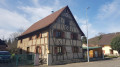
The scene of the terrible battle of 19 August 1914, the Talrain Forest, situated "Auf dem Berg" (literally: On the Hill), which overlooks the villages of Emlingen and Wittersdorf, offers views of Altkirch and the Black Forest and will teach you more about the key figures in this battle via the Path of Remembrance, part of which this route follows.
Heidwiller Castle
 2.63 mi
+226 ft
-226 ft
1h 25
Easy
Departure from Heidwiller (Haut-Rhin)
2.63 mi
+226 ft
-226 ft
1h 25
Easy
Departure from Heidwiller (Haut-Rhin)
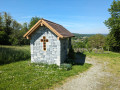
This walk will introduce you to the small village of Heidwiller, which offers everything a walker could wish for: in its centre stands a castle dating back almost a thousand years, to the north lies a peaceful canal, and to the south, a hill offering an exceptional view of the region. Add to this a short nature trail and a variety of forest paths, and you have the perfect combination for a successful walk!
Sundgau circuit: Wittersdorf-Emlingen-Walheim
 4.19 mi
+495 ft
-502 ft
2h 20
Average
Departure from Wittersdorf (Haut-Rhin)
4.19 mi
+495 ft
-502 ft
2h 20
Average
Departure from Wittersdorf (Haut-Rhin)
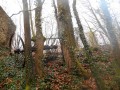
A wooded hill separates the Ill and Thalbach valleys. As you walk along it, you will discover an old vineyard, a quarry marked by tragedy, a botanical trail and the story of an unfortunate general. When you reach the Emlingen lime kilns, the 19th century suddenly springs to life, frozen in stone and iron.
The Aspach Planet Trail
2.02 mi
+157 ft
-148 ft
1h 05
Easy
Departure from Aspach (Haut-Rhin) (Haut-Rhin)
The Chemin des Planètes, created by the Astroaspach club in partnership with the municipality of Aspach, is a 3 km route that offers an original way to discover our solar system through educational panels depicting the distance between the planets to scale: 1 metre walked represents 2,100,000 km in space. From the Sun to Neptune, what a journey!Along the way, you can also enjoy a stroll through the Litten Forest, its chapel (1862) and the village’s rural surroundings, walk through the narrow streets of Aspach and, at the end of the trail, cross the Jardin des Libellules (a community garden dedicated to water conservation and biodiversity).
The snowdrops of Saint-Bernard
 7.46 mi
+157 ft
-157 ft
3h 35
Average
Departure from Heidwiller (Haut-Rhin)
7.46 mi
+157 ft
-157 ft
3h 35
Average
Departure from Heidwiller (Haut-Rhin)
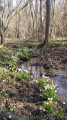
It is in late February and early March that you should go to meet spring in the forest of Saint-Bernard. This is where the snowdrops appear, signalling the end of winter.
From the Flaxlanden Cave to the Zillisheim Cannon
 4.79 mi
+404 ft
-384 ft
2h 35
Easy
Departure from Zillisheim (Haut-Rhin)
4.79 mi
+404 ft
-384 ft
2h 35
Easy
Departure from Zillisheim (Haut-Rhin)
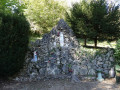
Passing through the pretty village of Flaxlanden and its Lourdes Grotto, discover a First World War military site in the hills above Zillisheim. Learn a little about nature with the discovery trails along the route and enjoy the many views that await you along the way!
Sundgau route: around the Illberg
 5.01 mi
+440 ft
-449 ft
2h 40
Easy
Departure from Altkirch (Haut-Rhin)
5.01 mi
+440 ft
-449 ft
2h 40
Easy
Departure from Altkirch (Haut-Rhin)
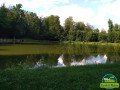
An easy walk that allows you to take in the forest air.
Not far from Altkirch town centre, there are some beautiful views and the Erlen pond, where you can sit and enjoy the surroundings.
Between Altkirch and Wittersdorf
 5.72 mi
+505 ft
-476 ft
3h 05
Easy
Departure from Altkirch (Haut-Rhin)
5.72 mi
+505 ft
-476 ft
3h 05
Easy
Departure from Altkirch (Haut-Rhin)
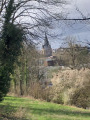
A lovely walk with very varied scenery, including forests, countryside, and views of the Jura, the Black Forest, the Vosges and the pretty village of Wittersdorf below, as well as Altkirch.
Around Rantzwiller
 5.35 mi
+459 ft
-463 ft
2h 50
Easy
Departure from Rantzwiller (Haut-Rhin)
5.35 mi
+459 ft
-463 ft
2h 50
Easy
Departure from Rantzwiller (Haut-Rhin)
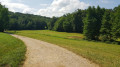
Rantzwiller, a small village in the Sundgau region, is a lovely place to live. The area around the village, particularly the hamlet of Heilhof, is well worth exploring and offers some lovely views.
Bruebach Circular Route
4.04 mi
+299 ft
-299 ft
2h 05
Easy
Departure from Bruebach (Haut-Rhin)
A short, leisurely walk, half of which is in the shade.
In the woods at Bruebach
 5.91 mi
+295 ft
-315 ft
3h 00
Easy
Departure from Bruebach (Haut-Rhin)
5.91 mi
+295 ft
-315 ft
3h 00
Easy
Departure from Bruebach (Haut-Rhin)
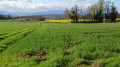
The route runs almost entirely through the forest, in the shade of the trees or exposed to the icy wind in winter. You may spot a few roe deer startled by your presence if you keep quiet. The route is straightforward but features numerous fallen trees that you’ll need to go round.
Sundgau route: Hundsbach-Franken
 3.75 mi
+184 ft
-194 ft
1h 55
Average
Departure from Haut-Rhin
3.75 mi
+184 ft
-194 ft
1h 55
Average
Departure from Haut-Rhin
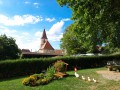
Below the Hochistross, the high road from Altkirch to Basel, villages dot the Thalbach valley. The old grain mill in Hundsbach has recently been restored, much to the delight of artists and history lovers.
The Way of the Cross on the hillsides of Bruebach
 3.97 mi
+305 ft
-302 ft
2h 05
Easy
Departure from Bruebach (Haut-Rhin)
3.97 mi
+305 ft
-302 ft
2h 05
Easy
Departure from Bruebach (Haut-Rhin)
A peaceful route offering beautiful views of the villages south of Bruebach, with the city of Basel on the horizon and the entire Alpine range as a backdrop. You’ll frequently be able to admire the German-speaking Swiss Alps straight ahead, with the Eiger and the Jungfrau and their magnificent pyramidal peaks, and at the other end, on the right-hand side, when the weather permits, Mont Blanc.
Sundgau route: the Hirsingue-Wittersdorf circular route via the Roman road
 12.56 mi
+843 ft
-843 ft
6h 30
12.56 mi
+843 ft
-843 ft
6h 30
 Difficult
Departure from Hirsingue (Haut-Rhin)
Difficult
Departure from Hirsingue (Haut-Rhin)
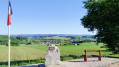
A long hike with superb views of the Vosges, the Black Forest and the Jura.
There are numerous points of interest with information boards, benches and water points along the route.
The villages of Didenheim and Hochstatt via the Saint-Gall Chapel
 5.14 mi
+279 ft
-279 ft
2h 35
Easy
Departure from Brunstatt (Haut-Rhin)
5.14 mi
+279 ft
-279 ft
2h 35
Easy
Departure from Brunstatt (Haut-Rhin)
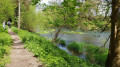
Perched on a hill overlooking the two villages of Didenheim and Hochstatt, the Saint-Gall Chapel has been destroyed and rebuilt many times. Set off to explore it as you stroll through the pretty neighbourhoods of Didenheim and Hochstatt, not forgetting the soothing presence of the River Ill, which you’ll cross on numerous occasions!
Through the woods of Bruebach
 5.52 mi
+427 ft
-433 ft
2h 55
Easy
Departure from Brunstatt (Haut-Rhin)
5.52 mi
+427 ft
-433 ft
2h 55
Easy
Departure from Brunstatt (Haut-Rhin)
This route takes you on a walk through Bruebach and its surroundings, mainly through the surrounding woods.
Circular route around the Eichelberg via the Igetalweg
 2.29 mi
+187 ft
-187 ft
1h 15
Easy
Departure from Brunstatt (Haut-Rhin)
2.29 mi
+187 ft
-187 ft
1h 15
Easy
Departure from Brunstatt (Haut-Rhin)
The circular route offers a partially shaded section covering around 60 to 70 per cent of the trail, with gentle slopes. It follows the route of the historic Igetalweg (partly paved), which farmers once used to reach their fields with ox-drawn carts thanks to its gentle, even gradient.
Do not use this circular route in strong winds.
The Riedweiher Pond via Galfingue
 5.69 mi
+177 ft
-177 ft
2h 45
Easy
Departure from Galfingue (Haut-Rhin)
5.69 mi
+177 ft
-177 ft
2h 45
Easy
Departure from Galfingue (Haut-Rhin)
The Riedweiher Pond, located near Galfingue, lies right in the middle of a small, very picturesque communal woodland. The walk takes you through the village and along the paths of this grove. As most of the paths are not signposted by the Club Vosgien, I recommend using the map in addition to the description.
Route around Brunstatt
 4.51 mi
+394 ft
-384 ft
2h 25
Easy
Departure from Brunstatt (Haut-Rhin)
4.51 mi
+394 ft
-384 ft
2h 25
Easy
Departure from Brunstatt (Haut-Rhin)
A walk to discover Brunstatt and its hills, mostly through fields, with beautiful views of the Vosges mountains.
Between Le Homberg and the Bruchberg, in the heart of the Bas-Sundgau hills
 8.71 mi
+505 ft
-502 ft
4h 25
Average
Departure from Kœtzingue (Haut-Rhin)
8.71 mi
+505 ft
-502 ft
4h 25
Average
Departure from Kœtzingue (Haut-Rhin)
A varied family walk that climbs towards the Forêt des Deux Chênes, dotted with wooden sculptures and educational panels. The Schlierbach discovery trails, the return route via the Homberg and the Kœtzingue ecological pond, as well as the beautiful views of the surrounding mountains, will make you forget a few short but sometimes steep climbs.
Sundgau Route: the Carspach loop
 7.68 mi
+361 ft
-354 ft
3h 50
Average
Departure from Carspach (Haut-Rhin)
7.68 mi
+361 ft
-354 ft
3h 50
Average
Departure from Carspach (Haut-Rhin)
Fancy a stroll through the woods for a few hours? This route is perfect for you.
Although it’s not difficult, it still lets you discover some of the “secrets” of this part of the Sundgau and make the most of a lovely time spent outdoors.
Roman Road and the Ill Valley starting from Willer
8.06 mi
+531 ft
-558 ft
4h 10
Average
Departure from Haut-Rhin
A lovely walk in the Sundgau starting from Willer.
Sundgau circuit in Hirtzbach
 5.34 mi
+413 ft
-404 ft
2h 50
Average
Departure from Hirtzbach (Haut-Rhin)
5.34 mi
+413 ft
-404 ft
2h 50
Average
Departure from Hirtzbach (Haut-Rhin)
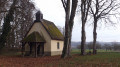
Hirtzbach is well worth a visit. The castle, English park and opulent residences of Unterdorf are neatly lined up on either side of the stream, whose banks are beautifully flowered in summer. Along the way, a rural and wooded detour leads to the site of the vanished village of Sankt-Glückern and the Landfürstenweyer, the Princes' Pond, with its still waters.
Notre-Dame de l'Unterholz by Bernwiller
 3.81 mi
+39 ft
-39 ft
1h 45
Easy
Departure from Bernwiller (Haut-Rhin)
3.81 mi
+39 ft
-39 ft
1h 45
Easy
Departure from Bernwiller (Haut-Rhin)
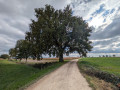
This route invites you to discover the village of Bernwiller and its surroundings, with a quick detour into the forest to sit for a moment in front of the small Notre-Dame de l'Unterholz Chapel and admire it.
Sundgau route: between woods and ponds
 9.89 mi
+600 ft
-597 ft
5h 05
Average
Departure from Hirtzbach (Haut-Rhin)
9.89 mi
+600 ft
-597 ft
5h 05
Average
Departure from Hirtzbach (Haut-Rhin)
A hike through the beautiful Sundgau forests dotted with ponds, with no major difficulties except for the walking time.
There are many places to stop for a snack along the route.
Sundgau route: the forgotten bunkers
 8.59 mi
+443 ft
-449 ft
4h 20
Easy
Departure from Hirtzbach (Haut-Rhin)
8.59 mi
+443 ft
-449 ft
4h 20
Easy
Departure from Hirtzbach (Haut-Rhin)
A hike starting from Hirtzbach that passes through Largitzen and Heimersdorf.
There are many remnants of theFirst World War along the route.
The surroundings of Heimsbrunn
 4.67 mi
+69 ft
-69 ft
2h 10
Easy
Departure from Heimsbrunn (Haut-Rhin)
4.67 mi
+69 ft
-69 ft
2h 10
Easy
Departure from Heimsbrunn (Haut-Rhin)
Heimsbrunn, a charming village to the west of Mulhouse, offers many lovely spots, including, in particular, the Notre-Dame-du-Chêne Chapel, as well as views of the Vosges, forest trails and pretty residential areas! Let us guide you!
From Haut-Rebberg to Tannenwald, starting from the Belvédère in Mulhouse
 6.35 mi
+495 ft
-502 ft
3h 20
Average
Departure from Mulhouse (Haut-Rhin)
6.35 mi
+495 ft
-502 ft
3h 20
Average
Departure from Mulhouse (Haut-Rhin)
Enjoy the omnipresent greenery along this route, the forest and views of four mountain ranges.
The Rebberg district of Mulhouse
 6.74 mi
+436 ft
-440 ft
3h 30
Average
Departure from Mulhouse (Haut-Rhin)
6.74 mi
+436 ft
-440 ft
3h 30
Average
Departure from Mulhouse (Haut-Rhin)
The Rebberg district of Mulhouse is undoubtedly one of the most beautiful neighbourhoods in Alsace. For the duration of your walk, forget that you’re right in the city centre as you wander through the various streets and alleyways of this impressive neighbourhood, which is striking both for its ever-present greenery and its many breathtaking mansions.
The hills of Schlierbach via the Croix and Deux Chênes trails.
 5.60 mi
+289 ft
-305 ft
2h 50
Easy
Departure from Haut-Rhin
5.60 mi
+289 ft
-305 ft
2h 50
Easy
Departure from Haut-Rhin
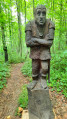
A family hike that follows the Sentier des Croix to the Chapelle des Malgré-nous, then climbs the hills to follow the Sentier des Deux Chênes, decorated with wooden sculptures and dotted with educational panels.
Notre-Dame du Chêne route in Heimsbrunn
 2.64 mi
+16 ft
-20 ft
1h 15
Easy
Departure from Heimsbrunn (Haut-Rhin)
2.64 mi
+16 ft
-20 ft
1h 15
Easy
Departure from Heimsbrunn (Haut-Rhin)
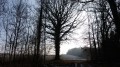
This forest route allows you to discover the Chapel of Notre-Dame du Chêne, the Steinbaechlein and hundred-year-old oak trees.
The banks of the Ill in Mulhouse
 4.51 mi
+23 ft
-23 ft
2h 05
Easy
Departure from Mulhouse (Haut-Rhin)
4.51 mi
+23 ft
-23 ft
2h 05
Easy
Departure from Mulhouse (Haut-Rhin)
This is an undemanding hike, ideal for a Sunday stroll with the family.
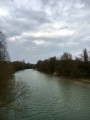
This circular runs along the banks of the Ill and allows you to discover the "Japanese Bridge" behind the Mulhouse swimming pool, as well as the "Bois des Philosophes" near the University.
Short circular loop in the Tannenwald
 2.16 mi
+144 ft
-141 ft
1h 05
Easy
Departure from Riedisheim (Haut-Rhin)
2.16 mi
+144 ft
-141 ft
1h 05
Easy
Departure from Riedisheim (Haut-Rhin)
A short walk in the woods near Mulhouse town centre. Very busy at weekends during the warmer months, it’s also a popular spot around 5 pm for dogs to run free and play.
Reservoir and view of the Alps from Zimmersheim
4.20 mi
+377 ft
-354 ft
2h 15
Easy
Departure from Zimmersheim (Haut-Rhin)
Walk from the centre of Zimmersheim up a steep climb towards the Schoofberg, where the reservoir is located. Pass through the Buchwald and Zuhrenberg woods to enjoy views of the Alps in good weather and a bit of cool air. Return via the south of Zimmersheim, across open terrain.
19th-century trail in Mulhouse
 Tourist office
 1.13 mi
+3 ft
-3 ft
0h 30
Easy
Departure from Mulhouse (Haut-Rhin)
1.13 mi
+3 ft
-3 ft
0h 30
Easy
Departure from Mulhouse (Haut-Rhin)
This trail will allow you to discover Mulhouse as it was in the 19th century, during its industrial textile boom. Find the locations of former factories, mansions and remnants of this unprecedented development.
Old Mulhouse Trail
 1.42 mi
+3 ft
-7 ft
0h 40
Easy
Departure from Mulhouse (Haut-Rhin)
1.42 mi
+3 ft
-7 ft
0h 40
Easy
Departure from Mulhouse (Haut-Rhin)
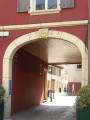
Discover historic Mulhouse with this tourist trail! You will admire the most beautiful buildings in the city centre.In about an hour, you will stroll through the medieval streets, observing the houses that have marked the history of the city...
Contemporary art in Mulhouse
 2.65 mi
+3 ft
-10 ft
1h 15
Easy
Departure from Mulhouse (Haut-Rhin)
2.65 mi
+3 ft
-10 ft
1h 15
Easy
Departure from Mulhouse (Haut-Rhin)
Set off to discover the contemporary artworks scattered throughout Mulhouse. From the city centre to the Promenade William Wyler, along the Nouveau Bassin, where sculptures and installations interact with the water and trees. In just a few steps, let yourself be guided by iconic creations that reveal the city's daring spirit.
The waterfront circuit in Reiningue
 5.13 mi
+20 ft
-20 ft
2h 20
Easy
Departure from Reiningue (Haut-Rhin)
5.13 mi
+20 ft
-20 ft
2h 20
Easy
Departure from Reiningue (Haut-Rhin)
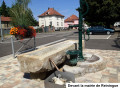
The "Au fil de l'eau" circuit, between the Doller and Leimbach rivers, crosses a magnificent oak-lined avenue before entering the Vorwald oak forest, passes by two series of blockhouses, then the Müatergottesgartla Chapel, and reaches the banks of the Doller via farmland north of Reiningue.
The entire route is marked with the Anneau Vert (Green Ring) sign by the Club Vosgien de Guewenheim
Shaded route in the city of Mulhouse
 1.70 mi
+7 ft
-7 ft
0h 45
Easy
Departure from Mulhouse (Haut-Rhin)
1.70 mi
+7 ft
-7 ft
0h 45
Easy
Departure from Mulhouse (Haut-Rhin)
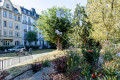
During a heatwave, we mainly seek shade or cool places. That is why this route was created. Enjoy this peaceful walk, far from the noise. To complete the circular route, return to the city centre.
Street art in Mulhouse
 2.10 mi
+3 ft
-3 ft
1h 00
Easy
Departure from Mulhouse (Haut-Rhin)
2.10 mi
+3 ft
-3 ft
1h 00
Easy
Departure from Mulhouse (Haut-Rhin)
Come and discover the works of the many street artists who adorn the city's walls and even... road signs! Clet, C215, Jana & Js are among those who embellish the streets of Mulhouse. Before starting this route,please note that street art is ephemeral, so some of the works may no longer be there when you take your walk. However, we invite you to keep your eyes peeled, as they may well be hidden.
Street art and painted walls in Mulhouse
 5.40 mi
+13 ft
-13 ft
2h 30
Easy
Departure from Mulhouse (Haut-Rhin)
5.40 mi
+13 ft
-13 ft
2h 30
Easy
Departure from Mulhouse (Haut-Rhin)
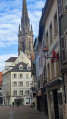
This family walk will give you the chance to discover Mulhouse’s tradition of painted walls.From giant murals to the tiniest graffiti, street art is everywhere in Mulhouse: on walls, pavements, letterboxes and even on road signs!You’ll need to keep your eyes peeled!
From Riedisheim to Rixheim via the vanished village of Leibersheim
 5.88 mi
+417 ft
-417 ft
3h 05
Easy
Departure from Riedisheim (Haut-Rhin)
5.88 mi
+417 ft
-417 ft
3h 05
Easy
Departure from Riedisheim (Haut-Rhin)
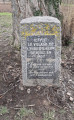
Between the two villages of Riedisheim and Rixheim lies a third, Leibersheim, which ceased to exist five centuries ago. You will also pass by the cemeteries of these two villages, one of which dates back more than two centuries. Finish by climbing the Fuchsberg hill to enjoy the beautiful scenery.
On the heights of Habsheim and Rixheim
2.87 mi
+259 ft
-246 ft
1h 35
Easy
Departure from Habsheim (Haut-Rhin)
La Bellevue de Habsheim, an apiary, donkeys, sheep, goats and cows, a remarkable garden, calvaries, a shelter, the Rixheim school orchard, the reservoirs and relay antenna in Habsheim, numerous viewpoints over the Rhine plain, the Black Forest, the Vosges, the Tour de l'Europe, Habsheim, Rixheim, the Stellantis site, Entremont Park... so much to see on such a short route!
Rixheim Hills Route
 5.74 mi
+463 ft
-436 ft
3h 00
Average
Departure from Rixheim (Haut-Rhin)
5.74 mi
+463 ft
-436 ft
3h 00
Average
Departure from Rixheim (Haut-Rhin)
The Rixheim Hills Route crosses the southern part of the town, passing through an urban area, then winds through the countryside and orchards on the heights overlooking the Alsace plain, offering beautiful views of the Hardt Forest, the Black Forest, the Jura, the Vosges, and, on a clear day, the peaks of the Swiss Alps.
The entire route is marked with the Red Ring by the Club-Vosgien.