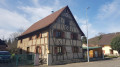
Haulenwald circuit (First World War)

The fighting of the First World War raged in the Sundgau region from August 1914 onwards. The French blew up the Dannemarie viaduct and the front stabilised and extended from the Vosges to the Swiss border. The front line ran a few kilometres from Illfurth, near Heidwiller. During this tour, you will discover several bunkers that served a variety of purposes, including ammunition depots, observation posts and artillery emplacements, as well as several casemates.

Details

110469
Creation:
Last update:
Last review:
  • Walking
    Activity: Walking
  • ↔
    Distance: 5.22 km
  • ◔
    Average duration: 1h 50 
  • ▲
    Difficulty: Easy

  • ⚐
    Back to start: Yes
  • ↗
    Ascent: + 116 m
  • ↘
    Descent: - 116 m

  • ▲
    Highest point: 368 m
  • ▼
    Lowest point: 267 m
  • ⚐ Country: France
  • ⚐ District: Illfurth (68720)
  • ⚑
    Start/End: N 47.663792° / E 7.259861°
  • Accessible from the train station Gare de Tagolsheim.
  • ❏
    IGN map(s): Ref. 3621ET
  • Hour-by-hour weather

Photos

Description of the walk

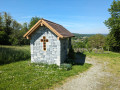
Departure from the Burnkirch chapel south of Illfurth. Parking is available at the adjacent cemetery. A first sign explains the history of the site during the First World War. The circuit is marked by a red ring, "Circuit du Haulenwald".

(S/E) From the south-west corner of the cemetery, head to a grassy crossroads with a large cannon.

(1) Take the grassy path on the left that runs along the side of the slope until it crosses a farm track. Continue straight ahead, following the red ring (there are several other signs at the crossroads). The path runs along the edge of the woods before entering them.
Reach a farm track at the edge of the woods. Turn right, then left onto the grassy path that climbs uphill. Cross the woods until you reach a T-junction.

(2) Take the path that climbs towards a casemate twice on the right.
The path continues winding above the position, then climbs along the ridge until you reach elevation 369, at the edge of the woods.

(3) The path continues to the right, following the military boundary until you reach the start of a gully and a forest track. Continue straight ahead, climbing a track until you reach a T-junction. Turn left, and the path leads to a ridge position.

(4) The path descends along the military boundary until it leaves the woods (altitude 345).
Go around a concrete electricity pole. The path winds through fields until it descends to the Saint-Urbin Chapel. Turn right, then (at elevation 331) left and right again to climb back up to the ridge.
Enter the Buckenberg woods until you reach the Heidwiller artillery observatory.

(5) The path runs along the edge of the woods and enters the woods via a steep descent until it returns to the grassy crossroads where the large cannon is located.

(1) Retrace your steps along the same path to return to the Burnkirch Chapel (S/E).

Waypoints

  1. S/E : km 0 - alt. 267 m - Burnkirch Chapel south of Illfurth
  2. 1 : km 0.26 - alt. 277 m - Grand Canon (sign no. 2)
  3. 2 : km 1.79 - alt. 307 m - Take the path that climbs uphill, turning right twice
  4. 3 : km 2.54 - alt. 368 m - Artillery observation posts (sign no. 4)
  5. 4 : km 3.09 - alt. 360 m - Position of Crête (sign no. 5)
  6. 5 : km 4.36 - alt. 335 m - Heidwiller artillery observatory (panel no. 6)
  7. S/E : km 5.21 - alt. 267 m - Burnkirch Chapel south of Illfurth

Notes

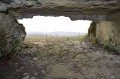
Walking shoes and a torch are recommended if you wish to enter the casemates.

Worth a visit

No. 1 Burnkirch Chapel
The sanctuary was first a chapel dedicated to Saint Nicholas, then to Saint Martin. In the Middle Ages, it was the mother church of Illfurth, Heidwiller and Tagolsheim, then remained the parish church of Illfurth until the 18th century. It contains some very interesting frescoes and various ancient tombstones
The Burnkirch infantry shelter is the only remaining vestige of the Burnkirch position. The roof is still visible. It was built as an open excavation with curved corrugated iron sheets serving as permanent formwork for pouring reinforced concrete. The living area was 15 m², the walls are 0.80 m to 1 m thick, and the roof is approximately 1.50 m thick.
No. 2 Location of a large cannon
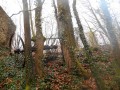
The traces of the railway track in the forest and the excavation and earthworks for the artillery position are still visible today, when they are not completely hidden by vegetation.
No. 3 Tagolsheim artillery position
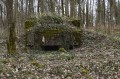
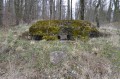
It is likely that the concrete shelter visible today, most of whose inscription has disappeared, was built in 1916. Corrugated iron sheets were laid on a concrete foundation to serve as formwork for pouring the concrete for the roof, which is approximately 1.2 m thick. A 1-metre-wide interior corridor connects to the outside via three entrances with baffles. It leads to three rooms, each measuring 24 square metres, with a maximum capacity of 100 seated men. One of the rooms could also have been used to store ammunition. The width of the corridor allows for easy movement. The shelter is equipped with high (stale air) and low (fresh air) ventilation and smoke ducts for stove pipes. The concrete platform adjacent to the shelter could accommodate two of the battery's four guns.
No. 4 Tagolsheim artillery observation posts
Composed of 43 metal parts, including plates 10 to 40 mm thick, the armoured observation post formed a pentagon open at the rear for access, pierced at the front by three rectangular embrasures that could be closed by sliding shutters. Bolted to a 0.50 m thick concrete base, it had a total height of 1.80 m. The space between the two layers of steel plate could be filled with either concrete or sand. The roof consisted of two superimposed metal sheets. It took four men two nights to assemble the observation post. The observer could sit on a folding seat. Observations were made with the naked eye, binoculars or a binocular telescope that passed through the oblong opening in the roof. The observatory was aligned 70° west towards Schoenholz. Adjacent to the observatory, a 9 m² concrete shelter for the telephone operator and officer was built. This complex was intended to be occupied permanently, day and night, by at least one officer (or non-commissioned officer) observer and one telephone operator.
No. 5 Crête position
Slightly west of elevation 364 of the Haulenwald, the forest-field boundary has changed little since 1916. This configuration was extremely favourable for the installation of rapid-fire weapons, with trees camouflaging the machine guns and open areas providing an ideal field of fire.
No. 6 Heidwiller artillery observation post
The two concrete structures, dating from the summer of 1915, occupy the edge of the woods near elevation 341 of the Buckenberg. They consist of a gun emplacement and an artillery observation post. The concrete of the emplacement is fairly coarse, as it contains a lot of stones. Near these two remains, traces of access tunnels that allowed soldiers to move around safely are still visible, and further away are underground shelters (now inaccessible) dug during the winter of 1916-1917.

You can download the explanatory documentation at: apps.tourisme-alsace.info/photos/altkirch/photos/242011114_d1.pdf

Reviews and comments

4.6 / 5
Based on 26 reviews

Reliability of the description
4.6 / 5
Ease of following the route
4.7 / 5
Route interest
4.6 / 5
Dominique Eme
Dominique Eme

Overall rating : 5 / 5

Date of your route : Feb 05, 2025
Reliability of the description : ★★★★★ Very good
Ease of following the route : ★★★★★ Very good
Route interest : ★★★★★ Very good
Very busy route : No

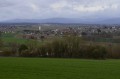
Easy route through fields and forest. Nice views of the Vosges at times. Information panels along the way.

Machine-translated

Alpha mans
Alpha mans

Overall rating : 4.7 / 5

Date of your route : Aug 27, 2024
Reliability of the description : ★★★★★ Very good
Ease of following the route : ★★★★★ Very good
Route interest : ★★★★☆ Good
Very busy route : No

A pleasant and informative tour.

Machine-translated

Embellie-pulmonaire68

Overall rating : 5 / 5

Date of your route : May 07, 2024
Reliability of the description : ★★★★★ Very good
Ease of following the route : ★★★★★ Very good
Route interest : ★★★★★ Very good
Very busy route : No

A nice little walk, not too long, that I do regularly when I don't know the level of my companions. The route is varied, with a nice little climb, a view of the Vosges and a historic ridgeline (with explanatory panels) where you can imagine the WW1 front in the Sundgau. The discovery of a 2nd large cannon project like the one at Zillisheim is a plus.
You can picnic on one of the bunkers, with a view but sheltered from the wind.

Machine-translated

DOPPLER Bernard
DOPPLER Bernard

Overall rating : 5 / 5

Date of your route : Jan 01, 2024
Reliability of the description : ★★★★★ Very good
Ease of following the route : ★★★★★ Very good
Route interest : ★★★★★ Very good
Very busy route : No

A highly historic route

Machine-translated

SEEWALD
SEEWALD

Overall rating : 4.3 / 5

Date of your route : Oct 07, 2022
Reliability of the description : ★★★★☆ Good
Ease of following the route : ★★★★☆ Good
Route interest : ★★★★★ Very good
Very busy route : No

At the start of the route on the map, you go around the cemetery towards the top, but when you get to the site, you see the red circle and pass in front of the chapel, so towards the bottom of the cemetery, and then you find the grassy path that leads up into the fields.
The most difficult part of the route is just past the site of the big cannon, at the crossroads where you have to realise that there is a "red circle" marker on a small hill, and then into the forest, where everything is very well signposted.
It was a beautiful day, perfect for a walk. The various historic sites we saw on the information panels were interesting. The views were splendid in places.

Machine-translated

Jean-Paul ROBERT
Jean-Paul ROBERT

Overall rating : 4.7 / 5

Date of your route : Sep 13, 2021
Reliability of the description : ★★★★☆ Good
Ease of following the route : ★★★★★ Very good
Route interest : ★★★★★ Very good
Very busy route : No

Lovely route, beautiful views, definite historical interest. Very pleasant woodland route!

Machine-translated

Virginie6
Virginie6

Overall rating : 5 / 5

Date of your route : Aug 22, 2020
Reliability of the description : ★★★★★ Very good
Ease of following the route : ★★★★★ Very good
Route interest : ★★★★★ Very good
Very busy route : No

Superb walk, 2 hours with my children aged 5 and 12 who loved it. Very well marked route, magnificent views... lovely afternoon in the cool of the forest.

Machine-translated

Dany68300
Dany68300

Overall rating : 3.7 / 5

Date of your route : Aug 14, 2020
Reliability of the description : ★★★☆☆ Average
Ease of following the route : ★★★☆☆ Average
Route interest : ★★★★★ Very good
Very busy route : Yes

very interesting and cultural walk

Machine-translated

nicolasnoel79
nicolasnoel79

Overall rating : 5 / 5

Date of your route : Jun 14, 2020
Reliability of the description : ★★★★★ Very good
Ease of following the route : ★★★★★ Very good
Route interest : ★★★★★ Very good
Very busy route : No

An excellent family walk through the forest, fields, ruins and fruit trees! Extra fun!

Machine-translated

RafRuns
RafRuns

Overall rating : 5 / 5

Date of your route : Jun 14, 2020
Reliability of the description : ★★★★★ Very good
Ease of following the route : ★★★★★ Very good
Route interest : ★★★★★ Very good
Very busy route : No

A beautiful trail through fields and forest. Historical interest that my two teenagers loved (against all odds!).
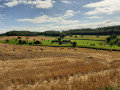
Beautiful views of the Vosges and the Belfort Gap.
The signposting is very well done and visible.
We took the first path on the left when we should have gone a little further up to the start sign above the greenhouses.

Machine-translated

emma7900
emma7900
• Edited:

Overall rating : 4.7 / 5

Date of your route : Jun 07, 2020
Reliability of the description : ★★★★☆ Good
Ease of following the route : ★★★★★ Very good
Route interest : ★★★★★ Very good
Very busy route : No

We were all delighted with the walk. The scenery is varied: meadows, forests, beautiful views of the villages below, cherry trees in abundance... The paths are narrow and a little wild. We live in Mulhouse and love walking, but we'd never been here before! A wonderful discovery!

Machine-translated

Elgrogro
Elgrogro

Overall rating : 5 / 5

Date of your route : Jun 07, 2020
Reliability of the description : ★★★★★ Very good
Ease of following the route : ★★★★★ Very good
Route interest : ★★★★★ Very good
Very busy route : Yes

Lovely walk with lots of little toads on the paths.

Machine-translated

jcjcb
jcjcb

Overall rating : 4 / 5

Date of your route : May 13, 2019
Reliability of the description : ★★★★☆ Good
Ease of following the route : ★★★★☆ Good
Route interest : ★★★★☆ Good

Nice little walk with beautiful views

Machine-translated

marc_67230
marc_67230

Overall rating : 4.3 / 5

Date of your route : Apr 17, 2019
Reliability of the description : ★★★★★ Very good
Ease of following the route : ★★★★★ Very good
Route interest : ★★★☆☆ Average

The walk is not particularly difficult, and can start from the car park at the Willerwald pond.

Machine-translated

w4rd68
w4rd68

Overall rating : 4.3 / 5

Date of your route : Feb 28, 2019
Reliability of the description : ★★★★★ Very good
Ease of following the route : ★★★★☆ Good
Route interest : ★★★★☆ Good

A nice, quick walk... A few ups and downs and some great views! There's plenty of historical interest!

Machine-translated

Other walks in the area

For more walks, use our search engine .

The GPS track and description are the property of this route's author. Please do not copy them without permission.