


Refine your search for walks in Landudec
Landudec walks


 Circuit de la Fontaine Saint-Anne et campagne de Landudec
 Visorando Member
 6.59 mi
 +285 ft
 -305 ft
 3h 15
3h 15
 Moderate
 Departure from Landudec (Finistère)
The route alternates between small country roads and numerous sunken paths in wooded areas.Passes by the Saint-Anne Fountain (1743) and part of the botanical trail near the water catchment protection area.The rest of the route follows various valleys where mills were once located.
Route of the old mills of Landudec
 6.47 mi
+322 ft
-305 ft
3h 15
Moderate
Departure from Landudec (Finistère)
6.47 mi
+322 ft
-305 ft
3h 15
Moderate
Departure from Landudec (Finistère)
Follow the start of the Goyen valley, which joins the sea after about thirty kilometres, along a few small country roads and paths through the woods.
This river used to power several mills. The route will take you past three of them.
You can also enjoy the peace and quiet of the valley floor.
Stang Vraz Circular (Grande Vallée)
 2.57 mi
+190 ft
-187 ft
1h 20
2.57 mi
+190 ft
-187 ft
1h 20
 Easy
Departure from Guiler-sur-Goyen (Finistère)
Easy
Departure from Guiler-sur-Goyen (Finistère)
This route through the countryside and woods has been restored by the Haut Pays Bigouden Community of Communes.
It takes you into the very wild, wooded moorland on the left bank of the Goyen valley: peace and quiet are guaranteed on this little-used route.
Along the Goyen River
 5.87 mi
+331 ft
-341 ft
3h 00
Easy
Departure from Guiler-sur-Goyen (Finistère)
5.87 mi
+331 ft
-341 ft
3h 00
Easy
Departure from Guiler-sur-Goyen (Finistère)
Discover the Goyen river and its valley via sunken paths and woodland.
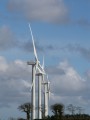
From Saint Ronan Chapel to the wind turbines
 7.58 mi
+72 ft
-66 ft
3h 35
Moderate
Departure from Plozévet (Finistère)
7.58 mi
+72 ft
-66 ft
3h 35
Moderate
Departure from Plozévet (Finistère)
This walk, punctuated by stops for exercise, allows you to discover the Chapel of Saint Ronan in its setting with the fountain and the granite sarcophagus, and to stroll around the wind turbines and through the woodland.
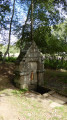
Walk from Saint-Ronan to Plozévet
 1.99 mi
+30 ft
-30 ft
0h 55
Easy
Departure from Plozévet (Finistère)
1.99 mi
+30 ft
-30 ft
0h 55
Easy
Departure from Plozévet (Finistère)
The Haut Pays Bigouden Community of Communes is responsible for managing the drinking water catchments in the area between Plozévet and Landudec. To this end, it manages a protection zone comprising wooded areas.
This walk takes you through this area of deciduous woodland (oaks, chestnut trees and beech trees) along a well-signposted path.
The walk also offers the chance to discover the idyllic site of the Saint-Ronan Chapel with its votive fountain.
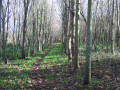
Banks of the Goyen and countryside south-east of Pouldergat
 7.27 mi
+381 ft
-400 ft
3h 40
Moderate
Departure from Pouldergat (Finistère)
7.27 mi
+381 ft
-400 ft
3h 40
Moderate
Departure from Pouldergat (Finistère)
This hilly route covers part of the long route that goes around the commune of Pouldergat, taking its south-eastern section.
It follows a section of the River Goyen, which is still only a modest stream, and returns through the countryside.
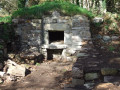
Wooded circular in Plogastel-Saint-Germain
 3.54 mi
+128 ft
-138 ft
1h 45
Easy
Departure from Plogastel-Saint-Germain (Finistère)
3.54 mi
+128 ft
-138 ft
1h 45
Easy
Departure from Plogastel-Saint-Germain (Finistère)
In the countryside around Plogastel-Saint-Germain, this short route mainly follows paths lined with wooded embankments and passes through small woods and wetlands, which can be crossed via a long wooden walkway.
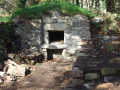
During the walk, you will discover an old bread oven saved at the last minute, an old farmhouse and a well-maintained wash house.
Countryside and woods around Plogastel-Saint-Germain
 6.68 mi
+394 ft
-394 ft
3h 25
Moderate
Departure from Plogastel-Saint-Germain (Finistère)
6.68 mi
+394 ft
-394 ft
3h 25
Moderate
Departure from Plogastel-Saint-Germain (Finistère)
This route, along small roads and wooded paths, largely combines two small routes around the village of Plogastel-Saint-Germain:
Wooded circular in Plogastel-Saint-Germain.
- Around the village of Plogastel-Saint-Germain via the Bois du Quilliou (in the opposite direction).
Circuit des Moulins de Pouldergat partie Nord-Ouest
 6.58 mi
+341 ft
-328 ft
3h 20
Moderate
Departure from Pouldergat (Finistère)
6.58 mi
+341 ft
-328 ft
3h 20
Moderate
Departure from Pouldergat (Finistère)
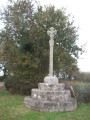
The Mills Route circles the town for about 27 km. This section runs through the countryside along sunken paths and shaded valleys, and along small roads in the second part. In the past, there were several mills on the many streams.
Around the village of Plogastel-Saint-Germain via the Bois du Quilliou
 4.52 mi
+338 ft
-318 ft
2h 20
Easy
Departure from Plogastel-Saint-Germain (Finistère)
4.52 mi
+338 ft
-318 ft
2h 20
Easy
Departure from Plogastel-Saint-Germain (Finistère)
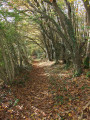
This short route takes you around the village of Plogastel-Saint-Germain, located on high ground (112 m). The Saint-Pierre church and its tall bell tower can be seen from afar.
Part of the route passes through the Quilliou deciduous forest.
Countryside around Plogastel-Saint-Germain
 6.24 mi
+440 ft
-443 ft
3h 15
Moderate
Departure from Plogastel-Saint-Germain (Finistère)
6.24 mi
+440 ft
-443 ft
3h 15
Moderate
Departure from Plogastel-Saint-Germain (Finistère)
Dominated by the bell tower of Saint-Pierre Church, the large village of Plogastel-Saint-Germain offers pleasant countryside criss-crossed by sunken lanes and small tree-lined roads.
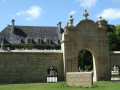
The route passes in front of the Manoir du Hilguy with its monumental gate, owned since 1987 by an English investment company.
Between the old railway line and the wild valleys at Plozévet
 6.53 mi
+371 ft
-387 ft
3h 20
Moderate
Departure from Plozévet (Finistère)
6.53 mi
+371 ft
-387 ft
3h 20
Moderate
Departure from Plozévet (Finistère)
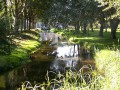
An old railway line called the "carrot train", a dark coniferous forest, small winding roads, a wide view of the Bigouden coast and a long passage at the bottom of a wild valley where only the murmur of the stream disturbs the silence.
In the countryside around Gourlizon
 6.14 mi
+341 ft
-328 ft
3h 05
Easy
Departure from Gourlizon (Finistère)
6.14 mi
+341 ft
-328 ft
3h 05
Easy
Departure from Gourlizon (Finistère)
Starting from the small village of Gourlizon, this country route first takes us into a small valley along a little stream, then through a wood.
The second part follows small roads linking a few isolated farms, where you can enjoy the peaceful tranquillity.
Viewpoint overlooking Douarnenez Bay.
Around Gourlizon via the Chapel of La Boissière and its fountain
 4.60 mi
+387 ft
-381 ft
2h 25
Easy
Departure from Gourlizon (Finistère)
4.60 mi
+387 ft
-381 ft
2h 25
Easy
Departure from Gourlizon (Finistère)
The first section is a signposted route through the countryside around the village of Gourlizon, passing through meadows and past the parish church of Saint-Cornély.
In the second part, the route descends into the valley of the stream that feeds into the River Goyen, leading to the monumental La Boissière fountain and its chapel.
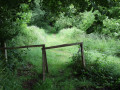
Return via a narrow hedgerow path.
The Upper Goyen Valley or the Five-Village Route
10.89 mi
+817 ft
-810 ft
5h 45
Moderate
Departure from Gourlizon (Finistère)
This route, which passes through five local authorities, allows you to explore the upper Goyen valley, close to its source, and to admire magnificent panoramic views on both sides of the valley. The route takes in the site of theChapelle de la Boissière in Plonéis and its fountain,
Pouldreuzic menhir route
 7.22 mi
+262 ft
-259 ft
3h 35
Moderate
Departure from Pouldreuzic (Finistère)
7.22 mi
+262 ft
-259 ft
3h 35
Moderate
Departure from Pouldreuzic (Finistère)
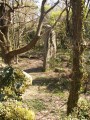
The bed and wardrobe of Saint-Kodelig, a possible menhir quarry, two menhirs separated by a stream... Explore the rolling countryside of Poudreuzic to discover these three megalithic sites, steeped in legend and historical reality.Along the way, you will encounter a few markers featuring excerpts from Pierre Jakez Hélias' masterpiece "Le cheval d'orgueil" (The Horse of Pride), combining biographical memories and ethnographic observations.
Discovering Pouldreuzic
 6.70 mi
+144 ft
-144 ft
3h 10
Moderate
Departure from Pouldreuzic (Finistère)
6.70 mi
+144 ft
-144 ft
3h 10
Moderate
Departure from Pouldreuzic (Finistère)
Pouldreuzic came to prominence following the publication, in 1975, of Pierre JaKez Hélias’s book *Le cheval d’Orgueil*, which was subsequently adapted into a film in 1980 by Claude Chabrol.Another local claim to fame: the little Hénaff pâté tin, produced since 1915, has its own eco-museum here. The top of the water tower even bears the image of the famous tin.This route also passes close to the “Kerné” cider house, another of the town’s flagship products.The route begins at Lababan Chapel and its cemetery, before heading out into the beautiful countryside.
In the rolling countryside of Plozévet and Pouldreuzic
 7.19 mi
+364 ft
-348 ft
3h 35
Moderate
Departure from Pouldreuzic (Finistère)
7.19 mi
+364 ft
-348 ft
3h 35
Moderate
Departure from Pouldreuzic (Finistère)
Route through the countryside of two neighbouring municipalities, along paths between fields and small roads offering regular views of the sea.Beautiful religious heritage along the way: chapels and calvaries.
Countryside around Lababan in Pouldreuzic
 6.77 mi
+495 ft
-495 ft
3h 35
Moderate
Departure from Pouldreuzic (Finistère)
6.77 mi
+495 ft
-495 ft
3h 35
Moderate
Departure from Pouldreuzic (Finistère)
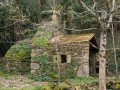
Set amongst trees, the church at Lababan and its cemetery, bearing witness to the history of this former parish now part of Poudreuzic, a fountain lost in the woods, a section of the old “Train Carottes” railway line, wild valleys and the restored bread oven near the Moulin de Crémenec – this is what awaits you on this hike through the peaceful countryside.
Saint-Demet route starting from Lababan
 7.18 mi
+367 ft
-367 ft
3h 35
Moderate
Departure from Pouldreuzic (Finistère)
7.18 mi
+367 ft
-367 ft
3h 35
Moderate
Departure from Pouldreuzic (Finistère)
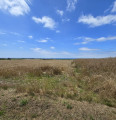
Starting from the chapel of Lababan in Pouldreuzic, we will take the old "carrot train" railway line to return via the wetlands of Plozévet.
Countryside and heritage from Lababan, a former parish of Pouldreuzic
 4.44 mi
+154 ft
-128 ft
2h 10
Easy
Departure from Pouldreuzic (Finistère)
4.44 mi
+154 ft
-128 ft
2h 10
Easy
Departure from Pouldreuzic (Finistère)
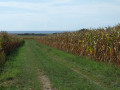
This short route along farm tracks offers beautiful panoramic views of the countryside and the coastal area.Several heritage sites along the way: wayside crosses and chapels.
The Plozévet countryside and the seaside via Penhors
 6.86 mi
+102 ft
-102 ft
3h 15
Moderate
Departure from Plozévet (Finistère)
6.86 mi
+102 ft
-102 ft
3h 15
Moderate
Departure from Plozévet (Finistère)
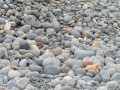
Chapels, an old mill, unspoilt countryside, a restored bread oven and the seaside via the small port of Penhors and its pebble beach. Return via paths through the fields.
From Saint-Demet to Penhors and the Menhir "Des Droits de l'Homme"
 6.66 mi
+138 ft
-167 ft
3h 10
Moderate
Departure from Plozévet (Finistère)
6.66 mi
+138 ft
-167 ft
3h 10
Moderate
Departure from Plozévet (Finistère)
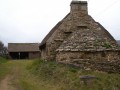
Starting from the Saint-Demet Chapel, you will reach the Notre-Dame-de-Penhors Chapel and follow the coastal path to the "Human Rights" menhir.
Route of the two churches and three chapels around Plozévet
 15.62 mi
+591 ft
-587 ft
7h 40
15.62 mi
+591 ft
-587 ft
7h 40
 Difficult
Departure from Plozévet (Finistère)
Difficult
Departure from Plozévet (Finistère)
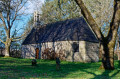
Discover two churches, three chapels, picturesque hamlets, valleys and a curious menhir in the countryside between Plozévet and Pouldreuzic via a greenway, idyllic footpaths and quiet country lanes.
Note: this route includes a few potentially tricky sections. See Practical Information.
Via the Chapelle de la Trinité and the Plozévet wind turbines
 6.35 mi
+72 ft
-72 ft
3h 00
Easy
Departure from Plozévet (Finistère)
6.35 mi
+72 ft
-72 ft
3h 00
Easy
Departure from Plozévet (Finistère)
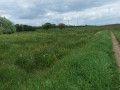
A peaceful countryside route alternating between quiet country lanes, wide paths and tracks used by herds of cows.At the start, the imposing Chapel of La Trinité and, along the route, the wind farm at Plozévet and the surrounding villages. The La Trinité district was once a major centre for tailors and embroiderers.
The chapels of La Trinité and Saint-Ronan
 7.68 mi
+102 ft
-102 ft
3h 35
Moderate
Departure from Plozévet (Finistère)
7.68 mi
+102 ft
-102 ft
3h 35
Moderate
Departure from Plozévet (Finistère)
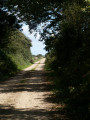
This circular route offers a view of the northern part of Plozévet. From the Chapel of the Trinity, the route passes close to the wind farm before reaching the site of the small Chapel of Saint-Ronan. The return journey offers the chance to walk along part of the old railway line and the “carrot train”, then explore the churchyard with its menhir-shaped war memorial featuring sculptures by René Quillivic.
Route des Vallons in Peumerit
 6.34 mi
+269 ft
-276 ft
3h 10
Easy
Departure from Peumérit (Finistère)
6.34 mi
+269 ft
-276 ft
3h 10
Easy
Departure from Peumérit (Finistère)
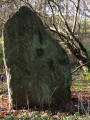
An easy, unmarked route through peaceful countryside, mostly on quiet minor roads.
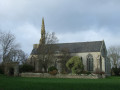
In the countryside from the Chapelle Saint-Germain
 6.65 mi
+315 ft
-331 ft
3h 20
Moderate
Departure from Plogastel-Saint-Germain (Finistère)
6.65 mi
+315 ft
-331 ft
3h 20
Moderate
Departure from Plogastel-Saint-Germain (Finistère)
This route in the countryside of Plogastel-Saint-Germain mainly follows small roads.
Along the route, a highlight of the religious heritage is the Saint-Germain Chapel, one of the few in the region to have a parish enclosure with a Gothic-style triumphal arch.
Also along the route are a beautiful bread oven and wash house currently being restored, a menhir and the Moulin Neuf, a well-preserved building among the old mills on the Pont-l'Abbé River.
Around Penhors
 3.89 mi
+33 ft
-36 ft
1h 50
Easy
Departure from Pouldreuzic (Finistère)
3.89 mi
+33 ft
-36 ft
1h 50
Easy
Departure from Pouldreuzic (Finistère)
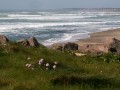
A short circular walk combining a seaside route with views of Audierne Bay, a section near a small coastal pond, and the chance to discover a somewhat forgotten dolmen as well as the famous Chapel of Notre-Dame de Penhors.
Poulguidou Pond, Lambabu Chapel from Mahalon
 6.83 mi
+256 ft
-226 ft
3h 20
Moderate
Departure from Mahalon (Finistère)
6.83 mi
+256 ft
-226 ft
3h 20
Moderate
Departure from Mahalon (Finistère)
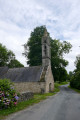
A route through the wooded countryside of Mahalon, passing through a protected area for water catchment – the Poulguidou Pond – and the well-preserved hamlet of Lambabu.Fountains, a chapel and a cross bear witness to this village’s past.
Please note: The bridge over the Goyen has collapsed. Head to Mahalon via Landudec, then Guiler-sur-Goyen.
The Mahalon countryside via Meilars
5.57 mi
+423 ft
-423 ft
2h 55
Easy
Departure from Mahalon (Finistère)
A route exploring the Mahalon countryside via Meilars and the River Goyen,
Please note: The bridge over the Goyen has collapsed; the walk is currently impassable (contact the town hall for information on when it will reopen).
Confort-Meilars route via the Chapel of Kérinec
 6.81 mi
+381 ft
-374 ft
3h 30
Easy
Departure from Confort-Meilars (Finistère)
6.81 mi
+381 ft
-374 ft
3h 30
Easy
Departure from Confort-Meilars (Finistère)
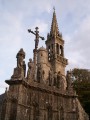
Countryside route starting from Confort-Meilars and its calvary, passing by the Chapel of Kérinec.
Mahalon from Confort-Meilars
 6.79 mi
+492 ft
-499 ft
3h 35
Moderate
Departure from Confort-Meilars (Finistère)
6.79 mi
+492 ft
-499 ft
3h 35
Moderate
Departure from Confort-Meilars (Finistère)
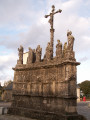
From Confort-Meilars, whose church is famous for its carillon wheel – which is turned to seek the intercession of Our Lady of Confort on behalf of children who are mute or have difficulty speaking, who are then placed beneath the wheel – as well as its calvary featuring the twelve apostles, this route descends into the valley of the Goyen, a small coastal river.The walk through Meilars and Mahalon offers some wonderful insights into the local heritage.
Please note: The bridge over the Goyen has collapsed; the walk is currently impassable (contact the town hall for information on when it will reopen).
The wash houses in Plozévet
 2.80 mi
+236 ft
-217 ft
1h 30
Easy
Departure from Plozévet (Finistère)
2.80 mi
+236 ft
-217 ft
1h 30
Easy
Departure from Plozévet (Finistère)
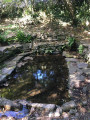
As you wander through the Bigouden countryside, you’ll discover five wash houses, two seaweed kilns and superb views stretching from land to sea.
Plozévet route, between sea and countryside
 5.86 mi
+322 ft
-341 ft
3h 00
Easy
Departure from Plozévet (Finistère)
5.86 mi
+322 ft
-341 ft
3h 00
Easy
Departure from Plozévet (Finistère)
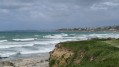
After following the coastal path overlooking Audierne Bay, we climb a little higher into the countryside. We pass through small villages and discover rustic fountains while enjoying views of the sea.
Via the Sainte-Brigitte Chapel and the Bois de Névet
 6.93 mi
+643 ft
-640 ft
3h 45
Moderate
Departure from Le Juch (Finistère)
6.93 mi
+643 ft
-640 ft
3h 45
Moderate
Departure from Le Juch (Finistère)
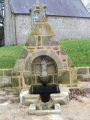
From the valley where the Ruisseau du Ris flows, passing through the edge of the Bois de Nevet, this route, alternating between paths and small country roads, allows you to discover the small Chapelle Sainte-Brigitte, isolated in its green setting.A short stretch on the Voie Verte reminds you of the former railway line that operated from 1884 to 1988.
Névet Valley at Le Juch
 6.10 mi
+479 ft
-469 ft
3h 15
Easy
Departure from Le Juch (Finistère)
6.10 mi
+479 ft
-469 ft
3h 15
Easy
Departure from Le Juch (Finistère)
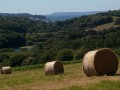
After visiting the church, famous for its statue of Saint Michael slaying a hideous devil, head for the Bois du Névet, where theGR®®38leads the way.Continue through the Névet valley, which offers lovely views of the Juch countryside as well as a view out over Douarnenez Bay. Finish this circular route on the Voie Verte, where information boards tell us about the bocage and the wetlands.
Along the Plovan pebble beach
 6.97 mi
+62 ft
-62 ft
3h 15
Moderate
Departure from Plovan (Finistère)
6.97 mi
+62 ft
-62 ft
3h 15
Moderate
Departure from Plovan (Finistère)
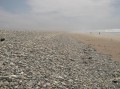
Following the pebble strip from Plovan to Penhors, you can enjoy views of the entire Bay of Audierne and its coastal lagoons. Return via small roads with the ocean always on the horizon.
Vallée de Languidou
 6.64 mi
+230 ft
-223 ft
3h 15
Moderate
Departure from Plovan (Finistère)
6.64 mi
+230 ft
-223 ft
3h 15
Moderate
Departure from Plovan (Finistère)
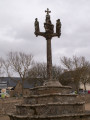
This route takes you into the valley that extends into the Étang de Kergalan.On the way back, you will pass by the Languidou Chapel, a ruined chapel that never fails to amaze with its architecture and magnificent stone lace rose window.
Around the Plovan ponds
 6.56 mi
+148 ft
-125 ft
3h 10
Easy
Departure from Plovan (Finistère)
6.56 mi
+148 ft
-125 ft
3h 10
Easy
Departure from Plovan (Finistère)
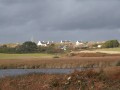
Discover the coastal lakes of Trunvel and Kergalan on the edge of Audierne Bay, which opens out onto the open sea.
The passage near the ruins of Languidou Chapel is always remarkable, not to mention the charm of the small village of Plovan.
Following the sardine route in Douarnenez
 4.59 mi
+210 ft
-217 ft
2h 20
Easy
Departure from Douarnenez (Finistère)
4.59 mi
+210 ft
-217 ft
2h 20
Easy
Departure from Douarnenez (Finistère)
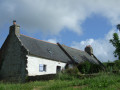
This route, adapted from the sardine route, is marked by 17 information panels explaining the history of sardine fishing in Douarnenez from Gallo-Roman times to the latest changes in the port.
Bronze nails bearing the image of a sardine guide you through the streets, alleys, ports and seaside (a fun treasure hunt).
Passing through Pouldavid, a district of Douarnenez
 5.49 mi
+374 ft
-374 ft
2h 50
Easy
Departure from Douarnenez (Finistère)
5.49 mi
+374 ft
-374 ft
2h 50
Easy
Departure from Douarnenez (Finistère)
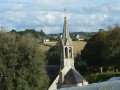
Pouldavid, which became part of Douarnenez in 1945, was primarily a port at the end of the ria.It was of considerable importance in the Middle Ages as a trading port.This ria is now occupied by Port-Rhu, half of which has become a museum of ancient boats afloat, the port museum of Douarnenez, and the other half a marina.This district of Douarnenez was previously part of the rural commune of Pouldergat.In 1919, it became an independent commune under the name of Pouldavid-sur-Mer.
Around and in Tréboul, a district of Douarnenez
 5.86 mi
+404 ft
-427 ft
3h 05
Moderate
Departure from Douarnenez (Finistère)
5.86 mi
+404 ft
-427 ft
3h 05
Moderate
Departure from Douarnenez (Finistère)
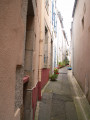
Take a stroll to discover Tréboul, the seaside district of Douarnenez: its marina, Plage des Sables Blancs beach, coastal path, chapel, marine cemetery and narrow streets.
Douarnenez and Port-Rhu
 5.13 mi
+367 ft
-354 ft
2h 40
Easy
Departure from Douarnenez (Finistère)
5.13 mi
+367 ft
-354 ft
2h 40
Easy
Departure from Douarnenez (Finistère)
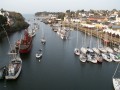
Stroll through the streets and alleys to discover Douarnenez, a town with a history of sardine fishing and three ports: the old Port du Rosmeur, Port-Rhu and the fishing port.
Coastal path via the beaches of Trezmalaouen and Kervel
 6.75 mi
+666 ft
-650 ft
3h 40
Moderate
Departure from Kerlaz (Finistère)
6.75 mi
+666 ft
-650 ft
3h 40
Moderate
Departure from Kerlaz (Finistère)
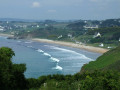
Framed by the cliffs of Cap-Sizun to the south and the Crozon Peninsula to the north, Douarnenez Bay is a sheltered spot, well known to ships when heavy weather is forecast.TheGR®® runs along the various beaches at the bottom of the bay and offers a beautiful view of Douarnenez and its fishing port.
NB: a new section was inaugurated in March 2024 to avoid the 20% incline at the start. The GR® markings do not currently take this into account, but it will soon become the official route.
Passing through Ploaré, a district of Douarnenez
 5.57 mi
+479 ft
-476 ft
3h 00
Easy
Departure from Kerlaz (Finistère)
5.57 mi
+479 ft
-476 ft
3h 00
Easy
Departure from Kerlaz (Finistère)
After passing through the Plomarc’h site, let’s set off to explore the former parish of Ploaré, which has been part of Douarnenez since 1945. It retains its strong connection to the land.
Around Douarnenez
 7.20 mi
+335 ft
-328 ft
3h 35
Moderate
Departure from Douarnenez (Finistère)
7.20 mi
+335 ft
-328 ft
3h 35
Moderate
Departure from Douarnenez (Finistère)
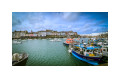
Circuit along Port-Rhu, the port museum and marina, continuing along the greenway.Return via the protected natural site of Plomarc'h and along the fishing port.
Short circular around Port Rhu
 2.94 mi
+82 ft
-75 ft
1h 25
Easy
Departure from Douarnenez (Finistère)
2.94 mi
+82 ft
-75 ft
1h 25
Easy
Departure from Douarnenez (Finistère)
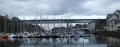
This short walk takes you around the Pouldavid ria, where the Douarnenez port museum was created, via the footbridge over the dry dock and then the path on the left bank.After crossing the old Douarnenez-Quimper railway line, the return route takes you close to the entire ria with its marina and the boats afloat at the maritime museum.
In Tréboul, Douarnenez's water sports centre.
 3.84 mi
+194 ft
-187 ft
1h 55
Easy
Departure from Douarnenez (Finistère)
3.84 mi
+194 ft
-187 ft
1h 55
Easy
Departure from Douarnenez (Finistère)
This walk offers two very different faces. The first part of the walk takes you through the lesser-known old town of Tréboul, along small streets, alleys and passageways often reserved for pedestrians.The second part, from the beautiful Plage des Sables Blancs, follows the coastal path overlooking the bay to the marina and its various activities.
Between megaliths, coastal path and countryside
 6.35 mi
+466 ft
-466 ft
3h 20
Moderate
Departure from Poullan-sur-Mer (Finistère)
6.35 mi
+466 ft
-466 ft
3h 20
Moderate
Departure from Poullan-sur-Mer (Finistère)
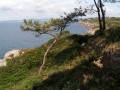
Megalithic heritage, theGR®®34coastal path overlooking Douarnenez Bay, small roads and paths in the countryside: this is what this hike has to offer.
From the Korrigans covered walkway to the Saint-They Chapel
 5.73 mi
+131 ft
-144 ft
2h 45
Easy
Departure from Poullan-sur-Mer (Finistère)
5.73 mi
+131 ft
-144 ft
2h 45
Easy
Departure from Poullan-sur-Mer (Finistère)
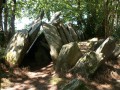
A short country route allowing you to visit the Korrigans' covered passageway "Ti ar C'horriged" as well as the Saint-They Chapel and its green surroundings.
Douarnenez and its neighbourhoods
 8.22 mi
+518 ft
-495 ft
4h 15
Moderate
Departure from Douarnenez (Finistère)
8.22 mi
+518 ft
-495 ft
4h 15
Moderate
Departure from Douarnenez (Finistère)
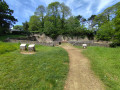
Passing through Tréboul and the marina, the fishing port, Ploaré and Pouldavid, this walk allows you to explore the different neighbourhoods of Douarnenez. Throughout the route, information boards recount the town’s maritime, industrial and social history.
The Sainte-Hélène Chapel (a listed building), the garum vats in Les Plomarc’h and Saint-Jacques Church in Pouldavid are all worth a visit.
Circular route via Douarnenez from Poullan-sur-Mer
 11.48 mi
+794 ft
-797 ft
6h 00
Moderate
Departure from Poullan-sur-Mer (Finistère)
11.48 mi
+794 ft
-797 ft
6h 00
Moderate
Departure from Poullan-sur-Mer (Finistère)
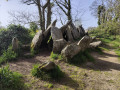
This walk, starting from Poullan-sur-Mer, takes you along the coastal path that runs alongside Douarnenez Bay, allowing you to visit Tréboul marina, before returning via the “Douarnenez – Poullan-sur-Mer” greenway and discovering the Lesconil covered walkway.
Coastal circuit via Pointe de la Jument
 10.14 mi
+1,004 ft
-988 ft
5h 30
Moderate
Departure from Poullan-sur-Mer (Finistère)
10.14 mi
+1,004 ft
-988 ft
5h 30
Moderate
Departure from Poullan-sur-Mer (Finistère)
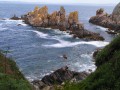
From the pretty little village of Poullan-sur-Mer, head towards the coast.
As you walk from headland to headland and small coves, you will overlook part of the Bay of Douarnenez with Cap de la Chèvre, one of the headlands of the Crozon peninsula, opposite.
On the edge of the Bois du Névet
 6.88 mi
+781 ft
-761 ft
3h 50
Moderate
Departure from Kerlaz (Finistère)
6.88 mi
+781 ft
-761 ft
3h 50
Moderate
Departure from Kerlaz (Finistère)
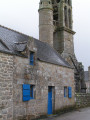
Starting from the small village of Kerlaz, descend into the Névet valley, a small river that flows into the sea at Plage du Ry (or Ris) in Douarnenez.Climb back up this valley to reach the edge of the Bois du Névet, which you will skirt around, then descend back to Kerlaz.A relatively hilly and wooded route.
Kergonda and Kermorvan routes in Plonéour-Lanvern
 7.18 mi
+344 ft
-371 ft
3h 35
Moderate
Departure from Plonéour-Lanvern (Finistère)
7.18 mi
+344 ft
-371 ft
3h 35
Moderate
Departure from Plonéour-Lanvern (Finistère)
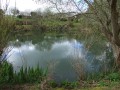
This route combines two shortPR® routes by linking them together: the Kergonda route, which follows part of the old railway line known as the "Carrot Train", and the Kermorvan route, which winds through the countryside along wide, often stony farm tracks and ends at the Raphalen botanical garden.
The link between these two routes allows you to discover the village of Plonéour-Lanvern, dominated by the imposing bell tower of Saint-Éneour Church (19th century).
The Moulin Neuf lake, starting from the Languivoa Chapel
 7.50 mi
+236 ft
-243 ft
3h 40
Moderate
Departure from Plonéour-Lanvern (Finistère)
7.50 mi
+236 ft
-243 ft
3h 40
Moderate
Departure from Plonéour-Lanvern (Finistère)
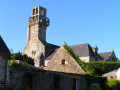
From the 13th-century Notre-Dame de Languivoa Chapel – whose troubled history led to it being abandoned for a very long time, and whose restoration was completed in 2017 – this route leads to the Moulin Neuf lake, created as a drinking water reservoir for much of the region.
Along the countryside route, you’ll pass the Manoir de Lestremec (1643), which has been beautifully restored by its new owners, and come close to a solitary menhir.
In the Bois du Névet via the Chapelle Saint-Pierre
 6.87 mi
+581 ft
-584 ft
3h 40
Moderate
Departure from Plogonnec (Finistère)
6.87 mi
+581 ft
-584 ft
3h 40
Moderate
Departure from Plogonnec (Finistère)
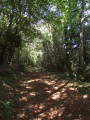
Starting from the beautiful Saint-Pierre Chapel, this route ventures into the Bois du Névet, a deciduous forest.
The route follows paths along the edge of the forest, a few sections of wide forest lanes and, towards the end, a wilder path above the Manoir du Névet estate.
In summer, you will appreciate the shaded route and in autumn, the colours of the foliage.
Around the Chapelle Saint-Pierre in Plogonnec
 2.14 mi
+272 ft
-282 ft
1h 15
Easy
Departure from Plogonnec (Finistère)
2.14 mi
+272 ft
-282 ft
1h 15
Easy
Departure from Plogonnec (Finistère)
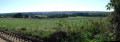
From the majestic Saint-Pierre Chapel, this short circular route continues along the edge of the Bois du Névet, then returns through the countryside via farm tracks and a quiet road serving only farms.
Bois du Névet via the bridle path
 5.60 mi
+591 ft
-584 ft
3h 05
Moderate
Departure from Locronan (Finistère)
5.60 mi
+591 ft
-584 ft
3h 05
Moderate
Departure from Locronan (Finistère)
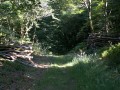
In the Bois du Névet, following the bridle path allows you to venture along small, wild and deserted tracks that criss-cross the woodland. You’ll avoid the wide, often very busy paths.
Why not give this route a go?
The small troménie route of Locronan
 3.87 mi
+453 ft
-453 ft
2h 10
Easy
Departure from Locronan (Finistère)
3.87 mi
+453 ft
-453 ft
2h 10
Easy
Departure from Locronan (Finistère)
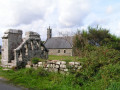
Every six years, Locronan hosts "la Grande Troménie", an unchanging pilgrimage of around 12 km around the sacred boundaries of the former monastery of Locronan. The last one took place in July 2025.
The "Petite Troménie" takes place annually, during the five years between two Grande Troménies. It only follows small roads. This route follows this route.
Locronan countryside and edge of Bois du Névet
 6.72 mi
+472 ft
-463 ft
3h 30
Moderate
Departure from Locronan (Finistère)
6.72 mi
+472 ft
-463 ft
3h 30
Moderate
Departure from Locronan (Finistère)
After passing through the countryside north-west of Locronan, this route turns south-west and ends at the edge of the Bois du Névet. It continues mainly along the edge of the forest before returning to Locronan.