


Refine your search for walks in Kappelen
Kappelen walks


 Around the Oberholz
 Visorando Member
 6.03 mi
 +377 ft
 -400 ft
 3h 05
3h 05
 Moderate
 Departure from Kappelen (Haut-Rhin)
A lovely circular walk starting from Kappelen, passing through Ranspach-le-Bas and the hills of Helfranzkirch, combining woodland, fields and village outskirts.
Bartenheim and Brinckheim Vines Trail
 3.93 mi
+246 ft
-256 ft
2h 00
3.93 mi
+246 ft
-256 ft
2h 00
 Easy
Departure from Bartenheim (Haut-Rhin)
Easy
Departure from Bartenheim (Haut-Rhin)
A trail giving you the possibility to explore a large number of running vineyards throughout the Bartenheim and Brinckheim hillsides.
Bartenheim - Kappelen circular loop
 4.67 mi
+174 ft
-174 ft
2h 20
Easy
Departure from Bartenheim (Haut-Rhin)
4.67 mi
+174 ft
-174 ft
2h 20
Easy
Departure from Bartenheim (Haut-Rhin)
The hike alternates between fields, forest edges and villages. Go through the fields of Bartenheim and Brinckheim, passing the small village of Kappelen. The return journey is through the fields of Kappelen and Brinckheim, then HochaLoch along the Muehlgraben.
Circular Bartenheim route via the big oak tree in Stetten
 9.57 mi
+509 ft
-509 ft
4h 50
Moderate
Departure from Bartenheim (Haut-Rhin)
9.57 mi
+509 ft
-509 ft
4h 50
Moderate
Departure from Bartenheim (Haut-Rhin)
The hike alternates between fields, forest edges and villages. Go through the fields of Bartenheim and Brinckheim, pass the small village of Stetten to reach the Gros Chêne. The return route is via the village of Helfrantzkirch, the fields of Kappelen and Brinckheim, and the HochaLoch along the Muehlgraben.
Bartenheim - Brinckheim circular along the Muehlgraben.
 2.66 mi
+174 ft
-144 ft
1h 20
Easy
Departure from Bartenheim (Haut-Rhin)
2.66 mi
+174 ft
-144 ft
1h 20
Easy
Departure from Bartenheim (Haut-Rhin)
A short, unpretentious hike.
Starting at the ACL foyer in Bartenheim, the outward journey takes you through the fields of Bartenheim and Brinckheim, and the return journey takes you through Hochaloch along the Muehlgraben.
The Schneckenberg Forest
 4.72 mi
+371 ft
-374 ft
2h 30
Easy
Departure from Bartenheim (Haut-Rhin)
4.72 mi
+371 ft
-374 ft
2h 30
Easy
Departure from Bartenheim (Haut-Rhin)
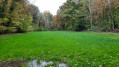
Overlooking the Rhine’s alluvial plain—a barren landscape where the Hardt Forest struggles to survive—the hills of the Bartenheim heights enjoy very rich soil. Set upon this fertile silt, on either side of the ridge between Helfrantzkirch and Bartenheim, lies the most beautiful forest in the Sundgau: the Schneckenberg Forest (see Practical Information).
A short walk through the forest or along the forest edge for tree lovers.
The heights of Blotzheim via the snail hills
 8.25 mi
+623 ft
-604 ft
4h 20
Moderate
Departure from Bartenheim (Haut-Rhin)
8.25 mi
+623 ft
-604 ft
4h 20
Moderate
Departure from Bartenheim (Haut-Rhin)
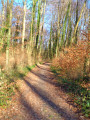
On the heights of Blotzheim, the Grand and Petit Schneckenberg (snail hills) form a wooded area close to its natural state, criss-crossed by streams and surrounded by fields, copses and a few vineyards.A multitude of trails and paths offer beautiful walks in the hills, where you can enjoy the peace and quiet and a few views of the neighbouring mountain ranges, the Vosges, the Black Forest and the Jura.Two versions are available, 10 or 13 km.
A short tour of Brestenberg through fields and forests
 2.51 mi
+174 ft
-174 ft
1h 20
Easy
Departure from Bartenheim (Haut-Rhin)
2.51 mi
+174 ft
-174 ft
1h 20
Easy
Departure from Bartenheim (Haut-Rhin)
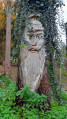
Family walk around Brestenberg hill between Bartenheim and Brinckheim, passing through sunken lanes typical of the Sundgau hills. Enjoy the forest and the view of the Vosges mountains and the Black Forest.
From Ranspach-le-Bas to Ranspach-le-Haut
7.04 mi
+528 ft
-515 ft
3h 40
Moderate
Departure from Ranspach-le-Bas (Haut-Rhin)
A lovely walk along the Sundgau trails through meadows, fields and woods. Near the D419, there’s a stunning view of the border region.
Of interest: a memorial to a plane crash in 1915… there weren’t many of those back then!
The Kenzo Trail
11.40 mi
+607 ft
-594 ft
5h 45
Moderate
Departure from Sierentz (Haut-Rhin)
A walk along easily accessible paths, ideal for families or those with pets.
A route through fields and along forest edges, starting from Sierentz, passing through Uffheim and Stetten to reach Helfrantzkirch, then returning via Kappelen towards Uffheim and back to Sierentz.
Between Le Homberg and the Bruchberg, in the heart of the Bas-Sundgau hills
 8.71 mi
+505 ft
-502 ft
4h 25
Moderate
Departure from Kœtzingue (Haut-Rhin)
8.71 mi
+505 ft
-502 ft
4h 25
Moderate
Departure from Kœtzingue (Haut-Rhin)
A varied family walk that climbs towards the Forêt des Deux Chênes, dotted with wooden sculptures and educational panels. The Schlierbach discovery trails, the return route via the Homberg and the Kœtzingue ecological pond, as well as the beautiful views of the surrounding mountains, will make you forget a few short but sometimes steep climbs.
The Hardt Forest
6.31 mi
+20 ft
-20 ft
2h 55
Easy
Departure from Sierentz (Haut-Rhin)
A pleasant, uneventful walk that starts in Sierentz and passes through fields and the Hardt Forest. The route is mostly on flat ground, part of which consists of tarmac paths for pedestrians and cyclists.
Around Rantzwiller
 5.35 mi
+459 ft
-463 ft
2h 50
Easy
Departure from Rantzwiller (Haut-Rhin)
5.35 mi
+459 ft
-463 ft
2h 50
Easy
Departure from Rantzwiller (Haut-Rhin)
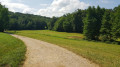
Rantzwiller, a small village in the Sundgau region, is a lovely place to live. The area around the village, particularly the hamlet of Heilhof, is well worth exploring and offers some lovely views.
Circular route in the southern Hardt Forest
 3.83 mi
+30 ft
-30 ft
1h 45
Easy
Departure from Kembs (Haut-Rhin)
3.83 mi
+30 ft
-30 ft
1h 45
Easy
Departure from Kembs (Haut-Rhin)
A short family walk through a pleasant woodland setting, in stark contrast to the neighbouring urban development. In fine weather, a playground and a picnic area will make for an enjoyable day out.
In wet seasons, the paths are often muddy or overgrown with vegetation, whilst others are rutted due to forestry work.
Following the route of the waters of Saint-Louis
 2.46 mi
+13 ft
-13 ft
1h 10
Easy
Departure from Saint-Louis (Haut-Rhin) (Haut-Rhin)
2.46 mi
+13 ft
-13 ft
1h 10
Easy
Departure from Saint-Louis (Haut-Rhin) (Haut-Rhin)
This is a small nature trail made by the city of Saint-Louis. It passes through the 3 of drinking water catchment points in the city where 535 cubic metres of water are pumped every hour and then stored in a 6000-metre-cubed tank.
The trail has a dozen panels explaining the difficulties of supplying drinking water and the surrounding environments.
Walk in the old bed of the Rhine: the Petite Camargue Alsacienne
 4.36 mi
+30 ft
-30 ft
2h 00
Easy
Departure from Bartenheim (Haut-Rhin)
4.36 mi
+30 ft
-30 ft
2h 00
Easy
Departure from Bartenheim (Haut-Rhin)
A national nature reserve, the Petite Camargue Alsacienne now covers 904 hectares, including nearly 200 hectares of water. Originally, in 1982, it covered 120 hectares around the buildings of the Imperial Fish Farm (1852). It is here, in the wild heart of the Au wetland plain, that you can walk along some of its most beautiful paths and discover the exceptional flora and fauna of this marshland landscape, thanks to the groundwater.
Walk along the old bed of the Rhine: along the Au
 3.86 mi
+69 ft
-39 ft
1h 50
Easy
Departure from Kembs (Haut-Rhin)
3.86 mi
+69 ft
-39 ft
1h 50
Easy
Departure from Kembs (Haut-Rhin)
In the heart of the Au, the alluvial terrace of the Rhine between Huningue and Kembs, the history of Rosenau is closely linked to that of the Rhine. Throughout this route, between the Grand Canal d’Alsace and the Huningue Canal, by a pond or a lock, on the banks of canals or streams, water is ever-present.
Along the canals south of Kembs
 5.48 mi
+13 ft
-13 ft
2h 30
Easy
Departure from Kembs (Haut-Rhin)
5.48 mi
+13 ft
-13 ft
2h 30
Easy
Departure from Kembs (Haut-Rhin)
Walk from the car park near the turbine roundabout in Kembs, towards Rosenau Sud along the Rosenau Stream, through Rosenau to the Huningue Canal, then back to the starting point along the towpath.
In the heart of the Au plain, Rosenau, daughter of the Rhine
 8.42 mi
+98 ft
-98 ft
3h 55
Moderate
Departure from Kembs (Haut-Rhin)
8.42 mi
+98 ft
-98 ft
3h 55
Moderate
Departure from Kembs (Haut-Rhin)
The Plaine de l’Au is this wetland region on the Rhine’s floodplain in the Land of the Three Borders, where the river, before its course was straightened by dykes (19th century) and then channelled (early 20th century), spread out into multiple branches.Between the Kembs hydroelectric power station to the north and the Grand Marais trail to the south, water accompanies us throughout this route, where biodiversity and human activities strive to coexist harmoniously.The time given does not include stops at the five observation points and other points of interest along the route.
Walk along the old bed of the Rhine: from the Huningue Canal to the Old Rhine
 6.31 mi
+253 ft
-256 ft
3h 05
Easy
Departure from Kembs (Haut-Rhin)
6.31 mi
+253 ft
-256 ft
3h 05
Easy
Departure from Kembs (Haut-Rhin)
Two centuries ago, the Rhine flowed in a network of meandering channels. From 1842, with the construction of dykes by Tulla, and then around 1930 with the construction of the Grand Canal, the river was channelled into a single course and the Rhine’s ecosystem was profoundly altered.Today, there is a stark contrast between nature, which is becoming overgrown again as it adapts to the drying conditions with diverse and unique flora and fauna, and the intense industrial activity centred on shipping and hydroelectric power.
Cambete route
 Tourist office
 5.48 mi
+49 ft
-46 ft
2h 35
Easy
Departure from Kembs (Haut-Rhin)
5.48 mi
+49 ft
-46 ft
2h 35
Easy
Departure from Kembs (Haut-Rhin)
A circular route that mainly follows cycle paths. The route, running alongside the water, allows you to discover the local flora, fauna, history and industry between Kembs-Loechlé and Kembs
The hills of Schlierbach via the Croix and Deux Chênes trails.
 5.60 mi
+289 ft
-305 ft
2h 50
Easy
Departure from Haut-Rhin
5.60 mi
+289 ft
-305 ft
2h 50
Easy
Departure from Haut-Rhin
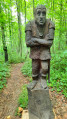
A family hike that follows the Sentier des Croix to the Chapelle des Malgré-nous, then climbs the hills to follow the Sentier des Deux Chênes, decorated with wooden sculptures and dotted with educational panels.
The hills of Hésingue
3.90 mi
+381 ft
-358 ft
2h 05
Easy
Departure from Hésingue (Haut-Rhin)
Partly in the forest and partly in open countryside, this route will allow you to discover the forest and countryside to the west of Hésingue: the passage over and under the D105, the Fichtag discovery trail with its numerous informative and entertaining displays and panels, the Liesbach passage with its beautiful wooden footbridges, the Finnish track, the tranquillity of the forest, the beauty of the countryside and the views towards the Black Forest.
The Saint Louis Neuweg neighbourhood and its discovery trail
 4.04 mi
+13 ft
-13 ft
1h 50
Easy
Departure from Saint-Louis (Haut-Rhin) (Haut-Rhin)
4.04 mi
+13 ft
-13 ft
1h 50
Easy
Departure from Saint-Louis (Haut-Rhin) (Haut-Rhin)
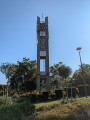
On the edge of the Petite Camargue Alsacienne is a quiet residential area that is part of the Saint-Louis conurbation: Neuweg. It is well worth a visit and, at the end of the walk, you will come to a small forest where you can learn more about water along a discovery trail.
Kembs lock between the Grand Canal d'Alsace and the Old Rhine
 3.26 mi
+52 ft
-52 ft
1h 35
Easy
Departure from Haut-Rhin
3.26 mi
+52 ft
-52 ft
1h 35
Easy
Departure from Haut-Rhin
A short walk between the wild Old Rhine and the tamed canal, with its array of industrial installations: the locks, the German motorway which you cannot see but can hear, the high-voltage power lines you pass under at the start of the route, as well as its natural beauty: the winding, sand-filled Rhine, exposed at the Barre d’Istein. To make the most of the views of the Rhine, the route is best enjoyed in winter when the trees are still bare.
La Petite Camargue by Rosenau
 3.98 mi
+13 ft
-13 ft
1h 50
Easy
Departure from Haut-Rhin
3.98 mi
+13 ft
-13 ft
1h 50
Easy
Departure from Haut-Rhin
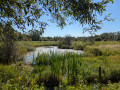
Do you live in the urban area of the three borders and want to get away from it all without travelling dozens of kilometres? Come and discover the Petite Camargue to get some fresh air and observe many species of birds and plants in a well-preserved area. Leaving from the pretty village of Rosenau, you'll find it hard to believe that you're only 4 kilometres away from the airport as the crow flies.
The Île du Rhin to the north of the Kembs bottleneck
 9.10 mi
+66 ft
-69 ft
4h 15
Moderate
Departure from Kembs (Haut-Rhin)
9.10 mi
+66 ft
-69 ft
4h 15
Moderate
Departure from Kembs (Haut-Rhin)
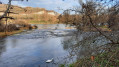
The Île du Rhin is a narrow strip of land stretching over 50 km between the Grand Canal d’Alsace and the Vieux Rhin, shared by the neighbouring municipalities.Less well-known and less frequented than its southern neighbour – which has been renaturalised, is fed by the Petit Rhin and has been developed for walking and birdwatching – the northern section within the municipality of Kembs is nevertheless well worth a visit for walkers, especially when the vegetation is not too dense, allowing visitors to observe the birds of the wetlands near the Old Rhine.
Sundgau route: Hundsbach-Franken
 3.75 mi
+184 ft
-194 ft
1h 55
Moderate
Departure from Haut-Rhin
3.75 mi
+184 ft
-194 ft
1h 55
Moderate
Departure from Haut-Rhin
Below the Hochistross, the high road from Altkirch to Basel, villages dot the Thalbach valley. The old grain mill in Hundsbach has recently been restored, much to the delight of artists and history lovers.
Via the Oratory of the Three Virgins from Wentzwiller
6.40 mi
+502 ft
-502 ft
3h 25
Moderate
Departure from Wentzwiller (Haut-Rhin)
The route starts at the car park by the church in Wentzwiller, a pretty little village typical of the Sundgau, a region in southern Alsace. A lovely walk with beautiful views over the Rhine Valley and Basel.
Isteiner Klotz, Huttingen and Römerstrasse through the vineyards
 3.77 mi
+486 ft
-492 ft
2h 10
Easy
Departure from Efringen-Kirchen (Regierungsbezirk Freiburg)
3.77 mi
+486 ft
-492 ft
2h 10
Easy
Departure from Efringen-Kirchen (Regierungsbezirk Freiburg)
The route is mainly open, winding through the vineyards. There are stunning views throughout the route of the villages in the Rhine Valley, the Jura, the Vosges and Istein. There are numerous benches and picnic tables along the route. Information boards (in German) on wine, history and geology are dotted along the route. From the car park, information boards and the Saint-Vit Chapel opposite, set in the rock, herald the richness of the route, which is “to be savoured”.
Roman Road and the Ill Valley starting from Willer
8.06 mi
+531 ft
-558 ft
4h 10
Moderate
Departure from Haut-Rhin
A lovely walk in the Sundgau starting from Willer.
Along the former bed of the Rhine: from the drawbridge to the Ecluse
 4.18 mi
+36 ft
-36 ft
1h 55
Easy
Departure from Kembs (Haut-Rhin)
4.18 mi
+36 ft
-36 ft
1h 55
Easy
Departure from Kembs (Haut-Rhin)
Before the construction of the Canal of Alsace (1928), the Rhine extended its arms east of the Huningue Canal (1806) over a wide area of 1km to 2km. From the Rhone Canal on the North Rhine to the Barre d'Istein on the Old Rhine, along paths and trails often in the protected areas of the "Little Alsatian Camargue.", you'll discover numerous natural and industrial sites related to the history of the Rhine.
Begin with a stroll between the drawbridge of Kembs (1831) and l'Ecluse Le Corbusier (1961).
Walk along the old bed of the Rhine: from Pont-levis to Ferme du Moulin
 2.77 mi
+16 ft
-16 ft
1h 15
Easy
Departure from Kembs (Haut-Rhin)
2.77 mi
+16 ft
-16 ft
1h 15
Easy
Departure from Kembs (Haut-Rhin)
Between the marina and the Ferme du Moulin, this unpretentious little walk allows you to enjoy the tranquillity of the banks of the Canal de Huningue, the Grand Canal d'Alsace and the Augraben, which still feature a few oxbow lakes and ponds, natural remnants of the old bed of the Rhine.
Between the vineyards and orchards of Huttingen and Blansingen
3.70 mi
+233 ft
-220 ft
1h 55
Easy
Departure from Efringen-Kirchen (Regierungsbezirk Freiburg)
A very beautiful short hike through vineyards and orchards with breathtaking views of the Alps, the Jura, the city of Basel, the Alsatian villages of Sundgau, the Rhine Valley and Kembs just opposite on the way there, and the Black Forest and Blauen on the way back. In the first half of the route, follow the Wiiwegli (wine trail) markings, red diamond with a yellow bunch of grapes, towards Blansingen. The markings are present at each fork. However, you will need to be vigilant at the start of the route and look out for the markings so as not to give in to the temptation to continue straight ahead on a more visible path. Our path branches off twice to the right between the orchards and then twice with a left-right turn on grassy paths.
The Way of the Cross on the hillsides of Bruebach
 3.97 mi
+305 ft
-302 ft
2h 05
Easy
Departure from Bruebach (Haut-Rhin)
3.97 mi
+305 ft
-302 ft
2h 05
Easy
Departure from Bruebach (Haut-Rhin)
A peaceful route offering beautiful views of the villages south of Bruebach, with the city of Basel on the horizon and the entire Alpine range as a backdrop. You’ll frequently be able to admire the German-speaking Swiss Alps straight ahead, with the Eiger and the Jungfrau and their magnificent pyramidal peaks, and at the other end, on the right-hand side, when the weather permits, Mont Blanc.
In the woods at Bruebach
 5.91 mi
+295 ft
-315 ft
3h 00
Easy
Departure from Bruebach (Haut-Rhin)
5.91 mi
+295 ft
-315 ft
3h 00
Easy
Departure from Bruebach (Haut-Rhin)
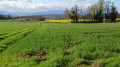
The route runs almost entirely through the forest, in the shade of the trees or exposed to the icy wind in winter. You may spot a few roe deer startled by your presence if you keep quiet. The route is straightforward but features numerous fallen trees that you’ll need to go round.
Bruebach Circular Route
4.04 mi
+299 ft
-299 ft
2h 05
Easy
Departure from Bruebach (Haut-Rhin)
A short, leisurely walk, half of which is in the shade.
Sundgau route: Hagenthal-Neuwiller
 8.15 mi
+692 ft
-676 ft
4h 20
Moderate
Departure from Hagenthal-le-Bas (Haut-Rhin)
8.15 mi
+692 ft
-676 ft
4h 20
Moderate
Departure from Hagenthal-le-Bas (Haut-Rhin)
The Eptingen family, who had already settled on the edge of the Sundgau region in the 14th century, owned both Hagenthal
and Neuwiller, where they lived in comfortable castles. This walk crosses their former seigneury and passes through a one-kilometre-wide bottleneck between the borders, as Neuwiller forms a sort of French peninsula on Swiss territory. Text by Marc Glotz taken from the Sundgau hiking guide.
Hills around Hagenthal-le-Haut
4.19 mi
+423 ft
-423 ft
2h 20
Easy
Departure from Hagenthal-le-Haut (Haut-Rhin)
A walk partly through the forest and partly in open countryside on the heights of Hagenthal-le-Haut. Several benches and picnic spots along the route. On the return journey, beautiful views of the Jura, Basel, Chrischona and the surrounding hills.
Between Niffer and Petit Landau, towards the Grand Canal d’Alsace
 6.50 mi
+33 ft
-33 ft
3h 00
Easy
Departure from Niffer (Haut-Rhin)
6.50 mi
+33 ft
-33 ft
3h 00
Easy
Departure from Niffer (Haut-Rhin)
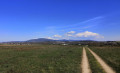
A walk in the Haut-Rhin starting from Niffer and its lock. Along the Rhône-Rhine Canal, then across the plain facing the Black Forest, and back via the Grand Canal d’Alsace (the canalised Rhine).
On the heights of Rheinweiler, Maria Hügel and Bamlach
 4.07 mi
+341 ft
-367 ft
2h 10
Easy
Departure from Bad Bellingen (Regierungsbezirk Freiburg)
4.07 mi
+341 ft
-367 ft
2h 10
Easy
Departure from Bad Bellingen (Regierungsbezirk Freiburg)
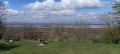
A Way of the Cross, a golf course, a chapel, viewpoints, vineyards, a village, a campsite – this is what this trail, which is signposted all the way, has to offer. We will walk along the Wiiwegli (Red Diamond with a yellow bunch of grapes) and the Way of St James (yellow shell on a blue background), following a Way of the Cross (Stationenweg) on the way there. At the Maria Hügel pilgrimage chapel, we will stop to admire the view over the Rhine plain and the Vosges. There are plenty of benches, and a flight of steps leads to a shelter and picnic tables. The return journey will follow a marked local path. The walk passes through the charming village of Bamlach and its campsite.
Through the woods of Bruebach
 5.52 mi
+427 ft
-433 ft
2h 55
Easy
Departure from Brunstatt (Haut-Rhin)
5.52 mi
+427 ft
-433 ft
2h 55
Easy
Departure from Brunstatt (Haut-Rhin)
This route takes you on a walk through Bruebach and its surroundings, mainly through the surrounding woods.
Sundgau route: Durmenach - Luppach
 4.43 mi
+423 ft
-420 ft
2h 25
Moderate
Departure from Durmenach (Haut-Rhin)
4.43 mi
+423 ft
-420 ft
2h 25
Moderate
Departure from Durmenach (Haut-Rhin)
In warm weather, this is a pleasant walk from the Ill valley to the old bed of the Rhine at the foot of the Jura mountains. The well-marked path offers plenty of opportunities to rest and leads to a strange crypt, the last vestige of a convent destroyed during the Revolution, where the shadow of an exiled poet still lingers.