


Refine your search for walks in Fontaines (Yonne)
Fontaines (Yonne) walks


 Le Thabor
 Visorando Member
 4.28 mi
 +223 ft
 -223 ft
 2h 10
2h 10
 Easy
Easy
 Departure from Fontaines (Yonne) (Yonne)
Marked route No. 66.
A walk featuring long stretches through woodland with some lovely views from the occasional natural gaps in the hedgerows.
The Sauvage Forest
4.29 mi
+299 ft
-315 ft
2h 15
Easy
Departure from Fontaines (Yonne) (Yonne)
Marked route No. 78.
Fountains: ‘Shall I not drink your water?’
And yet, from the wash house at Impluvium to Les Bidons, from springs to streams, water is everywhere.
Discover Toucy with your family
 Tourist office
 2.31 mi
+151 ft
-151 ft
1h 10
Easy
Departure from Toucy (Yonne)
2.31 mi
+151 ft
-151 ft
1h 10
Easy
Departure from Toucy (Yonne)
Starting from the central car park on Place des Frères Genêt, you will discover the fishing lake and leisure centre very close to the town centre, offering a magnificent panorama. Crossing woods and medieval streets, stop at the promontory overlooking Place de la République, dominated by the bust of Pierre Larousse, and enjoy exceptional views of this village, whose existence has been documented since the middle ofthe 3rd century.
From the cobbled streets of Toucy to the pollarded trees of the Bois des Quatre Francs
9.09 mi
+666 ft
-640 ft
4h 45
 Moderate
Departure from Toucy (Yonne)
Moderate
Departure from Toucy (Yonne)
Marked trail No. 17A trail that smells of trogne trees. This tree, emblematic of field edges and woods, which for years has fed animals and heated homes in the Poyaudine region, can be found in countless numbers along this trail.On both the outward and return journeys, you will enjoy a wonderful discovery of the streets and alleys of Old Toucy.
The Tacot de Toucy
4.42 mi
+413 ft
-404 ft
2h 25
Easy
Departure from Toucy (Yonne)
Marked route No. 77.Between the slightly longer walks around Toucy and exploring the town centre, this walk offers the chance to gain some height and take in the lush greenery surrounding the village. These paths, which are walked regularly, offer great variety.
Arthé circular
 7.65 mi
+630 ft
-610 ft
4h 05
Moderate
Departure from Toucy (Yonne)
7.65 mi
+630 ft
-610 ft
4h 05
Moderate
Departure from Toucy (Yonne)
Signposted route N° 76This route starts from Toucy, birthplace of Pierre Larousse, 19th-century grammarian, lexicographer and educator. It offers multiple viewpoints and panoramas along ridge lines. The sunken paths winding under a dense canopy of vegetation create a romantic atmosphere that you're sure to enjoy. Then, at the bend in the path, you'll fall under the spell of the magnificent Château d'Arthé.
Toucy's Nature and Heritage
 Association / Club / Walk leader
 6.11 mi
+427 ft
-427 ft
3h 10
Easy
Departure from Toucy (Yonne)
6.11 mi
+427 ft
-427 ft
3h 10
Easy
Departure from Toucy (Yonne)
This very natural outing allows you to discover the landscaped paths, shaped by man over the centuries. It allows, with some beautiful viewpoints, to discover the Puisaye and the town of Toucy, nestled against a hill.
 By bike, from Toucy to Grandchamp Castle and back
30.55 mi
+1,004 ft
-984 ft
5 hrs
Moderate
Departure from Toucy (Yonne)
This cycle tourism route invites you to discover the architectural and natural heritage of this verdant Puisaye region, offering beautiful views of the surrounding villages, the Yonne valley and the very distinctive Tholon hills.
Battle Trail
 2.28 mi
+112 ft
-112 ft
1h 10
Easy
Departure from Fontenoy (Yonne) (Yonne)
2.28 mi
+112 ft
-112 ft
1h 10
Easy
Departure from Fontenoy (Yonne) (Yonne)
Walk in the footsteps of Charlemagne’s grandsons and discover the battlefield of Fontenoy, where Charlemagne’s empire was divided: this is what awaits you on this short historical trail.
Tremblay Trail
 5.71 mi
+259 ft
-256 ft
2h 50
Easy
Departure from Fontenoy (Yonne) (Yonne)
5.71 mi
+259 ft
-256 ft
2h 50
Easy
Departure from Fontenoy (Yonne) (Yonne)
Marked walk No. 15.
Nature and history at your feet. Along the way, discover the Château du Tremblay Regional Centre for Contemporary Art and the plateau where part of the Battle of Fontenoy took place.
Les Grandes Hédes
3.80 mi
+141 ft
-144 ft
1h 50
Easy
Departure from Moulins-sur-Ouanne (Yonne)
Starting from the main car park at the foot of the town hall, discover the village wash house. After crossing the Ouanne, a country walk begins along narrow roads leading to local hamlets and fairly well-shaded paths.
The Moulin Rouge and the Château du Fort
 5.45 mi
+308 ft
-299 ft
2h 45
Easy
Departure from Mézilles (Yonne)
5.45 mi
+308 ft
-299 ft
2h 45
Easy
Departure from Mézilles (Yonne)
Signposted route N°69.In this village, known for bric-a-brac, the sunken paths are all the rage! A guaranteed immersion in nature.Mézilles is one of the "Cités de caractères de Bourgogne - Franche-Comté" villages.
Between Levis and Fontenoy: the Battle sites
 7.77 mi
+505 ft
-486 ft
4h 00
Moderate
Departure from Levis (Yonne)
7.77 mi
+505 ft
-486 ft
4h 00
Moderate
Departure from Levis (Yonne)
Marked trail No. 43.
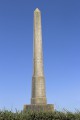
A historical journey back to the time of Charlemagne's succession. His grandsons fought over the kingdom. This division was settled by a battle and... discover the places and history of this epic story.
The Sablon Trail
 4.59 mi
+266 ft
-289 ft
2h 20
Easy
Departure from Levis (Yonne)
4.59 mi
+266 ft
-289 ft
2h 20
Easy
Departure from Levis (Yonne)
In days gone by, this path was used by the children of Sablon to walk to the local school in Levis.
You can also explore part of the battlefield at the site of the Battle of Fontenoy.
Dracy's Hills
5.29 mi
+335 ft
-325 ft
2h 45
Easy
Departure from Dracy (Yonne)
In the land of fruit trees, a walk through the valleys and hills. Sunken paths, springs, viewpoints and built heritage enhance this outing.
The Moulin de Hausse Côte Trail
 7.04 mi
+364 ft
-364 ft
3h 35
Moderate
Departure from Saints (Yonne) (Yonne)
7.04 mi
+364 ft
-364 ft
3h 35
Moderate
Departure from Saints (Yonne) (Yonne)
Marked walk No. 19.
Winding through the lush green landscapes of the woods and meadows of Puisaye and the cultivated fields of Forterre, this trail passes from one natural region to another and offers beautiful panoramic views from the Hausse Côte hill.
Vanneau Mill Trail
 4.77 mi
+207 ft
-194 ft
2h 20
Easy
Departure from Saints (Yonne) (Yonne)
4.77 mi
+207 ft
-194 ft
2h 20
Easy
Departure from Saints (Yonne) (Yonne)
Marked walk No. 18.
Set off along the paths to discover a farm of yesteryear. Explore a botanical trail, a heritage orchard and a museum of agricultural tools.
The Marquise du Deffand Trail
 7.04 mi
+325 ft
-322 ft
3h 30
Moderate
Departure from Saints (Yonne) (Yonne)
7.04 mi
+325 ft
-322 ft
3h 30
Moderate
Departure from Saints (Yonne) (Yonne)
Marked walk No. 20.A historic route featuring, close to the start, the Cross of Saint-Prix (martyred in 274), the village of Le Deffand where the Marquise du Deffand stayed inthe 18th century, and the monument to Alfred Saison – a republican activist – who fought in 1852 against Louis Napoleon Bonaparte’s coup d’état of 2 December 1851.
Saint-Marc Chapel
7.72 mi
+719 ft
-702 ft
4h 10
Moderate
Departure from Leugny (Yonne) (Yonne)
Marked route No. 46.
Along the banks of the Puisaye, this walk takes place largely on the hills of Forterre. The fields and horizons are vast, whilst the woods provide welcome shade. The Chastenay discovery garden adds a touch of nature.
Wash houses and the Sainte-Geneviève Spring
 8.45 mi
+594 ft
-568 ft
4h 25
Moderate
Departure from Sementron (Yonne)
8.45 mi
+594 ft
-568 ft
4h 25
Moderate
Departure from Sementron (Yonne)
Marked trail No. 54.
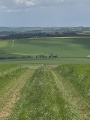
This walk is a real surprise! Set off from the village church, then head to a hamlet to find the town hall, before wandering through the rugged, limestone terrain of La Forterre to discover isolated hamlets and farms. On the way back, enjoy a lovely view from the plateau over the woods and landscapes of the Poyau region.
L'étang de Moutiers depuis Saint-Sauveur-en-Puisaye
6.01 mi
+253 ft
-269 ft
3h 00
Easy
Departure from Saint-Sauveur-en-Puisaye (Yonne)
From Colette's birthplace, discover the greenways, the village of Moutiers and the Moutiers pond, where a few water chestnuts still float.Saint-Sauveur-en-Puisaye is listed as one of the "Cités de caractères de Bourgogne - Franche-Comté" (villages of character in Burgundy-Franche-Comté).
Colette Trail
 3.69 mi
+292 ft
-318 ft
1h 55
Easy
Departure from Saint-Sauveur-en-Puisaye (Yonne)
3.69 mi
+292 ft
-318 ft
1h 55
Easy
Departure from Saint-Sauveur-en-Puisaye (Yonne)
Marked Trail No. 1.This trail, dedicated to Colette, was opened in 1993 by pupils from the Collège Colette in Saint-Sauveur-en-Puisaye.All along this path, everything evokes the stories of this writer, who was born in Saint-Sauveur-en-Puisaye in 1873. She described her native region so vividly – even though she used different names for the villages and characters – that every nook and cranny exudes the spirit of her literature.Saint-Sauveur-en-Puisaye is listed among the ‘Cités de caractères de Bourgogne – Franche-Comté’ villages.
The Puisaye Ponds
 18.36 mi
+892 ft
-869 ft
9h 15
18.36 mi
+892 ft
-869 ft
9h 15
 Difficult
Departure from Saint-Sauveur-en-Puisaye (Yonne)
Difficult
Departure from Saint-Sauveur-en-Puisaye (Yonne)
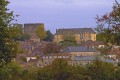
In this part of the Puisaye region, at the foot of the Forterre hills, there are numerous springs and ponds. Whether small or large, natural or man-made, these bodies of water set amongst the greenery shape the landscape. Together with the surrounding woodland, they form habitats home to abundant flora and fauna, as well as serving as a water reservoir to feed the Briare Canal.
Pollarded trees and Puisaye cedars
 6.40 mi
+459 ft
-472 ft
3h 20
Moderate
Departure from Saint-Sauveur-en-Puisaye (Yonne)
6.40 mi
+459 ft
-472 ft
3h 20
Moderate
Departure from Saint-Sauveur-en-Puisaye (Yonne)
Another way to explore Colette’s homeland: follow the paths shaped by agriculture, the work of the hedges (landmarkers) and the local heritage.
L'Orme du Pont by bike from Saint-Sauveur-en-Puisaye
7.73 mi
+381 ft
-364 ft
1.5 hrs
Easy
Departure from Saint-Sauveur-en-Puisaye (Yonne)
After a brief incursion into the grounds of the Colette castle/museum and the passage at the foot of the Saracen tower, this walk continues through the countryside along the lanes of the Puisaye.
The small and large ponds of Puisaye
26.28 mi
+988 ft
-991 ft
5 hrs
Difficult
Departure from Saint-Sauveur-en-Puisaye (Yonne)
You’ll discover no fewer than eight ponds, each with a different shape, size and habitat, not to mention the pools and streams you’ll come across in this region where Colette certainly admired them all – and, in some cases, loved them.
The icing on the cake is that you can have a picnic by the banks of one of them and take a dip in the Bourdon reservoir!
Sentier de la Folie
 7.28 mi
+289 ft
-262 ft
3h 35
Moderate
Departure from Saint-Sauveur-en-Puisaye (Yonne)
7.28 mi
+289 ft
-262 ft
3h 35
Moderate
Departure from Saint-Sauveur-en-Puisaye (Yonne)
Marked hike N°2.
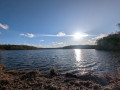
A hike in the heart of the birthplace of Colette. Through woods and passing by ponds, often described in her work.
Between Puisaye and Forterre: water and woodland
 18.39 mi
+1,273 ft
-1,283 ft
9h 35
Difficult
Departure from Saint-Sauveur-en-Puisaye (Yonne)
18.39 mi
+1,273 ft
-1,283 ft
9h 35
Difficult
Departure from Saint-Sauveur-en-Puisaye (Yonne)
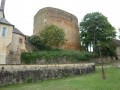
A tour of Puisaye in the land of Colette and the Potiers, through its picturesque villages, heritage and landscapes where land, water and forests meet.
The Sainte-Reine Chapel in Villiers-Saint-Benoît
4.21 mi
+246 ft
-220 ft
2h 10
Moderate
Departure from Villiers-Saint-Benoît (Yonne)
Marked hike No. 102.
This little path, which smells of hazelnuts as Mireille sang, has more of a scent of hornbeam and humus in the undergrowth. It is very pleasant to discover the beautiful landscape with its pollarded trees and hedges that shade much of the route.
The Test-Milon hill
5.75 mi
+390 ft
-367 ft
3h 00
Moderate
Departure from Lain (Yonne)
Marked walk No. 59.
Route from Lain around Test-Milon, including a section along the Roman road.
Chemin de la Romance
10.99 mi
+719 ft
-748 ft
5h 40
Moderate
Departure from Lain (Yonne)
Marked walk No. 58.
This circular route takes you along old tracks to discover the different aspects of the Forterre, a land of arable farming dotted with woods.
Le Bois Planté
9.52 mi
+197 ft
-197 ft
4h 35
Moderate
Departure from Villiers-Saint-Benoît (Yonne)
Marked walk No. 103.
Surrounded by woods and forests, Villiers-Saint-Benoît is rich in water, with its springs, streams and the River Ouanne, which flows through the valley floor. The largest water reserve is located underground and, via interconnected distribution networks, supplies a large proportion of the homes in this region.
The Parly's Chestnut Grove
 3.76 mi
+266 ft
-282 ft
2h 00
Easy
Departure from Parly (Yonne)
3.76 mi
+266 ft
-282 ft
2h 00
Easy
Departure from Parly (Yonne)
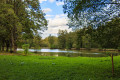
All along the route, you will discover centenaries trees, educational signs about the chestnut tree.
The Moutiers pond
 8.43 mi
+423 ft
-413 ft
4h 15
Moderate
Departure from Moutiers-en-Puisaye (Yonne)
8.43 mi
+423 ft
-413 ft
4h 15
Moderate
Departure from Moutiers-en-Puisaye (Yonne)
Marked trail No. 3.From the church with its magnificent murals, pass the Gué Ricart, discover the Moutiers pond via the Marseillaise, then the undergrowth before reaching Saint-Sauveur, Pays de Colette and her birthplace.
L'Orme du Pont from Moutiers-en-Puisaye
 5.69 mi
+371 ft
-351 ft
1 hr
Easy
Departure from Moutiers-en-Puisaye (Yonne)
5.69 mi
+371 ft
-351 ft
1 hr
Easy
Departure from Moutiers-en-Puisaye (Yonne)
An all-season trail in this region of Puisaye amid hedges (bouchures), heritage, and legends.
Moutiers en Puisaye and its ponds
 6.93 mi
+394 ft
-387 ft
3h 30
Moderate
Departure from Moutiers-en-Puisaye (Yonne)
6.93 mi
+394 ft
-387 ft
3h 30
Moderate
Departure from Moutiers-en-Puisaye (Yonne)
From this old pottery village, discover the ponds and small paths that make Puisaye so charming. If you are keen on wildlife or landscape photography, you will be delighted. If you are discreet, you will be able to see many varieties of ducks on the ponds, as well as herons and egrets. Sometimes you may be surprised by the passage of deer or roe deer and even nutria along the Loing.
Three Lakes Route
7.45 mi
+338 ft
-344 ft
3h 45
Moderate
Departure from Moutiers-en-Puisaye (Yonne)
Marked trail No. 44.Through woods and farmland, passing by ponds, discover the environments where the earth is shaped into artistic creations and pottery.
The pond and heritage of Moutiers-en-Puisaye
 5.71 mi
+217 ft
-233 ft
2h 50
Easy
Departure from Moutiers-en-Puisaye (Yonne)
5.71 mi
+217 ft
-233 ft
2h 50
Easy
Departure from Moutiers-en-Puisaye (Yonne)
Starting from the village of Moutiers-en-Puisaye, cross the Loing, pass through woods, enjoy a beautiful view of the ruins of the old abbey and the pond, whilst discovering the local heritage.