


Refine your search for walks in Lorigné
Lorigné walks


 A walk in the countryside near Lorigné
 Visorando Member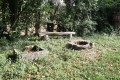
 2.96 mi
 +115 ft
 -112 ft
 1h 30
1h 30
 Easy
Easy
 Departure from Lorigné (Deux-Sèvres)
A short walk combining heritage discoveries with a chance to enjoy nature. It takes in several wells, a pond, bread ovens, remarkable trees and a beautiful viewpoint.
Between Jouhé Castle and the murals in Pioussay Church
 7.28 mi
+131 ft
-135 ft
3h 30
7.28 mi
+131 ft
-135 ft
3h 30
 Moderate
Departure from Pioussay (Deux-Sèvres)
Moderate
Departure from Pioussay (Deux-Sèvres)
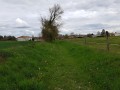
A pleasant walk through a bocage landscape of open fields and woods. There are some wonderful discoveries to be made, both in terms of the scenery and the heritage of the Poitou region, including, amongst others, the magnificent Château de Jouhé and the church at Pioussay with its wall frescoes. In the villages along the route, there are beautiful traditional houses, some of which have been restored and others currently undergoing restoration.
Montalembert circular route via the Montée Rouge
 5.64 mi
+282 ft
-285 ft
2h 50
Moderate
Departure from Montalembert (Deux-Sèvres)
5.64 mi
+282 ft
-285 ft
2h 50
Moderate
Departure from Montalembert (Deux-Sèvres)
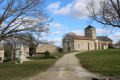
This walk offers the chance to discover a geological curiosity: the Montalembert Horst. Oriented along the granite axis of the Armorican Massif and the Massif Central – that is, north-west to south-east – it forms a remarkable hill (186 m high), 9 km long and 1 km wide, with wooded slopes and red clay soils (used for making roof tiles and growing chestnut trees).
In the vicinity of the Benedictine Abbey of Les Alleuds
 7.25 mi
+26 ft
-26 ft
3h 20
Moderate
Departure from Les Alleuds (Deux-Sèvres) (Deux-Sèvres)
7.25 mi
+26 ft
-26 ft
3h 20
Moderate
Departure from Les Alleuds (Deux-Sèvres) (Deux-Sèvres)
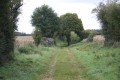
This walk takes you along the path used by the people of Melleran to reach Les Alleuds via ‘le Chemin de l’Abbaye’. The route takes you through the Bois du Juge, past the villages and their limestone buildings characteristic of the Pays Mellois, whilst also allowing you to discover a rich heritage of trees: lime, chestnut, oak and walnut, amongst others.
For your information, the word ‘alleu’ dates back to the 10th century and refers to land without a lord.
The Meulières of Caunay
 5.15 mi
+66 ft
-49 ft
2h 25
Easy
Departure from Caunay (Deux-Sèvres)
5.15 mi
+66 ft
-49 ft
2h 25
Easy
Departure from Caunay (Deux-Sèvres)
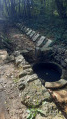
A pleasant walk through the countryside, offering varied scenery ranging from open fields to hedgerows and woodland. This route allows you to admire both the built and natural heritage, in particular the Fontadam fountain, said to have miraculous properties, and the church at Caunay.
Hidden natural beauty between Javarzay and Lussais
 5.06 mi
+30 ft
-30 ft
2h 20
Easy
Departure from Chef-Boutonne (Deux-Sèvres)
5.06 mi
+30 ft
-30 ft
2h 20
Easy
Departure from Chef-Boutonne (Deux-Sèvres)
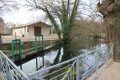
A lovely walk through the bocage countryside south of Javarzay, with its castle, and Lusseau. This walk, which takes you on both sides of the River Boutonne, is very pleasant and offers a lovely escape into the countryside right on the outskirts of Chef-Boutonne, a small town that is also well worth a visit.
The Well Route in Saint-Macoux
 8.74 mi
+259 ft
-249 ft
4h 15
Moderate
Departure from Saint-Macoux (Vienne)
8.74 mi
+259 ft
-249 ft
4h 15
Moderate
Departure from Saint-Macoux (Vienne)
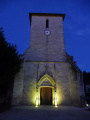
Discover the village of Saint-Macoux through its wells and springs.
The Saint-Coutant and Greenwich meridian circular loop
 5.16 mi
+180 ft
-187 ft
2h 30
Easy
Departure from Saint-Coutant (Deux-Sèvres) (Deux-Sèvres)
5.16 mi
+180 ft
-187 ft
2h 30
Easy
Departure from Saint-Coutant (Deux-Sèvres) (Deux-Sèvres)
A walk offering varied scenery. It starts from Saint-Coutant, a village situated on the edge of the Melle plateau. It crosses the route of a Roman road and passes directly over the Greenwich meridian.
Saint-Vincent-La-Châtre Circular Route
7.21 mi
+98 ft
-98 ft
3h 25
Moderate
Departure from Saint-Vincent-la-Châtre (Deux-Sèvres)
An easy route over almost flat terrain along grassy paths lined with hedges. The scenery is very varied and mostly away from built-up areas, making for a very pleasant walk.
Circular walk between Chail and Fontivillié
 7.64 mi
+125 ft
-125 ft
3h 35
Moderate
Departure from Chail (Deux-Sèvres)
7.64 mi
+125 ft
-125 ft
3h 35
Moderate
Departure from Chail (Deux-Sèvres)
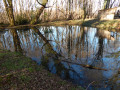
A pleasant walk through the plains and woods of Chail. This route forms part of the ‘Grand 8’ trail; the other section is located in the former commune of Sompt.
Circular route from La Caillaudrie to Les Villedonnes, featuring an ancient Roman road
 5.72 mi
+177 ft
-187 ft
2h 45
Moderate
Departure from Pouffonds (Deux-Sèvres)
5.72 mi
+177 ft
-187 ft
2h 45
Moderate
Departure from Pouffonds (Deux-Sèvres)
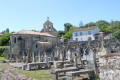
A pleasant walk through a hilly area south of Pouffonds and across the plateau to the east. This route begins with a walk mainly along small roads until you reach the wonderful village of Coubortiges, with its many well-restored old houses. It continues through the countryside, with its varied crops, in search of an ancient Roman road which you follow in the second half of this walk. This nature-filled route is suitable for all weather conditions.
Pouffonds - Coubortiges and its traditional architecture
 5.78 mi
+203 ft
-233 ft
2h 50
Moderate
Departure from Pouffonds (Deux-Sèvres)
5.78 mi
+203 ft
-233 ft
2h 50
Moderate
Departure from Pouffonds (Deux-Sèvres)
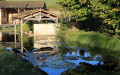
A lovely, varied route with beautiful sections through woodland or along a river (the Marseillaise). You’ll also discover local crops. As throughout the Pays Mellois, traditional architecture is evident, with a particular highlight being the charming village of Coubortiges.
This route alternates between wide farm tracks, a few sections of narrower paths and links along quiet roads.
Fountains and wash houses at Mareuil and Mouchedune in Bournaveau
 5.52 mi
+135 ft
-105 ft
2h 40
Easy
Departure from Saint-Léger-de-la-Martinière (Deux-Sèvres)
5.52 mi
+135 ft
-105 ft
2h 40
Easy
Departure from Saint-Léger-de-la-Martinière (Deux-Sèvres)
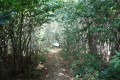
A lovely walking route starting from Bournaveau, offering varied scenery (countryside and woodland). This route allows you to discover some of the traditional architecture of southern Deux-Sèvres, notably at La Baudrière (well, bread oven) and two old wash houses at the Mareuil and Mouchedune fountains.
Four wash-and-water fountains in Saint-Léger-de-la-Martinière
 3.55 mi
+115 ft
-105 ft
1h 45
Easy
Departure from Saint-Léger-de-la-Martinière (Deux-Sèvres)
3.55 mi
+115 ft
-105 ft
1h 45
Easy
Departure from Saint-Léger-de-la-Martinière (Deux-Sèvres)
A pleasant little walk offering the chance to discover four beautiful wash-house fountains in the commune of Saint-Léger-de-la-Martinière: the Fontaine du Bignon, the Fontaine au Blanc, the Fontaine de Mouchedune and the Fontaine de Mareuil.
The Two Fountains Route
6.79 mi
+102 ft
-102 ft
3h 15
Moderate
Departure from Saint-Léger-de-la-Martinière (Deux-Sèvres)
A lovely walk through varied terrain, passing two springs, the Fontaine du Triangle and the Fontaine de l’Anguillière, and close to the source of the Sèvre Niortaise. This route follows mainly farm tracks with a few sections on minor roads. The landscape is pleasant and varied.