


Refine your search for walks in Baceno
Baceno walks


 Crampiolo - Alpe de Veglia
 Visorando Member
 10.03 mi
 +3,373 ft
 -3,346 ft
 13h 05
 Difficult
 Departure from Baceno (Verbano-Cusio-Ossola)
This fifth stage crosses the Devero and Veglia Natural Parks. During the day, you will cross two more passes, the Scatta d'Orogna and the Passo di Valtendra. After the second pass, the landscape becomes more harmonious. A pretty little stream and a long passage through the woods accompany the descent to Alpe de Veglia. Alpe de Veglia is a group of small hamlets located close to each other at the bottom of a very steep valley. Major peaks such as Monte Leone (3,553 m) and Bortelhorn (3,194 m) surround these peaceful hamlets.
Crampiolo - Salecchio Superiore
 9.04 mi
+3,173 ft
-4,094 ft
6h 55
Difficult
Departure from Baceno (Verbano-Cusio-Ossola)
9.04 mi
+3,173 ft
-4,094 ft
6h 55
Difficult
Departure from Baceno (Verbano-Cusio-Ossola)
At Crampiolo, the path to Bochetta della Valle is signposted and initially follows the left bank of Lago Dévéro. The path then continues towards the Alpi della Valle and Naga mountain pastures. Further up, a sign indicates the direction of Bocchetta della Valle. Walk along the Busin Superiore lakes and descend to the Busin Inferiore lake dam. The trail resumes below the dam (red markings) and the descent is quite steep to Alpe di Vova. From there, a balcony path leads to Salecchio Superiore via Casa Francoli. Crampiolo and Salecchio Superiore: two magnificent Walser-style villages.Markings: White-Red-White.
Binntal Hütte - Rifugio Margaroli
 5.65 mi
+1,896 ft
-2,165 ft
4h 15
Difficult
Departure from Binn (Valais)
5.65 mi
+1,896 ft
-2,165 ft
4h 15
Difficult
Departure from Binn (Valais)
This second stage crosses the Italian-Swiss border at the Albrunpass. You will enter the Val Formazza. The highest point of the day is at Scatta Minoïa. After the Ettore Conti bivouac, the descent to Lake Vannino is very pleasant and easy. The Rifugio Margaroli is located at the end of the lake. This relatively short stage gives you the opportunity to climb up to Lake Sruer at 2,351 m. (Absolute tranquillity guaranteed and magnificent views of Lake Vannino).
Salecchio Superiore - Crampiolo
 6.83 mi
+3,392 ft
-2,431 ft
6h 05
Difficult
Departure from Premia (Verbano-Cusio-Ossola)
6.83 mi
+3,392 ft
-2,431 ft
6h 05
Difficult
Departure from Premia (Verbano-Cusio-Ossola)
This fourth stage is marked by the crossing of two passes, the Passo Muretto and the Bocchetta di Scarpia. You will also cross several mountain pastures such as Alpe de Salecchio, Alpe de Pojola and Alpe de Sangiatto. In the evening, upon arrival in Crampiolo, you will have the opportunity to visit Lago Devero.
Salecchio Superiore - Bosco/Gurin
 9.32 mi
+4,993 ft
-4,869 ft
8h 40
9.32 mi
+4,993 ft
-4,869 ft
8h 40
 Very difficult
Departure from Premia (Verbano-Cusio-Ossola)
Very difficult
Departure from Premia (Verbano-Cusio-Ossola)
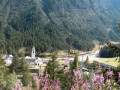
Return to Switzerland, in Ticino via the Guriner Furka. From Salecchio, take the same path as the day before to Alpi di Vova and follow the signs for Antillone and Fondovalle. Shortly after Altillone, the path joins the road, which you follow for 500 metres to the village of Fondovalle. A good path through the woods climbs towards the Guriner Furka via Alpe Stavello. Finally, a pass appears, the Passo della Foglia, but this is not the Guriner Furka. It takes another quarter of an hour to reach it via the path that branches off to the left. From Guriner Furka, you can see the chalets of Grossalp and the village of Bosco/Gurin. The descent is easy and pleasant. Bosco/Gurin is a Walser village, and German is commonly spoken there, even though it is located inTicino Markings: White-Red-White.
Binn - Crampiolo
 8.06 mi
+3,960 ft
-2,782 ft
7h 10
Difficult
Departure from Binn (Valais)
8.06 mi
+3,960 ft
-2,782 ft
7h 10
Difficult
Departure from Binn (Valais)
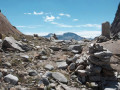
This stage is common to both the Mineralien Tour and the Walser Tour. The Geisspfadpass marks the border between Switzerland and Italy. In Binn, cross the small bridge over the Binna, follow the road to Fäld for about 1 km, and a sign on the right indicates the path to Geisspfadsee and Mässersee. This path joins the one coming from Fäld at the Mässerchäller chalet (1,879 m). Follow the signs for Maniboden. The climb to the Geisspfadpass is then very easy. The descent to Piano della Rossa is through large scree, with passages equipped with chains and ladders, but no particular difficulty. The descent to Crampiolo is very pleasant.Markings: White-Red-White]. Via Alpina Blue D3 and D2
From Binn to Simplon Pass
 54.93 mi
+19,777 ft
-17,884 ft
7 days
Difficult
Departure from Binn (Valais)
54.93 mi
+19,777 ft
-17,884 ft
7 days
Difficult
Departure from Binn (Valais)
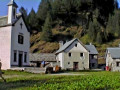
This hike is inspired by the Walser Tour and the Mineralien Tour. This magnificent route crosses numerous mountain pastures, where the dwellings are very varied: from wooden chalets to stone chalets. The hamlet of Salecchio Superiore consists of magnificent wooden chalets, several centuries old, all very well preserved. The chalet that houses the dormitories of the Rifugio "Zum Gora" dates back to the 17th century. In Italy, the route at the foot of the peaks bordering Switzerland, including Monte Leone, takes us through two regional parks: the Parco Naturale dell'Alpe Veglia and the Parco Naturale dell'Alpe Devero.
Binn - Binntal Hütte
 6.89 mi
+3,228 ft
-423 ft
6h 00
Difficult
Departure from Binn (Valais)
6.89 mi
+3,228 ft
-423 ft
6h 00
Difficult
Departure from Binn (Valais)
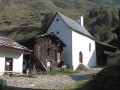
This stage is common to both the Walser Tour and the Valrando Mineral Tour. A few houses line this path in Freichi and then in Blatt. The Ofenhorn can be admired all the way to the Binntal Hütte. Although this is German-speaking territory, French is surprisingly the dominant language in this hut. The Binntal Hütte belongs to the Swiss Alpine Club: Delémont section.
Alpe de Veglia - Simplon Dorf
 13.19 mi
+4,596 ft
-5,587 ft
10h 05
Very difficult
Departure from Varzo (Verbano-Cusio-Ossola)
13.19 mi
+4,596 ft
-5,587 ft
10h 05
Very difficult
Departure from Varzo (Verbano-Cusio-Ossola)
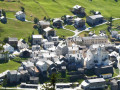
This sixth stage marks the return to Switzerland. You will cross the Passo dei Gialitt and pass through the last Italian mountain pastures of "Camoscella" and "Vallescia". After the Swiss mountain pastures of "Alpjerung" and "Corvetsch", you will descend towards the Simplon Pass road and rejoin the Stockeralper Weg at Alter Kaserne. This beautiful trail will take you to Gabi and then Simplon Dorf.
Rifugio Margaroli - Salecchio Superiore
 6.83 mi
+1,565 ft
-3,812 ft
4h 30
Difficult
Departure from Formazza (Verbano-Cusio-Ossola)
6.83 mi
+1,565 ft
-3,812 ft
4h 30
Difficult
Departure from Formazza (Verbano-Cusio-Ossola)
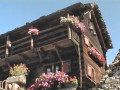
This third stage is very wild and not very busy. After Lago Vannino and Passo Busin, you will discover another lake, Lago Busin Inferiore. During the descent to Salecchio, you will notice the Walser habitat as you pass through hamlets such as Case Francoli and Salecchio Superiore. The dormitory at Rifugio Zum Gora dates back to the 17th century.
Bosco/Gurin - Capanna Alzaska
 9.83 mi
+4,478 ft
-3,740 ft
8h 25
Difficult
Departure from Bosco Gurin (Ticino)
9.83 mi
+4,478 ft
-3,740 ft
8h 25
Difficult
Departure from Bosco Gurin (Ticino)
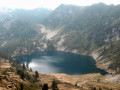
At the edge of the village, follow the path towards Cerentino. Descend to the village of Cerentino, then follow the road to Cevio for about 2.7 km. As a guide, about 2 km along, in a 180° bend, a sign indicates a path to Niva, and about 700 m further on, on the right, at a bus stop, the path to Capanna Alzasca begins. The path is shaded (chestnut, oak, hazel and other deciduous trees), but the climb is quite steep up to Alpe Orsalii. The climb to Bocchetta di Cansgei is more pleasant and well marked. The bochetta offers a magnificent view of Lago Alzasca. Descend to the sheepfold (Cortic di Cima) and follow the signs for Capanna Alzasaca. From the capanna, Lago Alzasca is about 20 minutes away. Lago Alzasca is considered the most beautiful natural lake in Ticino.Markings: White-Red-White.
Rosswald - Binn
 10.62 mi
+3,025 ft
-4,423 ft
7h 30
Difficult
Departure from Ried-Brig (Valais)
10.62 mi
+3,025 ft
-4,423 ft
7h 30
Difficult
Departure from Ried-Brig (Valais)
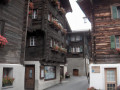
Classic stage of the Mineralien Tour. In Rosswald, signs point to the Saflisch Pass trail, Binn. The climb is quite steep up to the Fleshboden chairlift station. The path is always well marked and becomes more pleasant up to the Saflisch Pass. Stay on the AlpenPässe Weg to Binna Stausee. Descend to Binn via the Via Alpina Blue. The Saflischpass is the French/German language border. Markings: White-RedBwhite. AlpenPässe Weg - Via Alpina Blue D4
The Riederhorn from Bettmeralp
 7.49 mi
+1,811 ft
-1,804 ft
5h 00
Difficult
Departure from Riederalp (Valais)
7.49 mi
+1,811 ft
-1,804 ft
5h 00
Difficult
Departure from Riederalp (Valais)
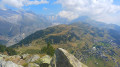
The Riederhorn is a peak overlooking the village of Riederalp. From Bettmeralp, the route follows the Aletsch Promenade and then the UNESCO Promenade to reach Rieder Furka and Villa Cassel. The route continues with the ascent of the Riederhorn and follows the ridge. The return to Villa Cassel takes you through the Bettwald forest, which overlooks the Gibidum reservoir, a lake fed by the Aletsch Glacier.
 Circular walk from Bettmeralp to Fiescheralp, returning via the Panoramaweg
 7.52 mi
+1,585 ft
-1,565 ft
5 hrs
7.52 mi
+1,585 ft
-1,565 ft
5 hrs
 Moderate
Departure from Riederalp (Valais)
Moderate
Departure from Riederalp (Valais)
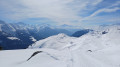
A beautiful panoramic hike linking the resorts of Bettmeralp and Fiescheralp. Along the route, there are numerous vantage points offering views of the Valais peaks over 4,000 metres, including the Weissmies, the Mischabel massif, the Monte Rosa massif, the Matterhorn and the Weisshorn. It is possible to ascend to the Eggishorn by cable car.
Bettmeralp-Golmenegg circular winter loop
 2.55 mi
+410 ft
-417 ft
1.5 hrs
2.55 mi
+410 ft
-417 ft
1.5 hrs
 Easy
Departure from Riederalp (Valais)
Easy
Departure from Riederalp (Valais)
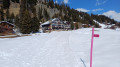
This pleasant winter hike partly follows the Aletschpromenade. Along this route, you will notice some beautiful old Valais houses. This route also offers several views of the Valais peaks over 4,000 metres.
In the Aletsch Forest and on the Aletsch Panorama Weg
 8.85 mi
+2,073 ft
-2,073 ft
5h 55
Difficult
Departure from Riederalp (Valais)
8.85 mi
+2,073 ft
-2,073 ft
5h 55
Difficult
Departure from Riederalp (Valais)
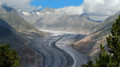
A circular walk starting from Bettmeralp. It passes through the village of Riederalp before climbing up to Rieder Furka. From this pass, you’ll descend through the beautiful Aletsch Forest to Silbersand. As you climb back up towards Alte Stafel, you’ll gradually come to see the Aletsch Glacier. At Moosfluh and along the ridge, you’ll enjoy panoramic views of the glacier. To the south, you can admire the 4,000-metre peaks, from the Weismiess to the Weisshorn via the Matterhorn. The return to Bettmeralp takes you past the lakes of Blausee and Bettmersee.
Bettmeralp, Hohfluh and Riederfurka circular loop
 7.02 mi
+1,204 ft
-1,198 ft
4 hrs
Moderate
Departure from Riederalp (Valais)
7.02 mi
+1,204 ft
-1,198 ft
4 hrs
Moderate
Departure from Riederalp (Valais)
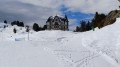
A superb panoramic hike offering views of the Aletsch Glacier to the north and, to the south, of numerous peaks over 4,000 metres, including the Matterhorn, the Weisshorn and the Monte Rosa massif.
From Märjelen Gletscherstube to Platta
 13.23 mi
+3,737 ft
-3,717 ft
9h 20
Difficult
Departure from Riederalp (Valais)
13.23 mi
+3,737 ft
-3,717 ft
9h 20
Difficult
Departure from Riederalp (Valais)
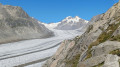
A magnificent route between Bettmeralp and Platta, with a viewpoint overlooking the Aletsch Glacier. You can admire the Aletsch Glacier all the way to Konkordia Platz, where several glaciers converge. This phenomenon forms the mid-moraines – lines of pebbles and rocks in the middle of the ice – which are clearly visible on the Aletsch Glacier. Along the way, before the tunnel under the Tälligrat, you can also see the Fischergletscher, another glacier in a valley further to the east.
The Eggishorn from the Bettmerhorn top station
 8.50 mi
+2,110 ft
-4,462 ft
5h 45
Difficult
Departure from Betten (Valais)
8.50 mi
+2,110 ft
-4,462 ft
5h 45
Difficult
Departure from Betten (Valais)
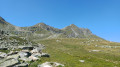
A very beautiful route starting from the upper Bettmerhorn station. After a panoramic viewpoint right at the start of the hike, you’ll make your way to the second summit, which offers the widest panorama of the Aletsch Glacier.
Bettmerhorn and back from Ried-Morel
 11.65 mi
+5,568 ft
-5,591 ft
10h 10
Difficult
Departure from Riederalp (Valais)
11.65 mi
+5,568 ft
-5,591 ft
10h 10
Difficult
Departure from Riederalp (Valais)
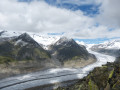
An out and back walk to the summit of the Bettmerhorn starting at Ried-Morel (or alternatively, Riederalp, Bettmeralp or Morel)
Hangebrucke, Belalp, Stausee Gibidum and the Massaweg
 14.13 mi
+6,699 ft
-6,690 ft
12h 20
Difficult
Departure from Riederalp (Valais)
14.13 mi
+6,699 ft
-6,690 ft
12h 20
Difficult
Departure from Riederalp (Valais)
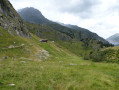
A Circular walk from Ried Morel (alternatively Morel or Riederalp) taking in an easy descent through woodland to glaciated rock scenery and the hanging bridge over the Massa which is the water flowing from the Aletsch Glacier. Then crossing peaceful alpine pastures to make the ascent up the steps to Hotel Belalp before dropping again on paths and roads to the dam at the end of Stausee Gibidum. The final section follows the scenic Massweg trail back to Reid Morel.
Märjelenseestube - Bellwad via the Aletsch Panoramaweg
 5.76 mi
+1,004 ft
-3,652 ft
3h 30
Difficult
Departure from Fieschertal (Valais)
5.76 mi
+1,004 ft
-3,652 ft
3h 30
Difficult
Departure from Fieschertal (Valais)
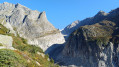
This third stage will take you to the Fieschergletcher, which runs parallel to the Aletschgletcher. On the Aspi Titter suspension bridge, you will be impressed by the depth of the Weisswasser river gorges. This fairly technical end of the route ends in the beautiful village of Bellwad, which has preserved its traditional chalets.
Moosfluh – Riederfurka – Bettmeralp
 4.82 mi
+312 ft
-1,634 ft
3 hrs
Moderate
Departure from Riederalp (Valais)
4.82 mi
+312 ft
-1,634 ft
3 hrs
Moderate
Departure from Riederalp (Valais)
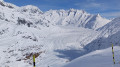
A superb panoramic hike, with a remarkable view of the Aletsch Glacier. On arriving at Riederfurka, you will notice Villa Cassel.
Zwischbergen - Alpe il Laghetto
 9.57 mi
+5,213 ft
-2,966 ft
8h 55
Difficult
Departure from Zwischbergen (Valais)
9.57 mi
+5,213 ft
-2,966 ft
8h 55
Difficult
Departure from Zwischbergen (Valais)
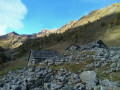
On leaving Zwischbergen, a fairly steep climb under the larch trees will take you to Passo Monscera. From this pass, which marks the border between Switzerland and Italy, you can see the Fletschhorn, the Lagginhorn and the Weissmies and, further to the left, the Pizzo d'Andolla. After passing the charming Rifugio Gattascosa, you will descend to San Bernado along a pleasant path. You will continue through alpine pastures to reach Vallaro and then Il Laghetto.
Simplon Dorf - Simplon Pass
 5.45 mi
+1,690 ft
-33 ft
4h 00
Moderate
Departure from Simplon (Valais)
5.45 mi
+1,690 ft
-33 ft
4h 00
Moderate
Departure from Simplon (Valais)
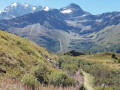
This final stage will take you from the village of Simplon to the Simplon Pass. Along the way, you will notice two remarkable buildings in this arid landscape: the Alte Spittel and the Barralhaus. Once you reach the Simplon Pass, you can take a short detour to see the Simplon Eagle and the imposing hospice.
Alpe il Laghetto - Rifugio Andolla
 5.96 mi
+2,238 ft
-2,201 ft
4h 40
Difficult
Departure from Bognanco (Verbano-Cusio-Ossola)
5.96 mi
+2,238 ft
-2,201 ft
4h 40
Difficult
Departure from Bognanco (Verbano-Cusio-Ossola)
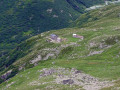
This day is punctuated by several passes. You will first cross the Passo di Campo, then the Passo Straciugo after the Laghi di Campo. At the Passo di Potimia, you will return to Swiss territory and cross the high plateaus that stretch to the foot of the Col d'Andolla. As you walk, you will be able to see the Weissmies and Pizzo Andolla. The Passo d'Andolla marks the entrance to Italy and the beginning of the descent into the Antrona Valley.