


Refine your search for walks in Villevallier
Villevallier walks


 The "owl" walk...
 Visorando Member
 5.59 mi
 +230 ft
 -220 ft
 2h 45
2h 45
 Easy
Easy
 Departure from Villevallier (Yonne)
Animal-themed walking trail created by Year 4-6 pupils at Villevallier Primary School in June 2015 as part of the "Un chemin, une école" (One trail, one school) initiative run by the Yonne branch of the French Hiking Federation.
Villecien to Saint-Aubin-sur-Yonne circular route
5.88 mi
+390 ft
-390 ft
3h 05
 Moderate
Departure from Saint-Aubin-sur-Yonne (Yonne)
Moderate
Departure from Saint-Aubin-sur-Yonne (Yonne)
A very lovely walk above the River Yonne, passing through Villecien. Much of the route is through woodland, then along the River Yonne. Suitable for all seasons.
In the deep forest, from Valprofonde to Corvisard
 Association / Club / Walk leader4.94 mi
+305 ft
-282 ft
2h 30
Easy
Departure from Villeneuve-sur-Yonne (Yonne)
Association / Club / Walk leader4.94 mi
+305 ft
-282 ft
2h 30
Easy
Departure from Villeneuve-sur-Yonne (Yonne)
The path reveals the intertwining of the forest and human activities, agricultural enclaves, hamlets, logging areas, always close to the majestic atmosphere of the forest. From the top of these tall trees, centuries contemplate us.
It also shows the first impacts of climate change, with dry ponds, emaciated trees and new species. It invites us to give the forest back its freedom to adapt and migrate at its own pace, to let it take control. The trail aims to restore a sense of confidence in what nature and the forest can achieve with and even without us.
It is this forest that the Ruban Vert wishes to help migrate to the next forest massifs of the woods and ponds of the Gâtinais in Burgundy.
From Verlin to Saint-Julien-du-Sault, a good overview of the local sights
 8.51 mi
+499 ft
-479 ft
4h 20
Moderate
Departure from Verlin (Yonne)
8.51 mi
+499 ft
-479 ft
4h 20
Moderate
Departure from Verlin (Yonne)
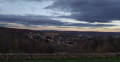
During this walk, you’ll discover the modest monuments that give Verlin and Saint-Julien-du-Sault their charm and which have often been the subject of legends: the Fontaine de la Vierge, the Croix du Turc Converti, the Pommesoies menhir and the Vauguillain Chapel. Along the way, do take the time to enjoy the Ru d’Ocq and the various views of the villages!
Bois de Saint-Martin circuit on the heights of Villeneuve-sur-Yonne
 Tourist office
 3.58 mi
+335 ft
-335 ft
1h 55
Easy
Departure from Villeneuve-sur-Yonne (Yonne)
3.58 mi
+335 ft
-335 ft
1h 55
Easy
Departure from Villeneuve-sur-Yonne (Yonne)
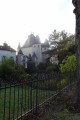
This pleasant circuit offers beautiful views of the town of Villeneuve-sur-Yonne, thanks to its small climbs. The path across woodland provides shade on one-third of the route during sunny weather.
From the Champ du Guet to Passy Castle
 10.25 mi
+860 ft
-830 ft
5h 30
Moderate
Departure from Villeneuve-sur-Yonne (Yonne)
10.25 mi
+860 ft
-830 ft
5h 30
Moderate
Departure from Villeneuve-sur-Yonne (Yonne)
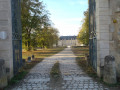
This beautiful route, which winds its way through the hills above Villeneuve-sur-Yonne, offers magnificent panoramic views of the town and the Yonne valley. It allows you to discover some of the many hamlets of Villeneuve-sur-Yonne, as well as the town’s rich heritage.
Route from Villeneuve-sur-Yonne to Passy - La Chaume
 6.98 mi
+472 ft
-463 ft
3h 35
Moderate
Departure from Villeneuve-sur-Yonne (Yonne)
6.98 mi
+472 ft
-463 ft
3h 35
Moderate
Departure from Villeneuve-sur-Yonne (Yonne)
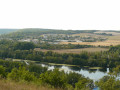
This route, which alternates between sections along cultivated fields and sections through woodland, offers beautiful views of the village of Passy, the Yonne valley, the lakes of Villeneuve-sur-Yonne and the town itself. On a clear day, you can even see the bell tower of Saint-Étienne Cathedral in Sens.
From Villeneuve-sur-Yonne to the hamlet of Château
 5.03 mi
+335 ft
-335 ft
2h 35
Easy
Departure from Villeneuve-sur-Yonne (Yonne)
5.03 mi
+335 ft
-335 ft
2h 35
Easy
Departure from Villeneuve-sur-Yonne (Yonne)
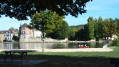
The route offers a pleasant walk along the banks of the Yonne, then through woodland (a third of the route on forest tracks) or along small country lanes (a third of the route). A pleasant walk through the hamlet of Château, whose site – known for having been home to a powerful oppidum of the Senones Gauls – rises some 100 metres above a bend in the River Yonne, offering beautiful views over the valley and the neighbouring hillsides.
From La Haute Épine to La Fontaine Rouge
 10.19 mi
+968 ft
-961 ft
5h 30
Moderate
Departure from Villeneuve-sur-Yonne (Yonne)
10.19 mi
+968 ft
-961 ft
5h 30
Moderate
Departure from Villeneuve-sur-Yonne (Yonne)
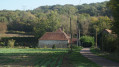
This beautiful route on the hills above Villeneuve takes you through the lands of the Thénard bequest, whose properties were used to provide for orphans. The route follows theGR®213trail and then theGRP® Tour de l’Orvanne trail, and runs mostly through woodland. However, the very beginning and the very end offer lovely views over Villeneuve-sur-Yonne. The sites of the headwaters of the Ru de Bourienne and the Fontaine Rouge are well worth a visit.
From Valprofonde to Chantereine, the spotlight is on Villeneuve-sur-Yonne
 11.34 mi
+961 ft
-935 ft
6h 05
Moderate
Departure from Villeneuve-sur-Yonne (Yonne)
11.34 mi
+961 ft
-935 ft
6h 05
Moderate
Departure from Villeneuve-sur-Yonne (Yonne)
This beautiful route, which winds its way through the hills above Villeneuve-sur-Yonne, offers magnificent panoramic views of the town and the Yonne valley. It allows you to explore some of the many hamlets of Villeneuve-sur-Yonne, as well as the town’s quays and ‘promenades’, which follow the line of the old ramparts. The route is signposted with the red and white markings ofthe GR®213for the first part of the walk, then with yellow markings for the rest of the route.
Beaudemont Route
 3.81 mi
+318 ft
-318 ft
2h 00
Easy
Departure from Villeneuve-sur-Yonne (Yonne)
3.81 mi
+318 ft
-318 ft
2h 00
Easy
Departure from Villeneuve-sur-Yonne (Yonne)
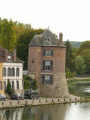
Starting from the medieval village of Villeneuve-sur-Yonne, why not give this easy walk a go? It will take you on a two-hour exploration of the lush countryside, after which you can enjoy a lovely view of the village below.
Way of St James: from Villeneuve-sur-Yonne to Joigny
 12.22 mi
+427 ft
-394 ft
6h 00
Moderate
Departure from Villeneuve-sur-Yonne (Yonne)
12.22 mi
+427 ft
-394 ft
6h 00
Moderate
Departure from Villeneuve-sur-Yonne (Yonne)
Section of the Paris–Vézelay Way of St James
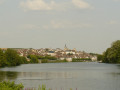
Two very typical little Burgundian towns, Villeneuve-sur-Yonne and Joigny, which have preserved, amongst other things, some beautiful churches.
Beautiful views all along the way (the Yonne valley, the hills, Saint-Julien-du-Sault)
This stage can easily be completed using the TER train, which takes you back to your starting point.
Around the lakes of Villeneuve-sur-Yonne
 4.79 mi
+13 ft
-13 ft
2h 15
Easy
Departure from Villeneuve-sur-Yonne (Yonne)
4.79 mi
+13 ft
-13 ft
2h 15
Easy
Departure from Villeneuve-sur-Yonne (Yonne)
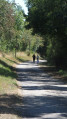
This pleasant, easy route is partly shaded in summer. The proximity to the water offers lovely views of the River Yonne and the fishing ponds at Villeneuve. You can spot a variety of wildlife and attractions… as well as anglers in action.
La balade buxoise et les Rossignols
4.04 mi
+66 ft
-72 ft
1h 55
Easy
Departure from Bussy-le-Repos (Yonne) (Yonne)
Cette randonnée vous permettra d'aborder la belle traversée en sous- bois de la Boularderie, puis le fameux passage en lisière à main droite du Grand Rossignol.
Les Déraclis
4.97 mi
+177 ft
-167 ft
2h 25
Easy
Departure from Bussy-le-Repos (Yonne) (Yonne)
This walk will take you through some lovely stretches across fields and through woodland, not to mention a few pretty hamlets and a beautiful viewpoint between points (6) and (7)
Mont Chauvot
9.01 mi
+1,421 ft
-1,444 ft
5h 25
Moderate
Departure from Joigny (Yonne)
The joy of this hike lies in discovering a variety of surprises as you traverse the woodland, tackling some lovely ascents and descents, not to mention the many beautiful views of the town of Joigny far below.
This route is sure to delight keen hikers.
Through the Joigny vineyards
3.60 mi
+512 ft
-482 ft
2h 05
Easy
Departure from Joigny (Yonne)
This route passes through the renowned Côte Saint-Jacques vineyards in Joigny.
Circular route to the north of Joigny on the Côte Saint-Jacques
 3.71 mi
+486 ft
-456 ft
2h 10
Easy
Departure from Joigny (Yonne)
3.71 mi
+486 ft
-456 ft
2h 10
Easy
Departure from Joigny (Yonne)
A circular route of less than 6km with a significant elevation gain, taking you above the beautiful town of Joigny, on the Côte Saint-Jacques, to the tranquillity of the woods and the Val d'Aubry via small paths, before descending back into the valley, with splendid views of Joigny, the Yonne and the surrounding area.
Joigny-Looze circular with return via the hillsides
 5.61 mi
+840 ft
-814 ft
3h 20
Easy
Departure from Joigny (Yonne)
5.61 mi
+840 ft
-814 ft
3h 20
Easy
Departure from Joigny (Yonne)
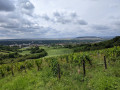
Circular route between the town of Joigny and the small village of Looze, passing through the plain on the way out and returning via the hillsides amongst vineyards and woods. Splendid views over the Yonne valley, the surrounding countryside and the town of Joigny.
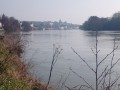
Le long du canal et de l'Yonne à partir de Joigny
 6.72 mi
+62 ft
-62 ft
3h 10
Easy
Departure from Joigny (Yonne)
6.72 mi
+62 ft
-62 ft
3h 10
Easy
Departure from Joigny (Yonne)
Long walk on flat ground, along the Joigny diversion canal to Cézy and back along the Yonne. Easy, peaceful route with the opportunity to spot wild birds such as wild ducks, cormorants and even wild swans.
La Sarboiserie
8.58 mi
+860 ft
-866 ft
4h 40
Moderate
Departure from Villeneuve-sur-Yonne (Yonne)
This walk offers plenty of lovely descents and climbs, with some lovely views and beautiful stretches through the woodland.
La balade béonaise et la Vallée de Chaillot
3.87 mi
+344 ft
-331 ft
2h 05
Easy
Departure from Béon (Yonne) (Yonne)
A lovely short walk around the village of Béon with beautiful views between points (1) and (2).
 From the Forest of Othe to the Wood of Cézy
24.31 mi
+840 ft
-830 ft
2.5 hrs
Moderate
Departure from Joigny (Yonne)
A very varied circular loop starting from Joigny, with quite a bit of elevation gain for the region. No technical difficulties; all paths are passable. You’ll cycle in both shade and sunshine. This circular loop follows the Yonne, allowing you to warm up, then climbs and winds through the Othe Forest, returning to the starting point via the other side of the valley.
The Jovinian Walk and La Collinière
3.85 mi
+584 ft
-574 ft
2h 15
Easy
Departure from Joigny (Yonne)
This walk will first take you through the narrow streets of Joigny, where you can see the church, and halfway through you will find yourself on the heights of the town with a beautiful view between the points (5) and (6)
The hillsides north of Joigny
 7.42 mi
+912 ft
-886 ft
4h 10
Moderate
Departure from Joigny (Yonne)
7.42 mi
+912 ft
-886 ft
4h 10
Moderate
Departure from Joigny (Yonne)
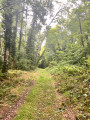
A very pleasant route with ascents and descents on the slopes of the Yonne, above Joigny. You will enjoy several crossings through the woods and the beautiful panorama of the town of Joigny from the highest point of the route. This route will delight keen walkers.
The Chamberiotte and Alouettes walk
3.92 mi
+256 ft
-256 ft
2h 00
Easy
Departure from Chamvres (Yonne)
This is a lovely, enjoyable walk where you can admire the famous passage between the D182 and point (2). The best part of this walk is the beautiful view between point (5) and point (6).
The parish walk and the Poteau
4.04 mi
+220 ft
-233 ft
2h 05
Easy
Departure from Paroy-sur-Tholon (Yonne)
This hike involves quite a few ascents and descents. The famous section lies between (2) and (3), all around the town of Paroy-sur-Tholon.
Route du Maquis de Bourgogne autour de Les Bordes
 5.70 mi
+489 ft
-466 ft
3h 05
Easy
Departure from Les Bordes (Yonne) (Yonne)
5.70 mi
+489 ft
-466 ft
3h 05
Easy
Departure from Les Bordes (Yonne) (Yonne)
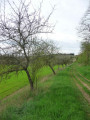
This easy walk takes you on a journey of discovery through Les Bordes and its hamlets. Above all, it allows you to step back in time to the summer of 1944, to follow in the footsteps of one of the maquis groups known as ‘Bourgogne’. This route, marked in yellow and dotted with historical information panels, recounts the attack of 3 August 1944, the lives and struggles of the maquis fighters, as well as the ‘sedentary’ resistance fighters, who were numerous in the farms, hamlets and villages.
Route of Resistance between Les Bordes and Dixmont
 12.90 mi
+876 ft
-850 ft
6h 40
Moderate
Departure from Les Bordes (Yonne) (Yonne)
12.90 mi
+876 ft
-850 ft
6h 40
Moderate
Departure from Les Bordes (Yonne) (Yonne)
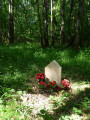
This trail takes you on a discovery of Dixmont and Les Bordes via a themed route (marked in green) dedicated to the Resistance; it is dotted with information panels. It recounts the story of the two maquis groups known as “Bourgogne”, which were based in this part of the Othe Forest during the winter and spring of 1944. Walkers will thus learn about the lives and struggles of the maquis fighters, as well as the ‘sedentary’ Resistance fighters, who were numerous in the farms, hamlets and villages.
Around Dixmont, from the mine to the Priory of L'Enfourchure
 8.04 mi
+541 ft
-528 ft
4h 10
Moderate
Departure from Dixmont (Yonne)
8.04 mi
+541 ft
-528 ft
4h 10
Moderate
Departure from Dixmont (Yonne)
This varied route allows you to explore the commune of Dixmont – the seat of a royal castellany in the12th century – and its surroundings. Of particular interest: the Priory of L'Enfourchure, founded by the Counts of Joigny in 1209. Ruined by the wars ofthe 15th and16th centuries, it was rebuilt in the16th century. Also visible along the route is the entrance to a former lignite mine, which was in operation duringthe 19th century.
Route du Maquis de Bourgogne autour de Dixmont
 4.36 mi
+269 ft
-269 ft
2h 15
Easy
Departure from Dixmont (Yonne)
4.36 mi
+269 ft
-269 ft
2h 15
Easy
Departure from Dixmont (Yonne)
This easy route takes you on a journey of discovery through Dixmont and its surroundings. Above all, it allows you to step back in time to the spring of 1944 and walk in the footsteps of a member of the Maquis known as "Bourgogne". This route, marked in red and dotted with historical information panels, recounts the attack of 15 May 1944, the lives and struggles of the maquis fighters, as well as the sedentary resistance fighters, who were numerous in the farms, hamlets and villages.
Exploring the wells around Dixmont
 10.41 mi
+692 ft
-689 ft
5h 25
Moderate
Departure from Dixmont (Yonne)
10.41 mi
+692 ft
-689 ft
5h 25
Moderate
Departure from Dixmont (Yonne)
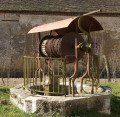
This route on the hills above Dixmont allows you to explore the old wells in the hamlets, which were in use right up until the 1970s. As you wander along the paths, you will also come across prehistoric remains, such as polishing stones and dolmens. A true journey back in time, set against a lush green backdrop.