


Refine your search for walks in Sennely
Sennely walks


 The Poustière circular in Sennely
 Visorando Member
 7.15 mi
 +36 ft
 -36 ft
 3h 20
3h 20
 Moderate
 Departure from Sennely (Loiret)
A lovely circular route through the forests of Sologne, criss-crossed by streams feeding numerous ponds. This circular route goes around the Baillère Valley, through which the Tannerie flows before joining the Cosson, which you will cross twice.
The Gaulardière circular walk in Sennely
 9.24 mi
+69 ft
-69 ft
4h 20
Moderate
Departure from Sennely (Loiret)
9.24 mi
+69 ft
-69 ft
4h 20
Moderate
Departure from Sennely (Loiret)
A lovely circular walk along varied paths and through the Sologne forests with their diverse range of tree species. If you remain alert and keep a low profile, you can spot numerous animal species, including birds, deer and wild boar. Please be aware of hunting seasons!
The Sologne as we like it: a circular route between two Solognots villages
 11.51 mi
+66 ft
-66 ft
5h 20
Moderate
Departure from Souvigny-en-Sologne (Loir-et-Cher)
11.51 mi
+66 ft
-66 ft
5h 20
Moderate
Departure from Souvigny-en-Sologne (Loir-et-Cher)
Starting from the pretty village of Souvigny-en-Sologne, this route will take you to the gates of Sennely along paths lined with forests and ponds. Here you will find all the charm of the Sologne, the Sologne as we love it, a natural and wild Sologne.
Souvigny-en-Sologne reveals its charms
 6.42 mi
+56 ft
-56 ft
3h 00
6.42 mi
+56 ft
-56 ft
3h 00
 Easy
Departure from Souvigny-en-Sologne (Loir-et-Cher)
Easy
Departure from Souvigny-en-Sologne (Loir-et-Cher)
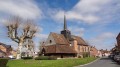
Starting from Souvigny, a village that has remained close to its history with its remarkable church with a caquetoir, this is a walk through woods and moors to discover the architecture of the Sologne region.
 From the white sands to the Lamotte Beuvron forest
 28.06 mi
+131 ft
-131 ft
4 hrs
Moderate
Departure from Vannes-sur-Cosson (Loiret)
28.06 mi
+131 ft
-131 ft
4 hrs
Moderate
Departure from Vannes-sur-Cosson (Loiret)
This circular route follows white sandy paths lined with broom-covered heathland and heather-filled undergrowth, crossing numerous streams. It passes through the Lamotte Beuvron State Forest and winds its way through the beautiful villages of Vannes-sur-Cosson, Souvigny-en-Sologne and Sennely.
The Trognards Route in Vannes-sur-Cosson
 2.40 mi
+620 ft
-604 ft
1h 40
Easy
Departure from Vannes-sur-Cosson (Loiret)
2.40 mi
+620 ft
-604 ft
1h 40
Easy
Departure from Vannes-sur-Cosson (Loiret)
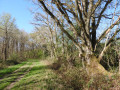
An easy family walk through the typical landscapes of Sologne, featuring several hedgerows of pollarded oaks: these pollarded oaks served as the farmers’ timber supply and formed hedgerows on an embankment enclosing the pastures.
On either side of the Cosson
 8.47 mi
+36 ft
-36 ft
3h 55
Moderate
Departure from Vannes-sur-Cosson (Loiret)
8.47 mi
+36 ft
-36 ft
3h 55
Moderate
Departure from Vannes-sur-Cosson (Loiret)
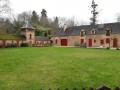
The walk follows the famous Chemin des Sables, with its heather, broom, mosses and lichens, and sections through mixed woodland. Beautiful farmhouses and homes dot the route.
Montlévrier and Château de la Turpinière
5.81 mi
+75 ft
-72 ft
2h 45
Easy
Departure from Ménestreau-en-Villette (Loiret)
A short 10 km walk in Sologne, taking in the lovely Château de la Turpinière.
Circular forest loop in wild Sologne
 10.20 mi
+131 ft
-131 ft
4h 50
Moderate
Departure from Ménestreau-en-Villette (Loiret)
10.20 mi
+131 ft
-131 ft
4h 50
Moderate
Departure from Ménestreau-en-Villette (Loiret)
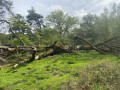
This circular route is very representative of the Sologne region, with its forests covered in moss, heather and ferns, its paths that are sometimes wide and straight, sometimes winding, grassy or muddy, its ponds and its brick houses, all of which contribute to its charm.
Hirtaignes Route
5.39 mi
+16 ft
-16 ft
2h 30
Easy
Departure from Brinon-sur-Sauldre (Cher)
Leaving Chaon, with its eclectic heritage, the walk gradually heads into the ‘real’ countryside with its paths lined with old trees.
Around Ménestreau-en-Villette via the Étang du Donjon
 7.37 mi
+56 ft
-66 ft
3h 25
Moderate
Departure from Ménestreau-en-Villette (Loiret)
7.37 mi
+56 ft
-66 ft
3h 25
Moderate
Departure from Ménestreau-en-Villette (Loiret)
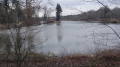
Starting from Ménestreau, a typical village with red brick houses, this route aims to bring back memories of a huge forest with a variety of tree species, in the heart of the Sologne region of ponds.
In the forgotten forest of Villette
 7.33 mi
+23 ft
-23 ft
3h 25
Easy
Departure from Ménestreau-en-Villette (Loiret)
7.33 mi
+23 ft
-23 ft
3h 25
Easy
Departure from Ménestreau-en-Villette (Loiret)
This hike aims to revive memories of a vast, partly forgotten forest that once stretched across the present-day communes of Saint-Cyr-en-Val, Marcilly-en-Villette and Ménestreau-en-Villette. It ends in a riot of colour during the rhododendron flowering season (May to June), when the undergrowth around the Château de Villette is covered with these flowers.
When the Pucelle joins Saint-Thibault
 6.09 mi
+23 ft
-23 ft
2h 50
Easy
Departure from Ménestreau-en-Villette (Loiret)
6.09 mi
+23 ft
-23 ft
2h 50
Easy
Departure from Ménestreau-en-Villette (Loiret)
A very pleasant getaway in the Sologne region, with a peaceful route through woods dotted with ponds. Avoid days when hunting is in season!
A circular loop through the Sologne region starting from the Domaine du Ciran
 3.85 mi
+66 ft
-82 ft
1h 50
Easy
Departure from Ménestreau-en-Villette (Loiret)
3.85 mi
+66 ft
-82 ft
1h 50
Easy
Departure from Ménestreau-en-Villette (Loiret)
Starting from the Ciran campsite, this short walk will introduce you to the many facets of the Sologne region: castles, a pond, forests, heathland, ducks, grebes and, with a bit of luck, roe deer and wild boar.
Historic Trail of the Vallée des Rois from Viglain
 7.12 mi
+66 ft
-66 ft
3h 20
Moderate
Departure from Viglain (Loiret)
7.12 mi
+66 ft
-66 ft
3h 20
Moderate
Departure from Viglain (Loiret)
Nestled on the edge of the Sologne region, Viglain reveals the riches of its countryside, with its woods, heathland, ponds and streams, not to mention the Sully-sur-Loire golf course, a vast green space dotted with trees of various species.
Le Cul d'Enfer, a circular in Sologne
 9.35 mi
+62 ft
-62 ft
4h 20
Moderate
Departure from Pierrefitte-sur-Sauldre (Loir-et-Cher)
9.35 mi
+62 ft
-62 ft
4h 20
Moderate
Departure from Pierrefitte-sur-Sauldre (Loir-et-Cher)
A superb walk. The varied landscapes of this circular route, including forests, meadows, ponds and the banks of the Sauldre Canal, make for a very pleasant walk.
Via La Rabolière
 8.23 mi
+98 ft
-66 ft
3h 50
Moderate
Departure from Marcilly-en-Villette (Loiret)
8.23 mi
+98 ft
-66 ft
3h 50
Moderate
Departure from Marcilly-en-Villette (Loiret)
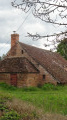
Between the plains and the forests, the route winds its way through game-rich countryside that is reminiscent of Maurice Genevoix’s novel *Raboliot*, named after a Sologne woodcutter with a passion for poaching. This is what the hamlet of La Rabolière recalls.
Circular of the Vieux Perroi in Brinon
 5.81 mi
+62 ft
-62 ft
2h 45
Easy
Departure from Brinon-sur-Sauldre (Cher)
5.81 mi
+62 ft
-62 ft
2h 45
Easy
Departure from Brinon-sur-Sauldre (Cher)
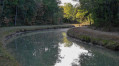
A beautiful circular in Sologne, the first part of this circular follows wide paths, while the second part quickly becomes wilder and more typical of the Sologne landscape.
Between the plains and forests of the Sologne region, starting from Marcilly-en-Villette
 13.27 mi
+49 ft
-52 ft
6h 10
13.27 mi
+49 ft
-52 ft
6h 10
 Difficult
Departure from Marcilly-en-Villette (Loiret)
Difficult
Departure from Marcilly-en-Villette (Loiret)
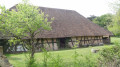
Starting from Marcilly-en-Villette, the walk takes in a wide variety of landscapes within a unspoilt environment, comprising woodland, farmland, heathland and ponds.
La route du Jongleur
 9.45 mi
+105 ft
-105 ft
4h 25
Moderate
Departure from Neuvy-en-Sullias (Loiret)
9.45 mi
+105 ft
-105 ft
4h 25
Moderate
Departure from Neuvy-en-Sullias (Loiret)
The juggler is one of the figures from the Gallo-Roman treasure found at Neuvy-en-Sulias in 1861 and displayed in the permanent exhibition in the garden adjoining the town hall.
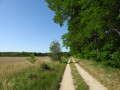
This very pleasant route offers a fine variety of landscapes typical of the Loire and Sologne regions, comprising three interwoven features: the wooded bocage and its meadows, the mixed deciduous and coniferous forest with few straight lines, and the open agricultural plain. The River Loire and the Leu stream provide a refreshing finale to the walk. A wealth of points of interest punctuate and enliven this route: a 16th-century château, the former port of Bouteille, a tile works listed as a historic monument, a windmill…
The route is marked in yellow by the FFR and featured in the guidebook ‘La Sologne à pied’.
Petit Leu Walk
 2.90 mi
+20 ft
-20 ft
1h 20
Easy
Departure from Neuvy-en-Sullias (Loiret)
2.90 mi
+20 ft
-20 ft
1h 20
Easy
Departure from Neuvy-en-Sullias (Loiret)
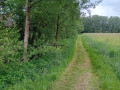
Quite close to the Loire between Sully and Châteauneuf, on the edge of the Sologne region, a family walk in the countryside. Starting from a charming village where a Gallo-Roman treasure was found in the 19th century.
Route du Gilloy
 6.12 mi
+856 ft
-1,020 ft
3h 35
Easy
Departure from Neuvy-en-Sullias (Loiret)
6.12 mi
+856 ft
-1,020 ft
3h 35
Easy
Departure from Neuvy-en-Sullias (Loiret)
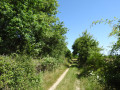
Close to the Loire, this fairly easy route runs alongside the Sologne region with its landscapes of woodland and farmland. Several points of interest (a pond, hedgerows, livestock farms) add a touch of variety to a route largely characterised by its woodland atmosphere. Best avoided during the hunting season from late September to February.
The Sauldre Canal from Brinon-sur-Sauldre
 11.85 mi
+69 ft
-69 ft
5h 30
Moderate
Departure from Brinon-sur-Sauldre (Cher)
11.85 mi
+69 ft
-69 ft
5h 30
Moderate
Departure from Brinon-sur-Sauldre (Cher)
A journey back in time to when, during the Second Empire, the Sologne region emerged from poverty thanks to the canals designed to transport marl—a natural mixture of limestone and clay—to fertilise its land. The route follows the towpath of the Sauldre Canal, which features no fewer than six locks, then passes through deciduous and coniferous forests with undergrowth of heather, as well as some moorland. It even runs alongside a modern farm!
Raboliot route from Brinon-sur-Sauldre
 10.30 mi
+131 ft
-98 ft
4h 50
Moderate
Departure from Brinon-sur-Sauldre (Cher)
10.30 mi
+131 ft
-98 ft
4h 50
Moderate
Departure from Brinon-sur-Sauldre (Cher)
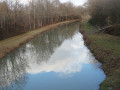
Set in the heart of the ‘Sologne des étangs’, this walk offers the chance to explore deciduous and coniferous forests, as well as the magnificent Sauldre Canal – a remnant of the major development works carried out in this province, which had long been neglected and only began to develop during the Second Empire.