Refine your search for walks in Pugey
Pugey walks


 Fort de Pugey Circular Route
 Visorando Member
 2.29 mi
 +361 ft
 -367 ft
 1h 20
1h 20
 Easy
Easy
 Departure from Pugey (Doubs)
A lovely family walk along the ridge overlooking the village of Pugey, passing by the Fort de Pugey. The route runs partly through woodland and across meadows, offering beautiful views of the lower Jura plateaus and the Franco-Swiss mountain range on a clear day. Nature lovers will be able to spot numerous plant species typical of the limestone hills around Besançon.
Pugey - Arguel via the ridges
 4.15 mi
+627 ft
-650 ft
2h 25
Easy
Departure from Pugey (Doubs)
4.15 mi
+627 ft
-650 ft
2h 25
Easy
Departure from Pugey (Doubs)
A short, easy walk to explore the villages of Pugey and Arguel via the ridges.
Circular Larnod route via Fort de Pugey, Arguel Castle and Valmy
5.65 mi
+932 ft
-909 ft
3h 25
 Moderate
Departure from Larnod (Doubs)
Moderate
Departure from Larnod (Doubs)
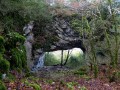
This short but intense hike will take you to a series of historical sites, including the military fort at Pugey, the ruins of Arguel Feudal Castle and the Valmy Monument, a memorial to the members of the Guy Mocquet resistance group who were shot at the citadel, as well as natural sites such as Malpertuis Cave, the Arguel Castle viewpoint, the viewpoint towards the Chère cave, the surprising Roche Trouée in the Martelin woods and finally the Valmy Monument viewpoint, which overlooks Besançon and the entire valley, from the Vosges to Burgundy.
La Roche Trouée du Bois Martelin
 2.37 mi
+607 ft
-591 ft
1h 35
Easy
Departure from Larnod (Doubs)
2.37 mi
+607 ft
-591 ft
1h 35
Easy
Departure from Larnod (Doubs)
A short but richly rewarding walk: the Rocher de Valmy and the memorial stele, a tribute to the 16 resistance fighters shot at the Citadel, located on a rocky outcrop (406m) overlooking the valley where the Doubs river forms one of its most charming meanders; the Martelin viewpoint over Avanne and the Côte de Planoise; the Roche Trouée, a gateway to the valley; and finally, the old royal road with more beautiful views of the neighbouring mountains.
The Rock of Valmy and Fort Pugey
 4.19 mi
+682 ft
-666 ft
2h 30
Easy
Departure from Larnod (Doubs)
4.19 mi
+682 ft
-666 ft
2h 30
Easy
Departure from Larnod (Doubs)
This gentle stroll to the Rocher de Valmy, a key site in the Franche-Comté Resistance, offers views of the lower valley where the Doubs river forms one of its most charming meanders. Then, between pastures and beautiful forests, you will discover the Belvédère Martelin overlooking Avanne and the Côte de Planoise, the Roche Trouée, a wild gateway opening onto the valley, and finally, the ruins of Fort de Pugey, the Grotte de Malpertuis and the massive, distant silhouette of Mont Poupet.
Le Grand Méandre and the Chalet d'Arguel
 8.21 mi
+801 ft
-814 ft
4h 30
Moderate
Departure from Larnod (Doubs)
8.21 mi
+801 ft
-814 ft
4h 30
Moderate
Departure from Larnod (Doubs)
This forest walk is ideal for an autumn morning, when you can surprise a few peaceful chamois in secret clearings and discover the superb Grand Méandre viewpoint over the Loue valley and the keep of the feudal castle of Chenecey, emerging from the forest. Return via the Chalet d'Arguel and pastures that will sharpen your sense of direction.
La Grange Rouge and the Grand Méandre
 5.46 mi
+548 ft
-564 ft
3h 00
Easy
Departure from Larnod (Doubs)
5.46 mi
+548 ft
-564 ft
3h 00
Easy
Departure from Larnod (Doubs)
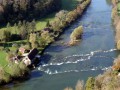
A forest walk, ideal for an autumn morning, where you might spot a few peaceful chamois in the depths of secret glades and discover, emerging from the forest setting, the superb Grand Méandre viewpoint over the Loue valley and the keep of the feudal castle of Chenecey.
The Côte d'Arguel
 4.95 mi
+1,053 ft
-1,047 ft
3h 10
Moderate
Departure from Arguel (Doubs)
4.95 mi
+1,053 ft
-1,047 ft
3h 10
Moderate
Departure from Arguel (Doubs)
Overlooking the village of Arguel, perched on their rocky outcrop, stand the ruins of the feudal castle, built in the early12th century, once again razed to the ground by the royal armies in 1668 during the conquest of Franche-Comté. This forest trail, with its charmingly steep paths, will take you past old wash houses, the Pisseur waterfall, a beautiful statue of Saint Vernier and lovely clearings overlooking the valley, where you might just spot a few chamois.
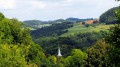
The Chère promontory
 2.47 mi
+630 ft
-633 ft
1h 40
Easy
Departure from Arguel (Doubs)
2.47 mi
+630 ft
-633 ft
1h 40
Easy
Departure from Arguel (Doubs)
Overlooking the village of Arguel, the ruins of a feudal fortress stand on a rocky outcrop. This short walk through pastures and beautiful forests offers superb views of the valley and, if you are discreet, you may spot a few deer or chamois.
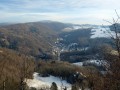
The Château d’Arguel viewpoint
 3.40 mi
+735 ft
-738 ft
2h 10
Easy
Departure from Arguel (Doubs)
3.40 mi
+735 ft
-738 ft
2h 10
Easy
Departure from Arguel (Doubs)
Overlooking the village of Arguel, ruins stand perched on a rocky outcrop: the remains of the feudal fortress (the foundations of a surrounding wall and the postern gate), built in the early 12th century and, once again, razed by the royal armies in 1668, during the conquest of Franche-Comté. However, this route, which strikes a balance between pastureland and beautiful woodland, offers superb views of the valley, where, if you know how to keep quiet, you may spot a few chamois.
From waterfalls to castles, starting from Arguel
 5.89 mi
+1,440 ft
-1,440 ft
4h 00
Moderate
Departure from Arguel (Doubs)
5.89 mi
+1,440 ft
-1,440 ft
4h 00
Moderate
Departure from Arguel (Doubs)
From the village of Arguel, dominated by a jagged rocky outcrop, you will descend into the valley, following the small gorges of La Pisseur, its three waterfalls and its miniature ravine. You will pass beneath the Bout du Monde waterfall and along an ancient Roman road and a ledge path to discover a superb viewpoint over the Doubs valley. You will climb up the sunny Mercureaux valley towards Saint-Pierre, not to Paradise, but towards Fort Rolland and the ruins of the feudal castle.
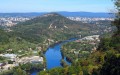
Arguel Castle and Pugey Fort
 5.23 mi
+971 ft
-971 ft
3h 15
Moderate
Departure from Arguel (Doubs)
5.23 mi
+971 ft
-971 ft
3h 15
Moderate
Departure from Arguel (Doubs)
Overlooking the village of Arguel, perched on their rocky outcrop, stand the ruins of the feudal castle, built in the early 12th century and, once again, razed to the ground by the royal armies in 1668 during the conquest of Franche-Comté. This route, winding through pastures and beautiful forests, offers superb views of the valley, Mont Poupet, the ruins of Pugey Fort, Malpertuis Cave and, if you manage to keep quiet, you may spot a few deer or chamois.
Mont d’Arguel
 2.49 mi
+656 ft
-650 ft
1h 45
Easy
Departure from Arguel (Doubs)
2.49 mi
+656 ft
-650 ft
1h 45
Easy
Departure from Arguel (Doubs)
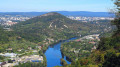
Set off to explore the viewpoints overlooking the Doubs valley. The route follows paths that are at times steep, leading to the ruins of the old Arguel Castle, several spectacular promontories and the Chère viewpoint. Amidst cliffs, forests, pastures and traces of the past, the route offers a wonderful variety of landscapes. Sections along the cliff edge require caution, but the 180° panoramic views more than make up for the effort of the climb.
The Rock of Valmy
 5.30 mi
+896 ft
-892 ft
3h 15
Easy
Departure from Arguel (Doubs)
5.30 mi
+896 ft
-892 ft
3h 15
Easy
Departure from Arguel (Doubs)
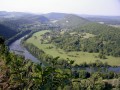
On 26 September 1943, between 7.36am and 8.24am, 16 members of the Guy Mocquet and Marius Vallet resistance groups were shot at the citadel. Later, the German officer in charge of the operation reported the end of the shootings in these terms: " None of them agreed to be blindfolded. They all died bravely, shouting 'Long live France!'" Hike in tribute to the memorial stone located at one of the most beautiful viewpoints in the Besançon area.
The End of the World
 6.98 mi
+1,155 ft
-1,135 ft
4h 15
Moderate
Departure from Beure (Doubs)
6.98 mi
+1,155 ft
-1,135 ft
4h 15
Moderate
Departure from Beure (Doubs)
Twelve short kilometres to the end of the world: a great destination that won't tire you out. You will discover the old village of Beure, a waterfall, an old wash house, a charming little church and its cemetery, and several viewpoints over the Doubs valley. Perhaps you will also have time to spare a thought for the young men who died under Nazi bullets, whose memory is perpetuated by the memorial at Rocher de Valmy.
The Fort of Planoise
 3.92 mi
+869 ft
-850 ft
2h 35
Easy
Departure from Avanne-Aveney (Doubs)
3.92 mi
+869 ft
-850 ft
2h 35
Easy
Departure from Avanne-Aveney (Doubs)
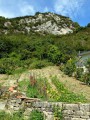
Starting from the church in Avanne, you will walk along the river, climb up to the cabordes, old dry stone winegrowers' huts, then on to Fort de Planoise or Fort Moncey, built in 1877, the first defensive rampart of the city of Besançon. You will pass numerous batteries and fortifications at a military pace, then stop at the superb viewpoints, one overlooking Besançon and its hills, the second to the south, overlooking the Doubs valley and the Jura mountains.
The Bout du Monde waterfall in Beure
 1.26 mi
+531 ft
-535 ft
1h 05
Easy
Departure from Beure (Doubs)
1.26 mi
+531 ft
-535 ft
1h 05
Easy
Departure from Beure (Doubs)
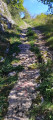
A lovely short but varied loop. After the Cascade du Bout du Monde waterfall and a detour to the old wash house, the trail climbs steeply through rocky, green surroundings to the Cascade de la Pisseur waterfall. You can still see traces of the old iron-wheeled carts here, before enjoying superb views of the mountains and the Doubs valley.
The belvederes at the end of the world
 6.62 mi
+1,467 ft
-1,480 ft
4h 20
Moderate
Departure from Beure (Doubs)
6.62 mi
+1,467 ft
-1,480 ft
4h 20
Moderate
Departure from Beure (Doubs)
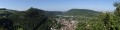
A Roman and medieval path leads from the Bout du Monde to the heights of the Doubs and Mercureaux valleys, allowing you to pass discreetly under the ruins of the castle, stronghold of the infamous Sir Jacques d'Arguel, the racketeer, and quickly placing you under the protection of our polychrome saints of Franche-Comté.
The Cabordes des Équegney
 4.35 mi
+1,093 ft
-1,112 ft
2h 55
Moderate
Departure from Avanne-Aveney (Doubs)
4.35 mi
+1,093 ft
-1,112 ft
2h 55
Moderate
Departure from Avanne-Aveney (Doubs)
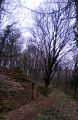
See information from Avanne Town Hall. From there, you’ll climb towards the ‘cabordes’, the dry-stone huts used by winegrowers. Then, at Fort de Planoise – the first rampart of the city of Besançon – you’ll march past the gun emplacements in military formation. You’ll stop at superb vantage points overlooking Besançon and its hills, the southern Doubs Valley and the Jura Mountains. After squeezing through a small tunnel inside a small fort, you’ll enter a wild, moss-covered wood that feels like a haunted forest.
The winegrowers’ huts and Planoise Fort
 4.08 mi
+1,230 ft
-1,250 ft
2h 55
Moderate
Departure from Avanne-Aveney (Doubs)
4.08 mi
+1,230 ft
-1,250 ft
2h 55
Moderate
Departure from Avanne-Aveney (Doubs)
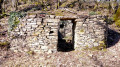
See Practical Information. You will climb towards the ‘cabordes’, these dry-stone winegrowers’ huts. Stop off at the viewing points of Fort de Planoise to take in the views of the Besançon hills, then southwards over the Doubs valley and the Jura mountains. Despite its military past, the fort offers a charming walk with its many paths winding through the ruins. You’ll return by following the cliffs through a wild, moss-covered wood that feels like a haunted and sinister forest.
La Baume Martin and the Gorges de la Pisseur
 1.78 mi
+669 ft
-682 ft
1h 25
Easy
Departure from Beure (Doubs)
1.78 mi
+669 ft
-682 ft
1h 25
Easy
Departure from Beure (Doubs)
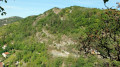
A short, challenging hike for busy city dwellers who want to explore the wild corners of our mountains around Besançon. However, it is rich in the Baume Martin (from the Gaulish "balma", meaning a rock shelter), the superb cornices of the Bois de Peu overlooking the Doubs valley, the Gorges and waterfalls of the Pisseur and the Cascade du Bout du Monde.
The Côte Blanche
 1.94 mi
+745 ft
-741 ft
1h 30
Moderate
Departure from Beure (Doubs)
1.94 mi
+745 ft
-741 ft
1h 30
Moderate
Departure from Beure (Doubs)
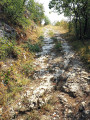
This short walk allows you to discover the most beautiful natural sites in Beure. Starting from the Côte Blanche, the route follows ancient paths with ruts carved into the rock, runs along the cliffs and offers superb panoramic views over the Doubs valley. It leads to the Baume Martin, the Bout du Monde waterfall, and then into the heart of the old village with its wash house and Saint-Hippolyte church. A varied, unspoilt and heritage-rich route.
The Bois de Peu
 3.44 mi
+922 ft
-915 ft
2h 25
Easy
Departure from Beure (Doubs)
3.44 mi
+922 ft
-915 ft
2h 25
Easy
Departure from Beure (Doubs)
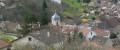
A short walk on the outskirts of Besançon, but one that offers the Cascade du Bout du Monde, an ancient Roman road, superb views over the Doubs valley, the Bois de Peu and its wooded valleys with their slender trees and wild, rugged rock formations that cut into the cliffs. Not bad at all!
The Mercureaux viewpoint
 3.72 mi
+1,119 ft
-1,122 ft
2h 40
Moderate
Departure from Beure (Doubs)
3.72 mi
+1,119 ft
-1,122 ft
2h 40
Moderate
Departure from Beure (Doubs)
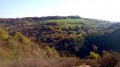
A short, challenging walk for city-dwellers in a hurry who want to explore the wild corners of our Besançon mountains. Six kilometres to discover the Bois de Peu, the Mercureaux viewpoint, the Cascade du Bout du Monde, the ancient Roman road and superb cliffs overlooking the Doubs valley.
La Pisseur, the Bout du Monde waterfall and the Celtic Way
 2.02 mi
+705 ft
-709 ft
1h 30
Easy
Departure from Beure (Doubs)
2.02 mi
+705 ft
-709 ft
1h 30
Easy
Departure from Beure (Doubs)
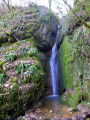
A short hike on the outskirts of Besançon, but rich in the small gorges of the Pisseur, the Bout du Monde waterfall, an ancient Roman road and a superb viewpoint over the Doubs valley. Please note! Despite its short length, it is challenging and requires sure-footedness.
Notre-Dame de la Libération and Chapelle des Buis in Fontain
6.95 mi
+784 ft
-781 ft
3h 55
Moderate
Departure from Fontain (Doubs)
This route allows you to discover Notre-Dame de la Libération with its panoramic view, the Chapelle des Buis and Les Mercureaux, all while walking through the woods.
La Baume Saint-Martin
 3.13 mi
+892 ft
-915 ft
2h 15
Moderate
Departure from Beure (Doubs)
3.13 mi
+892 ft
-915 ft
2h 15
Moderate
Departure from Beure (Doubs)
A short, challenging walk, just a stone’s throw from Besançon, to warm up for longer hikes. It will take you to the viewpoints at Les Mercureaux, La Côte de Beure, La Baume Saint-Martin, the Celtic route of the Chemin du Sert, the ‘Cascade du Bout du Monde’ and the ‘Pisseur’ waterfalls, as well as other vantage points overlooking the Doubs valley via steep paths.
The Mercureaux Valley
 5.25 mi
+548 ft
-541 ft
2h 55
Easy
Departure from Fontain (Doubs)
5.25 mi
+548 ft
-541 ft
2h 55
Easy
Departure from Fontain (Doubs)
Fans of alpine races who chant the Sambre et Meuse song as they run, move along. If, on the other hand, you like to make long speeches to one of our good old Montbéliard cows encountered along the way and find them very witty, if you like to trudge along our Cambrousard trails, then enjoy the charm of this peaceful walk along the Mercureaux stream where, it is said, a temple dedicated to the god Mercury stood in ancient times.
The Old Wash House at Arguel
 4.11 mi
+791 ft
-791 ft
2h 35
Easy
Departure from Fontain (Doubs)
4.11 mi
+791 ft
-791 ft
2h 35
Easy
Departure from Fontain (Doubs)
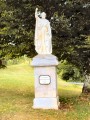
A short walk through the Comté region on the estate of the Lords of Arguel, where their fortified castle once stood on a jagged ridge, and a visit to the old wash house.
The Montferrand keep ridge trail
 3.18 mi
+443 ft
-430 ft
1h 50
Easy
Departure from Rancenay (Doubs)
3.18 mi
+443 ft
-430 ft
1h 50
Easy
Departure from Rancenay (Doubs)
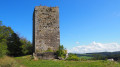
This hike offers magnificent views of the Doubs valley and its contrasting hills: warlike with the ruins of the feudal castle of Montferrand, peaceful with the protective Virgin of Notre-Dame du Mont. You will walk along a beautiful, rocky ridge, punctuated by numerous viewpoints over the valley.
Fort Moncey
 3.82 mi
+1,073 ft
-1,079 ft
2h 40
Moderate
Departure from Besançon (Doubs)
3.82 mi
+1,073 ft
-1,079 ft
2h 40
Moderate
Departure from Besançon (Doubs)
Info: Fort Moncey, better known to the people of Besançon as Fort de Planoise, was built between 1877 and 1892. Surrounded by shelters, four large batteries and barracks, it is open to the public but should be visited with caution. Walkers less interested in military history will appreciate this leafy setting and can stop off at the superb viewing points – one overlooking Besançon and its hills, the other to the south, looking out over the Doubs valley and the Jura mountains – before returning via the bucolic vineyard paths of Les Équegney.
In the shadow of Montferrand Castle
 5.80 mi
+594 ft
-594 ft
3h 10
Easy
Departure from Busy (Doubs)
5.80 mi
+594 ft
-594 ft
3h 10
Easy
Departure from Busy (Doubs)
A route to be enjoyed without hesitation along our beautiful Doubs Valley, under the dual watchful eye of the stern, thousand-year-old keep of the feudal castle of Montferrand and the gentler, protective gaze of Notre-Dame du Mont. A little taste of nature, punctuated by the remains of the ingenious industry that brought the valley to life during the first half of the 20th century, along the canal and its cutting. Then a short pilgrimage along a path lined with ferns and moss-covered rocks to Notre-Dame du Mont.
The Pierre des Vorges Trail
 4.51 mi
+413 ft
-427 ft
2h 25
Easy
Departure from Busy (Doubs)
4.51 mi
+413 ft
-427 ft
2h 25
Easy
Departure from Busy (Doubs)
Here is a walk to enjoy a stretch of the Doubs Valley. This route will allow walkers to enjoy the Gevrey Forest, follow the paths, reach the banks of the Doubs, make the most of the cycle route to take in the typical landscapes of the Doubs Valley – including the ruins of Montferrand Castle – and head back up towards Busy via Le Moulinot.
Hike organised by Grand Besançon Métropole.
 Busy – the Pierre de Vorges – Monument 1870 – Busy
9.90 mi
+689 ft
-692 ft
1 hr
Easy
Departure from Busy (Doubs)
A lovely walk or mountain bike ride. A gentle, steady gradient over 7.5 km with an elevation gain of around 220 m. Lovely view from the pass (1870 monument).
The Vorges Monument
 6.55 mi
+679 ft
-686 ft
3h 35
Moderate
Departure from Busy (Doubs)
6.55 mi
+679 ft
-686 ft
3h 35
Moderate
Departure from Busy (Doubs)
A walk through woods and countryside to discover the little valley tucked away between the two hills of Moulin Caillet and, climbing the beautifully named Chemin de l’Essart du Loup, the Monument de Vorges, in memory of the poor, long-forgotten soldiers of 1870. Return to Busy with lovely views of the keep at Montferrand and the Besançon hills.
The Crêtes trail and the Pierre de Vorges
 9.78 mi
+1,444 ft
-1,453 ft
5h 45
Moderate
Departure from Busy (Doubs)
9.78 mi
+1,444 ft
-1,453 ft
5h 45
Moderate
Departure from Busy (Doubs)
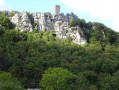
A short climb to warm up your legs and discover two villages and exceptional views over the Doubs and Loue valleys, the Chapel of Notre-Dame du Mont, overlooking the valley, the Château de Thoraise above the river, the feudal castle of Montferrand and its medieval keep overlooking the meanders and, on the horizon, Besançon. Then a more leisurely return via the towpath, along the banks of the Doubs in the protective shade of the ruins.
Rocher de Valmy, starting from Busy
 8.14 mi
+833 ft
-843 ft
4h 30
Moderate
Departure from Busy (Doubs)
8.14 mi
+833 ft
-843 ft
4h 30
Moderate
Departure from Busy (Doubs)
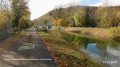
A short walk near Besançon offering a splendid bird’s-eye view of part of the Doubs valley.
The Combe de l’Œillet
 2.99 mi
+715 ft
-732 ft
2h 00
Easy
Departure from Besançon (Doubs)
2.99 mi
+715 ft
-732 ft
2h 00
Easy
Departure from Besançon (Doubs)
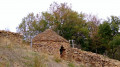
You’ll climb up to the winegrowers’ huts in the Combe des Œillets – these dry-stone structures built without mortar, where winegrowers used to store their tools and take shelter in the event of a storm. Return via the Rosemont cliffs and their views over the upper Doubs valley and the Jura mountains. Just a stone’s throw from the “Rosemont” tram stop, this short, challenging walk will prove – if proof were needed – that Besançon is a city in the countryside!
The cabordes of the Combe de l’Œillet
 1.42 mi
+617 ft
-617 ft
1h 10
Easy
Departure from Besançon (Doubs)
1.42 mi
+617 ft
-617 ft
1h 10
Easy
Departure from Besançon (Doubs)
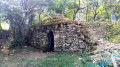
Until the 19th century, Rosemont Hill was cultivated using dry-stone terraces, on which vines, amongst other crops, were grown. The ‘cabordes’ served as shelters for the winegrowers. In the 20th century, these steep slopes were gradually abandoned. This walk allows you to explore the ledges, scree slopes and beautiful panoramic views over the Doubs valley, bearing witness to a landscape shaped by human hands.
The Rosemont Cabordes
 1.83 mi
+705 ft
-699 ft
1h 25
Easy
Departure from Besançon (Doubs)
1.83 mi
+705 ft
-699 ft
1h 25
Easy
Departure from Besançon (Doubs)
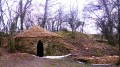
A short, challenging walk to climb up to the Combe des Œillets vineyard huts, these dry-stone structures built without mortar, where winegrowers stored their tools, took shelter during storms and sometimes slept when working late. Return via the Rosemont viewpoint overlooking the upper Doubs valley and the Jura mountains.
The Cabordes Trail
 6.22 mi
+1,795 ft
-1,821 ft
4h 25
Moderate
Departure from Besançon (Doubs)
6.22 mi
+1,795 ft
-1,821 ft
4h 25
Moderate
Departure from Besançon (Doubs)
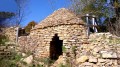
Present on the hills of Besançon since the 16th century, these dry stone constructions without mortar are a reminder of a time when vineyards stretched across the hillsides. A niche, a bench, a fireplace, they allowed the winegrower to store his tools, shelter in case of a storm and perhaps sleep there for a night, as the city gates closed every evening at 10:45 p.m. until 1875. Along the way, you will discover no fewer than five belvederes and the forts of Rosemont and Planoise.
Le Rosemont
 3.12 mi
+1,063 ft
-1,063 ft
2h 20
Easy
Departure from Besançon (Doubs)
3.12 mi
+1,063 ft
-1,063 ft
2h 20
Easy
Departure from Besançon (Doubs)
An urban hike, you might say, but one which, as you climb Rosemont and La Roche d’Or, will offer you a wealth of nature just a stone’s throw from the old town and the new town, with its steep cliff-top paths, the beautifully named Combe de l'Oeillet, its old cabordes, and its scree slopes formed by the natural weathering of the cliffs and the piles of stones left by our forebears, who cultivated our Besançon hillsides in terraces.
The great meander of the Loue
 4.70 mi
+495 ft
-505 ft
2h 35
Easy
Departure from Busy (Doubs)
4.70 mi
+495 ft
-505 ft
2h 35
Easy
Departure from Busy (Doubs)
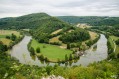
"To the south, there was no need for walls of wood or stone: the seigneurial tower spread its mismatched wings at the top of a steep cliff at the foot of which flows the Loue. The tranquil river continues to lap at the rocky escarpment, drawing the same green loops on the earth as it has done since time immemorial," writes Carole Martinez in her book Du domaine des murmures.
Come and listen to the murmur of the Loue in the shadow of the ancient castle.
The Grand Méandre and Charencey Castle
 6.90 mi
+879 ft
-889 ft
3h 55
Moderate
Departure from Busy (Doubs)
6.90 mi
+879 ft
-889 ft
3h 55
Moderate
Departure from Busy (Doubs)
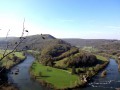
You will walk peacefully along the river towards Chenecey, with its old church and picturesque 18th-century turreted house, then climb up to the hidden ruins of the 9th-century feudal castle of Charencey, which dominates the village and the Loue valley. Finally, you will end your walk at the Grand Méandre viewpoint overlooking the valley and the castle keep, where you may even spot some chamois.
The Planoise Coast
 5.04 mi
+958 ft
-948 ft
3h 10
Moderate
Departure from Besançon (Doubs)
5.04 mi
+958 ft
-948 ft
3h 10
Moderate
Departure from Besançon (Doubs)
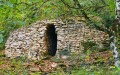
See Practical Information. Besançon, France's first green city, surrounded by wooded hills, is a city in the countryside. This route, from the Malcombe sports complex to Fort de Planoise, will convince you. You will climb picturesque and peaceful paths to two belvederes and cabordes, dry stone huts that bear witness to a time when vineyards stretched across our hillsides.
Circular Fontain to La Chapelle des Buis
 4.92 mi
+492 ft
-482 ft
2h 40
Easy
Departure from Fontain (Doubs)
4.92 mi
+492 ft
-482 ft
2h 40
Easy
Departure from Fontain (Doubs)
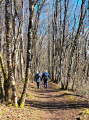
This easy circular route through woods and meadows will take you from the outskirts of Fontain to Notre Dame de la Libération, its crypt and its magnificent view of Besançon, the first plateau and the first peaks of the Jura. You will also discover the chapel of Notre Dame des Buis and a gentle return via the wild Mercureaux valley.
Le Rosemont and La Roche d'Or via the Combe de l'Œillet
 4.56 mi
+1,457 ft
-1,453 ft
3h 20
Moderate
Departure from Besançon (Doubs)
4.56 mi
+1,457 ft
-1,453 ft
3h 20
Moderate
Departure from Besançon (Doubs)
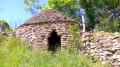
Via the Rosemont ledges, offering views over the Besançon hills topped by the massive, distant silhouette of Mont Poupet, you will climb up to the winegrowers’ huts of the Combe de l’Œillet, these dry-stone constructions built without mortar where winegrowers stored their tools and sought shelter from storms. You will descend back into the valley via these scree slopes, formed by the natural weathering of the cliffs and the piles of stones left by our ancestors who cultivated the terraced hills of the Besançon region. Then, one final effort to climb the Roche d’Or and return via the Chemin de l’Œillet and its houses nestled in the greenery of our city, which knows how to embrace its rural side.
The ruins of the feudal castle of Chenecey
 4.59 mi
+820 ft
-814 ft
2h 50
Easy
Departure from Chenecey-Buillon (Doubs)
4.59 mi
+820 ft
-814 ft
2h 50
Easy
Departure from Chenecey-Buillon (Doubs)
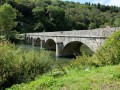
A ruined feudal castle dating from the 9th century overlooking the village and the Loue valley, the ruins of Charencey Castle are listed as a Historic Monument. From the church, located on the banks of the Loue, you will climb up to these secret ruins, continuing through a beautiful forest, perhaps imagining that you will come across a team of oxen pulling a cart up to the castle. Finally, you will return through the sunny pastures overlooking the valley.
Around the old castle of Chenecey-Buillon
 7.30 mi
+876 ft
-863 ft
4h 05
Moderate
Departure from Chenecey-Buillon (Doubs)
7.30 mi
+876 ft
-863 ft
4h 05
Moderate
Departure from Chenecey-Buillon (Doubs)
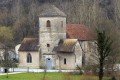
From Chenecey church, you will climb up to the solitary ruins of Charencey Castle overlooking the Grand Méandre de la Loue. From valleys to hills, you will continue through a vast, bright forest and meadows lost deep in the woods, reaching the riverbank to return to the village.
La Vouivre à la Trace, the natural environments around Chenecey
 Local authority
 3.16 mi
+427 ft
-427 ft
1h 50
Easy
Departure from Chenecey-Buillon (Doubs)
3.16 mi
+427 ft
-427 ft
1h 50
Easy
Departure from Chenecey-Buillon (Doubs)
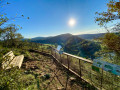
A family walk around Chenecey, featuring information boards about the natural habitats and clues left by the Vouivre river as it flows through the area.
Set against the exceptional backdrop of the Loue Valley, set off on an exploration to discover a diverse and well-preserved natural heritage. It all stems from a karst landscape shaped over time, so ancient that it is home to a strange mythological creature.
For younger children, the walk comes with an explorer’s booklet full of puzzles. This booklet is available free of charge from the booklet box at the church and from local shops in the village (the Boulangerie de la Loue, the restaurant Chez Gervais, the post office and the town hall). You’ll need a pencil.
Walls and Whispers: discovering the heritage of Chenecey and Buillon
 5.71 mi
+407 ft
-413 ft
3h 00
Moderate
Departure from Chenecey-Buillon (Doubs)
5.71 mi
+407 ft
-413 ft
3h 00
Moderate
Departure from Chenecey-Buillon (Doubs)
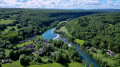
They will guide you through times gone by that are nevertheless at the origin of the unique landscape of Chenecey and Buillon. The activities of yesteryear explain today's landscapes: a strong identity and a rich and diverse memory that has been built up over time and passed down from generation to generation.Through a digital app, just like those who came before you, you are invited by the monks of the former Cistercian abbey and the famous painter James Tissot to leave the hustle and bustle of the village behind and enter places that invite you to relax and contemplate. Ten stations will allow you to discover places that are inaccessible to the public, as they were in their heyday. Human relationships, self-awareness, art and connections with nature have evolved over time and in line with the challenges of each era. Through this retrospective journey, this walk invites you to reflect on the future of these places.
Le Grand Méandre and Les Forges de Chenecey
 3.43 mi
+423 ft
-423 ft
1h 55
Easy
Departure from Chenecey-Buillon (Doubs)
3.43 mi
+423 ft
-423 ft
1h 55
Easy
Departure from Chenecey-Buillon (Doubs)
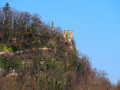
"The seigneurial tower spreads its mismatched wings at the top of a steep cliff at the foot of which flows the Loue. The tranquil river continues to lap at the rocky escarpment, striving to draw the same circular patterns on the earth as it always has," writes Carole Martinez. A walk rich in discoveries: old-fashioned farms, a fountain entwined with mossy walls, an old forge and, the highlight, the Grand Méandre de la Loue and its thousand-year-old sentinel, the keep of Charencey.
Les Monts des Buis
 5.06 mi
+840 ft
-830 ft
3h 05
Easy
Departure from Besançon (Doubs)
5.06 mi
+840 ft
-830 ft
3h 05
Easy
Departure from Besançon (Doubs)
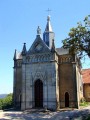
Starting from the small chapel overlooking the Citadel and the Besançon circular route, you will follow a stream through the cool little valley of Les Mercureaux where, it is said, a temple dedicated to the god Mercury stood in ancient times. Then you will return at a more brisk pace along the old Roman road to Fort des Buis, stopping at the many viewpoints over the Doubs valley.
The Boxwood Path
 6.89 mi
+997 ft
-988 ft
4h 00
Moderate
Departure from Besançon (Doubs)
6.89 mi
+997 ft
-988 ft
4h 00
Moderate
Departure from Besançon (Doubs)
A lion, small and large virgins. No! You are not in an arena, despite the Roman past of our Vesontio, but on the heights of the Chapelle des Buis with its splendid views of the Citadel overlooking the city of Besançon. You will then reach the charming little valley of Les Mercureaux via a ridge path winding through the box trees.
The Mercureaux stream
 4.32 mi
+659 ft
-679 ft
2h 35
Easy
Departure from Besançon (Doubs)
4.32 mi
+659 ft
-679 ft
2h 35
Easy
Departure from Besançon (Doubs)
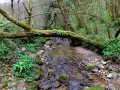
From the chapel, with views over the city of Besançon and the Citadel, you’ll walk through the hills accompanied by the pleasant scent of boxwood. Then, you’ll follow the narrow gorge of the Mercureaux stream as you climb towards the viewpoint over the Val d’Arguel, where you can imagine the feudal castle that once stood there, sadly now destroyed.
At the end of the world... in Besançon
 6.27 mi
+1,119 ft
-1,135 ft
3h 50
Moderate
Departure from Besançon (Doubs)
6.27 mi
+1,119 ft
-1,135 ft
3h 50
Moderate
Departure from Besançon (Doubs)
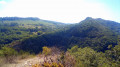
From the small chapel overlooking the Citadel and the Besançon circular route, you’ll follow the ditches of the old fort—which looks like a haunted forest—to reach the Bout du Monde and its waterfall. Along the way, an ancient Roman road, several viewpoints over the Mercureaux Valley and the Doubs Valley and its hills: the Côte de Planoise, Chaudanne, the Citadel, Bregille and the old feudal keep of Montfaucon.
La Jourande
 3.26 mi
+472 ft
-489 ft
1h 55
Easy
Departure from Besançon (Doubs)
3.26 mi
+472 ft
-489 ft
1h 55
Easy
Departure from Besançon (Doubs)
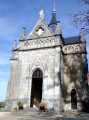
Starting from the small chapel overlooking the citadel and the Besançon circular route, you’ll walk alongside the ruins of the Fort de l’Ouest des Buis to reach the viewpoint over the Mercureaux Valley, where a temple dedicated to the god Mercury once stood. After this stretch through the woodland, you’ll emerge onto the slopes of La Jourande and its views over the Besançon hills and their fortifications.
The Fort de l’Ouest des Buis
 5.43 mi
+755 ft
-771 ft
3h 10
Easy
Departure from Besançon (Doubs)
5.43 mi
+755 ft
-771 ft
3h 10
Easy
Departure from Besançon (Doubs)
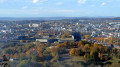
A walk through the Monts des Buis to explore the moats of the ancient fort, which has the air of a haunted forest. Along the way, there are several viewpoints overlooking the Mercureaux Valley and the Doubs Valley with its hills: the Côte de Planoise, Chaudanne, the Citadel, Bregille and the old feudal keep at Montfaucon.
Fort de Chaudanne in Besançon
4.17 mi
+712 ft
-715 ft
2h 30
Moderate
Departure from Besançon (Doubs)
Hike to discover Fort de Chaudanne with its panoramic view of Besançon and the citadel and the small paths surrounding the site.
Beure and the Chapelle des Buis in Besançon
7.50 mi
+945 ft
-928 ft
4h 15
Moderate
Departure from Besançon (Doubs)
Hike to discover several viewpoints on the outskirts of Besançon.
La Roche d'Or
 7.22 mi
+1,309 ft
-1,319 ft
4h 30
Moderate
Departure from Besançon (Doubs)
7.22 mi
+1,309 ft
-1,319 ft
4h 30
Moderate
Departure from Besançon (Doubs)
An urban hike to discover the hills of Besançon. Natural factors such as soil, climate and altitude, combined with the action of water, have shaped the hills of Chaudanne and Rosemont, which are remarkable natural areas. Let yourself be seduced by the beauty of unspoilt nature, proving that our provincial Besançon has managed to remain a city in the countryside.
The Chaudanne trails
 3.85 mi
+876 ft
-856 ft
2h 30
Easy
Departure from Besançon (Doubs)
3.85 mi
+876 ft
-856 ft
2h 30
Easy
Departure from Besançon (Doubs)
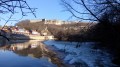
A short climb up one of Besançon's seven hills: Chaudanne, with its unspoilt natural beauty, its dry grasslands shaped by nature and man, its fort and its views of the Citadel, the old town and the southern Doubs valley.
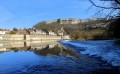
Fort de Chaudanne
 2.53 mi
+581 ft
-574 ft
1h 40
Easy
Departure from Besançon (Doubs)
2.53 mi
+581 ft
-574 ft
1h 40
Easy
Departure from Besançon (Doubs)
From the countryside to the city: crossing the dry grasslands, shaped by human hands for centuries, you’ll climb up to Fort de Chaudanne and its views over the old town, crowned by its protective citadel. You’ll descend the wooded hillside along a lovely path to follow the peaceful river, stopping for a moment by the bubbling waters of the old dam at the foot of the ramparts.
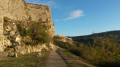
The Fortifications of Besançon
 8.85 mi
+1,854 ft
-1,850 ft
5h 40
Moderate
Departure from Besançon (Doubs)
8.85 mi
+1,854 ft
-1,850 ft
5h 40
Moderate
Departure from Besançon (Doubs)
Just a stone's throw from Besançon city centre, this hike will allow you to discover the capital of Franche-Comté from several different viewpoints. You will also discover the Citadel built by Vauban and several other forts and architectural features that made up the city's fortification system.
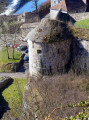
Besançon, its citadel and its circular loop
 3.42 mi
+348 ft
-358 ft
1h 55
Easy
Departure from Besançon (Doubs)
3.42 mi
+348 ft
-358 ft
1h 55
Easy
Departure from Besançon (Doubs)
The citadel, a masterpiece by Vauban, overlooks the old town, which is enclosed in a circular bend in the river (the Boucle), from a height of over 100 metres. Its ramparts offer spectacular panoramic views. You will climb up along the ramparts and casemates, then descend the other side towards the entrance to the city, the Porte Rivotte and the toll house. Then, walking along the riverbank, you will discover the towers and bastions that protect the city, ending at the Gare d'Eau, the old goods port.
Montrond-le-Château and its diverse landscapes
5.55 mi
+262 ft
-285 ft
2h 45
Easy
Departure from Montrond-le-Château (Doubs)
Two completely different sections:
- the climb to the castle ruins, with a superb view and an orientation table. A short but relatively steep climb.
- the very flat section, through a forest notable for its multitude of sharp limestone pavements and deep sinkholes, which will be enjoyed in all seasons.
A GPS is recommended to follow the route through the forest, but the 2022 update is more detailed.
A short stretch of road, with virtually no traffic.
Castle, viewpoint and chasms at Montrond
4.77 mi
+427 ft
-420 ft
2h 35
Easy
Departure from Montrond-le-Château (Doubs)
A varied hike with flat sections, a passage through woods, and two climbs up the Montrond hill. At the top, you can enjoy the vast panorama. At the bottom, you will discover two wells that have been cleared quite recently. Given the size of the cavities visible from the platforms, they can be considered chasms, with a vast underground network that you can learn about on the explanatory panels. You will take part of the Sentier du Triton trail, which will offer you a few riddles. In short, a hike for young and old alike.
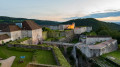
The Beautiful Lady and the Four Guardians of Besançon
 9.15 mi
+1,644 ft
-1,631 ft
5h 40
Moderate
Departure from Besançon (Doubs)
9.15 mi
+1,644 ft
-1,631 ft
5h 40
Moderate
Departure from Besançon (Doubs)
The beautiful Citadel, flanked by its four guardians – the forts of Chaudanne, Griffon, Beauregard and Bregille – still watches over the historic heart of Besançon and its inhabitants.
Discover them on this superb walk. Please note: you’ll be visiting forts, which means climbing to higher ground – so there’s a significant elevation gain – but what a reward: the views from up there are simply heavenly.
La Chapelle des Buis
8.37 mi
+1,293 ft
-1,293 ft
5h 00
Moderate
Departure from Besançon (Doubs)
Circular walk around Besançon. A mix of roads, tracks and steep paths. Take care in wet weather, as the paths can be slippery. Significant elevation gain at the start of the walk and very flat towards the end.