Refine your search for walks in Plovan
Plovan walks
Vallée de Languidou
This route takes you into the valley that extends into the Étang de Kergalan.On the way back, you will pass by the Languidou Chapel, a ruined chapel that never fails to amaze with its architecture and magnificent stone lace rose window.
Around the Plovan ponds
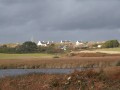
Discover the coastal lakes of Trunvel and Kergalan on the edge of Audierne Bay, which opens out onto the open sea.
The passage near the ruins of Languidou Chapel is always remarkable, not to mention the charm of the small village of Plovan.
Along the Plovan pebble beach
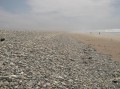
Following the pebble strip from Plovan to Penhors, you can enjoy views of the entire Bay of Audierne and its coastal lagoons. Return via small roads with the ocean always on the horizon.
Pouldreuzic menhir route
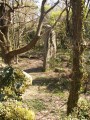
The bed and wardrobe of Saint-Kodelig, a possible menhir quarry, two menhirs separated by a stream... Explore the rolling countryside of Poudreuzic to discover these three megalithic sites, steeped in legend and historical reality.Along the way, you will encounter a few markers featuring excerpts from Pierre Jakez Hélias' masterpiece "Le cheval d'orgueil" (The Horse of Pride), combining biographical memories and ethnographic observations.
Route of Tréguennec beach and its vast dune area
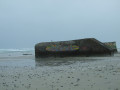
After the remains of the pebble crusher, a reminder of the construction of the Atlantic Wall, walk for about 3 km on the beach overlooking Audierne Bay.
Continue through the palud, an area between the dunes and the marshes, which are heavily flooded in winter.
There are some beautiful heritage sites to discover along the way: the hamlets of Stang and Saint-Vio, restored for the Maison de la Baie d'Audierne, as well as two charming chapels, each in a unique setting.
Around Tréguennec via the marshland and the Étang de Trunvel
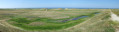
This easy route takes you through the Tréguennec marshland, overlooking the Trunvel coastal lagoon, before continuing through peaceful countryside.Don’t miss, at the start or finish, the remains of the imposing pebble crusher, a relic of the work undertaken for the construction of the Atlantic Wall from 1942 onwards.En route, near the Saint-Alour Chapel, note the protohistoric stele topped with an iron cross and its strange sculptures dating from 1869.
Countryside around Lababan in Pouldreuzic
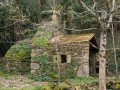
Set amongst trees, the church at Lababan and its cemetery, bearing witness to the history of this former parish now part of Poudreuzic, a fountain lost in the woods, a section of the old “Train Carottes” railway line, wild valleys and the restored bread oven near the Moulin de Crémenec – this is what awaits you on this hike through the peaceful countryside.
Saint-Demet route starting from Lababan
Starting from the chapel of Lababan in Pouldreuzic, we will take the old "carrot train" railway line to return via the wetlands of Plozévet.
Countryside and heritage from Lababan, a former parish of Pouldreuzic
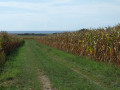
This short route along farm tracks offers beautiful panoramic views of the countryside and the coastal area.Several heritage sites along the way: wayside crosses and chapels.
In the rolling countryside of Plozévet and Pouldreuzic

Route through the countryside of two neighbouring municipalities, along paths between fields and small roads offering regular views of the sea.Beautiful religious heritage along the way: chapels and calvaries.
Saint-Vio route
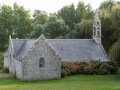
Circuit in the Tréguennec marsh with the sound of the waves of Audierne Bay in the background. On the route, there are two beautiful isolated chapels: Saint-Vio and Saint-Évy.
The Plozévet countryside and the seaside via Penhors
Chapels, an old mill, unspoilt countryside, a restored bread oven and the seaside via the small port of Penhors and its pebble beach. Return via paths through the fields.
From Saint-Demet to Penhors and the Menhir "Des Droits de l'Homme"
Starting from the Saint-Demet Chapel, you will reach the Notre-Dame-de-Penhors Chapel and follow the coastal path to the "Human Rights" menhir.
Kergonda and Kermorvan routes in Plonéour-Lanvern
This route combines two shortPR® routes by linking them together: the Kergonda route, which follows part of the old railway line known as the "Carrot Train", and the Kermorvan route, which winds through the countryside along wide, often stony farm tracks and ends at the Raphalen botanical garden.
The link between these two routes allows you to discover the village of Plonéour-Lanvern, dominated by the imposing bell tower of Saint-Éneour Church (19th century).
Route des Vallons in Peumerit
An easy, unmarked route through peaceful countryside, mostly on quiet minor roads.
Beuzec-Cap-Caval Route
This route, starting from the Chapel of Tronoën, or Tronoan, known as the "cathedral of the dunes" and its famous calvary, will take us on a journey of discovery to see menhirs and dolmens. After passing the Chapel of Beuzec-Cap-Caval, we return along the coast and through the dune massif: a good breath of sea air in store.
Heritage discoveries starting from Tronoën Chapel
This route starts at Tronoën Chapel, known as the ‘Cathedral of the Dunes’, and its superb calvary, leading into the surrounding countryside rich in sights such as Saint-Budoc Chapel in the former parish of Beuzeg-Cap-Caval and its fountain.
Along the route, you’ll pass by menhirs and steles and walk along the seashore facing the open sea of Audierne Bay.
Route of the 2 churches and 3 chapels between Saint-Jean-Trolimon and Plomeur
Discover two churches, three chapels and picturesque hamlets in the countryside between Saint-Jean-Trolimon and Plomeur via idyllic footpaths, farm tracks and quiet country lanes.
From Saint Ronan Chapel to the wind turbines
This walk, punctuated by stops for exercise, allows you to discover the Chapel of Saint Ronan in its setting with the fountain and the granite sarcophagus, and to stroll around the wind turbines and through the woodland.
Between the old railway line and wild valleys
An old railway line called the "carrot train", a dark coniferous forest, small winding roads, a wide view of the Bigouden coast and a long passage at the bottom of a wild valley where only the murmur of the stream disturbs the silence.
The Moulin Neuf lake walk
This is an easy walk around the reservoir, which supplies drinking water to eleven municipalities in the Pont-l'Abbé region. You can enjoy the peaceful, shaded surroundings and take the time to watch the birds that frequent this stretch of water: coots, gulls, grebes and a small colony of swans.
Route megalithique from Pointe de la Torche
Starting at Pointe de la Torche, dominated by its eroded tumulus which reveals a dolmen and the remains of a covered passageway, the route runs along the coast and past the famous rocks of Saint-Guénolé.
Other megalithic monuments dot this route.
Route coastal and Lescors Marshes in Saint-Guénolé
Easy coastal path facing the open sea: beach and imposing rocks.
Pass by the square tower of Saint-Guénolé.
Return via the marshes and dunes.
Circuit de la Fontaine Saint-Anne et campagne de Landudec
The route alternates between small country roads and numerous sunken paths in wooded areas.Passes by the Saint-Anne Fountain (1743) and part of the botanical trail near the water catchment protection area.The rest of the route follows various valleys where mills were once located.
Route of the old mills of Landudec
Follow the start of the Goyen valley, which joins the sea after about thirty kilometres, along a few small country roads and paths through the woods.
This river used to power several mills. The route will take you past three of them.
You can also enjoy the peace and quiet of the valley floor.
Around the Chapel of La Tréminou
An easy route through the countryside along small roads and shaded country lanes.
This magnificent chapel also played an important role in the Bonnets Rouges revolt in 1675. This revolt was a violent protest against the new taxes imposed by King Louis XIV: the creation of a tax on stamped paper and a tax on the possession of pewter objects, but also a protest against the harshness and increase in seigneurial taxes.
Plozévet route, between sea and countryside
After following the coastal path overlooking Audierne Bay, we climb a little higher into the countryside. We pass through small villages and discover rustic fountains while enjoying views of the sea.
Via the Chapelle de la Trinité and the Plozévet wind turbines
A peaceful countryside route alternating between quiet country lanes, wide paths and tracks used by herds of cows.At the start, the imposing Chapel of La Trinité and, along the route, the wind farm at Plozévet and the surrounding villages. The La Trinité district was once a major centre for tailors and embroiderers.
The chapels of La Trinité and Saint-Ronan
This circular route offers a view of the northern part of Plozévet. From the Chapel of the Trinity, the route passes close to the wind farm before reaching the site of the small Chapel of Saint-Ronan. The return journey offers the chance to walk along part of the old railway line and the “carrot train”, then explore the churchyard with its menhir-shaped war memorial featuring sculptures by René Quillivic.
Around the village of Plogastel-Saint-Germain via the Bois du Quilliou
This short route takes you around the village of Plogastel-Saint-Germain, located on high ground (112 m). The Saint-Pierre church and its tall bell tower can be seen from afar.
Part of the route passes through the Quilliou deciduous forest.
Countryside around Plogastel-Saint-Germain
Dominated by the bell tower of Saint-Pierre Church, the large village of Plogastel-Saint-Germain offers pleasant countryside criss-crossed by sunken lanes and small tree-lined roads.
The route passes in front of the Manoir du Hilguy with its monumental gate, owned since 1987 by an English investment company.
In the countryside from the Chapelle Saint-Germain
This route in the countryside of Plogastel-Saint-Germain mainly follows small roads.
Along the route, a highlight of the religious heritage is the Saint-Germain Chapel, one of the few in the region to have a parish enclosure with a Gothic-style triumphal arch.
Also along the route are a beautiful bread oven and wash house currently being restored, a menhir and the Moulin Neuf, a well-preserved building among the old mills on the Pont-l'Abbé River.
Coast and marshes around Saint-Guénolé
Cap Caval stretches out into the sea facing the ocean waves. From this flat land where even the bell towers are low, only the two lighthouses at the tip emerge. This piece of land seems to be on the verge of being swallowed up by the waves, and the Chapelle de la Joie, standing on the sea wall, offers a fragile defence against the fury of the ocean.
Route de Saint-Côme
Countryside route allowing you to discover the Kerfland Menhirs as well as Saint-Côme Chapel and its fountain.
Heritage sites around Plomeur
Discover an exceptional religious, megalithic and natural heritage between the village of Plomeur and Pointe de la Torche, via bucolic footpaths, farm tracks and quiet country lanes.
Megaliths, the seaside and marshes from the Chapelle de la Madeleine
A varied, flat route starting from the beautiful Chapelle de la Madeleine with its modern stained-glass windows, the work of the painter Jean Bazaine, passing by two megalithic sites including the remains of a significant alignment of menhirs. The route continues through the dunes near Porzh Karn Beach, a surfer’s paradise, and returns via the Marias de Lescors, managed by the Conservatoire du Littoral.Sea and countryside with some wonderful heritage discoveries.
Porz-Poulhan via the Moulin de Tréouzien and archaeological sites
Departing from the small port of Porz-Poulhan, discover the renovated and working Moulin de Tréouzien mill and the Chapelle Saint-They chapel, then return along the coast, visiting the archaeological sites.
Route de Porz Poulhan sur la côte Bigouden
The beautiful paths of this short route take us through the countryside of Porz Poulhan in the Plozévet area of the Bigouden region, passing through two lush, shady valleys. Along the way, you’ll come across restored mills and wash houses,The walk ends with a view of the blue sea along the shore, allowing you to enjoy the sea from above.
Countryside and woods around Plogastel-Saint-Germain
This route, along small roads and wooded paths, largely combines two small routes around the village of Plogastel-Saint-Germain:
Wooded circular in Plogastel-Saint-Germain.
- Around the village of Plogastel-Saint-Germain via the Bois du Quilliou (in the opposite direction).
Wooded circular in Plogastel-Saint-Germain
In the countryside around Plogastel-Saint-Germain, this short route mainly follows paths lined with wooded embankments and passes through small woods and wetlands, which can be crossed via a long wooden walkway.
During the walk, you will discover an old bread oven saved at the last minute, an old farmhouse and a well-maintained wash house.
Prehistoric sites, chapel and fountains against the backdrop of the sea in Plouhinec
A journey from the late Lower Palaeolithic with the Menez Drégan cave, through the Neolithic with the Souch necropolis, then the old guardhouse dating from 1747; this coastal route then leads to valleys where sacred fountains are nestled, as well as the little Saint-They Chapel.Beautiful landscapes and wonderful discoveries.