


Refine your search for walks in Heugnes
Heugnes walks

 Route exploratoire autour du village de Jeu-Maloches
 Visorando Member
 8.35 mi
 +279 ft
 -249 ft
 4h 05
4h 05
 Moderate
 Departure from Jeu-Maloches (Indre)
This is a route that allows you to explore the surroundings of Jeu-Maloches, a small village in the Boischaud-Nord area of the Indre, alternating between small roads and paths, with a few interesting viewpoints.
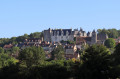
From the former Abbey of Saint-Genou to the châteaux of Palluau-sur-Indre
 7.48 mi
+223 ft
-223 ft
3h 40
Moderate
Departure from Saint-Genou (Indre)
7.48 mi
+223 ft
-223 ft
3h 40
Moderate
Departure from Saint-Genou (Indre)
This walk starts at the Abbey Church of Sainte-Marie in Saint-Genou and allows you to discover, amongst other things, the beautiful surrounding countryside, the banks of the Indre, the Church of Saint-Sulpice and the feudal (private) castle at Palluau-sur-Indre, the old cellars now inhabited by bats, and the small (private) château of La Joubardière.
Exploring the village of Moulins-sur-Céphons and its surroundings
 4.77 mi
+98 ft
-79 ft
2h 15
4.77 mi
+98 ft
-79 ft
2h 15
 Easy
Departure from Moulins-sur-Céphons (Indre)
Easy
Departure from Moulins-sur-Céphons (Indre)
This route takes you through the medieval village of Moulins-sur-Céphons, situated on the border of the Boischaut Nord and the Champagne Berrichonne, and allows you to explore the surrounding area.
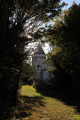
The area around Luçay-le-Mâle and its castle
 9.10 mi
+279 ft
-302 ft
4h 25
Moderate
Departure from Luçay-le-Mâle (Indre)
9.10 mi
+279 ft
-302 ft
4h 25
Moderate
Departure from Luçay-le-Mâle (Indre)
This walk first takes you to the Étang de la Foulquetière. You then cross through magnificent woodland before returning to Luçay-le-Mâle via paths and small country lanes. You will then discover its heritage, notably its (private) château. Some sections follow the route of the Benjamin Rabier discovery trail.
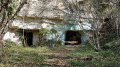
From one castle to another, starting from Le Tranger
 9.38 mi
+505 ft
-509 ft
4h 45
Moderate
Departure from Le Tranger (Indre)
9.38 mi
+505 ft
-509 ft
4h 45
Moderate
Departure from Le Tranger (Indre)
Overlooking and running alongside the Indre valley in its first section, this varied route will take you past three of the region’s most beautiful country houses as you make your way along.
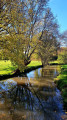
The Nahon Valley, between Vicq-sur-Nahon and Langé
 9.16 mi
+495 ft
-489 ft
4h 40
Moderate
Departure from Vicq-sur-Nahon (Indre)
9.16 mi
+495 ft
-489 ft
4h 40
Moderate
Departure from Vicq-sur-Nahon (Indre)
This hike starts in Vicq-sur-Nahon and takes you to the western hills overlooking the Nahon valley. It leads you to the Château de la Moustière and then the Château de Langé. You will then follow the Nahon river to climb the eastern hills. You will take part of the Benjamin Rabier discovery trail.
Saint-Lactencin route
 9.12 mi
+135 ft
-135 ft
4h 20
Moderate
Departure from Saint-Lactencin (Indre)
9.12 mi
+135 ft
-135 ft
4h 20
Moderate
Departure from Saint-Lactencin (Indre)
This walk mainly follows the FFRP route marked in yellow from Saint-Lactencin. It offers the chance to explore the village and two beautiful buildings, the Château de la Brosse and the Château de Marécreux. The path mostly runs through the vast expanses of farmland in this part of the Indre.
Route of exploration of the cellars and cliffs of Faverolles-en-Berry
 10.04 mi
+479 ft
-492 ft
5h 00
Moderate
Departure from Faverolles (Indre) (Indre)
10.04 mi
+479 ft
-492 ft
5h 00
Moderate
Departure from Faverolles (Indre) (Indre)
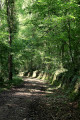
This walk allows you to explore the surroundings of Faverolles-en-Berry, a town on the northern border of the Indre department, and its heritage, such as its church, the troglodyte dwellings and cellars, as well as the ‘cliffs’ and tuffeau quarries.
From Chambon to Bonneau, from the hillsides to the Indre Valley
 8.78 mi
+102 ft
-105 ft
4h 10
Moderate
Departure from Villedieu-sur-Indre (Indre)
8.78 mi
+102 ft
-105 ft
4h 10
Moderate
Departure from Villedieu-sur-Indre (Indre)
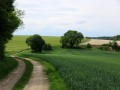
This pleasant walk starts in the hamlet of Chambon, near Villedieu-sur-Indre, and follows the southern slope of the Indre Valley to the village of Bonneau, returning via the northern slope, with some lovely views.
Through woods, meadows and fields in Sainte-Gemme
 8.05 mi
+56 ft
-56 ft
3h 45
Moderate
Departure from Sainte-Gemme (Indre) (Indre)
8.05 mi
+56 ft
-56 ft
3h 45
Moderate
Departure from Sainte-Gemme (Indre) (Indre)
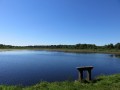
This pleasant walk allows you to explore the surroundings of the village of Sainte-Gemme, situated within the Brenne Regional Nature Park. It takes you through a variety of landscapes: fields and meadows, woodland and a pond.
Route in the countryside around Rouvres-les-Bois
 7.90 mi
+167 ft
-177 ft
3h 45
Moderate
Departure from Rouvres-les-Bois (Indre)
7.90 mi
+167 ft
-177 ft
3h 45
Moderate
Departure from Rouvres-les-Bois (Indre)
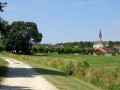
A countryside walk around Rouvres-les-Bois, following paths and small roads through woods and fields.
Montrésor circular starting from Villeloin-Coulangé
 Local authority
 6.16 mi
+253 ft
-272 ft
3h 05
Easy
Departure from Villeloin-Coulangé (Indre-et-Loire)
6.16 mi
+253 ft
-272 ft
3h 05
Easy
Departure from Villeloin-Coulangé (Indre-et-Loire)
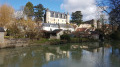
A short, slightly undulating route typical of the Touraine countryside. It combines the tranquillity of the countryside with the charm of Touraine’s historic mansions. Enjoy the magnificent view from the Balcon de l’Indrois in Montrésor for a break halfway along the route.
Circular route from Fléré-la-Rivière to Bridoré
 5.89 mi
+279 ft
-253 ft
2h 55
Easy
Departure from Fléré-la-Rivière (Indre)
5.89 mi
+279 ft
-253 ft
2h 55
Easy
Departure from Fléré-la-Rivière (Indre)
This lovely, easy circular route starts at the Fléré-la-Rivière pond and takes you to Bridoré via the Fléré meadow along the River Indre, before heading back down to Fléré via theGR® 46. It offers magnificent views of Bridoré Castle as well as the village of Fléré-la-Rivière.
A walk through the Azel countryside
 6.19 mi
+197 ft
-174 ft
3h 00
Easy
Departure from Aize (Indre)
6.19 mi
+197 ft
-174 ft
3h 00
Easy
Departure from Aize (Indre)
This is a pleasant walk through the countryside surrounding the village of Aize, situated in the northern Boischaut region of the Indre department.
Countryside and vineyards in Lye
 8.67 mi
+430 ft
-407 ft
4h 20
Moderate
Departure from Lye (Indre)
8.67 mi
+430 ft
-407 ft
4h 20
Moderate
Departure from Lye (Indre)
This walk in the northern Boischaut region of the Indre, on the border with the Loir-et-Cher, offers a chance to explore the area around the village of Lye. You’ll come across the Church of Notre-Dame (12th–16th century) and, in the distance, the Château de Saray (private), as you follow the Traîne-Feuilles stream. Narrow roads and paths will take you to the Lye vineyards, which form part of the Valençay and Val de Loire appellations, where you can admire the vineyard house ‘La Loge à Perrin’.
Circuit around the Bellebouche Pond
 6.06 mi
+20 ft
-20 ft
2h 50
Easy
Departure from Mézières-en-Brenne (Indre)
6.06 mi
+20 ft
-20 ft
2h 50
Easy
Departure from Mézières-en-Brenne (Indre)
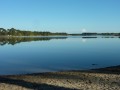
The Bellebouche Pond is one of the oldest, largest and most beautiful bodies of water in the Brenne Regional Nature Park. A small part is reserved for water sports, but most of it is a natural site that you can admire at your leisure with binoculars from three observatories around the pond.
 Bellebouche Pond and Vigneaux Pond
 12.87 mi
+36 ft
-39 ft
2 hrs
Easy
Departure from Mézières-en-Brenne (Indre)
12.87 mi
+36 ft
-39 ft
2 hrs
Easy
Departure from Mézières-en-Brenne (Indre)
A family cycle ride (hybrid bikes) to explore some of the ponds in the Brenne.
From the shores of the lake to the Chartreuse from Chemillé-sur-Indrois
 7.99 mi
+443 ft
-446 ft
4h 05
Moderate
Departure from Chemillé-sur-Indrois (Indre-et-Loire)
7.99 mi
+443 ft
-446 ft
4h 05
Moderate
Departure from Chemillé-sur-Indrois (Indre-et-Loire)
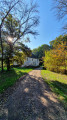
In Chemillé-sur-Indrois, the vast lake cannot be seen at a glance. You will need to walk along it, then move away, explore the forest to discover a charterhouse, before finally returning and climbing up to get a better view. A route that will delight lovers of nature and heritage.
Fontguenand, in the valley of the Petit Rhône, a tributary of the Fouzon
 7.46 mi
+151 ft
-148 ft
3h 35
Moderate
Departure from Fontguenand (Indre)
7.46 mi
+151 ft
-148 ft
3h 35
Moderate
Departure from Fontguenand (Indre)
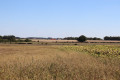
Fontguenand, a small village in the far north of the Indre department, on the border with Loir-et-Cher, is crossed by the Petit Rhône, a tributary of the Fouzon. This walk allows you to explore the surrounding countryside, typical of the Boischaut-Nord region, from vineyards to cereal fields, passing by the little chapel at L’Epinat.
Route through the Paulnay countryside
 6.07 mi
+98 ft
-98 ft
2h 55
Easy
Departure from Paulnay (Indre)
6.07 mi
+98 ft
-98 ft
2h 55
Easy
Departure from Paulnay (Indre)
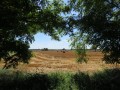
A pleasant walk offering the chance to explore the countryside around the village of Paulnay, situated in the Boischaut Nord natural region, within the Brenne Regional Nature Park.
Neuillay-les-Bois route
 6.21 mi
+13 ft
-13 ft
2h 50
Easy
Departure from Neuillay-les-Bois (Indre)
6.21 mi
+13 ft
-13 ft
2h 50
Easy
Departure from Neuillay-les-Bois (Indre)
This lovely walk on the edge of the Brenne Regional Nature Park takes you through a variety of landscapes typical of this region: meadows, ponds and pleasant woodland.
Circular Brenne in Saint-Michel-en-Brenne
 9.21 mi
+85 ft
-85 ft
4h 20
Moderate
Departure from Saint-Michel-en-Brenne (Indre)
9.21 mi
+85 ft
-85 ft
4h 20
Moderate
Departure from Saint-Michel-en-Brenne (Indre)
This walk near Saint-Michel-en-Brenne is a variation of route no. 60 proposed by the Brenne Regional Nature Park, entitled “Saint-Cyran-en-Brenne”.It follows small roads and paths, allowing you to discover, amongst other things, the Abbey of Saint-Cyran, built in the 7th century, and the bucolic, wooded landscapes of the Brenne, before leading to the Étang des Essarts observatory in the Chérine Reserve.
Discover Châteauroux
 2.34 mi
+62 ft
-59 ft
1h 10
Easy
Departure from Châteauroux (Indre)
2.34 mi
+62 ft
-59 ft
1h 10
Easy
Departure from Châteauroux (Indre)
Châteauroux, set to host the shooting events at the 2024 Olympic Games, is the capital of South Berry. Boasting a wealth of unexpected heritage, ranging from the medieval to the contemporary, Châteauroux reveals its character through its churches, Château Raoul and the Cordeliers Convent... Its cobbled streets often lead to peaceful gardens, and the meandering River Indre is never far away, flowing freely through the heart of a town with a well-preserved environment, where it feels good to take your time.