Grand tour of Île-de-France in 34 stages on the GR®11

This marked GR® route around the Île-de-France region (with a few forays into neighbouring departments and regions) complements its "little brother", the GR®1, by forming a circular route around Paris, generally with a slightly larger radius.

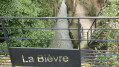
It follows the same overall pattern: first, a radial section starting from Paris (more precisely from the Pont d'Austerlitz, near the former confluence of the Bièvre and the Seine), going up the entire Bièvre valley, then continuing to Villiers-Saint-Frédéric, in the Yvelines. From there, it is a circular route that loops around the Île-de-France region, close to its borders with neighbouring regions.

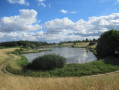
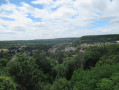
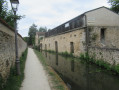
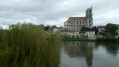
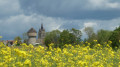
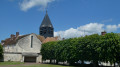
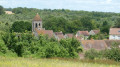
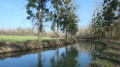
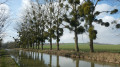
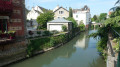
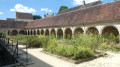
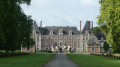
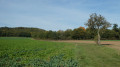
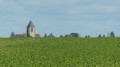
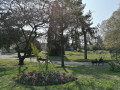
The route passes through beautiful regions, often untouched by intensive urbanisation, regional nature parks and other protected natural areas, and takes in some architectural wonders.

Details

83412554
Creation:
Last update:
Last review:
  • Walking
    Activity: Walking
  • ↔
    Distance: 850.42 km
  • ◔
    Average duration: 34 days 
  • ▲
    Difficulty: Difficult
  • ⚐
    Back to start: No
  • ↗
    Ascent: + 6,717 m
  • ↘
    Descent: - 6,753 m

  • ▲
    Highest point: 214 m
  • ▼
    Lowest point: 18 m
  • ⚐ Country: France
  • ⚐ District: Paris (75000)
  • ⚑
    Start: N 48.844592° / E 2.365367°
  • ⚑
    End: N 48.815201° / E 1.877647°
  • Hour-by-hour weather

Photos

Stages of the route

This route needs several days, find the details below:

  1. S
  2. 2
  3. 3
  4. 4
  5. 5
  6. 6
  7. 7
  8. 8
  9. 9
  10. 10
  11. 11
  12. 12
  13. 13
  14. 14
  15. 15
  16. 16
  17. 17
  18. 18
  19. 19
  20. 20
  21. 21
  22. 22
  23. 23
  24. 24
  25. 25
  26. 26
  27. 27
  28. 28
  29. 29
  30. 30
  31. 31
  32. 32
  33. 33
  34. E

Notes

This is a long-distance hiking route on the edge of the Île-de-France region, which complements the similar GR® 1 route. Most of the stages can be completed in a day from station to station, and some can even be split in the middle, particularly the first few. However, other stages require an overnight stay or more, as some of the regions crossed are less well served by transport. Therefore, find out about accommodation options and any closures due to work on the rail network before setting off.

I completed this route on my own over a period of two years, with no particular continuity between stages, depending on the weather, work on the rail network and my availability at the time. Out of necessity or choice, I spent several nights on site.

The route has 34 stages, generally 20 to 30 km long (sometimes a little more, sometimes a little less), for a total length of over 850 km! The stages are therefore quite long in general and are reserved for experienced hikers, at least in the form presented here. That said, they do not present any particular difficulties and there are never any significant elevation changes, except for a few rare steep paths that are never long and, particularly in the Fontainebleau forest and the surrounding mountains, a few potentially steep trails that are reminiscent of certain mountainous terrain.

The route is generally well marked with red and white GR® signs, although you may sometimes stray from the GR® for practical reasons or to visit a point of interest that is slightly off the beaten track. However, a map and/or GPS is essential.

For details of each stage, see the associated information sheet.

Worth a visit

The GR® allows you to discover wonders just a stone's throw from Paris, often unknown even to Parisians themselves.

  • Remarkable built heritage
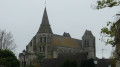
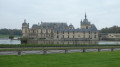
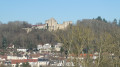
    • Numerous châteaux (Chantilly, Fontainebleau and a multitude of smaller, lesser-known buildings)
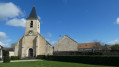
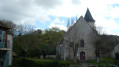
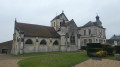
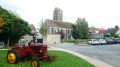
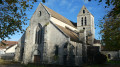
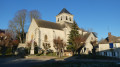
    • Numerous churches in the towns and villages along the route
    • Several remarkable historic centres (Senlis, Provins, Moret-sur-Loing, etc.)
  • Regional nature parks around Paris
    • French Vexin in the north-west
    • Oise - Pays de France to the north
    • French Gâtinais to the south
    • Haute Vallée de Chevreuse to the south-west
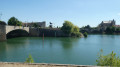
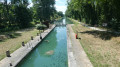
  • Waterways around Paris
    • Seine (downstream passage at Mantes and upstream at Montereau)
    • Oise, Marne, Yonne, Loing for the main tributaries
    • Ourcq, Petit and Grand Morin on the eastern side
    • Bièvre, Essonne, Juine, Orge, Yvette on the south side
    • And a multitude of smaller waterways (Mauldre, Vaucouleurs, Aubette, Viosne, Sausseron, Thérain, Nonette, Automne, Voulzie, École, Renarde, etc.)
    • Ourcq Canal, Loing Canal
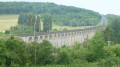
    • Aqueducts supplying Paris and its suburbs with drinking water: the Avre aqueduct to the west, the Dhuys aqueduct to the east, and the Voulzie, Vanne, Loing and Lunain aqueducts to the south.
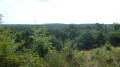
  • Forest areas around Paris
    • Chantilly, Ermenonville
    • Fontainebleau, Trois Pignons
    • And a multitude of smaller forests and woods
  • Natural regions surrounding Paris: Mantois, Vexin, Pays de Thelle, Multien, Brie, Bassée-Montois, Gâtinais, Hurepoix, etc.

Always be cautious and plan ahead when you're outdoors. Visorando and the author of this route cannot be held responsible for any accidents occurring on this route.

The GR® and PR® markings are the intellectual property of the Fédération Française de Randonnée Pédestre.

Other walks in the area

For more walks, use our search engine .

The GPS track and description are the property of this route's author. Please do not copy them without permission.