


Refine your search for walks in Chaource
Chaource walks


 Chaource – Etourvy
 Visorando Member
 10.08 mi
 +719 ft
 -548 ft
 5h 15
5h 15
 Moderate
 Departure from Chaource (Aube)
For the attention of pilgrims passing through Troyes and wishing to join theGR®654to Vézelay.
Day 3 – from Chaource to Etourvy.
Chaourçois Route
 Tourist office11.54 mi
+469 ft
-466 ft
5h 45
Moderate
Departure from Chaource (Aube)
Tourist office11.54 mi
+469 ft
-466 ft
5h 45
Moderate
Departure from Chaource (Aube)
You’ll discover the wonders of the built heritage in the Chaourçois region, such as the Church of Saint-Jean-Baptiste in Chaource, home to countless treasures including the magnificent Entombment dating from 1515.
The Petits Gués route around Cussangy
3.15 mi
+69 ft
-69 ft
1h 30
 Easy
Departure from Cussangy (Aube)
Easy
Departure from Cussangy (Aube)
Discover the village of Cussangy, situated near Chaource. The ‘Petits Gués’ trail offers a walk centred around the theme of water.
Jeugny to Saint-Phal circular route
 4.88 mi
+102 ft
-98 ft
2h 20
Easy
Departure from Jeugny (Aube)
4.88 mi
+102 ft
-98 ft
2h 20
Easy
Departure from Jeugny (Aube)
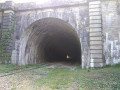
This route follows part of the L26 railway line, which has been disused since 1996, passing through the Fays-la-Chapelle tunnel. In 2018, an association called ASL26 was formed. Within three years, it had made the railway line between Jeugny and Auxon accessible to walkers.
The walk also takes in meadows and woodland.
Circular Five Valleys Route starting from Étourvy
9.72 mi
+942 ft
-932 ft
5h 15
Moderate
Departure from Étourvy (Aube)
A pleasant walk that can be adapted as required, allowing you to explore five valleys around the village of Étourvy with its rich heritage. The route takes in an old oil and flour mill, fountains, distinctive wash houses, and more… All set against a varied landscape combining farmland and woodland.
Circular route in the Rumilly-les-Vaudes forest
 9.05 mi
+161 ft
-167 ft
4h 20
Moderate
Departure from Rumilly-lès-Vaudes (Aube)
9.05 mi
+161 ft
-167 ft
4h 20
Moderate
Departure from Rumilly-lès-Vaudes (Aube)
This flat walk, suitable for all ages, starts and ends at the foot of the village’s 16th-century church. A 15 km walk suitable for everyone; pushchairs with large wheels are welcome.
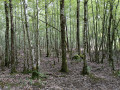
Mostly shaded, it will nevertheless give you a glimpse of the village’s streetscape. The first half of this walk follows theGR®2
Circular starting from Prusy
5.19 mi
+272 ft
-292 ft
2h 35
Easy
Departure from Prusy (Aube)
The route is fairly simple and allows you to walk along the paths around Prusy. It is mainly paths, but there are also a few sections on the road (essential for getting to the church). When you arrive at Saint-Edme Church, you can enjoy a pleasant view of the fields.
Prusy-Coussegrey circular
4.53 mi
+203 ft
-203 ft
2h 15
Easy
Departure from Prusy (Aube)
This circular route allows you to reach Coussegrey via the paths from Prusy. This route is fairly simple with a few climbs and stony paths. It is an easy route, but wear good, comfortable shoes to enjoy these beautiful trails.
The Davrey Route
10.05 mi
+144 ft
-161 ft
4h 45
Moderate
Departure from Davrey (Aube)
A pleasant walk that follows the poplar-lined banks of the Landion, passing through copses and forests, forming a ring between the commune’s two lowland rivers, the Armance and the Landion.
From Sommeval to Javernant
 4.61 mi
+545 ft
-531 ft
2h 35
Easy
Departure from Sommeval (Aube)
4.61 mi
+545 ft
-531 ft
2h 35
Easy
Departure from Sommeval (Aube)
A short walk offering a beautiful view of the Crésantignes region and the forests of Jeugny and Aumont.
The Wolf Trail in Sommeval
 8.70 mi
+669 ft
-646 ft
4h 35
Moderate
Departure from Sommeval (Aube)
8.70 mi
+669 ft
-646 ft
4h 35
Moderate
Departure from Sommeval (Aube)
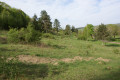
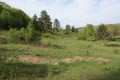
The Sentier du Loup trail circles Sommeval. This pretty little village stretches out in a valley which, like an amphitheatre, is surrounded on three sides by wooded hills. The trail allows visitors to discover one of the last dry grasslands in the Pays d'Othe.
The trail is well maintained and clearly marked, but it is not recommended during the hunting season, from November to February.
The Loup trail starting from Sommeval
 7.58 mi
+722 ft
-722 ft
4h 05
Moderate
Departure from Sommeval (Aube)
7.58 mi
+722 ft
-722 ft
4h 05
Moderate
Departure from Sommeval (Aube)
This variation of the Loup trail goes around Sommeval, a pretty little village nestled in a valley which, like an amphitheatre, is surrounded on three sides by wooded hills. The trail allows you to discover one of the last dry grasslands in the Pays d'Othe and to cross the forests of Javernant and Sommeval.
The trail is well maintained and clearly marked, but it is not recommended during the hunting season, from November to February.
The Wolf Trail via the Orchid Meadow and the Javernant Forest
 2.90 mi
+285 ft
-308 ft
1h 35
Easy
Departure from Sommeval (Aube)
2.90 mi
+285 ft
-308 ft
1h 35
Easy
Departure from Sommeval (Aube)
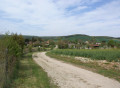
This variant of the Sentier du Loup trail allows you to explore the small village of Sommeval, the Pelouse aux Orchidées and to cross the Javernant communal forest.
Forests and vineyards above Ricey Bas and Balnot
 12.85 mi
+1,096 ft
-1,089 ft
6h 50
12.85 mi
+1,096 ft
-1,089 ft
6h 50
 Difficult
Departure from Les Riceys (Aube)
Difficult
Departure from Les Riceys (Aube)
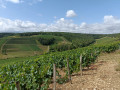
This circular walk takes us into the vineyard area of Les Riceys and Balnot-sur-Laignes. Leaving the vineyards behind, the return journey follows the course of the Laignes river and takes the route of the old "tacot" railway line which, from 1901, linked Les Riceys-Polisot to Cunfin.
Setting off from the church in Ricey Bas, a stroll through the vineyards
 4.64 mi
+407 ft
-404 ft
2h 30
Easy
Departure from Les Riceys (Aube)
4.64 mi
+407 ft
-404 ft
2h 30
Easy
Departure from Les Riceys (Aube)
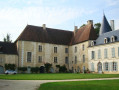
The Riceys vineyards cover the largest area of any in the whole of Champagne. They boast three appellations d’origine contrôlée.
Located in the Côte des Bars, the vineyards are easily accessible to walkers, with access often made easier by roads maintained for vineyard operations.
The Sentier des Moutons from Bouilly
 5.48 mi
+525 ft
-515 ft
3h 00
Easy
Departure from Bouilly (Aube)
5.48 mi
+525 ft
-515 ft
3h 00
Easy
Departure from Bouilly (Aube)
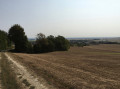
This trail follows one of the sheep tracks that allowed herds to move from the surrounding villages to the Essarts plateau when it was used as grazing land in the 19th century.
Since then, it has become a beautiful forest.
Le tour des fermes au départ de Ricey Haut
 7.90 mi
+528 ft
-528 ft
4h 00
Moderate
Departure from Les Riceys (Aube)
7.90 mi
+528 ft
-528 ft
4h 00
Moderate
Departure from Les Riceys (Aube)
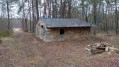
Une belle balade familiale à partir des Riceys, commune viticole au Sud de la Champagne dans la côte des Bars, à la croisée des chemins avec la Bourgogne toute proche. Cette commune est composée des trois villages, Ricey Bas, Haute Rive et Ricey Haut. La commune bénéficie de trois appellations et bénéficie du plus grand terroir classé champagne.
Montaigu from Souligny
 6.47 mi
+702 ft
-692 ft
3h 35
Moderate
Departure from Souligny (Aube)
6.47 mi
+702 ft
-692 ft
3h 35
Moderate
Departure from Souligny (Aube)
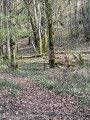
Walk through the Souligny Communal Forest, descend into the Val de Gloire along the Sentier des Moutons, then visit the Montaigu nature site, the remains of the Gallo-Roman oppidum and the ruins of the castle, with a panoramic view of the Champagne plain on the way back.The route follows sections of several well-signposted ‘Sentiers des Moutons’ trails (8 km, 12 km and 14 km in length).
Short circular in the Flogny-la-Chapelle communal forest
4.54 mi
+125 ft
-125 ft
2h 10
Easy
Departure from Flogny-la-Chapelle (Yonne)
The shaded forest atmosphere typical of the humid Champagne region can be enjoyed along this entire route, which is accessible on foot or by mountain bike. This route is strongly discouraged during the forest hunting season, from October to March, on Sundays and Wednesdays.
On the edge of southern Champagne, Molesme in Burgundy
 5.74 mi
+361 ft
-390 ft
2h 55
Easy
Departure from Molesme (Côte-d'Or)
5.74 mi
+361 ft
-390 ft
2h 55
Easy
Departure from Molesme (Côte-d'Or)
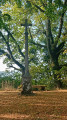
The walk starts in the small village of Molesme, situated in the north of the Côte-d’Or, in the valley of the Laigne – a tributary of the Seine – in a region straddling Burgundy and Champagne. Life in this village was strongly influenced by the monastic life of the abbey, which over the centuries experienced the consequences of the Hundred Years’ War, the Wars of Religion and the Revolution… The abbey is open to the public during the summer months by appointment. A leisurely walk allows you to explore and visit the ruins of the Oppidum of Vertillum, which was a major city in Roman times.
Les Grandes Vallées – Heurtebise
 4.00 mi
+367 ft
-364 ft
2h 10
Easy
Departure from Laines-aux-Bois (Aube)
4.00 mi
+367 ft
-364 ft
2h 10
Easy
Departure from Laines-aux-Bois (Aube)
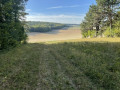
Circular route in the Grandes Vallées forest, Heurtebise and Fond de l’Homme Mort area.
Montaigu via Les Grandes Vallées
 4.31 mi
+463 ft
-472 ft
2h 25
Easy
Departure from Laines-aux-Bois (Aube)
4.31 mi
+463 ft
-472 ft
2h 25
Easy
Departure from Laines-aux-Bois (Aube)
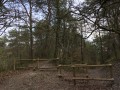
From the heights of Laines-aux-Bois, descend to the plain, visit the Fontaine site, the remains of the Gallo-Roman oppidum and the traces of the castle at the Montaigu nature site, then return via the Sentier des Moutons trail, ending with a walk through the charming hamlet of Les Grandes Vallées.
This route avoids the steepest paths.
La Barse Route
 AONB
AONB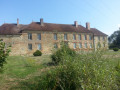 5.02 mi
+66 ft
-66 ft
2h 20
Easy
Departure from Montiéramey (Aube)
5.02 mi
+66 ft
-66 ft
2h 20
Easy
Departure from Montiéramey (Aube)
Two villages notable for their heritage are linked by this route, which crosses the River Barse, winding through pastures and orchards – a landscape typical of the humid Champagne region. The path passes by the former abbey of Montiéramey and two manor houses in Montreuil-sur-Barse.
The Vauchassis Forest via the Belle Fayte ridge
 5.01 mi
+394 ft
-384 ft
2h 40
Easy
Departure from Vauchassis (Aube)
5.01 mi
+394 ft
-384 ft
2h 40
Easy
Departure from Vauchassis (Aube)
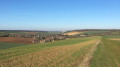
Walk in the forest east of Vauchassis and return via the Crête de la Belle Fayte
Mont Martin and the Laines Valley
 5.81 mi
+738 ft
-738 ft
3h 20
Moderate
Departure from Saint-Germain (Aube) (Aube)
5.81 mi
+738 ft
-738 ft
3h 20
Moderate
Departure from Saint-Germain (Aube) (Aube)
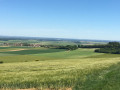
From the Chemin de la Grande Voie in the hamlet of Lépine (Saint-Germain), head towards Les Hauts des Forges and Mont Martin, then return along the Laines valley via theGR® de Pays ‘Plaines et Collines’ trail around Troyes.
The White Rabbit Trail
 2.08 mi
+43 ft
-43 ft
1h 00
Easy
Departure from Mesnil-Saint-Père (Aube)
2.08 mi
+43 ft
-43 ft
1h 00
Easy
Departure from Mesnil-Saint-Père (Aube)
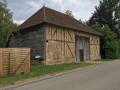
On the shores of Lake d’Orient, the traditional village of Mesnil-Saint-Père has retained its authentic Champagne charm. The interpretive trail winds its way between the houses and orchards, between the harbour and the church.
Route des Granges auboises
 4.77 mi
+66 ft
-66 ft
2h 15
Easy
Departure from Mesnil-Saint-Père (Aube)
4.77 mi
+66 ft
-66 ft
2h 15
Easy
Departure from Mesnil-Saint-Père (Aube)
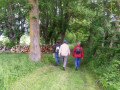
Between lake and forest, countryside and orchards, this route includes the Sentier du Lapin Blanc (White Rabbit Trail). Revealing a preserved village and its barns, crossing a wood, open countryside and green meadows, running along the beach and the dyke, this route sums up all the attractions of the Forêt d'Orient Regional Nature Park.