

Refine your search for walks in Chaillac
Chaillac walks


 Discover the Anglin, from the ruins of Brosse to the Seillant Mill
 Visorando Member
 6.14 mi
 +748 ft
 -758 ft
 3h 30
 Moderate
 Departure from Chaillac (Indre)
This walk follows aPR® trail, allowing you to discover the ruins of Château de Brosse, near Chaillac in the Indre department, then the pretty village of Seillant, as you stroll along the refreshing banks of the Anglin river.
From chapel to bell tower on the Dunet side
 6.94 mi
+407 ft
-430 ft
3h 35
Moderate
Departure from Dunet (Indre)
This pleasant walk takes you along beautiful paths and pretty little roads around the village of Dunet, south-west of Indre, in the southern Boischaut region. In addition to the typical hedgerow landscapes of this natural region, you can admire the beautiful bell tower of the 13th-century Saint-Martial church and the 12th-century chapel in Vouhet.Please note: the route has been temporarily modified between (10) and (11) (see Description and Practical Information sections)
The Chéniers iron mines
 7.10 mi
+548 ft
-525 ft
3h 45
Moderate
Departure from Sacierges-Saint-Martin (Indre)
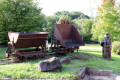
This walk is route no. 54 of the Brenne Regional Nature Park, which takes you along small roads and lovely paths to explore Chéniers, its surroundings and its mining heritage. Indeed, iron brought wealth to the village of Chéniers, so it’s no surprise that the earth and the houses are often red. Part of the route allows us to follow the traces left by ore mining, which dates back to Ancient Rome.
Meet at Aliénor d'Aquitaine, setting off from Lignac
 5.68 mi
+180 ft
-174 ft
2h 45
 Easy
Departure from Lignac (Indre)
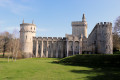
This pleasant walk takes you around the area near Lignac, as well as the beautiful castle and the picturesque village of Château Guillaume, which owes its name to William IX, father of Eleanor of Aquitaine, who built it in the late12th century.
Circuit de Roussines autour du bois de Chinan
8.73 mi
+289 ft
-302 ft
4h 15
Moderate
Departure from Roussines (Indre) (Indre)
This hike is suitable for cycling (but it's really mountain biking), walking and horse riding.You can admire the majestic oak tree in Saint-Civran, which is several hundred years old, perhaps even a thousand.
Exploring the Abloux Valley in Prissac
 5.39 mi
+282 ft
-282 ft
2h 45
Easy
Departure from Prissac (Indre)
This walk takes you through the Abloux Valley, set amidst the hedgerow countryside of Prissac, in the southern Boischaut region of the Indre. Hedgerows surround the fields like a mosaic of greenery, whilst the higher ground is either cultivated or left as pasture.
Le Pot Bouillant in Cromac
 4.20 mi
+230 ft
-230 ft
2h 10
Easy
Departure from Cromac (Haute-Vienne)
A short walk to explore the area around Cromac, following the River Benaize
The most beautiful paths in Abloux
 7.01 mi
+449 ft
-466 ft
3h 35
Moderate
Departure from Saint-Gilles (Indre) (Indre)
Hedgerows, forest, river, ponds, panoramic views... In short, you won’t get bored on this varied route, which reveals all the facets of the well-preserved landscape of southern Boischaut. You’ll enjoy yourself on foot, on horseback or by mountain bike, and if it’s hot, you can take advantage of a lovely spot for a swim in the river at Abloux itself.
Short circular loop around Saint-Gilles
3.41 mi
+184 ft
-174 ft
1h 45
Easy
Departure from Saint-Gilles (Indre) (Indre)
Suitable for walking, mountain biking or horse riding, this short circular route takes you along lovely paths and, in particular, runs alongside the River Abloux through a pleasant spot in the woods.
The slopes of the Abloux in Chazelet
 8.36 mi
+495 ft
-495 ft
4h 15
Moderate
Departure from Chazelet (Indre)
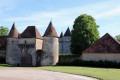
A lovely walk starting from Chazelet, a village in the Brenne Regional Nature Park, offering the chance to explore the bocage landscapes of the Boischaut-Sud region of the Indre in the Abloux valley, along a variety of small roads, paths and trails.
"Loup y es-tu?" in Luzeret
6.80 mi
+62 ft
-62 ft
3h 10
Moderate
Departure from Luzeret (Indre)
A lovely walk exploring the forests of Luzeret, a village bordering the Brenne Regional Nature Park, where wolves once roamed alongside humans.
Étang de la Chaume
 Tourist office
 5.43 mi
+243 ft
-243 ft
2h 40
Easy
Departure from Azerables (Creuse)
The vast Étang de la Chaume conceals little-known spots that this interpretive route invites you to discover as you walk along part of the shoreline and wander through the surrounding woods and heathland. Please be considerate of wildlife and anglers, and wear sturdy footwear in wet weather.
On the hills above Azérables
 3.46 mi
+187 ft
-187 ft
1h 45
Easy
Departure from Azerables (Creuse)
This short route takes you past the splendid buildings hidden away in the village of Azérables, before taking you up to higher ground to admire them once more, this time in their natural setting.
Route in Brenne at Bélâbre: water, earth, air and fire
 5.59 mi
+276 ft
-256 ft
2h 50
Easy
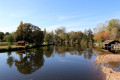
Departure from Bélâbre (Indre)
Bélâbre, situated in the Brenne Regional Nature Park in the Indre department, enjoyed a period of prosperity in the 19th century thanks to these four elements used in its tile works, potteries and forges. Earth for raw materials (clay and ore), water to wash and moisten them and to generate energy, air to dry the moulded clay, and fire for firing. This walk offers you the chance, amongst other things, to discover some remnants of this past.