


Refine your search for walks in Saint-Lyphard
Saint-Lyphard walks


 Tour of the thatched-roof villages of Saint-Lyphard
 Visorando Member
 18.20 mi
 +138 ft
 -148 ft
 2 hrs
2 hrs
 Easy
Easy
 Departure from Saint-Lyphard (Loire-Atlantique)
Remnants of a time when much of what enabled the people of Bréca to make a living was extracted from the marsh, thatched cottages are still very much in evidence around Saint-Lyphard. There are said to be no fewer than 500 of them.
To discover this exceptional heritage, why not hop on your bike and explore the narrow roads and farm tracks that criss-cross the Saint-Lyphard area? A complete change of scenery is guaranteed!
 The banks of the Brière at Marlais
8.21 mi
+39 ft
-39 ft
3h 50
 Moderate
Departure from Herbignac (Loire-Atlantique)
Moderate
Departure from Herbignac (Loire-Atlantique)
This route runs between the Brière and Mès marshes. These two protected wetlands are home to numerous birds, which you may spot along the way.
La Cour aux Loups
9.07 mi
+72 ft
-102 ft
4h 15
Moderate
Departure from Herbignac (Loire-Atlantique)
Although Herbignac is not the commune in Brière with the most thatched cottages, the villages along this route offer some fine examples.
Les Faillies Brières and Les Crolières de Gras
 5.96 mi
+33 ft
-33 ft
2h 45
Easy
Departure from Herbignac (Loire-Atlantique)
5.96 mi
+33 ft
-33 ft
2h 45
Easy
Departure from Herbignac (Loire-Atlantique)
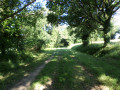
The Mès, a small coastal river in the north of the Guérande peninsula, flows through a low, wide valley consisting mainly of marshes, draining the water into the ocean.
The proposed route allows you to discover the upper part of these marshes and cross them via the Gras bridge, an ancient stone footbridge.
This route should only be attempted when the water level in the marshes allows the paths surrounding them to be used.
The Herbignac Potters’ Trail
8.17 mi
+79 ft
-79 ft
3h 50
Moderate
Departure from Herbignac (Loire-Atlantique)
Passing through clay extraction sites and former pottery villages, this route pays tribute to one of Herbignac’s traditional trades, which continued until the mid-20th century.
From Ranrouët Castle to La Brière
7.49 mi
+26 ft
-26 ft
3h 30
Moderate
Departure from Herbignac (Loire-Atlantique)
The Château de Ranrouët is a medieval gem nestled on the edge of the marshes. Here, there is no fortified rock, but a slight elevation in the greenery. The marshes that surround it provided protection, and the proposed route winds through the surrounding countryside where land and water constantly mix.
Chemin du Bocage in Kerhinet
 Tourist office0.54 mi
+10 ft
-10 ft
0h 15
Easy
Departure from Saint-Lyphard (Loire-Atlantique)
Tourist office0.54 mi
+10 ft
-10 ft
0h 15
Easy
Departure from Saint-Lyphard (Loire-Atlantique)
This small village of 18 thatched-roof houses was acquired in the 1970s by the Brière Regional Nature Park with the intention of renovating it and turning it into a showcase of traditional Brière housing. Kerhinet is a village situated to the south-west of the municipality of Saint-Lyphard, on the western side of the marshes. The village is open to visitors free of charge. You can enjoy a drink or an ice cream on site. There is a picnic area as well as free, designated parking.
Between thatched cottages and marshes in Saint-Lyphard
 7.45 mi
+26 ft
-26 ft
3h 25
Moderate
Departure from Saint-Lyphard (Loire-Atlantique)
7.45 mi
+26 ft
-26 ft
3h 25
Moderate
Departure from Saint-Lyphard (Loire-Atlantique)
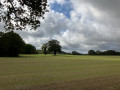
This hike allows you to discover the different faces of Brière: its marshes, its thatched cottages, its flora and fauna. Lots of paths, a few roads, all lined with oak trees, pines, gorse, willows and chestnut trees. Superb!
La Brière between Sandun and Saint-André-des-Eaux
 8.21 mi
+59 ft
-62 ft
3h 50
Moderate
Departure from Guérande (Loire-Atlantique)
8.21 mi
+59 ft
-62 ft
3h 50
Moderate
Departure from Guérande (Loire-Atlantique)
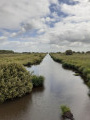
La Brière, France's second largest freshwater marsh, is a secret land hidden behind the surrounding hedgerows. The suggested route allows you to explore it from the land bordering it to the west and even catch a glimpse of it from the Sandun hill, which rises to a height of 28 metres. A real mountain in this flat country!But be careful, marshes are best explored when the water level allows it.Circuit temporarily closed
The Gagneries de la Chapelle des Marais circuit
8.32 mi
+10 ft
-10 ft
3h 50
Moderate
Departure from La Chapelle-des-Marais (Loire-Atlantique)
Farming in the marshes has always relied on mowing and grazing the meadows when they were no longer covered in water. Cows prefer dry land to the aquatic environment, and providing them with winter refuge areas is key to ensuring the continuation of this farming practice. This route invites you to discover the pastures of La Chapelle des Marais.
Route of the large islands
24.91 mi
+16 ft
-16 ft
4 hrs
Moderate
Departure from Saint-Joachim (Loire-Atlantique)
Discover the islands of Saint-Joachim and some of the islands of Saint-Malo-de-Guersac by bike, with some beautiful views of the Brière marshes.
The paths of Saint-Dys
7.32 mi
+112 ft
-92 ft
3h 30
Moderate
Departure from Férel (Morbihan)
The commune of Férel comprised five ‘frairies’ (sub-parishes), including that of Saint-Dys (or Teiz), which covers the wooded south-western part of the commune’s territory. The suggested route follows country lanes and forest tracks around Coët Castel and Ally.
A walk around the Férel bell tower
 5.67 mi
+69 ft
-72 ft
2h 40
Easy
Departure from Férel (Morbihan)
5.67 mi
+69 ft
-72 ft
2h 40
Easy
Departure from Férel (Morbihan)
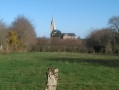
Situated about ten kilometres inland from the coast, on a plateau sloping down from the banks of the Vilaine to the first marshes of Briéron, the commune of Férel has managed to preserve its bocage landscape and a network of paths offering a wide range of walking options. This route offers an almost constant view of the bell tower, which, being tall and sharply pointed, is one of the area’s main landmarks.
Route des Coulées
7.52 mi
+138 ft
-138 ft
3h 35
Moderate
Departure from Férel (Morbihan)
The plateau on which the village of Férel lies is situated at an altitude of 30 to 50 metres above sea level. It overlooks the southern bank of the Vilaine, sometimes quite steeply, and the streams flow along the bottoms of wooded valleys (the Coulées), which are ideal for walks in all seasons.
Circular cycling route: Férel – Pénestin – Assérac
33.38 mi
+486 ft
-459 ft
4 hrs
Moderate
Departure from Férel (Morbihan)
Between Mès and Vilaine lies a little-known corner where the landscapes change constantly, from the banks of the Vilaine to the Atlantic coast at Pénestin, via the salt marshes of Mès and the wooded areas of Monchoix and Coët Castel. So hop on your bike and explore it along roads and paths away from heavy traffic.
Walk in Grande Brière around Saint-Malo-de-Guersac
 4.56 mi
+23 ft
-23 ft
2h 05
Easy
Departure from Saint-Malo-de-Guersac (Loire-Atlantique)
4.56 mi
+23 ft
-23 ft
2h 05
Easy
Departure from Saint-Malo-de-Guersac (Loire-Atlantique)
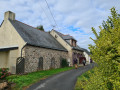
Walk along the edge of the Grande Brière. As you circle the village, you will discover meadows sometimes flooded by the rising spring waters, separated by the canals you will be walking alongside. In Rozé, you can climb up to a viewpoint to enjoy a view of the entire Grande Brière.
Between the Vilaine and the Étang du Pont de Fer
6.27 mi
+249 ft
-243 ft
3h 05
Easy
Departure from Camoël (Morbihan)
To the south of the Vilaine estuary, the gentle terrain encourages the intermingling of wetlands and agricultural land. The village of Camoël is built on a slight rise overlooking both the river and the marshes situated upstream of Pont Mahé Bay.The suggested route allows you to explore the river where its estuary begins and one of the streams that feed the Étang du Pont de Fer, a hidden nature reserve that can be glimpsed when the foliage is not too dense.
Vieille Roche Route
5.78 mi
+112 ft
-128 ft
2h 45
Easy
Departure from Camoël (Morbihan)
In the past, the Vilaine was crossed by ferry downstream of La Roche-Bernard. This was the case between Vieille Roche in Camoël and Arzal. The construction of the dam in the 1970s significantly changed these practices, as a fixed link now allows people to cross from one bank to the other. The suggested route allows you to explore the dam and the paths along the left bank of the Vilaine around Camoël.
From one port to another along the Vilaine
6.34 mi
+420 ft
-436 ft
3h 15
Moderate
Departure from Camoël (Morbihan)
Running along the left bank of the Vilaine, this path follows the riverbank closely, linking the two ports of Arzal and La Roche-Bernard, and offering a multitude of landscapes and views of the Basse-Vilaine. In summer, you can also return by boat or canoe.
Circular route between the Arzal Dam and Ferel
8.17 mi
+197 ft
-197 ft
3h 55
Easy
Departure from Camoël (Morbihan)
This circular walk allows you to enjoy the scenery along the River Vilaine, the woodland on the way to Ferel, and finally a return journey through the countryside around Camoël.
From the Arzal dam to La Roche Bernard along the left bank of the Vilaine
9.57 mi
+965 ft
-961 ft
5h 15
Moderate
Departure from Camoël (Morbihan)
Walk starting from the Arzal Dam, following the Vilaine upstream on the left bank, circular route via the two bridges and finishing at the port of La Roche-Bernard. The scenery along the Vilaine is breathtaking.
More walks in Saint-Lyphard
Select a point of interest below: