Country:

 City:
City:


(S/E) Park in the small car park next to the village bakery and cross the RD47 to take the street opposite. After the last houses, turn right and return to the departmental road. Cross the road and turn left to cross the bridge and follow the road for about 200 m.
(1) Just before the Cruttier bend, take the path that branches off to the right, then 80 m before the first bend, take the path that goes into the woods on the right, following a wire fence. Be careful not to miss it, as the entrance is very discreet. Follow this path straight ahead until you reach the Bréca road.
(2) Turn left when you get there. Follow the road for about 500 m, then leave it to the left at the three-way junction, continuing along the path on the right. Once you have passed the barrier, you will enter the Grand Brière Mottière.
(3) La Brière has a very special land status, as, by letters patent from François II, Duke of Brittany and father of Duchess Anne, it is the undivided property of its inhabitants. The Grande Brière Mottière union committee brings together representatives from the 21 municipalities surrounding the marsh and is responsible for its management (maintenance of canals, water levels, grazing, fishing and hunting rights).
Follow the first moat before reaching the canal de ceinture (a canal surrounding the undivided marsh) and the GRP® Tour de Brière trail (red and yellow markings). Turn right and follow it to the Tréhé canal.
(4) Turn right and head for the village port after crossing the first footbridge.
(5) Although there are fewer barges (flat-bottomed boats typical of the marshes), this small port has retained its original appearance, with its barges moored in the shade of tall trees.
Go around the various basins to return to the marsh by following the other bank of the Tréhé canal until you reach the footbridge that crosses it.
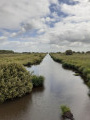
(6) This straight canal is one of those dug in the first half of the 20th century to facilitate travel in the marshes. Previously, its users travelled in more or less natural barges that joined the copis and piardes. These open stretches of water are the result of peat extraction. Although the marsh is now wooded, there was a time when, between cutting reeds for roofing or animal bedding, grazing and peat extraction, it had a completely different appearance. Nothing stopped the eye except the hedges on the mainland. Imagine this landscape as you follow the belt canal to the outskirts of Saint-André-des-Eaux. In the distance, the dark mass of the Forêt de la Bretesche covers the Sillon de Bretagne.
(7) Cross the canal via the Chaussée du Bourg footbridge and leave the marsh, taking care to close the gate behind you. Join the road to Bilac via a beautiful tree-lined path. When you reach this road, turn right and enter the village of Bilac. There are still a few attractive thatched cottages here.
(8) At the crossroads in the centre of the village, turn left, then after the tall house, turn right onto a path that passes behind Kerméans. Turn right at the road, then left to descend into a small valley.
(9) Go up the opposite slope and turn right when you reach the first houses. After a few dozen metres, the tarmac will come to an end.
Pass Kerpoisson and continue under some majestic trees.
After joining a first path, continue right for 200 m, and turn left at the next three-way junction.
As you pass, take a look to your left at a small chapel-like building at the end of the neighbouring field.
(10) Reach Tréhé, leaving Le Bilôt on your right. At the road, go straight ahead and continue along the path that extends the road. Ignore the signpost blocking the passage. Only a slightly damp section a little further on may hinder your progress.
(11) At the cycle path, turn right, then left at the next crossroads, and follow the path until you reach the RD47. This section of the route can be difficult to walk in wet weather due to the ruts.
(12) If you are in a group, prepare and signal when crossing this busy, winding road. On the other side, continue to Kerjacob.
(13) At the village bakery, turn right onto the street that climbs towards a farmhouse. It continues along a steep path that climbs the Sandun hill. This hill offers an excellent view of the Brière region, but only in winter when the trees have lost their leaves. Without vegetation, it is easy to understand why this balcony above the marsh was occupied early on, as evidenced by the many remains that have been discovered there (dolmen, "Gallic" wall, necropolis, etc.). With vegetation having reclaimed its rights, only the calvary still dominates the site since it was restored.
Descend the hill on the opposite side, then follow the road to the right, which takes you back to the starting point at the Sandun oven (S/E).




 Tourist office
 Easy
Easy 
 Visorando Member