


Refine your search for walks in Rémalard
Rémalard walks


 The Perche region and its hills as seen from Rémalard
 Association / Club / Walk leader
 14.04 mi
 +945 ft
 -945 ft
 7h 15
7h 15
 Difficult
 Departure from Rémalard (Orne)
This walk through the Rémalard countryside will allow you to discover the Perche landscapes: hills, woods, streams, traditional houses and châteaux.
Mansonnière Cave
 Visorando Member
 3.83 mi
+249 ft
-249 ft
2h 00
3.83 mi
+249 ft
-249 ft
2h 00
 Easy
Departure from Bellou-sur-Huisne (Orne)
Easy
Departure from Bellou-sur-Huisne (Orne)
A lovely walk along a former railway line, converted into a footpath and cycle route, through charming rolling countryside, then along paths and small tarmac roads with beautiful views over the Huisne Valley.
From Moutiers-au-Perche to La Ferté-Vidame
 17.47 mi
+653 ft
-466 ft
8 hrs
17.47 mi
+653 ft
-466 ft
8 hrs
 Very difficult
Departure from Moutiers-au-Perche (Orne)
Very difficult
Departure from Moutiers-au-Perche (Orne)
This hike is the third stage of an eight-day, 200 km route, the Tour des Collines du Perche.The route leaves the beautiful village of Moutiers-au-Perche, above the church, and immediately enters the woods. It then passes through a beautiful valley and a long stretch of forest before reaching the grain-growing plains of the Eure valley. It then reaches the woods of Neuilly and the forest of La Ferté-Vidame, which it crosses to reach the small town of La Ferté-Vidame.
Circular in the Réno Valdieu forest
 14.34 mi
+883 ft
-896 ft
7h 20
Difficult
Departure from La Chapelle-Montligeon (Orne)
14.34 mi
+883 ft
-896 ft
7h 20
Difficult
Departure from La Chapelle-Montligeon (Orne)
A lovely walk, mostly on good paths, which allows you to visit a magnificent forest, admire a few ponds and pass by some religious buildings. The only difficulty is the length.
The Étang Chiot lake in Longny-au-Perche
 3.57 mi
+184 ft
-184 ft
1h 50
Easy
Departure from Longny-au-Perche (Orne)
3.57 mi
+184 ft
-184 ft
1h 50
Easy
Departure from Longny-au-Perche (Orne)
This is an easy circular loop starting from Longny-au-Perche, which follows a small road and shaded paths.Étang Chiot is not a pond but the name of a stream and a hamlet!
Circular route from Longny-au-Perche to Étang du Chevreuil via Rainville
7.09 mi
+436 ft
-427 ft
3h 40
 Moderate
Departure from Longny-au-Perche (Orne)
Moderate
Departure from Longny-au-Perche (Orne)
A hike that combines villages, plains and forests. Without any particular difficulties, this hike is suitable even in wet weather. It can also easily be done by bike and with the family.
Tour of the Perche Hills
 289.61 mi
+14,616 ft
-14,731 ft
8 days
Difficult
Departure from Nogent-le-Rotrou (Eure-et-Loir)
289.61 mi
+14,616 ft
-14,731 ft
8 days
Difficult
Departure from Nogent-le-Rotrou (Eure-et-Loir)
The Tour des Collines du Perche will take you on a journey through the Perche regions of Orne and Eure-et-Loir, with its bocage, hills, valleys and forests (offspring of the famous Forêt des Carnutes), all set against the backdrop of its many manor houses, churches, chapels and a thousand other sites.
You are sure to be amazed by the diversity of the landscapes you will pass through during a journey that takes you through typical Perche towns and villages, steeped in history.
From Nogent-le-Rotrou to Rémalard
17.21 mi
+902 ft
-814 ft
8h 40
Difficult
Departure from Nogent-le-Rotrou (Eure-et-Loir)
This walk is the first stage of an eight-day, 220 km route, the Tour des Collines du Perche.
This first stage, from Nogent-Le-Rotrou to Rémalard, will be your first taste of what characterises the splendid landscapes of the Perche: forests criss-crossed by sunken lanes, meandering rivers, and, along the way, chapels, fountains, wells and a few manor houses.
Nogent-le-Rotrou, town of the Counts of Rotrou
 Tourism professional
 2.25 mi
+157 ft
-171 ft
1h 10
Easy
Departure from Nogent-le-Rotrou (Eure-et-Loir)
2.25 mi
+157 ft
-171 ft
1h 10
Easy
Departure from Nogent-le-Rotrou (Eure-et-Loir)
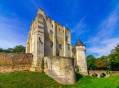
A historical and heritage tour of the capital of the Perche region, following in the footsteps of Rotrou III, Count of the Perche, Maximilien de Béthune, Duke of Sully, and Rémy Belleau, poet of the Pléiade.
In the footsteps of the Maquis fighters in Plainville
 7.41 mi
+630 ft
-600 ft
3h 55
Easy
Departure from Marolles-les-Buis (Eure-et-Loir)
7.41 mi
+630 ft
-600 ft
3h 55
Easy
Departure from Marolles-les-Buis (Eure-et-Loir)
As you walk along the paths once used by the Maquis fighters, discover a key site of the Resistance in Eure-et-Loir: the Plainville Maquis.
Manor houses and dolmens from the priory of Sainte-Gauburge
 8.78 mi
+571 ft
-574 ft
4h 30
Moderate
Departure from Saint-Cyr-la-Rosière (Orne)
8.78 mi
+571 ft
-574 ft
4h 30
Moderate
Departure from Saint-Cyr-la-Rosière (Orne)
Starting from the 13th-century priory of Sainte-Gauburge, this route leads along sunken paths to the Dolmen de la Pierre Procureuse, the site of several legends, then passes in front of a feudal motte at the Tour du Sablon and several fortified farms, before reaching the Angenardière manor house.
Perche heritage in Saint-Cyr-le-Rosière
 7.40 mi
+413 ft
-417 ft
3h 45
Moderate
Departure from Saint-Cyr-la-Rosière (Orne)
7.40 mi
+413 ft
-417 ft
3h 45
Moderate
Departure from Saint-Cyr-la-Rosière (Orne)
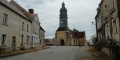
A countryside trail exploring the built heritage of the Perche region and its gems, notably the hamlet of Saint-Gauburge and its priory, the Manoir de l'Angenardière, the Manoir des Chaponnières, and the hamlet of Clémencé. Discover exceptional buildings constructed from cut stone and finished with lime plaster coloured with local sand.
Around La Vinette
9.94 mi
+823 ft
-823 ft
5h 15
Moderate
Departure from Coudreceau (Eure-et-Loir)
Beautiful views of the hills of Perche and the Vinette Valley. This route follows paths and small roads with little traffic.
The Priory of Sainte-Gauburge, starting from L’Hermitière
 14.55 mi
+935 ft
-935 ft
7h 30
Moderate
Departure from L'Hermitière (Orne)
14.55 mi
+935 ft
-935 ft
7h 30
Moderate
Departure from L'Hermitière (Orne)
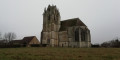
Following the sunken lanes of the Perche and the rolling hills, the route passes through the village of Gemages, the Angenardière Manor and the Priory of Sainte-Gauburge with its Ecomuseum. The return journey to L’Hermitière takes you through the Bois des Baronnières, which overlooks Le Theil.
The Berthe Valley starting from Rougemont
4.66 mi
+512 ft
-518 ft
2h 35
Easy
Departure from Vichères (Eure-et-Loir)
From the Church of Notre-Dame (listed building), you can admire the traditional architecture of Vichères, built from red sandstone and white stone. This rural route, with its ups and downs, links Rougemont Hill (the highest point in Eure-et-Loir at 285 m) to the picturesque Berthe Valley via sunken paths.
The Coudre Valley, starting from Saint-Germain-de-la-Coudre
 10.24 mi
+673 ft
-650 ft
5h 20
Moderate
Departure from Saint-Germain-de-la-Coudre (Orne)
10.24 mi
+673 ft
-650 ft
5h 20
Moderate
Departure from Saint-Germain-de-la-Coudre (Orne)
A lovely walk through the Percheron countryside and the Perche Regional Park. Numerous watercourses flow through this area: the Coudre, the Même, the Coutillonnière and the Jaunet, all of which flow into the Huisnes. The undulating route follows beautiful sunken lanes lined with pollarded trees.
From Saint-Germain-de-la-Coudre to Nogent-le-Rotrou
 17.44 mi
+1,299 ft
-1,280 ft
10 hrs
Very difficult
Departure from Saint-Germain-de-la-Coudre (Orne)
17.44 mi
+1,299 ft
-1,280 ft
10 hrs
Very difficult
Departure from Saint-Germain-de-la-Coudre (Orne)
This walk is the eighth and final stage of an eight-day, 220km route, the Tour des Collines du Perche.
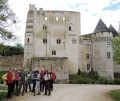
Setting off from Saint-Germain-de-la-Coudre, you will first pass through the Bois de la Bretèche, situated on a plateau on the left bank of the Huisne, which you will cross at Le Theil. The route, offering plenty of panoramic views, will take you to Nogent-le-Rotrou at the foot of Château Saint-Jean. All that remains then is to walk through the historic districts of Le Pâty.