


Refine your search for walks in Plonéis
Plonéis walks


 At the source of the Goyen
 Visorando Member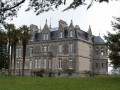
 7.05 mi
 +522 ft
 -525 ft
 3h 40
3h 40
 Moderate
 Departure from Plonéis (Finistère)
Route in rolling countryside mainly devoted to livestock farming, where the River Goyen has its source. Through wooded areas and along small country roads, this route takes you to two manor houses and a chapel in a rural setting. Its fountain, located at the bottom of a wild valley, is accessed by a staircase of 80 steps.
NB: some sections are tricky since Storm Ciaran.
In the Guengat countryside
 5.14 mi
+190 ft
-190 ft
2h 30
5.14 mi
+190 ft
-190 ft
2h 30
 Easy
Departure from Guengat (Finistère)
Easy
Departure from Guengat (Finistère)
Following the former Quimper-Douarnenez railway line at times, take a detour to discover the Saint-Thégonnec Chapel and its fountain inside. Return to the village of Guengat via small country roads.
 Le Juch - Douarnenez circular via the Greenway
 24.29 mi
+640 ft
-636 ft
3 hrs
Moderate
Departure from Guengat (Finistère)
24.29 mi
+640 ft
-636 ft
3 hrs
Moderate
Departure from Guengat (Finistère)
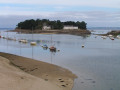
This route follows the route of the old Quimper - Douarnenez railway line.Along the way, take a short detour to pass through the village of Le Juch and cross Douarnenez along the seafront.
The Upper Goyen Valley or the Five-Village Route
10.89 mi
+817 ft
-810 ft
5h 45
Moderate
Departure from Gourlizon (Finistère)
This route, which passes through five local authorities, allows you to explore the upper Goyen valley, close to its source, and to admire magnificent panoramic views on both sides of the valley. The route takes in the site of theChapelle de la Boissière in Plonéis and its fountain,
In the countryside around Gourlizon
 6.14 mi
+341 ft
-328 ft
3h 05
Easy
Departure from Gourlizon (Finistère)
6.14 mi
+341 ft
-328 ft
3h 05
Easy
Departure from Gourlizon (Finistère)
Starting from the small village of Gourlizon, this country route first takes us into a small valley along a little stream, then through a wood.
The second part follows small roads linking a few isolated farms, where you can enjoy the peaceful tranquillity.
Viewpoint overlooking Douarnenez Bay.
Around Gourlizon via the Chapel of La Boissière and its fountain
 4.60 mi
+387 ft
-381 ft
2h 25
Easy
Departure from Gourlizon (Finistère)
4.60 mi
+387 ft
-381 ft
2h 25
Easy
Departure from Gourlizon (Finistère)
The first section is a signposted route through the countryside around the village of Gourlizon, passing through meadows and past the parish church of Saint-Cornély.
In the second part, the route descends into the valley of the stream that feeds into the River Goyen, leading to the monumental La Boissière fountain and its chapel.
Return via a narrow hedgerow path.
In the Pluguffan countryside
 6.36 mi
+279 ft
-279 ft
3h 10
Easy
Departure from Pluguffan (Finistère)
6.36 mi
+279 ft
-279 ft
3h 10
Easy
Departure from Pluguffan (Finistère)
Just a short walk from the village and the small airport, this route takes you through very peaceful countryside along numerous sunken paths winding through unspoilt valleys.Along this route, you can admire the Church of Saint-Cuffan in the village, as well as the Chapel of Notre-Dame des Grâces and its votive fountain, set in the heart of the countryside.
Tour of Pluguffan and the Bois des Korrigans
 5.69 mi
+226 ft
-256 ft
2h 50
Easy
Departure from Pluguffan (Finistère)
5.69 mi
+226 ft
-256 ft
2h 50
Easy
Departure from Pluguffan (Finistère)
A suburban walk taking you round Pluguffan and through wooded areas near the water catchment areas.
The little Bois des Korrigans offers the chance to discover a Neolithic dolmen.
Tradition often holds that dolmens are the homes of korrigans, the sprites of Breton folklore. Perhaps this is where the name of this wood comes from?
Hike around the St. Alouarn mill
 5.91 mi
+482 ft
-453 ft
3h 10
Easy
Departure from Guengat (Finistère)
5.91 mi
+482 ft
-453 ft
3h 10
Easy
Departure from Guengat (Finistère)
Discover the remains of the Manor of Saint-Alouarn and the mill, via the Quimper-Douarnenez bike route and country roads.
Countryside and woods around Plogastel-Saint-Germain
 6.68 mi
+394 ft
-394 ft
3h 25
Moderate
Departure from Plogastel-Saint-Germain (Finistère)
6.68 mi
+394 ft
-394 ft
3h 25
Moderate
Departure from Plogastel-Saint-Germain (Finistère)
This route, along small roads and wooded paths, largely combines two small routes around the village of Plogastel-Saint-Germain:
Wooded circular in Plogastel-Saint-Germain.
- Around the village of Plogastel-Saint-Germain via the Bois du Quilliou (in the opposite direction).
Wooded circular in Plogastel-Saint-Germain
 3.54 mi
+128 ft
-138 ft
1h 45
Easy
Departure from Plogastel-Saint-Germain (Finistère)
3.54 mi
+128 ft
-138 ft
1h 45
Easy
Departure from Plogastel-Saint-Germain (Finistère)
In the countryside around Plogastel-Saint-Germain, this short route mainly follows paths lined with wooded embankments and passes through small woods and wetlands, which can be crossed via a long wooden walkway.
During the walk, you will discover an old bread oven saved at the last minute, an old farmhouse and a well-maintained wash house.
Kermabeuzen valley and stream, approached from the south
 2.65 mi
+344 ft
-354 ft
1h 30
Easy
Departure from Quimper (Finistère)
2.65 mi
+344 ft
-354 ft
1h 30
Easy
Departure from Quimper (Finistère)
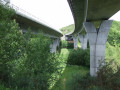
A peaceful walk through the valley where the Kermabeuzen stream flows. After passing under the magnificent double viaduct of Quimper’s north-western ring road, you head deep into the woodland, where the sound of traffic from the ring road quickly fades away. Only the murmur of the stream you’re following and the birdsong break the silence: peace and a change of scenery guaranteed just a stone’s throw from the town. The route passes close to the imposing Toulgoat Manor.
Hills and valleys in the Plogastel-Saint-Germain countryside
 6.94 mi
+433 ft
-433 ft
3h 35
Moderate
Departure from Plogastel-Saint-Germain (Finistère)
6.94 mi
+433 ft
-433 ft
3h 35
Moderate
Departure from Plogastel-Saint-Germain (Finistère)
A long walk through the countryside around Plogastel-Saint-Germain, taking in cultivated hills and wooded valleys.
Countryside around Plogastel-Saint-Germain
 6.24 mi
+440 ft
-443 ft
3h 15
Moderate
Departure from Plogastel-Saint-Germain (Finistère)
6.24 mi
+440 ft
-443 ft
3h 15
Moderate
Departure from Plogastel-Saint-Germain (Finistère)
Dominated by the bell tower of Saint-Pierre Church, the large village of Plogastel-Saint-Germain offers pleasant countryside criss-crossed by sunken lanes and small tree-lined roads.
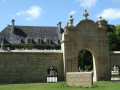
The route passes in front of the Manoir du Hilguy with its monumental gate, owned since 1987 by an English investment company.
Around the village of Plogastel-Saint-Germain via the Bois du Quilliou
 4.52 mi
+338 ft
-318 ft
2h 20
Easy
Departure from Plogastel-Saint-Germain (Finistère)
4.52 mi
+338 ft
-318 ft
2h 20
Easy
Departure from Plogastel-Saint-Germain (Finistère)
This short route takes you around the village of Plogastel-Saint-Germain, located on high ground (112 m). The Saint-Pierre church and its tall bell tower can be seen from afar.
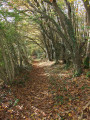
Part of the route passes through the Quilliou deciduous forest.
In the countryside from the Chapelle Saint-Germain
 6.65 mi
+315 ft
-331 ft
3h 20
Moderate
Departure from Plogastel-Saint-Germain (Finistère)
6.65 mi
+315 ft
-331 ft
3h 20
Moderate
Departure from Plogastel-Saint-Germain (Finistère)
This route in the countryside of Plogastel-Saint-Germain mainly follows small roads.
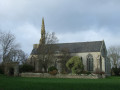
Along the route, a highlight of the religious heritage is the Saint-Germain Chapel, one of the few in the region to have a parish enclosure with a Gothic-style triumphal arch.
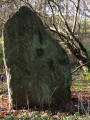
Also along the route are a beautiful bread oven and wash house currently being restored, a menhir and the Moulin Neuf, a well-preserved building among the old mills on the Pont-l'Abbé River.
The hillsides of Penhars
 5.12 mi
+361 ft
-351 ft
2h 40
Easy
Departure from Quimper (Finistère)
5.12 mi
+361 ft
-351 ft
2h 40
Easy
Departure from Quimper (Finistère)
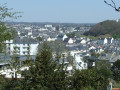
Explore the hillsides of Penhars via the Bois du Séminaire and the Bois d'Amour, cross the ZUP and its allotments, discover the Manoir de Kermoysan tucked away amongst the buildings, and follow the Odet along the towpath: a varied itinerary on the outskirts of Quimper.
Via the Sainte-Brigitte Chapel and the Bois de Névet
 6.93 mi
+643 ft
-640 ft
3h 45
Moderate
Departure from Le Juch (Finistère)
6.93 mi
+643 ft
-640 ft
3h 45
Moderate
Departure from Le Juch (Finistère)
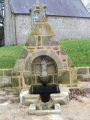
From the valley where the Ruisseau du Ris flows, passing through the edge of the Bois de Nevet, this route, alternating between paths and small country roads, allows you to discover the small Chapelle Sainte-Brigitte, isolated in its green setting.A short stretch on the Voie Verte reminds you of the former railway line that operated from 1884 to 1988.
Névet Valley at Le Juch
 6.10 mi
+479 ft
-469 ft
3h 15
Easy
Departure from Le Juch (Finistère)
6.10 mi
+479 ft
-469 ft
3h 15
Easy
Departure from Le Juch (Finistère)
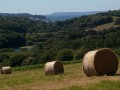
After visiting the church, famous for its statue of Saint Michael slaying a hideous devil, head for the Bois du Névet, where theGR®®38leads the way.Continue through the Névet valley, which offers lovely views of the Juch countryside as well as a view out over Douarnenez Bay. Finish this circular route on the Voie Verte, where information boards tell us about the bocage and the wetlands.
Kercaradec route from Kermoysan in Quimper
 5.10 mi
+515 ft
-545 ft
2h 50
Easy
Departure from Quimper (Finistère)
5.10 mi
+515 ft
-545 ft
2h 50
Easy
Departure from Quimper (Finistère)
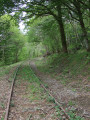
Starting from a highly urbanised area, this route passes through the small Bois de Kerjestin wood and leads into peaceful countryside, circling the hill of Kercaradec, an ancient Gallic archaeological site.
Numerous streams line this route, accompanying walkers with their gentle murmurings.
On the north-western outskirts of Quimper towards the Chapel of Ty Mamm Doué
 6.58 mi
+571 ft
-574 ft
3h 30
Moderate
Departure from Quimper (Finistère)
6.58 mi
+571 ft
-574 ft
3h 30
Moderate
Departure from Quimper (Finistère)
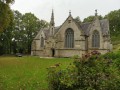
Semi-urban circuit towards the imposing Ty Mamm Doué Chapel. Alternating between streets, wooded areas and riverside paths.
Discover Quimper and its two rivers
 6.19 mi
+194 ft
-194 ft
3h 00
Easy
Departure from Quimper (Finistère)
6.19 mi
+194 ft
-194 ft
3h 00
Easy
Departure from Quimper (Finistère)
Follow the Stéïr, then take the small streets to walk through the city centre and reach the Locmaria district and its Romanesque church. Walk along the Odet, the main river that crosses Quimper, following the old towpath and the quays.
Kermabeuzen Valley via Saint-Conogan Chapel
 6.03 mi
+476 ft
-456 ft
3h 10
Moderate
Departure from Quimper (Finistère)
6.03 mi
+476 ft
-456 ft
3h 10
Moderate
Departure from Quimper (Finistère)
Very close to Quimper, this route takes you through the Kermabeuzen valley, which has retained its wild character and is dominated by the viaduct of the North-West bypass.
On the way back, you’ll pass through a quiet woodland.
Kermabeuzen Valley Route
 6.56 mi
+636 ft
-617 ft
3h 35
Moderate
Departure from Quimper (Finistère)
6.56 mi
+636 ft
-617 ft
3h 35
Moderate
Departure from Quimper (Finistère)
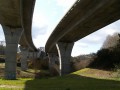
The route crosses the wild Kermabeuzen valley, passing under the new viaduct to reach Toulgoat Manor.
Through the Kermabeuzen Wood
 3.63 mi
+230 ft
-203 ft
1h 50
Easy
Departure from Quimper (Finistère)
3.63 mi
+230 ft
-203 ft
1h 50
Easy
Departure from Quimper (Finistère)
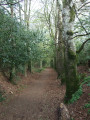
From the green space near the Steïr, this route leads to the Bois de Kermabeuzen, where well-marked paths through unspoilt countryside take you to the foot of the viaduct on Quimper’s north-western bypass. After a lovely climb through the same woodland, the return journey takes you along a beautiful avenue of majestic beech trees.
There are two footbridges to cross over the river to complete the circular route.
Around the Moulin Vert, in the north-west of Quimper
 3.93 mi
+230 ft
-203 ft
2h 00
Easy
Departure from Quimper (Finistère)
3.93 mi
+230 ft
-203 ft
2h 00
Easy
Departure from Quimper (Finistère)
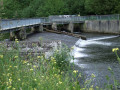
The Moulin Vert residential area to the north-west is well known for its family walks along the banks of the River Stéîr, a tributary of the Odet.This route takes its inspiration from this area but also explores less well-known paths on the built-up hills of Kermabeuzen.It is also an opportunity to rediscover the beautiful beech-lined avenue at Kerayen, which was cut in two during the construction of the North-West Bypass (CNO), opened in 2008.
Route in the country via the Bonnescat mill
 6.42 mi
+502 ft
-509 ft
3h 25
Easy
Departure from Plogonnec (Finistère)
6.42 mi
+502 ft
-509 ft
3h 25
Easy
Departure from Plogonnec (Finistère)
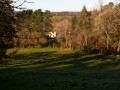
Countryside route overlooking the Kerganapé stream and its mills.
Tro Sant Per from Plogonnec
 6.41 mi
+679 ft
-663 ft
3h 30
Moderate
Departure from Plogonnec (Finistère)
6.41 mi
+679 ft
-663 ft
3h 30
Moderate
Departure from Plogonnec (Finistère)
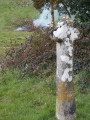
A countryside walk taking in the Saint-Pierre Chapel, the edge of the Bois du Névet and the hills overlooking Locronan.
Locronan Mountain Route
 6.67 mi
+725 ft
-709 ft
3h 40
Moderate
Departure from Plogonnec (Finistère)
6.67 mi
+725 ft
-709 ft
3h 40
Moderate
Departure from Plogonnec (Finistère)
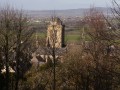
Let's climb Locronan Mountain, where we will have a view of the Porzay basin and Douarnenez Bay. Along the way, we can admire the Saint-Théleau Chapel and the Kerguénolé Manor and its grounds overlooking the village of Locronan.
In the Bois du Névet via the Chapelle Saint-Pierre
 6.87 mi
+581 ft
-584 ft
3h 40
Moderate
Departure from Plogonnec (Finistère)
6.87 mi
+581 ft
-584 ft
3h 40
Moderate
Departure from Plogonnec (Finistère)
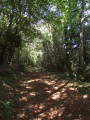
Starting from the beautiful Saint-Pierre Chapel, this route ventures into the Bois du Névet, a deciduous forest.
The route follows paths along the edge of the forest, a few sections of wide forest lanes and, towards the end, a wilder path above the Manoir du Névet estate.
In summer, you will appreciate the shaded route and in autumn, the colours of the foliage.
Around the Chapelle Saint-Pierre in Plogonnec
 2.14 mi
+272 ft
-282 ft
1h 15
Easy
Departure from Plogonnec (Finistère)
2.14 mi
+272 ft
-282 ft
1h 15
Easy
Departure from Plogonnec (Finistère)
From the majestic Saint-Pierre Chapel, this short circular route continues along the edge of the Bois du Névet, then returns through the countryside via farm tracks and a quiet road serving only farms.
Passing by the Saint-Alouarn Mill
 7.10 mi
+636 ft
-653 ft
3h 50
Moderate
Departure from Plogonnec (Finistère)
7.10 mi
+636 ft
-653 ft
3h 50
Moderate
Departure from Plogonnec (Finistère)
Following small country lanes, wooded paths and the old railway line converted into a greenway, let’s go and see the old feudal mill at Saint-Alouarn.
In the Plogonnec countryside
 6.32 mi
+554 ft
-574 ft
3h 25
Moderate
Departure from Plogonnec (Finistère)
6.32 mi
+554 ft
-574 ft
3h 25
Moderate
Departure from Plogonnec (Finistère)
Following paths through fields and woodland, and along small roads, let’s set off to explore a corner of the countryside and its religious heritage.
In the Steïr valley
 5.74 mi
+545 ft
-538 ft
3h 05
Easy
Departure from Plogonnec (Finistère)
5.74 mi
+545 ft
-538 ft
3h 05
Easy
Departure from Plogonnec (Finistère)
This route, very close to Quimper, alternates between small country lanes and sections through woodland. It also takes you along the right bank of the River Steïr, allowing you to explore the valley floor and the infrastructure for the Quimper-Brest railway line. At the start, the small Seznec chapel, dating from 1673, with its calvary in the enclosure.
Vallon de Kermabeuzen et Bois de Saint-Conogan
4.73 mi
+443 ft
-433 ft
2h 35
Easy
Departure from Quimper (Finistère)
Après un cheminement sur les rives du Steïr, une belle allée de hêtres conduit sur les hauteurs du Bois de Saint-Conogan. Une descente par le vallon de Kermabeuzen avec un passage toujours aussi impressionnant sous le viaduc de la rocade permet de retrouver les ruelles et les passages piétonniers du Moulin Vert.
Walk along the Steïr to Moulin Vert
 3.75 mi
+49 ft
-49 ft
1h 45
Easy
Departure from Quimper (Finistère)
3.75 mi
+49 ft
-49 ft
1h 45
Easy
Departure from Quimper (Finistère)
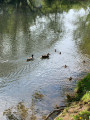
A short route along the Steïr, one of the tributaries of the Odet which flows through Quimper.
Along the Odet river via Corniguel and Kéraval Castle
 6.13 mi
+167 ft
-161 ft
3h 00
Easy
Departure from Quimper (Finistère)
6.13 mi
+167 ft
-161 ft
3h 00
Easy
Departure from Quimper (Finistère)
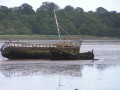
Route south of Quimper following the towpath to Port du Corniguel, the city's maritime gateway. Continue along Kérogan Bay to discover Kéraval Castle.
Towpath along the River Odet and the Bois du Corniguel
 2.64 mi
+128 ft
-121 ft
1h 20
Easy
Departure from Quimper (Finistère)
2.64 mi
+128 ft
-121 ft
1h 20
Easy
Departure from Quimper (Finistère)
A peaceful walk that starts on the towpath on the right bank of the Odet and offers a view of Lanniron Castle on the opposite bank. You can also see Corniguel Harbour and its facilities on the right bank. The route criss-crosses the Bois du Corniguel. The return journey takes you along quiet little streets behind the river. The route is more enjoyable at high tide (when birds are present).
Via Mont Frugy to Quimper
 1.83 mi
+197 ft
-197 ft
1h 00
Easy
Departure from Quimper (Finistère)
1.83 mi
+197 ft
-197 ft
1h 00
Easy
Departure from Quimper (Finistère)
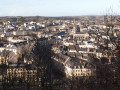
A short stroll through Quimper starting from the Locmaria district, with its Romanesque church and priory, the Henriot pottery works and Pascal Jaouen’s School of Artistic Embroidery.Walk along the Odet river and its many footbridges before climbing Mont Frugy, which towers over the town at a height of 70 metres.
Heritage walk in Quimper
 2.66 mi
+89 ft
-89 ft
1h 20
Easy
Departure from Quimper (Finistère)
2.66 mi
+89 ft
-89 ft
1h 20
Easy
Departure from Quimper (Finistère)
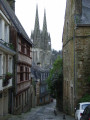
This walk through Quimper will take you back in time and allow you to discover part of this city of art and history.
Route of chapels starting from Quimper and passing through Plogonnec
 20.61 mi
+1,467 ft
-1,467 ft
3 hrs
Moderate
Departure from Quimper (Finistère)
20.61 mi
+1,467 ft
-1,467 ft
3 hrs
Moderate
Departure from Quimper (Finistère)
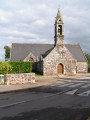
Discover part of the religious heritage of the area around Quimper via a hilly route mainly following small country lanes.
Bois du Névet via the bridle path
 5.60 mi
+591 ft
-584 ft
3h 05
Moderate
Departure from Locronan (Finistère)
5.60 mi
+591 ft
-584 ft
3h 05
Moderate
Departure from Locronan (Finistère)
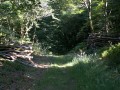
In the Bois du Névet, following the bridle path allows you to venture along small, wild and deserted tracks that criss-cross the woodland. You’ll avoid the wide, often very busy paths.
Why not give this route a go?
Through the Kerfeunteun neighbourhoods north of Quimper
 3.87 mi
+243 ft
-269 ft
2h 00
Easy
Departure from Quimper (Finistère)
3.87 mi
+243 ft
-269 ft
2h 00
Easy
Departure from Quimper (Finistère)
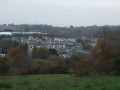
A short peri-urban route to explore this rapidly changing area in the north.
A walk through the Kerfeunteun neighbourhoods of Quimper
 5.15 mi
+344 ft
-322 ft
2h 40
Moderate
Departure from Quimper (Finistère)
5.15 mi
+344 ft
-322 ft
2h 40
Moderate
Departure from Quimper (Finistère)
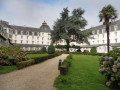
A short, unpretentious stroll through housing estates, back roads, woods and a valley to explore part of the Kerfeunteun neighbourhood: the countryside within the city.Currently being revised!
From Prat-Maria to Le Braden, via Kerustum and Vallon Saint-Laurent
 4.43 mi
+367 ft
-354 ft
2h 20
Easy
Departure from Quimper (Finistère)
4.43 mi
+367 ft
-354 ft
2h 20
Easy
Departure from Quimper (Finistère)
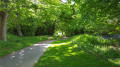
A long walk through the south-east of Quimper, taking in green, wooded areas and pedestrian shortcuts often known only to residents of the adjacent streets. A semi-urban route passing largely through woods, parks and shaded footpaths or cycle lanes.
Fountains, gardens and footbridges in the heart of Quimper
 3.69 mi
+236 ft
-217 ft
1h 55
Easy
Departure from Quimper (Finistère)
3.69 mi
+236 ft
-217 ft
1h 55
Easy
Departure from Quimper (Finistère)
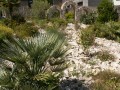
Starting from Kerfeunteun, in the northern district of Quimper, head down into the heart of the city to discover some of its beautiful gardens, stroll along the River Odet, crossed by numerous flower-covered footbridges, and through the small cobbled streets.
Along the way, you will see Saint-Corentin Cathedral, the former bishop's palace and the Max Jacob Theatre, three of the city's most iconic monuments.
Short route around Cuzon
 3.94 mi
+262 ft
-289 ft
2h 05
Easy
Departure from Quimper (Finistère)
3.94 mi
+262 ft
-289 ft
2h 05
Easy
Departure from Quimper (Finistère)
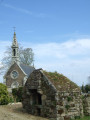
A short route through the Cuzon neighbourhood, which was an independent parish from Kerfeunteun until the Revolution. The two neighbourhoods are separated by the Frout valley, a tributary of the Odet.The retention basin is used to regulate the river’s flow to prevent flooding in Quimper.The Cuzon neighbourhood, situated a little apart, has developed a relatively recent craft and trade area.Around the Manoir de Kermahonnet lies one of the last remaining market-gardening areas in this north-western part of Quimper.
Around the former Gourmelen Hospital and Quimper’s small gardens
 3.25 mi
+144 ft
-141 ft
1h 35
Easy
Departure from Quimper (Finistère)
3.25 mi
+144 ft
-141 ft
1h 35
Easy
Departure from Quimper (Finistère)
An urban stroll slightly off the beaten track: around the former Gourmelen Hospital (early 19th century), with its magnificent old trees and palm trees, returning via the Jardin de la Retraite, the cathedral and then the old theatre and its garden.
Please note a message left by a user on 25 June 2024:
1 - It is no longer possible to enter through the gate of the former Gourmelen Hospital; all entrances are closed as major works are due to take place. Therefore, there is no longer any access to the park.
2 - Access to the Max Jacob Theatre and its gardens is also closed due to works, until January 2025.
In the heart of Locronan
 1.86 mi
+135 ft
-135 ft
1h 00
Easy
Departure from Locronan (Finistère)
1.86 mi
+135 ft
-135 ft
1h 00
Easy
Departure from Locronan (Finistère)
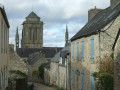
Through streets, alleys and paths, this route takes you on a journey of discovery through the heart of Locronan, a former weaving village and small town of character.From the 15th century onwards, the hemp and flax trade brought wealth to the town through the sailcloth market, which supplied the largest ships of the time.The impressive granite buildings are a testament to this today.
The small troménie route of Locronan
 3.87 mi
+453 ft
-453 ft
2h 10
Easy
Departure from Locronan (Finistère)
3.87 mi
+453 ft
-453 ft
2h 10
Easy
Departure from Locronan (Finistère)
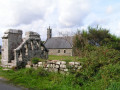
Every six years, Locronan hosts "la Grande Troménie", an unchanging pilgrimage of around 12 km around the sacred boundaries of the former monastery of Locronan. The last one took place in July 2025.
The "Petite Troménie" takes place annually, during the five years between two Grande Troménies. It only follows small roads. This route follows this route.
Locronan countryside and edge of Bois du Névet
 6.72 mi
+472 ft
-463 ft
3h 30
Moderate
Departure from Locronan (Finistère)
6.72 mi
+472 ft
-463 ft
3h 30
Moderate
Departure from Locronan (Finistère)
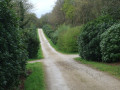
After passing through the countryside north-west of Locronan, this route turns south-west and ends at the edge of the Bois du Névet. It continues mainly along the edge of the forest before returning to Locronan.
Along the sunken paths around Locronan
 6.21 mi
+627 ft
-630 ft
3h 25
Moderate
Departure from Locronan (Finistère)
6.21 mi
+627 ft
-630 ft
3h 25
Moderate
Departure from Locronan (Finistère)
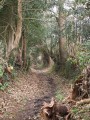
Like the troménie ("troménie" is a French adaptation of the Breton tro-minihi, literally tour - tro - du minihi, derived from the Latin monachia - monastic space in the early Middle Ages), this route will take you around Locronan. You will mainly follow old sunken paths and discover beautiful granite farmhouses. Near the end of your route, a high point will offer you a view of the Bay of Douarnenez.
Locronan and its bocage
 6.04 mi
+564 ft
-564 ft
3h 15
Easy
Departure from Locronan (Finistère)
6.04 mi
+564 ft
-564 ft
3h 15
Easy
Departure from Locronan (Finistère)
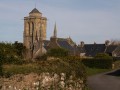
After wandering through the streets and alleys of Locronan, follow the paths through the bocage to return via the Bois du Névet.
Through the Bois du Névet forest from Locronan
 7.48 mi
+479 ft
-505 ft
3h 50
Moderate
Departure from Locronan (Finistère)
7.48 mi
+479 ft
-505 ft
3h 50
Moderate
Departure from Locronan (Finistère)
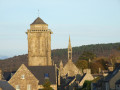
The route combines views of the historic centre of Locronan with a walk through part of the Bois du Névet forest.Return via sunken paths and a visit to the Chapelle de la Bonne Nouvelle chapel.
Route de Cuzon and the banks of the Odet
 6.38 mi
+367 ft
-348 ft
3h 15
Moderate
Departure from Quimper (Finistère)
6.38 mi
+367 ft
-348 ft
3h 15
Moderate
Departure from Quimper (Finistère)
Discovering the former parish of Cuzon, which became a commune in 1791.
Situated to the east and beyond the Ruisseau du Frout de Quimper, this neighbourhood remains, for the most part, a rural outlying area of Quimper.
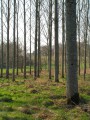
This route runs alongside the Odet, which is partly wild and partly channelled as it enters the town.
The banks of the Steïr and woodland from Menfouest Chapel
 3.66 mi
+397 ft
-384 ft
2h 00
Easy
Departure from Quimper (Finistère)
3.66 mi
+397 ft
-384 ft
2h 00
Easy
Departure from Quimper (Finistère)
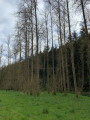
A return walk through unspoilt countryside along the Steïr, a tributary of the Odet, and then through the woods of this valley.The route may take you across two bridges used by the TER train linking Quimper to Landerneau.Along the route, you’ll pass the Menfouest Chapel and Kergadou Manor.
Menfouest Chapel Route
 4.29 mi
+341 ft
-381 ft
2h 15
Easy
Departure from Quimper (Finistère)
4.29 mi
+341 ft
-381 ft
2h 15
Easy
Departure from Quimper (Finistère)
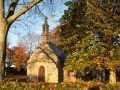
Starting from the Menfouest Chapel and its bucolic setting, this route will first take you along small country lanes through countryside dominated by cattle farming.
Around and in Locronan
 3.36 mi
+367 ft
-361 ft
1h 50
Easy
Departure from Locronan (Finistère)
3.36 mi
+367 ft
-361 ft
1h 50
Easy
Departure from Locronan (Finistère)
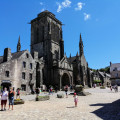
This short route takes you through the north-western part of the Locronan countryside with its beautiful sunken paths and passes by some of the iconic sites of this village, which is classified as a "Petite Cité de caractère de France" (Small Town of Character in France): the Manoir de Kerguénolé, the Chapelle Notre-Dame de Bonne Nouvelle and, of course, the central square with the Église Saint-Ronan.
Let yourself be guided through the many narrow streets.
Via the Camp des Salles in Locronan
 3.63 mi
+515 ft
-502 ft
2h 05
Moderate
Departure from Locronan (Finistère)
3.63 mi
+515 ft
-502 ft
2h 05
Moderate
Departure from Locronan (Finistère)
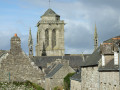
A short walk up to the heights of Locronan, offering a panoramic view of the village and the entire Porzay plain, stretching from Mount Ménez-Hom to Douarnenez Bay.
The route passes by the archaeological site of Camp des Salles, a Carolingian village from the early Middle Ages, which was excavated in 1989 but has not yet revealed all its secrets, as the woodland has reclaimed the area.
On the heights of Locronan
 4.95 mi
+653 ft
-636 ft
2h 50
Moderate
Departure from Locronan (Finistère)
4.95 mi
+653 ft
-636 ft
2h 50
Moderate
Departure from Locronan (Finistère)
Along beautiful paths through the woods and small roads, this route takes you up the Montagne de Locronan, where the little Chapelle ar Sonj chapel is located, an essential stop on the various troménies: viewpoint over Locronan and the entire Porzay region from Ménez Hom to the Bay of Douarnenez. The route continues down into the woods to the imposing Chapelle Saint-Thélau chapel, before returning via the historic centre of Locronan.
In the Stéïr valley, starting from Pont Quéau
 7.42 mi
+732 ft
-728 ft
4h 05
Moderate
Departure from Quimper (Finistère)
7.42 mi
+732 ft
-728 ft
4h 05
Moderate
Departure from Quimper (Finistère)
A hilly route through the countryside where the Stéïr, a tributary of the Odet, flows.
Via the Locronan mountain
 5.95 mi
+666 ft
-676 ft
3h 20
Moderate
Departure from Locronan (Finistère)
5.95 mi
+666 ft
-676 ft
3h 20
Moderate
Departure from Locronan (Finistère)
From the lively village of Locronan, climb the mountain that overlooks it, offering a beautiful panorama from the Bay of Douarnenez to the last peak of the Black Mountains, Ménez Hom (330 m).A beautiful descent takes you back to the countryside and its sunken paths to return to the heart of the former weavers' town.
Walk around Port du Corniguel
 3.42 mi
+95 ft
-95 ft
1h 40
Easy
Departure from Quimper (Finistère)
3.42 mi
+95 ft
-95 ft
1h 40
Easy
Departure from Quimper (Finistère)
A route starting from Port du Corniguel, Quimper Harbour, with its associated activities. The route initially follows Kérogan Bay before continuing along a cove of the River Odet. A round trip takes you past Kéraval Castle, one of the many castles overlooking this river. The return journey takes you through a lovely woodland.
Kerbernez Pond and the banks of the Odet
 5.64 mi
+308 ft
-308 ft
2h 50
Easy
Departure from Plomelin (Finistère)
5.64 mi
+308 ft
-308 ft
2h 50
Easy
Departure from Plomelin (Finistère)
This route along the Anse de Kerdour and then the bank of the Odet allows you to explore the Étang de Kerbernez, a popular spot for mallards, as well as the surroundings of the Kerbernez Golf Course.
Views of Kerdour Castle, Kerbernez Manor, not to mention the Trois Tourtes site and its legend.
Route de Saint-Albin en Plogonnec
 6.93 mi
+463 ft
-446 ft
3h 35
Moderate
Departure from Plogonnec (Finistère)
6.93 mi
+463 ft
-446 ft
3h 35
Moderate
Departure from Plogonnec (Finistère)
A route through undulating countryside, offering vast expanses of farmland surrounding a few hamlets.
The route mainly follows quiet country lanes.
Discover picturesque views from the hilltops, with the Montagne du Prieuré de Locronan towering above it all.
In the countryside between Saint-Albin and Quéménéven
 6.98 mi
+571 ft
-561 ft
3h 40
Moderate
Departure from Plogonnec (Finistère)
6.98 mi
+571 ft
-561 ft
3h 40
Moderate
Departure from Plogonnec (Finistère)
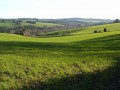
A route through the countryside with rolling hills offering wide open views. The route mainly follows quiet country lanes. Discover picturesque views, including Ménez Hom (330m), which marks the western end of the Montagnes Noires range.
Southern districts of Quimper
 7.40 mi
+699 ft
-722 ft
4h 00
Moderate
Departure from Quimper (Finistère)
7.40 mi
+699 ft
-722 ft
4h 00
Moderate
Departure from Quimper (Finistère)
A suburban route offering various views of Quimper, mainly of the south-western part of the upper Tourelle district, then Frugy and the heights of Kernoter.Passage along the Odet, the Créac’h Gwen leisure area (mistakenly marked as Guen on the map).Return via the Bois de Kéradennec and the peaceful haven of Vallon Saint-Laurent.
Créac’h Gwen leisure and activity area and the surrounding countryside
 5.07 mi
+187 ft
-177 ft
2h 30
Easy
Departure from Quimper (Finistère)
5.07 mi
+187 ft
-177 ft
2h 30
Easy
Departure from Quimper (Finistère)
From the busy Créac’h Gwen leisure and activity centre, this route runs along one bank of the Odet, crosses a reed bed and then heads up into a woodland before reaching another leisure area at the Moulin des Landes.
The route continues through peaceful countryside.
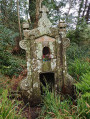
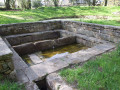
A beautifully restored wash house and two lovely fountains, one of which commemorates a tragic event, mark this route.
Route des Vallons in Peumerit
 6.34 mi
+269 ft
-276 ft
3h 10
Easy
Departure from Peumérit (Finistère)
6.34 mi
+269 ft
-276 ft
3h 10
Easy
Departure from Peumérit (Finistère)
An easy, unmarked route through peaceful countryside, mostly on quiet minor roads.
Circuit des Moulins de Pouldergat partie Nord-Ouest
 6.58 mi
+341 ft
-328 ft
3h 20
Moderate
Departure from Pouldergat (Finistère)
6.58 mi
+341 ft
-328 ft
3h 20
Moderate
Departure from Pouldergat (Finistère)
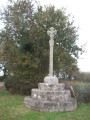
The Mills Route circles the town for about 27 km. This section runs through the countryside along sunken paths and shaded valleys, and along small roads in the second part. In the past, there were several mills on the many streams.
L'Anse de Kerdour and L'Étang de Kerbernez via the Plomelin countryside
 7.69 mi
+302 ft
-312 ft
3h 50
Moderate
Departure from Plomelin (Finistère)
7.69 mi
+302 ft
-312 ft
3h 50
Moderate
Departure from Plomelin (Finistère)
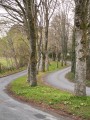
Discover the soothing natural landscapes along the banks of a bend in the Odet.
L’Étang de Kerbernez, on a tributary of the river, offers a peaceful stroll through wooded surroundings.
Paths through the woods enhance this route.
On the edge of the Bois du Névet
 6.88 mi
+781 ft
-761 ft
3h 50
Moderate
Departure from Kerlaz (Finistère)
6.88 mi
+781 ft
-761 ft
3h 50
Moderate
Departure from Kerlaz (Finistère)
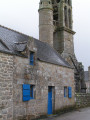
Starting from the small village of Kerlaz, descend into the Névet valley, a small river that flows into the sea at Plage du Ry (or Ris) in Douarnenez.Climb back up this valley to reach the edge of the Bois du Névet, which you will skirt around, then descend back to Kerlaz.A relatively hilly and wooded route.
The banks of the Odet and Mont Frugy as seen from the Créac’h Gwen leisure centre
 6.51 mi
+246 ft
-249 ft
3h 15
Moderate
Departure from Quimper (Finistère)
6.51 mi
+246 ft
-249 ft
3h 15
Moderate
Departure from Quimper (Finistère)
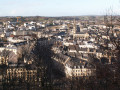
A semi-urban route via the Créac’h Gwen leisure centre, then along the Odet via the towpath. The climb to Le Frugy, which overlooks the town, offers a beautiful view.The return route takes you through Locmaria, Quimper’s historic district with its Romanesque church and former priory.There are numerous information boards detailing the town’s history.
Banks of the Odet and countryside in Plomelin
 7.38 mi
+384 ft
-381 ft
3h 45
Moderate
Departure from Plomelin (Finistère)
7.38 mi
+384 ft
-381 ft
3h 45
Moderate
Departure from Plomelin (Finistère)
The route alternates between countryside, the Odet river and wooded areas around Plomelin on the outskirts of Quimper.
Surroundings of the village of Plomelin
 4.16 mi
+108 ft
-115 ft
2h 00
Easy
Departure from Plomelin (Finistère)
4.16 mi
+108 ft
-115 ft
2h 00
Easy
Departure from Plomelin (Finistère)
A walk along the western and then north-eastern edges of the village of Plomelin, through a mix of built-up areas and countryside. Several tree-lined paths enhance this route, which is particularly recommended in autumn. Three heritage sites: menhirs, the chapel and the fountain.
Around Plomelin
 6.21 mi
+335 ft
-341 ft
3h 10
Easy
Departure from Plomelin (Finistère)
6.21 mi
+335 ft
-341 ft
3h 10
Easy
Departure from Plomelin (Finistère)
Route along the banks of the Odet, then around Plomelin: passing the newly renovated Rossulien Mill, with a fine view of Kerambleiz Castle, one of the many castles overlooking this small coastal river.
The grand tour of Plomelin
 12.46 mi
+420 ft
-436 ft
6h 05
Moderate
Departure from Plomelin (Finistère)
12.46 mi
+420 ft
-436 ft
6h 05
Moderate
Departure from Plomelin (Finistère)
Plomelin offers many possible routes starting from the village. Several have already been suggested on Visorando
This longer route aims to give a more comprehensive view of this wooded commune, bordered by the River Odet and rich in heritage.
Towards the banks of the Odet in Plomelin
 5.05 mi
+266 ft
-266 ft
2h 35
Easy
Departure from Plomelin (Finistère)
5.05 mi
+266 ft
-266 ft
2h 35
Easy
Departure from Plomelin (Finistère)
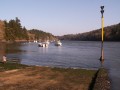
A pleasant route, mostly wooded, overlooking the banks of the Odet. Pass by the old Rossulien Mill, which has been restored and is located in a beautiful green setting. View of Kerambleiz Castle overlooking the river.
South-east of Plomelin via Anse de Combrit
 7.83 mi
+302 ft
-302 ft
3h 50
Moderate
Departure from Plomelin (Finistère)
7.83 mi
+302 ft
-302 ft
3h 50
Moderate
Departure from Plomelin (Finistère)
After some lovely stretches through the woods, we follow the Anse de Combrit, one of the Odet’s many coves.
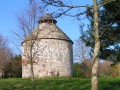
We reach the site of Lestremeur with its pond, fountain, wash house, bread oven and majestic dovecote. We pass the old manor house and follow a small road lined with imposing beech trees.
We’ll walk through the pastures where the horses and ponies from the riding centre graze, before returning to the banks of the Odet.
There is an option to take a detour leading to the Roman baths at Perennou, with a view of the castle.
Randoligo in Plomelin
 7.61 mi
+374 ft
-381 ft
3h 50
Moderate
Departure from Plomelin (Finistère)
7.61 mi
+374 ft
-381 ft
3h 50
Moderate
Departure from Plomelin (Finistère)
The “Oligocyte Bretagne” Association provides information on brain tumours, supports patients and their families, and funds medical research into innovative treatments. Every year, it organises a day of walks called “Randoligo”. Here is a suggested route for its tenth anniversary in Plomelin in October 2024, taking in the countryside, woodland and the banks of the Odet with its castles.
Walk around the village of Plomelin
 2.98 mi
+69 ft
-69 ft
1h 25
Easy
Departure from Plomelin (Finistère)
2.98 mi
+69 ft
-69 ft
1h 25
Easy
Departure from Plomelin (Finistère)
A short family route to explore the area around the village of Plomelin.
Walk via the Étang de Kerbernez, one bank of the Odet and the Anse de Kerdour
 2.57 mi
+49 ft
-49 ft
1h 15
Easy
Departure from Plomelin (Finistère)
2.57 mi
+49 ft
-49 ft
1h 15
Easy
Departure from Plomelin (Finistère)
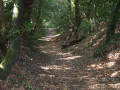
An easy walk, largely in the shade, along the Kerbernez Golf Course, passing by the Trois Tourtes viewpoint. Walking round the pond allows you to watch the mallards darting between the two banks as walkers pass by. The section open from1 April to 30 September offers lovely views of the banks of the Odet. The route is suitable for families, though not for pushchairs.
Please note: the section along the Odet at the ‘4 ’ viewpoint is closed off by a barrier from1 October to 31 March: this is a protected area for wintering birds.
The Kergoat Route
 5.95 mi
+282 ft
-282 ft
3h 00
Easy
Departure from Quéménéven (Finistère)
5.95 mi
+282 ft
-282 ft
3h 00
Easy
Departure from Quéménéven (Finistère)
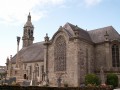
Countryside route offering views of the Notre Dame de Kergoat Chapel (16th century, famous for Jules Breton's painting "Le Pardon de Kergoat" 1891, on display at the Quimper Museum of Fine Arts.
Pass by the fountain and the edge of the Forêt du Duc.
À l'Ouest de Plomelin par le Golf et l'Étang de Kerbernez
 6.21 mi
+279 ft
-279 ft
3h 05
Moderate
Departure from Plomelin (Finistère)
6.21 mi
+279 ft
-279 ft
3h 05
Moderate
Departure from Plomelin (Finistère)
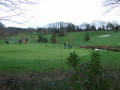
Passing by the Rossulien site and its mill, then below Kerambleïz Castle which overlooks the Odet, this route continues along a quiet path that runs alongside Kernernez Golf Course to rejoin the banks of the Odet.After going round the Étang de Kerbernez, the return journey takes you through the Plomelin countryside.
Family walk at the Vire-Court site
 2.56 mi
+377 ft
-397 ft
1h 30
Easy
Departure from Plomelin (Finistère)
2.56 mi
+377 ft
-397 ft
1h 30
Easy
Departure from Plomelin (Finistère)
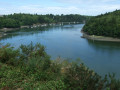
This circular loop, mainly through the forest, offers beautiful views of the meandering Odet river and a stunning vista of Kerambleïz Castle perched on the hilltop.
Also worth discovering is the Rossulien Mill, which was restored in 2020 and is now operational (free to visit).
Passing through Ploaré, a district of Douarnenez
 5.57 mi
+479 ft
-476 ft
3h 00
Easy
Departure from Kerlaz (Finistère)
5.57 mi
+479 ft
-476 ft
3h 00
Easy
Departure from Kerlaz (Finistère)
After passing through the Plomarc’h site, let’s set off to explore the former parish of Ploaré, which has been part of Douarnenez since 1945. It retains its strong connection to the land.
Coastal path via the beaches of Trezmalaouen and Kervel
 6.75 mi
+666 ft
-650 ft
3h 40
Moderate
Departure from Kerlaz (Finistère)
6.75 mi
+666 ft
-650 ft
3h 40
Moderate
Departure from Kerlaz (Finistère)
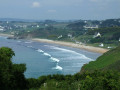
Framed by the cliffs of Cap-Sizun to the south and the Crozon Peninsula to the north, Douarnenez Bay is a sheltered spot, well known to ships when heavy weather is forecast.TheGR®® runs along the various beaches at the bottom of the bay and offers a beautiful view of Douarnenez and its fishing port.
NB: a new section was inaugurated in March 2024 to avoid the 20% incline at the start. The GR® markings do not currently take this into account, but it will soon become the official route.
The Kergoat route via Locronan
 6.90 mi
+430 ft
-417 ft
3h 35
Moderate
Departure from Quéménéven (Finistère)
6.90 mi
+430 ft
-417 ft
3h 35
Moderate
Departure from Quéménéven (Finistère)
Countryside route along sunken paths connecting Kergoat Chapel to the town of Locronan and back along the Forêt du Duc.
Following the sardine route in Douarnenez
 4.59 mi
+210 ft
-217 ft
2h 20
Easy
Departure from Douarnenez (Finistère)
4.59 mi
+210 ft
-217 ft
2h 20
Easy
Departure from Douarnenez (Finistère)
This route, adapted from the sardine route, is marked by 17 information panels explaining the history of sardine fishing in Douarnenez from Gallo-Roman times to the latest changes in the port.
Bronze nails bearing the image of a sardine guide you through the streets, alleys, ports and seaside (a fun treasure hunt).
More walks in Plonéis
Select a point of interest below: