


Refine your search for walks in Mulhouse
Mulhouse walks


 Old Mulhouse Trail
 Tourist office
 1.42 mi
 +3 ft
+3 ft
 -7 ft
-7 ft
 0h 40
0h 40
 Easy
Easy
 Departure from Mulhouse (Haut-Rhin)
Discover historic Mulhouse with this tourist trail! You will admire the most beautiful buildings in the city centre.In about an hour, you will stroll through the medieval streets, observing the houses that have marked the history of the city...
Shaded route in the city of Mulhouse
 1.70 mi
+7 ft
-7 ft
0h 45
Easy
Departure from Mulhouse (Haut-Rhin)
1.70 mi
+7 ft
-7 ft
0h 45
Easy
Departure from Mulhouse (Haut-Rhin)
During a heatwave, we mainly seek shade or cool places. That is why this route was created. Enjoy this peaceful walk, far from the noise. To complete the circular route, return to the city centre.
Street art in Mulhouse
 2.10 mi
+3 ft
-3 ft
1h 00
Easy
Departure from Mulhouse (Haut-Rhin)
2.10 mi
+3 ft
-3 ft
1h 00
Easy
Departure from Mulhouse (Haut-Rhin)
Come and discover the works of the many street artists who adorn the city's walls and even... road signs! Clet, C215, Jana & Js are among those who embellish the streets of Mulhouse. Before starting this route,please note that street art is ephemeral, so some of the works may no longer be there when you take your walk. However, we invite you to keep your eyes peeled, as they may well be hidden.
Contemporary art in Mulhouse
 2.65 mi
+3 ft
-10 ft
1h 15
Easy
Departure from Mulhouse (Haut-Rhin)
2.65 mi
+3 ft
-10 ft
1h 15
Easy
Departure from Mulhouse (Haut-Rhin)
Set off to discover the contemporary artworks scattered throughout Mulhouse. From the city centre to the Promenade William Wyler, along the Nouveau Bassin, where sculptures and installations interact with the water and trees. In just a few steps, let yourself be guided by iconic creations that reveal the city's daring spirit.
The banks of the Ill in Mulhouse
 Visorando Member
 4.51 mi
+23 ft
-23 ft
2h 05
Easy
Departure from Mulhouse (Haut-Rhin)
4.51 mi
+23 ft
-23 ft
2h 05
Easy
Departure from Mulhouse (Haut-Rhin)
This is an undemanding hike, ideal for a Sunday stroll with the family.
This circular runs along the banks of the Ill and allows you to discover the "Japanese Bridge" behind the Mulhouse swimming pool, as well as the "Bois des Philosophes" near the University.
19th-century trail in Mulhouse
 1.13 mi
+3 ft
-3 ft
0h 30
Easy
Departure from Mulhouse (Haut-Rhin)
1.13 mi
+3 ft
-3 ft
0h 30
Easy
Departure from Mulhouse (Haut-Rhin)
This trail will allow you to discover Mulhouse as it was in the 19th century, during its industrial textile boom. Find the locations of former factories, mansions and remnants of this unprecedented development.
Street art and painted walls in Mulhouse
 5.40 mi
+13 ft
-13 ft
2h 30
Easy
Departure from Mulhouse (Haut-Rhin)
5.40 mi
+13 ft
-13 ft
2h 30
Easy
Departure from Mulhouse (Haut-Rhin)
This family walk will give you the chance to discover Mulhouse’s tradition of painted walls.From giant murals to the tiniest graffiti, street art is everywhere in Mulhouse: on walls, pavements, letterboxes and even on road signs!You’ll need to keep your eyes peeled!
The Rebberg district of Mulhouse
 6.74 mi
+436 ft
-440 ft
3h 30
6.74 mi
+436 ft
-440 ft
3h 30
 Moderate
Departure from Mulhouse (Haut-Rhin)
Moderate
Departure from Mulhouse (Haut-Rhin)
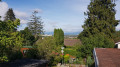
The Rebberg district of Mulhouse is undoubtedly one of the most beautiful neighbourhoods in Alsace. For the duration of your walk, forget that you’re right in the city centre as you wander through the various streets and alleyways of this impressive neighbourhood, which is striking both for its ever-present greenery and its many breathtaking mansions.
Short circular loop in the Tannenwald
 2.16 mi
+144 ft
-141 ft
1h 05
Easy
Departure from Riedisheim (Haut-Rhin)
2.16 mi
+144 ft
-141 ft
1h 05
Easy
Departure from Riedisheim (Haut-Rhin)
A short walk in the woods near Mulhouse town centre. Very busy at weekends during the warmer months, it’s also a popular spot around 5 pm for dogs to run free and play.
From Haut-Rebberg to Tannenwald, starting from the Belvédère in Mulhouse
 6.35 mi
+495 ft
-502 ft
3h 20
Moderate
Departure from Mulhouse (Haut-Rhin)
6.35 mi
+495 ft
-502 ft
3h 20
Moderate
Departure from Mulhouse (Haut-Rhin)
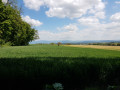
Enjoy the omnipresent greenery along this route, the forest and views of four mountain ranges.
From Riedisheim to Rixheim via the vanished village of Leibersheim
 5.88 mi
+417 ft
-417 ft
3h 05
Easy
Departure from Riedisheim (Haut-Rhin)
5.88 mi
+417 ft
-417 ft
3h 05
Easy
Departure from Riedisheim (Haut-Rhin)
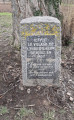
Between the two villages of Riedisheim and Rixheim lies a third, Leibersheim, which ceased to exist five centuries ago. You will also pass by the cemeteries of these two villages, one of which dates back more than two centuries. Finish by climbing the Fuchsberg hill to enjoy the beautiful scenery.
Route around Brunstatt
 4.51 mi
+394 ft
-384 ft
2h 25
Easy
Departure from Brunstatt (Haut-Rhin)
4.51 mi
+394 ft
-384 ft
2h 25
Easy
Departure from Brunstatt (Haut-Rhin)
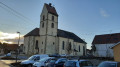
A walk to discover Brunstatt and its hills, mostly through fields, with beautiful views of the Vosges mountains.
Circular route around the Eichelberg via the Igetalweg
 2.29 mi
+187 ft
-187 ft
1h 15
Easy
Departure from Brunstatt (Haut-Rhin)
2.29 mi
+187 ft
-187 ft
1h 15
Easy
Departure from Brunstatt (Haut-Rhin)
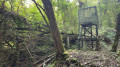
The circular route offers a partially shaded section covering around 60 to 70 per cent of the trail, with gentle slopes. It follows the route of the historic Igetalweg (partly paved), which farmers once used to reach their fields with ox-drawn carts thanks to its gentle, even gradient.
Do not use this circular route in strong winds.
The villages of Didenheim and Hochstatt via the Saint-Gall Chapel
 5.14 mi
+279 ft
-279 ft
2h 35
Easy
Departure from Brunstatt (Haut-Rhin)
5.14 mi
+279 ft
-279 ft
2h 35
Easy
Departure from Brunstatt (Haut-Rhin)
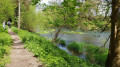
Perched on a hill overlooking the two villages of Didenheim and Hochstatt, the Saint-Gall Chapel has been destroyed and rebuilt many times. Set off to explore it as you stroll through the pretty neighbourhoods of Didenheim and Hochstatt, not forgetting the soothing presence of the River Ill, which you’ll cross on numerous occasions!
Through the woods of Bruebach
 5.52 mi
+427 ft
-433 ft
2h 55
Easy
Departure from Brunstatt (Haut-Rhin)
5.52 mi
+427 ft
-433 ft
2h 55
Easy
Departure from Brunstatt (Haut-Rhin)
This route takes you on a walk through Bruebach and its surroundings, mainly through the surrounding woods.
Lutterbach, its basilica and its woods
 5.32 mi
+52 ft
-52 ft
2h 30
Easy
Departure from Lutterbach (Haut-Rhin)
5.32 mi
+52 ft
-52 ft
2h 30
Easy
Departure from Lutterbach (Haut-Rhin)
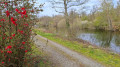
A family walk offering the chance to discover some of the attractions of Lutterbach, a town steeped in history and culture, home to one of the four basilicas of Alsace and a famous brewery rich in history, before enjoying the Bois de Lutterbach, the south-western part of the Forêt du Nonnenbruch (Marais des Nonnes), criss-crossed by numerous walking trails and serving as the urban area’s green lung.
This walk is accessible via Lutterbach railway station (Haut-Rhin).
Tour of the Lutterbach Woods
4.27 mi
+16 ft
-16 ft
2h 00
Easy
Departure from Lutterbach (Haut-Rhin)
When you think of hiking in Alsace, the Vosges mountains spring to mind. But the Alsace plain also offers some very pleasant walks. This is the case with this short, family-friendly circular in the Bois de Lutterbach, on the outskirts of Mulhouse. This walk is completely safe and accessible to almost everyone. Most of the route is through forest. The highlight of the hike is halfway along the route: the Gros Chêne de Pfastatt (Pfastatt Great Oak).
Discover Richwiller and its industrial past
 Local authority4.96 mi
+43 ft
-43 ft
2h 20
Easy
Departure from Richwiller (Haut-Rhin)
Local authority4.96 mi
+43 ft
-43 ft
2h 20
Easy
Departure from Richwiller (Haut-Rhin)
The municipality of Richwiller is launching a series of historical discovery trails to help residents learn more about their village.
First loop: "Richwiller, its industrial past" with 18 stops.
On the banks of the Ill and Dollerbaechlein rivers in Kingersheim
 4.82 mi
+16 ft
-16 ft
2h 15
Easy
Departure from Kingersheim (Haut-Rhin)
4.82 mi
+16 ft
-16 ft
2h 15
Easy
Departure from Kingersheim (Haut-Rhin)
A lovely family walk that allows you to discover the potash villages from a different angle, along the Ill and Dollerbaechlein streams.
Lutterbach Wood Circular Loop
 5.19 mi
+20 ft
-20 ft
2h 25
Easy
Departure from Pfastatt (Haut-Rhin)
5.19 mi
+20 ft
-20 ft
2h 25
Easy
Departure from Pfastatt (Haut-Rhin)
This short forest trail will delight lovers of nature walks! Be careful, however, as the undergrowth is quite sparse. Although entirely in the forest, the trail is regularly exposed to the sun.
Reservoir and view of the Alps from Zimmersheim
4.20 mi
+377 ft
-354 ft
2h 15
Easy
Departure from Zimmersheim (Haut-Rhin)
Walk from the centre of Zimmersheim up a steep climb towards the Schoofberg, where the reservoir is located. Pass through the Buchwald and Zuhrenberg woods to enjoy views of the Alps in good weather and a bit of cool air. Return via the south of Zimmersheim, across open terrain.
From the Flaxlanden Cave to the Zillisheim Cannon
 4.79 mi
+404 ft
-384 ft
2h 35
Easy
Departure from Zillisheim (Haut-Rhin)
4.79 mi
+404 ft
-384 ft
2h 35
Easy
Departure from Zillisheim (Haut-Rhin)
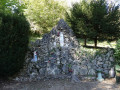
Passing through the pretty village of Flaxlanden and its Lourdes Grotto, discover a First World War military site in the hills above Zillisheim. Learn a little about nature with the discovery trails along the route and enjoy the many views that await you along the way!
More walks in Mulhouse
Select a point of interest below: