


Refine your search for walks in Montenay
Montenay walks


 As far as Gué Guérin, following the Ernée
 Visorando Member
 9.02 mi
 +358 ft
 -335 ft
 4h 25
4h 25
 Moderate
 Departure from Montenay (Mayenne)
This route, known as the “Circuit des sentiers de l’Oscence”, originates in the Mayenne region.
It offers the pleasure of walking alongside the Ernée, a small river which flows into the Mayenne – a tributary of the Loire – as well as along some magnificent sunken paths.
The mills of Gastines and Fumeçon
 7.70 mi
+423 ft
-420 ft
3h 55
Moderate
Departure from Vautorte (Mayenne)
7.70 mi
+423 ft
-420 ft
3h 55
Moderate
Departure from Vautorte (Mayenne)
There are only two old mills, no longer in operation, on this route, but it will also allow you to explore the woods and moors of the Gastinais region.
The countryside around Chailland
9.16 mi
+617 ft
-620 ft
4h 45
Moderate
Departure from Chailland (Mayenne)
This route forms a figure of ‘8’; it can therefore be divided into two shorter circular loops: the upper circular loop is 9 km long, whilst the lower circular loop is just 5 km. It offers a lovely countryside stroll along quiet country lanes and very pleasant footpaths.
The Pouillé Copse in Larchamp
6.64 mi
+299 ft
-302 ft
3h 20
Moderate
Departure from Larchamp (Mayenne)
Unnoticeable to the hiker, this route has a unique feature: the waters encountered in the south feed into the Atlantic basin, whilst those in the north flow towards the English Channel.
It does, however, offer the chance to explore a site where woodworking was, for several centuries, the primary industry.
Circular route starting from Andouillé via the Crennes moorland
4.55 mi
+233 ft
-243 ft
2h 20
 Easy
Departure from Andouillé (Mayenne)
Easy
Departure from Andouillé (Mayenne)
Visit Andouillé and its countryside with its gentle hills and cross the Ernée via its stepping stones.
Gastard trail starting from Andouillé
6.65 mi
+413 ft
-430 ft
3h 25
Moderate
Departure from Andouillé (Mayenne)
A short detour to Rochefort, a charming hamlet on the banks of the Mayenne, is highly recommended to admire the river. You can quench your thirst at La Guinguette before continuing your journey.
Le Relais des Vallées in La Chapelle-Janson
8.13 mi
+650 ft
-623 ft
4h 20
Moderate
Departure from La Chapelle-Janson (Ille-et-Vilaine)
Beautiful sunken lanes, hedgerow-lined countryside, patches of woodland, open countryside and quiet country lanes with very little traffic, offering views over the lush green valleys. A glimpse of the local heritage: the 16th-century Manoir de la Lande.
“Hedgerows and Rivers” route in Sacé
 Tourist office
 8.78 mi
+253 ft
-279 ft
4h 15
Moderate
Departure from Sacé (Mayenne)
8.78 mi
+253 ft
-279 ft
4h 15
Moderate
Departure from Sacé (Mayenne)
A walk starting from Sacé, alternating between sunken paths and a stroll along the towpath.
Around Sacé
 3.44 mi
+180 ft
-180 ft
1h 45
Easy
Departure from Sacé (Mayenne)
3.44 mi
+180 ft
-180 ft
1h 45
Easy
Departure from Sacé (Mayenne)
A short route along the sunken paths of the small village of Sacé, passing by the River Mayenne.
From Sacé, the banks of the Mayenne
 7.82 mi
+318 ft
-302 ft
3h 50
Moderate
Departure from Sacé (Mayenne)
7.82 mi
+318 ft
-302 ft
3h 50
Moderate
Departure from Sacé (Mayenne)
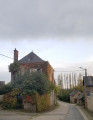
This route gives pride of place to the River Mayenne, following its course for over four kilometres. As you travel upstream, you will pass five lock-and-dam complexes, some of which are linked to a small power station.
The Bois Février in Fleurigné
6.40 mi
+164 ft
-164 ft
3h 05
Easy
Departure from Fleurigné (Ille-et-Vilaine)
Two separate circular loops in the countryside around Fleurigné. Peace and quiet, greenery, shade and tranquillity are the hallmarks of these independent circular loops.
Roland’s Leap
4.35 mi
+289 ft
-299 ft
2h 15
Easy
Departure from Dompierre-du-Chemin (Ille-et-Vilaine)
Le Saut Roland is the first designated area of natural beauty in the Marches de Bretagne. The steep cliffs rise to a height of 173 metres, and the wooded slopes stretching down to the valley floor form a landscape traversed from east to west by the Ruisseau Saint-Blaise.
The sunken lanes of La Dorée
 7.05 mi
+541 ft
-528 ft
3h 45
Moderate
Departure from La Dorée (Mayenne)
7.05 mi
+541 ft
-528 ft
3h 45
Moderate
Departure from La Dorée (Mayenne)
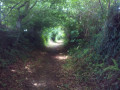
The Mayenne is a land of pastures where plots of land remain small. There are numerous sunken lanes here, and you are invited to explore several of them.
One slight drawback: due to their nature, there is no continuity. Walkers will therefore have to accept walking some distances on tarmac roads.
Route du Champ Dolent to Saint-M’Hervé
 Local authority9.78 mi
+387 ft
-361 ft
4h 50
Moderate
Departure from Saint-M'Hervé (Ille-et-Vilaine)
Local authority9.78 mi
+387 ft
-361 ft
4h 50
Moderate
Departure from Saint-M'Hervé (Ille-et-Vilaine)
Walking alongside the Haute Vilaine reservoir for its entire length is the main attraction of this walk, which will also allow you to discover the charming little village of Saint-M’Hervé.
Around the Merveille stream
 10.81 mi
+512 ft
-492 ft
5h 25
Moderate
Departure from Saint-Jean-sur-Mayenne (Mayenne)
10.81 mi
+512 ft
-492 ft
5h 25
Moderate
Departure from Saint-Jean-sur-Mayenne (Mayenne)
The Mayenne: first and foremost, it is a river 200 km long that has given its name to a town from which it is navigable, as well as to a department (53).
You’ll begin by exploring the countryside along a path through the scrub, then along so-called ‘traverse’ paths – some unpaved, some tarmacked – with views over the Vallon des Merveilles, before reaching the river as it cuts through the granite at Moulin Oger and then a deep gorge formed by two sandstone escarpments.
Circuit de la Paillardière à Saint-M'Hervé
6.07 mi
+240 ft
-240 ft
3h 00
Moderate
Departure from Saint-M'Hervé (Ille-et-Vilaine)
Discover the countryside around Saint-M'Hervé with this route, which takes you to the east of the village.
Hollow path route in Saint-Jean-sur-Mayenne
 4.56 mi
+236 ft
-236 ft
2h 20
Moderate
Departure from Saint-Jean-sur-Mayenne (Mayenne)
4.56 mi
+236 ft
-236 ft
2h 20
Moderate
Departure from Saint-Jean-sur-Mayenne (Mayenne)
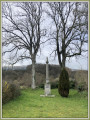
A very pleasant walk to rediscover the Mayenne countryside, between sunken paths, wooded areas, fields of cows and crops.
Around Genest-Saint-Isle
3.70 mi
+171 ft
-187 ft
1h 50
Easy
Departure from Le Genest-Saint-Isle (Mayenne)
An easy walk starting from Genest-Saint-Isle, with very little elevation gain. The paths are beautiful, and you may see deer. In rainy weather, two or three sections are flooded for a few metres, but you can get around this by walking along the edge of the adjacent field. A beautiful finish along a pretty little stream.
From Pontmain to Pont Dom Guérin
3.14 mi
+141 ft
-151 ft
1h 35
Easy
Departure from Pontmain (Mayenne)
This route takes you into the Parc des Oblats and its arboretum, then along a shaded path by the water’s edge leading to Mausson Castle, which is privately owned but can be admired from the outside. Pontmain is an important place of pilgrimage to Our Lady of Pontmain, who appeared to several children on 17 January 1871.
Claire-Fontaine and the Chapelle de Courbefosse in Fougerolles-du-Plessis
 9.08 mi
+440 ft
-413 ft
4h 35
Moderate
Departure from Fougerolles-du-Plessis (Mayenne)
9.08 mi
+440 ft
-413 ft
4h 35
Moderate
Departure from Fougerolles-du-Plessis (Mayenne)
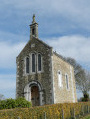
A very pleasant walk, starting with two lakes, followed by wide, straight paths through wooded countryside, before continuing along the circular western route with unobstructed views as you walk alongside a small stream. Along the way, you’ll see some beautiful country houses and two small chapels.
As far as Mausson Castle, staying within the Bazouge region
4.24 mi
+318 ft
-305 ft
2h 15
Easy
Departure from Landivy (Mayenne)
Tree-lined paths running alongside a river lead to the château. The return route mainly follows a winding path through the fields.
Lake Haute Vilaine at La Chapelle-Erbrée
 8.66 mi
+249 ft
-249 ft
4h 10
Moderate
Departure from Saint-M'Hervé (Ille-et-Vilaine)
8.66 mi
+249 ft
-249 ft
4h 10
Moderate
Departure from Saint-M'Hervé (Ille-et-Vilaine)
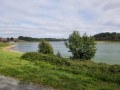
The Haute Vilaine Lake covers an area of 155 hectares and holds 8 million cubic metres of water, with a maximum depth of 13 metres.
Created in 1982, its purpose is to regulate winter floods on the Vilaine for Vitré and Rennes, located downstream.
Walking around the lake allows you to enjoy the lake and the forest paths.
Along the Airon from Landivy
 11.43 mi
+466 ft
-489 ft
5h 40
Moderate
Departure from Landivy (Mayenne)
11.43 mi
+466 ft
-489 ft
5h 40
Moderate
Departure from Landivy (Mayenne)
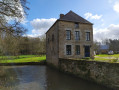
With one foot in Normandy and one in Brittany, this trail offers some truly stunning views. After taking in the panoramic scenery, you’ll wind your way through the shaded paths along the Futaie Valley.
The Morinais route
 8.25 mi
+308 ft
-305 ft
4h 05
Moderate
Departure from Louvigné-du-Désert (Ille-et-Vilaine)
8.25 mi
+308 ft
-305 ft
4h 05
Moderate
Departure from Louvigné-du-Désert (Ille-et-Vilaine)
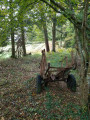
Several quarries dot this route. Whether they are still in operation, such as the Morinais quarry, or partly overgrown with vegetation, they all seem to still echo with the hammering sounds of decades past.
The granite quarried here was used for roadworks, by funeral firms, and also in local architecture. The mysterious beauty of the Morinaye manor house and the typical rural houses in the villages you will pass through bear witness to this.