


Refine your search for walks in Simandre
Simandre walks


 Moulin du Roy trail at Simandre
 Tourist office
 3.99 mi
 +36 ft
 -36 ft
 1h 50
 Easy
 Departure from Simandre (Saône-et-Loire)
Simandre, on the banks of the Saône and close to Cuisery, is a lively village with many shops. Its Romanesque church and lava stone roof are listed in the Bâtiments de France inventory. You can observe the flora and fauna at the various ponds along the route.
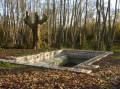
Simandre's three washhouses
 3.94 mi
+43 ft
-43 ft
1h 50
Easy
Departure from Simandre (Saône-et-Loire)
Simandre, on the banks of the Saône and close to Cuisery, is a lively village with many shops. Its Romanesque church and lava stone roof are listed in the Bâtiments de France inventory. You can observe the flora and fauna at the various ponds along the way.
Baudrières Route
 12.28 mi
+243 ft
-262 ft
5h 50
 Moderate
Departure from Baudrières (Saône-et-Loire)
Baudrières is a charming village in the heart of the Natura 2000 area. During your walk, you’ll pass through picturesque landscapes comprising woods, meadows, streams and ponds, and you’ll come across several beautiful Bresse-style houses, including the ‘Maison Forte’ in the hamlet of Tenarre. You can admire the11th-century church with its stone bell tower, and also stop off at La Verne, a lake equipped for fishing and leisure activities.
From Cuisery to Loisy along the banks of the Seille
 Visorando Member5.38 mi
+13 ft
-13 ft
2h 30
Easy
Departure from Cuisery (Saône-et-Loire)
A path linking the Cuisery Water Sports Centre to the Loisy Water Sports Centre along the banks of the Seille. It’s a very pleasant round trip through the countryside and along the riverbank.
Route de Fontaine Couverte via the aerodrome
5.11 mi
+66 ft
-69 ft
2h 25
Easy
Departure from Cuisery (Saône-et-Loire)
This circular route allows you to discover all that Cuisery has to offer: the village centre, the aerodrome, the countryside (pond, woods, fields), including wildlife: Bresse poultry farms, horses in the meadows or at the riding school, birds by the pond, and occasionally hares or roe deer in the fields.
 On the left bank of the Saône, starting from Lacrost
6.53 mi
+151 ft
-144 ft
1.5 hrs
Easy
Departure from Lacrost (Saône-et-Loire)
An easy walk that allows you to explore the banks of the Saône and also offers a lovely view of Tournus and the Tournugeois hills.
A route through the woodland around Sennecey-le-Grand
 10.83 mi
+1,293 ft
-1,283 ft
6h 05
Easy
Departure from Sennecey-le-Grand (Saône-et-Loire)
A route through the woodland around Sennecey-le-Grand.
Between villages and woodlands
 10.19 mi
+1,499 ft
-1,490 ft
6h 00
Moderate
Departure from Laives (Saône-et-Loire)
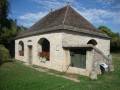
This hike will take you past numerous wash houses and fountains as you walk through pleasant woodland in hot weather, returning via the Chemin des Moines. If you love beautiful stonework and buildings, you're in for a treat. After the hike, you can enjoy the lakes of Laives or visit La Ferté Abbey.
La Montagne du Vannier: how about going to the theatre... through the woods?
 5.83 mi
+873 ft
-896 ft
3h 25
Easy
Departure from Vers (Saône-et-Loire) (Saône-et-Loire)
Circular forest loop in the Tournugeois region, on either side of a discreet little valley connecting the hamlets of Corlay to the village of Montceaux-Ragny. Halfway along, you can temporarily leave your hiking boots and accessories behind to show off your talents: singing, dancing, reciting, etc. You will find a stage and bleachers in the middle of nature.
La Truchère-Ratenelle Nature Reserve and Site des Charmes
 7.26 mi
+69 ft
-66 ft
3h 25
Moderate
Departure from Sermoyer (Ain)
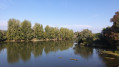
It is undoubtedly the sand dunes that represent the most striking feature of the Nature Reserve. Shaped 5,000 years ago by the wind, these shifting sands are partially covered in mosses and lichens. Only species adapted to arid environments manage to colonise them. Just a few metres from this desert-like environment lies a waterlogged area stretching over 5 to 6 hectares: a wooded peat bog, the presence of which at an altitude of just 200 metres is surprising. A third, very different environment can be seen not far from there: Étang Fouget, whose surrounding marsh takes the form of a vegetative labyrinth and attracts numerous birds.
Brancion, a small medieval village
 7.54 mi
+1,401 ft
-1,398 ft
4h 40
Moderate
Departure from Royer (Saône-et-Loire)
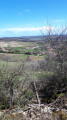
Discover Brancion, a small medieval village with a trip to "paradise".
Brancion via Mont Prevers and the Bois de la Dame
 5.69 mi
+971 ft
-971 ft
3h 30
Moderate
Departure from Royer (Saône-et-Loire)
This walk will take you from Royer to Brancion via the Chemin des Moines, at the heart of the Romanesque route linking the abbeys of Tournus and Cluny. Perched on a rocky outcrop, the village of Brancion has been inhabited for 3,000 years. Brancion welcomes you and invites you to discover an idyllic medieval world: a fortified gate, a keep overlooking the village and the Romanesque church, exceptional views and leisurely strolls through a completely pedestrianised area. Nestled in lush greenery, the castle is a place where time seems to have stood still.
Romenay's ponds
6.30 mi
+102 ft
-118 ft
3h 00
Easy
Departure from Romenay (Saône-et-Loire)
A route along easy paths in the Bresse region, starting from the traditional village of Romenay.
The Montpont-en-Bresse Ponds Route
 6.09 mi
+138 ft
-135 ft
2h 55
Easy
Departure from Montpont-en-Bresse (Saône-et-Loire)
Before being renamed Montpont-en-Bresse in 1961, the village was first known as Mons Pavonis and then Montpaon.
Dotted with ponds, streams and rivers, it also boasts a large area of woodland. The charm of this countryside lies in the diversity of its heritage, fine examples of which can be found in the village centre, with its brick church, its town hall housed in a former manor house, and its library set in a traditional Bresse-style building.
The Fougères Route in Montpont-en-Bresse
 5.17 mi
+66 ft
-66 ft
2h 25
Easy
Departure from Montpont-en-Bresse (Saône-et-Loire)
Before being renamed Montpont-en-Bresse in 1961, the town was first known as “Mons Pavonis” and then “Montpaon”.
Dotted with ponds, streams and rivers, it also boasts a large area of woodland. The charm of this countryside lies in the diversity of its heritage, fine examples of which can be found in the village centre, with its brick church, its town hall housed in a former manor house, and its library set in a traditional Bresse-style building.
Montpont-en-Bresse Forest Route
 8.21 mi
+164 ft
-138 ft
3h 55
Moderate
Departure from Montpont-en-Bresse (Saône-et-Loire)
Before being named Montpont-en-Bresse in 1961, the village was first known as “Mons Pavonis” and then “Montpaon”.
Dotted with ponds, streams and rivers, it also boasts a large area of woodland. The charm of this countryside lies in the diversity of its heritage, fine examples of which can be found in the village centre, with its brick church, its town hall housed in a former manor house, and its library situated in a traditional Bresse-style building.
The Madeleine Historical Trail
4.78 mi
+85 ft
-85 ft
2h 15
Easy
Departure from Saint-Martin-en-Bresse (Saône-et-Loire)
Starting from the hamlet of La Madeleine, this historic path immerses you in a place steeped in history. Here, on 8 and 9 March 1944, a group of resistance fighters based in the surrounding forests was taken by surprise and surrounded, leading to fierce fighting in the woods, the fields and right into the heart of the village. This site commemorates the sacrifice of four resistance fighters and three residents of the hamlet, including the Jouvenceau brothers. As a tribute, a memorial has been erected using stones from the burnt-out houses, ensuring the memory of these events lives on. It is a moving stop, combining heritage, nature and the duty to remember.