


Refine your search for walks in Combourg
Combourg walks


 Combourg Lake, the Étang des Mufins and the Haute Boissière
 Association / Club / Walk leader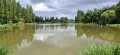
 6.26 mi
 +135 ft
 -135 ft
 3h 00
3h 00
 Moderate
 Departure from Combourg (Ille-et-Vilaine)
A route mainly on land. It will take you past Combourg’s two main bodies of water, the lake and the Étang des Maffins. Then, after passing through the La Croix Briand housing estate, it will take you to La Haute Boissière via a charming little sunken path. This spot is situated on a small hill about 80 metres above sea level, offering a lovely panoramic view of Combourg and the surrounding area in fine weather.
The Witches’ Route via Quelmé
 7.84 mi
+394 ft
-374 ft
3h 55
Moderate
Departure from Combourg (Ille-et-Vilaine)
7.84 mi
+394 ft
-374 ft
3h 55
Moderate
Departure from Combourg (Ille-et-Vilaine)
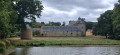
This extended version of the Witches’ Route winds its way through the Combournais countryside. Between the refreshing shade of the Haute Vallée and the picturesque villages and traditional (restored) houses, you can enjoy breathtaking views of this charming little town. Along the way, you can also admire the Manoir du Grand Trémaudan and its superb dovecote.
The Witches’ Route in Combourg
 5.14 mi
+269 ft
-249 ft
2h 35
5.14 mi
+269 ft
-249 ft
2h 35
 Easy
Departure from Combourg (Ille-et-Vilaine)
Easy
Departure from Combourg (Ille-et-Vilaine)
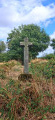
The Circuit des Sorciers takes you through the wooded countryside around Combourg. The route winds its way through the refreshing shade of the Haute Vallée in summer and past the small villages and houses characteristic of the region, offering breathtaking views of the ‘small town of character’ of Combourg.
Around Riniac
4.87 mi
+174 ft
-190 ft
2h 25
Easy
Departure from Combourg (Ille-et-Vilaine)
A countryside walk along sunken lanes and, to a lesser extent, on the hills overlooking the town of Combourg. A route with no particular difficulty. It alternates between paths through woodland and paths across fields. A significant portion is on roads with very little traffic. Riniac is of no particular interest. It is more of a "dormitory" village, but with pretty houses. The countryside offers beautiful views.
Circular route via the wind farm and the ‘hanged wolf’ in Trémeheuc
 7.73 mi
+105 ft
-105 ft
3h 40
Moderate
Departure from Trémeheuc (Ille-et-Vilaine)
7.73 mi
+105 ft
-105 ft
3h 40
Moderate
Departure from Trémeheuc (Ille-et-Vilaine)
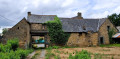
The route follows part of the Wind Farm route, which it complements. Just like the route mentioned above, this route is very pleasant, often following wide avenues lined with oak and chestnut trees. It winds through wooded countryside dotted with sunken lanes. And with a bit of luck, you might spot some of the local wildlife – early in the morning, and if you’re lucky, roe deer and rabbits, or perhaps even more.
Trémeheuc Wind Farm
 5.24 mi
+46 ft
-46 ft
2h 25
Easy
Departure from Trémeheuc (Ille-et-Vilaine)
5.24 mi
+46 ft
-46 ft
2h 25
Easy
Departure from Trémeheuc (Ille-et-Vilaine)
The route is very pleasant, often following wide paths lined with oak and chestnut trees. It winds through wooded countryside dotted with sunken lanes. And with a bit of luck, you might spot some of the local wildlife early on – and, if you’re lucky, roe deer frolicking at the foot of the wind turbines.
The Landehuan Canal in Dingé
 Visorando Member
 5.38 mi
+141 ft
-141 ft
2h 35
Easy
Departure from Dingé (Ille-et-Vilaine)
5.38 mi
+141 ft
-141 ft
2h 35
Easy
Departure from Dingé (Ille-et-Vilaine)
The Rigole de Boulet stretches for 17 km and links Étang de Boulet to the Ille and Rance Canal, which it once fed.
The Landéhuan Channel is a secondary channel that fed the Boulet Channel. The route follows the channel for 2 km, beneath 200-year-old beech trees.
It also passes through the hamlets of La Bouderie and Les Hauts Rochers, where you can see traditional local architecture: granite walls, arched doorways, well-tended gardens…
The Domaine des Ormes from Bonnemain
 5.67 mi
+72 ft
-69 ft
2h 40
Easy
Departure from Bonnemain (Ille-et-Vilaine)
5.67 mi
+72 ft
-69 ft
2h 40
Easy
Departure from Bonnemain (Ille-et-Vilaine)
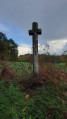
Located in the north-west of the Ille-et-Vilaine department, Bonnemain is one of the twenty-six parishes in the canton of Combourg, also known as Romantic Brittany. This gentle walk allows you to discover the surrounding countryside and the Domaine des Ormes, renowned for its campsite. The path is lined with some beautiful stone houses and two wayside crosses. The path around the Étang de la Sablonnière is particularly pleasant.
Around Bonnemain
 4.60 mi
+98 ft
-98 ft
2h 10
Easy
Departure from Bonnemain (Ille-et-Vilaine)
4.60 mi
+98 ft
-98 ft
2h 10
Easy
Departure from Bonnemain (Ille-et-Vilaine)
Bonnemain is one of the twenty-six communes in the canton of Combourg (also known as Romantic Brittany). This walk complements the one to the north-east, which runs between the village and the Domaine des Ormes. It winds its way through the countryside via sunken paths and past some pretty little houses.
Boulet Watercourse – La Motte aux Anglais Route
 6.94 mi
+85 ft
-98 ft
3h 15
Moderate
Departure from Dingé (Ille-et-Vilaine)
6.94 mi
+85 ft
-98 ft
3h 15
Moderate
Departure from Dingé (Ille-et-Vilaine)
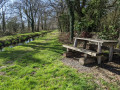
The Boulet Canal stretches for 17 km and connects Boulet Pond to the Île and Rance Canal, which it once fed.
This walk allows you to explore the area south of Dingé. The path follows the banks in the shade of two-hundred-year-old beech trees. It takes you past a few small engineering structures built as part of the watercourse.
It takes us to the Motte aux Anglais burial mound (11th century).
A very open walk in all seasons and shaded in summer.
8 km alternative route: see Information
Circular starting from Bonnemain via La Perinne and Les Ormes.
 8.02 mi
+164 ft
-164 ft
3h 50
Moderate
Departure from Bonnemain (Ille-et-Vilaine)
8.02 mi
+164 ft
-164 ft
3h 50
Moderate
Departure from Bonnemain (Ille-et-Vilaine)
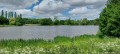
Bonnemain is one of the twenty-six communes in the canton of Combourg (also known as Romantic Brittany). This walk complements the one to the north-east, which runs between the village and the Domaine des Ormes. It winds its way through the countryside, via sunken paths and a few pretty little houses.
The menhir of La Butte in Cuguen
 6.78 mi
+200 ft
-223 ft
3h 15
Moderate
Departure from Cuguen (Ille-et-Vilaine)
6.78 mi
+200 ft
-223 ft
3h 15
Moderate
Departure from Cuguen (Ille-et-Vilaine)
A very pleasant route along sunken paths (sometimes wet) and hedgerow paths. You will walk alongside small streams with the incessant sound of lapping water as they cross a stony area. The highlight of this hike is the Butte menhir.
Boulet Canal – From the Estate to Pas de l’Ille via Les Landelles
 4.87 mi
+23 ft
-23 ft
2h 15
Easy
Departure from Dingé (Ille-et-Vilaine)
4.87 mi
+23 ft
-23 ft
2h 15
Easy
Departure from Dingé (Ille-et-Vilaine)
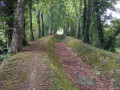
This walk follows the banks of the Rigole de Boulet to the east of Dingé. The well-maintained path runs alongside the meandering watercourse, passing wooden or iron sheet piling, and crosses several 19th-century engineering structures: siphons, aqueducts, drinking troughs…
You walk beneath a canopy of beech trees. The colours change from spring to autumn. It’s cool in summer.
The Parc de la Higourdais and the Croix de Pierre
 7.44 mi
+102 ft
-69 ft
3h 30
Moderate
Departure from Epiniac (Ille-et-Vilaine)
7.44 mi
+102 ft
-69 ft
3h 30
Moderate
Departure from Epiniac (Ille-et-Vilaine)
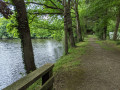
The Parc de la Higourdais is managed by the Ille-et-Vilaine Departmental Council. It was the Council that had the mill and the bakehouse restored. Furthermore, along the route you will come across no fewer than five crosses.
Circular loop through the Parc de la Higourdais via Le Brégain to Épiniac
 8.66 mi
+374 ft
-387 ft
4h 20
Moderate
Departure from Epiniac (Ille-et-Vilaine)
8.66 mi
+374 ft
-387 ft
4h 20
Moderate
Departure from Epiniac (Ille-et-Vilaine)
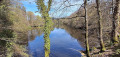
This route crosses the Parc de la Higourdais on the heights of Épiniac. It leads to the banks of the Ruisseau du Landal, which it follows through woodland that is particularly pleasant in summer. It then continues, half on road and half on footpaths. The walk passes over Brégain Hill, which offers a beautiful view of the Guyoult basin to the north. In good weather, you can see Mont-Saint-Michel to the north-east. The return journey takes you along small roads that are generally quite pleasant and quiet, allowing you to discover old hamlets and some beautiful stone houses.
Étang des Noës in Québriac
 8.17 mi
+217 ft
-203 ft
3h 55
Moderate
Departure from Québriac (Ille-et-Vilaine)
8.17 mi
+217 ft
-203 ft
3h 55
Moderate
Departure from Québriac (Ille-et-Vilaine)
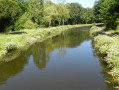
A varied route between the peaceful Ille-et-Rance canal and the steep-sided Moulin-Neuf valley, with beautiful architectural heritage to discover along the way. A very shaded route with very little tarmac.
Saint-Léonard, Les Ormes and the ‘White City’
 7.41 mi
+108 ft
-105 ft
3h 30
Moderate
Departure from Epiniac (Ille-et-Vilaine)
7.41 mi
+108 ft
-105 ft
3h 30
Moderate
Departure from Epiniac (Ille-et-Vilaine)
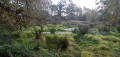
The route takes you through the Domaine des Ormes Park, which has been developed as a luxury campsite. It then leads you through the countryside along wooded paths and small roads. With a bit of luck, if you keep quiet, you might spot some large game, including wild boar, and no doubt some birds such as little egrets, great egrets or grey herons.
No particular difficulty.
Route through the Mesnil Forest via the Maison des Fées
 7.85 mi
+92 ft
-92 ft
3h 40
Moderate
Departure from Le Tronchet (Ille-et-Vilaine)
7.85 mi
+92 ft
-92 ft
3h 40
Moderate
Departure from Le Tronchet (Ille-et-Vilaine)
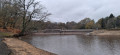
A walk starting from the village of Le Tronchet for a route through the Mesnil Forest. A pleasant walk in the shade, passing by the ‘Maison des Fées’ dolmen and then skirting the Étang de Mireloup. With a bit of luck, you’ll come across the Rocher du Diable. To finish, you’ll cross the golf course, but only on authorised paths.
From Château du Haut Mesnil to Notre-Dame de Tronchet Abbey
 5.46 mi
+46 ft
-46 ft
2h 35
Easy
Departure from Le Tronchet (Ille-et-Vilaine)
5.46 mi
+46 ft
-46 ft
2h 35
Easy
Departure from Le Tronchet (Ille-et-Vilaine)
A pleasant walk to discover the Abbey of Notre-Dame du Tronchet. The route takes you through a heavily wooded landscape, including the Mesnil State Forest, the Château du Haut Mesnil with its chapel, and then Lake Mireloup. It is a route rich in both natural and cultural interest.
Towards the Petit Châtelain in Tinténiac
8.77 mi
+98 ft
-98 ft
4h 05
Moderate
Departure from Tinténiac (Ille-et-Vilaine)
Although in some places the route follows small country lanes, it takes in some very pleasant scenery and makes use of the paths that give the Breton countryside its charm. The return journey along the Ille and Rance Canal offers peace and tranquillity.
The Étang de Boulet and the Grotte Notre-Dame de Lourdes
 6.56 mi
+46 ft
-46 ft
3h 05
Moderate
Departure from Feins (Ille-et-Vilaine)
6.56 mi
+46 ft
-46 ft
3h 05
Moderate
Departure from Feins (Ille-et-Vilaine)
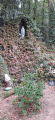
This walk, starting at the Boulet lock, goes round the Étang de Boulet. The terrain is flat and easy, making it ideal for young children. The Étang de Boulet is the largest navigable body of water in Ille-et-Vilaine. The lake is a Natura 2000 site. The route takes you past the Notre-Dame de Lourdes Grotto and along the Rigole du Boulet, which once supplied water to the Ille and Rance Canal. The route ends with a short detour through the countryside near the lake.
The Abbesse Bridge in Tinténiac
8.23 mi
+230 ft
-233 ft
4h 00
Moderate
Departure from Tinténiac (Ille-et-Vilaine)
A walk offering a varied route between the Ille-et-Rance Canal and the countryside around Québriac and Tinténiac. A stop in the historic centre of Tinténiac is a must to appreciate its rich architectural heritage.
The Rigole de Boulet and La Motte aux Anglais, starting from La Plousière
 6.00 mi
+33 ft
-33 ft
2h 45
Easy
Departure from Guipel (Ille-et-Vilaine)
6.00 mi
+33 ft
-33 ft
2h 45
Easy
Departure from Guipel (Ille-et-Vilaine)
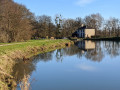
A short walk along the Rigole de Boulet, which feeds the upper section of the Ille and Rance Canal. Set amongst trees and following wide paths, this walk is magnificent in the colours of spring and autumn and well-shaded in summer. You’ll forget about tarmac roads the whole way.
You can extend the walk along the banks of the canal (at the Ville Morin lock) or along the Rigole de Boulet to the hamlet of Le Mée.
Jardin d'Amour and the covered walkway at La Roche aux Fées in the Mesnil Forest
 4.95 mi
+66 ft
-66 ft
2h 20
Easy
Departure from Tressé (Ille-et-Vilaine)
4.95 mi
+66 ft
-66 ft
2h 20
Easy
Departure from Tressé (Ille-et-Vilaine)
This route takes you through wooded and hedgerow landscapes. Running exclusively through the undergrowth, it takes you through the Mesnil State Forest (600 ha), formerly owned by the privateer Surcouf. The paths are well-maintained but numerous, particularly in the southern section; follow the route carefully, ideally using a smartphone, as it is easy to take a wrong turn. The covered walkway, known as ‘La Roche aux Fées’, should not be confused with another walkway of the same name, which is more monumental and located in Janzé.
The Pond and the Boulet Canal
 9.57 mi
+194 ft
-207 ft
4h 35
Moderate
Departure from Feins (Ille-et-Vilaine)
9.57 mi
+194 ft
-207 ft
4h 35
Moderate
Departure from Feins (Ille-et-Vilaine)
This walk will take you on a journey of discovery through a rich environment of flora and fauna linked to the presence of the Étang de Boulet. The Étang and the Boulet canal form part of the heritage of the water supply infrastructure for the Ille and Rance Canal and are inextricably linked to the rich history of navigation along this route.
The walk through the three communes: Feins, Montreuil-sur-Ille and Aubigné
11.52 mi
+302 ft
-305 ft
5h 35
Moderate
Departure from Feins (Ille-et-Vilaine)
Explore the paths linking these three towns, whose development is owed to the Ille and Rance Canal, built between 1804 and 1832, and to the Rennes–Saint-Malo railway line, which runs close to Montreuil-sur-Ille.
More walks in Combourg
Select a point of interest below: