


Refine your search for walks in Castile and León
Castile and León walks


 Let's look for the frog in Salamanca
 Visorando Member
 4.14 mi
 +240 ft
 -249 ft
 2h 05
2h 05
 Easy
Easy
 Departure from Salamanca
Under the pretext of hunting for frogs, set off to discover "la Dorada" (the "Golden City"), one of the most spectacular Renaissance cities in Europe. There are many monuments to visit along this route, some of which charge an entrance fee. To fully enjoy the atmosphere of this city, even if visits are no longer possible, you can do this tour at night, with a break for dinner around the Plaza Mayor.
La Yecla Gorge in Santo Domingo de Silos
 0.82 mi
+341 ft
-325 ft
1h 15
Easy
Departure from Santo Domingo de Silos (Burgos)
0.82 mi
+341 ft
-325 ft
1h 15
Easy
Departure from Santo Domingo de Silos (Burgos)
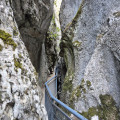
This very short round trip hike takes you through an extremely narrow gorge. A small stream has cut through the mountain at an impressive height (100 metres), carving out a very narrow passage: you have to bend down to get through in some places. You will see vultures on the cliffs and a metal sculpture of a vulture by the side of the path.
Carrión de los Condes - Moratinos
 17.98 mi
+404 ft
-344 ft
8h 35
17.98 mi
+404 ft
-344 ft
8h 35
 Difficult
Departure from Carrión de los Condes (Palencia)
Difficult
Departure from Carrión de los Condes (Palencia)
Sixtieth stage of the Camino de Santiago. A carefree stage... it’s flat... flat... flat! Few village crossings. The route is less desolate than the previous stage, yet there isn’t much to discover. But this may be an opportunity to listen to the silence and reflect on what truly drove us to reach Santiago!
León, a city of monuments
 3.28 mi
+75 ft
-69 ft
1h 35
Easy
Departure from León
3.28 mi
+75 ft
-69 ft
1h 35
Easy
Departure from León
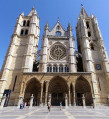
León is a city steeped in history and full of monuments to discover. Without a doubt, the cathedral is the number one sight to see in León. A colossal monument that dominates the city from above and captivates simply by its presence. In addition to this monumental building, you can explore the Royal Collegiate Church of San Isidoro, Casa Botines, the Palacio de los Guzmanes, the Roman and medieval walls, and the Convent of San Marcos.
And if you have time, do take a stroll through the Húmedo and Romántico districts to soak up the atmosphere around the tapas bars.
I visited this city at the end of the sixty-third stage of my Camino de Santiago.
Belorado - San Juan de Ortega
 14.84 mi
+1,509 ft
-699 ft
8h 10
Difficult
Departure from Belorado (Burgos)
14.84 mi
+1,509 ft
-699 ft
8h 10
Difficult
Departure from Belorado (Burgos)
Fifty-fifth stage of the Camino de Santiago. This stage towards Burgos takes you through several villages along a path that climbs imperceptibly, leading you first towards the Montes de Oca through wooded landscapes, and finally to the convent of San Juan de Ortega, a convent perched in the mountains, which appears like an oasis (remember to stock up on supplies before setting off).
Circular Sotoserrano route via Cepeda, Madroñal and Herguijuela
9.10 mi
+1,276 ft
-1,260 ft
5h 20
 Moderate
Departure from Sotoserrano (Salamanca)
Moderate
Departure from Sotoserrano (Salamanca)
Starting from Sotoserrano, this circular route connects Cepeda, Madroñal and Herguijuela de la Sierra through the typical landscapes of the Sierra de Francia. The route alternates between country lanes, wooded sections, village crossings and more open stretches offering views of the surrounding hills. The main climb is concentrated in the first part of the route, followed by a more gentle return to Sotoserrano. This walk offers a good balance between distance, varied scenery and moderate exertion. In summer, an early start is recommended to avoid the heat of the day.
From Sotoserrano to Miranda via the trails of the Sierra de Francia
6.63 mi
+981 ft
-597 ft
3h 55
Moderate
Departure from Sotoserrano (Salamanca)
This one-way walk connects Sotoserrano to Miranda del Castañar, in the heart of the Sierra de Francia. The route begins with a mostly downhill section to the lowest point, before starting a gradual climb towards the higher ground and the village at the end of the walk. The difficulty is moderate for an experienced walker, but the summer heat can make the second half more challenging. It is advisable to set off early, take plenty of water and download the route map for offline use. As this is not a circular route, the return journey from Miranda del Castañar must be arranged in advance.
Route in the Valdelateja Valley
6.03 mi
+1,411 ft
-1,411 ft
4h 00
Moderate
Departure from Valle de Sedano (Burgos)
A short walk starting and ending in Valdelateja. The walk takes you past a viewpoint high up, allows you to stroll through the neighbouring valley before heading back up alongside it to a viewpoint overlooking the canyon.
Rambling in the Sierra de Guadarrama - Hornillo waterfall & Cabeza Peak
 Association / Club / Walk leader6.96 mi
+2,566 ft
-2,539 ft
5h 25
Moderate
Departure from Santa María de la Alameda (Ávila)
Association / Club / Walk leader6.96 mi
+2,566 ft
-2,539 ft
5h 25
Moderate
Departure from Santa María de la Alameda (Ávila)
A circular route at the western end of the Sierra de Guadarrama. Pleasant walking and the bonus of the waterfall (best seen in the spring). Some great views down to El Escorial and Madrid in the far distance. Also, on a clear day, views of the Gredos mountains to the west.
Sierra de la Altalaya (Pedralba de la Praderia, Sanabria)
7.24 mi
+699 ft
-673 ft
3h 55
Moderate
Departure from Pedralba de la Pradería (Zamora)
Route family (3-4 hours though) on easy paths. Viewpoint at 1151m, 1.5 km from the road: 360-degree view. Elevation gain: 220m.
Beautiful panoramic views in several places. View of Portugal on one side. Later, views of Puebla and the mountains above Lake Sanabria.
Mirador del Cancho and Peña Citores in the Sierra de Guadarrama
8.38 mi
+2,792 ft
-2,792 ft
6h 15
Difficult
Departure from Real Sitio de San Ildefonso (Segovia)
A circular route that begins and ends at the car park next to the Puente de la Cantina, which spans the gorge over the river Eresma. A demanding mountain route with a steep ascent to Peña Citores, rewarded by panoramic views, historic civil war remains, alpine scenery, and a scenic descent along forest paths and mountain streams.
Path to the El Arenal football field
2.08 mi
+377 ft
-400 ft
1h 15
Easy
Departure from El Arenal (Ávila)
A pleasant little path that runs alongside the river and through the trees, offering cool shade in summer. It offers superb views of the village nestled at the foot of the Sierra de Gredos.
Rambling around Spain - Quintana Martín Galíndez - El Cotorrón & Río Ebro
13.14 mi
+1,237 ft
-1,253 ft
7h 05
Difficult
Departure from Valle de Tobalina (Burgos)
This circular route starts and finishes in the small village of Quintana Martín Galíndez (Burgos). It links quiet villages, hilltop views at El Cotorrón and Altos del Portillo, the Ebro riverbanks, a Roman bridge, and the hamlet of Montejo de San Miguel.
Rambling around Spain - Muñalba, 3 Provincias, Camperón & Urbión (Soria)
10.83 mi
+2,844 ft
-2,815 ft
7h 25
Difficult
Departure from Duruelo de la Sierra (Soria)
A circular route starting and finishing at the car park of Castroviejo. Drive up from Duruelo de la Sierra (or walk if you want to split the route into two days).This route links several prominent summits, with sweeping ridge views, dramatic rocky landscapes, and the source of the Duero River in a wild and scenic setting.
Rambling around Spain - Duruelo de la Sierra, Covaleda and the River Duero
10.17 mi
+335 ft
-354 ft
5h 00
Moderate
Departure from Duruelo de la Sierra (Soria)
A gentle circular route along the River Duero in Soria, starting from the village of Duruelo de la Sierra, along woodland paths and historic bridges, passing hermitages and the village of Covaleda before returning through peaceful forest scenery.
Castile Canal and Palencia Cathedral
3.28 mi
+39 ft
-43 ft
1h 30
Easy
Departure from Palencia
Free parking is available in the public car park at the start of the walk. Walk along the canal in the shade of the trees and cross the bridge to admire the lock. Return via the other bank of the canal to the water retention basin. Take the pedestrian crossing to enter the old town and visit the cathedral. Then return to the car park.
Discovering the gems of Burgos
 5.16 mi
+305 ft
-325 ft
2h 40
Easy
Departure from Burgos
5.16 mi
+305 ft
-325 ft
2h 40
Easy
Departure from Burgos
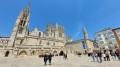
The sheer number of things to do in Burgos is impressive: religious and secular monuments, parks, museums, fountains, statues and so on. Among the places to visit, perhaps the most important is the Cathedral of Santa María, a Gothic-style Catholic church converted into a museum. Inside, it houses numerous chapels, each of which is a small museum in its own right. Not far from the altar, on the floor, lies the tombstone of El Cid and Chimène. Also not to be missed are the Monastery of Santa María la Real de Las Huelgas, Burgos Castle, the historic centre, the Miraflores Charterhouse, and so on.
I spent a day visiting Burgos, at the end of the fifty-sixth stage of my Camino de Santiago.
Villafranca del Bierzo - O’Cebreiro
 17.56 mi
+2,897 ft
-390 ft
10h 35
Difficult
Departure from Villafranca del Bierzo (León)
17.56 mi
+2,897 ft
-390 ft
10h 35
Difficult
Departure from Villafranca del Bierzo (León)
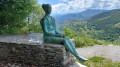
The sixty-ninth stage of the Camino de Santiago. This stage is nothing like the one before it – far from it! It is a stage that will leave an indelible memory, thanks to the beautiful, exhilarating and daunting climb to O Cebreiro, the highest ascent on the French Way within Spanish territory. In the village of O Cebreiro, you are in Galicia; this village is a little gem, thanks to its location, its views, its church, its pallozas and its legends.
Ponferrada - Villafranca del Bierzo
 14.73 mi
+801 ft
-794 ft
7h 30
Difficult
Departure from Ponferrada (León)
14.73 mi
+801 ft
-794 ft
7h 30
Difficult
Departure from Ponferrada (León)
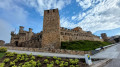
Stage 68 of the Camino de Santiago. Today’s stage crosses the entire Bierzo region, a large basin surrounded by mountains and blessed with a milder microclimate. You’ll find yourself back in the countryside and among the vineyards that produce the famous wines of Bierzo. After passing through a few small villages that stretch along the route and crossing the River Cua, you’ll arrive in Villafranca del Bierzo, a Frankish town born of the pilgrimage route and rich in beautiful heritage.
Santa Colomba de Somoza - Ponferrada
 13.94 mi
+456 ft
-3,438 ft
6h 50
Difficult
Departure from Santa Colomba de Somoza (León)
13.94 mi
+456 ft
-3,438 ft
6h 50
Difficult
Departure from Santa Colomba de Somoza (León)
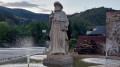
The 67th stage of the Camino de Santiago. On this stage, the climb up to Alto de Cerezales offers a magnificent panoramic view of the surrounding area. Then begins a long descent along stony paths and through magnificent chestnut groves towards Ponferrada. This ancient town, built at the confluence of the River Boeza, boasts numerous religious buildings and an imposing fortified castle built by the Knights Templar in the 13th century.
Astorga - Santa Colomba de Somoza
 17.21 mi
+2,096 ft
-256 ft
8 hrs
17.21 mi
+2,096 ft
-256 ft
8 hrs
 Very difficult
Departure from Astorga (León)
Very difficult
Departure from Astorga (León)
Sixty-sixth stage of the Camino de Santiago. On this stage, you climb gently up the eastern slope of the León mountains through magnificent scenery. The route passes through picturesque little villages saved from abandonment. After passing through Rabanal del Camino on a path through oak forests, you begin the ascent to the Cruz de Ferro (the Iron Cross), through a landscape of almost deserted moorland, before descending to the hamlet of Manjarin to spend the night in, or next to, a quaint refuge.
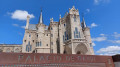
Villadangos del Páramo - Astorga
 19.01 mi
+594 ft
-669 ft
8 hrs
Very difficult
Departure from Villadangos del Páramo (León)
19.01 mi
+594 ft
-669 ft
8 hrs
Very difficult
Departure from Villadangos del Páramo (León)
The sixty-fifth stage of the Camino de Santiago. On this stage, you reach the very photogenic Orbigo Bridge before passing through several picturesque villages to arrive in Astorga, a Roman town with an imposing city wall, whose many monuments serve as a reminder of its historic past.
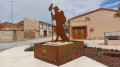
León - Villadangos del Páramo
 13.99 mi
+571 ft
-407 ft
6h 55
Moderate
Departure from León
13.99 mi
+571 ft
-407 ft
6h 55
Moderate
Departure from León
Sixty-fourth stage of the Camino de Santiago. On this stage, you will pass through the old part of the city of León, taking in the famous tapas bars, restaurants and iconic landmarks such as the Trajan’s Column. The walk out of León is gruelling, involving several hours’ walking along the N-120, all the way to Villadangos del Páramo.
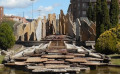
Santas Martas - León
 14.43 mi
+407 ft
-358 ft
7h 00
Difficult
Departure from Santas Martas (León)
14.43 mi
+407 ft
-358 ft
7h 00
Difficult
Departure from Santas Martas (León)
Stage 63 of the Camino de Santiago. On this stage, you leave behind the arid high plateau of the Meseta to reach León, one of the most beautiful and culturally rich cities on the Camino de Santiago. This is a fairly short stage, leaving you plenty of time to explore the city.
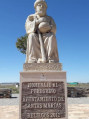
Sahagún - Santas Martas
 18.68 mi
+308 ft
-246 ft
8 hrs
Very difficult
Departure from Sahagún (León)
18.68 mi
+308 ft
-246 ft
8 hrs
Very difficult
Departure from Sahagún (León)
Sixty-second stage of the Camino de Santiago. This stage is long, monotonous and hot! In short, another stage across the Meseta and, more specifically, the rocky Páramo plain, with endless, straight paths offering little variety that seem to go on forever.
Moratinos - Sahagún
 7.94 mi
+240 ft
-367 ft
3h 50
Moderate
Departure from Moratinos (Palencia)
7.94 mi
+240 ft
-367 ft
3h 50
Moderate
Departure from Moratinos (Palencia)
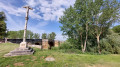
Sixty-first stage of the Camino de Santiago. This short route is a transitional stage, allowing you time to visit the Virgen del Puente before arriving in Sahagún and then exploring the town, its churches and monasteries.
It is also a good opportunity to rest after the long stages that have gone before, in order to prepare for the long stages ahead.
Itero de la Vega - Carrión de los Condes
 21.08 mi
+486 ft
-302 ft
10h 05
Very difficult
Departure from Itero de la Vega (Palencia)
21.08 mi
+486 ft
-302 ft
10h 05
Very difficult
Departure from Itero de la Vega (Palencia)
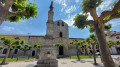
Fifty-ninth stage of the Camino de Santiago. A long, flat stage with no particular difficulty, except that you walk alongside long stretches of busy road. You enter the province of Palencia and pass through several towns and villages, including Boadilla del Camino with its Gothic Rollo and Frómista, where you can admire the four-lock system of the Canal de Castilla. After entering the autonomous community of Castile and León, you discover the town of Carrión de los Condes with its extraordinary Church of Santa María del Camino and its old town.
Iglesias - Itero de la Vega
 16.03 mi
+640 ft
-1,053 ft
7h 55
Difficult
Departure from Iglesias (Burgos)
16.03 mi
+640 ft
-1,053 ft
7h 55
Difficult
Departure from Iglesias (Burgos)
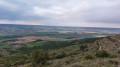
Fifty-eighth stage of the Camino de Santiago. This stage, with few trees to shelter from the fierce summer sun or the uncomfortable wind and rain, runs largely over good terrain through fields of grain. After passing under the arches of San Antón, you cross the village of Castrojeriz and, after climbing the Teso de Mostelares, you arrive at the village of Itero de la Vega.
Burgos - Iglesias
 16.56 mi
+748 ft
-679 ft
8h 15
Difficult
Departure from Burgos
16.56 mi
+748 ft
-679 ft
8h 15
Difficult
Departure from Burgos
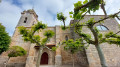
Fifty-seventh stage of the Camino de Santiago. After an urban interlude in Burgos, this stage takes you into the heart of the scorching landscapes of Castile. After Rabé de las Calzadas , you step straight onto a desert-like high plateau, dotted with villages nestled amidst the fields. Here, it is a desert of ploughed fields along a path that is often flat and straight, exposed to the wind or the beating sun! Protect yourself before you turn into a lobster.
San Juan de Ortega - Burgos
 16.08 mi
+433 ft
-919 ft
7h 45
Difficult
Departure from Barrios de Colina (Burgos)
16.08 mi
+433 ft
-919 ft
7h 45
Difficult
Departure from Barrios de Colina (Burgos)
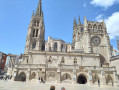
Fifty-sixth stage of the Camino de Santiago. This stage towards Burgos passes through Atapuerca and takes you over the day’s only small hill through a rural area.
There is an alternative route at the entrance to Burgos to avoid the tarmac after Orbaneja Riopico. This alternative, well signposted from Castañares, is more pleasant. It avoids the tarmac as much as possible and is shaded all the way along the river.
The River Arlanzón and the Miraflores Charterhouse
 6.74 mi
+213 ft
-213 ft
3h 15
Easy
Departure from Burgos
6.74 mi
+213 ft
-213 ft
3h 15
Easy
Departure from Burgos
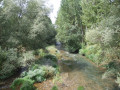
A walk to explore the River Arlanzón, which flows through Burgos, the Miraflores Charterhouse, and the Fuentes Blancas Park.
From the Vegabaño Refuge to the Collado Jermoso Refuge
 11.71 mi
+5,807 ft
-3,425 ft
10 hrs
11.71 mi
+5,807 ft
-3,425 ft
10 hrs
 Extremely difficult
Departure from Oseja de Sajambre (León)
Extremely difficult
Departure from Oseja de Sajambre (León)
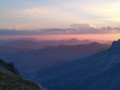
A long stage that begins with a climb through a beech forest, then turns towards Posada de Valdeón to follow a gently sloping valley, before tackling the very difficult climbs of the Canal de Asotín, El Berón and the Canal de Congosto. Finally, you arrive at the magnificent site of Collado Jermoso, where the refuge is perched.