


Refine your search for walks in Saint-Ulphace
Saint-Ulphace walks


 The Woods of Roussigny
 Tourism professional
 11.28 mi
 +758 ft
 -751 ft
 5h 50
5h 50
 Moderate
 Departure from Saint-Ulphace (Sarthe)
Like the neighbouring village of Gréez, the medieval development of Saint-Ulphace is linked to the settlement, between the Braye and the Saint-Ulphace stream, of a hermit monk in the6th century. The Hermitage of Saint-Ulphace led to the clearing of the surrounding land and the settlement of Christianised populations, followed by the establishment of the parish, first mentioned in 802.
Around Mont-Chauvel
 5.52 mi
+387 ft
-384 ft
2h 50
5.52 mi
+387 ft
-384 ft
2h 50
 Easy
Departure from Courgenard (Sarthe)
Easy
Departure from Courgenard (Sarthe)
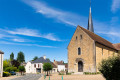
Situated on the eastern slopes of the Huisne, Courgenard, first mentioned at the end ofthe 9th century, was the seat in the Middle Ages of an important barony belonging to the chapter of canons of Le Mans Cathedral. The fine Romanesque architecture of Saint-Martin’s Church still bears witness today to the power of this barony, as does the remarkable16th-century decoration adorning the chancel. In the19th century, the village still lived off agriculture and the production of hemp cloth. Today, it forms part of the La Ferté-Bernard employment area.
Montmirail Castle and its countryside
 6.17 mi
+295 ft
-312 ft
3h 05
Easy
Departure from Montmirail (Sarthe) (Sarthe)
6.17 mi
+295 ft
-312 ft
3h 05
Easy
Departure from Montmirail (Sarthe) (Sarthe)
This hike allows you to discover Montmirail, a "small town of character", and its green countryside through woods and sunken paths.
 Les Terres Douces
14.13 mi
+433 ft
-410 ft
3 hrs
Moderate
Departure from Authon-du-Perche (Eure-et-Loir)
The "Terres Douces" countryside reveals a heritage full of charm: the former Priory of Les Châtaigniers and the Manoir de la Guillerie.
The Boisvinet Ponds
 Association / Club / Walk leader
 7.59 mi
+302 ft
-308 ft
3h 45
Moderate
Departure from Le Plessis-Dorin (Loir-et-Cher)
7.59 mi
+302 ft
-308 ft
3h 45
Moderate
Departure from Le Plessis-Dorin (Loir-et-Cher)
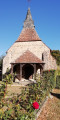
This route takes you along quiet country lanes, paths through the bocage and forest trails, and will introduce you to the Étangs de Boisvinet. You will also pass the glassworks, which operated until 1952 and was the subject of a book by Daphne du Maurier, *The Glass Blowers*.
A hidden architectural gem near Saint-Jean-des-Échelles
 3.46 mi
+118 ft
-118 ft
1h 40
Easy
Departure from Saint-Jean-des-Échelles (Sarthe)
3.46 mi
+118 ft
-118 ft
1h 40
Easy
Departure from Saint-Jean-des-Échelles (Sarthe)
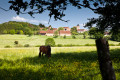
Situated on a small hill overlooking the surrounding area, the village, which takes its nickname from the Échelles farm, the former seat of the parish seigneury, offers a well-preserved architectural and landscape setting, dominated by the Church of Saint John the Baptist. Built inthe 12th century, this church underwent embellishment work in the16th century: what remains is the painted panelled vault, resting—an extremely rare feature—on posts placed against the walls, and above all the remains of an extraordinary altarpiece in carved and painted limestone, dated 1558. The décor was redesigned in the18th century with the installation of three new altarpieces.
The hills of Ceton
 10.90 mi
+781 ft
-771 ft
5h 40
Moderate
Departure from Ceton (Orne)
10.90 mi
+781 ft
-771 ft
5h 40
Moderate
Departure from Ceton (Orne)
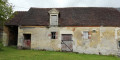
Taking beautiful sunken paths, over hill and dale, you will discover magnificent panoramic views of the Cétonais countryside and be amazed by its diversity: woods, meadows, hedgerows and cultivated fields.
Around Saint-Symphorien in Cherré-Au
 4.06 mi
+315 ft
-315 ft
2h 10
Easy
Departure from Cherreau (Sarthe)
4.06 mi
+315 ft
-315 ft
2h 10
Easy
Departure from Cherreau (Sarthe)
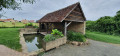
Cherré-Au is a new commune formed in 2019 by merging the communes of Cherré and Cherreau, located east of La Ferté-Bernard. The village of Cherreau has always been closely linked to the neighbouring town of La Ferté-Bernard. Indeed, in the Middle Ages, the lords of La Ferté took over the Abbey of La Pelice at the end ofthe 12th century. Then, in the14th century, the Domaine de la Plaisse was incorporated into that of La Ferté. More recently, as the town of La Ferté-Bernard expanded inthe 19th century, it encroached upon Cherreau, annexing the hamlets of Gué-Faux and La Fosse Fondue in 1889, which bordered the road to Paris.
Around Cherreau
 3.81 mi
+272 ft
-272 ft
2h 00
Easy
Departure from Cherreau (Sarthe)
3.81 mi
+272 ft
-272 ft
2h 00
Easy
Departure from Cherreau (Sarthe)
This walk offers beautiful views of La Ferté-Bernard and Cherreau.
The Yerre Valley
7.32 mi
+33 ft
-33 ft
3h 25
Easy
Departure from La Bazoche-Gouet (Eure-et-Loir)
A beautiful walk in the former fiefdom of the turbulent Gouet barons. Like Brou, La Bazoche continues a long tradition of fairs and markets. For over 100 years, the Percheron foal fair has been held on thefirst Saturday in November.
Route du père from Vibraye
 9.68 mi
+453 ft
-449 ft
4h 50
Moderate
Departure from Vibraye (Sarthe)
9.68 mi
+453 ft
-449 ft
4h 50
Moderate
Departure from Vibraye (Sarthe)
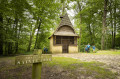
The village is characterised by the presence of the forest. This enabled its owner, the Marquis de Vibraye, to establish forges on the Braye river in Champrond in the early 17th century, where charcoal from the forest fuelled the furnaces producing pig iron and wrought iron until 1913. The trail partly follows the route taken by the convoys laden with heavy iron bars to the workshop in the hamlet of La Fenderie, on the pond of the same name. At La Bouverie, another vanished hamlet, eight houses provided accommodation for the forges’ carters, whilst charcoal burners and miners lived in makeshift huts. Now silent once more, the forest retains of this past activity only the network of paths. Part of it is now a Natura 2000 site.
The Abadie factory, the Saules tile works and the Jambette Valley
 17.33 mi
+1,158 ft
-1,161 ft
9h 00
17.33 mi
+1,158 ft
-1,161 ft
9h 00
 Difficult
Departure from Avezé (Sarthe) (Sarthe)
Difficult
Departure from Avezé (Sarthe) (Sarthe)
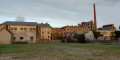
This walk takes you through the Avezé forest to the outskirts of Saint-Germain-de-la-Coudre, passing by the Saules tile works. Winding through the hills, the route passes through Le Theil, a once-thriving industrial town and home to the former Abadie factories, now listed as heritage sites. Then, following the sunken paths, you’ll explore the Jambette Valley before returning to Avezé via the Beauvais woods and the panoramic views over the Huisne Valley.
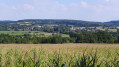
Panoramic views over the Prairies d'Avezé
 6.80 mi
+377 ft
-384 ft
3h 25
Moderate
Departure from Avezé (Sarthe) (Sarthe)
6.80 mi
+377 ft
-384 ft
3h 25
Moderate
Departure from Avezé (Sarthe) (Sarthe)
This route, which alternates between sunken lanes, forest paths and flat sections, will take you to the hill overlooking the Huisne Valley to the west. Along the way, several panoramic views allow you to admire the meadows of Avezé, a veritable hay barn that has provided for generations of farmers.
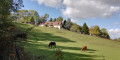
The woods of Beauvais
 7.14 mi
+548 ft
-538 ft
3h 45
Moderate
Departure from Avezé (Sarthe) (Sarthe)
7.14 mi
+548 ft
-538 ft
3h 45
Moderate
Departure from Avezé (Sarthe) (Sarthe)
A lovely walk along sunken paths, through woodland and across the gentle hills of the Perche. Panoramic views of the Huisne and Maroisse valleys.
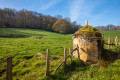
In the heart of the Perche countryside from Avezé
 8.17 mi
+367 ft
-367 ft
4h 05
Moderate
Departure from Avezé (Sarthe) (Sarthe)
8.17 mi
+367 ft
-367 ft
4h 05
Moderate
Departure from Avezé (Sarthe) (Sarthe)
The village of Avezé developed in the Middle Ages to the north-east of the church, which was rebuilt inthe 16th century, at the same time as the priory that adjoined it, of which only extensive farm buildings remain. The main street is dominated by a large two-storey house known as the “Maison du prieur” (Prior’s House), dating from the 15th or 16th century, notable for its rear stair tower and its elegant façade that juts out over the current street.
Panoramic view over the Téné meadow.
4.93 mi
+354 ft
-377 ft
2h 35
Easy
Departure from Orne
This route offers panoramic views of the Huisne valley on the outskirts of Nogent-le-Rotrou.
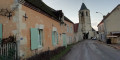
From Mâle to the outskirts of Ceton
 8.80 mi
+764 ft
-758 ft
4h 45
Moderate
Departure from Orne
8.80 mi
+764 ft
-758 ft
4h 45
Moderate
Departure from Orne
Through sunken lanes, hedgerows and woods, discover the landscapes of the Perche region as far as Ceton, the Jambette Valley and the Huisne Valley.
The ore route in Vibraye
 Visorando Member
 6.49 mi
+243 ft
-269 ft
3h 10
Moderate
Departure from Vibraye (Sarthe)
6.49 mi
+243 ft
-269 ft
3h 10
Moderate
Departure from Vibraye (Sarthe)
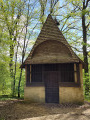
Rated as easy, this hike crosses the Vibraye Forest. To make it a circular route, allow about 3 hours and do not leave the marked trail, which is public. Unlike the forest, which is private, the route is marked with round signs 10 cm in diameter reminiscent of the work of the forge. You are in the Haut Maine region. In the Middle Ages, this region was home to a significant metallurgical industry, made possible by the presence of iron ore, extracted from flint clay and quartz sand, as well as the large quantities of wood needed for the forges. The forest was managed by cutting down coppice wood every 18 years to renew the resource. The dominant species is oak, but the forest also consists of aspens, birches, chestnuts and pines. This pleasant route describes a craft activity through the display boards scattered around the former mining sites.
The Vow of Saint-Quentin
 5.43 mi
+266 ft
-269 ft
2h 45
Easy
Departure from Saint-Maixent (Sarthe)
5.43 mi
+266 ft
-269 ft
2h 45
Easy
Departure from Saint-Maixent (Sarthe)
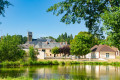
Bordering the Huisne valley to the west and the Vibraye forest to the east, Saint-Maixent is first mentioned in the13th century. Although the settlement is largely scattered (27 farms and 59 cottages in 1841), there are large hamlets such as Les Blousières, whose houses, clustered around a now-vanished pond, once housed up to 40 people, likely hemp workers. The village, crossed by the medieval road known as the “Chemin aux Bœufs” leading to Paris via Châteaudun, grew considerably in the 19th century thanks to the trade generated by this route.
Huisne Valley and the hills of Val-au-Perche
 11.52 mi
+787 ft
-778 ft
6h 00
Moderate
Departure from Le Theil (Orne) (Orne)
11.52 mi
+787 ft
-778 ft
6h 00
Moderate
Departure from Le Theil (Orne) (Orne)
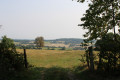
Lush green valleys, steep hillsides, majestic panoramas, sunken lanes and their gnarled pollarded trees are all part of this beautiful countryside walk, which crosses the wide Huisne valley and takes you through the villages of Mâle and La Rouge.
The Avezé and Souvigné plateau, starting from L’Orgerie
3.62 mi
+30 ft
-30 ft
1h 40
Easy
Departure from Souvigné-sur-Même (Sarthe)
A pleasant walk through the woods and countryside of Avezé along sunken paths.
The Étang des Panses
 7.73 mi
+299 ft
-272 ft
3h 50
Moderate
Departure from Beaumont-les-Autels (Eure-et-Loir)
7.73 mi
+299 ft
-272 ft
3h 50
Moderate
Departure from Beaumont-les-Autels (Eure-et-Loir)
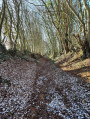
The Étang des Panses lake can be seen along a path where it is not uncommon to encounter forest animals. After the forest, you will discover Percheron fruit trees at the Miermaigne conservation orchard; in mid-November, you can take part in the Apple Festival.
The Berthe Valley starting from Rougemont
4.66 mi
+512 ft
-518 ft
2h 35
Easy
Departure from Vichères (Eure-et-Loir)
From the Church of Notre-Dame (listed building), you can admire the traditional architecture of Vichères, built from red sandstone and white stone. This rural route, with its ups and downs, links Rougemont Hill (the highest point in Eure-et-Loir at 285 m) to the picturesque Berthe Valley via sunken paths.
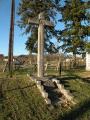
Village of Gemages at the start of the Chêne Vert
 4.87 mi
+453 ft
-440 ft
2h 40
Easy
Departure from Le Theil (Orne) (Orne)
4.87 mi
+453 ft
-440 ft
2h 40
Easy
Departure from Le Theil (Orne) (Orne)
A hike through woods, sunken paths and hills that will introduce you to the Même valley, a panoramic view of Saint-Germain-de-la-Coudre and the church of Gemages. Along the way, you will admire the charming village of L'Hermitière, its castle and its church perched proudly on a hill.
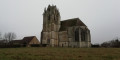
The Priory of Sainte-Gauburge, starting from L’Hermitière
 14.55 mi
+935 ft
-935 ft
7h 30
Moderate
Departure from L'Hermitière (Orne)
14.55 mi
+935 ft
-935 ft
7h 30
Moderate
Departure from L'Hermitière (Orne)
Following the sunken lanes of the Perche and the rolling hills, the route passes through the village of Gemages, the Angenardière Manor and the Priory of Sainte-Gauburge with its Ecomuseum. The return journey to L’Hermitière takes you through the Bois des Baronnières, which overlooks Le Theil.