


Refine your search for walks in Écaussinnes
Écaussinnes walks


 Discovering the treasures of Écaussinnes
 Visorando Member
 9.21 mi
 +217 ft
 -217 ft
 4h 25
 Moderate
 Departure from Écaussinnes (Hainaut)
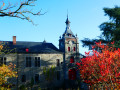
The mainly urban section at the start allows you to discover some of the gems of the two Écaussinnes (Écaussinnes-Lalaing and Écaussinnes-d’Enghien) before heading out into the countryside between Ronquières and Feluy via the magnificent Senette valley. A walk with two distinct character, which can very easily be split into a short urban stroll and a longer countryside walk.
Les Longues Hayes
 Tourist office
 7.58 mi
+141 ft
-151 ft
3h 35
Moderate
Departure from Le Rœulx (Hainaut)
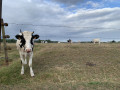
La Haye du Roeulx is the wooded area that surrounds our small princely town to the north-northeast. In addition to exploring our countryside and woods, this route will allow you to discover the town centre of Le Roeulx and its sights.
Countryside and castles around Écaussinnes
 8.69 mi
+561 ft
-574 ft
4h 30
Moderate
Departure from Braine-le-Comte (Hainaut)
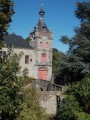
This is an easy walk, about an hour's drive from Brussels. You will discover the two castles of Écaussinnes as you walk through the forest, along country roads and paths with the Ronquières Tower as a landmark.
Grand tour of the Bois de la Houssière
 7.35 mi
+410 ft
-430 ft
3h 45
Moderate
Departure from Braine-le-Comte (Hainaut)
After a short warm-up walk in the arboretum, where small educational signs provide information on the names of the trees found here, the hike takes you on a long, easy walk around the Bois de la Houssière, a popular destination for walkers in this region of Belgium.
Discover the locks of the old canal in the province of Hainaut
 7.39 mi
+302 ft
-308 ft
3h 40
 Easy
Departure from Seneffe (Hainaut)
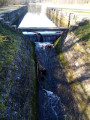
This region is criss-crossed by canals, some very modern ones having replaced the old canals, a section of which we follow on this easy walk that takes us past some of the locks dotting the route.The locks that can be seen during this walk have been out of use since 1958. Since then, the lock gates have been removed and artificial waterfalls have been created on the downstream side. And this is the result that can be seen today.
 From Seneffe to Ghent
69.55 mi
+607 ft
-948 ft
8 hrs
Moderate
Departure from Seneffe (Hainaut)
This cycle route, starting in Seneffe, takes you to Ghent along the region’s iconic waterways. Ideal for an accessible and easy-going cycle ride, the route follows the landscaped banks of the Charleroi–Brussels Canal, offering you a peaceful, leafy route through Wallonia and Flanders.
Ronquières inclined plane, Canal and Old Brussels-Charleroi Canal
 8.04 mi
+348 ft
-377 ft
4h 00
Moderate
Departure from Braine-le-Comte (Hainaut)
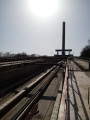
This easy walk follows the Canal du Centre and the old canal for the most part, before crossing the countryside to reach the top of the Ronquières inclined plane, which is used to transfer boats. This ‘lift’ overcomes a 68-metre difference in height over a distance of 1,432 metres.
Braine-le-Comte – Meslin-l’Evèque
 16.43 mi
+230 ft
-417 ft
7h 45
 Difficult
Departure from Braine-le-Comte (Hainaut)
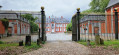
The second stage of the Tour de Wallonie takes us today from the town of Braine-le-Comte to Meslin-l’Evèque, a small village in the municipality of Ath to the north-east. We will mainly be walking along small country lanes as we cross this beautiful, gently rolling Hainaut countryside, passing through a few small villages and other hamlets such as Horrues. A short detour of a few metres to view Thoricourt Castle from behind its gates before crossing part of the infamous Ghislenghien industrial estate.
Ronquières and the ‘Bonhomme de Fer’
 10.50 mi
+640 ft
-643 ft
5h 25
Moderate
Departure from Braine-le-Comte (Hainaut)
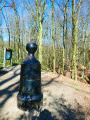
Part countryside, part woodland, this circular walk takes you on a journey of discovery through the area to the west of the Ronquières Inclined Plane on the Brussels–Charleroi Canal and the Hainaut town of Braine-le-Comte.Whilst the walk does not strictly speaking pass through the incline site itself, it offers a fine view of its tower, visible from a great distance even though it lies at the bottom of the Senette valley.Starting in the countryside, the route quickly climbs towards the Houssière forest, with its countless paths and tracks and its old sand pits.You’ll come across the ‘Bonhomme de Fer’ at the southern end of this woodland. It is quite simply a geodetic marker dating fromthe mid-19th century, erected by the Belgian military engineers of the time to map Belgium more accurately. It formed part of a primary network of 86 points, some of which were marked by a cast-iron marker in the shape of a human figure.
From the old canals to the new canal between Seneffe and Godarville
 6.71 mi
+184 ft
-174 ft
3h 15
Moderate
Departure from Seneffe (Hainaut)
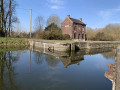
Here is a pleasant circular route mainly along the water’s edge with an unusual point of interest. To explore it properly, bring a torch. You’ll be able to see inside the Godarville boat tunnel, though without actually entering it. Those with a keen eye will spot here and there remnants of times gone by, such as landing stages, bollards or mooring posts, and a variety of birds, including cormorants.
Arquennes, Bois d'Arpes and the old Brussels-Charleroi canal
 7.02 mi
+279 ft
-299 ft
3h 30
Moderate
Departure from Seneffe (Hainaut)
An easy walk through the pretty region of Arquennes, along paths, country lanes, woodland edges and the Ravel cycle route, returning along the Charleroi/Brussels canal. The route is almost entirely car-free.
Houdeng-Goegnies lift circular
10.59 mi
+325 ft
-322 ft
5h 10
Moderate
Departure from La Louvière (Hainaut)
This route first follows the Canal du Centre Historique and its four hydraulic lifts, then returns via the new Canal du Centre and the impressive Strépy-Thieu boat lift. We will also cross the Sart canal bridge. On the old canal, we will also see the Houdeng swing bridge and the Bracquegnies drawbridge.
Hike without detailed description to be followed with the Visorando app.
In the countryside north-west of Soignies
 8.45 mi
+171 ft
-174 ft
4h 00
Moderate
Departure from Soignies (Hainaut)
This walk will introduce you to some aspects of the countryside in the north-western quarter of Soignies. The first section passes near the region’s quarries through flat countryside, whilst the second section is more pastoral and slightly undulating. Most of the route follows lovely paths or quiet roads (with alternative routes indicated in case of rain).
 Via Le Roeulx – Gottignies – Ville-sur-Haine
12.22 mi
+361 ft
-377 ft
1.5 hrs
Easy
Departure from Le Rœulx (Hainaut)
Let’s all set off on a lovely ride during which you’ll discover the lush green landscapes of our area, the charm and tranquillity of the banks of the new Canal du Centre, and the historic heart of our little princely town.
Le Roeulx – La Louvière by bike, between land and water
19.49 mi
+364 ft
-394 ft
2 hrs
Easy
Departure from Le Rœulx (Hainaut)
Discover the Roeulx and La Louvière region with its rural landscapes and views of the canal in the historic centre, featuring its old hydraulic lifts and funicular railway.
Bicycle hire available (see practical information)
A tour of Le Roeulx
5.28 mi
+108 ft
-125 ft
2h 30
Easy
Departure from Le Rœulx (Hainaut)
A picturesque tour of the town of Le Roeulx and its surroundings.
Around Le Roeulx
5.84 mi
+102 ft
-102 ft
2h 45
Easy
Departure from Le Rœulx (Hainaut)
A relaxing stroll in and around the town of Le Roeulx.
Discovering the town centre of Le Rœulx
1.28 mi
+23 ft
-23 ft
0h 35
Easy
Departure from Le Rœulx (Hainaut)
A picturesque tour will allow you to discover the charm of Le Roeulx, guiding you through its characterful houses and iconic monuments. This town has managed to preserve its rural atmosphere while offering architectural treasures to explore.
The canals in the town centre from Le Rœulx
13.19 mi
+643 ft
-659 ft
2.5 hrs
Easy
Departure from Le Rœulx (Hainaut)
The town of Le Rœulx is an important crossing point for river barges linking the Brussels–Charleroi Canal (at Seneffe) to the Nimy–Blaton–Péronnes Canal (at Nimy). They thus connect to the French canals.This walk will allow you to discover the old and new Canal du Centre, with its main points of interest, including, amongst others, the Strépy-Thieu funicular lift and the four hydraulic lifts located on the historic Canal du Centre.
Le Rœulx – La Louvière. Cycling between land and water. Short version
13.49 mi
+548 ft
-548 ft
1.5 hrs
Moderate
Departure from Le Rœulx (Hainaut)
A ride through the countryside and along the canals of the Roeulx area.
Bicycle hire available (see practical information)
Around the Bois de La Haye du Roeulx
 5.32 mi
+171 ft
-157 ft
2h 35
Easy
Departure from Le Rœulx (Hainaut)
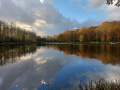
This walk will allow you to discover the remarkable sites of the town of Le Roeulx and its bucolic landscapes.
Monstrous, Ronquière: land and water
10.38 mi
+446 ft
-427 ft
5h 10
Moderate
Departure from Nivelles (Brabant Wallon)
A route where every step reveals a fragment of history. At Les Onze Bonniers, the mist floats like a memory. The streams of Pont à Mousson and Les Corbeaux whisper their legends — it is said that crows guided travellers. In the Bois de l'Hôpital, du Planti and d'en Bas, you will find elusive chamois, ancient herbs and secret springs. The Brussels–Charleroi canal unfurls its memories of barges and towpaths. La Gratière, La Thines and Hiernoulet offer golden light and dragonflies. There are also the Fermes de la Barette, de l'Abbaye and du Seigneur, guardians of the fields. At the Caverne du Philosophe, silence becomes history. Villages such as Ronquières, Chenu and Bornival are as gentle as an old book.A hike that whispers its secrets.
Panoramic views in Ittre
 5.93 mi
+358 ft
-367 ft
3h 00
Easy
Departure from Ittre (Brabant Wallon)
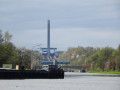
Starting from the heights of Ittre, a short footpath followed by a stretch of road leads to the first panoramic view, stretching all the way to the tower of the Ronquières inclined plane on the Brussels–Charleroi Canal. Your journey will take you as far as this canal, taking in a succession of other panoramic views, each as beautiful as the last, before descending to join the Ravel cycle route along the water’s edge.
The climb back up takes you through the fields, always with the Ronquières Tower in view. After bidding it farewell, there’s a short break on the plateau and another panoramic view of the route you took on the way there, before you descend into the Ri de Fauquez valley, from where you climb back up to rejoin the original route. The icing on the cake is that you might just be greeted by a llama in a meadow...
Along the Brussels-Charleroi Canal and the Ittre lock
 6.58 mi
+108 ft
-112 ft
3h 05
Moderate
Departure from Ittre (Brabant Wallon)
On this easy walk, which is mainly on hard-surfaced paths, you will discover a fine feat of engineering, one of many in the region, symbolising both the economic vitality of this area and human ingenuity in overcoming natural obstacles.
The Canal du Centre and its lifts
 7.37 mi
+387 ft
-384 ft
3h 45
Moderate
Departure from Wallonie
Admire the landscape of the Canal du Centre, the century-old drawbridges and the lifts that operate solely on hydraulic power.
The canals in the centre, the old and the new, via Strépy-Bracquegnies
 10.82 mi
+331 ft
-328 ft
5h 15
Moderate
Departure from Wallonie
Starting from the Strépy-Thieu funicular lift, the walk takes you on a discovery of the infrastructure of both canals, the historic and the recent.Four lifts, two drawbridges, two swing bridges and a few other remains, documented on four-language information panels, enhance the walk along the historic canal to its junction with the new canal at its eastern end.
The Canal du Centre
 15.00 mi
+456 ft
-469 ft
7h 20
Difficult
Departure from La Louvière (Hainaut)
The central canal and the historic canal have joined forces with a short stretch of the Haine to create a delightful walk along the water.
Engineering structures around Strépy-Bracquegnies
 8.90 mi
+709 ft
-702 ft
4h 45
Moderate
Departure from Wallonie
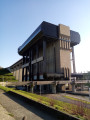
During this easy walk, you will discover some prodigious engineering works built on the Canal du Centre, culminating in the Strépy-Thieu funicular lift,the second largest boat lift in the world.
The Gottignies Artists’ Walk
4.39 mi
+266 ft
-243 ft
2h 15
Moderate
Departure from Le Rœulx (Hainaut)
This walk is designed to show you all the different facets of our beautiful village of Gottignies. You’ll love it – it’s a lovely, rural walk.
Sometimes quite challenging and sometimes easy, neither too long nor too short: just the right length.
The Wanze Valley starting from Gottignies
 7.81 mi
+410 ft
-404 ft
3h 55
Moderate
Departure from Le Rœulx (Hainaut)
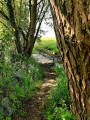
Explore the beautiful Rhône countryside and follow the meandering course of this pretty little river. An easy walk, with no large forests to cross but vast landscapes along dirt tracks.
Circular of the Gottignards Marcheurs
13.68 mi
+551 ft
-535 ft
6h 45
Difficult
Departure from Le Rœulx (Hainaut)
This walking route offers panoramic views of magnificent valleys and, above all, Wanze.
Gottignies is a beautiful village in the municipality of Le Roeulx, nestled between two hills. The Church of St Léger has just been renovated.
Several walking routes are available. Here, the 20 km route is used by the village walking group "Les Marcheurs Gottignards".
Discovering Haute Wanze
 5.57 mi
+322 ft
-335 ft
2h 50
Moderate
Departure from Le Rœulx (Hainaut)
The Wanze is a small river that flows through Gottignies and into the Haine at Ville-sur-Haine. This walk takes us to the source of the river, which you can ford. It's a great way to discover the bucolic landscapes of this small village.
Discovering Basse Wanze
 7.16 mi
+207 ft
-213 ft
3h 30
Moderate
Departure from Le Rœulx (Hainaut)
Discover Gottignies and Ville-sur-Haine as you follow the meandering course of the Wanze. This river, which can also be spelled "Wance", rises in Montauban and flows through the small village of Gottignies before joining the Haine in Ville-sur-Haine.
Little Switzerland in the Rhone Valley
2.81 mi
+171 ft
-177 ft
1h 25
Easy
Departure from Le Rœulx (Hainaut)
Discover the village of Gottignies with its hills, valleys, magnificent panoramic views and tranquillity. A bucolic landscape waiting to be explored.
Three slag heaps near La Louvière
 7.61 mi
+692 ft
-801 ft
4h 05
Moderate
Departure from La Louvière (Hainaut)
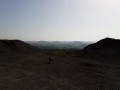
During this walk, discover three slag heaps situated relatively close to one another: the AlbertI, Quesnoy and Saint-Emmanuel slag heaps. Slag heaps are man-made hills formed by the gradual accumulation of mining waste produced by mining operations. These hills stand as a testament to an iconic industrial activity that provided a livelihood for several generations of locals, and which has now ceased.
Le Canal historique et l'héritage minier de Houdeng-Aimeries
 8.26 mi
+312 ft
-344 ft
4h 05
Moderate
Departure from La Louvière (Hainaut)
The appeal of this walk lies in the way it combines the region’s mining history with the tranquil beauty of the historic Canal du Centre, a UNESCO World Heritage Site, featuring its boat lifts—now operational again—and other infrastructure dating back over 100 years, bearing witness to the ingenuity of their designers.
Around the old railway line from Rognon
12.62 mi
+509 ft
-512 ft
6h 15
Difficult
Departure from Rebecq (Brabant Wallon)
The walk, which starts at the old Rognon station, takes you through the surrounding countryside and, at the end, follows just over two kilometres of the old line 123.Straddling the provinces of Walloon Brabant and Hainaut, the main features are a gently undulating landscape, fairly distant villages and, between them, a habitat that is both omnipresent and very scattered: numerous private dwellings and isolated farms or small hamlets.
A tour of the historic Canal du Centre’s hydraulic lifts
9.83 mi
+341 ft
-348 ft
1.5 hrs
Easy
Departure from La Louvière (Hainaut)
Departure from Place Hardat in Thieu (part of Le Roeulx)
A lovely way to visit the four historic hydraulic lifts on the Canal du Centre. Superb views
superb views of the local countryside.
Between two waters from Thieu to Ville-sur-Haine
2.37 mi
+135 ft
-128 ft
1h 10
Easy
Departure from La Louvière (Hainaut)
As you travel along both the old and new canals, journey from Thieu to Ville-sur-Haine whilst discovering or rediscovering the engineering structures of the waterways (drawbridges, locks and lifts, etc.). Enjoy the peace and quiet as you stroll at your leisure along the towpaths.
The Grandes Eaux departing from Thieu
3.36 mi
+56 ft
-52 ft
1h 35
Easy
Departure from La Louvière (Hainaut)
Departure from Place Hardat in Thieu (part of Le Roeulx).
Follow the two canals, the old and the new, from Thieu to Ville-sur-Haine, discovering or rediscovering the engineering structures of the waterways (drawbridges, locks, lifts). Enjoy the peace and quiet as you stroll along the towpaths at your leisure.
Cycling along the paths of Thieu
8.87 mi
+446 ft
-449 ft
1.5 hrs
Easy
Departure from La Louvière (Hainaut)
Thieu, a village situated between two waterways – between the new and old Canal du Centre – offers a wide variety of landscapes, ranging from waterside views to countryside scenery.
Ittre and the Château de la Tournette golf course
 6.46 mi
+338 ft
-351 ft
3h 15
Moderate
Departure from Ittre (Brabant Wallon)
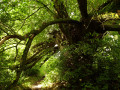
A circular route almost entirely through the countryside, starting from the centre of Ittre and ending at the Château de la Tournette golf course. Along the way, the Ravel cycle path runs alongside the Ri Ternel river, taking in the sweeping agricultural landscapes on the heights of Haut-Ittre – with, among other things, its beautiful hedgerows allowing nature to flourish – and crossing the golf course, all in an atmosphere of calm and serenity.
Circular route, North/South, Ittre – Canal – Golf de la Tournette
 13.15 mi
+633 ft
-640 ft
6h 35
Difficult
Departure from Ittre (Brabant Wallon)
Over hill and dale, through meadows and woodland, along country lanes, towpaths and a few streets – all linking up to form the backbone of this walk. The first section allows you to discover the natural surroundings so close to Ittre; just a few steps uphill take you to the Brussels–Charleroi Canal at lock no. 5. You then walk alongside Ittre’s marina and continue along the towpath. A semi-urban stretch takes you back into the countryside, where the path zigzags until it leads you to the Golf de la Tournette. The final stretch follows the Ry Ternel back to the centre of Ittre.
Trails and clearings starting from Ittre
 9.70 mi
+938 ft
-935 ft
5h 15
Moderate
Departure from Ittre (Brabant Wallon)
In the heart of Walloon Brabant, Ittre reveals a landscape of deep forests and secret valleys. The Bois des Frères, Bois du Bailli and Bois du Chapitre offer a refuge for wildlife. Le Bilot and La Baraque l'Hermitage combine ancient stones and peaceful clearings.Around Braine-le-Château, the heritage tells the story: medieval castle, Ferme Sainte-Croix and villages with evocative names such as Derrière les Monts or Le Cheval Blanc. Local legends still tell of white horses crossing the woods at dusk.The paths wind between hills and meadows, on sandy and clay soils. Heather, holly and oak trees make up a typical Brabant landscape. Mixed forests, wet meadows, orchids, ferns, deer and rare birds punctuate the walk. Between nature, history and legends, Ittre invites you to immerse yourself peacefully in the memory of the woods.
Ittre and the Brussels-Charleroi Canal
 6.25 mi
+472 ft
-453 ft
3h 15
Moderate
Departure from Ittre (Brabant Wallon)
Starting from the pleasant little square in Ittre, a small path quickly leads to unusual places so close to the town. Then there are vast landscapes stretching as far as the eye can see, followed by a pleasant walk through the Bois du Chapitre forest as you continue on your way. This is how this circular route is constructed, with a few streets here and there connecting the paths that take precedence here. And, as the icing on the cake, you pass by the Brussels-Charleroi Canal, discover lock no. 5 and the Ittre marina, and, before setting off again, stroll through the narrow streets of Ittre.
On horseback around Ville-sur-Haine
10.05 mi
+171 ft
-161 ft
1 hr
Easy
Departure from Mons (Belgique) (Hainaut)
The name of this village is said to come from the presence of a Roman villa built along the Haine River. The name evolved over the centuries, becoming 'Villa-Super-Hoeniam' (1240), 'Ville-Sour-Haine' (1293), 'Ville-sur-Haysne' (1660) and 'Ville-Sur-Heine' (1744). This walk will take you mainly along the towpaths of the Canal du Centre and the Canal du Centre Historique.